After 63 Years, Legendary Horror Classic Finally Receives Overdue High-Def Upgrade Business

After 63 Years, Legendary Horror Classic Finally Receives Overdue High-Def Upgrade

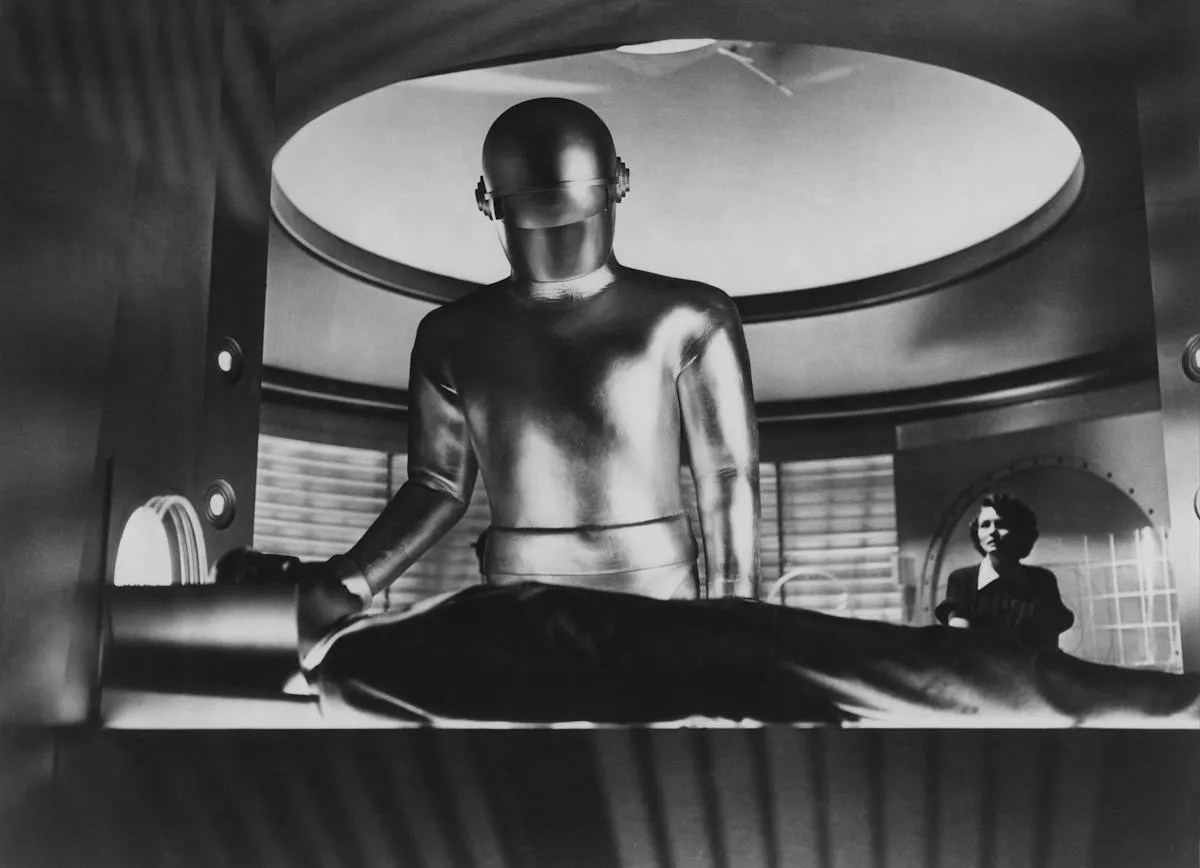
Metro-Goldwyn-Mayer(SeaPRwire) - Director Robert Wise’s 1963 classic film The Haunting is the gold standard for all haunted house horror movies. Adapted from Shirley Jackson’s groundbreaking 1959 novel The Haunting of Hill House, the film leaves its scares unseen and open to interpretation (are the ghosts real, or is the doomed protagonist Eleanor suffering a full mental breakdown?), and proves that the most frightening things are often the ones we cannot see.But you don’t have to take just our word for it: Martin Scorsese and Steven Spielberg both rank The Haunting as one of the scariest horror films ever made. Its core premise — that some houses are simply “born bad” — its intentional blurring of the nature and origin of the events that plague the team of paranormal researchers, and its use of a deeply unreliable narrator are all elements that still influence the horror genre to this day. It is fitting, then, that the film has just received a new 4K UHD Blu-ray release from Scream Factory, so modern audiences can properly experience and appreciate it.How Was The Haunting Received When It First Launched?Like many genre icons of its era, The Haunting is considered a masterpiece today, even though it got mixed critical feedback and underperformed at the box office when it released in 1963. Moviegoers at the time were clearly quite spooked, but not all critics were won over. The New York Times’ Bosley Crowther said “there is really no point” to the film, while Variety noted it suffered from “major shortcomings,” though the outlet did acknowledge that the house itself had a “monstrous personality” and was “decidedly the star of the film.”Shirley Jackson herself, while reportedly not happy with several plot changes, was impressed by the film’s production design and visuals (fortunately, she never lived to see the widely panned 1999 remake of the film).A quick reminder of the movie's setting. | Metro-Goldwyn-MayerWhy Is The Haunting Worth Watching For Modern Audiences?The Haunting is a seminal foundational work of horror cinema, particularly for the “haunted house” subgenre. Robert Wise got his early career experience as an editor working with Orson Welles, and as a director with producer Val Lewton; Welles’ influence shines through in the film’s expressionistic imagery and Elliot Scott’s brilliant production design, while Lewton’s influence is clear in Wise’s perfect instinct to never show audiences exactly what “walks alone” inside Hill House.The story is mostly told through the perspective (and frequent voiceover) of Eleanor Lance (Julie Harris), a traumatized young woman who spent her entire adult life caring for her sick mother. She joins paranormal researcher John Markway (Richard Johnson), psychic Theodora (Claire Bloom, whose positive portrayal of a lesbian character was a major breakthrough for that era), and skeptic Luke Sannerson (Russ Tamblyn) to investigate the mansion, which carries a long, sordid history of tragedy and scandal. Not long after they arrive, supernatural manifestations begin: voices, loud noises, cold spots, writing on walls, and even the house shifting into a labyrinth — and the house clearly targets the fragile Eleanor. Or, is it all just happening in her head?It is that constant tension between events being supernatural or just products of Eleanor’s imagination — a detail Jackson herself downplayed, but screenwriter Nelson Gidding made a core focus — that keeps viewers off-balance through the whole runtime of The Haunting, a tension amplified by Harris’ incredible, raw performance as a woman slowly unraveling. This blurring of the line between psychosis and the uncanny has inspired countless horror films in the decades since, including classics and cult favorites like The Shining, The Babadook, and Session 9.We never learn exactly who or what haunts Hill House, even with the house’s morbid backstory. Is it the ghost of its cold-hearted builder, Hugh Crain? One of his dead wives? His daughter, who wasted away inside the house, or her suicidal nurse? It could be all or none of them; it could just be the house itself. Wise never pulls back the curtain to show a single ghost, monster, or otherworldly entity, making The Haunting a perfect example of how horror can achieve far more with less.The Haunting’s stunning production design remains iconic to this day. | Metro-Goldwyn-MayerWhat New Features Come With The Haunting 4K Blu-Ray?The Haunting’s 4K UHD debut comes from a full restoration of the film’s original negative. The picture is sharp, letting viewers see all the fine detail that went into building Hill House, but it still retains the original texture and depth of the film’s outstanding black-and-white cinematography. The 4K refurbishment never overpolishes or alters the original look of the film. The audio is also crisp, highlighting the unnerving sound effects and Humphrey Searle’s eerie, atonal score, one of the earliest of its kind for the horror genre.Unfortunately, there is not much new bonus content included, though there are two brand new commentaries: one from actor Tracy Letts and film critic Sean Fennessey, and the other from the hosts of the MonsterTalk podcast. An older commentary featuring Wise, Gidding, and all four principal actors (all recorded separately and edited into one track) has been carried over from past releases, along with the original theatrical trailer.Bloom and Tamblyn are still alive today, now both well into their 90s, but new interviews or a new archival documentary seem unlikely at this point. That is a shame, given the rich history of the source material and The Haunting’s celebrated position as, after all these decades, the mother of all haunted house stories. It has held that standing for more than 60 years, and it will likely hold it for 60 more.The Haunting 4K UHD Amazon - This article is provided by a third-party content provider. SeaPRwire (https://www.seaprwire.com/) makes no warranties or representations regarding its content. Category: Top News, Daily News SeaPRwire provides global press release distribution services for companies and organizations, covering more than 6,500 media outlets, 86,000 editors and journalists, and over 3.5 million end-user desktop and mobile apps. SeaPRwire supports multilingual press release distribution in English, Japanese, German, Korean, French, Russian, Indonesian, Malay, Vietnamese, Chinese, and more.
More
The Evolution of the Mandalorians: From Star Wars Legends to Modern Canon Business

The Evolution of the Mandalorians: From Star Wars Legends to Modern Canon

Lucasfilm/Fox/Kobal/Shutterstock(SeaPRwire) - Once the most enigmatic faction in Star Wars canon, the Mandalorians were initially reduced to a single line in The Empire Strikes Back audiobook—mentioning a group defeated during the Clone Wars. Fast forward to today, and they’ve become one of the most well-known groups, largely thanks to The Mandalorian series and The Mandalorian and Grogu film. As the galaxy’s mercenaries, the Mandalorians are a warrior species with roots stretching back to ancient times. Their narrative in the non-canon Legends timeline is extensive and diverse, featuring mystical masks, numerous internal disputes, and video game visuals that haven’t aged well. Still, it makes one curious about what The Mandalorian and Grogu might have been if it had leaned into this rich historical backdrop. Boba Fett’s initial Star Wars debut cast him as a solitary bounty hunter, akin to a mysterious Western villain. For instance, in the 1982 Star Wars comics, Boba’s inner thoughts are voiced with a Southern twang, including lines like “There’s the grubber what’s got the controls to them cursed energy links!” Boba Fett had a much different personality in the older Star Wars comics. | Marvel ComicsOver time, however, the Mandalorians were reimagined as an ancient species with origins thousands of years prior to the Star Wars films. They started as the Taung—grey-skinned, yellow-eyed beings—on Coruscant, but humans forced them off the planet, leading them to migrate to Roon. That’s where their fearsome reputation took root. Under Mandalore the First (a title derived from the word Mand’alor, meaning “sole ruler”), the Taungs gradually conquered Outer Rim planets, dubbing their first victory “Mandalore.”On that planet, the newly christened “Mandalorians” built a galaxy-spanning reputation as fearsome warriors. The first generation, called Mandalorian Crusaders, lived in relative peace in their sector—until the Great Sith War, the first clash between Jedi and Sith, altered everything. The Mandalorians aligned with the Sith, and their leader, Mandalore the Indominable, died while retreating on Dxun’s moon. Immediately, another crusader claimed the Mask of Mand’alor from his corpse, becoming the new leader. In short, Mandalorians of this era followed rules similar to those in The Santa Clause. Two decades later, the Mandalorian Wars erupted. The Mandalorians kept seizing worlds, forcing the Jedi to debate intervention. While they governed the galaxy, the Jedi didn’t see themselves as warriors—but that didn’t stop Revan and his Jedi Crusaders from confronting the Mandalorians directly. Using the Mass Shadow Generator superweapon, Revan decimated Mandalorian fleets and even took the Mask of Mand’alor, leaving surviving Mandalorians unable to appoint a new leader. This era marked the start of their freelance bounty hunting, though some turned to piracy or banditry. The original Mandalorians were the Taungs from the planet Coruscant. | Del ReyPost-Star Wars: Knights of the Old Republic II: The Sith Lords, Revan had a change of heart and instructed his ally—former Mandalorian Crusader Canderous Ordo—to take the mask and unify the Mandalorians. During his mission, Ordo met one of the last Taungs, who reminded him of traditional Mandalorian values and bequeathed his armor to him. Still, Ordo’s mission wasn’t fully successful; the Mandalorians stayed divided and scattered. For millennia, Mandalorians continued as mercenaries and warriors in various groups, playing supporting roles in countless conflicts—like the Cold War and New Sith Wars, where they fought against the Sith. After these wars, the New Mandalorians emerged, rejecting their ancestors’ violence to build a peaceful reputation. They exiled dissenters to Concordia moon, and those outcasts spent centuries committing atrocities for whoever paid the most. Just over 50 years before the Original Trilogy, another split divided the Mandalorians. Led by Mand’alor Jaster Mereel, this rift came from his Supercommando Codex—a new code of conduct for Mandalorian mercenaries. Tor Vizsla condemned this focus on honor and ethics, wanting to revive the Mandalorians’ most brutal, barbaric ways. Jaster Mereel rescues Jango Fett and adopts him into the Mandalorians. | Dark Horse ComicsJaster Mereel’s “True Mandalorians” and Tor Vizsla’s Death Watch became the opposing sides of the Mandalorian Civil War, with the New Mandalorians staying neutral. This is where Boba Fett—our favorite bounty hunter—enters the story. In a Concordia Dawn battle, Tor Vizsla killed farmer Fett and his wife; their son Jango was saved by Jaster Mereel and became a Mandalorian foundling, much like Din Djarin. The True Mandalorians won the war, and Jango Fett was being prepared to become the next Mand’alor after his adoptive father’s death. This brings us to Star Wars canon: Jango was later recruited by Darth Tyranus (Count Dooku) as the perfect warrior to clone into a full army. Across three seasons and a film, The Mandalorian has barely touched the thousands of years of Mandalorian history in the Legends timeline. The closest nod so far was in The Mandalorian Season 2, where Jaster Mereel’s name (in Aurebesh) is visible on Boba’s armor. Maybe in Din Djarin’s future, this deep lore will finally get the recognition it deserves in canon. The Mandalorian and Grogu is currently showing in theaters. This article is provided by a third-party content provider. SeaPRwire (https://www.seaprwire.com/) makes no warranties or representations regarding its content. Category: Top News, Daily News SeaPRwire provides global press release distribution services for companies and organizations, covering more than 6,500 media outlets, 86,000 editors and journalists, and over 3.5 million end-user desktop and mobile apps. SeaPRwire supports multilingual press release distribution in English, Japanese, German, Korean, French, Russian, Indonesian, Malay, Vietnamese, Chinese, and more.
More
Year’s Most Ambitious Thriller Brings Internet Phenomenon to Life Business

Year’s Most Ambitious Thriller Brings Internet Phenomenon to Life

A24(SeaPRwire) - Each generation shapes horror in its own image. For the era of Hammer Films, terror resided in Gothic castles draped in cobwebs and shadowed crypts. By the 1980s, under Stephen King’s influence, fear had shifted to the abandoned house at the end of a quiet, all-American street. Today, with Gen Z and Generation Alpha spending much of their lives online, it’s only natural that the spaces haunting their imaginations are digital. That’s where Backrooms—and its 21-year-old creator, Kane Parsons—come in.Parsons was still in high school when he uploaded “The Backrooms (Found Footage)” to YouTube, tapping into a rising fascination with “liminal horror”—a genre that transforms ordinary, forgotten spaces like empty malls, sterile corridors, and flickering fluorescent-lit hallways into realms of eerie, otherworldly dread. That original video, crafted using the computer-graphics software Blender, has since amassed an astonishing 78 million views. Now, with A24’s support, the Backrooms have leapt from screen to reality: a sprawling 30,000-square-foot physical set built specifically for the live-action adaptation of Parsons’ web series.It’s worth noting that a vast body of Backrooms lore has grown online, though viewers needn’t study it beforehand. In fact, approaching the film with no prior knowledge enhances the disorienting effect of its surreal environment. The movie opens with a direct nod to Parsons’ original video: an unseen cameraman panics after suddenly materializing in an endless maze of identical rooms, all lined with the same yellow wallpaper and worn, musty carpet. As he wanders, a pixelated figure emerges from a shadowed corner—prompting a frantic reaction before the feed abruptly cuts out.The chairs are all crazy, bro. | A24The film’s world-building is deliberately elusive, hinting at a grand sci-fi/horror narrative while revealing little about its mechanics. At times, it feels like playing a video game—characters navigate strange environments, face threats, and loop back to where they started. Gradually, it becomes clear that each person’s experience in the Backrooms is uniquely personal: the entity governing this liminal dimension torments individuals by weaving their own psychological wounds into the environment, twisting familiar imagery into surreal reflections of their inner lives.These distortions include furniture that fuses with walls and floors, and signs or banners that degrade ordinary messages—like a store sale or grand opening—into nonsensical fragments. As the story unfolds and Parsons gradually reveals the film’s “real-world” context, these bizarre elements begin to cohere. Set in 1990, Backrooms embraces a VHS-era visual style, while its production design channels the soft pastels and Southwestern motifs popular at the time.The focus remains on the mundane and mass-produced, crafting a cold, impersonal atmosphere that mirrors the hollow emotional states of the isolated characters. Indeed, it’s telling that the characters aren’t introduced until now—they’re largely unremarkable. Chiwetel Ejiofor plays Clark, an architect turned furniture salesman who runs the ambiguously named Cap’N Clark’s Ottoman Empire in Silicon Valley’s suburbs. Freshly divorced and financially strained, Clark sleeps in his store, drowning his bitterness in nightly drinks.Renate Reinsve is about to fall through that wall. | A24It’s during one of these late-night store wanderings that Clark first “no-clips” into the Backrooms—plummeting through a wall into the humming, interdimensional void that gives the film its premise. Over time, he pulls his employee Kat (Lukita Maxwell) and her boyfriend Bobby (Finn Bennett) into the mystery, followed by his therapist, Dr. Mary Kline (Renate Reinsve), who initially dismisses the Backrooms as a delusion—until she too tumbles into them. Mary carries her own share of emotional baggage, which gains significance as she ventures deeper and realizes she’s not alone.Parsons did not write the screenplay; that task fell to television writer Will Soodik, whose conventional approach clashes with the film’s unsettling atmosphere. While simplifying the narrative may be pragmatic given the rich visual complexity, the result is a formulaic script undermined by flat characters, a thin plot, and clumsy exposition. A string of tense, claustrophobic chase sequences partially compensates by keeping audiences on edge right up to the abrupt, enigmatic finale. Still, it’s hard to overlook that the Backrooms themselves remain far more compelling than the story unfolding within them.Parsons clearly possesses a director’s eye: his framing of the horizon in a series of powerful establishing shots alone demonstrates his visual talent. His vision for Backrooms is rich with strange, disquieting details, drawing inspiration from masters like Stanley Kubrick—echoes of 2001: A Space Odyssey are evident in the design—and David Lynch, particularly the supernatural boundary of Twin Peaks’ Black Lodge. The young director has masterfully constructed a haunting stage. One can only wish the story matched its brilliance.From A24, Backrooms debuts in theaters on May 29. This article is provided by a third-party content provider. SeaPRwire (https://www.seaprwire.com/) makes no warranties or representations regarding its content. Category: Top News, Daily News SeaPRwire provides global press release distribution services for companies and organizations, covering more than 6,500 media outlets, 86,000 editors and journalists, and over 3.5 million end-user desktop and mobile apps. SeaPRwire supports multilingual press release distribution in English, Japanese, German, Korean, French, Russian, Indonesian, Malay, Vietnamese, Chinese, and more.
More
Two Decades Later, the X-Men Movie Hailed as a Flop Is Surprisingly Better Than You Recall Business

Two Decades Later, the X-Men Movie Hailed as a Flop Is Surprisingly Better Than You Recall

Chung Sung-Jun/Getty Images Entertainment/Getty Images(SeaPRwire) - Claims of superhero fatigue are hardly a recent phenomenon. If you had asked moviegoers leaving theaters on May 26, 2006, after watching X-Men: The Last Stand, whether the superhero genre was finally hitting a creative decline, most would have agreed emphatically. Yet, two decades later, the irony is clear: despite its poor reputation, The Last Stand is far from the worst entry in the X-Men franchise—or even among the worst superhero films ever made.Coming after the critically acclaimed X2 in 2004, X-Men: The Last Stand faced setbacks in part due to the production of another 2006 superhero film, Superman Returns. Five key contributors to X2—director Bryan Singer, composer John Ottman, screenwriters Dan Harris and Michael Dougherty, and actor James Marsden (Cyclops)—were reassigned to Superman Returns, leaving X3 in need of new leadership. Brett Ratner ultimately took over for Singer—a shift that, in hindsight, appears to trade one controversial director for another. To put it plainly, at least The Last Stand surpasses Ratner’s most recent work, Melania.This context underscores the challenge of separating a film’s artistic merits from the complexities surrounding its creators—a task that demands near-acrobatic mental gymnastics when revisiting the early X-Men movies. Still, it’s fair to say the cast—including Patrick Stewart, Hugh Jackman, Famke Janssen, and Halle Berry—delivered committed performances in service of a film that often feels uneven. X3 also initiated a recurring motif of Professor X’s early demise, a fate he has now suffered three times: in The Last Stand, Logan (2017), and briefly in 2022’s Doctor Strange in the Multiverse of Madness. (As a curious aside, that latter film premiered the same day as the debut of Picard Season 2 and Strange New Worlds Season 1, both of which also starred Patrick Stewart and Anson Mount. Coincidence?)While Professor X’s death early in The Last Stand should have delivered a powerful emotional impact, the film’s true heartbreak comes when Wolverine is forced to kill Jean Grey to stop the Phoenix from destroying the world. (Janssen herself has noted that many of her most iconic roles end with her character’s death.) It’s in this tragic moment that the film’s core theme emerges: Jean Grey is too dangerous to survive, and thus, the nearly immortal Wolverine becomes the last X-Man standing.X-Men: The Last Stand. | Sony/MarvelAs a loose retelling of the legendary (and divisive) “Dark Phoenix Saga” from 1980, The Last Stand proves more engaging on repeat viewings than 2019’s X-Men: Dark Phoenix, which, despite being more faithful to the source material, is significantly more confusing and even more bleak. One could also argue that The Last Stand is a more coherent experience than X-Men: Apocalypse, and perhaps even less overstuffed than Days of Future Past.Moreover, The Last Stand lays the emotional foundation for Hugh Jackman’s Wolverine arc across The Wolverine (2013), Days of Future Past (2014), and Logan (2017). Regardless of which timeline is considered canonical—given the tangled web of X-Men narratives between 2013 and 2019—the throughline remains: Logan is haunted by having killed Jean Grey in The Last Stand.So even if The Last Stand falls short of greatness, it possesses two qualities many weaker X-Men films lack: first, the stakes feel genuinely high, even as the Phoenix storyline grows convoluted; second, the film earns recognition for its lasting impact—much like Star Trek: Nemesis in its own franchise. It may not be a standout entry, but its consequences—particularly regarding Jean Grey and Logan—resonated deeply throughout the mutant saga for years to come.X-Men: The Last Stand is streaming on Disney+. This article is provided by a third-party content provider. SeaPRwire (https://www.seaprwire.com/) makes no warranties or representations regarding its content. Category: Top News, Daily News SeaPRwire provides global press release distribution services for companies and organizations, covering more than 6,500 media outlets, 86,000 editors and journalists, and over 3.5 million end-user desktop and mobile apps. SeaPRwire supports multilingual press release distribution in English, Japanese, German, Korean, French, Russian, Indonesian, Malay, Vietnamese, Chinese, and more.
More
“Mandalorian and Grogu Marks a Historic Star Wars Box Office Milestone — But Budget, Not Performance, Is Key Business

“Mandalorian and Grogu Marks a Historic Star Wars Box Office Milestone — But Budget, Not Performance, Is Key

Lucasfilm(SeaPRwire) - When Solo: A Star Wars Story brought in a disappointing $100 million during its theatrical debut, it marked a new low for a series previously considered invincible. With a $275 million production budget, it was more affordable than peers like The Force Awakens, which reportedly cost around $500 million. However, in contrast to other Disney-era Star Wars entries, Solo failed to reach the $1 billion global milestone that had become the standard.While Solo’s total earnings were significant, the film became a symbol of the pitfalls Star Wars needed to dodge to remain viable. The franchise halted theatrical releases partly due to this perceived underperformance, and as The Mandalorian and Grogu marks the return of Star Wars to the big screen after a seven-year hiatus, the legacy of Solo remains a persistent concern.It is arguably unfair to place such heavy pressure on an unconventional project; the fate of a major blockbuster shouldn't rest on two television characters, and the mixed critical response to The Mandalorian and Grogu reflects that issue. From a financial perspective, Din Djarin (Pedro Pascal) and his companion haven't exceeded projections, yet their opening weekend performance lacks the warning signs associated with Solo, and there is a surprising reason why.The Mandalorian and Grogu didn’t break any box office records, but its low budget saved it. | LucasfilmThe Mandalorian and Grogu led the Memorial Day weekend box office, earning approximately $100 million domestically over four days. This is slightly lower than the $103 million opening weekend of Solo. Does this signal a similar disappointment for The Mandalorian and Grogu? Not necessarily, because this latest installment is the most budget-friendly film of the Disney era. With a production cost of roughly $166 million, it requires far less revenue than Solo to break even. In fact, when accounting for its $163 million global haul, it has essentially already recouped its production costs.While marketing expenses mean The Mandalorian and Grogu still needs additional revenue to be deemed a definitive success, the franchise's return is moving in a positive direction. It may not shatter the records established by Rogue One or The Last Jedi, but its eventual performance, even if modest, should provide a stable foundation for future Star Wars films.The Mandalorian and Grogu is now playing in theaters. This article is provided by a third-party content provider. SeaPRwire (https://www.seaprwire.com/) makes no warranties or representations regarding its content. Category: Top News, Daily News SeaPRwire provides global press release distribution services for companies and organizations, covering more than 6,500 media outlets, 86,000 editors and journalists, and over 3.5 million end-user desktop and mobile apps. SeaPRwire supports multilingual press release distribution in English, Japanese, German, Korean, French, Russian, Indonesian, Malay, Vietnamese, Chinese, and more.
More
Amazon’s ‘Spider-Noir’: Premier Date, Time, Trailer and Synopsis for the New Superhero Series Business

Amazon’s ‘Spider-Noir’: Premier Date, Time, Trailer and Synopsis for the New Superhero Series

Prime Video(SeaPRwire) - Spider-Man fans have plenty to celebrate this year. Alongside Tom Holland’s long-awaited return as the web-slinging hero in the Marvel Cinematic Universe, a fresh iteration of the iconic character is set to make its debut on Prime Video soon.Anyone who has watched Sony’s Spider-Verse films already recognizes Spider-Man Noir, the gritty private investigator voiced by Nicolas Cage. While he returned to his black-and-white home world at the end of Into the Spider-Verse, his adventures are, to some extent, carrying on in Prime Video’s Spider-Noir. The upcoming series is less a spinoff than a complete reimagining of the Spider-Man lore, with Cage now portraying a hero known as The Spider. That is not the only unique detail that sets this story apart: Prime is also releasing two distinct versions of the show, ensuring Spidey fans will have plenty to keep them occupied while waiting for Brand New Day. Below is all the key information you need about Spider-Noir, from its release date and launch time to the different viewing formats it will be offered in.Spider-Man Noir is ensnared in a compelling mystery. | Prime VideoWhat is the official release date for Spider-Noir?Spider-Noir is the latest entry in a string of superhero shows that have premiered consecutively in a block this year. The new spinoff is positioned to fill the gap left by fellow Prime Video series The Boys, debuting exactly one week after its Season 5 finale. You can start streaming Spider-Noir from May 27 onwards. What time will Spider-Noir be available to stream?All eight episodes of Spider-Noir will go live on Prime Video at midnight PT/3:00 a.m. ET. When accessing the show, viewers can pick between two formats for their first watch. Spider-Noir is offered both in a noir-style black-and-white cut and the vibrant, technicolor-inspired “True Hue” version. Both formats deliver a slightly different viewing experience — meaning fans essentially get two slightly distinct iterations of the show to enjoy.Has a trailer for Spider-Noir been released?Yes, it has. You can view the final trailer, which is presented in “True Hue” color, below.What is the storyline of Spider-Noir?Surprisingly, Spider-Noir is not a direct continuation of the animated Spider-Man: Into the Spider-Verse — the film that first introduced the titular hero to movie audiences — but a full reimagining of the character. Instead of focusing on a variant of Peter Parker, the series follows the story of Ben Reilly, an “experienced, down-on-his-luck private investigator working in 1930s New York.” The plot picks up years after he was bitten by a radioactive spider, gained superpowers, and became the masked vigilante known as “The Spider.” Though he has left that life behind by the time we meet him in Spider-Noir, Ben is pulled back into a world of strange mutations and hidden conspiracies when he takes on a missing persons case that is far more complex than it initially appears.Who makes up the cast of Spider-Noir?Nicolas Cage leads Spider-Noir as Ben Reilly, the tough, no-nonsense detective who will eventually embrace his destiny once more as The Spider. The full supporting cast of Spider-Noir is listed below:Li Jun Li plays Cat Hardy, a nightclub performer and this universe’s version of Black CatLamorne Morris portrays Robbie Robertson, a Daily Bugle journalist and Ben’s close trusted allyKaren Rodriguez takes on the role of Janet, Ben’s personal assistantBrendan Gleeson plays Silvermane, an infamous crime boss who holds full control over New York CityJack Huston is Flint Marko, Silvermane’s personal bodyguard and Cat’s romantic partnerSpider-Noir reworks classic Spidey characters within the setting of a noir film. | Prime VideoIs a second season of Spider-Noir in development?No official updates have been shared yet about whether Ben Reilly’s story will continue with another season of Spider-Noir, but Sony appears dedicated to expanding the Spider-Verse whenever possible. Showrunner Oren Uziel told The Hollywood Reporter that there is always potential for more seasons: “The show is designed to run for as many seasons as we want to make,” he revealed. “One of the great things about any private detective story is, if you want to tell another story, all you need is a new client to knock on that door, and that brings a whole new set of cases, new challenges, and a brand new adventure to follow.”Let’s hope Ben’s next set of adventures arrives sooner rather than later. This article is provided by a third-party content provider. SeaPRwire (https://www.seaprwire.com/) makes no warranties or representations regarding its content. Category: Top News, Daily News SeaPRwire provides global press release distribution services for companies and organizations, covering more than 6,500 media outlets, 86,000 editors and journalists, and over 3.5 million end-user desktop and mobile apps. SeaPRwire supports multilingual press release distribution in English, Japanese, German, Korean, French, Russian, Indonesian, Malay, Vietnamese, Chinese, and more.
More
Zach Cregger Tackles Resident Evil’s Biggest Issue Business

Zach Cregger Tackles Resident Evil’s Biggest Issue

Columbia Pictures (SeaPRwire) - After revolutionizing the horror genre in the 1990s, the Resident Evil series underwent a dramatic shift in gameplay. The original title became legendary for its unsettling camera angles, strict resource limitations, and deliberately clumsy controls—every aspect crafted to challenge players as fiercely as the Spencer Mansion itself. This design philosophy reached its peak in Resident Evil 2, which expanded the scope while preserving the tense atmosphere and high-stakes survival mechanics.However, with Resident Evil 3: Nemesis and more notably Resident Evil 4, the franchise began moving away from its horror roots. Though jump scares, monstrous enemies, and resource scarcity remained present, the gameplay increasingly resembled a standard third-person shooter—a trend critics felt peaked with Resident Evil 6. In recent years, the series has circled back to its origins with RE7, Village, and Requiem. On the film front, the upcoming reboot marks a long-overdue return to genuine survival-horror after decades of cinematic adaptations downplaying those core elements.In a new behind-the-scenes featurette for Zach Cregger’s Resident Evil movie, the director outlines his vision for reinventing the franchise. He reaffirms the central role of horror in the series, highlighting the slow-burn tension that defined the earliest games. He also explains the guiding principle behind his interpretation: portraying the Raccoon City outbreak through the eyes of an ordinary civilian—someone unaccustomed to firearms and unprepared for life-or-death combat, unlike the trained officers and special agents who typically headline the games.Everything Cregger shares in the video aligns closely with the tone of the franchise’s most horror-focused entries, especially the original game and RE7: creeping through pitch-black corridors with only two shotgun shells to your name, acutely aware that something terrifying lurks ahead. This mood is reinforced by footage showing Austin Abrams’ character, Bryan, clumsily navigating Raccoon City, awkwardly handling weapons, and fleeing from grotesque bio-engineered threats. The clip even includes a brief “first-person” segment, with the camera peering down the barrels of a double-barreled shotgun as Bryan moves through a dimly lit house.The first-person视角 sequences and everyman protagonist pay clear homage to RE7 and its vulnerable hero, Ethan Winters. | CapcomAfter two decades of cinematic Resident Evil stories filtered through an action-oriented lens—from Paul W.S. Anderson’s films to the 2021 action-horror reboot Welcome to Raccoon City—it’s a welcome change to see a filmmaker commit to recapturing the franchise’s foundational atmosphere, much like RE7 did, by centering an unassuming civilian fighting for survival. While not a direct retelling of any single game, Cregger’s Resident Evil may well become the adaptation that most authentically conveys the sensation of playing the original material when it arrives later this year.Resident Evil hits theaters on September 18, 2026. This article is provided by a third-party content provider. SeaPRwire (https://www.seaprwire.com/) makes no warranties or representations regarding its content. Category: Top News, Daily News SeaPRwire provides global press release distribution services for companies and organizations, covering more than 6,500 media outlets, 86,000 editors and journalists, and over 3.5 million end-user desktop and mobile apps. SeaPRwire supports multilingual press release distribution in English, Japanese, German, Korean, French, Russian, Indonesian, Malay, Vietnamese, Chinese, and more.
More
Best Fantasy Franchise of Century Names Surprising New Writer Business

Best Fantasy Franchise of Century Names Surprising New Writer

StudioCanal (SeaPRwire) - What’s the greatest film of all time? That’s a question that can spark a heated debate in some circles, but for a short stretch, the verifiable answer was, in fact, Paddington 2. Orson Welles’ Citizen Kane has held the top rank on Rotten Tomatoes for years, but after a negative review resurfaced, its score dropped to 99%, allowing Paddington 2’s perfect 100% rating to surpass it. This top spot may not have lasted long, but public affection for the Paddington film series has stood the test of time. Spanning three movies and now a West End musical, the live-action adventures of this Peruvian bear have landed him in prison, underwater, and even back in his native homeland. Now, though, the franchise is taking a bold risk by hiring another British legend—one whose body of work is far less family-friendly. Veteran collaborators Simon Blackwell and Armando Iannucci will co-pen the fourth Paddington film. | James Veysey/Swarovski/Shutterstock Per Variety, Armando Iannucci—creator of The Thick of It and Veep—will co-write the screenplay for Paddington 2 alongside Simon Blackwell, who also contributed writing to both of those series. Dougal Wilson, who directed the third installment, Paddington in Peru, is also in negotiations to return as director. Paddington 4 will mark the first film in the series that does not include Paul King, the writer-director who handled both writing and directing duties for the first two movies before only serving as a story contributor for Paddington in Peru. Still, Armando Iannucci is a perfect fit for the role: he has penned films including The Personal History of David Copperfield and In The Loop, and is a prominent comedic personality. He is also currently appearing on the latest season of the hit British game show Taskmaster alongside Kumail Nanjiani. That said, there is one major point of concern with Iannucci’s involvement: he is not widely known for wholesome, family-focused entertainment. Ever since The Thick of It first debuted, Armando Iannucci’s shows have been defined by profanity-laced political satire—from Peter Capaldi’s Malcolm Tucker berating a junior British government minister to Julia Louis-Dreyfus scolding her staff on Veep. Even when he branches into other genres, like the HBO sci-fi series Avenue 5, his signature political satire remains front and center. Armando Iannucci is best known for raunchy political satires like In The Loop, so stepping into the Paddington franchise will be a major shift in his work. | Bbc Films/Kobal/Shutterstock With that in mind, could we see Paddington dip his paws into the political sphere in the fourth movie? That certainly wouldn’t be out of the ordinary for him, as he has already faced adult trial in a British court system. If he qualifies to be sent to prison, he definitely meets the criteria to run for public office. But this gig could also give Iannucci a chance to create something entirely new: a story that may echo his past work, but moves it outside his usual creative environment. One thing is absolutely certain, though: we won’t hear Paddington using nearly as much foul language as Vice President Selina Meyer. He is far too considerate for that. In the words of the bear himself, “If we’re kind and polite, the world will be right.” This article is provided by a third-party content provider. SeaPRwire (https://www.seaprwire.com/) makes no warranties or representations regarding its content. Category: Top News, Daily News SeaPRwire provides global press release distribution services for companies and organizations, covering more than 6,500 media outlets, 86,000 editors and journalists, and over 3.5 million end-user desktop and mobile apps. SeaPRwire supports multilingual press release distribution in English, Japanese, German, Korean, French, Russian, Indonesian, Malay, Vietnamese, Chinese, and more.
More
‘Vought Rising’ Trailer Offers First Glimpse of ‘The Boys’ Future Business

‘Vought Rising’ Trailer Offers First Glimpse of ‘The Boys’ Future

Prime Video(SeaPRwire) - Regardless of your opinion on that polarizing finale, The Boys as we knew it has concluded. While the flagship series of Prime Video’s satirical superhero franchise finished its run after five seasons, the broader universe—now branded as the VCU—is just getting started. Several spinoffs are currently in development, and we have just received our first glimpse at the upcoming series, Vought Rising.Although Vought Rising represents the future of the franchise, its narrative is firmly rooted in the past. This prequel takes place in 1950, chronicling the rise of the first generation of Supes as they began to exert their influence over American society. You can view the series' debut trailer below.Vought Rising centers on Soldier Boy (Jensen Ackles) alongside the V1 generation of heroes. Notably, the character Bombsight (Mason Dye)—a former WWII pilot turned Supe—played a significant role in the fifth season of The Boys, serving as a lead-in to Vought Rising while highlighting the grim consequences of the V1 generation's eternal youth. While some viewers felt that the focus on these new characters disrupted the main narrative, the plot point offered a compelling examination of the perils of immortality.One of the most intriguing aspects of this 90-second teaser is the return of Aya Cash as Clara Risinger, also known as Clara Vought, Liberty, and eventually Stormfront. Unlike her appearance in The Boys, where she remained ageless, this trailer features her speaking with a German accent as she tells Soldier Boy, “There is a brighter future. All we need to do is take it.”Aya Cash appears in Vought Rising as Clara Vought. | Prime VideoWith its mid-century aesthetic, the inclusion of Sister Rosetta Tharpe’s “Strange Things Happening Every Day,” and its glamorous critique of Golden Age Hollywood, the series bears a striking resemblance to another Prime Video production, Fallout. Much like that show, which balances a post-apocalyptic future with extensive mid-century flashbacks, Vought Rising explores the origins of a world we already know.We are already aware of the trajectory Vought Rising is on: the rise of Supe supremacy, the development of God complexes, and the eventual public downfall of Homelander. However, just as the flashbacks in Fallout provided context for its present-day events, the secrets behind Vought’s inception may shed light on The Boys. We might even see confirmation of the popular fan theory that Clara is not merely a love interest for Soldier Boy and Homelander, but is actually Homelander’s biological mother—a revelation that would certainly fit the unsettling tone of the “VCU.”Vought Rising premieres on Prime Video in 2027. This article is provided by a third-party content provider. SeaPRwire (https://www.seaprwire.com/) makes no warranties or representations regarding its content. Category: Top News, Daily News SeaPRwire provides global press release distribution services for companies and organizations, covering more than 6,500 media outlets, 86,000 editors and journalists, and over 3.5 million end-user desktop and mobile apps. SeaPRwire supports multilingual press release distribution in English, Japanese, German, Korean, French, Russian, Indonesian, Malay, Vietnamese, Chinese, and more.
More
After 45 Years, Divisive Horror Classic Gains Timeless Relevance Business

After 45 Years, Divisive Horror Classic Gains Timeless Relevance

Gaumont(SeaPRwire) - Time can redeem all things, and for films, it can transform failures into beloved works. Movies like The Thing, The Shining, and Blade Runner initially confused and even repelled critics, yet they are now hailed as masterpieces. Upon its debut at the Cannes Film Festival in 1981, Andrzej Żuławski's experimental horror film Possession also sparked controversy. With its strange premise and style, it was banned in the United Kingdom as a so-called "video nasty."As cinematic history often shows, the film has reversed its fortunes 45 years later. This notoriously disturbing movie has gathered a dedicated and expanding cult audience. A forthcoming remake by Parker Finn, starring Robert Pattinson and Margaret Qualley, could push this experimental horror further into the mainstream, if it hasn't arrived there already.It is now time to discern the logic within Żuławski's chaos. Beyond the visceral gore and human-monster intimacy (more on that later), lies a poignant, enduring story about the end of a relationship. Żuławski based the film on his own divorce. He returned to Warsaw to bring his wife and child back to France, only to discover his wife was leaving him—a scenario that essentially opens Possession. Mark (Sam Neill) comes home to learn his wife Anna (Isabelle Adjani) desires a life elsewhere with another—or rather, another thing. Contemporary critics praise the film for its portrayal of the visceral anguish of a disintegrating marriage, the torment of parting from a loved one, and the confusion of not grasping the reasons why.However, time has also revealed the film to be more foresighted than originally thought. While Żuławski intended to make a movie about divorce, he inadvertently captured the surreal quality of modern life, primarily through the film's absurd, baffling, and excessive style. Nothing in the movie conventionally "makes sense." The plot hinges on Mark discovering his wife is involved with an octopus-like creature. This creature then transforms into Mark. This new Mark connects with a new Anna (yes, she has a double as well)... Understand?Then there is the acting, which is just as relentless and perplexing as the narrative. Dialogue rapidly shifts from long speeches to violent screams and fragmented words delivered through gasps and spasmodic movements. Adjani flings and contorts her body with such wild abandon, often during ordinary talks and daily tasks, that she appears genuinely possessed. (Unsurprisingly, she won Best Actress at Cannes for this role, alongside her work in James Ivory's Quartet.)It is precisely this fusion of the mundane—like domestic squabbles over "who will pick up our kid from school"—with an absurd aesthetic that generates a surreal feeling of familiarity. Viewing it in 2026, there is something even more recognizable in how nothing is logical yet life continues. While tentacled monsters and doppelgangers may not lurk in closets, there is a definite sense that the world no longer runs on logic and reason. Instead, scholar Vinicius Mariano de Carvalho and writer John Schoneboom describe a shift from rationality to what they term Surrealpolitik. De Carvalho states this is an age where "actions by global leaders produce a sense of strangeness and seem inconsistent with reason, moving beyond reality."In our era of surrealpolitik, politicians and presidents act more like internet memes than individuals. Today, much as in Possession, a flood of excess and nonsense submerges the world in a sensation of unreality. The film's stubborn commitment to the extremely ridiculous meets the moment, or in today's parlance of absurd trends, it perfectly encapsulates the era's "surreal-maxxing." Get it?Isabelle Adjani delivers one of cinema's most unrestrained and dedicated physical performances in Possession — a feat difficult to surpass. | GaumontPossession also carries its own political history, which further informs Schoneboom's concept of surrealpolitik as a hallucinatory network fueled by expanding totalitarian and surveillance cultures. The film was shot and set in Cold War-era West Berlin. This political strain shadows its characters. The Berlin Wall is introduced at the film's start, with graffiti reading “Die Mauer muss weg” (“the wall must go”) shown before the credits. It looms over the characters, forming the backdrop to the couple's apartment and Anna's hidden flat. Amidst marital fights, they gaze out the window at the wall. Soldiers watch back through binoculars.Existing in this perpetually monitored world, where a nuclear bomb could (literally or metaphorically) detonate at any second, it is easy to conceive of being driven to hysteria—to comprehend the impulse to, like Anna, discard your groceries and shriek against the walls of a train station.The horror of watching Possession now lies in recognizing the madness of its characters, and how the disasters of their fractured world mold the paranoia, fear, and anxieties that seep into and shatter their relationships and their grip on reality. If films like Mickey 17 and One Battle After Another capture the political events of today, Possession illustrates the emotional experience of enduring them.Possession is available for streaming on the Criterion Channel and AMC+. This article is provided by a third-party content provider. SeaPRwire (https://www.seaprwire.com/) makes no warranties or representations regarding its content. Category: Top News, Daily News SeaPRwire provides global press release distribution services for companies and organizations, covering more than 6,500 media outlets, 86,000 editors and journalists, and over 3.5 million end-user desktop and mobile apps. SeaPRwire supports multilingual press release distribution in English, Japanese, German, Korean, French, Russian, Indonesian, Malay, Vietnamese, Chinese, and more.
More
The standout aspect of “The Mandalorian and Grogu” isn’t its visuals Business

The standout aspect of “The Mandalorian and Grogu” isn’t its visuals

(SeaPRwire) - If The Mandalorian earned its fanbase for any reason, it was likely due to its distinct atmosphere. The live-action Star Wars series has always been somewhat light on narrative depth, relying instead on the undeniable cool factor of its central bounty hunter (Pedro Pascal) and the endearing charm of his adopted son, Grogu. Yet much of what made the show so engaging stemmed from the immersive tone crafted in part by Ludwig Göransson, the Oscar-winning composer known for his work on films like Oppenheimer and Sinners.Göransson’s musical landscape played a crucial role in establishing the show’s mood, often maintaining tension even when the storytelling faltered. After taking a reduced role in Season 3, he returns for The Mandalorian and Grogu’s transition to the big screen—and his presence is a welcome one. Already celebrated as one of the most innovative composers of his generation, Göransson elevates his craft even further in this film. What once served as the hidden strength of the series now fully carries its cinematic successor: his score is unquestionably the film’s standout feature.Göransson accepts an Oscar for his Oppenheimer score. | David Crotty/Patrick McMullan/Getty ImagesWhile The Mandalorian and Grogu isn’t without its merits, the score remains its most compelling achievement by a significant margin. It’s been a while since this segment of the Star Wars universe felt as fresh as it did in its debut season. Director Jon Favreau delivers plenty of stylish moments for Mando and ample opportunities for Grogu to showcase his adorableness, yet the emotional foundation of the story still feels underdeveloped. The two protagonists come across more as archetypes than fully realized characters, and neither undergoes meaningful growth—even amid a series of intense and perilous events. As a result, the stakes feel surprisingly low throughout. That leaves Göransson’s music to shoulder much of the weight—and he proves more than capable.The core musical themes from The Mandalorian persist largely intact in Mando/Grogu, including the ethereal, flute-driven motif that defines Mando’s theme. Yet Göransson also introduces subtle refinements that deepen familiar melodies: a highlight from the new soundtrack, “Shakari,” overlays Mando’s theme atop a trap rhythm, lending a sharp, contemporary edge to the film’s new Star Wars setting. Where the movie itself struggles to establish a strong sense of place, the music compensates with atmosphere and tone. It cleverly diverts attention from potentially cringe-inducing choices—such as Mando’s reunion with the Razor Crest, set to the playful “Next Mission”—or moments that fall flat.It’s admittedly a letdown that Mando/Grogu doesn’t deliver a stronger emotional impact overall. With Star Wars in need of a compelling revival, it’s difficult to justify a theater visit for what essentially feels like three episodes of the series stitched together. But if there’s one compelling reason to see the film (beyond its impressive IMAX visuals), it’s the score. Göransson’s composition serves as a worthy consolation for the story’s lack of depth: while it can’t entirely mask the film’s hollow center, it nearly single-handedly provides the immersive quality needed to sustain audience engagement.The Mandalorian and Grogu is now playing in theaters. This article is provided by a third-party content provider. SeaPRwire (https://www.seaprwire.com/) makes no warranties or representations regarding its content. Category: Top News, Daily News SeaPRwire provides global press release distribution services for companies and organizations, covering more than 6,500 media outlets, 86,000 editors and journalists, and over 3.5 million end-user desktop and mobile apps. SeaPRwire supports multilingual press release distribution in English, Japanese, German, Korean, French, Russian, Indonesian, Malay, Vietnamese, Chinese, and more.
More
Fresh Kill Now Available on a High-Quality Blu-ray After a Remaster Business

Fresh Kill Now Available on a High-Quality Blu-ray After a Remaster

Lona Foote(SeaPRwire) - There is a palpable tension in Shu Lea Cheang’s Fresh Kill, and it isn't just figurative. A literal crimson haze hangs over the Staten Island skyline, mirroring the massive piles of refuse at the Fresh Kills landfill. The environment is saturated with pollution that plagues both residents and wildlife. From the outset, this experimental science fiction feature establishes a stark divide between the affluent—who frequent a grim, high-end sushi establishment—and the marginalized, who struggle to survive in tents or cramped living quarters.Claire (Erin McMurtry) is a waitress at the restaurant where corporate elites make decisions that dictate her life over meals she could never afford, such as a costly dish prepared with the lips of a rare fish. She shares a home with her partner, Shareen (Sarita Choudhury), and their daughter, Honey (Nelini Stamp). The situation turns dire when Claire brings home tainted fish from work, causing Honey to emit a green glow before vanishing. This disappearance forces Shareen and Claire into a desperate search for answers. They join forces with two restaurant colleagues—sushi chef Jiannbin (Abraham Lincoln Lim) and dishwasher Miguel (José Zúñiga)—to infiltrate the sinister GX Corporation, seeking both justice and the truth behind their daughter’s fate.As a fiercely independent production characterized by unconventional casting and an avant-garde narrative style, Fresh Kill never saw a wide theatrical release and barely reached the home video market. For years, the film remained notoriously difficult to locate, though that changed with a 35mm restoration in 2024 that toured the country. Now, thanks to Criterion, this bold, visionary work is finally accessible via a high-definition Blu-ray release.How was Fresh Kill Received Upon Release?In truth, Fresh Kill went largely unnoticed during its initial debut. As an avant-garde sci-fi project, it premiered at the 1994 Berlin Film Festival and appeared at various other festivals, including TIFF, but it lacked a significant theatrical run until its recent restoration.Contemporary critical reception was polarized. Kevin Thomas of the Los Angeles Times described it as “a celebration of multicultural diversity with as much humor as seriousness,” while The New York Times’ Janet Maslin dismissed it as “aimless, arty self-indulgence carried to a remarkable extreme,” though she did acknowledge the quality of Vernon Reid’s musical score.Why Is Fresh Kill Important to See Now?The gang goes on a mission. | Lona FooteThe term "prescient" is frequently overused, yet Fresh Kill remains genuinely ahead of its time. Even 32 years after its debut, its exploration of systemic resistance and the ways corporations contaminate not only our environment but also our physical and mental well-being feels more relevant than ever. The film possesses a punk-rock spirit, blending sharp satire with an acidic wit that inspires a desire for social change.Cheang was motivated to create the film after learning about global industrial waste dumping, a phenomenon she observed firsthand in her home city of New York. A line in the movie regarding the construction of a park atop the landfill might have seemed like an absurdist joke at the time, yet it became reality when the development of Freshkills Park began in 2008 on the very site that inspired the film’s title.Furthermore, Fresh Kill serves as a cornerstone of the “Be Gay, Do Crime” cinematic subgenre. It offers a compelling justification for its characters' illicit activities, as Claire and her allies are fighting to expose the corruption destroying their community and harming their child. For those interested in hacker cinema, the film provides a unique perspective, mocking corporate culture while serving as one of the earliest depictions of “hacktivism.” While hacking is often viewed through a negative lens, Fresh Kill demonstrates its potential as a tool for social justice and the exposure of corporate wrongdoing.What New Features Does the Fresh Kill Blu-ray Have?The Criterion Blu-ray edition of Fresh Kill includes a robust collection of supplemental materials. These features provide essential context regarding the film’s production and the enduring relevance of its themes.New 4K restoration, supervised and approved by director Shu Lea Cheang and cinematographer Jane Castle, featuring a 2.0 surround DTS-HD Master Audio soundtrackNew interviews with Cheang and actor Sarita ChoudhuryA new program detailing the 2024 theatrical rerelease and Cheang’s history of self-distributionA thirtieth-anniversary discussion with Cheang, moderated by scholar Jigna Desai and hosted by the Carsey-Wolf Center at the University of California, Santa BarbaraAn LG Guggenheim Art and Technology Initiative profile of Cheang, honoring her 2024 award for artistic achievementPLUS: An essay by artist and technologist Mindy SeuFresh Kill 4K Blu-ray Criterion Amazon - This article is provided by a third-party content provider. SeaPRwire (https://www.seaprwire.com/) makes no warranties or representations regarding its content. Category: Top News, Daily News SeaPRwire provides global press release distribution services for companies and organizations, covering more than 6,500 media outlets, 86,000 editors and journalists, and over 3.5 million end-user desktop and mobile apps. SeaPRwire supports multilingual press release distribution in English, Japanese, German, Korean, French, Russian, Indonesian, Malay, Vietnamese, Chinese, and more.
More
45 Years After, A Classic Erotic Noir Thriller Gets a Premium Remaster Business

45 Years After, A Classic Erotic Noir Thriller Gets a Premium Remaster

Warner Bros.(SeaPRwire) - The erotic thrillers that defined the 1980s and 1990s represented a prolific and provocative period for Hollywood neo-noir, characterized by studios pairing actors who possessed a volatile blend of intense chemistry and underlying tension. At their core, these erotic thrillers share a lineage with traditional noir, featuring morally ambiguous men and femme fatales who manipulate and betray one another, often leading to disastrous conclusions. However, there is a vast stylistic distance between Billy Wilder’s seminal Double Indemnity and the more sensationalist entries like Wild Things.Occupying the space between these two extremes is Body Heat, which spearheaded the initial wave of erotic thrillers in 1981. It drew heavy inspiration from Wilder’s work, infusing it with the grit and moral decay envisioned by writer-director Lawrence Kasdan and leads William Hurt and Kathleen Turner. With the Criterion Collection now releasing a new 4K edition of Body Heat, it is the perfect time to explore the classic noir foundations of the film.How was Body Heat received upon release?As Body Heat marked Kasdan’s directorial debut, expectations were modest. However, his screenwriting success—bolstered by his work on The Empire Strikes Back and Raiders of the Lost Ark alongside George Lucas, who also supported the production of Body Heat—provided a strong foundation. The film proved to be a commercial success, grossing $24 million against a $9 million budget and garnering generally positive reviews. While critics Pauline Kael and Roger Ebert famously clashed over the merits of Turner’s performance as a femme fatale, the passage of 45 years has vindicated Ebert; Kael’s assessment of Turner appears misguided, as she stands as the definitive femme fatale of the 1980s.Why is Body Heat important to see now?While films such as Fatal Attraction, Basic Instinct, Blue Velvet, and Body Double range from sophisticated studies of voyeurism to pulpy, twist-heavy spectacles, they are united by common themes: infidelity, conspiracy, seduction, blackmail, and homicide. These elements define the genre’s cynical, hedonistic worldview, where self-interested characters navigate a landscape of deception regardless of the human cost. In Body Heat, Ned Racine (Hurt), a sleazy Florida attorney, is seduced by Matty Walker (Turner) at a local bar, leading to a sordid scheme to murder her husband (Richard Crenna). Ned, acting as a naive pawn, mistakes Matty’s bluntness for genuine intellectual parity; in truth, she is far more calculating, orchestrating his professional downfall and framing him for the crime.Hurt delivers a compelling performance as a desperate, lust-driven man who is clearly out of his depth, matching the intensity of Turner’s Matty while lacking her cold, strategic focus. Their on-screen chemistry is palpable. Unlike Wilder’s Double Indemnity, which was constrained by the Hays Code and thus devoid of explicit sex or nudity, Body Heat leans into its carnal nature. The conspirators in the 1944 film—an insurance agent played by Fred MacMurray and a dissatisfied wife played by Barbara Stanwyck—are more evenly matched in their cunning and paranoia, driven primarily by the financial incentive of a lucrative insurance payout.While not nearly as horny, Double Indemnity is a clear inspiration. | Paramount PicturesStanwyck’s character approaches MacMurray as a client rather than a seductress, making their criminal partnership feel more like a calculated business arrangement than a reckless affair. A key departure in Body Heat is reflected in its title: the atmosphere is stifling, from the oppressive Florida heat to the explicit sexual encounters that cloud Ned’s judgment and distract him from the peril of his actions. As a young Mickey Rourke, playing a bomb-making associate, warns him, there are endless ways for a "perfect crime" to unravel, and being blinded by lust only increases the likelihood of irrational behavior.Kasdan employs a traditional noir aesthetic, utilizing the physical space and distance between characters during seduction scenes to build tension. When Matty shuts her porch door on Ned, watching him from the safety of her husband’s home, Ned’s frustration at the physical barrier leads him to force his way in. He fails to recognize that his volatile emotions are being manipulated by a woman who operates with far more restraint. This dynamic highlights a central trope of adulterous noir: the protagonist’s gradual realization regarding the true motives of their partner. The full scope of the deception only becomes clear at the climax. The protagonist is so blinded by the promise of a forbidden prize and the perceived vulnerability of the femme fatale that he ignores the reality of his situation. By revitalizing the core tenets of classic noir, Body Heat demonstrated that the genre’s cynical perspective remained relevant, offering a sharp commentary on a grittier, more chaotic reality.This is why no one meets in bars anymore. | Warner Bros.What new features does the Body Heat 4K Blu-ray have?Criterion’s ongoing 4K restoration initiative continues to set a high standard. This digital restoration of Body Heat was overseen by editor Carol Littleton (known for E.T. and The Manchurian Candidate) and received final approval from Kasdan. The release includes new supplementary material, such as an interview with Kasdan and a discussion between Littleton and film historian Bobbie O’Steen. The package also retains previous interviews with cast members William Hurt, Kathleen Turner, and Ted Danson, alongside a new essay by crime novelist and screenwriter Megan Abbott (The Deuce, Dare Me).Body Heat 4K Blu-RayCriterion Collection - This article is provided by a third-party content provider. SeaPRwire (https://www.seaprwire.com/) makes no warranties or representations regarding its content. Category: Top News, Daily News SeaPRwire provides global press release distribution services for companies and organizations, covering more than 6,500 media outlets, 86,000 editors and journalists, and over 3.5 million end-user desktop and mobile apps. SeaPRwire supports multilingual press release distribution in English, Japanese, German, Korean, French, Russian, Indonesian, Malay, Vietnamese, Chinese, and more.
More
Mando’s Iconic Creature: A Long-Lost Star Wars Deep-Cut Resurfaces After 46 Years Business

Mando’s Iconic Creature: A Long-Lost Star Wars Deep-Cut Resurfaces After 46 Years

Lucasfilm(SeaPRwire) - The Mandalorian and Grogu features a wide array of creatures, including Hutts, Anzellans, nearly all the holochess figures, and naturally, Grogu. However, the Dragonsnake stands out as one of the film's most fascinating beasts. This monster, which resembles a Basilisk, was showcased in the trailers prior to the movie's debut. While you might have forgotten, Star Wars enthusiasts have encountered this alien previously. A Dragonsnake appears on Dagobah during Luke's initial arrival in The Empire Strikes Back. Similar to many creatures from the original trilogy, the Dragonsnake boasts a rich history within both canon and Legends. The non-canon Dagobah Dragonsnake resembles a dragon more than a snake, distinct from the Nal Hutta version. | Dark Horse ComicsWithin current canon, Dragonsnakes are defined as reptilian inhabitants of swamps. Although they appeared in The Empire Strikes Back, they remained unnamed until Obi-Wan Kenobi faced one on Nal Hutta in the "Hunt for Ziro" episode of Star Wars: The Clone Wars Season 3. Its only other canonical appearance is as a skull in a separate Clone Wars episode. Outside of canon, however, reference books such as The Wildlife of Star Wars: A Field Guide offer extensive details. These sources reveal that Dragonsnakes are omnivores equipped with razor-sharp fins that enjoy basking on rocks. The 2010 graphic novella Star Wars Adventures: Luke Skywalker and the Treasure of the Dragonsnakes provided insight into the social structure of these creatures. The beast that attempted to consume R2-D2 was, in fact, the King of the Dragonsnakes, who governs Dragonsnake Bog with an iron fin. This encounter became a crucial part of Luke’s training, as Yoda instructed him to face and connect with the King using the Force. The Nal Hutta Dragonsnake made its debut in Star Wars: The Clone Wars. | LucasfilmNevertheless, the Dragonsnake featured in The Mandalorian and Grogu differs from the Legends version found on Dagobah. This specific creature dwells beneath the palace on Nal Hutta and exhibits distinct physiology, as evidenced by the one that attacked Obi-Wan Kenobi in “Hunt for Ziro.” Unlike their Dagobah counterparts, these creatures possess neither fins nor dragon-like ears. Information regarding this specific subspecies is scarce, making The Mandalorian and Grogu our primary opportunity to observe its behavior. It is possible that this marks just the second of many appearances for this reptilian alien. The Mandalorian and Grogu is currently playing in theaters. This article is provided by a third-party content provider. SeaPRwire (https://www.seaprwire.com/) makes no warranties or representations regarding its content. Category: Top News, Daily News SeaPRwire provides global press release distribution services for companies and organizations, covering more than 6,500 media outlets, 86,000 editors and journalists, and over 3.5 million end-user desktop and mobile apps. SeaPRwire supports multilingual press release distribution in English, Japanese, German, Korean, French, Russian, Indonesian, Malay, Vietnamese, Chinese, and more.
More
After 40 Years, Once-Dismissed Sequel to Horror Classic Proves More Valuable Than Initially Thought Business

After 40 Years, Once-Dismissed Sequel to Horror Classic Proves More Valuable Than Initially Thought

Mgm/Kobal/Shutterstock(SeaPRwire) - Back in 1982, viewers were introduced to the Freeling clan—your average American suburban family grappling with mysterious spirits and the shocking truth that their home sat atop a burial ground. Tobe Hooper’s directed, Steven Spielberg-produced Poltergeist was a massive hit both commercially and critically, raking in more than $75 million just in the U.S. and claiming the title of the year’s highest-grossing movie. Following up such a success was always going to be a tall order. Exactly four years later, Poltergeist II: The Other Side hit theaters; like many sequels, it was instantly pitted against the original and found lacking.The reasons for this are clear. Though original scribes Michael Grais and Mark Victor came back, director Tobe Hooper did not—British filmmaker Brian Gibson took his place instead. And even though most of the original cast reprised their roles, the first film was shadowed by tragedy: Dominique Dunne, who portrayed oldest daughter Dana, was killed by a jealous partner just five months after the original’s premiere. So even though Poltergeist II: The Other Side earned $75 million at the box office (on a $19 million budget), reactions were split. Critics were somewhat favorable, but many argued the original didn’t require a follow-up.That’s a pity, because Poltergeist II is in many respects equal to the original. The first Poltergeist tells of a domestic life upended by a breach into the supernatural, but Poltergeist II focuses on the Freelings’ explicit existential anxiety (after their trip to the other side and back) alongside the personal family struggle of having a child who stands apart from the rest. While the original explored the awe-inspiring realm between life and death, the sequel highlights universal human fears of mortality and the interconnectedness of spiritual beliefs overall.Picking up right where the first Poltergeist ended, we catch up with the Freelings after they’ve been displaced—their home was swallowed by a vortex, and they’re struggling to explain that to their insurance company. Now staying with Diane’s (JoBeth Williams) mother, the family is trying to settle into a new routine. But the spirits that targeted young Carol Anne (Heather O’Rourke) refuse to let her be. A preacher in a black hat named Kane (Julian Beck) is dead set on claiming the “little angel” for his own, pushing the family to unite once more.The first film’s horror largely came from the relentless haunting attacks on the Freelings, but in this sequel, that takes a backseat to a physical embodiment of Death (or the Devil, depending on your interpretation) in Reverend Kane. In the original movie, Diane at first finds the poltergeist activity amusing—until Carol Anne vanishes. Even after their daughter crosses to the other side, the Freelings and the scientists researching their home are struck by the presence of souls using the house as a temporary stop. They observe the loneliness and sorrow of these spirits who don’t know they’re dead, all while marveling at concrete proof of an afterlife.In this sequel, mortality hits the Freelings close to home. Diane’s mother, Jess (Geraldine Fitzgerald), passes away early in the film, and she calls Carol Anne on a toy phone to reassure her everything will be fine. This moment is tender and moving, and it makes sense for the Freelings—they’ve already seen that life continues beyond death. Reverend Kane’s arrival not only gives mortality a face but also brings their own fear of dying to life. Beck, who died of stomach cancer before the film’s release, is not just physically menacing; his portrayal of Kane’s Southern charm is laced with a deep-seated evil. In one scene, he tries to manipulate family head Steve (Craig T. Nelson) by preying on his insecurities about being “strong enough” to protect his loved ones. Kane has twisted religion and spirituality into a scam, building a cult whose members’ souls he controls. It’s revealed that he had contact with Carol Anne in the first film and intends to use her life energy for his own purposes.The Freelings have already had their brush with the other side. | Mgm/Kobal/ShutterstockThe afterlife here has no charm—only raw fear of its unavoidable nature. Steven is warned that Kane will stop at nothing to get into their house and take Carol Anne, breaking the family apart by exploiting their deepest fears. Thanks to Steven’s fragile sense of masculinity, which Kane has already eroded, Kane manages to physically invade him. Steven drinks a mezcal worm that becomes Kane’s way into their home. In a harrowing scene, Steven—possessed by the preacher—attacks Diane and airs unspoken, repressed thoughts the couple has, like whether Carol Anne should have been born and how much blame Diane bears for their situation.A large part of Poltergeist II shows the Freelings trying to ignore the events of the first film, hoping to move forward and forget. But eventually, they’re forced to confront their conflicting feelings about those events, life, and death by returning to their old home in Cuesta Verde to fight Kane. There, the Freelings—both living and deceased (Gramma Jess aids from the other side)—defeat Kane with the help of their chosen family: spiritual medium Tangina (Zelda Rubenstein) and Native American shaman Taylor (Will Sampson). Taylor is especially noteworthy because both films take a largely agnostic stance on the afterlife; no specific deities or religions are mentioned. With Taylor’s involvement, it’s a true coming-together of diverse perspectives that takes down Kane. In the end, the afterlife is simply the afterlife—not a Christian version or any other specific faith’s interpretation.Poltergeist II doesn’t just naturally expand on the original; it pushes its protagonists to face their innermost thoughts about life and death. It’s a much darker film, but one that grasps how inescapable mortality is. This hits even harder when you consider not just Dunne’s death, but the later passings of O’Rourke, Sampson, and Beck as the series progressed. Ultimately, it’s just as good as the original—regardless of what critics or audiences might have said.Poltergeist II: The Other Side is available to stream on Tubi and Pluto TV. This article is provided by a third-party content provider. SeaPRwire (https://www.seaprwire.com/) makes no warranties or representations regarding its content. Category: Top News, Daily News SeaPRwire provides global press release distribution services for companies and organizations, covering more than 6,500 media outlets, 86,000 editors and journalists, and over 3.5 million end-user desktop and mobile apps. SeaPRwire supports multilingual press release distribution in English, Japanese, German, Korean, French, Russian, Indonesian, Malay, Vietnamese, Chinese, and more.
More
10 Years On, ‘Game of Thrones’ Overtaking the Books Marks the Show’s Turning Point Business

10 Years On, ‘Game of Thrones’ Overtaking the Books Marks the Show’s Turning Point

HBO(SeaPRwire) - Midway through Game of Thrones Season 6, the gentle, loyal Hodor (Kristian Nairn) is torn apart by feral ice zombies. He dies in the freezing cold, hundreds of miles from his home, sacrificing his life to save two high-born characters who would never make the same sacrifice for him.Hodor’s death in the episode “The Door” lines up with the big reveal of just how much of his life was stolen from him. The sequence shows Bran (Isaac Hempstead Wright) damaging young Hodor’s mind during a botched time-travel warging accident. Bran triggers a seizure in the once-healthy, outgoing pre-teen Hodor (Sam Coleman), a seizure that leaves him only capable of saying the word “Hodor” for the rest of his life. The show gives viewers a quick peek at the happy life Hodor — whose real name is Wylis — was meant to live, then yanks that future away.Hodor’s canonical origin story ended up being far darker than what Kristian Nairn had imagined for the character. Nairn wrote in his 2024 memoir, Beyond the Throne, that he had long guessed Hodor was “kicked in the head by a horse” as a youth, and he built his entire performance around that backstory. Looking back at his work after the episode’s reveal, Nairn believes his original interpretation fits surprisingly well with the show’s official origin.“It wasn’t what I expected,” Nairn tells Inverse, adding, “I was still happy enough with it because Hodor is a very reaction-driven character. He doesn’t overplan what he’ll do with his day. He just reacts to whatever is going on around him. That’s how I decided to play him from very early on, and I think that approach worked perfectly even after we learned how his story would end.”The reveal that the mysterious word “Hodor” was an echo of Hodor’s final moments — a shortened version of Meera’s urgent command for him to hold the door until his death — left viewers who only watched the show devastated. It also broke book-reading fans, but for a more meta reason: this was the show’s first real spoiler for The Winds of Winter, the still-unpublished sixth book in the series the show was adapted from.This wasn’t the first time the show had outpaced its published source material, but the unpredictability of this plot point made it totally unique. Readers had already guessed Tyrion and Daenerys would form an alliance just like they did in Season 5, and readers could still tell themselves Stannis’ fate in the books (a character the show never seemed to value much) would turn out differently. But the “hold the door” wordplay tied to Hodor’s name was so specific that it must have been planned by the original author from day one. Not only would Hodor’s iconic death scene almost certainly play out the same way in The Winds of Winter, but the show’s version was so well-executed that the book’s take might never live up to it.“The Door” marked a devastating shift in the power dynamic between book fans and show-only fans. Where book fans once could smugly call show-only viewers “sweet summer children” when they unknowingly said something ironic, now it was book fans who had their unread story spoiled by another medium. To make matters worse, by spring 2016, The Winds of Winter was still nowhere in sight. Even if George R. R. Martin had announced the book’s publication that year, he still had an entire seventh book in the series left to finish. Realistic fans had already accepted the show would overtake the books; for readers still clinging to hope that wouldn’t happen, the spoiled fate of Hodor finally shattered that illusion.“The Door” marked the moment Game of Thrones surpassed the books. | HBONairn himself has never read the books, though he can sympathize with fans’ frustration. “I also understand it from George's point of view,” he says. “I understand this really hasn't happened before, not very often. ... I write myself. Knowing your own characters are out there and someone else has finished the story ahead of you, it must be very strange.”While some fans were frustrated by the franchise’s unprecedented situation, there was one silver lining: if “The Door” was any indicator, the showrunners would be able to do the original books justice.After all, Hodor’s final moments were nearly perfect from writing, acting, and directing perspectives. The show took a complicated, messy concept and somehow made every emotional beat land perfectly. Most viewers still can’t fully explain how Bran connecting to young Hodor caused all that damage, but they don’t need to; when young Hodor’s eyes turn white and he collapses to the ground, it feels like years of scattered puzzle pieces finally clicking into place.“The Door” stands as a high point in Game of Thrones’ post-book seasons, a moment where viewers could feel confident they’d get at least a competently told version of the story Martin himself couldn’t yet release. Arya had not yet walked off multiple stomach stab wounds after being soaked in sewage. Jon Snow had not yet led his crew on a nonsensical trip beyond the Wall to capture a wight. Daenerys had not yet simply forgotten about the Iron Fleet. The masterful work of Hodor’s final scene painted a promising picture of the high quality the show would keep delivering; there was no way to know it would turn out to be a mirage.Looking back at the episode, Nairn feels that Hodor’s tragic demise was the right move. | HBONairn enjoyed Game of Thrones’ series ending more than most fans, even though writers never followed through on the popular fan theory that Hodor would return as a wight. Nairn noted that showrunners had vague plans to bring Hodor back in zombie form, "maybe just a passing camera shot, just to hit you right in the heart," but those plans never came to be. "I would've loved to have gotten all that White Walker make-up," Nairn said, but added, "On story terms, I think it was good to leave him, just to leave him underneath that door."Game of Thrones may not have ended on the most fan-pleasing note, but no disappointing finale could undo the raw, painful brilliance of Hodor’s final moments. A full 10 years after his character’s death, Nairn gets just as much love from fans as he ever did.When asked if fans still shout “Hodor!” at him in public, the Belfast-based actor answered, “It's just as common now as it ever was. My friends and my mother often say they thought it would have calmed down by now. I think it's because I’m pretty recognizable in real life too, it's hard to miss me. I still get really excited reactions from people every day, which is absolutely wild.”Game of Thrones is available to stream on HBO Max. This article is provided by a third-party content provider. SeaPRwire (https://www.seaprwire.com/) makes no warranties or representations regarding its content. Category: Top News, Daily News SeaPRwire provides global press release distribution services for companies and organizations, covering more than 6,500 media outlets, 86,000 editors and journalists, and over 3.5 million end-user desktop and mobile apps. SeaPRwire supports multilingual press release distribution in English, Japanese, German, Korean, French, Russian, Indonesian, Malay, Vietnamese, Chinese, and more.
More
45 Years Ago, a Sci-Fi Classic Revived the Western’s Legacy in Space Business

45 Years Ago, a Sci-Fi Classic Revived the Western’s Legacy in Space

Ladd Co/Warner Bros/Kobal/Shutterstock(SeaPRwire) - Following his 1977 science-fiction success Capricorn One, filmmaker Peter Hyams faced heavy skepticism when he proposed directing a Western. As Hyams recalled to Empire magazine, the industry consensus was that the genre was completely defunct. While he found it strange that such a long-standing cinematic tradition could abruptly vanish, he eventually realized that the Western hadn't died—it had simply migrated to the cosmos.His assessment was spot on. By the start of the 1980s, traditional Westerns were financial risks, yet their core elements were thriving within sci-fi hits like Star Wars, Alien, and Mad Max. The pristine, polished futures of older sci-fi had given way to gritty, weathered environments. This shift provided the ideal backdrop for Hyams' vision of a harsh frontier story, as he aimed to capture the grueling reality of a space-age Dodge City.This concept materialized as Outland, featuring Sean Connery in a decidedly uncharacteristic, vulnerable role as William O’Niel. O'Niel is a tired federal marshal stationed for a year at a titanium mine on Io, Jupiter's volatile moon. (Hyams would later explore another Jovian moon, Europa, in his overlooked 1984 film 2010: The Year We Make Contact). The mining outpost is a cramped, dirty, labyrinthine facility where the harsh living conditions quickly drive O’Niel’s wife and son to abandon him and return to Earth after just a fortnight.The colony's ruthless manager, Sheppard (played with menace by Peter Boyle), advises O’Niel to maintain the status quo for an easy assignment. However, O’Niel investigates a series of bizarre psychotic episodes and suicides among the laborers, tracing them to an illicit, performance-enhancing drug that spikes productivity before causing mental collapse. Sheppard is the mastermind behind the drug ring, using it to maximize corporate profits, and he is determined to eliminate O’Niel when the marshal resolves to shut the operation down.Over the decades, Outland has frequently been described as a sci-fi adaptation of High Noon. While not a direct remake of the 1952 classic, it mirrors several key narrative beats. In the original film, Gary Cooper plays a marshal abandoned by his town, his deputies, and initially his wife, forced to face a band of arriving outlaws alone. That story unfolds in real-time as the clock ticks toward the train's arrival.While the latter half of Outland doesn't occur in real-time, it builds tension through a 60-hour countdown to the arrival of a transport shuttle carrying two hitmen hired by Sheppard. O’Niel finds himself entirely isolated; the miners refuse to help to protect their financial bonuses, and his own deputies abandon him—with one even attempting to assassinate him. His sole ally is the outpost's sharp-tongued, cynical doctor, played by Frances Sternhagen, who dryly notes that her assistance is merely a bout of "temporary insanity" rather than a moral stand.Outland gives the classic Western a science-fiction reimagining. | Moviestore/ShutterstockThis grim, desolate setting draws strong parallels not only to High Noon but also to Ridley Scott's 1979 classic Alien. The stylistic similarities are evident in the opening credits and the atmospheric score by Jerry Goldsmith, who composed for both projects. Much like Alien, Outland infuses its narrative with themes of corporate greed and labor exploitation. Just as Weyland-Yutani views its crew as disposable, the Con-Amalgamated corporation in Outland happily ignores worker fatalities to protect its bottom line.The trope of a solitary protagonist standing against systemic corruption—be it a greedy land baron, a powerful bank, or a hostile community—is deeply rooted in Western cinema. From classics like Once Upon a Time in the West and High Plains Drifter to modern entries like Hell or High Water, the genre has long explored frontier hazards and corporate exploitation. With Outland, Hyams demonstrated that these enduring themes translate seamlessly from dusty plains to deep space, retaining all of their original impact.Audiences can stream or rent Outland on Prime Video and various digital storefronts. This article is provided by a third-party content provider. SeaPRwire (https://www.seaprwire.com/) makes no warranties or representations regarding its content. Category: Top News, Daily News SeaPRwire provides global press release distribution services for companies and organizations, covering more than 6,500 media outlets, 86,000 editors and journalists, and over 3.5 million end-user desktop and mobile apps. SeaPRwire supports multilingual press release distribution in English, Japanese, German, Korean, French, Russian, Indonesian, Malay, Vietnamese, Chinese, and more.
More
Apple’s Major Sci-Fi Series Paves the Way for a Heartbreaking Finale Business

Apple’s Major Sci-Fi Series Paves the Way for a Heartbreaking Finale

Apple TV(SeaPRwire) - Throughout the first three seasons of For All Mankind, the relationship between the Baldwin and Stevens families shaped the narrative. Spanning from the close bond between Ed Baldwin (Joel Kinnaman) and Gordo Stevens (Michael Dorman) to the complex friendship between Tracy Stevens (Sarah Jones) and Karen Baldwin (Shantel VanSanten), and the sorrowful ties involving Ed and Danny Stevens (Casey W. Johnson) or the fall of Jimmy Stevens (David Chandler), these two clans have defined the show's generational arc. Yet, during Season 4, the Stevens family was largely absent, allowing the Baldwins to take the lead in interplanetary exploration, both literally and figuratively. However, Season 5 brings the Baldwin-Stevens dynamic back into the spotlight. In the penultimate episode, "Sons and Daughters," For All Mankind utilizes dramatic irony by pairing the grandchildren of Ed and Gordo in an unexpected yet perfect alliance. Spoilers ahead.Avery and Alex Unite Alex Baldwin (Sean Kaufman) faces tough choices in the final episodes of For All Mankind Season 5. | Apple TVAlthough Avery Stevens' (Ines Asserson) storyline has been gradual this season, Episode 9 establishes her as perhaps the most crucial character, rivaling Alex Baldwin (Sean Kaufman). Her significance lies in her role as the embodiment of the Stevens dynasty's return to the main plot. Following Ed's death in Episode 4, we witnessed Avery confiding in Danielle Poole (Krys Marshall), grappling with her family's complicated legacy. Her grandparents, as established, died as heroes on the Moon in the Season 2 finale. Conversely, her father was a traitor in Season 3, and her uncle was a de facto bomber. Echoing the Skywalker lineage in Star Wars, Avery fears a curse attached to her surname. Meanwhile, Alex's journey this season has focused on living up to the perceived heroism and bravery of his grandfather Ed and mother, Kelly Baldwin (Cynthy Wu). While the audience knows Ed and Kelly weren't perfect, Alex has less to worry about regarding his family's reputation compared to Danny Stevens. Consequently, when Avery and Alex are thrust together in Episode 9, the show seems to be engaging in a dialogue about the two families and their overwhelming impact on this timeline.Episode 9 Ending Twist is Full of IronyAvery and Hasekell head into a surprising situation in Episode 9 of For All Mankind. | Apple TVWhen Marines are deployed to retake Happy Valley from Marsie revolutionaries, Alex accidentally shoots his high school friend, Marcus Haskell (Barrett Carnahan). This act involves his best friend, who is serving as a soldier in their shared home on Mars. The audience is aware that Haskell was one of the few Marines to treat Avery with decency without judging her family history. Upon Haskell's wounding, Alex and Avery bring him to Dev's (Edi Gathegi) compound on Mars, unaware that their grandparents were once very close. Alex has no idea who Avery is; she uses the surname of her stepfather, Jarrett, and has never left Mars. The fact that Alex accidentally injures his sole friend, who is part of the opposing force, is a stunning twist, potentially the season's most surprising moment. However, having Avery as his sole ally in the effort to save Haskell is the brilliant stroke.In the final moments of Episode 9, it is just Avery and Alex, demanding medical care for Haskell from Dev. Will Dev agree? Will Avery and Alex discover their shared history? And, most crucially, will the Baldwins and Stevens succeed in saving the day again by the season finale?For All Mankind streams on Apple TV. The Season 5 finale airs on Friday, May 29, 2026. This article is provided by a third-party content provider. SeaPRwire (https://www.seaprwire.com/) makes no warranties or representations regarding its content. Category: Top News, Daily News SeaPRwire provides global press release distribution services for companies and organizations, covering more than 6,500 media outlets, 86,000 editors and journalists, and over 3.5 million end-user desktop and mobile apps. SeaPRwire supports multilingual press release distribution in English, Japanese, German, Korean, French, Russian, Indonesian, Malay, Vietnamese, Chinese, and more.
More
The Underrated Adelphi Rangers Make Their Return in ‘Mandalorian and Grogu’ Business

The Underrated Adelphi Rangers Make Their Return in ‘Mandalorian and Grogu’

Lucasfilm(SeaPRwire) - While The Mandalorian and Grogu does not feature lightsabers, and therefore no appearances from the remaining Jedi in the galaxy following the Empire's collapse, director Jon Favreau's description of the film as a "ground-level experience of what’s going on" in the wider Star Wars universe holds true. The Mandalorian and Grogu focuses on ordinary individuals and their smaller-scale struggles. However, this does not mean that Din Djarin (Pedro Pascal) and his young green companion are without assistance when needed. Their cinematic adventure is filled with characters that the average fan might vaguely recall, with its action-packed conclusion particularly featuring a host of supporting figures.The absence of characters like Luke Skywalker or Ahsoka Tano is hardly felt when The Mandalorian and Grogu marks the return of the Adelphi Rangers. This group of X-Wing pilots, initially introduced in the first season of The Mandalorian, has provided aerial support on various occasions since. In Mando/Grogu, they operate under a new commander, Colonel Ward, portrayed by Sigourney Weaver, and their presence serves as a significant tribute to the series that paved the way for this film.Spoilers follow for The Mandalorian and Grogu.Understanding the Adelphi RangersDave Filoni’s Trapper Wolf makes his big-screen debut in The Mandalorian and Grogu. | LucasfilmAside from a few miscellaneous alien pilots, the Adelphi Rangers have also incorporated several directors from The Mandalorian into their ranks. Dave Filoni (seen above as Trapper Wolf), Deborah Chow (playing Sash Ketter), and Rick Famuyiwa (as Jib Dodger) first appeared as X-Wing pilots in "The Prisoner," an episode already rich with cameos from The Mandalorian's inaugural season. This was followed by Captain Carson Teva (Paul Sun-Hyung Lee) in Season 2, and another unnamed pilot played by director Lee Isaac Chung in Season 3. This squadron made several appearances in different formations thereafter, but The Mandalorian and Grogu brings them back for significant action.When Din Djarin finds himself trapped behind enemy lines on Nal Hutta, Colonel Ward mobilizes the Adelphi Rangers for an unscheduled rescue operation. The X-Wing squadron swiftly neutralizes the Hutt Syndicate's forces, obliterating their palace in a formidable display of power. They execute this destruction with relative ease, demonstrating that the New Republic is a force to be reckoned with. This makes the fact that this originated as a running gag between Filoni and Favreau even more amusing, as no one could have predicted that Trapper Wolf, of all characters, would play such a crucial role in a Star Wars film. The Adelphi Rangers are proving to be vital to the New Republic's ongoing efforts to rebuild.The Mandalorian and Grogu is currently showing in theaters. This article is provided by a third-party content provider. SeaPRwire (https://www.seaprwire.com/) makes no warranties or representations regarding its content. Category: Top News, Daily News SeaPRwire provides global press release distribution services for companies and organizations, covering more than 6,500 media outlets, 86,000 editors and journalists, and over 3.5 million end-user desktop and mobile apps. SeaPRwire supports multilingual press release distribution in English, Japanese, German, Korean, French, Russian, Indonesian, Malay, Vietnamese, Chinese, and more.
More
“The Mandalorian and Grogu” Revisits Star Wars’ Overlooked Bounty Hunter Embo Business

“The Mandalorian and Grogu” Revisits Star Wars’ Overlooked Bounty Hunter Embo

(SeaPRwire) - Some have described The Mandalorian and Grogu as essentially "Glup Shitto: The Movie," an evaluation that could be positive or negative depending on one's perspective as a Star Wars fan. The movie features a significant number of minor characters from across the galaxy, several of whom already boast their own dedicated fan followings. From Jeremy Allen White's Rotta the Hutt (first seen as an infant in The Clone Wars) to the Anzellans who provided one of the few bright spots in The Rise of Skywalker, Din Djarin (Pedro Pascal) and Grogu encounter a cast of eccentric beings. Observing their interactions feels somewhat like rummaging through Lucasfilm's toy box: director Jon Favreau has less crafted a traditional film than he has collided a collection of action figures. However, is that truly a bad thing when the figure being brought to life on the big screen (in live-action for the first time) is one you personally adore?The Mandalorian and Grogu offers a similar treatment for Embo, another character carried over from The Clone Wars. Similar to Mando, he is a highly skilled bounty hunter—he presents a serious challenge to our duo when he appears—and a man of extremely few words. This renders his cameo in the film somewhat enigmatic. What is his origin? Why is he taking jobs for the Hutts? The film provides little background, so here is a complete overview of Embo.Spoilers ahead for The Mandalorian and Grogu.Mando and Grogu cross paths with Embo after angering the Hutt syndicate. The mission was to deliver a now-adult Rotta the Hutt to the clan's interim leaders, The Twins. However, upon encountering Rotta, Mando chooses to release him to live freely, especially after learning his aunt and uncle allegedly intended to kill him to seize control of the syndicate. Yet Mando's mercy has consequences: when The Twins are deprived of their prize, they dispatch another hunter to seize both Din Djarin and Rotta. That hunter is Embo, a Kyuzo renowned for his distinctive hat (which serves as both a shield and a weapon) and his nimble combat techniques.Embo debuted in a The Clone Wars episode titled "Bounty Hunters," which saw Anakin Skywalker, Obi-Wan Kenobi, and Ahsoka Tano joining forces with a group of (as the name implies) bounty hunters to defend a rural village. The episode, in line with many Star Wars narratives, drew clear inspiration from Seven Samurai; the name of Embo's species, Kyuzo, is a direct reference to a character from Akira Kurosawa's classic film.The Mandalorian and Grogu doesn’t explain Embo’s origins — but at least it knows his value. | LucasfilmWhile he initially fought for the defenseless, Embo later demonstrated a willingness to work for anyone who could pay, forging an association with the Hutts later in The Clone Wars. His whereabouts after the war are largely undocumented. A cameo in the comic Flight of the Falcon suggested he had retired to farming following the Galactic Civil War—but given his return to Hutt service in The Mandalorian and Grogu, it is reasonable to conclude that detail has been revised. Embo has little opportunity to discuss his history in the film: he is almost completely silent, limited to intense glares and a handful of razor-close confrontations with Mando. Admittedly, his role lacks depth, but it remains enjoyable to witness his transition to live-action. Embo has consistently been one of the franchise's most overlooked bounty hunters, and while The Mandalorian and Grogu does not provide much depth for him, it does acknowledge his worth.The Mandalorian and Grogu is now playing in theaters. This article is provided by a third-party content provider. SeaPRwire (https://www.seaprwire.com/) makes no warranties or representations regarding its content. Category: Top News, Daily News SeaPRwire provides global press release distribution services for companies and organizations, covering more than 6,500 media outlets, 86,000 editors and journalists, and over 3.5 million end-user desktop and mobile apps. SeaPRwire supports multilingual press release distribution in English, Japanese, German, Korean, French, Russian, Indonesian, Malay, Vietnamese, Chinese, and more.
More