

(SeaPRwire) – By: Ethan Gallagher
Let’s cut the flattery. Junji Ito is a master of horror. We all know that. His panels are fever dreams etched in ink. His body horror doesn’t jump out at you; it seeps into your skull. So why, after two decades of attempts, has television consistently failed to capture his work? The answer is not about bad animation budgets. It’s about a fundamental misunderstanding of the medium.
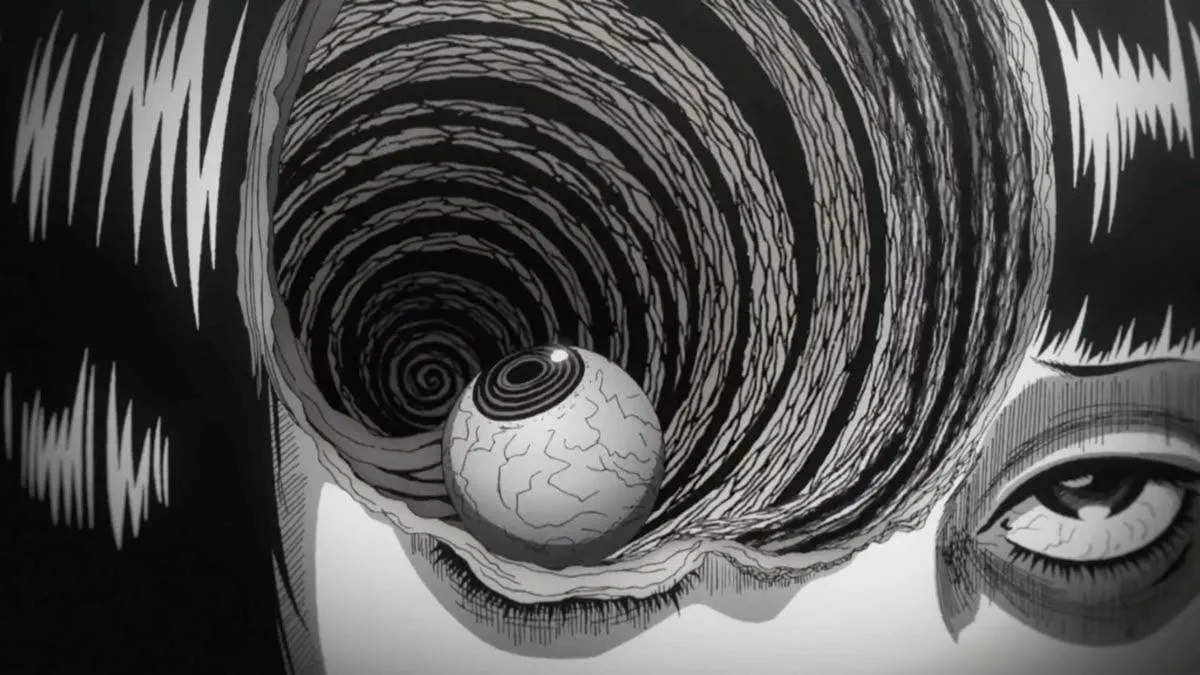
The press release for *Strange: Junji Ito’s Tales for Sleepless Nights* is a classic case of hope springing eternal. It points to the live-action format. It cites *The Twilight Zone* as a lineage. It mentions the first two episodes premiering at Anime Expo 2026. But the industry subtext is screaming something else. The subtext is that the last two attempts—Adult Swim’s *Uzumaki* and Netflix’s *Japanese Tales of the Macabre*—were massive failures. The press release calls them “far from perfect.” Let’s be honest. *Uzumaki* had a single good episode. The remaining four were a production disaster. The animation quality collapsed. The subtext here is that the market is running out of patience. The audience is conditioned to expect disappointment.
The official story is that *Strange* will be a live-action anthology. They’ve pulled stories from the *Masterpiece Collection*. Titles like *The Mansion of Phantom Pain* and *Face Thief*. This sounds great on paper. But the real intent is a desperate attempt to fix a broken formula. The anime format failed because it tried to replicate the static, detailed horror of Ito’s art with motion. Motion dilutes the fear. The horror in Ito’s work is in the frozen moment. The curl of the spiral. The sudden, wrong angle of a face. Animation forces movement, which destroys the dread. The subtext for *Strange* is that they think live-action will solve this. It won’t. Live-action introduces a new problem: real actors. Real faces. The uncanny valley of Ito’s monsters is impossible to cast. You can’t find an actor to play Tomie convincingly. The horror is in the drawn line, not the human performance.
The industry subtext here is a painful truth. Japanese studios and Western distributors are treating Ito’s catalogue like a content farm. They are mining it for IP. They are not respecting the medium-specific constraints. Think about the last time you saw a good adaptation of a Lovecraft story. It’s rare. Why? Because the horror is in the text, not the image. Ito’s horror is in the image. The image is the final product. You cannot “translate” it to television. You can only document it. The best approach would be a motion comic with minimal animation. Just slow pans across his panels. But that doesn’t sell subscriptions. So they push for full animation or live-action, and they fail.
So what is the commercial endgame here? The release says *Strange* will hit HBO Max this fall. The international audience is the target. This is a play for the American streaming market. They want to push Ito into mainstream pop culture. They want the Stephen King treatment. But Stephen King’s horror is narrative. It works in film because it’s about plot and character. Ito’s horror is visual. It’s about composition and texture. The blunt truth is that *Strange* will likely have the same problem. A few decent episodes. A lot of mediocrity. The only way this series redeems the previous blunder is if it completely abandons the idea of narrative adaptation. If it just shows the art. But they won’t do that. They will add dialogue. They will add plot. And they will water down the nightmare.
Author bio: Ethan Gallagher, a Silicon Valley Hardware Architect and Infrastructure Strategist who analyzes the structural limits of content delivery systems and creative production pipelines.