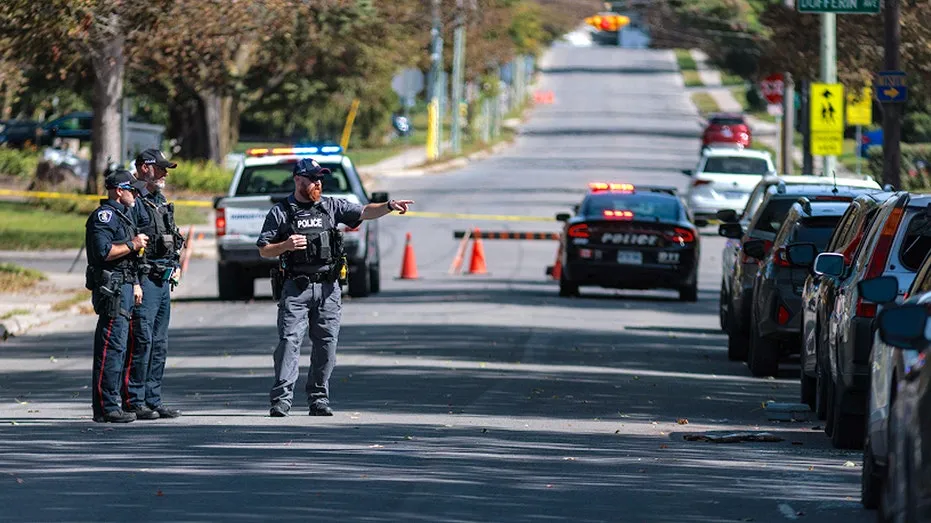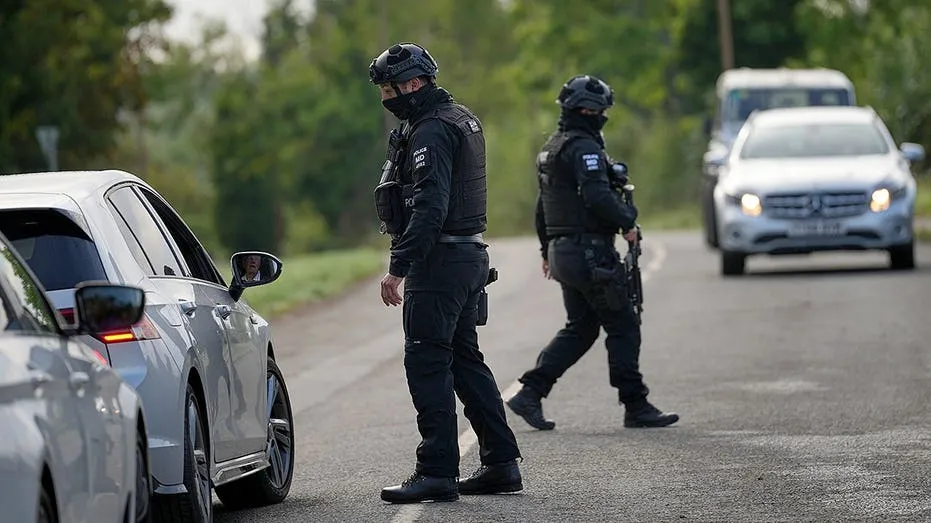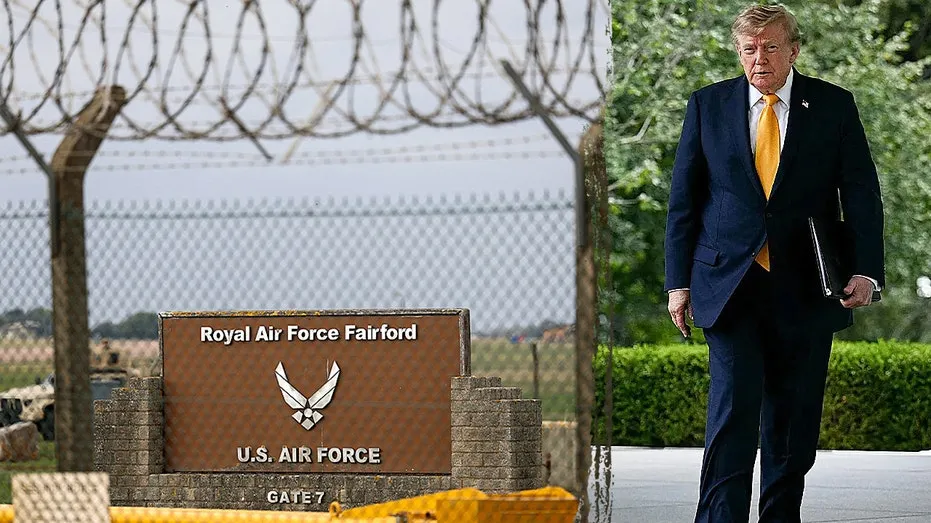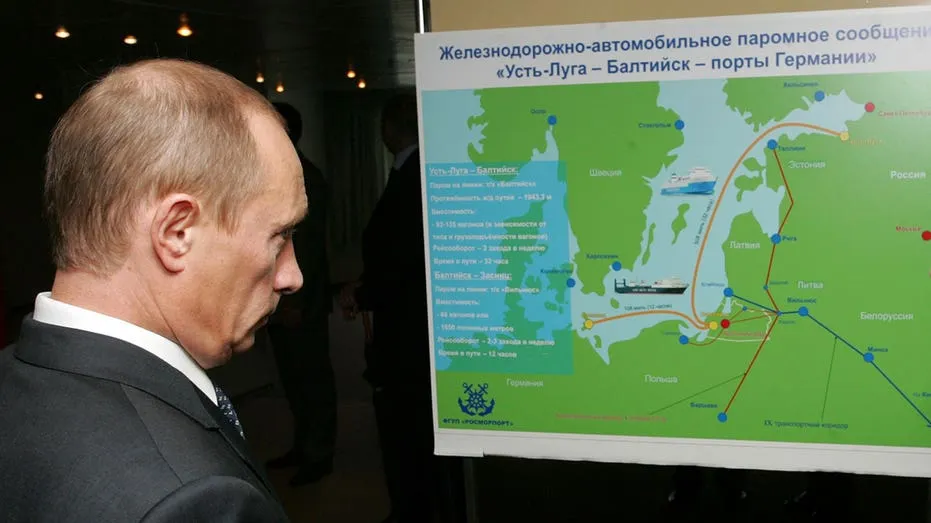
(SeaPRwire) - According to allegations, an 89-year-old gunman opened fire inside two government buildings in Athens on Tuesday, wounding at least four people. This rare outbreak of violence shook Greece’s tightly regulated gun landscape, and the incident ended with the suspect’s arrest several hours later. Police stated the suspect first stormed into a social security office, climbed to the fourth floor and opened fire, hitting an employee in the leg. Officials noted the gunman warned one worker to duck before pulling the trigger, though he did not appear to deliberately target the employee he struck. "He went in, climbed to the fourth floor, raised his shotgun, told an employee to duck and hit another one," Alexandros Varveris, head of Greece’s National Social Security Fund, told state broadcaster ERT radio. The wounded man received medical treatment on site, but the suspect fled, and later opened fire again inside a courthouse in another part of the city, where several more people were wounded. Authorities said at least three women, all working as court employees, suffered minor injuries from ricocheting pellets, while media reported that a fourth woman was taken to a hospital as a safety precaution. Surveillance video aired by local media showed a man walking calmly down the street carrying what appeared to be a short-barreled shotgun. Police later arrested the suspect near the city of Patra, around 130 miles west of Athens, and recovered the weapon used in the attacks. The motive of the attack remains unclear, though state media reported the man left documents behind at the courthouse that outlined his personal grievances. This article is provided by a third-party content provider. SeaPRwire (https://www.seaprwire.com/) makes no warranties or representations regarding its content. Category: Top News, Daily News SeaPRwire provides global press release distribution services for companies and organizations, covering more than 6,500 media outlets, 86,000 editors and journalists, and over 3.5 million end-user desktop and mobile apps. SeaPRwire supports multilingual press release distribution in English, Japanese, German, Korean, French, Russian, Indonesian, Malay, Vietnamese, Chinese, and more.
U.S. condemns Iran’s leadership post at UN nuclear conference as ‘beyond shameful’
(SeaPRwire) - On Monday, the United States, joined by the United Arab Emirates and supported by misgivings from key European powers, issued a sharp condemnation of the United Nations’ decision to grant Iran a leadership post at a major nuclear treaty conference. Iran’s selection as one of dozens of vice presidents for the month-long Nuclear Non-Proliferation Treaty review conference has reignited scrutiny of what critics describe as a recurring pattern of Iran gaining procedural legitimacy within international institutions, despite longstanding concerns over its nuclear activities. The clash broke out as the 11th Review Conference of the Nuclear Non-Proliferation Treaty kicked off at UN headquarters in New York, where Iran was named one of 34 vice presidents via the Non-Aligned Movement bloc. The conference brings together 191 parties to the treaty and is held every five years to review implementation of the pact, which is designed to prevent the spread of nuclear weapons. For the U.S. administration, the symbolic impact of the move was immediate and incendiary. "Rather than choosing to use this review conference to defend the integrity of the NPT and call Iran to account, we instead elect Iran a vice president," Christopher Yeaw, U.S. assistant secretary for arms control and nonproliferation, told delegates. "It is beyond shameful and an embarrassment to the credibility of this conference." The UAE and Australia publicly backed the U.S. objection, while Britain, France and Germany also voiced their concerns, forming a broader coalition than in earlier UN disputes, where the U.S. had often stood largely alone in challenging Iran’s procedural elevation. This diplomatic uproar follows a pattern previously highlighted by Digital. On April 13, the United Nations Economic and Social Council (ECOSOC) — a 54-member body that plays a central role in shaping UN policy and staffing key committees — nominated the Islamic Republic of Iran to the UN’s Committee for Program and Coordination, which helps develop policy on human rights, women’s rights, disarmament and counterterrorism. At that time, the United States was the only country to raise a formal objection. During Monday’s debate, Iranian envoy Reza Najafi rejected the criticism as "baseless and politically motivated," accusing the U.S. of hypocrisy and pointing to America’s own nuclear history while defending Tehran’s right to peaceful nuclear development. Russia also defended Iran, with Ambassador-at-Large Andrey Belousov speaking out against what he called the politicization of the conference. The Iranian mission to the United Nations declined to provide comment to Digital. UN spokesperson Stéphane Dujarric told Digital that the secretary-general "is not involved in any way in the election of Member States to leadership roles in various conferences or legislative bodies." "Member States are responsible for electing other Member States, and they must be accountable for the results of these elections," Dujarric stated. He added that the UN’s focus remains on addressing broader nuclear threats rather than the procedural controversy surrounding Iran’s appointment. "We strongly encourage all Member States participating in the Nuclear Non-Proliferation Treaty Review Conference to focus on what is most important: stopping the spread and threat of nuclear weapons, which remains a global threat," he said. Iran’s appointment comes amid heightened international concern over the trajectory of Iran’s nuclear program. Western governments and the International Atomic Energy Agency have raised alarms over Iran’s enrichment of uranium to near weapons-grade levels and ongoing disputes over inspection protocols, while Tehran insists its program is strictly for civilian use. Critics say the controversy exposes a structural contradiction at the core of the UN system: geopolitical blocs can elevate states under scrutiny to positions of procedural authority, even at conferences dedicated to the very norms those states are accused of violating. The last NPT review conference held in 2022 failed to produce a consensus document after Russia blocked the agreement, underscoring how divisions between major powers have increasingly paralyzed the treaty’s review process, according to The Associated Press. Hillel Neuer, executive director of UN Watch, told Digital the vote reflects what he described as a broader erosion of institutional credibility at the United Nations. "This is part of a disturbing trend," Neuer said. "Iran has been accumulating senior roles across the UN system, from human rights bodies to key committees. Each appointment chips away at the credibility of international institutions, reinforcing the perception that political deal-making outweighs basic standards of conduct." Reuters and This article is provided by a third-party content provider. SeaPRwire (https://www.seaprwire.com/) makes no warranties or representations regarding its content. Category: Top News, Daily News SeaPRwire provides global press release distribution services for companies and organizations, covering more than 6,500 media outlets, 86,000 editors and journalists, and over 3.5 million end-user desktop and mobile apps. SeaPRwire supports multilingual press release distribution in English, Japanese, German, Korean, French, Russian, Indonesian, Malay, Vietnamese, Chinese, and more.
Can King Charles rescue the increasingly fracturing ‘special relationship’ following Trump’s anger at Starmer over the Iran war?
(SeaPRwire) - As the UK publicly distances itself from President Donald Trump’s campaign to pressure Iran, King Charles III’s upcoming visit is shaping up to be more than just royal pageantry.It may serve as Britain’s most crucial diplomatic tool for preventing growing policy rifts with Washington from deepening into something more significant."The British monarch has historically held immense importance in fostering personal diplomacy to smooth over any ruffled feathers," Alan Mendoza, executive director of the Henry Jackson Society, a London-based think tank, told Digital. He argued that the Crown has often acted as Britain’s strategic stabilizer during periods of political strain.Mendoza stated that Charles could play a pivotal role at a time when Britain's Prime Minister Keir Starmer's government and Trump appear increasingly at odds over Iran, defense strategy, and the future direction of the transatlantic alliance."King Charles has the opportunity, through personal diplomacy, to forge a new beginning with Donald Trump," Mendoza commented.Britain’s delicate balancing act became more apparent on Monday when Deputy Minister Stephen Doughty publicly rejected US blockade tactics against Iran, while still affirming support for Washington’s broader objective of securing maritime traffic through the Strait of Hormuz."While the UK does not endorse the US blockade, it supports working with the United States and other nations to reopen the Strait of Hormuz," Doughty said ahead of a UN Security Council meeting, according to The Associated Press. He warned that Tehran must not be allowed to hold "the rest of the world to ransom."This divergence highlights London's effort to support US security objectives without fully endorsing Trump’s "economic fury" strategy, which aims to cripple Iran’s economy through aggressive maritime pressure.This policy difference has intensified scrutiny on whether Charles’ visit is now functioning as a diplomatic pressure release valve.A White House spokesperson emphasized the visit as a demonstration of the enduring personal rapport between the president and the monarch. "President Trump has always held great respect for King Charles, and their relationship was further strengthened by the president’s historic trip to the United Kingdom last year," White House spokesperson Anna Kelly told Digital. "The president enjoyed welcoming their majesties to the White House, and he looks forward to more special events throughout the week."Mendoza pointed to Queen Elizabeth II’s past interventions as evidence that the monarchy can sometimes achieve success where elected leaders falter.He cited Elizabeth’s significant role in easing tensions with Ireland and described royal diplomacy as uniquely positioned to build trust on a personal level."People often question the continued existence of the British monarchy in the 21st century," Mendoza remarked. "This is why."Nevertheless, Mendoza was careful not to overstate the king’s influence.Charles, he explained, is unlikely to directly impact specific policies concerning Iran, NATO, or military cooperation. Instead, his greatest value lies in shaping what Mendoza termed the "general mood music" regarding Trump’s willingness to engage."It's more a question of general mood music, which could make the president more receptive to interesting solutions," Mendoza suggested.This distinction could prove crucial.Rather than forcing policy alignment, Charles could help maintain the broader strategic atmosphere necessary for Washington and London to function as close allies, even when their elected governments disagree.For Britain, this could be particularly important as external analysts warn that the "special relationship" is facing increasing structural strain.In an analysis published on Monday, Council on Foreign Relations senior fellow Matthias Matthijs argued that while the royal visit offers "spectacle and ritual," it is unlikely to reverse what he described as the deeper unraveling of US-UK ties.Matthijs highlighted Trump’s consistent criticisms of Starmer regarding immigration, energy policy, and Britain's stance on the US-Israeli confrontation with Iran, suggesting that Charles may now be undertaking much of the diplomatic "heavy lifting" required to preserve British access to Trump.Meanwhile, constitutional scholars in Britain have also voiced concerns.Writing for the UK Constitutional Law Association earlier in April, Francesca Jackson cautioned that using the monarch as a diplomatic tool during periods of intense political volatility could expose the Crown to political backlash or "potential embarrassment," particularly if Charles is perceived as caught between Trump and Starmer.This risk reflects the broader stakes involved.If Trump embraces Charles while continuing to criticize Starmer, the visit could preserve royal rapport while highlighting political dysfunction, effectively establishing a separate diplomatic channel between Washington and the British Crown.However, for now, Mendoza contends, the monarchy's purpose is not governance, but rather access to the king, which may still offer a chance to prevent the relationship from fracturing beyond repair. Digital reached out to Prime Minister Starmer's office for comment. This article is provided by a third-party content provider. SeaPRwire (https://www.seaprwire.com/) makes no warranties or representations regarding its content. Category: Top News, Daily News SeaPRwire provides global press release distribution services for companies and organizations, covering more than 6,500 media outlets, 86,000 editors and journalists, and over 3.5 million end-user desktop and mobile apps. SeaPRwire supports multilingual press release distribution in English, Japanese, German, Korean, French, Russian, Indonesian, Malay, Vietnamese, Chinese, and more.
Iran is seeking revenge for Soleimani as WHCA Dinner shooting reveals security ‘vulnerability,’ expert warns
(SeaPRwire) - A former Defense Department intelligence officer has warned that the shooting at the White House Correspondents’ Association Dinner has uncovered a critical security vulnerability for President Donald Trump and other senior U.S. officials. Amid soaring tensions between Washington and Tehran and stalled ceasefire negotiations, Andrew Badger told Digital that the April 25 security breach could further boost Iran’s incentive to target Trump and other members of the administration. "This could reveal a weakness in the ability to access President Trump or senior government officials," Badger stated before cautioning about "significant vulnerabilities." "When you observe your adversary and spot their weaknesses, it also stokes your drive to act," he remarked before asserting that "Iran has the motive to strike at senior Trump officials, including President Trump." "Iran, which has a well-documented track record of employing criminals and proxy individuals, could certainly look at this as an opportunity." Chaos erupted at the Washington Hilton Hotel when a suspected gunman, identified as 31-year-old Cole Thomas Allen of Torrance, California, forced his way past a security checkpoint and opened fire. Trump and other administration officials were quickly evacuated from the ballroom as law enforcement responded to the scene. Allen is currently in custody and made his initial court appearance on Monday. The gathering included Trump, first lady Melania Trump, Vice President JD Vance, Speaker of the House Mike Johnson, journalists and senior administration officials — a concentration of leadership that Badger said presented significant risk. "The top three of the line of succession were at this single event," Badger noted. He added that "eight of the nine line-of-succession officials were at this single event," warning of a worst-case scenario: "If this individual had somehow worn a suicide vest, you could have eliminated all three of those individuals." "Imagine if there were multiple people. Imagine if he was wearing suicide vests. Imagine if he used some type of drone," Badger said, emphasizing the scale of potential exposure at a nonsecure venue. The incident, he said, unfolds against the backdrop of ongoing tensions with Iran, which have escalated amid U.S. and Israeli targeting of Iranian officials and leadership. Badger pointed to longstanding Iranian hostility tied to the 2020 killing of Qassem Soleimani, the commander of Iran’s Quds Force, who was killed in a U.S. drone strike near Baghdad International Airport ordered by Trump. "There has been a driving animus, a driving motivation in the Iranian regime — which they’ve stated publicly — to get revenge for that killing of Soleimani," said Badger, who served on the front lines of human intelligence operations, including a 2014 deployment to Afghanistan. After Soleimani was killed, Ayatollah Khamenei warned that those responsible for the attack would face "severe revenge," adding that the death would strengthen and intensify resistance against the United States and Israel. Badger warned that Iran and other adversaries have increasingly relied on unconventional tactics. "Iran and other state actors such as Russia have increasingly reverted to contracting criminals, or gangsters, to conduct hybrid warfare," he said. Following the incident, Trump underscored the need for more secure venues, advocating for a dedicated White House ballroom. "It’s got every single bell and whistle you can possibly have for security and safety... It’s really what you need," Trump said on "The Sunday Briefing." This article is provided by a third-party content provider. SeaPRwire (https://www.seaprwire.com/) makes no warranties or representations regarding its content. Category: Top News, Daily News SeaPRwire provides global press release distribution services for companies and organizations, covering more than 6,500 media outlets, 86,000 editors and journalists, and over 3.5 million end-user desktop and mobile apps. SeaPRwire supports multilingual press release distribution in English, Japanese, German, Korean, French, Russian, Indonesian, Malay, Vietnamese, Chinese, and more.
Significant setback for Putin in Africa as Russian troops expelled from Mali stronghold by separatists and jihadists
(SeaPRwire) - JOHANNESBURG: Reports are emerging from Mali of a significant defeat for Russia’s mercenary Africa Corps in clashes with jihadist and tribal militias. Fatal attacks by al Qaeda-affiliated rebels and predominantly Muslim Tuareg tribespeople across cities in the West African nation persisted on Monday, alongside reports that high-ranking members of Mali’s military junta have been killed or wounded.Analysts suggest this event might mark a pivotal moment for Moscow’s influence in West Africa. Russia has been extracting Mali’s valuable minerals—including gold—in exchange for vowing to defend the country against rebel groups. However, on Sunday, rebels claimed that Russian mercenaries had been compelled to retreat from their base in the northern city of Kidal."The attacks are a major blow to Russia", Ulf Laessing, who leads the Sahel program at the Konrad Adenauer Foundation, told the Associated Press. He added, "The (Russian) mercenaries had no intelligence about the attacks and were unable to protect major cities. They have unnecessarily worsened the conflict by not distinguishing between civilians and combatants."Digital has viewed footage of deceased soldiers who appear to be Russian, as well as Russian military vehicles allegedly leaving Kidal.The Defense News Nigeria outlet reported that Russia’s Africa Corps stated from Kidal: "they were heavily outnumbered by a ratio of 6 to 1," adding, "the Corps claimed that between 10,000 and 12,000 fighters were involved in yesterday’s attacks. There are 2,000 Russian mercenaries operating in Mali. The Malian government pays Wagner $10 million per month for security," according to the Nigerian publication.A Russian Telegram blog, claiming to be based in Kidal, stated on Monday: "the units of the African Corps that were stationed and fought in Kidal left this settlement together with the military personnel of the Malian army. First of all, wounded servicemen and heavy equipment were evacuated. The personnel continues to carry out the assigned combat mission. The situation in the Republic of Mali remains difficult."A representative for the Tuareg-led Azawad Liberation Front (FLA) told the Associated Press that Russian troops had withdrawn from the city following a "white" agreement. This claim has not been confirmed by either Mali’s government or Russia’s Ministry of Foreign Affairs.Russia's Ministry of Foreign Affairs said on its Telegram account: "two hundred and fifty militants attacked Bamako Senou International Airport and the military base located nearby. The Malian Armed Forces repelled the attack and are currently taking further steps to eliminate the militia that may have been, reportedly, trained by Western security agencies. Russia is deeply concerned about these developments. This terrorist activity poses a direct threat to the stability of friendly Mali and could have the most serious consequences for the entire region."Mali’s military junta— which first seized power in a 2020 coup— announced on Monday that Gen. Oumar Diarra, chief of the armed forces’ general staff, and Gen. Modibo Koné, director of the national security agency, have both been wounded in attacks.The government confirmed earlier that Sadio Camara— described as the second most important figure in Mali’s military junta— had been killed in the fighting. Camara served as Mali’s defense minister and is widely credited with bringing Moscow’s mercenary Africa Corps to assist in battling the militias.The rebels attempting to take control of Mali are said to be jihadists from Nusrat al-Islam (GSIM/JNIM) linked with FLA tribespeople and other groups, including at least one connected to the Islamic State. GSIM’s declared aim is to turn Mali into an al Qaeda-linked Islamic caliphate governed by strict Sharia law."The United States strongly condemns the terrorist attack in Mali," a State Department spokesperson told Digital on Monday, adding: "We extend our deepest condolences to the victims, their families, and all those affected. We stand with the Malian people and government in the face of this violence. The United States remains committed to supporting efforts to advance peace, stability, and security across Mali and the region."The U.S. Embassy in Mali warned on its website Sunday: "U.S. citizens should continue to shelter in place, remain alert, follow local news for updates, and avoid areas where security operations may be underway."On Monday, multiple reports indicated that Malian troops and Russian mercenaries have also been forced by rebels to withdraw from the northern Malian city of Tessit. At the time of publication, this had not been confirmed by the Malian government. This article is provided by a third-party content provider. SeaPRwire (https://www.seaprwire.com/) makes no warranties or representations regarding its content. Category: Top News, Daily News SeaPRwire provides global press release distribution services for companies and organizations, covering more than 6,500 media outlets, 86,000 editors and journalists, and over 3.5 million end-user desktop and mobile apps. SeaPRwire supports multilingual press release distribution in English, Japanese, German, Korean, French, Russian, Indonesian, Malay, Vietnamese, Chinese, and more.
Trump administration warns Iraq over Iran terror proxies amid reports of blocked US cash payments
(SeaPRwire) - The Trump administration has reportedly intensified its punitive actions to pressure Iraq into dissolving the Iranian-backed militias, known as the Popular Mobilization Force (PMF), which are integrated into its government. This follows persistent assaults on American personnel and assets.During a fragile ceasefire between the U.S. and Iran, the administration increased pressure on Iraq by halting shipments of U.S. dollars to Baghdad. The escalating policy disputes between the U.S. and Iraq may result in diminishing Iran's regional influence and further U.S. strategic objectives against Tehran.In a statement critical of Iraq's government, a State Department spokesperson told Digital, "The United States has been consistently clear that we will employ all necessary measures to counter Iran's destabilizing actions in Iraq, safeguard U.S. interests from Iran-aligned terrorist militias there, and express our concerns regarding the Iraqi government's inability to prevent such terrorism."The spokesperson continued, "While we recognize the attempts by Iraqi Security Forces to counter terrorist attacks from Iran-aligned militia groups, we must reiterate that the Iraqi government's failure to prevent these attacks, coupled with the ongoing political, financial, and operational support some government-linked elements provide to the militias, is harming the U.S.-Iraq relationship. The United States will not accept attacks on its interests and demands the Iraqi government act immediately to dismantle the Iran-aligned militia groups within its borders."Last week, The Wall Street Journal initially reported on the security and financial sanctions levied against Iraq. The report indicated the U.S. suspended security cooperation programs with Iraq's military and blocked "a cargo-plane delivery of nearly $500 million in U.S. banknotes, the proceeds from Iraqi oil sales held in Federal Reserve Bank of New York accounts." The publication noted this was the second instance of a blocked dollar delivery to the Central Bank of Iraq since the commencement of the U.S.-Israel conflict with Iran on February 28.The Treasury Department offered no comment on the withheld payments.An Iraqi official stated to Digital, "Iraq considers its relations with the United States a vital partnership founded on mutual interests and cooperation. Our joint decisive fight against ISIS demonstrates the depth and importance of this relationship."Regarding the pro-Iran militias, the Iraqi official said, "Concerning the matter of armed factions, it is crucial to understand that Iraq's situation is extremely complex, with intertwined political, security, and social aspects. Some of these groups also wield political and popular support. Therefore, resolving this issue demands cautious, step-by-step strategies based on a thorough grasp of the domestic landscape, aiming to reinforce state control, ensure only the state holds weapons, and preserve internal stability."The official added, "External actions that ignore the specifics of this reality could produce adverse results and disrupt internal equilibriums, undermining the stability initiatives pursued by Iraq and its partners, notably Washington."The PMF is a coalition of militias predominantly loyal to Iran, which the State Department labels the world's leading state sponsor of terrorism. PMF members have targeted U.S. assets in Iraqi Kurdistan and attacked Iraqi Kurds, a key U.S. ally in the Middle East.A senior Kurdish official told Digital, "Halting the dollar shipments is a severe Treasury Department measure, one the Americans have historically been hesitant to use. The Iraqis, for their part, have mistreated their partners—both the Americans and the KRG [Kurdish Regional Government], as this conflict has revealed—and now Washington is establishing a firm boundary."The Kurdish official said, "They have communicated that conditions for Iraq will deteriorate further if the militias restart attacks on U.S. interests, including within the Kurdistan Region. It is past time for the Americans to use this tool; for too long, it has enabled Iran to select a prime minister and set the terms, despite ongoing urging to reject Iran's proxies in Iraq."Officials from both Iraq and Kurdistan indicated the government is unstable as various factions maneuver to choose a new Iraqi prime minister.The Trump administration objects to the potential return of former Iraqi Prime Minister Nouri al-Maliki due to his strong connections to Iran.The Kurdish official highlighted the influence of the majority Shia population: "Ultimately, it is still the Shia political sphere that decides the premiership. They have some flexibility, but in the end, they will choose a candidate agreeable to both Iran and the United States. That is the dynamic—and America has traditionally responded to Iran's moves. This time, however, Washington seems determined to shape the result, not merely witness it."The official added, "This is particularly significant because Iraq relies on oil, and the revenue is held in the U.S. Federal Reserve and American banks. Washington's handling of those deposits affects the political process and reshapes the balance of power within the Shia political sphere. It is extremely consequential."Entifadh Qanbar, a former spokesman for an Iraqi deputy prime minister, warned of an urgent need for Prime Minister Mohammed Shia' al-Sudani to quickly dismantle the PMF, as it poses an immediate threat to the U.S. Embassy in Baghdad.He told Digital, "The Iraqi government also furnishes these groups with official state IDs, vehicles, and government license plates under the guise of the PMF framework. This enables them to freely enter Baghdad's high-security Green Zone and menace the U.S. Embassy or any Iraqi government institution."Highlighting the PMF's threat, the U.S. Department of Justice announced a $10 million reward on Monday for the leader of the pro-Iranian militia Harakat Ansar Allah al-Awfiya (HAAA). On Monday, the U.S. embassy posted on X that the pro-Iran militia "Harakat Ansar Allah al-Awfiya (HAAA) terrorists have carried out attacks throughout Iraq and the region, including the April 8 ambush of U.S. diplomats near Baghdad International Airport. HAAA terrorists persistently erode Iraqi sovereignty and endanger the safety of Iraqi and American civilians alike. We will not accept attacks on U.S. interests and anticipate all necessary steps will be taken to dismantle Iran-aligned terrorist militia groups in Iraq." This article is provided by a third-party content provider. SeaPRwire (https://www.seaprwire.com/) makes no warranties or representations regarding its content. Category: Top News, Daily News SeaPRwire provides global press release distribution services for companies and organizations, covering more than 6,500 media outlets, 86,000 editors and journalists, and over 3.5 million end-user desktop and mobile apps. SeaPRwire supports multilingual press release distribution in English, Japanese, German, Korean, French, Russian, Indonesian, Malay, Vietnamese, Chinese, and more.
Death toll from Colombia bus bombing rises to 20 amid wave of violence
(SeaPRwire) - Officials confirmed on Sunday that the death toll from a bombing in an unstable area of southwestern Colombia has increased to 20.According to Cauca regional governor Octavio Guzmán, the assault occurred Saturday after an explosive was set off on a bus on the Pan-American Highway in Cajibio. The victims include 15 women and five men.In a post on X, Guzmán stated that 36 other people were wounded, with three in intensive care. He added that five of those injured are children who are anticipated to make a full recovery.Specialists such as dentists, anthropologists, and forensic doctors from Colombia’s Institute of Legal Medicine are working to identify the deceased.This bombing marks the most recent in a series of assaults in the area, where over two dozen incidents have been recorded in the last three days. Illegal armed groups, which compete for dominance over coca farming zones and key drug trafficking routes to Central America and Europe, are active in the region.Colombia's armed forces commander, Gen. Hugo López, characterized the event as a "terrorist act." He attributed the attack to the network of "Iván Mordisco"—a top wanted individual in Colombia—and the Jaime Martínez faction. Both are splinter groups of the former Revolutionary Armed Forces of Colombia (FARC) operating locally.The U.N. High Commissioner for Human Rights denounced the attacks on civilians and urged authorities to probe the events and "ensure justice for the victims."On Sunday, Guzmán announced a three-day mourning period to honor the victims. This article is provided by a third-party content provider. SeaPRwire (https://www.seaprwire.com/) makes no warranties or representations regarding its content. Category: Top News, Daily News SeaPRwire provides global press release distribution services for companies and organizations, covering more than 6,500 media outlets, 86,000 editors and journalists, and over 3.5 million end-user desktop and mobile apps. SeaPRwire supports multilingual press release distribution in English, Japanese, German, Korean, French, Russian, Indonesian, Malay, Vietnamese, Chinese, and more.
Strait of Hormuz crisis propels $24 billion Iraq trade initiative as Gulf sea routes change
(SeaPRwire) - According to an analyst, the ongoing Strait of Hormuz crisis is pushing countries to accelerate development of alternative trade routes linking the Gulf to Europe, with Iraq’s $24 billion "Development Road" project leading these efforts. The corridor running from Iraq’s Grand Faw Port through Turkey and onward to Europe is advancing "with discipline," Muhanad Seloom, an analyst at the Middle East Council on Global Affairs, told Digital, describing the initiative as a "permanent" and "transformative" wartime shift. Seloom made these remarks as President Donald Trump warned Tehran against further escalating tensions in the Gulf, and indicated the U.S. is prepared to take action to keep the strait accessible. Iranian forces have placed mines and issued threats against commercial traffic in the narrow waterway. As of Sunday, the shipping route remains effectively closed to most traffic. "Iraq’s Development Road means every container moving through Basra instead of Iranian-controlled waters cuts down Tehran’s leverage over Iraq," Seloom said. "Independent estimates place the actual scale of the Development Road at close to $24 billion, and the project is now moving with discipline," he noted. Iraqi Prime Minister Mohammed Shia al-Sudani officially opened the first 63-kilometer section of the Development Road in 2025. The first phase of the project is scheduled for completion by 2028. "What the Iraqi government billed as a flagship of its statecraft now has a clear regional justification, with governments and financiers viewing it as essential rather than an aspirational goal," explained Seloom, who also works as an assistant professor at the Doha Institute for Graduate Studies. "Sudani appears to be positioning Iraq exactly where its geographic location has always suggested it belongs, as a connecting state between the Gulf, Turkey and Europe," he remarked. Seloom notes that other regional infrastructure projects are also being advanced in parallel alongside the Development Road. Saudi Arabia’s East-West Petroline pipeline is currently operating near its maximum 7 million-barrel-per-day capacity, with expansion plans currently under review. The UAE’s ADCOP pipeline leading to Fujairah is also running at full capacity, and discussions for a second parallel line are underway, he said. "Turkey’s Zangezur and Middle Corridors, which bypass Iran via the Caucasus, are four to five years away from completion." He added: "Six Gulf-backed overland fiber optic projects are also currently in progress, running across Syria, Iraq and the Horn of Africa." Iran reinstated closure measures for the Strait of Hormuz on April 18, cutting daily traffic down to just a small number of vessels, compared to the pre-war average of roughly 130 to 140 ships per day. These restrictions, which apply to commercial ships, have faced widespread criticism in recent days, and vessel interceptions in the area date back to the start of the war on February 28, when Tehran first moved to block transit following U.S.-Israeli strikes. "Hormuz remains irreplaceable for global energy trade, but it is no longer treated as the default route. That shift is permanent as a result of the war," Seloom stated. Seloom said Iraq’s corridor is "potentially transformative," with projected annual transit revenue of $4 billion, and will support Iraq’s repositioning from an oil-dependent rentier state to a regional logistics hub. "Turkey will be the single largest beneficiary. Combined with the Zangezur and Middle Corridors, Ankara becomes the primary overland bridge between Asia and Europe," he said. "Europe will gain an additional overland trade option on a timeline starting after 2028, but there will be no relief for the current crisis from these projects. They will marginally reduce Europe’s structural dependence on the unreliable Suez–Red Sea trade axis." This article is provided by a third-party content provider. SeaPRwire (https://www.seaprwire.com/) makes no warranties or representations regarding its content. Category: Top News, Daily News SeaPRwire provides global press release distribution services for companies and organizations, covering more than 6,500 media outlets, 86,000 editors and journalists, and over 3.5 million end-user desktop and mobile apps. SeaPRwire supports multilingual press release distribution in English, Japanese, German, Korean, French, Russian, Indonesian, Malay, Vietnamese, Chinese, and more.
Iran turmoil escalates: A hardliner mocking Trump contends with nuclear talks
(SeaPRwire) - According to reports, new signs of upheaval have emerged within Iran’s negotiating team for talks with the United States, as hardliner Mohammad Bagher Ghalibaf is widely expected to be replaced by a veteran conservative known for rejecting any nuclear concessions. Iran International reported on April 24 that 60-year-old Saeed Jalili — who already leads what has been described as a "shadow government" — is anticipated to take over Ghalibaf’s role after Ghalibaf’s sudden exit amid internal political disputes. Jalili also leads Iran’s ultra-hardline political faction called the Stability Front (Paydari), which is labeled a "bastion of ultraconservatism in Iran," per multiple reports. Ali Safavi, an official with Iranian opposition coalition the National Council of Resistance of Iran (NCRI), told Digital that Jalili "has developed from a simple nuclear negotiator into a highly influential actor within the ruling regime." Reports note Ghalibaf was forced to step down after he tried to add the nuclear issue to the agenda of talks with Washington, a move that sparked strong backlash within Iran’s political establishment. Former U.S. President Donald Trump canceled plans for U.S. envoys to travel to Pakistan for peace talks with Iran on April 25. The power struggle between Jalili and Ghalibaf is said to stretch back more than 10 years, and grew much more intense during the 2024 Iranian elections, when Jalili refused to drop out of the race. This split ultimately helped contribute to President Masoud Pezeshkian’s election victory. Safavi said, "The growing visibility of previously hidden internal divisions comes from repeated nationwide uprisings, deep economic crises and the pressures of war, all of which have intensified internal feuding. "Far from signaling any sort of systemic transformation, these developments show accelerating erosion and mounting pressure on the regime, deepening internal fractures and leaving the regime increasingly weaker and more vulnerable," he added. Sources add that Foreign Minister Abbas Araghchi is also seeking to retain a leading role in the nuclear negotiations, highlighting the competing centers of influence shaping Iran’s overall diplomatic strategy. Araghchi is currently in Islamabad, Pakistan, after returning from a short trip to Muscat, Oman, where he held high-level diplomatic talks on the ongoing conflict. Reports indicate Araghchi will next travel to Moscow. Jalili’s potential appointment, however, points to a clear hardening of Iran’s negotiating stance, with far more emphasis placed on resistance rather than compromise. "Within this regime, there are a number of core positions shared by every faction," Safavi said before highlighting that these core positions are "repression, the export of terrorism and the pursuit of nuclear weapons." "All factions ultimately follow the same core path: holding onto power. They differ only in their methods, not in their end goals," Safavi cautioned. Jalili, for his part, served as Iran’s top nuclear negotiator from 2007 to 2013 under President Mahmoud Ahmadinejad, and later ran for president three times. He also previously served as secretary of Iran’s Supreme National Security Council. A former member of the Islamic Revolutionary Guard Corps (IRGC), Jalili lost his right leg at age 21 during the Iran-Iraq War, which earned him the title of "Living Martyr." The Paydari Front, which Jalili is affiliated with, opposes any engagement with the West — particularly the 2015 nuclear deal — and advocates for a doctrine of "active resistance." During Hassan Rouhani’s presidency, Jalili established a "shadow government" to push back against the Rouhani administration’s policies, especially the 2015 nuclear deal. On April 7, Jalili wrote on X: "Yes — the ‘infrastructure’ of American domination and the U.S.-led order is on the verge of collapse; once it falls, a far better foundation will be built in its place." A day before that post, he shared: "Telling Trump to ‘shut up’ is not the right response to his ramblings; let him keep talking. Nothing exposes the true nature of the United States more effectively than Trump’s outbursts." "When dealing with this regime," Safavi said, "we must remember that in the 45 years since mullahs consolidated their rule in 1981 by crushing all peaceful political activity, so-called reformists have governed for nearly half that time — and presided over some of the regime’s darkest crimes." "These crimes include the 1988 massacre of 30,000 political prisoners, the assassination of dissidents abroad, the serial murders of intellectuals inside Iran, and the relentless pursuit of nuclear weapons." This article is provided by a third-party content provider. SeaPRwire (https://www.seaprwire.com/) makes no warranties or representations regarding its content. Category: Top News, Daily News SeaPRwire provides global press release distribution services for companies and organizations, covering more than 6,500 media outlets, 86,000 editors and journalists, and over 3.5 million end-user desktop and mobile apps. SeaPRwire supports multilingual press release distribution in English, Japanese, German, Korean, French, Russian, Indonesian, Malay, Vietnamese, Chinese, and more.
World leaders denounce ‘unacceptable’ violence following an armed attack that disrupted the WH Correspondents’ Dinner
(SeaPRwire) - Leaders from around the world quickly denounced political violence and voiced relief that President Donald Trump remained unhurt following a chaotic armed assault that interrupted the White House Correspondents’ Association Dinner in Washington, D.C., on Saturday evening.Reactions from these leaders flooded in on X after an individual carrying guns and knives rushed into the lobby of the Washington Hilton and ran toward the ballroom—where Trump, legislators, journalists, and foreign officials were assembled—leading Secret Service agents to fire shots and attendees to take cover under tables.The suspect—subsequently identified as 31-year-old Cole Allen from Torrance, California—was arrested, and Trump was quickly escorted offstage without injury. Authorities stated that the suspect was a guest at the Washington Hilton (the venue for the dinner) and was apprehended at the site. He is scheduled to appear in court on Monday.In their comments, global leaders highlighted two key points: solidarity with the U.S. and worry about the increasing tide of political violence.French President Emmanuel Macron labeled the event "unacceptable," noting that "violence has no role in a democracy" and offering "full support" to Trump.Italian Prime Minister Giorgia Meloni mirrored that view, cautioning against political extremism."Political hatred has no place in our democracies," she stated, adding that democratic countries must prevent "fanaticism from contaminating spaces for free discussion and information."Indian Prime Minister Narendra Modi expressed relief that Trump, the first lady, and Vice President JD Vance were safe, underscoring that violence "must be clearly and unconditionally condemned."European leaders shared a comparable stance. British Prime Minister Keir Starmer said he was "shocked by the events," describing the attack as one that should be "condemned in the most forceful way," especially since it targeted a prominent democratic gathering.UK Foreign Secretary Yvette Cooper stated she was "appalled," noting that democracies need to "unite against political violence."NATO Secretary General Mark Rutte characterized the incident as a wider threat to democratic systems, terming it "an attack on our free and open societies" and reaffirming solidarity with the U.S.Israeli Prime Minister Benjamin Netanyahu referred to the incident as an "attempted assassination," even though U.S. officials have not publicly labeled it that way. He and his wife were "shocked," he said, and he commended U.S. security forces for their "quick and decisive response." Additionally, he wished a fast recovery to a police officer who was shot in a bulletproof vest during the clash.From the Western Hemisphere, Canadian Prime Minister Mark Carney expressed relief that all participants were safe but called the incident a "disturbing event," while Mexico’s President Claudia Sheinbaum simply stated: "Violence should never be the solution."Argentine President Javier Milei released one of the most forceful statements, denouncing what he called a "new assassination attempt" and connecting the attack to "the left’s violent rhetoric worldwide." U.S. authorities have not verified his description.Leaders outside the traditional Western alliance also commented. Venezuela’s acting president, Delcy Rodríguez, stated her government "strongly condemns" the attack and stressed that "violence is never an option." Meanwhile, European Commission Vice President Kaja Kallas pointed out the venue’s symbolic significance, noting that "an event intended to honor a free press should never turn into a place of fear."Australian Prime Minister Anthony Albanese lauded U.S. law enforcement and Secret Service agents for their "quick action" in controlling the situation.This attack is the latest in a series of security threats against Trump since 2024, and it will probably increase scrutiny of security measures at large public events featuring the president. It is also expected to reignite discussions about the growing problem of political violence in the U.S.Officials report that the suspect acted alone, and they have not yet determined a motive. FBI agents and local law enforcement officers went to the suspect’s Torrance residence on Saturday night. This article is provided by a third-party content provider. SeaPRwire (https://www.seaprwire.com/) makes no warranties or representations regarding its content. Category: Top News, Daily News SeaPRwire provides global press release distribution services for companies and organizations, covering more than 6,500 media outlets, 86,000 editors and journalists, and over 3.5 million end-user desktop and mobile apps. SeaPRwire supports multilingual press release distribution in English, Japanese, German, Korean, French, Russian, Indonesian, Malay, Vietnamese, Chinese, and more.
Experts Note Regime’s Collapse in Strategy and US Labeled “Evil” Retained
(SeaPRwire) - Just days after Iran’s leadership presented a unified front—undermining the long-discussed moderate-versus-hardliner divide—President Donald Trump canceled planned talks with Tehran in Islamabad, Pakistan, citing "infighting and confusion" inside the regime.Iranian-American experts argue that social media posts from Iran’s new Supreme Leader Mojtaba Khamenei, President Masoud Pezeshkian and other key officials reveal the collapse of the "good cop, bad cop" tactic the regime used to deceive adversaries and secure generous concessions in nuclear negotiations.In a Saturday Truth Social post, Trump announced he had canceled the trip, citing "too much time wasted on traveling" and "too much work!""Besides which, there is tremendous infighting and confusion within their ‘leadership,'" the president added, noting "nobody knows who is in charge, including them.""Also, we have all the cards, they have none!" Trump wrote. "If they want to talk, all they have to do is call!!!"Experts say the collapse of the hardline-moderate split within the regime could have profound consequences for Trump’s approach to the nuclear talks in Islamabad. Last week, Trump appeared to allude to an unclear division between Iran’s factions."Iran is having a very hard time figuring out who their leader is! They just don’t know! The infighting is between the ‘Hardliners,’ who have been losing BADLY on the battlefield, and the ‘Moderates,’ who are not very moderate at all (but gaining respect!), and it is CRAZY!" Trump wrote in a Thursday X post.Iran’s Supreme Leader Khamenei quickly fired back, claiming "due to the strange unity created among compatriots, a fracture has occurred in the enemy.""With practical gratitude for this blessing, cohesion has become even greater and more steel-like, and the enemies will become more wretched and diminished," Khamenei wrote in a reply. "The enemy's media operations, by targeting the minds and psyches of the people, intend to undermine national unity and security; may our negligence not allow this sinister intent to come to fruition."Mariam Memarsadeghi, a senior fellow at The Macdonald-Laurier Institute and founder/director of the Cyrus Forum for Iran's Future, told Digital the Islamic Republic has fooled Western policymakers for decades by sending moderates to negotiations as "window dressing for its terror and subjugation."These officials would then tell their counterparts they were under pressure from hardliners, implying the West must make concessions to strengthen them internally."Because of the war, the Trump administration is in a remarkably advantageous situation vis-à-vis the imperial terror state, one never before attempted, much less achieved," Memarsadeghi said. "But every time Trump says regime change has already happened, he denies America the opportunity to finally, truly be rid of the world’s top sponsor of terror and the existential threat it poses not just to the people of Iran but to all the world."Navid Mohebbi, a former Persian media analyst for the State Department's Public Affairs Bureau, cautioned that while rivalries and factions exist within the Islamic Republic, they are united on the regime’s core principles."Their disagreements are primarily over tactics, not fundamental direction," Mohebbi told Digital, stressing real decision-making power in Iran has always rested with the supreme leader and the Islamic Revolutionary Guard Corps (IRGC)."So-called moderates have never had the final say on key strategic issues and are often used to soften the regime’s image abroad," he said. "From the Iranian people’s perspective, there has been little difference. Across administrations labeled 'moderate' or 'hardline,' the system has consistently relied on repression."Mohebbi cited former Iranian President Hassan Rouhani, who presented himself as a moderate but whose security forces violently killed 1,500 protesters during the November 2019 uprising."The same pattern has continued under Masoud Pezeshkian in the January 2026 protest massacre, reinforcing the reality that these labels have not translated into meaningful change on the ground," he said.A regional official, however, insisted there are clashes between moderates and hardliners in Iran. The official told Digital Pezeshkian is a moderate but "could not even make good on his campaign promise regarding internet freedom. To be honest, he’s not even been able to do s---.""The joint reaction by the heads of the three branches of power was in response to Trump’s reference to the issue of rift, and also to the fact that there are indeed hardliners and moderates," the official added. "Look, whenever Iran wants to make concessions, they throw moderates under the bus so that the moderates make a deal, and then, the hardliners blame them for the same concessions all of them had agreed to make."Lawdan Bazargan, imprisoned by the Islamic Republic in the 1980s for political dissident activities, told Digital what officials are seeing now is not the disappearance of the divide but the exposure of its true nature."In reality, all of these figures — Mohammad-Bagher Ghalibaf [speaker of Iran’s parliament], Saeed Jalili [member of the Expediency Discernment Council], Pezeshkian, Ahmad Vahidi [head of the IRGC], Gholam-Hossein Mohseni-Ejei [head of Iran’s judiciary] — operate within the same ideological framework," Bazargan said. "They are all committed to the preservation of the system, the projection of power in the region, and confrontation with what they define as ‘the forces of evil,’ namely the United States and Israel." This article is provided by a third-party content provider. SeaPRwire (https://www.seaprwire.com/) makes no warranties or representations regarding its content. Category: Top News, Daily News SeaPRwire provides global press release distribution services for companies and organizations, covering more than 6,500 media outlets, 86,000 editors and journalists, and over 3.5 million end-user desktop and mobile apps. SeaPRwire supports multilingual press release distribution in English, Japanese, German, Korean, French, Russian, Indonesian, Malay, Vietnamese, Chinese, and more.
Latin American leftist leaders gather in Spain, indicating challenge to US influence in the region
(SeaPRwire) - MEXICO CITY: A recent significant meeting of leftist leaders in Barcelona, organized by Spain’s socialist Prime Minister Pedro Sánchez, is attracting considerable attention for what observers interpret as a broader geopolitical strategy that could potentially counter U.S. influence throughout Latin America and beyond.The summit included Brazil's President Lula da Silva, Colombia's Gustavo Petro, and Mexico's Claudia Sheinbaum. While presented as a forum to address issues such as inequality, climate change, and the rise of right-wing political movements, the discussions have prompted questions in Washington and across the region regarding the potential formation of a more unified political bloc to counterbalance the United States.Without directly naming the Trump administration, Sánchez voiced concerns about the "normalization of the use of force" and "attempts to undermine international law," thereby criticizing U.S. foreign policy. He also advocated for reforms to global institutions, asserting that the current system no longer reflects contemporary geopolitical realities, a stance that implicitly challenges the long-standing leadership of the U.S. within these bodies."The Barcelona summit signifies a deliberate effort by Pedro Sánchez to establish himself as a prominent figure within a developing progressive coalition that is increasingly critical of U.S. foreign policy under President Trump," stated Juan Angel Soto, founder and CEO of Fortius Consulting, to Digital."This positioning is particularly intricate given Spain's fundamental ties to both the European Union and NATO, which traditionally align it closely with Washington. Nevertheless, Sánchez has simultaneously strengthened relationships with the Global South, as evidenced by his growing closeness with China, as well as with leaders like Lula, Sheinbaum, and Petro, suggesting a two-pronged foreign policy aimed at achieving greater independence from U.S. influence," Soto added.The Colombian leader directly linked global tensions to economic and energy systems, arguing that reliance on fossil fuels has exacerbated conflict and inequality, an argument that resonates with broader critiques of Western-led economic models.Roberto Salinas León, Director of International Affairs at Universidad de la Libertad in Mexico City, commented to Digital: "The misnamed summit 'In Defense of Democracy' held in Barcelona brought together prominent 'progressives' with the objective of assembling a global contingent opposed to, well, Trump 2.0. How convenient.""Petro declared that ‘Latin American progressivism is a ray of hope for a humanity in crisis.’ Yet these supposed champions of democracy have supported such brutal dictatorships as Cuba, Nicaragua, Maduro’s Venezuela, Iran, and others. This gathering is more accurately described as a political facade for electoral autocracies, with each leader undermining the institutional checks and balances of open liberal democracies," he asserted.Brazil's Lula criticized what he termed interventionist policies by major global powers and called for a recalibration of global governance, including modifications to the U.N. Security Council. At one point, he characterized recent U.S. leadership as a contributor to global instability, reinforcing a central theme of the summit: the need to redefine the current international order."The new Cold War is being fought between China and the United States; this very rivalry is at stake in every country participating in the summit. Lula's concern about the resurgence of the right has become undeniably clear, particularly when observing Argentina and Chile, where the victories of Milei and Kast have heralded 'winds of change.' We are, quite literally, living through times reminiscent of the fall of the Berlin Wall, specifically, the collapse of ‘21st-century socialism’ across Hispanic America, and this is precisely what has them so worried," said Brazilian political analyst Sandra Bronzina to Digital."When the global progressive left criticizes the United States, speaking of sovereignty and peace, or denouncing war, they are not acting out of pure altruism or good intentions. Instead, they are motivated by a hidden self-interest: ensuring that China continues its colonization of our nations, a process that is, evidently, already well underway."Mexico's Sheinbaum emphasized the principle of national sovereignty, echoing Latin America's long-standing focus on non-intervention. She joined other leaders in opposing sanctions on countries like Cuba, indicating a readiness to coordinate positions that significantly diverge from U.S. policy in the region.Collectively, analysts suggest that the discourse emanating from Barcelona points to the nascent stages of a loosely coordinated bloc, one that is increasingly prepared to challenge U.S. stances on global governance, regional policy, and economic strategy.However, even as leaders in Barcelona warn of a growing right-wing threat, the political realities across the Americas present a different narrative, one that might resonate more directly with U.S. audiences.In Argentina, extensive economic reforms centered on deregulation and fiscal discipline have garnered international attention as an alternative to state-led models. In El Salvador, stringent security measures have led to a significant reduction in violence. And in Ecuador, a renewed emphasis on law and order and institutional control is emerging as a response to escalating cartel-related violence.Analysts contend that these examples highlight a counterpoint to the Barcelona narrative, suggesting that a substantial portion of the region is shifting towards policies focused on security, market reforms, and stronger state authority—priorities that often align more closely with U.S. strategic interests.Experts note a striking contrast. On one hand, a group of leaders in Barcelona is advocating for a reevaluation of global systems long associated with U.S. leadership. On the other, governments throughout the hemisphere are exploring approaches that prioritize economic liberalization and robust security measures. This article is provided by a third-party content provider. SeaPRwire (https://www.seaprwire.com/) makes no warranties or representations regarding its content. Category: Top News, Daily News SeaPRwire provides global press release distribution services for companies and organizations, covering more than 6,500 media outlets, 86,000 editors and journalists, and over 3.5 million end-user desktop and mobile apps. SeaPRwire supports multilingual press release distribution in English, Japanese, German, Korean, French, Russian, Indonesian, Malay, Vietnamese, Chinese, and more.
US Embassy in London Warns to ‘Exercise Increased Caution’ Near Jewish Sites in the UK and Europe Following Attacks
(SeaPRwire) - On Friday, the U.S. Embassy in London issued a warning to American citizens, advising them to "exercise increased caution" when visiting Jewish and American-related locations across the U.K. and Europe due to a recent uptick in threats.The alert stated: "The U.S. Embassy in London has observed recent attacks and threats directed at Jewish and American institutions in the United Kingdom and Europe. U.S. citizens—especially those visiting facilities catering to Jewish or American interests—should stay vigilant and exercise heightened caution."Additionally, the embassy recommended that Americans remain alert in tourist spots, expat communities, and places of worship; review their personal security strategies; and monitor local media for the latest updates.Citizens with concerns can also sign up for the U.S. State Department’s Safe Traveler Enrollment Program (STEP) to receive travel and security notifications.This advisory came in the wake of several recent antisemitic incidents in the U.K. and Europe, including a March 23 arson attack on four ambulances linked to a Jewish charity in London, an April 18 assault on the Kenton United Synagogue in London, and a March explosion at a Jewish school in Amsterdam—an incident authorities described as a "targeted attack against the Jewish community."While no one was injured in these events, the Amsterdam school sustained damage.According to GB News, U.K. officials are investigating whether Iran-backed "thugs for hire" are inciting the attacks in London.Prime Minister Keir Starmer told the Jewish Chronicle: "Regarding malign state actors in general, we need legislation for proscription to take necessary actions—and we’re working to introduce that legislation as quickly as possible." This article is provided by a third-party content provider. SeaPRwire (https://www.seaprwire.com/) makes no warranties or representations regarding its content. Category: Top News, Daily News SeaPRwire provides global press release distribution services for companies and organizations, covering more than 6,500 media outlets, 86,000 editors and journalists, and over 3.5 million end-user desktop and mobile apps. SeaPRwire supports multilingual press release distribution in English, Japanese, German, Korean, French, Russian, Indonesian, Malay, Vietnamese, Chinese, and more.
Hamas’s influence casts a shadow over Gaza elections as experts warn the vote could backfire
(SeaPRwire) - On Saturday, residents of Deir al-Balah in Gaza will head to the polls to vote for new local leaders for the first time in 22 years — a step experts warn could give Hamas more space to sustain its influence, as the group refuses to abide by ceasefire disarmament requirements. Jonathan Schanzer, executive director of the Foundation for Defense of Democracies, told Digital that "holding elections in the Palestinian Authority at an inopportune time, when conditions remain uncertain, will result in Hamas winning electoral victories." Schanzer noted that the Bush administration’s 2006 push to support elections "resulted in Hamas securing electoral wins, which sparked a political standoff that eventually led to civil conflict," and added that "extreme caution is essential when organizing elections in a region like Gaza, where Hamas holds extensive control and terrorist groups are still viewed as legitimate political actors." Gazan journalists and media workers continue to be labeled as members of terrorist groups after their deaths, underscoring the challenge of differentiating terrorist affiliates from ordinary civilians. Four political parties are running in the Deir al-Balah election. Per reporting from the Center for Peace Communications, candidates were required to endorse the Palestine Liberation Organization and abide by its previously signed agreements, including recognizing the State of Israel and supporting a two-state solution. Yet many observers are concerned that one of the participating parties, Deir al-Balah Unites Us, has ties to Hamas. Two of its candidates have been photographed alongside Hamas officials or police officers. Ahmed Fouad Alkhatib, a resident senior fellow at the Atlantic Council, posted on X that "holding elections in Gaza at this moment is deeply reckless and irresponsible," pointing out that "Gazans are being arrested, imprisoned, tortured, shot, and killed every day for social media posts or any remarks deemed critical of Hamas. These elections should be stopped and blocked from moving forward, as they interfere with the transition plan for Gaza that the Board of Peace, [National Council for the Administration of Gaza], and the international community have outlined — a plan where Hamas disarming and giving up its power is the first essential step." Hamas disarmament, a core requirement in the second phase of former President Donald Trump’s ceasefire deal, has not yet been completed. As of March, reports show that Hamas has strengthened its control over Gaza, continuing to levy taxes on local residents, build educational infrastructure, and deploy police across the territory it controls. Schanzer stated that Hamas is unlikely to fully surrender its weapons. Should the group choose to do so, he noted, it "will attempt to draw distinctions between different types of arms," potentially offering to hand over heavy weapons such as RPGs while retaining a large stockpile of automatic firearms. Hamas has seemingly put forward a partial disarmament proposal. On April 19, The New York Times reported that two Hamas officials stated they would turn over thousands of weapons from their police force and other security agencies. When asked whether weapons from Hamas’s so-called military wing would be part of this handover, the officials "failed to give a clear response." Schanzer pushed back against assertions that Hamas’s political and military wings operate independently. "That is a falsehood. The notion that they are separate in any respect, or that there is a clear barrier between them, is ridiculous." He explained that this is "a distinction invented by the West so that it can maintain political ties with Hamas or justify holding elections, and it is a mistake to embrace that false narrative." Schanzer argued that weakening Iran is critical to reducing Hamas’s influence. "I cannot overstate how significant the psychological impact would be if their primary sponsor were defeated on the battlefield," he noted. "That would be a devastating blow to Hamas." With Israel controlling roughly 53% of the Gaza Strip and Hamas holding the remaining 47%, Schanzer said "we could continue to see Hamas’s control slip" during the "slow, steady process of Israel making territorial and operational gains on the ground." He emphasized that patience is necessary, adding that "the foes of the U.S., Israel, and the West have a much slower timeline. They aim to outwait everyone because they know we want to move past this conflict." The Trump administration did not respond to Digital’s inquiries regarding whether a partial disarmament would meet its ceasefire requirements, or if the administration would take steps to delay the elections until Gaza achieves greater stability. This article is provided by a third-party content provider. SeaPRwire (https://www.seaprwire.com/) makes no warranties or representations regarding its content. Category: Top News, Daily News SeaPRwire provides global press release distribution services for companies and organizations, covering more than 6,500 media outlets, 86,000 editors and journalists, and over 3.5 million end-user desktop and mobile apps. SeaPRwire supports multilingual press release distribution in English, Japanese, German, Korean, French, Russian, Indonesian, Malay, Vietnamese, Chinese, and more.
US sanctions Chinese refinery in expanded Iran oil crackdown, targets ‘shadow fleet’ tankers
(SeaPRwire) - The U.S. Treasury's Office of Foreign Assets Control (OFAC) imposed sanctions on Friday against a significant Chinese oil refinery and numerous vessels associated with Iran's "shadow fleet," intensifying a push to sever Tehran's principal income stream.In a statement, officials stated the action focuses on Hengli Petrochemical, a top purchaser of Iranian oil, as well as a web of shipping firms and tankers that move petroleum products valued in the billions of dollars to international markets.The Treasury Department described these "shadow fleet" ships as the crucial financial support for Iran's "unstable regime."This enforcement is a component of the Economic Fury initiative, a wider strategy to pressure Iran's economy by restricting its overseas oil sales, income which the U.S. claims finances the regime's military and disruptive actions in the Middle East."Economic Fury is applying a financial chokehold on the Iranian regime, impeding its aggression in the Middle East and aiding in restraining its nuclear ambitions," stated Treasury Secretary Scott Bessent.Hengli Petrochemical (Dalian) Refinery Co. is a Chinese "teapot" refinery, a label for independent plants recognized for buying cut-price crude oil, sometimes from nations under sanctions.This refinery, among China's biggest independent operators, has been taking deliveries of Iranian oil from sanctioned shadow fleet tankers since at least 2023. Hengli has also bought oil connected to Iran's armed forces, producing hundreds of millions in revenue for the Iranian military.Hengli has additionally accepted shipments linked to Sepehr Energy Jahan Nama Pars Company, an entity U.S. authorities have designated as a cover for Iran's armed forces that assists in enabling foreign oil sales.The firm acts for Iran’s Armed Forces General Staff, employing a system of middlemen and ships to transport sanctioned crude, with the profits aiding the funding of the nation's military initiatives and regional proxy forces.The fresh sanctions also aim at the system enabling these oil transactions: a "shadow fleet" comprising older tankers and shell corporations that shuttle petroleum worldwide while dodging sanctions and concealing shipment origins.These vessels elude discovery by moving cargo between tankers at sea. Treasury officials reported that 19 ships were designated in this measure.This step forms part of the Trump administration's revived "maximum pressure" strategy on Iran, intended to block the regime's chief revenue source from oil exports through sanctions enforcement.U.S. authorities state oil exports continue to be the foundation of Iran's economy, and measures to constrain these shipments are meant to reduce the government's capacity to finance its military, back proxy groups, and progress its nuclear agenda.Treasury officials cautioned that more sanctions are probable as the U.S. persists in focusing on the networks, intermediaries, and purchasers that allow Iran to market its oil globally. This article is provided by a third-party content provider. SeaPRwire (https://www.seaprwire.com/) makes no warranties or representations regarding its content. Category: Top News, Daily News SeaPRwire provides global press release distribution services for companies and organizations, covering more than 6,500 media outlets, 86,000 editors and journalists, and over 3.5 million end-user desktop and mobile apps. SeaPRwire supports multilingual press release distribution in English, Japanese, German, Korean, French, Russian, Indonesian, Malay, Vietnamese, Chinese, and more.
Iran escalates Hormuz ‘tit-for-tat’ by seizing ship connected to billionaire with ties to Trump and Macron
(SeaPRwire) - Tensions heightened in the Strait of Hormuz on April 22 after Iran’s Islamic Revolutionary Guard Corps (IRGC) seized two vessels, an action analysts characterize as "tit-for-tat" retaliation against the United States. Notably, one of the seized ships is connected to a billionaire shipping magnate with close ties to former President Donald Trump and French President Emmanuel Macron.Reuters reported on Thursday that video broadcast by Iranian state television allegedly depicts IRGC forces seizing container ships within the Strait.One of the vessels, the MSC Francesca, is owned by MSC Mediterranean Shipping Company, which was established by Italian billionaire Gianluigi Aponte and is currently managed by his two children, Digital has learned."Approximately 20 heavily armed Iranians stormed the vessel. The sailors are under Iranian control, their movement on board is restricted, but the Iranians are treating them well," a relative of one of the MSC Francesca crew members told Reuters."The ship is anchored nine nautical miles off the Iranian coast. Negotiations between MSC and Iran are ongoing, and our sailors are safe," Montenegro’s Minister of Maritime Affairs, Filip Radulovic, stated to state broadcaster RTCG.Maritime intelligence firm Windward AI identified the IRGC’s "tit-for-tat" strategy in light of the recent seizure involving an MSC vessel.This incident occurred following a U.S. naval blockade implemented on April 13, following Tehran’s threats of retaliation after U.S. forces seized an Iranian ship."The IRGC attacked three ships. It captured and took two of them—the MSC Francesca and the Epaminondas—while the Euphoria managed to escape," Windward AI co-founder Ami Daniel told Digital."This constitutes a 'tit-for-tat' operation by the IRGC, which, alongside the Houthis, has long asserted a connection between MSC and Israel.""Aponte, the owner and chairman, has a Jewish wife, and MSC calls at Israel; however, this is true for all major shipping lines."Bloomberg reported on April 13 that Diego Aponte, Gianluigi’s son, had been cultivating "inroads with Trump’s circle."He also assisted in arranging a November 2025 White House meeting with Swiss business leaders that resulted in a preliminary agreement to reduce the 39% tariffs imposed on Switzerland during the summer.Over the past year, MSC’s relationship with the White House has positioned Gianluigi Aponte as a central figure in a $19 billion deal with Li Ka-shing. As MSC and BlackRock sought to acquire two Panama Canal ports under pressure from Trump to place them in "friendly" hands, the outlet noted.With a net worth of at least $37 billion, according to the Bloomberg Billionaires Index, it is Gianluigi Aponte and his wife, Rafaela Aponte-Diamant, who appear to associate with world leaders.MSC executive chairman Gianluigi Aponte and Rafaela have been photographed with French President Emmanuel Macron.Rafaela is also reportedly related to Alexis Kohler (his mother is said to be her cousin), who served as Macron’s secretary-general from May 2017 to April 14, 2025, and was referred to as "Macron’s second brain."Sources told Reuters on Thursday that the Aponte family’s ship, carrying roughly 40 crew members, was taken toward Iran’s port of Bandar Abbas by the Iranian navy.Officials stated that four crew members, including the captain, are from Montenegro, while Croatia’s foreign ministry confirmed that two Croatian nationals are also on board.MSC declined to comment, Reuters confirmed.The IRGC Navy asserted that both captured vessels were "operating without the necessary permits."According to Lloyd’s List, the 2008-built MSC Francesca "typically operates in service between the U.S. West Coast, Asia, and the Middle East Gulf." This article is provided by a third-party content provider. SeaPRwire (https://www.seaprwire.com/) makes no warranties or representations regarding its content. Category: Top News, Daily News SeaPRwire provides global press release distribution services for companies and organizations, covering more than 6,500 media outlets, 86,000 editors and journalists, and over 3.5 million end-user desktop and mobile apps. SeaPRwire supports multilingual press release distribution in English, Japanese, German, Korean, French, Russian, Indonesian, Malay, Vietnamese, Chinese, and more.
Nuclear specialists say Iran’s claim to a uranium “right” is unfounded and back Trump’s firm stance
(SeaPRwire) - Amidst ongoing tensions between President Trump and Iran’s fractured leadership regarding the regime's demand to maintain its nuclear enrichment capabilities, prominent experts on Iran’s atomic program are backing the President’s firm stance on dismantling the infrastructure entirely.A primary point of contention in the high-stakes negotiations between Washington and Tehran is Iran’s assertion that it possesses a legitimate right to enrich and hold weapon-grade uranium—the essential component for nuclear weaponry. This dispute over enriched material is expected to be a critical factor in any future nuclear discussions, potentially scheduled to take place in Pakistan.Last week, Iranian Foreign Ministry spokesperson Esmael Baqaei publicly dismissed Trump’s demands on state television, stating, "Iran’s enriched uranium is not going to be transferred anywhere under any circumstances."President Trump has referred to Iran’s 440-kilogram stockpile as "nuclear dust," following U.S. military operations that targeted the facilities where the material was stored."The United States should insist on a permanent ban of Iranian enrichment and its full dismantlement in negotiations. Iran retaining any enrichment infrastructure in anticipation of the end of a moratorium would allow it to cheat as soon as Trump leaves office and resume its path to nuclear weapons," Andrea Stricker, deputy director of the Foundation for Defense of Democracies' nonproliferation program, told Digital.Jonathan Ruhe, a fellow for American strategy at JINSA, agreed with the necessity of ending Iran’s enrichment program. He told Digital, "An acceptable deal would have to embody many of Trump’s stated redlines from his first administration, and from the run-up to last summer’s 12-Day War. This means permanent bans on enrichment, reprocessing and weaponization capability – and equally importantly, full verification of Iran’s compliance with these strictures."In 2018, President Trump exited the Joint Comprehensive Plan of Action (JCPOA), the nuclear agreement established under President Obama. At the time, Trump argued that while the deal was intended to prevent an Iranian nuclear weapon, it actually permitted Iran to continue enrichment and move closer to a potential nuclear breakout.Ruhe noted, "The JCPOA failed to ensure IAEA [International Atomic Energy Agency] inspectors could monitor, and account for, the entirety of Iran’s program and its compliance with the deal. This problem has worsened significantly in the decade since, as Iran systematically stonewalled inspectors."He added, "Iran’s negotiators always drag out talks and avoid giving clear answers. They still think time is on their side, with their blockade hurting the global economy and their missile arsenals being dug out and prepared for renewed conflict. Trump should insist on a definitive response from Tehran, and be ready for renewed operations.""As a cautionary tale: the Obama team first entered nuclear talks with stringent redlines, but then they let Iran call their bluffs, ignore their deadlines and wear down their demands until we ended up with the JCPOA," Ruhe stated.Although Iran is a party to the Non-Proliferation Treaty (NPT), which prohibits the enrichment of uranium for military purposes, U.S. and European intelligence have documented evidence of Iran’s covert proliferation efforts.Ruhe remarked, "This regime cynically wants it both ways: they insist the NPT gives the ‘right’ to peaceful enrichment, yet they flout the treaty’s safeguards. By claiming this ‘right,’ they try to make certain core issues non-negotiable. By this logic, they should get to retain enrichment capacity, so the questions then become how much and what the U.S. has to give in return for this supposed sacrifice by Iran."He further argued that "As the Nonproliferation Treaty’s name indicates, it’s an agreement to prevent proliferation, not to promote nuclear development."Stricker pointed out that IAEA head Rafael Grossi recently clarified that the NPT does not explicitly mention "enrichment" within its provisions for peaceful use. Furthermore, the U.N. Security Council has legally demanded that Iran cease enrichment and adhere to its nonproliferation commitments. For nearly 25 years, the IAEA has been unable to verify that all of Iran’s nuclear activities are strictly for peaceful purposes.She concluded, "Iran’s enrichment program began through illicit procurements and covert facilities, under a nuclear weapons program that planned to use enriched uranium as fuel. Iran was clearly stockpiling material for an apparent nuclear weapons breakout." This article is provided by a third-party content provider. SeaPRwire (https://www.seaprwire.com/) makes no warranties or representations regarding its content. Category: Top News, Daily News SeaPRwire provides global press release distribution services for companies and organizations, covering more than 6,500 media outlets, 86,000 editors and journalists, and over 3.5 million end-user desktop and mobile apps. SeaPRwire supports multilingual press release distribution in English, Japanese, German, Korean, French, Russian, Indonesian, Malay, Vietnamese, Chinese, and more.
Iranian forces seize armed ships in Strait of Hormuz; vessels being escorted to port, report says
(SeaPRwire) - The two container vessels seized by Iranian forces in the Strait of Hormuz have been directed toward the port of Bandar Abbas along the vital waterway, a report stated Thursday.Iran's Revolutionary Guard asserted on Wednesday that the ships, identified as the MSC Francesca and the Epaminondas, were operating without valid authorization and had tampered with navigation systems, claims that have not been independently verified."Approximately 20 heavily armed Iranians stormed the vessel. The sailors are under Iranian control, their movements on board are restricted, yet the Iranians are treating them kindly," a relative of a captive on one of the ships told Reuters on Thursday regarding one of the seizures.The news agency cited sources indicating that both ships, which are managed by Mediterranean Shipping Company (MSC), were steered toward Bandar Abbas, carrying a total of 40 crew members."The ship is anchored nine nautical miles from the Iranian coast. Discussions between MSC and Iran are in progress, and our sailors are safe," Filip Radulovic, Montenegro's minister of maritime affairs, stated in a quote to state television.Prior to their seizure on Wednesday, the ships reported being fired upon near the strait, highlighting the increasingly unstable conditions in one of the world's most crucial shipping routes.This situation follows U.S. forces recently detaining an Iranian-flagged cargo ship in the Gulf of Oman as it approached Iranian waters on Sunday.That vessel, the Touska, remains in U.S. custody as American forces continue to inspect what maritime security sources described to Reuters as likely "dual-use" cargo—materials suitable for both civilian and military applications—after a voyage from Asia.The U.S. military is also continuing to enforce a blockade of Iranian ports on Thursday.To date, U.S. Central Command stated on Thursday that U.S. forces have redirected 33 vessels since the commencement of the blockade against Iran. Digital’s Morgan Phillips contributed to this report. This article is provided by a third-party content provider. SeaPRwire (https://www.seaprwire.com/) makes no warranties or representations regarding its content. Category: Top News, Daily News SeaPRwire provides global press release distribution services for companies and organizations, covering more than 6,500 media outlets, 86,000 editors and journalists, and over 3.5 million end-user desktop and mobile apps. SeaPRwire supports multilingual press release distribution in English, Japanese, German, Korean, French, Russian, Indonesian, Malay, Vietnamese, Chinese, and more.
Two trains collide in Denmark, resulting in 5 people being critically injured
(SeaPRwire) - A collision between two trains occurred in Denmark early Thursday, leaving five people critically injured in an incident police described as major.The crash happened around 6:30 a.m. near Hillerød, roughly 40 kilometers (25 miles) north of Copenhagen. Approximately a dozen other individuals have minor injuries, according to the Greater Copenhagen Fire Department.Thirty-eight people were on board the two trains, a spokesperson for the North Zealand police stated.Officials initially reported four people as critically injured but revised that number hours after the collision. It was not immediately clear if the train drivers were among those affected.Investigators are probing the cause of the crash, which took place near a level crossing. Photos from the scene show the front ends of the trains damaged, though both remained upright on the tracks.Trine Egetved, mayor of the nearby town of Gribskov, said in a Facebook post that some of the injured were airlifted to the hospital.She noted the crash occurred on a local rail line used by many Gribskov residents, employees, and schoolchildren.No further details were available. This article is provided by a third-party content provider. SeaPRwire (https://www.seaprwire.com/) makes no warranties or representations regarding its content. Category: Top News, Daily News SeaPRwire provides global press release distribution services for companies and organizations, covering more than 6,500 media outlets, 86,000 editors and journalists, and over 3.5 million end-user desktop and mobile apps. SeaPRwire supports multilingual press release distribution in English, Japanese, German, Korean, French, Russian, Indonesian, Malay, Vietnamese, Chinese, and more.
Former Philippine President Duterte to stand trial on charges of crimes against humanity
(SeaPRwire) - International Criminal Court judges on Thursday formally approved crimes against humanity charges against former Philippine president Rodrigo Duterte, relating to lethal anti-drug operations he is accused of supervising during his presidency.A unanimous three-judge panel determined there are "substantial grounds" to hold the former leader accountable for numerous murders, initially during his tenure as mayor of Davao city in the southern Philippines and subsequently as president.The 80-year-old Duterte, who was arrested in the Philippines last year, has pleaded not guilty to all allegations.In a 50-page ruling, the judges concluded that evidence indicates Duterte "formulated, promoted, and executed" a strategy "to ‘neutralize’ suspected criminals."Prosecutors allege that dozens of murders were committed by police and assassins following Duterte’s orders, with perpetrators motivated by financial rewards or fear of being targeted."For some individuals, the killings became a twisted kind of contest," deputy prosecutor Mame Mandiaye Niang stated during pretrial proceedings in February.The commencement date for the trial remains unscheduled.In the February hearings, Duterte's principal attorney, Nick Kaufman, informed the court that his client "firmly stands by his legacy and unequivocally asserts his innocence."Kaufman contended that the prosecution selectively used instances of Duterte's "provocative language," arguing his client's remarks were never meant to encourage violence.Figures for the number of deaths under Duterte's administration differ widely, ranging from the over 6,000 acknowledged by national police to as many as 30,000 cited by human rights organizations.Duterte has exercised his right to waive court attendance and has not been present for hearings. Judges last month ruled him medically fit for trial, following a prior delay due to health considerations.ICC prosecutors initiated a preliminary examination into the drug war's violence in 2018. The then-president Duterte declared the Philippines' withdrawal from the court a month later, a step rights campaigners view as an attempt to evade responsibility.On Wednesday, appellate judges dismissed a motion from Duterte's defense to dismiss the case, rejecting the argument that the ICC lost jurisdiction due to the country's departure. This article is provided by a third-party content provider. SeaPRwire (https://www.seaprwire.com/) makes no warranties or representations regarding its content. Category: Top News, Daily News SeaPRwire provides global press release distribution services for companies and organizations, covering more than 6,500 media outlets, 86,000 editors and journalists, and over 3.5 million end-user desktop and mobile apps. SeaPRwire supports multilingual press release distribution in English, Japanese, German, Korean, French, Russian, Indonesian, Malay, Vietnamese, Chinese, and more.