Viral Memes Meet Zoo Ethics: The Inside Story of Bangladesh’s Trump Buffalo Sensation

(SeaPRwire) -I first stumbled on clips of this albino buffalo last week, and like everyone else, I laughed at the uncanny resemblance to former US President Donald Trump. But as I dug into the full story, it’s clear this isn’t just a silly viral pet meme—it’s a sharp case study in how global digital culture collides with local cultural norms. Rashedul Haque Chowdhury, senior research director at the Bangladesh Digital Media Institute, put it perfectly: “This isn’t just a silly animal story—it’s a masterclass in the unregulated collision of global memetic culture and local cultural etiquette. We’ve seen this before with viral pet trends, but this case hits different because the reference is tied to a globally divisive, high-stakes public figure. The zoo’s quick backtrack and the curator’s firing signal that institutions can’t just chase viral clout without considering the local audience’s sense of respect for public figures, especially in a region with strong cultural norms around public discourse.” Let’s walk through the full timeline of what happened. A local farmer outside Dhaka first spotted the rare albino buffalo’s blond head tuft, which bore an exact match to Trump’s signature hairstyle. He shared short clips of the horned, pale-skinned animal online, and the video spread like wildfire across Bangladeshi social media, drawing hundreds of onlookers to the family farm where the buffalo was being kept. At the time, the animal had been sold to be slaughtered for the upcoming Eid al-Adha feast, but government officials stepped in to halt the plan and relocate the buffalo to the Bangladesh National Zoo in the capital. Once at the zoo, staff put up a sign labeling the animal “Donald Trump,” which turned the exhibit into an immediate tourist hotspot. Crowds packed the enclosure to snap photos and videos, but opinions split fast. Dhaka university student Mohammed Nasim told the Associated Press that the buffalo matched Trump’s eyes, hair, and skin tone, and joked that it was now living a “celebrity lifestyle” with special treatment just like the former president. But not everyone was on board: local resident Mohammad Joynal Adedin called the name disrespectful, saying naming a farm animal after a global leader was a poor choice, even though he made the trip to see the buffalo himself. The zoo later removed the controversial sign, and the zoo curator was fired, though no official reason was given for the dismissal. For anyone who tracks digital media and tourism trends, this event holds huge implications. Zoos have long leaned into charismatic animals to boost attendance, but the rise of short-form social media has supercharged the pressure to create viral-worthy content overnight. This case exposes a critical gap in many institutions’ branding and crisis strategies: chasing viral clicks without accounting for the cultural and political context of the reference. Going forward, we’ll see more zoos and tourist attractions partnering with local cultural consultants to vet any memetic or public figure tie-ins, rather than jumping on trends that might alienate their core local audience. This isn’t just about avoiding PR missteps, either—it’s about honoring the cultural values of the communities that support these spaces. Global social media trends don’t exist in a vacuum, and local audiences will push back hard when a viral joke clashes with their sense of respect, even if it’s meant as lighthearted fun. For digital marketers and tourism operators, this is a clear reminder that viral appeal without cultural nuance can lead to costly, avoidable missteps. This article is provided by a third-party content provider. SeaPRwire (https://www.seaprwire.com/) makes no warranties or representations regarding its content. Category: Top News, Daily News SeaPRwire provides global press release distribution services for companies and organizations, covering more than 6,500 media outlets, 86,000 editors and journalists, and over 3.5 million end-user desktop and mobile apps. SeaPRwire supports multilingual press release distribution in English, Japanese, German, Korean, French, Russian, Indonesian, Malay, Vietnamese, Chinese, and more.
More
Trump’s Cuba Sanctions Expansion: Why Foreign Mining & Tourism Firms Suddenly Have a Target on Their Backs Hot News

Trump’s Cuba Sanctions Expansion: Why Foreign Mining & Tourism Firms Suddenly Have a Target on Their Backs

(SeaPRwire) - I hopped on a call earlier this week with Elias Voss, a senior cross-border sanctions compliance consultant who’s advised EU and Canadian firms on US regulatory risks for 15 years, to get his take on the new Cuba sanctions rollout. “Most foreign firms operating in Cuba haven’t bothered building US sanctions compliance frameworks until now, because they assumed the embargo only applied to American entities. This move doesn’t just change the calculus for GAESA partners. It’s a test run for how the US could extend secondary sanctions to other small, sanctioned economies where foreign firms have operated under the radar for decades. I’ve already had three Spanish hotel groups and two Canadian mining clients reach out for emergency assessments in the last 48 hours, and that number’s only going to climb before the June 5 deadline.” The policy in question comes from an executive order Donald Trump signed May 1, marking the most significant expansion of US sanctions on Cuba in decades. For the first time ever, the rules apply secondary sanctions to foreign companies and banks, not just US entities, threatening penalties for any firm that keeps operating in key Cuban economic sectors tied to Grupo de Administración Empresarial S.A., better known as GAESA. GAESA is a sprawling military-linked conglomerate that analysts estimate controls between 40% and 70% of Cuba’s entire economy, spanning tourism, mining, retail, ports and financial services. The State Department already sanctioned GAESA and its affiliated entities in May under the new rules, giving firms until June 5 to wind down existing dealings. Supporters frame the move as closing a long-standing loophole that left US firms locked out of Cuba while foreign investors propped up the country’s ruling regime. Former Treasury Department official Max Meizlish, now a research fellow at the Foundation for Defense of Democracies, noted Spanish firms have poured millions into luxury hotel and villa projects in partnership with GAESA, while Canadian firms operate in Cuba’s nickel and cobalt sectors, all funneling huge sums to the military leadership. GAESA holds an estimated $20 billion in assets and cash, Meizlish said, even as ordinary Cubans are denied access to basic resources. Critics push back that the burden of the new sanctions will fall almost entirely on regular Cuban citizens, not the regime leadership. Longtime Cuba expert William LeoGrande of American University warned cutting off the government’s revenue stream will leave it with fewer resources to import food, medicine and fuel, right as Cuba faces its worst humanitarian crisis in years. The World Food Programme has documented worsening food insecurity across the island, while UN officials note widespread electricity blackouts are disrupting hospitals, vaccination programs and food distribution networks. LeoGrande added the measures could even trigger a mass migration event similar to the ones seen in 1980 and 1994. A US official speaking on background rejected claims the sanctions are driving the crisis, noting US law explicitly allows exports of food and medicine to Cuba, and blaming the regime for hoarding billions in overseas bank accounts instead of investing in basic infrastructure and civilian needs. Requests for comment from the Cuban Embassy in Washington went unanswered as of publication. For firms operating across borders, the ripple effects will stretch far beyond Cuba. Companies in the tourism and critical minerals sectors, the latter of which is core to the global electric vehicle supply chain, will lead the first wave of divestments from GAESA-linked projects ahead of the June 5 deadline, especially any firms with even tangential exposure to US markets. Smaller firms with no US footprint might hold out for a while, but they will quickly struggle to find global banks willing to process their Cuban transactions, as no financial institution wants to risk losing access to the US financial system. This policy also sets a clear precedent for future US sanctions strategy, with similar secondary sanction expansions likely on the table for other smaller sanctioned states that have flown under the regulatory radar until now. For global businesses, the core takeaway is simple: no operating market is entirely insulated from US regulatory reach anymore, even if you have no formal US operations or employees on the ground. This article is provided by a third-party content provider. SeaPRwire (https://www.seaprwire.com/) makes no warranties or representations regarding its content. Category: Top News, Daily News SeaPRwire provides global press release distribution services for companies and organizations, covering more than 6,500 media outlets, 86,000 editors and journalists, and over 3.5 million end-user desktop and mobile apps. SeaPRwire supports multilingual press release distribution in English, Japanese, German, Korean, French, Russian, Indonesian, Malay, Vietnamese, Chinese, and more.
More
When the Camera Captures the Crime: A Bloody Handcuffing on a Southampton Street Hot News

When the Camera Captures the Crime: A Bloody Handcuffing on a Southampton Street

(SeaPRwire) - The truth often hides in the metadata, and this case is a stark reminder of that. From my vantage point, the most chilling element is not the initial violence, but the immediate institutional reflex to control the narrative. We are building systems to analyze bodycam footage in real-time, yet the human in the loop failed the most basic test of empathy. The officer's dismissal of a dying man's plea exposes a dangerous gap in training, where protocol is valued over the physiological reality of a human body shutting down. This isn't just about one tragedy; it's a data point highlighting how AI-assisted policing tools might misinterpret vital signs if the human operator defaults to skepticism too quickly. The legal proceedings will dissect intent, but the cultural damage is already done, showing a sector struggling to align technological observation with genuine human compassion. If the algorithms are ever to be trusted, we must first ensure the people interpreting the pixels understand the blood on the ground. Reconstructing the events on that Southampton street reveals a sequence where facts were secondary to a pre-existing narrative. Officers arrived at the scene following a reported racist assault, and the 18-year-old victim, Henry Nowak, was already incapacitated. He lay on the ground articulating his mortal wounds, stating he had been stabbed and could not breathe. The response was disbelief, captured on the very bodycam footage now fueling the outcry. Handcuffs were applied before any medical assessment, binding a victim who was actively bleeding out. The narrative shifted only when the alleged attacker, Vickrum Digwa, claimed the encounter was a racist incident, prompting the police to reverse their position. Medical intervention came only after the handcuffs were removed, too late for the finance student wielding a 21-centimeter blade. The subsequent murder conviction of Digwa has ignited a political firestorm, forcing a national conversation about policing tactics, racial profiling, and the devaluation of life in volatile situations. This incident acts as a pressure test for the entire policing ecosystem in the digital age. The demand for transparency, via public release of bodycam footage, is now a non-negotiable expectation, pushing departments toward greater accountability. However, the tension between operational security and public trust is fragile. The conversation is rapidly moving beyond the isolated incident to question systemic biases in how force is applied and how video evidence is interpreted. Future policy will likely focus on real-time auditing of officer decisions and the integration of medical data streams with bodycam feeds to prevent such cognitive failures. The industry must evolve to support officers in making split-second judgments that prioritize de-escalation and medical urgency over procedural rigidity. This article is provided by a third-party content provider. SeaPRwire (https://www.seaprwire.com/) makes no warranties or representations regarding its content. Category: Top News, Daily News SeaPRwire provides global press release distribution services for companies and organizations, covering more than 6,500 media outlets, 86,000 editors and journalists, and over 3.5 million end-user desktop and mobile apps. SeaPRwire supports multilingual press release distribution in English, Japanese, German, Korean, French, Russian, Indonesian, Malay, Vietnamese, Chinese, and more.
More

The Airport as Battleground: When Drone Swarms and Missiles Test the Limits of Civilian Tech Infrastructure

(SeaPRwire) - I was on a call with Dr. Elias Vance this morning, a former Pentagon advisor who now runs a security consultancy focused on critical infrastructure. When I mentioned the reports out of Kuwait, he didn't sound surprised, just grimly matter-of-fact. "We've been watching the theater of conflict expand into civilian airspaces for years," he said. "But hitting a major international airport's passenger terminal? That's a deliberate escalation in the playbook. It's not just about causing casualties; it's a stress test. They're probing the seams between national military defense grids and the civilian-operated, commercially-focused tech that keeps our global hubs running. The real story here isn't the condemnation—it's the vulnerability of systems we assumed were protected by geopolitical red lines." His point stuck with me. We design airports for efficiency and comfort, not as potential frontlines. This incident forces a brutal rethink. Let's break down what happened. Early Tuesday, Kuwait International Airport became a target. According to statements from Kuwait's Foreign Affairs and Defense ministries posted on X, a wave of what they termed "brutal and ongoing Iranian attacks" utilized ballistic missiles and drones. The specific focus was the airport's Terminal 1 passenger building. Official translations state the attack resulted in one death, injuries to others, and caused significant material damage to the facility, with some reports noting diplomatic missions were also affected. Brigadier General Saud Abdulaziz Al-Otaibi, the defense ministry spokesman, confirmed the damage and injuries, adding that the armed forces are on high alert. The context, as outlined by U.S. Central Command (CENTCOM), is a broader series of exchanges. CENTCOM claims U.S. forces successfully intercepted multiple Iranian ballistic missiles and drones aimed at regional neighbors like Kuwait and Bahrain on June 2nd. They reported that two missiles aimed at Kuwait fell short or broke apart, while others were shot down. Furthermore, CENTCOM stated it conducted "self-defense strikes" on an Iranian military ground control station on Qeshm Island. In a separate post, they noted defeating an additional wave of drones aimed at U.S. forces in Kuwait, emphasizing no American personnel were harmed. The narrative from Kuwaiti authorities directly labels this a "criminal Iranian aggression," while the U.S. frames its actions as defensive countermeasures within an ongoing tense regional standoff. Looking beyond the immediate crisis, this event is a stark data point for anyone in critical infrastructure, logistics tech, or defense. The convergence is undeniable. The technology safeguarding a modern airport—from air traffic control radars to baggage handling networks—was never meant to interface with military-grade counter-drone and missile defense systems. Yet, that integration is now a pressing necessity. We're going to see a surge in investment for dual-use tech: AI-powered threat detection that can differentiate between a commercial drone delivery and a hostile swarm, or cybersecurity protocols that can lock down operational systems the moment a perimeter is breached. The "smart airport" of the future won't just be about biometric boarding; its foundational spec will include hardened digital and physical defense layers. For tech firms, this opens a complex, ethically fraught, but undoubtedly massive market. The race isn't just to build faster jets or better missiles anymore; it's to seamlessly weave a protective mesh into the very fabric of our civilian lives without grinding global connectivity to a halt. The attack on Kuwait International Airport is a tragic proof-of-concept that this race has already begun. This article is provided by a third-party content provider. SeaPRwire (https://www.seaprwire.com/) makes no warranties or representations regarding its content. Category: Top News, Daily News SeaPRwire provides global press release distribution services for companies and organizations, covering more than 6,500 media outlets, 86,000 editors and journalists, and over 3.5 million end-user desktop and mobile apps. SeaPRwire supports multilingual press release distribution in English, Japanese, German, Korean, French, Russian, Indonesian, Malay, Vietnamese, Chinese, and more.
More

The Sanctions Code: When Geopolitical Targeting Masquerades as Policy

(SeaPRwire) - I was on a call earlier with David Stern, a geopolitical risk analyst who’s spent two decades mapping the fault lines between Western policy and Middle Eastern realities. His take cut through the usual diplomatic noise. “What we’re seeing isn’t just another sanctions list,” he said. “It’s a beta test for a new form of political leverage. The EU is using financial and legal frameworks—tools designed for counter-terrorism or human rights—to algorithmically target a specific political ideology within a sovereign ally. The argument is about violence and law, but the targets are groups whose core ‘offense’ is opposing a Palestinian state through legal and parliamentary channels. It’s precision-guided policy warfare, and it sets a precedent that should worry any nation-state about where the line between external criticism and internal interference is being redrawn.” This all kicked off when the European Union sanctioned four Israeli civil society organizations and three individuals. Their official reasoning, via the European External Action Service (EEAS), alleges these groups support "settler violence" and undermine the prospects for a Palestinian state. One of the targeted groups, Regavim, immediately called the move an infringement on Israeli sovereignty. Israel’s Deputy Foreign Minister, Sharren Haskel, didn’t mince words. She accused the EU of weaponizing a "socially acceptable mask" of anti-Zionism, arguing that traditional antisemitism has simply rebranded to target the Jewish state collectively. “The political targeting of Israel always bleeds into an assault on Jewish life itself,” she stated. From Regavim’s perspective, the sanctions are bewildering. Their International Division Director, Naomi Kahn, told me their work is purely about legal and parliamentary action—analyzing policies, going to court, highlighting where Israeli policy might be lacking. “The European Union is trying to control the internal political system and policies of an independent state that is supposed to be an ally,” Kahn said. The EU specifically cited Regavim’s lobbying for the demolition of an EU-funded school near Bethlehem. Kahn’s counter is that the school was illegally built on Israeli state land in Area C, within a nature reserve, and was deemed unsafe by engineers. She frames this as part of a systematic pattern: the Palestinian Authority, with external support, using illegal construction to establish facts on the ground in Area C, which under the Oslo Accords is under full Israeli control. Regavim’s own research claims there are about 100 illegal schools and over 100,000 unauthorized structures used in this strategy. In response to these perceived encroachments, Israel’s cabinet recently approved measures to counter PA efforts in Area C, declaring any parallel land registry initiatives as having no legal validity. Haskel insists the EU’s real target is legitimate political opposition to a two-state solution, not violence, and accuses Brussels of disregarding the Oslo Accords to “unilaterally alter facts on the ground.” She draws a sharp line, condemning any moral equivalence between law-abiding Israeli residents and a terrorist organization like Hamas. Looking at this through a wider lens, the clash is a symptom of a deeper shift in how international pressure is applied. We’re moving past broad economic sanctions towards targeted, legalistic strikes against non-state actors—NGOs, civil groups, even specific individuals—that are seen as enablers of a disliked policy. For the tech community, it’s familiar: think of it as moving from blocking an entire IP range to deploying a highly specific heuristic that flags certain packets of political activity. The risk is in the false positives and the underlying bias of the algorithm. When the framework defining “violence” or “undermining peace” can be stretched to include litigation and lobbying, it becomes a potent tool for silencing dissent. The future will see more of this granular geopolitical targeting, wrapped in the language of law and human rights. It creates a chilling effect far beyond the immediate targets, forcing organizations worldwide to self-censor or risk being algorithmically blacklisted by powerful external blocs. The question isn't just about Israel or the EU tonight; it's about who gets to write the rules for this new game, and which forms of political speech get flagged for deletion next. This article is provided by a third-party content provider. SeaPRwire (https://www.seaprwire.com/) makes no warranties or representations regarding its content. Category: Top News, Daily News SeaPRwire provides global press release distribution services for companies and organizations, covering more than 6,500 media outlets, 86,000 editors and journalists, and over 3.5 million end-user desktop and mobile apps. SeaPRwire supports multilingual press release distribution in English, Japanese, German, Korean, French, Russian, Indonesian, Malay, Vietnamese, Chinese, and more.
More

Targeted intel tech just took down the Nukhba commander behind the Re’im abductions — here’s what it means for future counterterror ops

(SeaPRwire) - I caught up with Aaron Levin, a senior counterterror tech researcher who has spent 12 years studying intelligence gathering systems for hostage rescue operations, earlier this week. He pointed out that this specific strike isn’t just a routine high-value target elimination. It’s a public demonstration that the IDF’s hostage case tracing system, which cross-references testimony from released hostages, signal intercepts from tunnel communication networks, and biometric matching from on-ground sensor feeds, is now precise enough to pinpoint even mid-level cell members tied to specific abduction cases, even after two years of operational chaos in Gaza. The target of Monday’s strike in central Gaza is Yousef Ayesh Awad Ramadan, deputy commander of a Nukhba cell under Hamas’ Al-Qassam Brigades military wing. He was part of the group that infiltrated Israeli territory during the October 7 massacre, and directly took part in abducting four people from the bomb shelter at Re’im Junction. 23-year-old Hersh Goldberg-Polin, one of the four, was taken from the Supernova music festival that day, losing part of his left arm to a grenade during the attack. He spent almost 11 months held in Gaza’s underground tunnel network before he was murdered by Hamas in August 2024, shortly before IDF troops reached the location where he was being held. The other three hostages abducted that day survived their time in captivity. Eliya Cohen spent 505 days held hostage, suffering extreme starvation, being chained in tunnels for weeks at a time, and undergoing surgery for a gunshot wound without any anesthesia before he was released in February 2025 as part of a negotiated deal. Or Levy spent 491 days in captivity, only learning after his release that his wife Einav had been killed in the October 7 attacks, and has since reunited with his young son. Alon Ohel, a talented pianist, was held for more than two years, enduring starvation, torture, and serious eye injuries from a grenade before he was freed on October 13 2025 via a U.S.-brokered deal. He now performs alongside other Israeli artists as part of his recovery. IDF notes also confirm Ramadan had been developing new attack plans targeting both stationed IDF troops and Israeli civilians in recent weeks, making him an immediate active threat to forces operating in central Gaza at the time of the strike. The data infrastructure that made this strike possible is already being picked up by defense tech teams across NATO member states. The core value of this type of targeted, case-linked tracking is that it cuts down on collateral damage while delivering tangible accountability for acts of violence that would otherwise go unpunished for decades. We’re already seeing venture capital flow into startups building cross-source intelligence integration tools that can pull together fragmented data points from witness testimony, signal feeds, and open source intelligence to build actionable profiles of individual violent actors in as little as 72 hours. These tools will also be adapted for use in mass casualty criminal investigations outside of active war zones in the near future, bringing the same level of granular accountability to domestic violent crime cases. Yonat Friling, Robert McGreevy and Landon Mion contributed to this report. This article is provided by a third-party content provider. SeaPRwire (https://www.seaprwire.com/) makes no warranties or representations regarding its content. Category: Top News, Daily News SeaPRwire provides global press release distribution services for companies and organizations, covering more than 6,500 media outlets, 86,000 editors and journalists, and over 3.5 million end-user desktop and mobile apps. SeaPRwire supports multilingual press release distribution in English, Japanese, German, Korean, French, Russian, Indonesian, Malay, Vietnamese, Chinese, and more.
More

The Geopolitical Load-Balancer: How Romania Became the Critical Node in Global Defense Tech and Supply Chains

(SeaPRwire) -When you look at Romania's latest geopolitical maneuvers, you aren't just seeing standard diplomatic posturing. I was discussing this recently with Dr. Elias Thorne, a prominent geopolitical tech strategist, who pointed out that Bucharest is essentially positioning itself as the ultimate geopolitical load-balancer. By green-lighting US air-refueling operations for the Strait of Hormuz while simultaneously scrambling to address Russian drone incursions in Galați, Romania is bridging two massive theaters of modern conflict. Thorne argues this isn't merely about military alliances; it's about controlling critical infrastructure nodes in an era where supply chains and sovereign airspace are heavily contested. They are leveraging their geographic and strategic footprint to secure both global energy logistics and regional airspace integrity. It’s a high-stakes game of multi-domain deterrence, and Romania just went all-in. Romania is stepping up its role on the global stage, directly answering the Trump administration’s push for allied support in the Middle East. Interim Foreign Affairs Minister Oana-Silvia Ţoiu confirmed that Bucharest is opening its military bases for defensive activities, specifically highlighting air refueling operations aimed at de-escalating tensions with Iran and keeping the Strait of Hormuz open. Ţoiu made it clear that while Romania isn't entering a war, providing this logistical backbone is a crucial diplomatic and defensive effort to stabilize global energy prices and prevent fertilizer blockades. This move aligns with President Trump’s ongoing pressure on European nations to boost defense spending. Romania is already walking the walk, having hit the 2% GDP mark during Trump's previous term and now eyeing a massive 3.4% allocation for next year's military and infrastructure upgrades. But Romania’s security focus isn't just looking south. The country recently triggered its first-ever emergency UN Security Council session in its 70-year UN history. The catalyst was a Russian-made drone packed with explosives that breached Romanian airspace for four minutes before slamming into a residential building in Galați on May 29, injuring a mother and child. Ţoiu presented clear military and chemical analysis confirming the drone's origin, noting it was likely part of a broader Russian assault on Ukrainian civilian targets near the Danube. While Russia’s UN Ambassador Vasily Nebenzya dismissed the claims as biased and suggested it might be a Ukrainian provocation, the US and over 50 nations backed Romania in condemning the reckless strike. Looking at the broader industry implications, we are watching a fundamental shift in how defense tech and geopolitical logistics intersect. Romania's dual-front strategy highlights a growing trend where mid-tier powers become indispensable logistical hubs. In the tech and defense sectors, the demand for advanced airspace monitoring, drone detection systems, and secure refueling logistics is going to skyrocket. Eastern flank NATO countries are no longer just buffer zones; they are active testing grounds for next-gen electronic warfare and drone defense mechanisms. As defense budgets swell to match Romania’s aggressive spending targets, we will see a massive influx of capital into dual-use technologies. Startups focusing on AI-driven radar, autonomous counter-drone systems, and resilient supply chain tracking will find eager customers across Eastern Europe. Furthermore, the Strait of Hormuz situation underscores the fragility of global maritime routes. Tech solutions enabling predictive maintenance for long-range air operations and real-time maritime domain awareness will become critical assets. The convergence of physical military infrastructure and advanced tech networks is accelerating, and countries that can seamlessly integrate both will dictate the pace of global security frameworks in the coming decade. This article is provided by a third-party content provider. SeaPRwire (https://www.seaprwire.com/) makes no warranties or representations regarding its content. Category: Top News, Daily News SeaPRwire provides global press release distribution services for companies and organizations, covering more than 6,500 media outlets, 86,000 editors and journalists, and over 3.5 million end-user desktop and mobile apps. SeaPRwire supports multilingual press release distribution in English, Japanese, German, Korean, French, Russian, Indonesian, Malay, Vietnamese, Chinese, and more.
More
Discovery of a Hidden Tunnel in Tijuana Possibly Aiding Cross-Border Trafficking Operations Hot News

Discovery of a Hidden Tunnel in Tijuana Possibly Aiding Cross-Border Trafficking Operations

(SeaPRwire) - Mexican officials have found an advanced subterranean passage near the border with the United States, fitted with lighting, ventilation, and an electronic conveyance system that may link Tijuana to a San Diego street.The discovery was announced on Saturday by Mexico's Attorney General's Office (FGR) after a search warrant was carried out at a location in Tijuana's Nueva Tijuana area, Baja California.The tunnel extends about 265 meters (870 feet) and descends to a depth of approximately 6.3 meters (21 feet), according to authorities.Investigators reported the passage contained functional systems for lighting and ventilation, along with an electronic sliding device intended to transport goods bi-directionally across the border.This find resulted from intelligence operations by agents of the FGR's Criminal Investigation Agency, working with Mexico's Security Cabinet.The search was part of a probe into suspected breaches of Mexico's laws on firearms and explosives, in addition to drug crimes.Officials suspect the site served as a hub for storing, managing, and trafficking firearms, explosives, and illegal narcotics.Photographs released by the FGR seem to depict agents inside the underground corridor, entryways to the tunnel, and items seized during the raid.From the property, investigators collected ammunition, what is believed to be methamphetamine and marijuana, mobile phones, and assorted documents.Pictures from Mexican authorities also seem to reveal the tunnel's ventilation setup, highlighting what was characterized as a complex criminal enterprise.The FGR stated its inquiry suggests the tunnel probably emerges at a street in San Diego, although the exact location has not been disclosed, nor is it confirmed if the U.S. entrance has been found.This discovery was labeled a major setback for crime groups that use underground pathways to smuggle drugs and other illegal goods across the frontier.The evidence and the property have been handed to federal prosecutors in Baja California for the ongoing investigation. This article is provided by a third-party content provider. SeaPRwire (https://www.seaprwire.com/) makes no warranties or representations regarding its content. Category: Top News, Daily News SeaPRwire provides global press release distribution services for companies and organizations, covering more than 6,500 media outlets, 86,000 editors and journalists, and over 3.5 million end-user desktop and mobile apps. SeaPRwire supports multilingual press release distribution in English, Japanese, German, Korean, French, Russian, Indonesian, Malay, Vietnamese, Chinese, and more.
More

Anti-cartel candidate nicknamed ‘The Tiger’ echoes Trump and Bukele in stunning Colombian election upset

(SeaPRwire) - Tough-talking conservative Abelardo de la Espriella took victory in Colombia’s first round of presidential voting, a result that analysts say signals a growing backlash against leftist governments across Latin America. The election could carry major implications for U.S. interests in the region, spanning drug trafficking, migration and regional stability, as voters increasingly prioritize security, counternarcotics policies and economic stability ahead of the June 21 runoff between de la Espriella and leftist candidate Ivan Cepeda. "For the Trump administration, a Colombia that renews its commitment to security cooperation, counternarcotics work, and stronger democratic institutions would be a major win and a key step forward toward restoring stability across the Western Hemisphere," Melissa Ford Maldonado of the America First Policy Institute (AFPI) told Digital from Colombia. "Developments in Colombia impact the flow of drugs into American communities, the power of transnational criminal networks, migration pressures and the overall balance between democratic governments and criminalized regimes across the region," she added. The first-round winner, de la Espriella, a conservative lawyer and political outsider nicknamed "El Tigre" ("The Tiger"), has emerged as the public face of Colombia’s security-focused political shift. An admirer of former President Donald Trump and El Salvador's President Nayib Bukele, he won 43.7% of the vote Sunday, performed better than most polls projected, and advanced to the runoff against left-wing Cepeda, the candidate endorsed by Colombian President Gustavo Petro. His campaign has centered on a hardline crackdown on criminal organizations, which he argues have grown significantly under Petro's "Total Peace" policy. In an interview with the Associated Press, de la Espriella pledged to open mega-prisons and adopt a far more aggressive approach toward criminal groups. "Criminals will either surrender or leave the country," he said. The first-round vote comes as Colombia faces rising violence, expanding criminal organizations and growing criticism of President Gustavo Petro’s "Total Peace" strategy, which was built around negotiations with armed groups and criminal networks. "Colombia enters the June 21 runoff with armed groups controlling vast stretches of the country, a failed ‘Total Peace’ negotiating strategy that has left communities more vulnerable than when it launched, and a Venezuelan refugee crisis that has overwhelmed the state's already limited capacity to govern its own territory," Daniel Swift, senior research analyst at the Foundation for Defense of Democracies told Digital. Maldonado said Colombia’s election reflects a broader political shift unfolding across Latin America. "This election is part of a wider trend across Latin America, where voters are increasingly rejecting the failed promises of the left in favor of security, sovereignty and economic opportunity," she said. "We’ve seen this shift already in Argentina, Ecuador, Bolivia, Chile, Honduras, Costa Rica and now it is growing increasingly clear in Colombia." Swift agreed that the election results reflect a broader regional trend. He noted that de la Espriella outperforming "every poll, with security at the top of every voter's mind — confirms that Colombia is part of a broader regional reckoning: Latin Americans are losing patience with governments that cannot deliver security," Swift said. Maldonado said the results reflect mounting frustration with the country's direction under Petro. "Years of growing insecurity, rising coca cultivation, expanding criminal organizations, and concessions to armed groups have left many Colombian people frustrated with the direction of the country," she added. The June 21 runoff is expected to focus heavily on security policy, organized crime and Colombia’s future relationship with the United States under the Trump administration. Maldonado argues it "offers Colombia an opportunity to begin reversing course and reestablish a principle that should have never been up for debate: criminal organizations should be confronted, not negotiated with." This article is provided by a third-party content provider. SeaPRwire (https://www.seaprwire.com/) makes no warranties or representations regarding its content. Category: Top News, Daily News SeaPRwire provides global press release distribution services for companies and organizations, covering more than 6,500 media outlets, 86,000 editors and journalists, and over 3.5 million end-user desktop and mobile apps. SeaPRwire supports multilingual press release distribution in English, Japanese, German, Korean, French, Russian, Indonesian, Malay, Vietnamese, Chinese, and more.
More

U.S. military carries out ‘self-defense strikes’ against Iran over the weekend

(SeaPRwire) - U.S. Central Command (CENTCOM) stated it executed "self-defense strikes" targeting Iran during the weekend.A press release detailed that "U.S. Central Command (CENTCOM) performed self-defense strikes against Iranian radar and drone command and control facilities in Goruk, Iran, and on Qeshm Island over the weekend."CENTCOM further explained, "These calculated strikes took place on Saturday and Sunday as a counter to aggressive Iranian moves, which involved shooting down a U.S. MQ-1 drone over international waters. U.S. fighter jets promptly neutralized Iranian air defenses, a ground control station, and two one-way attack drones that presented imminent dangers to vessels in regional waters."The release added, "No U.S. personnel were injured. CENTCOM remains committed to safeguarding American assets and interests against unjustified Iranian aggression, even amid the current ceasefire."According to The Associated Press, Kuwait reported its air defenses engaged on Monday to counter drone and missile assaults. Concurrently, Iran's paramilitary Revolutionary Guard claimed it retaliated against an American attack, without specifying the location—an apparent reference to the Kuwait incident. Per the AP, a Guard statement carried by the state-run IRNA news agency said the U.S. had aimed at a telecommunications tower.In a Monday morning Truth Social post, President Donald Trump asserted that Iran "really wants" to reach a deal, contending that vocal critics are complicating his negotiation efforts.He advised the public to "sit back and relax," expressing confidence the situation would conclude favorably."Iran genuinely desires an agreement, which will be advantageous for the U.S.A. and its allies. However, don't the Dumocrats, along with certain seemingly disloyal Republicans, realize it is FAR more challenging for me to execute my duties and negotiate when political operatives persistently and unprecedentedly 'chirp' negative comments, repeatedly urging me to act faster, slower, to initiate war, to avoid war, or anything else," he stated in an early Monday Truth Social post."Simply sit back and relax, everything will resolve positively in the end - It always does!" he proclaimed.The United States is maintaining a blockade on Iran.In a Saturday press release, CENTCOM announced, "U.S. forces in the Gulf of Oman implemented blockade protocols on May 29 by disabling a Gambia-flagged ship that was trying to reach an Iranian port."The Associated Press contributed to this report This article is provided by a third-party content provider. SeaPRwire (https://www.seaprwire.com/) makes no warranties or representations regarding its content. Category: Top News, Daily News SeaPRwire provides global press release distribution services for companies and organizations, covering more than 6,500 media outlets, 86,000 editors and journalists, and over 3.5 million end-user desktop and mobile apps. SeaPRwire supports multilingual press release distribution in English, Japanese, German, Korean, French, Russian, Indonesian, Malay, Vietnamese, Chinese, and more.
More

Reportedly, fireworks cause a mass horse stampede through Rome streets, injuring several soldiers

(SeaPRwire) - Unauthorized fireworks reportedly caused a mass stampede of frightened horses during a late-night rehearsal for Italy’s annual Republic Day parade, resulting in injuries to several riders and animals.The incident took place late Friday near the ancient Baths of Caracalla, where mounted units from Italy's armed forces and law enforcement agencies were practicing for the June 2 national celebration, according to Reuters.Approximately 35 horses broke free and galloped through city streets following the unexpected fireworks, the outlet reported. Video footage captured the chaotic scene, showing numerous horses running along Via Cristoforo Colombo while drivers filmed the event.A search and recovery operation reportedly continued until dawn the following day, with the last horse found about nine miles from where the incident began.Reuters stated that the sudden explosions began shortly before 11:30 p.m., causing panic among the ceremonial horses, many of which were being handled by members of Italy’s Army, Carabinieri paramilitary police, and state police.Some riders were on horseback, while others were leading horses by hand when the startled animals broke loose, the outlet noted.During the chaos, a 22-year-old soldier sustained broken ribs and a punctured lung; however, officials indicated his injuries were not life-threatening. Reports also indicated that at least 15 horses were injured, though none required euthanasia.According to Italian outlet ANSA, the stampede injured three young soldiers from the Montebello Lancers and a 29-year-old policewoman.Authorities are investigating how the unauthorized fireworks were set off near the rehearsal site.The Rome Local Police Command stated that four traffic police officers were involved in the incident and were reportedly in the vicinity of the firecrackers when they detonated, ANSA reported.Officials indicated that one of the officers allegedly ignited a battery of fireworks approximately 200 yards from the horses, according to the outlet. This officer was identified as a 50-year-old who joined the force after passing the most recent exam.Video evidence and witness accounts suggest that the explosions and the horses' escape occurred simultaneously, according to the local report.Rome police commander Mario De Sclavis told Corriere della Sera that the incident "discredits the image of the Corps and its officers," as reported by Reuters.De Sclavis added that the agency will take "necessary measures" to hold those responsible accountable, according to ANSA.He described the events of the previous night as having "hit us like a tsunami." This article is provided by a third-party content provider. SeaPRwire (https://www.seaprwire.com/) makes no warranties or representations regarding its content. Category: Top News, Daily News SeaPRwire provides global press release distribution services for companies and organizations, covering more than 6,500 media outlets, 86,000 editors and journalists, and over 3.5 million end-user desktop and mobile apps. SeaPRwire supports multilingual press release distribution in English, Japanese, German, Korean, French, Russian, Indonesian, Malay, Vietnamese, Chinese, and more.
More
Mojtaba Khamenei Promotes New Anti-US Alliance as Gulf Backchannel Reaches Tehran, Analysts Say Hot News

Mojtaba Khamenei Promotes New Anti-US Alliance as Gulf Backchannel Reaches Tehran, Analysts Say

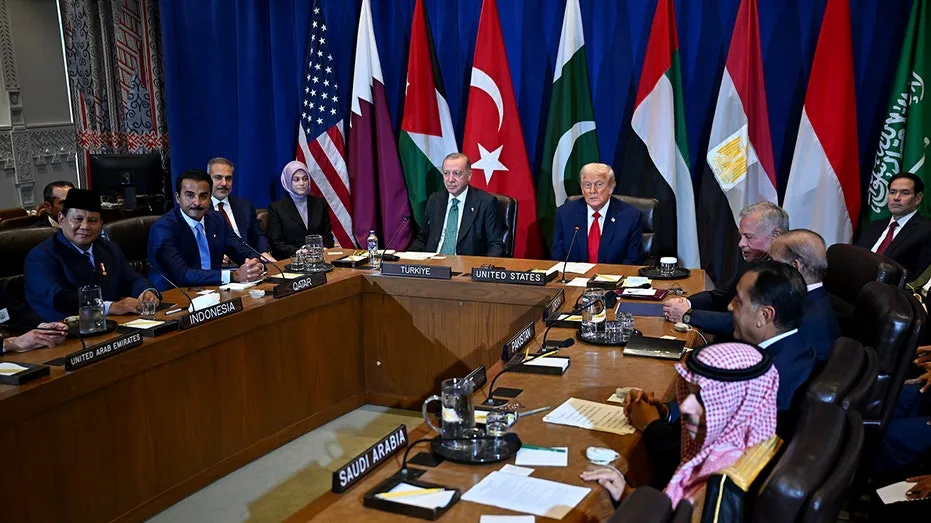
(SeaPRwire) - An analyst warned Sunday that Iran’s supreme leader has launched a broad counteroffensive against U.S. President Donald Trump, working to rally Middle Eastern nations into an anti-American alliance. This aggressive move came just hours after Trump proposed expanding the Abraham Accords. According to the analyst, Tehran is seeking to position itself as the region’s "new sheriff", while forcing Gulf states that maintain backchannels to Iran to choose between Washington’s security umbrella and a "New Islamic Civilization". As of Sunday, negotiations between Iran and the United States remained ongoing, and Trump had not yet approved any potential peace deal. Trump recently held a phone call with leaders from Saudi Arabia, the United Arab Emirates, Qatar, Turkey, Pakistan, Egypt, Jordan and Bahrain to discuss expanding the 2020 Abraham Accords, and shared a related post on Truth Social on May 25. Mojtaba Khamenei released a direct counter-response on the platform X on May 26, calling for a "New Islamic Civilization" targeted at those same regional capitals. "With sincere and pure intentions, I invite all Islamic countries and governments to friendship and cooperation for goodness, so that working together we can take steps to advance the Islamic Ummah and resolve the problems of the Islamic world," Khamenei posted. While highlighting "the nations of the region" and "common interests that will shape the new order and the future framework of the region and the world", he referenced "the Islamic Ummah and the #New_Islamic_Civilization". "The United States will no longer have a safe haven for its mischief-making or establishing military bases in West Asia," he also warned. "Mojtaba Khamenei’s statement makes clear that the Muslim world should unify under Iran’s leadership — the 'Ummah', the 'new Islamic civilization' — to oppose the American-led order," Dr. Omar Mohammed told Digital. "That is the core theme, and it directly clashes with the Abraham Accords narrative. This is an attempt to build an alliance against the Abraham Accords," said Mohammed, director of the Antisemitism Research Initiative Program on Extremism at George Washington University. "In his statement, he also frames American bases on Muslim soil as an occupation that must be expelled, while wrapping the whole message in religious language that casts the Iranian regime as God’s instrument." The counterterrorism expert noted that while the "Ummah" doctrine itself is not new — it has been used by Mojtaba’s father for years — the timing and targeted nature of this appeal represents a major escalation. "This push centers on joining the Ummah under Iran, rather than normalizing relations with Israel under Washington," Mohammed explained. "Same target audience, opposite framing, released just 24 hours apart, and it is a bid to assemble this new alliance." "The full statement was published and circulated by Iranian state media. It also aligns with his first statement as leader on March 12, when he demanded that all U.S. bases in the region be closed." "This was not a random offhand post," the expert warned. "While the doctrine is old, targeting these regions the day after Trump’s pitch is what makes this new." This public posturing comes as Khamenei establishes his standing on the global stage, though his reclusive nature complicates traditional diplomatic processes. "Tehran is selling itself to the region as the new sheriff of the neighborhood," Mohammed warned. "Saudis, Qataris and Omanis have existing channels to the Iranian state, but you cannot open a backchannel to a man no one can locate. All of this has been routed through Pezeshkian and Araghchi." Despite Iran’s sudden new rhetoric of "friendship", the reality of the region has been shaped by months of Iranian aggression against its neighbors. Tehran’s forces have actively launched attacks on Bahrain, Qatar, the UAE and Kuwait. Mohammed added that Tehran aims to pull Gulf states away from Washington, while its threats continue to target both the United States and the countries that host American forces. "Iran spent this period of conflict firing on these states — it hit Bahrain, Qatar, the UAE and Kuwait, the same capitals it is now inviting to join its brotherhood, and the UAE alone reported intercepting nearly 2,000 drones and hundreds of ballistic missiles since Feb. 28," Mohammed said. "These are the states that host U.S. forces: the Fifth Fleet in Bahrain, Al Dhafra in the UAE and Al Udeid in Qatar. You do not endure three months of Iranian attacks and then sign onto its alliance." Ultimately, Gulf capitals remain deeply skeptical of Tehran, Mohammed said, but they are equally watchful of American commitment to the region. "What actually worries the Gulf isn’t Mojtaba's invitation — it’s the deal Washington might sign," Mohammed noted, "one that gives Iran its funds back while leaving its missiles intact, and amounts to rewarding the regime that just attacked them." This article is provided by a third-party content provider. SeaPRwire (https://www.seaprwire.com/) makes no warranties or representations regarding its content. Category: Top News, Daily News SeaPRwire provides global press release distribution services for companies and organizations, covering more than 6,500 media outlets, 86,000 editors and journalists, and over 3.5 million end-user desktop and mobile apps. SeaPRwire supports multilingual press release distribution in English, Japanese, German, Korean, French, Russian, Indonesian, Malay, Vietnamese, Chinese, and more.
More

Hezbollah’s ‘game-changing’ night-time weapon breaches Israel’s defenses, expert says

(SeaPRwire) - Hezbollah has started deploying "game-changing" and "lethal" nighttime drone swarms against Israel, according to a defense expert, with these strikes reportedly causing casualties, penetrating defensive lines, and creating widespread disorder in border areas.The intensification of these Hezbollah operations led Prime Minister Benjamin Netanyahu to hold an urgent security session on May 30, following an unexpected attack that reportedly left Israeli forces struggling to react amidst significant confusion."These nighttime drones are primarily small Category 1 and Category 2 models," explained Cameron Chell, a defense expert and CEO of Draganfly, in an interview with Digital."They are typically utilized by ground units for immediate tactical strikes or surveillance within the theater of operations. By employing thermal sensors, they can navigate in the dark and identify IDF personnel through their heat signatures," he noted."The fact that Hezbollah now possesses nighttime operational capabilities is a game changer," Chell added."We are likely to see an increase in drone usage and further advancements in asymmetric warfare tactics by Hezbollah in that region," he cautioned.Chell’s analysis follows reports that the conflict has shifted significantly, forcing the implementation of improvised defensive measures, such as the use of nets.According to reports, Israeli troops have begun purchasing commercial fishing and soccer nets in an attempt to ensnare incoming aerial threats."This necessitates a new array of countermeasures for the IDF, ranging from electronic jamming to the deployment of net guns or physical netting around installations and vehicles to prevent terminal impact from strike drones," Chell stated."The IDF will need to fundamentally adjust its operational tactics for nighttime movement. They must now account for Hezbollah’s ability to conduct both thermal observation and direct strikes after dark."Netanyahu convened with senior officials following a heavy barrage of rockets and drones on Saturday that caught the military unprepared.A Channel 13 report indicated that the Israeli military was caught off guard by both the intensity of the fire and Hezbollah’s strategic shift in response to Israel’s ground operations extending past the Litani River.On-the-ground reports described "total chaos" in northern regions, as Hezbollah launched coordinated drone strikes alongside rocket attacks on cities.Hezbollah leader Naim Qassem has also highlighted the group's drone arsenal, labeling it a potent tool against Israeli forces operating near and within southern Lebanon.Netanyahu has acknowledged that Hezbollah’s drone capabilities represent a significant threat, primarily due to the challenges involved in detecting them."Hezbollah has established some form of supply chain," Chell observed, noting that while the technology is not revolutionary, the tactics are effective. "They are using relatively dated technology and methods.""Regardless, someone is supplying this equipment to Hezbollah—whether it originates from Iran, China, Russia, Afghanistan, or the black market—there is a consistent flow of product reaching their supply lines," Chell warned. This article is provided by a third-party content provider. SeaPRwire (https://www.seaprwire.com/) makes no warranties or representations regarding its content. Category: Top News, Daily News SeaPRwire provides global press release distribution services for companies and organizations, covering more than 6,500 media outlets, 86,000 editors and journalists, and over 3.5 million end-user desktop and mobile apps. SeaPRwire supports multilingual press release distribution in English, Japanese, German, Korean, French, Russian, Indonesian, Malay, Vietnamese, Chinese, and more.
More
English police handcuffed a teen stabbing victim after the attacker alleged a racial assault. Hot News

English police handcuffed a teen stabbing victim after the attacker alleged a racial assault.

(SeaPRwire) - English law enforcement is under intense scrutiny after officers placed an 18-year-old university student in handcuffs while he was dying from stab wounds, reportedly because they accepted the attacker’s unsubstantiated claim that he had been the target of a racist assault.The incident has triggered widespread public indignation across the U.K., fueled political discourse regarding police conduct, and led to demands for the disclosure of body-worn camera recordings from the responding officers.Alan Mendoza, co-founder and executive director of the Henry Jackson Society, a London-based think tank, remarked that the situation highlights systemic issues within British police culture. "The death of Henry Nowak illustrates the extent to which political correctness has permeated the mindset of British policing," Mendoza stated."The current default reaction seems to be an immediate acceptance of any allegation involving racism," he continued. "In this instance, it clearly took precedence over a murder investigation, as a dying Mr. Nowak was detained based solely on the word of his Sikh assailant, without officers verifying the facts."On Thursday, 23-year-old Vickrum Digwa was found guilty of murdering Henry Nowak, an 18-year-old finance student at the University of Southampton, following a December 3, 2025, altercation.Upon arriving at the scene, police initially identified Nowak as the perpetrator after Digwa alleged he had been racially harassed and assaulted. Officers handcuffed Nowak before recognizing the severity of his wounds. Despite attempts at first aid, he collapsed and died at the scene, according to reports from Sky News.Following the conviction, the Hampshire Constabulary issued a public apology and referred the matter to the Independent Office for Police Conduct (IOPC) for a formal review. "I regret that he was handcuffed and arrested in the moments before he lost consciousness," Temporary Deputy Chief Constable Robert France stated, as reported by Sky News.During the trial, prosecutors stated that Digwa used a 21-centimeter blade, described in court as a kirpan-style weapon, to stab Nowak multiple times. Although Digwa argued he acted in self-defense following racial provocation, the jury rejected this claim and returned a guilty verdict for murder.The case has since sparked a heated debate in British media and online regarding whether police prioritized racism allegations over standard medical and investigative protocols.During a Friday appearance on GB News, Reform UK MP Robert Jenrick advocated for the release of the body-worn camera footage, provided the Nowak family agrees."The officers chose to prioritize an accusation of racial abuse over the life of this young man," Jenrick said. "That was a grave error."Jenrick also criticized the perceived silence from the British political establishment, contrasting it with the reaction to the 2020 death of George Floyd in the U.S."The Prime Minister has said nothing. The Home Secretary has said nothing."The incident has also prompted concerns regarding potential hostility toward the U.K.'s Sikh community, which has actively sought to distance itself from the crime.In a statement released after the verdict, Sikh organizations condemned the murder and emphasized that the actions of the individual do not reflect the Sikh faith."Henry’s life was tragically cut short by an individual’s moment of madness, for which there is no excuse," the statement read.The organizations further noted that "the actions of the police officers who handcuffed the victim just before he died" exacerbated criticism of the police and "unnecessarily stirred up community hatred."The statement also clarified that legal exemptions allowing Sikhs to carry ceremonial kirpans do not apply when such items are used in violence."We understand that the weapon used in this case was not the standard Kirpan carried by practicing Sikhs," the statement added.Mendoza emphasized that the British Sikh community has largely condemned the murder and supports the ongoing investigation."It is legal for Sikhs to carry ceremonial knives in the U.K., but they are typically very small, as ordained by religious authorities," Mendoza told Digital. "He had one of those, in addition to his [8-inch] blade."He also characterized Digwa as a "weapons nut," citing trial evidence suggesting the defendant had a preoccupation with knives and weaponry.The IOPC investigation into the officers' conduct is ongoing. Digital contacted the Hampshire & Isle of Wight Constabulary for comment but received no response prior to publication. This article is provided by a third-party content provider. SeaPRwire (https://www.seaprwire.com/) makes no warranties or representations regarding its content. Category: Top News, Daily News SeaPRwire provides global press release distribution services for companies and organizations, covering more than 6,500 media outlets, 86,000 editors and journalists, and over 3.5 million end-user desktop and mobile apps. SeaPRwire supports multilingual press release distribution in English, Japanese, German, Korean, French, Russian, Indonesian, Malay, Vietnamese, Chinese, and more.
More

A hardline anti-cartel figure, emulating Trump, aims to end Colombia’s leftist era in crucial election

(SeaPRwire) - A strict, law-and-order candidate, vowing to dismantle drug cartels and overhaul Colombia's security approach, is attracting significant voter support ahead of Sunday's presidential election.Given its status as the world's leading cocaine producer and a long-term security ally of the U.S., Colombia's domestic policies have a direct impact on drug trafficking, migration patterns, and stability across the region.Experts suggest that a change in leadership in Bogotá might alter collaboration with Washington concerning drug interception, intelligence exchange, and anti-cartel efforts – matters crucial to both U.S. domestic and international policy.Abelardo De La Espriella, a businessman and accomplished defense lawyer, has risen as a prominent right-wing candidate, advocating for forceful counternarcotics measures, institutional changes, and a clear departure from current leftist President Gustavo Petro's strategy of negotiating with armed rebel groups. The 47-year-old, known as ‘The Tiger,' recently informed the Associated Press, "The sole peace process I endorse is one enforced by military strength and the nation's laws. Should any criminal resist under my administration, they will be neutralized as necessary; if they surrender, we will incarcerate them in a mega-prison to ensure they face justice appropriately."His growing popularity reflects a regional trend observed with figures such as Javier Milei, Nayib Bukele, and José Antonio Kast, who have gained political traction by prioritizing security and capitalizing on public discontent over crime and economic uncertainty.An Associated Press report indicates that polls suggest De La Espriella will likely contend with leftist candidate Iván Cepeda, a member of President Gustavo Petro's party, and center-right candidate Paloma Valencia. A total of 14 candidates are listed on the ballot.Valencia's campaign enjoys support from most of the country's established political parties and from economists worried about the increasing debt under the Petro government, advocating for Colombia to revert to more conventional economic strategies, as reported by the Associated Press.Valencia stated to Digital, "As Colombia's president, we will re-establish a strategic, close, and reliable relationship with the United States, founded on mutual respect and the protection of our national interests. We will enhance collaboration in security, intelligence, military training, and combating transnational crime; these are areas where the partnership between our nations has been vital for Colombia's stability. We will also strive to ensure Colombia actively participates in the Shield of the Americas and contributes to regional leadership in defense and security." She further remarked, "The United States will remain a crucial partner for economic development, investment, and employment generation, and a vital ally for the millions of Colombians residing there. Colombia will also stand with the United States in upholding freedom and democracy throughout the hemisphere, backing initiatives to restore freedom in Cuba and assist Venezuela in returning to a democratic course. Our relationship will be characterized by trust, cooperation, and the pursuit of concrete advantages for Colombia and its populace."Critics contend that leftist candidate Iván Cepeda signifies a continuation and possible expansion of the left-wing policies linked to Petro. Cepeda advocates for discussions with armed groups, agrarian reform, and a restructuring of Colombia's conventional security approach, prioritizing social investment more heavily.Camilo Guzmán, executive director of Libertank, informed Digital that Sunday's election is expected to lead to a runoff between Cepeda and De La Espriella. "Abelardo secured his position by understanding the public mood better than any other opposition figure. He provided an outlet for strong emotions, directly addressing Colombian voters' anger towards the conventional political class and the establishment. "While center-right Senator Paloma Valencia presented competence and adherence to the Uribe legacy," he noted, De La Espriella's message "is founded on a tough stance on security," Guzmán further explained. "This includes terminating Petro's unsuccessful ‘total peace’ policy, which empowered guerrillas and cartels, aggressively pursuing drug trafficking, and re-establishing the anti-narcotics partnership with Washington that Petro spent four years dismantling."Analysts suggest the election's result holds considerable strategic importance for the U.S. A De La Espriella government might more closely align with Washington's established anti-drug objectives, potentially enhancing bilateral collaboration as synthetic drug movements and organized crime networks proliferate throughout the hemisphere.Beyond its impact on bilateral ties, the election is being closely observed as a possible turning point for Latin America. A victory for De La Espriella or Valencia would bolster the trend of security-oriented leadership evident in some parts of the region, whereas a Cepeda presidency would indicate a continuation of Petro's policies.José Manuel Restrepo, the vice-presidential candidate running with De La Espriella, spoke exclusively to Digital. "The bond between Colombia and the United States requires restoration and reconstruction, beginning with a robust security strategy to combat drug trafficking. It will be essential to overcome the current weakened relationship, where we have lost the historical bilateral, bicameral, bipartisan, and multisectoral connection with our main trade and investment partner."He added, "To reinforce this, we must capitalize on the chance for Colombia to become the United States' strongest ally in re-establishing democracy in Venezuela. By utilizing this relationship with the United States, we can significantly contribute to investing in food, hygiene products, and essential goods from Colombia for Venezuela. This would, among other benefits, redirect the relationship with the United States, generating new opportunities that serve Colombia…Under our governance, the relationship with the United States would be invigorated and reinforced.Guzmán observed that "De La Espriella's anti-establishment stance does not represent a libertarian platform. His economic plan relies on price controls, interest-rate subsidies, and import substitution, aligning more with traditional Latin American populism than with Bukele's pro-investment shift, and distinctly different from Milei's free-market initiative. The unresolved question is whether the accompanying economic program will generate fresh instability south of the border."Jerónimo Uribe, an analyst, entrepreneur, and son of a former president, stated that the implications of Sunday's presidential contest are exceptionally clear. "The elections in Colombia are not a battle between the left and the right. They are a choice between a communist system supported by drug traffickers and a system that champions democracy and freedom," he informed Digital.Cepeda's representatives did not promptly reply to Digital's request for comment. This article is provided by a third-party content provider. SeaPRwire (https://www.seaprwire.com/) makes no warranties or representations regarding its content. Category: Top News, Daily News SeaPRwire provides global press release distribution services for companies and organizations, covering more than 6,500 media outlets, 86,000 editors and journalists, and over 3.5 million end-user desktop and mobile apps. SeaPRwire supports multilingual press release distribution in English, Japanese, German, Korean, French, Russian, Indonesian, Malay, Vietnamese, Chinese, and more.
More
Pentagon Holds Inaugural Israeli-Lebanese Military Talks Aimed at Restraining Hezbollah Hot News

Pentagon Holds Inaugural Israeli-Lebanese Military Talks Aimed at Restraining Hezbollah

(SeaPRwire) - Military delegations from Israel and Lebanon kicked off Pentagon-facilitated talks in Washington on Friday morning, launching a new U.S.-brokered security coordination channel aimed at preventing renewed escalation along the Israel-Lebanon border and shoring up the fragile ceasefire reached in mid-April. A State Department official told Digital, “As we have consistently stated, the only path to lasting peace is through direct negotiations between the two sovereign governments.” These discussions mark a shift from traditional diplomatic negotiations to direct military coordination, with talks expected to center on ceasefire enforcement, border stability, Israeli withdrawal from portions of southern Lebanon, and the role of the Lebanese Armed Forces in containing Hezbollah. The talks come weeks after a U.S.-brokered ceasefire was first established during the broader regional conflict tied to the U.S.–Iran war. While large-scale fighting has cooled, Israeli forces continue to operate in parts of southern Lebanon and Hezbollah still maintains drone and rocket capabilities, leaving tensions high along the shared border. The existing ceasefire was extended on May 15 for an additional 45 days, putting pressure on both sides to show progress before the current truce arrangement expires. But analysts note the central question overshadowing the talks is whether Lebanon can realistically curb Hezbollah’s military strength without risking full internal collapse. “This will be the first meeting between military representatives since the negotiation process between Lebanon and Israel got underway,” Ahmed Sharawi, a research analyst at the Foundation for Defense of Democracies think tank, told Digital. Leading Lebanon’s delegation at the talks is Lebanese Armed Forces (LAF) commander Gen. Rodolphe Haykal, who previously served as head of Lebanese Armed Forces operations in southern Lebanon, an area where Hezbollah maintains a strong presence. Hezbollah is an Iran-backed Lebanese group that the United States has officially designated as a foreign terrorist organization. “What we should expect are talks focused on de-confliction and what expectations are placed on the LAF as part of the broader plan to disarm Hezbollah of its weapons,” he said. Sharawi said the odds of a major breakthrough remain limited as long as Hezbollah stays heavily armed and politically entrenched within Lebanon. “The biggest obstacle here is that the Lebanese state has yet to put forward a feasible plan to disarm Hezbollah,” he said. He pointed to the terms of the November 2024 ceasefire agreement, which assigns responsibility for disarming Hezbollah to the Lebanese state itself. “We have yet to see even a single bullet confiscated from Hezbollah,” Sharawi said. He also warned that Hezbollah’s deep base of support among Lebanon’s Shiite population makes any push toward normalization with Israel far more complicated. “There is a widespread fear of civil war,” he said. “That is also why the Lebanese state is unwilling to move forward with disarming Hezbollah.” The talks opened as Israeli Prime Minister Benjamin Netanyahu signaled that Israel intends to keep up military pressure on Hezbollah despite the ongoing negotiations. Sharawi argued that the Trump administration nevertheless appears determined to push the process forward as part of a broader effort to reduce Iranian influence in the region. “The reason these meetings are being held is that President Trump is actively pushing for a peace agreement between Israel and Lebanon,” he said. “Peace between these two countries would significantly undermine Hezbollah and its influence within Lebanon.” Israeli analysts similarly describe the talks less as a breakthrough and more as a strategic message targeted at Hezbollah. “The war between us and Hezbollah is still ongoing,” Yossi Kuperwasser, senior project manager at the Jerusalem Institute for Strategy and Security and former head of the Research Division of Israeli Military Intelligence, told Digital. “There is no doubt that the Lebanese government does not hold a monopoly on the use of force within Lebanon,” he said. Kuperwasser said expectations for an immediate diplomatic breakthrough should remain low, but argued that the talks themselves send an important political message. “The purpose of these talks is first and foremost to send a message to Hezbollah and also to the Americans,” he said. “Both sides are prepared to sit together against Hezbollah and signal that they are moving, even if slowly, toward normalization between Israel and Lebanon.” He argued that Hezbollah has been weakened both politically and militarily by the ongoing conflict and growing frustration among Lebanese civilians displaced by the fighting. “For years Hezbollah portrayed itself as the defender of Lebanon,” Kuperwasser said. “Now many Lebanese people see Hezbollah as responsible for the suffering Lebanon is currently experiencing.” Kuperwasser added that while Israel supports strengthening the Lebanese army, Beirut fears a direct confrontation with Hezbollah could ignite another civil war. “The Lebanese government fears military action against Hezbollah would lead to civil war,” he said. “That fear shapes all of their decisions.” The talks also come amid mounting domestic pressure inside Israel, where critics of Netanyahu have accused the government of pursuing containment instead of a decisive military victory over Hezbollah. Speaking during a visit to Israel’s northern front on Friday, Netanyahu said Israeli forces had crossed the Litani River and were operating across multiple parts of Lebanon. “We are operating in Beirut, in the Bekaa Valley, across the entire front and striking Hezbollah hard,” Netanyahu said. Meanwhile, Lebanon’s leadership is attempting to balance growing American pressure against its own fears of internal instability and renewed sectarian conflict. Neither the Israeli Embassy in Washington nor the Lebanese Embassy in Washington issued an immediate response to requests for comment. The Pentagon declined to add any additional comment when approached. This article is provided by a third-party content provider. SeaPRwire (https://www.seaprwire.com/) makes no warranties or representations regarding its content. Category: Top News, Daily News SeaPRwire provides global press release distribution services for companies and organizations, covering more than 6,500 media outlets, 86,000 editors and journalists, and over 3.5 million end-user desktop and mobile apps. SeaPRwire supports multilingual press release distribution in English, Japanese, German, Korean, French, Russian, Indonesian, Malay, Vietnamese, Chinese, and more.
More

Christian farming communities face attacks as US report identifies Fulani militants as Nigeria’s deadliest threat

(SeaPRwire) - JOHANNESBURG — A significant new report indicates that roughly 30,000 predominantly Muslim Fulani militants are active in Nigeria, contributing to "worsening insecurity and religious freedom violations."According to the report from the U.S. Commission on International Religious Freedom (USCIRF), "violence by Fulani militants resulted in more fatalities within Nigeria's religious communities over the past year than attacks by organized insurgent groups and criminal gangs."The USCIRF report notes that the Fulanis, traditionally livestock herders, have "targeted Christian farming communities in the Middle Belt and, to a growing extent, the South, setting fire to homes and churches while also engaging in kidnapping, rape, and murder."However, a former State Department counterterrorism specialist informed Digital that recent U.S.-Nigerian joint strikes in the North against groups like Boko Haram and Islamic State would be ineffective against the Fulanis in the country's mainly Christian central regions.Sterling Tilley, the former acting director in the Bureau of Counterterrorism with experience in Nigeria, stated that U.S. military intervention in the farmer-herder conflict "is not advisable as it could lead to greater national instability." Tilley, currently directing the Thomas R. Pickering Graduate Foreign Affairs Fellowship at Howard University, further remarked, "Certain measures could reduce the violence, but implementing them requires political will from Nigeria."This week, Secretary of War Pete Hegseth discussed recent U.S. strikes in Nigeria ordered by President Donald Trump, noting, "Approximately a year ago, [the president] listened to the pleas of Nigerian Christians targeted and killed by ISIS. He instructed me, 'Pete, I want the War Department dedicated to doing all we can to safeguard those Christians.'"Christians constitute about 48% of Nigeria's populace. The USCIRF report said Fulani militants "frequently execute attacks during Christian holidays like Christmas or Easter to amplify psychological terror, preventing communities from assembling to celebrate or worship. Attackers sometimes shout religious phrases, such as "Allahu Akbar" (Arabic for "God is great").The report also clarifies that Muslims have not been exempt from attacks. "Fulani attackers have also targeted Muslims, stealing cattle from herders and launching violent assaults on Muslim communities that are not Fulani," it added.Henrietta Blyth, CEO of the Christian persecution watchdog Open Doors UK & Ireland, told Digital, "Violence perpetrated by Fulani tribe militants significantly exceeds that of other militant factions like Boko Haram or ISWAP (Islamic State West African Province)."Although her group was not involved in the report, she stated, "It is heartbreaking to hear accounts from individuals who witnessed their loved ones slaughtered before them or taken into slavery."Blyth continued: "The crisis is complex, and as the report finds, attributing all actions to religious motives is an oversimplification. What is undeniable is that Christians are exceptionally vulnerable and frequently become victims, paying a severe price. They urgently require protection and, for the hundreds of thousands displaced, an opportunity to recover and reconstruct their lives."The USCIRF report further commented, "Federal and state authorities' reactions to Fulani militant violence have frequently been criticized as inadequate at best and conspiratorial at worst."Tilley informed Digital that with Nigerian elections scheduled next year, "the Fulani wield substantial political clout as a voting bloc. Consequently, the government appears hesitant to enact necessary measures to curb the violence, worried about losing their support base in the North and Middle Belt." Digital contacted the Nigerian government for a statement but received no reply before publication. This article is provided by a third-party content provider. SeaPRwire (https://www.seaprwire.com/) makes no warranties or representations regarding its content. Category: Top News, Daily News SeaPRwire provides global press release distribution services for companies and organizations, covering more than 6,500 media outlets, 86,000 editors and journalists, and over 3.5 million end-user desktop and mobile apps. SeaPRwire supports multilingual press release distribution in English, Japanese, German, Korean, French, Russian, Indonesian, Malay, Vietnamese, Chinese, and more.
More
Israel’s pursuit of Oct 7 terrorists leaves Hamas struggling to replenish leadership Hot News

Israel’s pursuit of Oct 7 terrorists leaves Hamas struggling to replenish leadership

(SeaPRwire) - Right as Gaza was set to begin celebrations for Eid al-Adha, one of Islam’s most significant holidays, an Israeli airstrike targeted a structure in Gaza City, killing Mohammed Odeh, the recently named leader of Hamas’s military branch, per statements from Israeli officials that were later corroborated by Hamas. Regional media reports indicate that members of Odeh’s family also died in the strike. Gaza’s markets were bustling with activity just two hours after the attack. Digital examined footage shot in Gaza that showed packed Eid thoroughfares, children out shopping and families gathering together, with barely any visible public response to the death of the Hamas commander, whom Israel has identified as one of the masterminds of the October 7, 2023, attacks on its territory. This stark contrast highlights what numerous Gazans and analysts characterize as a widening rift between Hamas leadership and local civilians worn down by almost three years of conflict. The Hamas-run Gaza Health Ministry reports that the war has killed over 70,000 Palestinians, a tally that does not differentiate between civilian and combatant deaths, and has displaced the majority of Gaza’s residents. Hadeel Oueis, the editor-in-chief of Jusoor News, told Digital that these targeted killings are creating “a clear void” within Hamas, and eroding coordination between the group’s leaders based in Gaza and those located outside the enclave. “As its leaders are killed and its robust centralized command structure breaks down, Hamas is evolving into a smaller militia that competes with other armed factions active in Gaza,” Oueis stated. “Hamas is currently fighting to stay intact.” In a joint statement released on Tuesday, Israeli Prime Minister Benjamin Netanyahu and Defense Minister Israel Katz stated that Odeh, who had taken over for top commander Izz al-Din al-Haddad just a few days prior, was “one of the masterminds of the October 7 massacre.” “Israel will track down every single one of them, sooner or later,” Netanyahu and Katz added. Within Gaza, multiple residents who spoke to Jusoor News said they no longer see the deaths of Hamas leaders as personal losses for their community. “Naturally, we felt nothing when Haddad, Sinwar or other leaders were killed,” one Gazan activist and former political prisoner told Jusoor News in an on-camera interview, where his face was obscured to protect his safety. The activist was referencing Izz al-Din al-Haddad, the Hamas military commander that Israel claims it killed earlier in May, and Yahya Sinwar, the former head of Hamas and lead architect of the October 7, 2023, attacks, who was killed by Israeli troops in southern Gaza in October 2024. “Regular people are the ones who have borne the cost, not the leaders who made impulsive, unconsidered decisions,” the activist said. “Because of those decisions, Gaza is now nearly totally destroyed,” the activist added. “There are families that have lost every single thing they owned, while the remaining leaders inside Gaza and abroad keep continuously gambling with our lives.” A journalist based in Gaza echoed this widespread sense of frustration. “When we got word that Izz al-Din Haddad or other leaders had been killed, it didn’t impact us at all,” the journalist said. “What hurts even more is that the children of these leaders live outside Gaza, in Turkey and Qatar, driving high-end cars and enjoying comfortable lives, while people here have been pushed almost back to living in the Stone Age.” Another Gaza-based journalist and human rights advocate told Jusoor that Hamas has inflicted as much harm on Palestinians as it has on Israelis. “I don’t view the deaths of these leaders as losses for Palestinians, because we regular people are the ones who have paid the price,” the advocate stated. “To be honest, Hamas didn’t only harm Israelis – they hurt us too.” Meanwhile, Israeli analysts warn that these repeated targeted killings do not automatically signal that Hamas is on the brink of collapse. Michael Milshtein, an expert on Palestinian affairs, told Digital that Hamas has undeniably sustained heavy damage since October 7, 2023, especially following the deaths of long-serving commanders who helped build the group’s military framework and operational ideology. “Practically no one is left from the core team that planned and carried out the October 7 attack,” he said. But he pointed out that Odeh himself was widely seen as a mid-level figure before the war, not an expected heir to Hamas’s longstanding military leadership. “The people taking their places are much less experienced, less competent and far less charismatic,” Milshtein noted. Even so, he contends that Hamas still retains working chains of command and ideological unity, even amid all its losses. “People know they are very likely to be killed, and they still vie for these leadership roles,” he added. Discussions over Hamas’s future are unfolding as global efforts to put together a post-war political structure for Gaza pick up pace. Nickolay Mladenov, who was named High Representative for Gaza as part of the Board of Peace initiative, released the core components of a proposed 15-point “Roadmap to Complete the Implementation of President Trump’s Gaza Comprehensive Peace Plan.” The proposal outlines a phased disarmament process for Hamas, security reforms overseen by international bodies, and the establishment of the “one authority, one law, one weapon” principle within Gaza. “Gaza cannot recover as long as armed groups also function as governing authorities at the same time,” Mladenov wrote when he shared the proposal on social media. For many Gazans worn out by years of war, displacement and destruction, the deaths of Hamas leaders now hold far less emotional significance than their hope that the conflict will finally come to an end. “Gaza cannot be held hostage to the concept of endless war, while only civilians foot the entire bill,” one activist stated. This article is provided by a third-party content provider. SeaPRwire (https://www.seaprwire.com/) makes no warranties or representations regarding its content. Category: Top News, Daily News SeaPRwire provides global press release distribution services for companies and organizations, covering more than 6,500 media outlets, 86,000 editors and journalists, and over 3.5 million end-user desktop and mobile apps. SeaPRwire supports multilingual press release distribution in English, Japanese, German, Korean, French, Russian, Indonesian, Malay, Vietnamese, Chinese, and more.
More
Drone hits apartment building in NATO member Romania amid Russian attacks on neighboring Ukraine Hot News

Drone hits apartment building in NATO member Romania amid Russian attacks on neighboring Ukraine

(SeaPRwire) - A drone hit an apartment building in Romania on Friday, local officials reported, triggering an explosion and fire that left several people wounded. Romania is a member of the NATO alliance.The country's Defense Ministry stated the event took place during an overnight Russian drone assault on areas of neighboring Ukraine close to the Romanian border.The ministry explained, "A drone breached Romanian airspace, was monitored by radar systems to the Southern part of Galați municipality, and impacted the roof of a residential apartment building."Since the start of Russia's invasion of Ukraine, Romania—which belongs to NATO and the European Union—has documented over two dozen cases of Russian drones crossing into its airspace.This Friday's event was the first instance of a drone hitting a populated location within Romania and causing injuries.According to Romania's state news agency, a woman and her child were taken to a hospital with minor wounds, and two other individuals received on-site treatment for panic attacks.In the aftermath, Romania has asked NATO for enhanced anti-drone support and characterized the drone's route as a major breach of international law, as reported by The Associated Press.Romania's emergency agency confirmed the drone struck the building and detonated, igniting a fire on the tenth floor.The agency noted the drone's full explosive charge went off when it hit.Officials said seventy individuals were evacuated from the structure. The blaze has now been contained.The defense ministry reported that two F-16 fighter aircraft and a military helicopter were scrambled to observe the Russian assault. Pilots had clearance to fire on any drones deemed a threat.This incident follows remarks earlier this week from Ukrainian President Volodymyr Zelenskyy, who said he is urging the United States to supply more Patriot air defense missiles to help defend against Russian strikes.He cautioned that shipments to Ukraine are becoming critically low as U.S. military assets and inventories are stretched by conflict with Iran."I think [the U.S.] needs to move faster. We are being very persistent," Zelenskyy informed reporters while visiting Sweden.Reuters and This article is provided by a third-party content provider. SeaPRwire (https://www.seaprwire.com/) makes no warranties or representations regarding its content. Category: Top News, Daily News SeaPRwire provides global press release distribution services for companies and organizations, covering more than 6,500 media outlets, 86,000 editors and journalists, and over 3.5 million end-user desktop and mobile apps. SeaPRwire supports multilingual press release distribution in English, Japanese, German, Korean, French, Russian, Indonesian, Malay, Vietnamese, Chinese, and more.
More
Moscow and the Taliban form military alliance in a power grab following the US withdrawal from Afghanistan: reports Hot News

Moscow and the Taliban form military alliance in a power grab following the US withdrawal from Afghanistan: reports

(SeaPRwire) - Russia and Afghanistan's Taliban administration have inked a military cooperation agreement, strengthening an alliance that deepens Moscow's clout in Central Asia, reports indicate.The agreement was concluded Wednesday during an international security forum in Russia, after a discussion between Russian Security Council Secretary Sergei Shoigu and Afghan Defense Minister Mohammad Yaqoob.The Taliban's Defense Ministry posted on X that Yaqoob journeyed to Russia for the event.Yaqoob previously served as the Taliban's military commander and is the son of the group's founder, Mullah Mohammad Omar.Omar maintained a tight alliance with Osama bin Laden and offered sanctuary from which al Qaeda orchestrated the 9/11 attacks.As of Thursday, neither Russian nor Afghan officials had disclosed additional specifics of the new military pact."Afghanistan and Russia share long-standing historical ties. We intend to advance in this direction. We have broadened our bilateral relations," Yaqoob stated during the meeting.This pact comes after remarks from a high-ranking Russian security official, who said Moscow has formed a "comprehensive partnership" with Afghanistan's governing Taliban and is urging other regional nations to enhance their engagement with Kabul, according to a Reuters report.The Taliban retook control in August 2021, toppling the U.S.-supported Afghan government led by President Ashraf Ghani.In 2021, Russian President Vladimir Putin recognized the potential for Russia to remove the Taliban from its list of terrorist organizations.In 2024, he referred to the Taliban as "allies in the fight against terrorism," and Russia became the first nation to formally acknowledge the Islamic Emirate of Afghanistan."Following years of hesitation, Russia has turned into the first country globally to grant official recognition to the Taliban administration in Afghanistan," said Nikita Smagin, an expert on Iranian policies, Islamism, and Russia's Middle East strategy, in a Carnegie Endowment for International Peace report."This is more a symbolic move than one motivated by trade or economic factors," Smagin continued, noting that when Taliban fighters entered Kabul in August 2021, "Russia was already considered worthy of preferential treatment.""Its embassy was promptly granted security, and Russian Ambassador Dmitry Zhirnov was the initial foreign diplomat to confer with Afghanistan's new leadership," he elaborated.On Wednesday, Shoigu additionally urged Western nations to release frozen Afghan assets."We believe Western countries must unblock Afghan funds, fully acknowledge their accountability for their two-decade presence in Afghanistan, and shoulder the load of the nation's postwar recovery," Shoigu was quoted as saying."Moscow must act to reclaim its image as a proactive, influential power, and recognizing the Taliban regime fulfills that exact aim," Smagin further stated."Being the first to establish formal diplomatic ties with the Taliban government should position Russia at the forefront of regional security dialogues."He said the Taliban's recognition was a Russian effort to "demonstrate its role as a principal global player unafraid to challenge conventions and create examples for others."Moscow persistently stresses the importance of direct collaboration with Kabul as it confronts serious, persistent security challenges from multiple opposing Islamist militant factions active across Central Asia and the Middle East, Reuters reported.Shoigu also mentioned that Moscow is developing a "practical dialogue" with the Taliban encompassing security, trade, cultural, and humanitarian assistance, the news agency reported on May 14. This article is provided by a third-party content provider. SeaPRwire (https://www.seaprwire.com/) makes no warranties or representations regarding its content. Category: Top News, Daily News SeaPRwire provides global press release distribution services for companies and organizations, covering more than 6,500 media outlets, 86,000 editors and journalists, and over 3.5 million end-user desktop and mobile apps. SeaPRwire supports multilingual press release distribution in English, Japanese, German, Korean, French, Russian, Indonesian, Malay, Vietnamese, Chinese, and more.
More