(SeaPRwire) –
By: Oliver Hawthorne
The Dune: Part Three trailer’s viral Chani twist exposes a growing rift at the heart of the global geek IP economy. Studios now rely on algorithmic social reach to drive blockbuster ticket sales, but that reach often hinges on divisive, debate-sparking choices. For decades, faithful adaptation was the gold standard for sci-fi and fantasy projects. Today, a single controversial book change can generate more pre-release buzz than a $20 million TV ad campaign. The anxiety rippling through tech and entertainment teams is simple. How far can you push fan discourse bait before you alienate the core audience that built your IP in the first place? This isn’t just a Dune problem. It’s a question every studio building long-term franchise slates is grappling with right now. I sat in on a studio marketing roundtable last quarter where half the room argued for strict fidelity, and the other half pushed for “discourse drivers” in every trailer. No one had a clear answer. The Dune 3 trailer might be the first big public test of which side wins.
The facts from Warner Bros.’ official trailer drop lay out the stakes clearly. Dune: Part Three is Denis Villeneuve’s final film in his Dune trilogy, and it largely adapts Frank Herbert’s 1969 novel Dune Messiah. The 57-year gap between book and film makes the adaptation’s creative choices feel even more loaded for long-time fans. The trailer debuted at a buzzy fan event live-streamed in IMAX theaters across the world.
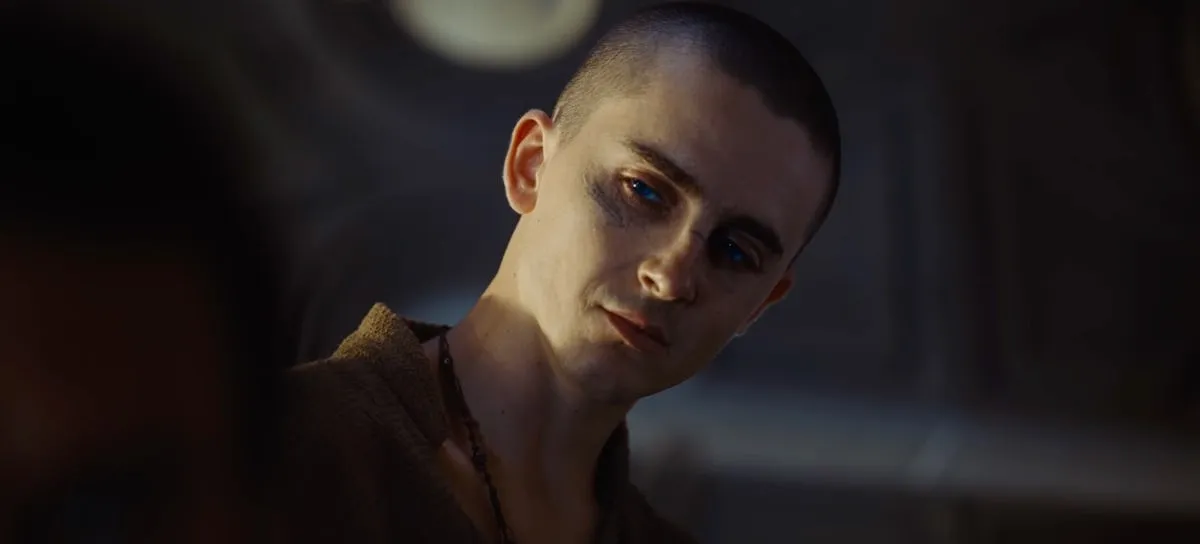
It picks up years after Paul Atreides defeated the Harkonnens, married Princess Irulan, and launched a bloody holy war that has conquered the galaxy and destroyed thousands of worlds. Hayt, the ghola clone of Paul’s former ally Duncan Idaho played by Jason Momoa, explicitly says Paul is “beyond redemption” in the trailer. The trailer shows Hayt offering himself as a gift to Paul, a Trojan Horse move that kicks off Scytale’s plot in the book. The most discussed change from the books centers on Chani, played by Zendaya.
Spoilers ahead for Dune Messiah!
In Herbert’s novels, Chani remains Paul’s loyal mistress and de facto wife after he takes the throne, earning the ire of his official wife Irulan. She spends most of Dune Messiah pregnant, slowly poisoned by Irulan as part of a conspiracy to depose Paul. She eventually dies giving birth to twins Leto and Ghanima. The film takes a sharp turn from this setup. Chani parted ways with Paul after his rise to power and stayed on Arrakis, rejecting his holy war and his new imperial role. The trailer leans heavily into this rift. It shows flashbacks of the pair arguing over his conquests, and a shot of Chani abandoning her blue Nezhoni scarf, a traditional Fremen symbol of romantic commitment. Later shots show a battle-worn Paul wearing the scarf around his wrist. The film’s new poster directly pits Paul against Chani, framing them as opponents.
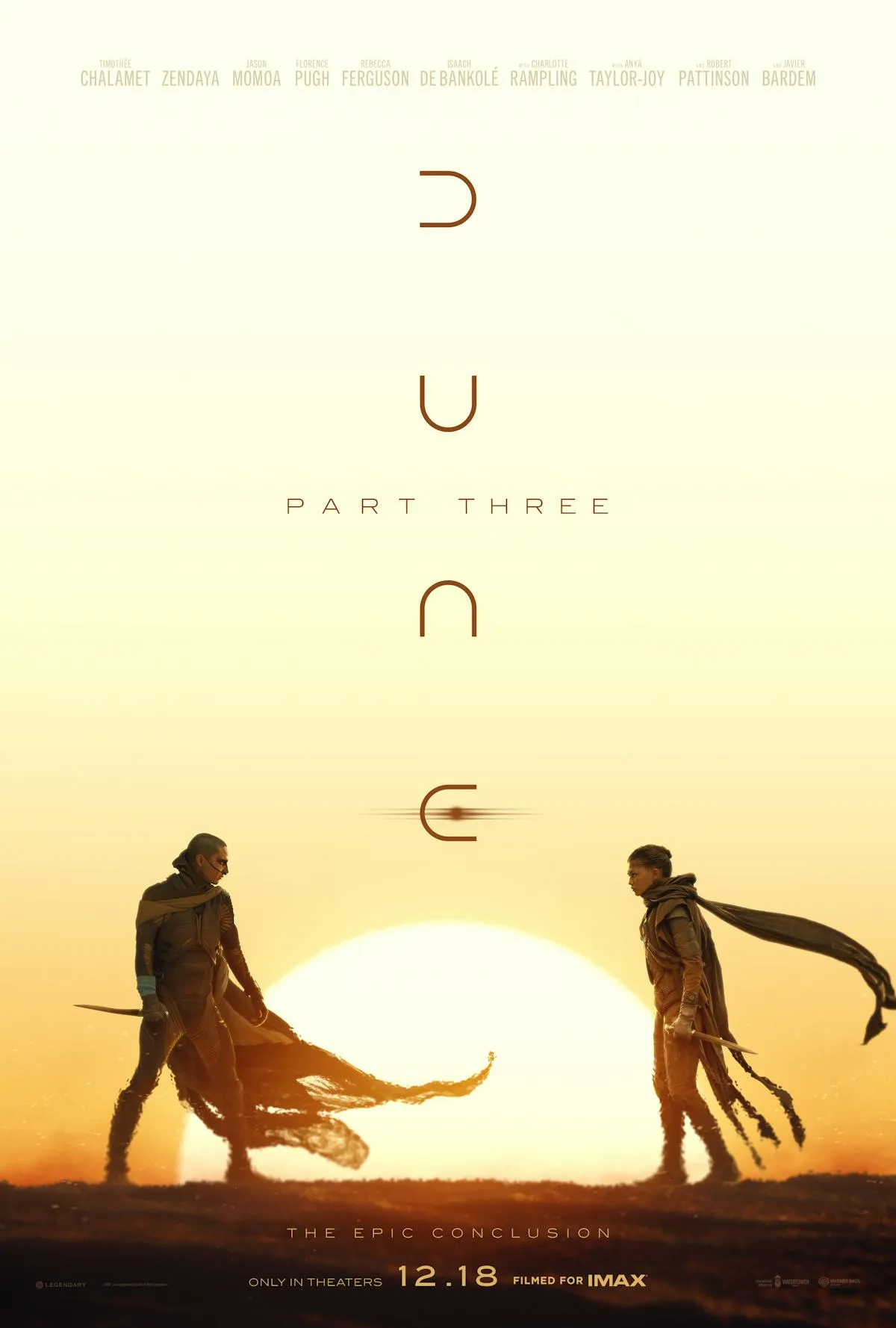
There are two competing theories about how this plays into the larger plot. The first is that Chani has joined the conspiracy against Paul led by Scytale, a shapeshifting Face Dancer played by Robert Pattinson. The trailer shows Scytale scheming with Irulan, who appears more frightened of treason accusations than she is in the book, and implying Chani is key to their assassination plot. The second theory is that the “Chani” facing Paul is actually Scytale in disguise. In the book, Scytale kills a Fremen woman named Lichna and takes her identity to get close to Paul. Scytale rarely appears as himself in the novel. The film could be substituting Chani for Lichna to raise the emotional stakes. That would explain one eerie line delivery from Zendaya in the trailer, where she asks Paul, “How does it feel to be human? Like everyone else, Paul Atreides.” There’s also a third, more meta possibility. The trailer could be deliberately misleading fans. In an early scene in Dune Messiah, Face Dancers perform for the royal court and take on Chani’s form as a demonstration of their skills. The trailer could be pulling footage from that brief scene to manufacture a sense of conflict that doesn’t exist for most of the film. Either way, the change gives Zendaya a far more active role than she has in the book version of Dune Messiah. That tracks with her breakout turn as the emotional core of Dune: Part Two.
The entire rollout follows a tight, tech-enabled commercial loop. Warner Bros. starts with a high-production fan event in IMAX theaters, giving attendees exclusive access to the trailer. Those attendees post immediate reactions across X, TikTok, and other social platforms. The algorithm picks up on the spike in Dune-related content and pushes it to more users. The Chani twist acts as a perfect “discourse trigger” for that algorithmic push. Hardcore fans write threads dissecting the book changes and debating their validity. Casual fans who loved Zendaya in Part Two share their excitement for her expanded role. Even people who don’t care about Dune see the discourse and click through to watch the trailer. Every share, every debate, every hot take drives more pre-release awareness than paid ads could match. It also solves a key problem for franchise films. Modern audiences have endless entertainment options, from streaming shows to short-form video. Cutting through that noise requires more than just a good trailer. It requires a reason to talk. The Chani twist gives people that reason. The end-game for this strategy is clear. Studios will increasingly build “controlled controversy” into their geek IP rollouts. They’ll tease small, debatable changes from source material in early trailers. They’ll use misdirection to keep fans guessing for months. They’ll balance core fan fidelity with broader commercial appeal by saving the actual faithful plot beats for the film itself. This isn’t about ruining classic stories. It’s about adapting marketing to a world where algorithmic reach is the most valuable currency in entertainment. The strategy carries risks, of course. Push too far, and fans will write off the project entirely before it hits theaters. But the Dune 3 rollout shows the upside is too big to ignore. It will be the first major test of whether this marketing playbook works for a AAA geek franchise.
Dune: Part Three hits theaters on December 18, 2026.
Author bio: Oliver Hawthorne, a principal correspondent at an international tech review, covers digital media strategy and geek culture industry trends.