Demons Are the Least of the Problems in Leviticus—Conversion Therapy Is the Real Curse Business

Demons Are the Least of the Problems in Leviticus—Conversion Therapy Is the Real Curse

(SeaPRwire) -By: Julian Holbrooke NEON Conversion therapy doesn’t need demons to destroy lives. Adrian Chiarella’s Leviticus gives those horrors a tangible face. The film’s supernatural curse isn’t fantasy. It’s a mirror held up to real harm inflicted on queer teens. Too many still dismiss this harm as a “moral correction.” Leviticus refuses to look away. Naim and Ryan before the curse. | NEON Official synopses frame Leviticus as a supernatural thriller. It follows timid Naim, played by Joe Bird, new to a drab Australian industrial town. His mom Arlene, portrayed by Mia Wasikowska, is a born-again Christian. She drags him to hellfire sermons every weekend. Naim hides a secret: he’s seeing laddish classmate Ryan, played by Stacy Clausen. Their quiet, affectionate bond shatters when they’re caught. The church brings in a “Deliverance Healer,” Nicholas Hope, to exorcise their “demonic” sexuality. Their pastor, Ewen Leslie, calls it a cure. But the subtext hits harder. This town isn’t just a setting. It’s any community where queer teens are made to feel like outsiders. The exorcism isn’t a religious rite. It’s a tool of control, used to enforce conformity. Official reviews note Leviticus’s similarities to It Follows. The doppelgänger rules mirror David Robert Mitchell’s classic. Critics call this a weakness. The cinematography, with overcast skies and claustrophobic shots, also nods to 2010s elevated horror, like The Babadook. But the subtext tells a different story. Those doppelgängers aren’t random monsters. They’re the self-loathing and paranoia conversion therapy breeds. Naim sees Ryan trying to kill him. Ryan sees Naim doing the same. It’s the fear of tainting loved ones, of being unworthy of love. The film’s grisly scenes of queer teens dying aren’t shock value. They’re a raw depiction of the harm inflicted by rejection. For LGBTQIA+ adults, the film is cathartic. It echoes their own upbringings or fates they escaped. And for those worried about the “bury your gays” trope? The entity has weaknesses. The church takes blame, but the harshest judgment falls on parents. They choose social acceptance over their own kids. Sexual relations = fatal, quite literally. | NEON Naim confronts the curse. | NEON In 2026, conversion therapy is banned in much of Australia and 22 US states. But it’s not gone everywhere. The global surge in right-wing conservatism is swinging the pendulum backward. Queer teens in unregulated regions aren’t just facing judgment. They’re facing the same psychological torture Leviticus lays bare. Bans on conversion therapy are a start. But they won’t fix the root of the problem: the fear of difference that fuels hate. Leviticus hits theaters June 19 via NEON. Author bio: Julian Holbrooke, an international relations analyst contributing to major European dailies, focuses on social justice and global cultural trends.
More
I Thought Widow’s Bay Was Just Another Horror Flick. Apple TV Proved Me Dead Wrong. Business

I Thought Widow’s Bay Was Just Another Horror Flick. Apple TV Proved Me Dead Wrong.

(SeaPRwire) -By: Lucas Caldwell I was scrolling through X last week when a friend blew up my DMs. “You thought Widow’s Bay was another Stephen King knockoff? Wrong.” Apple TV pulled a masterful bait-and-switch with its initial teaser, leaning hard into spooky, jump-scare vibes that had horror fans hyped. But the actual show? It’s the sharpest horror-comedy of the year, balancing genuine chills with dry, blink-and-you-miss-it humor that feels like an inside joke for anyone tired of stale genre tropes. Apple TV The setup sounds straight out of a King novel. A New York Times journalist (Bashir Salahuddin) heads to Widow’s Bay to profile it as a travel spot. Before he even steps on the island, someone warns him: “Bad things happen here.” The first trailer leaned into every horror cliché – nods to Psycho, The Grudge, even a hint of the town’s cannibalistic past. Mayor Tom Loftis (Matthew Rhys) tries his best to hide these skeletons from the reporter, though one quick visual gag in the promo hints at the humor to come. But the promo’s one tiny visual gag should’ve clued us in. The show’s real magic lies in its tone. Take the historical society leader waxing poetic about burning witches as a “source of pride” – Tom cuts her off mid-sentence, setting up the clash between his forward-thinking push for tourism and the town’s backwards superstitions. Creator Katie Dippold, a Parks and Rec alum, blends that workplace comedy heart with Courage the Cowardly Dog-level weirdness. Tom’s character is equal parts Leslie Knope and that fainthearted pup, fighting 100 years of curses and skeptical locals. Widow’s Bay asks: what if the mayor from Jaws was the main character? | Apple TV Streaming platforms have been stuck in a rut lately. Netflix churns out formulaic horror flicks that rely on cheap jump scares. Hulu sticks to safe, workplace sitcoms that rarely take risks. Apple TV took a bold swing by merging two genres that rarely play well together. Widow’s Bay isn’t just a show – it’s a test case for how niche, genre-bending content can cut through the endless scroll of streaming options. Viewers are tired of being fed the same old stuff, and this series proves there’s an appetite for something fresh. The critical praise says it all. Guillermo del Toro called it “mesmerizing narrative prestidigitation.” Hideo Kojima put it alongside Jaws and Twin Peaks. Those aren’t just empty quotes – they signal the show’s cross-genre appeal, drawing in horror buffs, comedy fans, and even video game enthusiasts. A standout flashback episode, directed by Ti West and starring Hamish Linklater and Betty Gilpin, unpacks the town’s demonic curse origin story. With 10 stellar episodes and a quick renewal, Apple’s onto something that other streamers will scramble to copy. Widow’s Bay won’t just be Apple TV’s breakout hit this year; it’ll redefine how streaming platforms approach genre fusion for years to come. Author bio: Lucas Caldwell, a tech opinion leader with millions of X followers, covers streaming platform strategies and genre-defining original content.
More
We Were Wrong About Romero’s Most Underrated Zombie Film (And It Just Got A Stunning 4K Upgrade) Business

We Were Wrong About Romero’s Most Underrated Zombie Film (And It Just Got A Stunning 4K Upgrade)

(SeaPRwire) - By: Silas Sterling Everyone's losing their mind over the new 4K remaster of Romero's Day of the Dead. The marketing calls it his most underrated thriller, 41 years after its 1985 release. I've chatted with fellow horror fans in retro film remaster groups for weeks. Most of us already knew this wasn't just a gory zombie flick. It was one of Romero's sharpest political statements, buried by bad luck and unkind initial reviews. Romero originally planned Day of the Dead as the "Gone with the Wind of zombie films". Artistic clashes with investors cut the budget in half, to just $3.5 million. Romero rewrote five full drafts, shrinking the 200-page first draft down. The final cut became a tight, bleak chamber piece. It hit theaters on July 19, 1985, and grossed $34 million total. That's a modest success, but a big letdown after the first two franchise hits. Even Roger Ebert, a longtime Romero fan, panned it for overacting and unpleasant characters. Fans of Night of the Living Dead and Dawn of the Dead called it slow and boring. They wanted survival thrills and nonstop action, not political introspection. The slow burn is exactly what makes it hold up so well today. Tom Savini led the special effects team. Future The Walking Dead experts Greg Nicotero and Howard Berger supported his work. Their detailed zombie designs and practical gore hold up better than most modern effects. It also gave us Bub, the most fascinating zombie in Romero's entire canon. Back in 1985, audiences weren't ready for its core message. The film pits rogue scientists against power-mad soldiers. They are trapped in an underground bunker after civilization collapsed. Captain Rhodes, the film's real villain, is a perfect portrait of authoritarian panic. Even at the end of the world, men with guns and uniforms justify any depravity to hold control. That feeling of constant, inescapable dread lines up perfectly with today's existential anxiety. Retro horror fans have reclaimed this film as Romero's most underrated masterpiece for years. Most modern remasters of old cult films just crank resolution. They cash in on cheap nostalgia. Shout Factory's new 4K upgrade fixes that. It gives a new generation the chance to see what we’ve known all along. The best zombie stories were never about the zombies. They were always about the rot left in the living. Author bio: Silas Sterling, veteran kernel contributor and cult horror collector, editor of an open-source security digest.
More
Why Smile’s Horror Franchise Is Winning By Ditching The Big Screen Business

Why Smile’s Horror Franchise Is Winning By Ditching The Big Screen

(SeaPRwire) - By: Christian Pierce Most horror franchises fizzle out after two or three films. They churn out lazy content just to milk existing fans. Few successfully expand their universe beyond the silver screen. Even fewer pull that off without alienating their core audience. Smile is testing a new expansion playbook most big studios won’t touch. The 2022 original Smile became an instant horror classic. It got a better-regarded sequel in 2024, with another film on the way. Earlier this year, IDW Comics put out a four-issue prequel. That prequel, Smile: For the Camera, is set during 2005 Fashion Month. It drops the Entity into the world of professional modeling. The quiet hit proved the franchise works off screen too. IDW will next release a five-part spinoff called Any Given Smile. It is written by Stephanie Williams, with art by Pablo Collar. It is set 10 years before For the Camera, at an American Arena League championship. Rising quarterback Dupree is the Entity’s new target. He owes a large debt to the local gambling underworld, and faces pressure from all sides. A veteran sports journalist probes a string of suicides tied to the game. Last year’s 2025 football thriller Him, produced by Jordan Peele, fumbled this theme. It was too scattered and relied too much on glossy visuals to land its point. Studios see existing franchise IP as their most valuable asset. Most lock all expansion into big-budget film sequels only. That limits outside risk, but it also limits long-term growth. It burns out audience goodwill and raises production costs every cycle. Smile tests low-stakes expansion into comics first. It tries new settings and character types without nine-figure budgets. A successful comic spinoff gives the studio a tested story for future films. A flop leaves barely a scratch on a major studio’s balance sheet. Eisner-nominated Williams has the track record to nail this story. This low-risk, high-reward model will become the standard for mid-budget horror IP. Smile is streaming on Paramount+. Author bio: Christian Pierce, chief financial columnist covering media and entertainment industry business trends.
More
Spider-Man’s Power Surge Signals a Franchise Architecture Overhaul Business

Spider-Man’s Power Surge Signals a Franchise Architecture Overhaul

(SeaPRwire) -By: Oliver Hawthorne The franchise faces a structural integrity check. Peter Parker exists in a state of enforced anonymity. This creates narrative tension. Fans demand evolution. Studios demand retention. The trailer reveals a system update. Powers are escalating beyond baseline parameters. Loneliness acts as the catalyst. This mirrors hardware stress testing. The world forgot his secret identity. Yet his abilities grow at a frightening pace. This contradiction drives the current anxiety. Sony confirms the timeline. The story follows No Way Home. Tom Holland returns. Mark Ruffalo appears as Bruce Banner. Jon Bernthal joins as Frank Castle. Organic webbing is now canon. This references The Other storyline. An invisible enemy attacks New York City. Force fields project huge force. The release date is July 31. Peter seeks help from Banner. He needs new powers to stop the threat. Sony Visuals confirm the all-black eyes hint. Casting details like Sadie Sink remain unconfirmed. The commercial loop requires constant novelty. Old friends are written out. MJ and Ned remain forgotten. This resets the social graph. The invisible threat represents unseen market risks. Only Spider-Man can sense it. Frank Castle becomes the closest ally. The transformation must stop the threat. The industry end-game relies on this adaptation. Sony must deliver on July 31. Failure risks the entire webslinger infrastructure. Author bio: Oliver Hawthorne, a Principal Correspondent permanently stationed at an international technology review. He specializes in dissecting digital media infrastructure and narrative system evolution.
More
Mining Miyazaki: The Calculated Risk of BBC’s Kiki Remake Business

Mining Miyazaki: The Calculated Risk of BBC’s Kiki Remake

(SeaPRwire) - By: Robert Kensington Remaking a Studio Ghibli classic is a bold move. The original film is visually perfect. It has a unique alchemy. You cannot replicate that style easily. The characters move with a hypnotic bent. Nature is depicted beautifully. It makes the idea of a remake feel unnecessary. Studios keep trying regardless. They see value in the IP. They ignore the artistic sanctity. The market demands content though. Old classics are safe bets. This new project risks a lot. It might fail to capture the magic. The potential reward is too high to ignore. BBC Studios is leading the charge. They partnered with Wheel in Motion. Kadokawa Corporation is involved too. They are adapting the novel. Not the movie. Eiko Kadono wrote the books. There are eight of them. The show will have ten episodes. Irena Brignull is writing it. She worked on *The Boxtrolls*. This is a strategic move. They are mining the source material. They want to avoid direct comparison. They are targeting an English-speaking audience. The first season covers the first book. It follows a year in the heroine's life. Kiki must prove she can live independently. She settles in Koriko with her cat Jiji. The official line is clear. They want to tell the story again. The real intent is different. It is about asset utilization. Kadokawa owns the rights. BBC needs library content. This deal leverages existing IP. It reduces development risk. The story structure helps. The novel has eleven chapters. Each chapter is a problem. It fits the TV format perfectly. They are building a franchise. They hope for international syndication. The 2014 live-action film already proved the concept works. Now they are expanding the scope. They are betting on the brand recognition. This is a play for market share. Streaming wars need ammunition. Nostalgia sells well. BBC is betting on familiar characters. They want a slice of the anime pie. It will not replace Miyazaki. It will likely find its own niche. The commercial logic is sound. The artistic risk is high. If they succeed, they unlock a valuable catalog. If they fail, they damage a beloved legacy. It is a classic business gamble. Author bio: Robert Kensington, an overseas entrepreneurial veteran with decades of experience in real-economy industrial investment and expansion.
More
Forget Sam Bridges: The Death Stranding Movie Ditches Direct Adaptation For A Wild Creative Bet Business

Forget Sam Bridges: The Death Stranding Movie Ditches Direct Adaptation For A Wild Creative Bet

(SeaPRwire) -By: Oliver Hawthorne Video game adaptations still split fans and critics every time a new one is announced. The Death Stranding movie is no exception. Longtime fans spent years begging for a direct retelling of Sam Bridges’ cross-country courier quest. They feared a botched adaptation would waste Kojima’s signature weird, thoughtful worldbuilding. The latest project update just threw all those existing expectations completely out the window. Sony Interactive Entertainment The Death Stranding movie was first announced back in 2022. Michael Sarnoski, director of Pig and A Quiet Place: Day One, was hired to write and direct in 2025. He recently told /Film’s Ben Pearson Kojima gave him full creative carte blanche. He can craft a totally original story set adjacent to the games, with new original characters. The 2019 game launched from the ashes of the canceled Silent Hills project. It already features a stacked Hollywood cast including Norman Reedus, Mads Mikkelsen and Guillermo del Toro. Death Stranding feels like a Kojima game in every way, yet it’s wholly unique compared to the rest of his work. | Sony Interactive Entertainment This original in-universe story approach proved wildly successful for Amazon’s Fallout series. The upcoming Resident Evil movie from Zach Cregger follows the exact same playbook. Studios are ditching rigid direct adaptations that alienate casual viewers and frustrate long-time fans. This model lets existing fans explore established worlds without forcing creators to cram 30+ hour game plots into two hour runtimes. The Death Stranding movie has no confirmed release date yet. This creative framework will become the industry standard for big-budget game adaptations by 2028. Death Stranding becoming a movie feels like a full-circle moment considering its movie-star (and moviemaking) cast. | Sony Interactive Entertainment Author bio: Oliver Hawthorne, principal correspondent at a leading international technology review, with 11 years covering interactive entertainment and cross-media adaptations.
More
Forget James Bond’s Gadgets—’The Agency’ Season 2 Turns Office Memos Into Spy Gold Business

Forget James Bond’s Gadgets—’The Agency’ Season 2 Turns Office Memos Into Spy Gold

(SeaPRwire) - By: Lucas Caldwell Most spy shows lean on flashy gadgets and over-the-top stunts to hook viewers. They treat espionage like a playground for adrenaline junkies, ignoring the quiet, grinding work that defines real intelligence operations. "The Agency" Season 2 rejects all those tired tropes. It takes the slow-burn tension of John le Carré’s novels and wraps it in the relatable chaos of office life. Mundane moments—like passing a file or hesitating before leaving a room—become high-stakes drama that makes every other spy series feel childish and unoriginal. "The Agency" debuted its first season in late 2024. It blended prestige TV’s polished storytelling with le Carré’s moral ambiguity, plus a dash of workplace drama that felt surprisingly human. Season 2 cranks that formula up a notch. Some of its best scenes involve characters handing off important files, demanding entry to locked offices, or pausing mid-exit to drop a plot-altering line. You don’t need to care if it’s realistic to the London CIA branch. The office drama feels so real, you’ll swear you could be a spy too. There’s a weirdly fitting parallel to the new James Bond game, "First Light." That game lets twentysomethings step into a young Bond’s shoes, learning basics like navigating a dance club or driving a fancy car—like an adventure version of college. "The Agency" is the grown-up counterpart. You already know how to drive, shoot, and navigate social scenes. Now you’re just trying to get through your workday, keep your job, and not blow your cover. It’s wish-fulfillment for anyone who’s ever stared at a spreadsheet and dreamed of something more. The cast drives home this grown-up vibe. It’s a lineup of seasoned talent: Katherine Waterson’s relatable, clear-eyed Naomi; Richard Gere’s gruff Bosko; Jeffrey Wright’s unshakable Henry, the only honest CIA boss in the room. Hugh Bonneville, best known as Paddington’s dad, plays an antagonistic MI6 higher-up. Younger characters like Saura Lightfoot-Leon’s likable Gremlin exist, but the core cast comes from a pre-social media generation. That grounding makes every interaction feel authentic, not scripted for viral clips. Unlike many spy shows, "The Agency" Season 2 doesn’t rely on cheap twists or confusing plots. Every episode is written by creators Jez Butterworth and John-Henry Butterworth, so the storytelling stays tight and consistent—no loose ends, no out-of-character shocks. Michael Fassbender’s Martian is the heart of the show; his quiet, steely charm and unwavering love for Jodie Turner-Smith’s Sami are the only backstory new viewers need. Supporting characters like John Magaro’s Owen and Ambreen Razia’s Blair steal scenes, making you forget the spy plots for minutes at a time. When "The Agency" Season 2 drops all 10 episodes on June 21, 2026, it’ll set a new standard for adult spy TV that no other series will match for years. Author bio: Lucas Caldwell, a tech opinion leader with millions of X/Twitter followers, explores how streaming and gaming redefine modern entertainment.
More
The TNG Finale That Proved Continuity Is a Feature, Not a Bug Business

The TNG Finale That Proved Continuity Is a Feature, Not a Bug

(SeaPRwire) - By: Silas Sterling The industry loves a cliffhanger. But looking back at June 1991, the hype machine was working overtime. TNG was peaking. They had just beaten the original series' episode count. The network wanted another "Best of Both Worlds." They wanted a spectacle. Instead, the writers delivered a lore bomb. It wasn't about the Borg this time. It was about Klingon politics. That sounds boring on paper. It was a risk. But the community knows better. The real value wasn't in the explosions. It was in the legacy code execution. Let's look at the commit history. Ronald D. Moore started pushing this branch in Season 3. "Sins of the Father" introduced the Klingon corruption bug. It sat dormant. Then "Redemption Part 1" triggered the merge conflict. The Duras family was exploiting a vulnerability in the Empire's logic. Worf had to patch it by leaving the ship. The crew lineup scene was pure emotional overhead. It looked like a write-off operation. Everyone thought Worf was being deprecated from the main loop. That was the misdirection. The real kernel panic happened in the final seconds. The Romulans were the rootkit. But the payload was familiar. It was Tasha Yar. Visually, the hash matched the Season 1 security officer. But the logic was inverted. She was now Sela. This was a callback to "Yesterday's Enterprise." The show was accessing memory from an alternate timeline. It was a dirty pointer trick. Denise Crosby returned as a Romulan villain. It broke the standard serialization protocol. The writers were injecting legacy code into a new architecture. Fans usually hate retcons. It smells of lazy writing. But this felt different. It respected the dependency tree. The show didn't just bring an actor back. They brought back a timeline. It acknowledged the "Yesterday's Enterprise" patch. The network probably just wanted a villain. They got a continuity nightmare. A good one. The line about humans showing up when least expected was a direct injection of philosophy into the runtime. It validated the viewer's attention to detail. Modern streaming services would never allow this complexity. They want standalone modules. They want binge-able snacks. TNG was building an operating system. "Redemption Part 1" proved that long-term continuity pays technical debt. It turned a dead character into a recurring antagonist. That is good architecture. But don't expect Paramount+ to understand the source code anymore. They just want the output. Author bio: Silas Sterling, a veteran kernel contributor and editor-in-chief of an open-source security digest.
More
Darth Maul’s Voice Is Resurrecting Harry Potter’s Most Ghosted Character—But Can It Save HBO’s Troubled Remake? Business

Darth Maul’s Voice Is Resurrecting Harry Potter’s Most Ghosted Character—But Can It Save HBO’s Troubled Remake?

(SeaPRwire) -By: Lucas Caldwell HBO’s Harry Potter remake is chasing fan redemption by unearthing a ghost the original movies left for dead. Peeves the Poltergeist, the mischievous Hogwarts specter completely cut from all eight big-screen adaptations, is finally getting his moment in the spotlight. But this long-awaited win for diehard book readers comes wrapped in a toxic cloud. The franchise’s creator, whose widely condemned transphobic views have alienated millions of fans, remains an executive producer on the series. Every creative triumph here feels like a bitter compromise. Warner Bros. The original Warner Bros. films were box office juggernauts, but even their two-plus-hour runtimes couldn’t fit every book detail. Peeves was slated to appear in *Harry Potter and the Sorcerer’s Stone*, with British comedian Rik Mayall cast to play him. Mayall filmed scenes, but they were cut for time, and no subsequent movie revisited the character. Fans mourned the loss, writing it off as a permanent missed opportunity as franchise interest faded. Now, HBO’s series format is changing that. WB Discovery’s head of streaming, JB Perrette, told Variety the series can “go deeper” than the films ever could. The series premieres on HBO and HBO Max this Christmas. Peter Serafinowicz has been tapped to bring Peeves to life. The British actor has a long resume in genre and comedy: he voiced Darth Maul in *Star Wars: Episode I – The Phantom Menace*, delivered the iconic line “What a bunch of a-holes” in *Guardians of the Galaxy*, and starred in cult hits *Spaced* and *Shaun of the Dead* alongside new Potter co-star Nick Frost. His comedic chops make him a perfect fit for Peeves’ mischief. Season 1 filming is already wrapped, so viewers might not see Peeves until Season 2, but his inclusion signals the series’ focus on book accuracy. The show will also expand arcs for supporting characters like Draco Malfoy, leveraging its eight-hour runtime to explore details the films skipped. Peter Serafinowicz will play Peeves the Poltergeist in future seasons of Harry Potter. | Jamie McCarthy/Getty Images Entertainment/Getty Images Streaming platforms are leaning hard into nostalgic franchises to lock in subscribers, and HBO’s Potter remake is a textbook example. The series format allows for the kind of deep dives into side characters and lore that movies can’t pull off, which is catnip for loyal fans. But this strategy hits a wall with the Rowling controversy. Many fans have rejected the franchise entirely, citing her ongoing involvement and harmful views. HBO is betting on fan desire for a faithful adaptation to override those concerns, but the odds are shaky. The clash between artistic fidelity and ethical consumption is becoming a defining battle for streaming services. Younger audiences, in particular, prioritize supporting content that aligns with their values. Rowling’s executive producer role means every promotional push for the series reignites debates about trans rights and corporate accountability. Even if HBO nails every detail of Peeves and Draco Malfoy’s expanded arcs, the shadow of Rowling’s views will hang over every episode. It’s a lose-lose for fans who want both a faithful adaptation and ethical media. HBO’s Harry Potter remake will either become a masterclass in nostalgic storytelling or a cautionary tale about separating art from problematic creators. Author bio: Lucas Caldwell, a tech opinion leader with millions of followers on X/Twitter, covers streaming media trends and fan culture.
More
Curry Barker’s $300M 2026 Horror Hit Already Has a Sequel Plan—Here’s What We Know Business

Curry Barker’s $300M 2026 Horror Hit Already Has a Sequel Plan—Here’s What We Know

(SeaPRwire) -By: Logan Pierce Focus Features Curry Barker didn’t just make a surprise horror hit. He turned a simple premise into a $300 million theatrical smash. Obsession is the highest-grossing festival acquisition of all time. Barker, 26, went from digital creator to Hollywood overnight. His rise lines up with two other 2026 breakout indie horror hits. As if he snapped Obsession’s magical trinket himself, Curry Barker has become an overnight Hollywood sensation. | Focus Features The 2026 horror box office top three includes Iron Lung at $51 million, Backrooms at $160 million, and Obsession at nearly $300 million. All three films come from internet creators who jumped to theatrical film. Barker already has two upcoming projects lined up. He wrapped Anything but Ghosts, a buddy-comedy haunting story set in Obsession’s world. He’s set to direct a Texas Chain Saw Massacre remake for A24. Barker spoke to The Hollywood Reporter recently about Obsession’s success. He confirmed he has a cool idea for an Obsession sequel. He noted the follow-up probably won’t drop for a while. Studios and fans are pushing him to revisit the One-Wish Willow. The film’s magical MacGuffin is its most memorable, twisted element. The horror genre has seen a surge of digital creator talent over the past year. Traditional Hollywood once relied on established directors. Now they’re chasing viral creators with built-in fan bases. Barker’s success proves this formula works for big-budget runs. Studios are scouring TikTok and YouTube for the next breakout creator. The One-Wish Willow is a versatile narrative tool at the heart of Obsession. It can grant wishes literally, or twist them to expose dark fears. Barker has said the sequel won’t revisit Nikki’s tragic ending. Instead, it will lean into Monkey’s Paw-style horror. It could focus on a new character’s wish, or expand the magical trinket’s world. Hollywood’s next big franchise gold mine will be mining viral internet horror IP for repeatable, twisty installments. Obsession is currently in theaters. Author bio: Logan Pierce, an independent business researcher and corporate governance writer focused on creator economy and indie media trends.
More
Loki’s Pompeii Fix: How Marvel Is Turning Historical Nuance Into Streaming Subscriber Bait Business

Loki’s Pompeii Fix: How Marvel Is Turning Historical Nuance Into Streaming Subscriber Bait

(SeaPRwire) -By: Logan Pierce Marvel Studios Marvel’s latest move isn’t just another superhero flick—it’s a clever pivot to turn historical curiosity into streaming views. The Loki team’s new docuseries, Pompeii: Out of Time, leverages the show’s existing fan base and Tom Hiddleston’s star power to rebrand a well-trodden historical event. This isn’t just about telling a story; it’s about using IP equity to make non-fiction content feel familiar and engaging for casual viewers who might otherwise skip a history-focused show. Five years after Loki’s first season framed Pompeii as a fixed timeline event, Hiddleston and producer Kevin R. Wright are back. The three-part docuseries follows Hiddleston as he collects data on real Pompeian citizens who lived through Vesuvius’ eruption. It also uses well-staged reenactments to show three characters—a teen apprentice, a powerful businesswoman, and a mysterious Praetorian guard—fighting to escape almost certain doom. The series’ synopsis promises cutting-edge archaeological discoveries, expert analysis, and deeply personal storytelling. It reframes Pompeii from a tragedy of destruction to a human drama of resilience, sacrifice, and survival. The doc streams July 23 on Disney+ and Hulu, tapping into two of the biggest streaming platforms to maximize its potential audience reach. Streaming services are in a constant battle to retain subscribers. Docuseries are a low-cost, high-reward format, but they often struggle to stand out amid the noise. Marvel’s trick here is to tie the doc to a beloved character and show, reducing the barrier for fans to click play. This cross-promotion play could boost viewership for both the doc and Loki’s future seasons. Competitors like Netflix have dabbled in historical docuseries, but few have the IP clout Marvel does. Hiddleston’s charm and the Loki connection will draw viewers who might otherwise skip a history show. This move sets a precedent for how studios can expand their content portfolios without straying too far from their core brands or alienating existing fans. Marvel’s Pompeii doc will likely become a blueprint for other studios looking to blend IP with non-fiction content. Author bio: Logan Pierce, an independent business researcher focused on media streaming strategies and corporate content expansion plays.
More
Why Marvel is Betting the Farm on an Invisible Jean Grey Business

Why Marvel is Betting the Farm on an Invisible Jean Grey

(SeaPRwire) - By: Lucas Caldwell Marvel is finally ripping the band-aid off Holland’s Peter Parker. The mentor crutch is gone. Iron Man is dead. Happy is likely gone. Now we have Jon Bernthal’s Punisher looming over a kid who has to grow up fast. This isn't just another sequel. It is a hard reset button. The studio is desperate to shed the "Avengers Junior" baggage. They are throwing him into the deep end with a rogue's gallery that feels ripped from a darker, grittier timeline. It is a risky pivot. It signals a shift from coming-of-age fluff to survival horror. The tone is shifting. The official synopsis dropped a breadcrumb about a "powerful new villain" nobody can see. Sadie Sink is playing this mystery role. We know the roster includes The Hand and Boomerang. But the invisible threat is the key. The Hood and Ghost exist in the MCU already. They don't fit here. Chameleon is a stretch unless they rewrite his powers completely. The text points to something else. It points to a mutant. The phrasing is too specific to be a red herring. It suggests a power set that bends light or perception. The Jean Grey theory is gaining traction. Her telekinesis can create a mental cloak. That counts as invisible. The trailer showed a body jump from an old woman to a cop. That fits the Phoenix force narrative. It introduces the X-Men without a fast team-up. It uses Spider-Man as the vehicle. It is a deep cut comic reference. It connects the dots between the "invisible" description and Sink's casting. It explains the body swapping mechanic perfectly. It bridges two franchises in one fell swoop. This is a calculated play for the MCU's next phase. They need the X-Men. They need them now. Using a Spider-Man solo film to soft-launch the franchise is smart. It guarantees the box office. It mitigates the risk of a new IP. It forces the general audience to care about mutants. It integrates the DNA of the Fox universe. It is a backdoor pilot disguised as a superhero blockbuster. The strategy relies on brand recognition. It leverages Holland's star power to launch the next era. The July 31, 2026 release date is the start line. Peter is facing his own metamorphosis too. The synopsis mentions a change he cannot control. Friends moving on triggers it. We might see the Man-Spider monster. Or maybe "The Other" storyline with the web cocoon. Organic webbing could return. It adds horror elements. It separates this trilogy from the high school comedy. It raises the stakes physically. It mirrors the psychological trauma of the identity reset. The physical transformation matches the internal isolation. It grounds the fantasy in puberty horror. Marvel is betting the farm on a body-hopping mutant to save their shared universe. Author bio: Lucas Caldwell, a tech opinion leader with millions of followers on X/Twitter.
More
Shrek 5 Isn’t Just a Sequel — It’s a Middle Finger to Disney’s Frozen Era Business

Shrek 5 Isn’t Just a Sequel — It’s a Middle Finger to Disney’s Frozen Era

(SeaPRwire) - By: Robert Kensington Twenty-five years ago, Shrek was the ugly duckling that laughed at the swans. Disney ruled animation with sparkly princesses. DreamWorks came in green, crude, and loud. It won the first Oscar for Best Animated Film. That prize lit a fire under a rivalry that still burns today. Now, 17 years after *Shrek Forever After* promised to be the final chapter, the franchise is crawling out of the swamp again. *Shrek 5* lands in 2027. And it looks desperate. The official story is simple. Shrek, Fiona, and Donkey travel to a seedy metropolis called Further, Further Away. The trailer shows half-melted snowmen catcalling passersby. That is a direct hit on Disney's *Frozen*. Olaf gets turned into a street creep. The triplets are now grown up. Felicia (Zendaya), Fergus (Marcello Hernandez), and Farkle (Skylar Gisondo). Only the two boys appear in the trailer. The plot might be a rescue mission for the missing sister. DreamWorks insists this is a darker, satirical return to form. The real subtext is different. The industry wants to believe Shrek can still swing a pitchfork at Disney’s latest hits. *Frozen*, *Zootopia*, and *Encanto* defined a new generation of kids. Disney had its own comeback. Shrek’s irreverent parody model is rusty after 17 years. The last great Puss in Boots spinoff doesn't count as a mainline fix. So DreamWorks is banking on nostalgia plus shock value. But the danger is clear: this feels like a sequel made for its own sake. Here is the blunt truth. DreamWorks needs a franchise anchor. Animation is expensive. Streaming wars have crushed mid-budget original features. So they resurrect the ogre. The core pain point is simple: can Shrek still punch upward? Disney is bigger than ever. The snowman gag is easy. But mocking *Frozen* in a trailer is not the same as winning back audiences who grew up on *Encanto*. Market share doesn’t reshuffle on a single joke. Author bio: Robert Kensington, an overseas entrepreneurial veteran with decades of experience in real-economy industrial investment and expansion.
More
The Blair Witch Reboot Drama That Exposes Hollywood’s Secret AI Likeness Grab Business

The Blair Witch Reboot Drama That Exposes Hollywood’s Secret AI Likeness Grab

(SeaPRwire) - By: Nathaniel Cross The Blair Witch reboot isn’t just another nostalgia cash grab. It lays bare a quiet trend in Hollywood’s AI strategy. Studios are quietly grabbing lifelong rights to creator likenesses. They hide these clauses in standard reboot contract language. Most creators don’t notice the fine print until it’s too late. Blumhouse and Lionsgate first announced this reboot at 2024 CinemaCon. James Wan recently said the studio got “all the original people” involved. Original co-stars Joshua Leonard and Michael Williams signed on as executive producers. The studio framed the deal as a win for the original film’s creators. The reboot is set to start shooting this fall, with no release date set. Original lead Heather Donahue, who also goes by Rei Hance, did not sign. She posted a public clarification on Facebook confirming she won’t participate. She said the deal raised red flags around rights, compensation and free speech. The red flag she flagged explicitly covers future tech use of her identity and voice. This clearly points to a clause granting AI usage rights to the studio. The deal also included a non-disparagement clause to lock down creator speech. Donahue retired from acting in 2008, so she had no industry pressure to comply. More creators will choose autonomy over small checks as these clauses become common. Author bio: Nathaniel Cross, former Lead AI Research Scientist and decentralized digital identity rights pioneer.
More
Toy Story 5 Isn’t Just Nostalgia Bait—It’s a Millennial Wake-Up Call About Screen Overload Business

Toy Story 5 Isn’t Just Nostalgia Bait—It’s a Millennial Wake-Up Call About Screen Overload

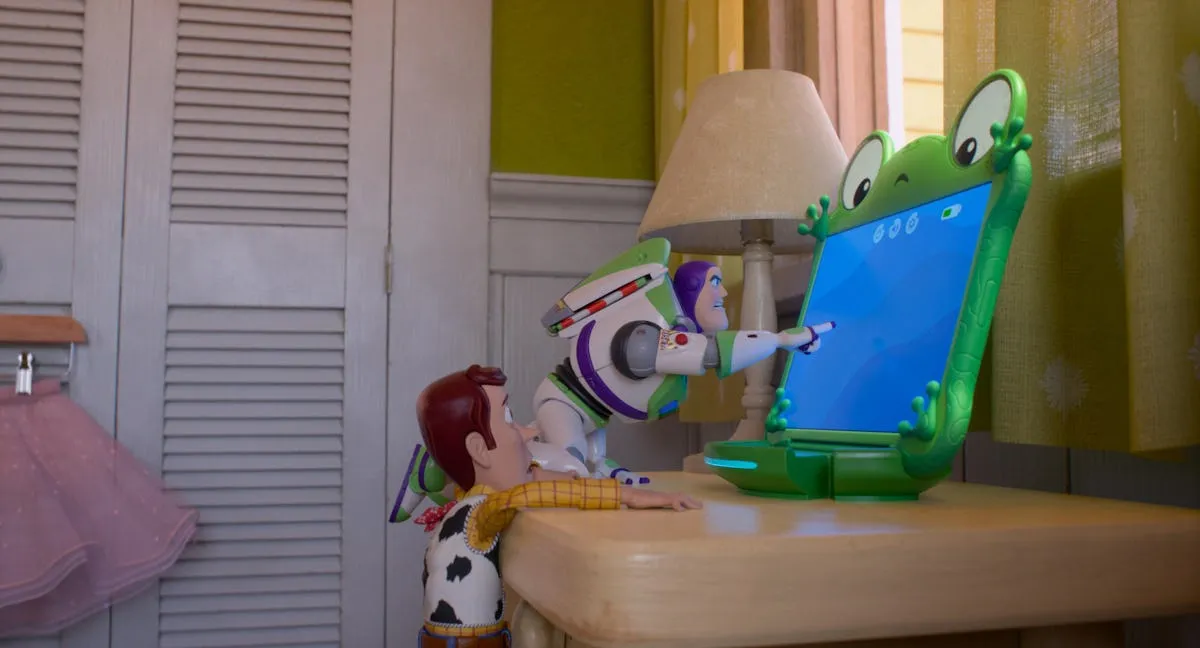
(SeaPRwire) -By: Oliver Hawthorne Pixar Toy Story 5 defies every logical wrap-up the franchise ever had. Pixar seemed to close the books twice. First with Andy passing his toys to Bonnie. Then with Woody leading a crew of lost toys. Yet here we are, 31 years after the first film. The real tension? It’s not for the next generation of kids. It’s for the millennials who grew up with Woody and Buzz. Toy Story 5 picks up years after Toy Story 4. Jessie leads Bonnie’s toy crew now. Bonnie is 8, and struggles to make friends at school. All the other kids are glued to Lilypad tablets. These tablets are ubiquitous, making kids abandon physical toys fast. Bonnie’s parents buy her a Lilypad to help her fit in. She stops playing with her toys overnight. Jessie stows away to a sleepover, and winds up at her first owner Emily’s old house. Buzz and Woody launch a rescue mission to get her back. Andrew Stanton directs, co-writing with Kenna Harris. Joan Cusack carries the film as Jessie. Woody and Buzz are supporting players now. New cast includes Conan O’Brien, Craig Robinson and Shelby Rabara. The film has 2D animated interludes. It touches on tech ubiquity and childhood loneliness. Greta Lee voices the snarky Lilypad villain. It leans hard on the iconic Sarah McLachlan track ‘When She Loved Me’ for emotional beats. It expands on Jessie’s backstory with Emily. Some critics call the emotional beats overly manipulative. Improved CG makes human characters more visible, but some fans say it makes the world feel smaller. The humor leans into adult innuendo and bathroom puns. Some fans think the film would work better as Disney+ short films instead of a full theatrical release. It carries a PG rating, and opens in theaters June 19. Buzz and Woody attempt to work Lilypad. | Pixar Pixar and Disney know exactly who is buying tickets for this film. They’re targeting the millennial audience that grew up with the original Toy Story movies. This isn’t a cash grab for kids. It’s a nostalgia play for adults tired of screen-dominated lives. As long as that audience keeps showing up, the Toy Story franchise will keep churning out new entries. It doesn’t matter if the stories are perfect or not. Author bio: Oliver Hawthorne, Principal Correspondent for a leading international tech review, covering media tech and cultural digital shifts.
More
Strange New Worlds Season 4 Is Finally Giving Trek Fans the Kirk-Spock Bromance Origin Story They’ve Waited 60 Years For Business

Strange New Worlds Season 4 Is Finally Giving Trek Fans the Kirk-Spock Bromance Origin Story They’ve Waited 60 Years For

(SeaPRwire) -By: Silas Sterling Paramount+ Paramount’s latest Trek push leans hard on its most beloved bond. For 60 years, fans have debated Kirk and Spock’s unspoken layers. The 2009 Abrams film reworked their dynamic in an alternate timeline. Now Strange New Worlds chases the original series’ canonical roots. The full Season 4 trailer dropped after an April 25 teaser. It leans into 1960s-style Trek weirdness, with aliens and phaser battles. The season’s tagline teases more TOS prequel canon than ever. The trailer opens with Spock telling Kirk, “I have many things I want to talk about.” SNW’s Kirk and Spock first met in Season 2, Episode 6. Season 3’s finale used a pivotal mindmeld to cement their bond. The trailer also teases a Uhura and Scotty kiss, a canon callback. Star Trek V’s brainwashed romance counts as official lore, too. The new launch poster for Star Trek: Strange New Worlds Season 4. | Paramount+ Season 4 debuts July 23 on Paramount+, with 10 weekly Thursday episodes. It’s the penultimate season, followed by a 6-episode final run in 2027. All versions of Star Trek currently stream on Paramount+. This arc is a play to retain the platform’s Trek-focused subscriber base. Fans have criticized past reboots for ignoring core canon rules. In the end, Trek fans hold the real power here. If Paramount botches this bromance, they’ll lose a dedicated, long-standing fan base. Author bio: Silas Sterling, veteran kernel contributor and editor-in-chief of an open-source security digest who covers geek culture media intersections.
More
200 Million Hostages: The Brutal Math Behind The Paramount-Warner Merger Business

200 Million Hostages: The Brutal Math Behind The Paramount-Warner Merger

(SeaPRwire) - By: Vivian Brooks The Justice Department greenlit a monster on June 12. Paramount is swallowing Warner Brothers Discovery. This consolidation rivals the 2019 Disney-Fox deal. It creates a Borg-like entity. Local vendors and smaller studios will suffocate. The market cannot support this much concentrated power. We are witnessing a stranglehold on content. The underdog narrative is a distraction. This is pure market dominance. Executives claim they won't keep services separate forever. Collider reported this plan on June 11. They promise a shared service. It will boast 200 million subscribers instantly. This looks like efficiency on paper. In reality, it is a forced bundling strategy. They will combine Paramount+ and HBO Max. The goal is to lock in users. It eliminates choice in the streaming landscape. Remember the Viacom and CBS remerger in 2021. That birthed the current Paramount+. Now they leverage Star Trek and DC Comics. Superman might meet the Enterprise. This isn't just about fun crossovers. It is about hoarding Intellectual Property. They control the supply chain of culture. Consumers will forget the ethics. They will just pay the subscription fee. The cycle repeats. Regulators missed the window to stop this. The deal is effectively done. We will see a cable-era monopoly return. Expect prices to rise immediately. Antitrust intervention will be too little, too late. The market is now an oligopoly. Author bio: Vivian Brooks, an independent competitive market structure analyst and corporate litigation researcher.
More
Disney’s “Atlantis” Wasn’t a Flop. The Critics Were Just Wrong for 25 Years. Business

Disney’s “Atlantis” Wasn’t a Flop. The Critics Were Just Wrong for 25 Years.

(SeaPRwire) - By: Lucas Caldwell Let’s be blunt. The idea that *Atlantis: The Lost Empire* is a bad movie is a historical artifact, not a critical truth. We spent two decades apologizing for liking it. We heard the noise: “old-fashioned,” “boring,” “no soul.” That noise came from critics who were still drunk on the Renaissance formula. They wanted showtunes. They got a pulpy, 95-minute sci-fi adventure that moved like a bullet train. That wasn’t the problem. The problem was timing. The film dropped in 2001, right when *Shrek* was gutting the fairy tale blueprint and kids were too cool for earnest wonder. So the critics, trained to expect a princess and a power ballad, saw a misfire. They didn’t see the pivot. They didn’t understand Disney was trying to grow up. We, the kids who watched it on VHS, knew better. We always did. The raw box office numbers tell a painful story. *Atlantis* bombed. It opened against *Shrek* in its third week and *Lara Croft: Tomb Raider*. The math was ugly. A 48% score on Rotten Tomatoes sealed the narrative. People called it a failure of ambition. They said it looked weird. That weirdness is the point. Production designer Mike Mignola, the guy behind Hellboy, built the visual language. The angular, shadow-heavy design looks nothing like a standard Disney film. That was the entire bet. Disney spent years perfecting musicals. Here, they stripped the songs. They stripped the romance arc. They replaced it with a team of explorers, a ticking clock, and a city floating in the center of the Earth. No internal monologues. No “I Want” song. Just characters like Milo, Rourke, and Helga Sinclair pushing against each other until the pressure cooker exploded. But here is the subtext the original reviews missed completely. *Atlantis* isn’t a story about finding a lost city. It is a story about the crew that finds it. And how that crew falls apart. The film eschews character *development* for character *complication*. Milo wants funding. Rourke wants the treasure. Helga wants to win. The relationships shift in real time. By the time they reach Atlantis, the team is a liability. That is more adult than any ballad about a beast learning to be gentle. The film gives us a colonizer narrative with a sci-fi spine. Milo bonds with Kida, the Atlantean princess. Rourke pulls out his guns. The film asks: what happens when the dreamer and the mercenary are on the same payroll? That question hits harder now than it did in 2001. We have lived through two decades of tech idealists turning into extractive monsters. *Atlantis* saw it coming. The macro industry game here is about audience fragmentation. Disney’s Experimental Era was born out of panic. The 2000s were a crisis. *Tarzan* closed the Renaissance in 1999. The kids who loved *Aladdin* were now teenagers who wanted *American Pie*. Disney didn’t know how to talk to them. So they tried *Atlantis*. Then *Treasure Planet*. Then *Lilo & Stitch*. Some worked. Some didn’t. But the dismissal of the era as a “dark age” is lazy. It ignores the risk. *Atlantis* cost something like $90 million to make. The animation, a hybrid of 2D and 3D, was cutting edge. The story was a direct homage to Jules Verne and the pulp serials of the 1940s. It was a love letter to adventure without the safety net of a musical number. The market didn’t reward it. But the cult fandom built a second life through home video and eventually Disney+. The audience found the film on their own terms. This is where the critical re-evaluation matters. Calling *Atlantis* underrated is now too weak a term. It’s a structural correction. The film’s 25th anniversary is the moment the pendulum swings. The generation that grew up with it is now writing the reviews. They are the editors. They see the Mignola aesthetic, the tight pacing, the lack of filler. They see a film that trusted its young audience to handle a darker, more cynical worldview. They see a film that refused to be a toy commercial or a sing-along. That is why it survived. *Shrek* was a cultural event. *Atlantis* was a cultural seed. It took twenty-five years to grow. The final prediction is simple. In ten years, *Atlantis: The Lost Empire* will be taught in animation history classes as the moment Disney stopped being a fairy tale factory and started being a studio. The critics were wrong. We were right.
More
Why Anya Taylor-Joy Is Warner Bros’ Last Big Bet On Middle-earth Business

Why Anya Taylor-Joy Is Warner Bros’ Last Big Bet On Middle-earth

(SeaPRwire) - By: Robert Kensington Warner Bros is digging through Tolkien’s canon for new content. Everyone saw how The Hobbit trilogy stretched thin. A new Gollum prequel sounded like another cash grab with no heart. Most fans and industry observers wrote it off before casting finished. Official announcement confirms Anya Taylor-Joy will play Seren, a new Sindar Elf. The film, The Lord of the Rings: The Hunt for Gollum, hits theaters December 17, 2027. The official line frames Seren as a natural fit to existing canon. It notes Wood-elves tracked Gollum through Mirkwood before Aragorn joined the hunt. The subtext is simple. WB knows it needs a big draw to re-engage jaded fantasy fans. Taylor-Joy already has a massive following for fantasy and period roles. She even joked recently she’s typecast as a “desert creature” ahead of Dune: Part Three. Seren does not exist anywhere in Tolkien’s original source material. WB used this same approach for The Hobbit, when it created the new character Tauriel. The studio is not just adding a random new face. It is targeting modern audiences that want fresh, compelling lead roles. Taylor-Joy’s natural ethereal vibe matches exactly what fans expect from an elf. No other working A-list actress fits that mold as well. This casting is no happy accident. It is a calculated move to fix the prequel’s biggest flaw: widespread public apathy. If this casting doesn’t move the needle on ticket pre-sales, WB will abandon its Middle-earth prequel push entirely. Author bio: Robert Kensington, media franchise investor with 25 years of experience analyzing big-budget IP strategy.
More