
(SeaPRwire) – By: Lucas Caldwell
Let’s be blunt. The idea that *Atlantis: The Lost Empire* is a bad movie is a historical artifact, not a critical truth. We spent two decades apologizing for liking it. We heard the noise: “old-fashioned,” “boring,” “no soul.” That noise came from critics who were still drunk on the Renaissance formula. They wanted showtunes. They got a pulpy, 95-minute sci-fi adventure that moved like a bullet train. That wasn’t the problem. The problem was timing. The film dropped in 2001, right when *Shrek* was gutting the fairy tale blueprint and kids were too cool for earnest wonder. So the critics, trained to expect a princess and a power ballad, saw a misfire. They didn’t see the pivot. They didn’t understand Disney was trying to grow up. We, the kids who watched it on VHS, knew better. We always did.
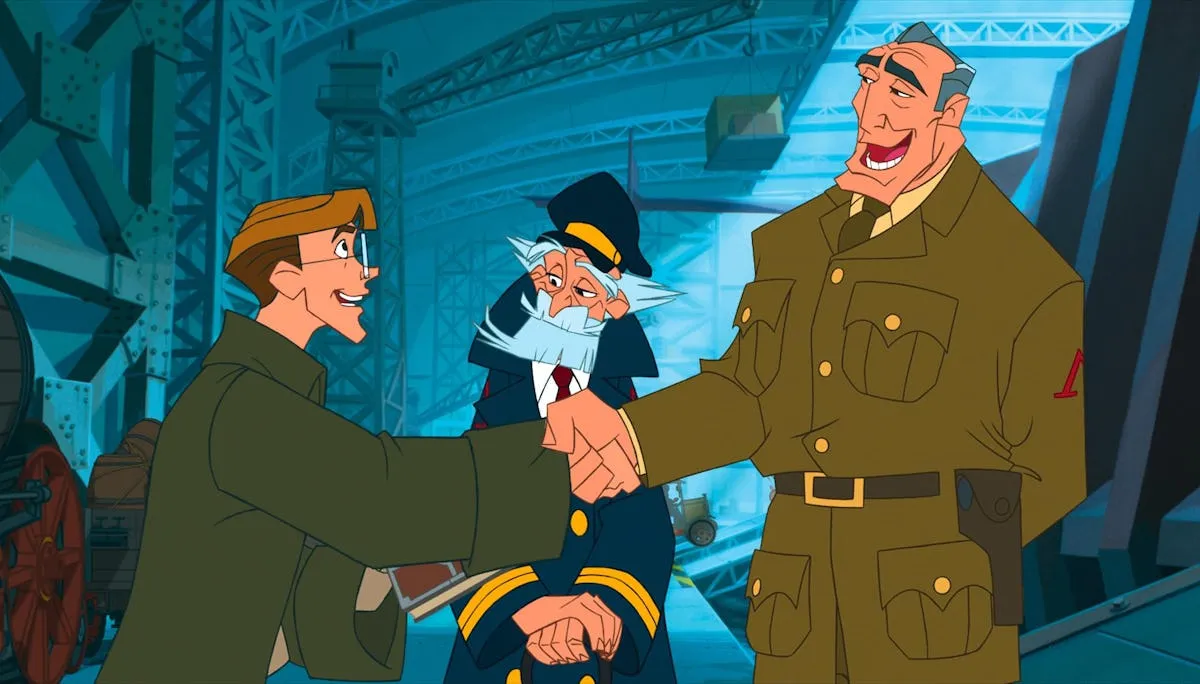
The raw box office numbers tell a painful story. *Atlantis* bombed. It opened against *Shrek* in its third week and *Lara Croft: Tomb Raider*. The math was ugly. A 48% score on Rotten Tomatoes sealed the narrative. People called it a failure of ambition. They said it looked weird. That weirdness is the point. Production designer Mike Mignola, the guy behind Hellboy, built the visual language. The angular, shadow-heavy design looks nothing like a standard Disney film. That was the entire bet. Disney spent years perfecting musicals. Here, they stripped the songs. They stripped the romance arc. They replaced it with a team of explorers, a ticking clock, and a city floating in the center of the Earth. No internal monologues. No “I Want” song. Just characters like Milo, Rourke, and Helga Sinclair pushing against each other until the pressure cooker exploded.
But here is the subtext the original reviews missed completely. *Atlantis* isn’t a story about finding a lost city. It is a story about the crew that finds it. And how that crew falls apart. The film eschews character *development* for character *complication*. Milo wants funding. Rourke wants the treasure. Helga wants to win. The relationships shift in real time. By the time they reach Atlantis, the team is a liability. That is more adult than any ballad about a beast learning to be gentle. The film gives us a colonizer narrative with a sci-fi spine. Milo bonds with Kida, the Atlantean princess. Rourke pulls out his guns. The film asks: what happens when the dreamer and the mercenary are on the same payroll? That question hits harder now than it did in 2001. We have lived through two decades of tech idealists turning into extractive monsters. *Atlantis* saw it coming.
The macro industry game here is about audience fragmentation. Disney’s Experimental Era was born out of panic. The 2000s were a crisis. *Tarzan* closed the Renaissance in 1999. The kids who loved *Aladdin* were now teenagers who wanted *American Pie*. Disney didn’t know how to talk to them. So they tried *Atlantis*. Then *Treasure Planet*. Then *Lilo & Stitch*. Some worked. Some didn’t. But the dismissal of the era as a “dark age” is lazy. It ignores the risk. *Atlantis* cost something like $90 million to make. The animation, a hybrid of 2D and 3D, was cutting edge. The story was a direct homage to Jules Verne and the pulp serials of the 1940s. It was a love letter to adventure without the safety net of a musical number. The market didn’t reward it. But the cult fandom built a second life through home video and eventually Disney+. The audience found the film on their own terms.
This is where the critical re-evaluation matters. Calling *Atlantis* underrated is now too weak a term. It’s a structural correction. The film’s 25th anniversary is the moment the pendulum swings. The generation that grew up with it is now writing the reviews. They are the editors. They see the Mignola aesthetic, the tight pacing, the lack of filler. They see a film that trusted its young audience to handle a darker, more cynical worldview. They see a film that refused to be a toy commercial or a sing-along. That is why it survived. *Shrek* was a cultural event. *Atlantis* was a cultural seed. It took twenty-five years to grow.
The final prediction is simple. In ten years, *Atlantis: The Lost Empire* will be taught in animation history classes as the moment Disney stopped being a fairy tale factory and started being a studio. The critics were wrong. We were right.