WHO declares Ebola outbreak in Central Africa a public health emergency following 80 suspected deaths Hot News

WHO declares Ebola outbreak in Central Africa a public health emergency following 80 suspected deaths

(SeaPRwire) - The World Health Organization (WHO) has declared the Ebola outbreak in Central Africa an international public health emergency following reports of dozens of suspected deaths in the Democratic Republic of Congo and nearby Uganda.The outbreak, which is caused by the Bundibugyo virus, does not meet the threshold for a pandemic-level emergency, according to the WHO.This decision comes after 80 suspected Ebola-related deaths, eight laboratory-confirmed cases, and 246 suspected cases were recorded as of Saturday across at least three health zones in the DRC—Bunia, Rwampara, and Mongbwalu.The announcement coincides with ongoing monitoring of a separate hantavirus outbreak linked to the MV Hondius cruise ship, which has resulted in multiple illnesses among passengers and crew, including three fatalities.As of May 13, the WHO confirmed 11 hantavirus cases connected to the cruise, comprising eight confirmed, two probable, and one inconclusive case.In neighboring Uganda’s capital, Kampala, two distinct laboratory-confirmed Ebola cases—including one fatality—were reported on Friday and Saturday. Both individuals had traveled from the DRC.A third laboratory-confirmed case was also identified in Kinshasa, the capital of the DRC, involving a person who had returned from Ituri province.Early testing indicates that this Ebola strain is not the Zaire variant responsible for the deadly 2018–2020 epidemic in Congo, which claimed over 1,000 lives.However, unlike the more common Ebola-Zaire strain, there are currently no approved vaccines or treatments available for the Bundibugyo strain—a fact the WHO highlighted as making this outbreak particularly exceptional.The agency warned that the true scale of the outbreak may be larger than reported due to the high rate of positive results among initial tests and the increasing number of suspected cases.The WHO emphasized that the outbreak poses a significant public health threat to other countries and urged nations to activate emergency response systems and enforce cross-border screening protocols.Ebola is a highly contagious and often fatal disease transmitted through bodily fluids such as blood, vomit, and semen. Symptoms include fever, vomiting, diarrhea, muscle pain, and internal bleeding.WHO Director-General Tedros Adhanom Ghebreyesus noted that the DRC has demonstrated a strong history of successfully managing Ebola outbreaks, and announced the release of $500,000 in emergency funds to aid containment efforts.The organization stated it will convene an emergency committee to evaluate and recommend strategies for how affected nations should respond.No travel bans or border closures have been advised by the WHO.The DRC has now experienced 17 Ebola outbreaks since the virus was first detected there in 1976. This report includes contributions from Digital’s Jasmine Baehr and Brittany Miller, along with Reuters. This article is provided by a third-party content provider. SeaPRwire (https://www.seaprwire.com/) makes no warranties or representations regarding its content. Category: Top News, Daily News SeaPRwire provides global press release distribution services for companies and organizations, covering more than 6,500 media outlets, 86,000 editors and journalists, and over 3.5 million end-user desktop and mobile apps. SeaPRwire supports multilingual press release distribution in English, Japanese, German, Korean, French, Russian, Indonesian, Malay, Vietnamese, Chinese, and more.
More
Man killed after 13-foot great white shark attack near popular island resort: officials Hot News

Man killed after 13-foot great white shark attack near popular island resort: officials

(SeaPRwire) - A 38-year-old man passed away on Saturday following a shark attack in Australia involving a 13-foot predator.According to police, the incident occurred shortly before 10 a.m. at Horseshoe Reef, situated near Rottnest Island off the country's western coast.The island lies approximately 19 miles west of Perth.Although the victim was transported to the shore, he remained unresponsive and could not be resuscitated."It is believed that a 38-year-old man was bitten by a shark while in the water at Horseshoe Reef," a representative for St. John WA Ambulance informed People."The individual was transported by boat to the shore, where he was attended to by St. John WA paramedics. Regrettably, he could not be revived."Digital has contacted St. John WA Ambulance for further comment.This marks the second fatal shark attack in Australia this year.As reported by BBC News, the Department of Primary Industries and Regional Development in Perth has advised the public to exercise "additional caution" when in the vicinity.The agency further identified the shark as a great white.Video footage captured by the Australian Broadcasting Corporation depicts police and rescue personnel at the scene with a boat.In January, a 12-year-old boy died one week after being attacked by a shark in Sydney Harbor.During that same two-day period, three other individuals were involved in non-fatal shark attacks along the coast of New South Wales.Reuters contributed to this report. This article is provided by a third-party content provider. SeaPRwire (https://www.seaprwire.com/) makes no warranties or representations regarding its content. Category: Top News, Daily News SeaPRwire provides global press release distribution services for companies and organizations, covering more than 6,500 media outlets, 86,000 editors and journalists, and over 3.5 million end-user desktop and mobile apps. SeaPRwire supports multilingual press release distribution in English, Japanese, German, Korean, French, Russian, Indonesian, Malay, Vietnamese, Chinese, and more.
More
British defence gaps exposed as the UK shuns an offensive role against Iran, prompting Trump criticism Hot News

British defence gaps exposed as the UK shuns an offensive role against Iran, prompting Trump criticism

(SeaPRwire) - LONDON: The United Kingdom announced Tuesday it will deploy military assets "as part of a future defensive mission to secure freedom of navigation in the Strait of Hormuz." While this move can be seen as a positive step in repairing relations with the U.S., Prime Minister Keir Starmer’s reluctance to join the U.S. in "Operation Epic Fury" against Iran has still caused tension in Washington—most notably with President Donald Trump. Trump has dismissed Starmer as "no Churchill." In a recent interview with Sky News, the president further complained about the lack of British alignment: "When we asked them for help, they were not there. When we needed them, they were not there... And they still aren't there." Trump also criticized the readiness of the British Navy in March, mocking the fleet during a White House meeting. "We had the U.K. say that, 'We'll send'—this is three weeks ago—'we'll send our aircraft carriers,' which aren't the best aircraft carriers, by the way," Trump said, according to Sky News. "They're toys compared to what we have." Two recent reports by a leading military expert and a parliamentary committee may, in part, explain why the U.K. did not join the conflict in an offensive capacity. In a report titled, "Iran War Delivers a Tough Lesson in Hard Power to the U.K.," Matthew Savill, director of military sciences at the Royal United Services Institute (RUSI), wrote, "The outbreak of a new war in the Middle East has led to questions about the U.K.'s relevance in international affairs. Alongside debates about legality and politics, there are some hard truths about military power and the reality of the readiness of the U.K.'s armed forces." While the report was written with the war still ongoing, Savill stated, "Pressure is growing for the deployment of more U.K. forces to the region and direct involvement in strikes, but the government will need to answer difficult questions about prioritization and the effect that it might be trying to achieve. The consequence is that as much as intent and policy drive U.K. involvement, the practical realities will constrain what the U.K. can do." Savill added, "On the defensive side, the U.K. has not been idle... [U.K. assets] which also appear to have included some counter-drone units—have been involved in downing Iranian drones while defending Jordan and Iraq." Savill wrote that "The challenge for the U.K. is that in the past few years, the commitments and visible presence of U.K. Armed Forces in the region have been shrinking, as a result of the pressure on the military, and a conscious decision to prioritize elsewhere, most recently in the ‘NATO First’ approach of the Strategic Defense Review of 2025." While the Starmer government has committed to increasing defense spending to 2.5% of GDP by 2027, experts warn that this investment may be too late to restore the U.K.’s ability to project power globally in the near term. John Hemmings, director of the National Security Center at Henry Jackson, told , "The U.K.’s military capabilities have been systematically underfunded over the past 15 years, with the Spending Review and cuts starting in 2009 and 2010 under Prime Minister David Cameron. The Strategic Defense and Security Review (SDSR) at the time stated that the world was headed in a much more dangerous state, but the fiscal devastation of the 2008 Financial Crisis pushed the Government into a series of cuts that were intended to be short-term. Instead, the Cameron Government sent the U.K.’s armed services into a spiral of terminal decline that has lasted until this day," he said. Hemmings added, "Consider the Royal Navy, the U.K.’s premier service and source of great power reach; only 25 out of 63 commissioned vessels are actual fighting ships. This force size is impossible to service Britain’s overseas responsibilities and has seen cuts of 50% in only 30 years. In 1996, there were 22 frigates, 17 submarines, 15 destroyers, and 3 aircraft carriers. Today’s First Sea Lord must attempt to carry out the same duties with seven frigates, 10 submarines, six destroyers, two aircraft carriers. In addition, the U.K. underfunded new capabilities like domestic air and missile defenses and advanced command and control systems." A second report released last month by the House of Lords International Relations and Defense Committee, titled: ‘Adjusting to new realities: rebalancing the U.K.-U.S. partnership,' presents several key recommendations where it warned of the over-dependence on the U.S. "Although the U.K. has benefited from closely collaborating with the U.S. on defense, this has fostered a dependency culture leading to a decline in U.K. capabilities and loss of U.K. credibility in Washington. The Government should provide a clear and costed pathway to achieving the commitment to increase defense spending to 5% of GDP." While the Ministry of Defense did not respond to several requests for comment regarding the state of the forces, Digital recently reported that the U.K. government said it is reversing an attrition rate in the military, stating that total armed forces strength stood at 182,050 personnel as of Jan. 1, 2026, including 136,960 regular troops, an increase from the previous year. The government has also pledged what it calls the largest sustained rise in defense spending since the Cold War, with military spending set to reach 2.6% of GDP by 2027, backed by an additional £5 billion (approximately $6.6 billion) this financial year and £270 billion (nearly $360 billion) in defense investment over the course of the current parliament. Britain has also said it aims to raise defense spending to 3% of GDP by the end of the next parliament. Analysts say while some in the Trump administration see the U.K.’s absence as a betrayal of the special relationship, others may say it is a tough lesson in the limitations of a mid-sized power that has tried to maintain a global footprint on a shrinking budget. This article is provided by a third-party content provider. SeaPRwire (https://www.seaprwire.com/) makes no warranties or representations regarding its content. Category: Top News, Daily News SeaPRwire provides global press release distribution services for companies and organizations, covering more than 6,500 media outlets, 86,000 editors and journalists, and over 3.5 million end-user desktop and mobile apps. SeaPRwire supports multilingual press release distribution in English, Japanese, German, Korean, French, Russian, Indonesian, Malay, Vietnamese, Chinese, and more.
More

Report: Seized vessel off UAE’s Strait of Hormuz may have functioned as floating armory

(SeaPRwire) - According to reports from the British military, a vessel was seized off the coastline of the United Arab Emirates (UAE) close to the Strait of Hormuz on Thursday morning. The United Kingdom Maritime Trade Operations (UKMTO) confirmed on Thursday that the vessel was boarded and "taken by unauthorised personnel" when it was located roughly 38 nautical miles northeast of Fujairah, the UAE's oil export terminal. UKMTO reported Thursday that it tracked the vessel moving toward Iranian territorial waters after the seizure took place. British authorities have not released details on the vessel's ownership or the identity of the group that seized it. While there is no official confirmation so far, the BBC reported that the Honduras-flagged ship Hui Chuan was the vessel seized in the Strait on Thursday. Citing risk management company Vanguard, the BBC reported that the ship's operators informed Vanguard that Hui Chuan was functioning as a "floating armory" for vessels traveling through the Strait to defend against pirate attacks. At least two other vessels have been seized in the Strait of Hormuz since February this year. In April, Iran's Islamic Revolutionary Guard Corps (IRGC) seized two ships in the Strait: the Panamanian-flagged MSC Francesca and the Epaminondes. Digital reached out to UKMTO and Vanguard for additional details on the incident, but did not receive an immediate response. This article is provided by a third-party content provider. SeaPRwire (https://www.seaprwire.com/) makes no warranties or representations regarding its content. Category: Top News, Daily News SeaPRwire provides global press release distribution services for companies and organizations, covering more than 6,500 media outlets, 86,000 editors and journalists, and over 3.5 million end-user desktop and mobile apps. SeaPRwire supports multilingual press release distribution in English, Japanese, German, Korean, French, Russian, Indonesian, Malay, Vietnamese, Chinese, and more.
More
A non-Jewish professor claims he was fired for criticizing Hamas supporters in a social media post Hot News

A non-Jewish professor claims he was fired for criticizing Hamas supporters in a social media post

(SeaPRwire) - A non-Jewish Canadian professor claims he was dismissed from his university position after expressing support for Israel in a social media post amid rising antisemitism in Canada following Hamas’ Oct. 7 terrorist attacks.Paul Finlayson told Digital that he lost his job at the University of Guelph-Humber after publicly condemning the massacre and kidnapping of Israelis and foreign nationals—including Americans and Canadians—in an online statement.In November 2023, Finlayson responded to a LinkedIn message from an international educator who reportedly called for the destruction of Israel. Although the original author later deleted both their post and associated comments, the National Post quoted Finlayson’s reply in a December 2023 article.“If you say ‘from the River to the Sea,’ you’re a Nazi,” Finlayson wrote. “I’m not neutral. I stand with Israel. I stand against antisemites who seek nothing but dead Jews: those who divert millions from education and healthcare funding to fueling war… You claim to support Palestine? Then you side with Hitler. You don’t desire peace—you want dead Jews… They slaughtered 1,400 innocent people and took 250 hostages, while others celebrated rapists and murderers as heroes.”Since making the post, Finlayson says he has been subjected to a targeted campaign that damaged his professional reputation and career prospects.According to Finlayson, students at the university discovered his LinkedIn response before the original poster removed the thread, prompting public backlash. During a meeting with a student in his office on Nov. 27, Finlayson said an administrator waited outside and ultimately handed him a suspension notice.A copy of the suspension letter, provided by Finlayson, references “inappropriate online comments” and places the professor “on leave pending the outcome of the investigation.” It also prohibits Finlayson from contacting “any of your departmental staff or students or broader members of the [university].”Finlayson described himself as highly regarded by students, consistently ranking among the top faculty in the business department. He asserted that false rumors about the allegations against him destroyed his academic standing, including his ability to develop courses and publish textbooks.“My trial has been conducted through defamation, and it continues via defamation,” Finlayson remarked, characterizing the process as “Kafkaesque.”He further stated that his union, OPSEU Local 562, declined to represent him. The union did not respond to Digital’s request for comment.Finlayson was formally terminated by the university in July 2025. He submitted a copy of his termination letter, which cited a “formal complaint of discrimination and harassment.” An investigator concluded that his “conduct violated the Ontario Human Rights Code and Humber’s Human Rights and Harassment Policy, and that [he] engaged in reprisal under both instruments.”The Humber harassment policy specifies that “anyone who attempts Reprisal or threatens Reprisal against a person who initiates a complaint or participates in proceedings under this Policy may be subject to disciplinary action.”The same policy affirms that “Humber upholds and supports the right to equal treatment without Discrimination” based on protected grounds, including religion and ethnic origin—which encompasses antisemitism.The University of Guelph-Humber declined to comment on Finlayson’s suspension, investigation, or dismissal. The institution also did not address whether anti-Israel posts shared by its students or professors violate the Humber Human Rights and Harassment Policy.The University of Guelph’s “UofGforPalestine” Instagram page, which identifies itself as representing “students, staff, and faculty who stand in solidarity with Palestine,” has shared content featuring the inverted red triangle used by Hamas to designate targets. Like the United States and Canada, Hamas is designated as a terrorist organization.In November 2024, the group posted images on Instagram depicting a guillotine displayed on a walking path in Guelph, showing decapitated figures of Canadian, American, and Israeli leaders painted red. Though labeled as an “anonymous submission,” the post included the caption: “Death to empire, death to colonialism and imperialism, death to the war machine.”A University of Guelph-Humber professor whom Finlayson believes initiated the complaint against him has published inflammatory statements on his personal LinkedIn profile, referring to Israel as a “terrorist state” and asserting that true peace cannot coexist with Israel’s existence.This professor did not respond to requests for comment from Digital.In contrast, three York University staff members faced legal consequences but retained their positions after participating in activism linked to the Oct. 7 attacks. In November 2023, these individuals were among 11 charged with “hate-motivated mischief” for vandalizing a bookstore with graphic images accusing a Jewish CEO of genocide and splashing the premises with red paint, as reported by the National Post.Although initially suspended, at least two of the staffers now have active profiles listed on the York University website. One, a professor, most recently taught courses during the Winter 2026 semester. York University did not respond to inquiries regarding the reinstatement of these staff members.Following the Oct. 7 terrorist attacks, antisemitic incidents surged across Canada. According to a report released in April by B’nai Brith Canada’s League for Human Rights, there were 6,800 such incidents recorded in 2025—a 9.4% increase from the previous year. This averages to 18.6 incidents per day and represents the highest number ever documented since the organization began tracking such events. This article is provided by a third-party content provider. SeaPRwire (https://www.seaprwire.com/) makes no warranties or representations regarding its content. Category: Top News, Daily News SeaPRwire provides global press release distribution services for companies and organizations, covering more than 6,500 media outlets, 86,000 editors and journalists, and over 3.5 million end-user desktop and mobile apps. SeaPRwire supports multilingual press release distribution in English, Japanese, German, Korean, French, Russian, Indonesian, Malay, Vietnamese, Chinese, and more.
More

Hamasdeliberately and systematically used sexual violence on Oct. 7, commission report finds

(SeaPRwire) - WARNING: This article includes graphic and disturbing accounts from the October 7 massacre in Israel.Hamas and its Palestinian collaborators employed sexual and gender-based violence "deliberately and systematically" as an intrinsic element of their broader strategy during the 2023 massacres in southern Israel, according to a report released Tuesday by the Civil Commission on Oct. 7 Crimes Against Women and Children.The Israeli nonprofit stated that its investigation gathered evidence of abuse at various locations during the Oct. 7 terror incursion, including the Nova Music Festival, kibbutzim situated near the Gaza border, Israel Defense Forces bases, among hostages held in captivity, and in the condition of recovered bodies exhibiting signs consistent with sexual violence.The report detailed that investigators identified at least 13 recurring forms of abuse, encompassing rape, sexual torture, shootings targeting victims’ genital areas, and abuse inflicted post-mortem.Dr. Cochav Elkayam-Levy, founder and chair of the Civil Commission and a principal co-author of the report, informed Digital that the most significant challenge in compiling the findings was the team's repeated exposure to graphic material and the associated trauma of regularly reviewing it."We were compelled not only to gather materials but also to review and analyze them alongside forensic experts while witnessing human suffering at its most extreme," Elkayam-Levy stated. "Our motivation stemmed from the denial, hesitation, and questioning we encountered. We were determined to ensure the world comprehends what transpired to the victims."For us, this represents a final act of justice for the victims," she added.The report also documented instances where sexual violence was perpetrated in the presence of or involving family members, including one alleged incident where relatives were coerced into committing acts against one another.Furthermore, it accused Hamas and allied perpetrators of utilizing videos, digital platforms, and social media as instruments to amplify psychological harm, disseminate fear, and publicize the attacks, including the distribution of sexualized content.Elkayam-Levy expressed her hope that the findings would extend beyond academic circles, human rights organizations, or activists, and also be examined by counterterrorism and national security experts to foster a deeper understanding and confrontation of such atrocities."We cannot prevent what we do not fully comprehend," Elkayam-Levy asserted. "No single prosecution could ever fully encapsulate the magnitude of these crimes in the way this report does. Consequently, it is crucial for policymakers, decision-makers, members of Congress, and senators to find avenues for formally recognizing these findings and conducting hearings to initiate addressing this issue. We desire the findings of this report to receive formal institutional acknowledgment."Elkayam-Levy pointed out that the report highlights that victims of the Oct. 7 atrocities hailed from 52 countries, underscoring the global reach and impact of the attack.Witness testimonies included in the report featured an account of a woman who was sexually assaulted before being beheaded. Another witness described observing a woman being dragged from a vehicle, pinned against a wall, repeatedly raped, and then stabbed, with the assault allegedly continuing after her death.In a separate case, a witness recounted discovering the body of a man whose genitals had been severed, lying next to the body of a woman holding them, in what the report characterized as an apparent effort to degrade and humiliate the victims.Investigators reported that some female victims were found naked or partially unclothed, with evidence of severe mutilation and the insertion of objects such as grenades, nails, and household tools into their bodies. The report also cited gunshot wounds, cuts, and burn injuries concentrated on intimate areas.The report indicated that some female bodies brought to morgues displayed broken pelvises or legs, bloodied underwear, and additional trauma to the abdomen or groin.Former hostages, both female and male, have also provided testimony regarding rape, sexual torture, and other forms of abuse during their abduction or captivity, according to the report. It stated that some female captives reported experiencing sexual assaults while receiving medical treatment in Gaza hospitals for injuries sustained during the attacks.Male hostages similarly described sexual abuse during their captivity, including assaults in showers and incidents carried out under armed threat while victims were naked, the report noted. One former hostage recounted being sexually assaulted when a captor forcibly rubbed his genitals against the victim’s anus.Last month, former hostage Rom Braslavski shared the abuse he claimed to have endured during captivity in an exclusive interview with Digital."They would hit me with whatever they had on hand. I underwent severe torture, bondage, and sexual abuse. Everything they could do to me, they did. My body is still covered in scars. After four months of torture, I was clinically dead, rolling my eyes and passing out. They decided to stop the violence and brought doctors to treat me with injections and gave me food again," he recounted.The report asserted that sexual and gender-based violence was "widespread and systematic" and constituted an "integral component" of both the Oct. 7 attacks and the subsequent treatment of captives, while deeming the prosecution of such crimes an "urgent" priority to be pursued through international accountability mechanisms.Among its recommendations, the commission advocated for targeted sanctions against individuals and entities accused of perpetrating or materially supporting the Oct. 7 attack and its aftermath. It also urged action against what it described as the denial, minimization, or politicization of the sexual crimes committed during the massacre and in captivity."The Commission further recommends that Israel adopt a comprehensive gender strategy within its prosecutorial framework and establish a specialized chamber or panel of judges dedicated to the prosecution of sexual and gender-based crimes committed on October 7th and during captivity," the report stated.Elkayam-Levy mentioned that the report has garnered significant international attention, including front-page coverage in U.S. and global media outlets. "We feel the discussion has shifted from questioning whether these crimes occurred to examining their consequences," she commented. "There is now a substantial legal evidentiary foundation preserved in a secure archive that cannot be denied." This article is provided by a third-party content provider. SeaPRwire (https://www.seaprwire.com/) makes no warranties or representations regarding its content. Category: Top News, Daily News SeaPRwire provides global press release distribution services for companies and organizations, covering more than 6,500 media outlets, 86,000 editors and journalists, and over 3.5 million end-user desktop and mobile apps. SeaPRwire supports multilingual press release distribution in English, Japanese, German, Korean, French, Russian, Indonesian, Malay, Vietnamese, Chinese, and more.
More
Iran deploys small submarines to Strait of Hormuz as expert notes vulnerability to detection Hot News

Iran deploys small submarines to Strait of Hormuz as expert notes vulnerability to detection

(SeaPRwire) - Iran has announced the deployment of small submarines to serve as an "invisible guardian" of the Strait of Hormuz, amid a series of rejected peace agreements between Tehran and the U.S., according to reports.The claim of submarine deployment emerged as analysts noted that while Iran’s Ghadir-class mini-submarines could pose a threat to U.S. naval forces, their limited range, firepower, and endurance would significantly reduce any meaningful strategic effect.Bloomberg highlighted the submarine deployment, which was first reported by the semi-official Tasnim News Agency.Rear Admiral Shahram Irani, head of Iran’s navy, stated that his forces had deployed light submarines, described by Iranian state media as the "dolphins of the Persian Gulf."The move also coincides with Tehran’s efforts to strengthen its control over the strait, now defined as a much broader zone, Reuters reported."Time would be limited—probably no more than a few days at most," defense analyst Tom Shugart told Digital regarding the Iranian submarine deployment.The retired U.S. Navy submarine warfare officer also pointed out that the small diesel-electric submarines face significant operational limitations."If they use their diesel engines to snorkel and recharge batteries, that could produce noise detectable by sonar," Shugart said."Their snorkel masts extending above the water could also be spotted by radar on patrol aircraft or helicopters," he added.Designed for shallow waters such as the Strait of Hormuz, these submarines can operate quietly for short durations using battery power."While they may be able to remain submerged on the seabed for a time and run quietly on batteries, they lack an air-independent propulsion system (AIP) found in more advanced diesel-electric submarines," Shugart explained, noting that they would "eventually need to surface and snorkel, making them more susceptible to detection and attack."The Islamic Revolutionary Guard Corps (IRGC) Navy is reportedly the only operator of this submarine class, all of which are part of the Southern Fleet."Any remaining Ghadir-class submarines, if they exist and are actively deployed, might be capable of laying mines or threatening merchant vessels," Shugart cautioned."However, I don’t consider them a serious threat to U.S. Navy warships—let alone to U.S. submarines," he said."That said, I certainly wouldn’t want to be aboard one in the current climate."On May 10, the U.S. Navy confirmed that an Ohio-class nuclear-powered submarine armed with ballistic missiles had arrived in Gibraltar."The port visit underscores U.S. naval capability, flexibility, and ongoing commitment to NATO allies," stated U.S. Sixth Fleet Public Affairs."Ohio-class ballistic missile submarines serve as undetectable launch platforms for submarine-launched ballistic missiles, forming the most survivable component of the U.S. nuclear triad," the statement added.Shugart’s comments came as the Strait of Hormuz remains effectively shut down, with commercial tanker traffic largely halted due to ongoing military operations and the continued U.S. blockade of Iranian ports.The United Arab Emirates and South Korea reported new attacks on stranded ships on Wednesday, while the IRGC stepped up activity with fast-attack craft, according to reports.President Donald Trump has repeatedly claimed that Iran’s navy is "completely destroyed."The Pentagon did not immediately respond to Digital’s request for comment. This article is provided by a third-party content provider. SeaPRwire (https://www.seaprwire.com/) makes no warranties or representations regarding its content. Category: Top News, Daily News SeaPRwire provides global press release distribution services for companies and organizations, covering more than 6,500 media outlets, 86,000 editors and journalists, and over 3.5 million end-user desktop and mobile apps. SeaPRwire supports multilingual press release distribution in English, Japanese, German, Korean, French, Russian, Indonesian, Malay, Vietnamese, Chinese, and more.
More
Trump confronts division among retired U.S. commanders on restarting Iran attacks Hot News

Trump confronts division among retired U.S. commanders on restarting Iran attacks

(SeaPRwire) - President Donald Trump described the ceasefire with Iran as being on "massive life support," highlighting a growing divide among retired U.S. commanders and national security experts regarding whether Washington should restart military operations against Tehran or steer clear of what critics warn could evolve into another protracted Middle East conflict."I would say the ceasefire is on massive life support," Trump stated to reporters on Monday, likening it to a medical scenario where "the doctor walks in and says, ‘Sir, your loved one has approximately a 1% chance of living.’"Trump also dismissed Iran’s most recent response to a proposed agreement as "a piece of garbage," even as reports indicate the White House is assessing military options should negotiations fall apart.Retired Lt. Gen. H.R. McMaster, who previously served as Trump’s national security adviser, expressed skepticism that Iran’s leadership would agree to the concessions Trump deems essential for a deal."I think the Iranian leadership and IRGC are unwilling to make the kind of concessions that President Trump thinks are at the minimum," McMaster remarked to Digital, referring to Iran’s hardline Islamic Revolutionary Guard Corps."President Trump always wants a deal," he added. "But he's not going to sign up for a bad deal."The ongoing debate now hinges on a central issue facing Washington: whether increased military pressure can compel Iran to abandon its nuclear and missile ambitions, or if renewed strikes would only intensify regional hostilities without yielding decisive outcomes.Retired Vice Adm. Mark Fox, former deputy commander of U.S. Central Command (CENTCOM), believes the current ceasefire and diplomatic efforts are unlikely to force Iran into submission."I really cannot envision anything other than a full return to combat operations," Fox told Digital. "The only thing that they will respond to, I think ultimately, is force."Fox argued that the U.S. military remains capable of reopening and securing commercial shipping through the Strait of Hormuz despite persistent Iranian threats against vessels traversing the waterway."This is a militarily obtainable objective," he said, outlining a strategy involving guided missile destroyers, attack helicopters, drones, and expanded aerial surveillance to establish a protected maritime corridor through the strait.Fox acknowledged that the U.S. Navy is smaller than it was during the 1980s tanker wars but maintained that American forces still possess the capacity to secure the strategic chokepoint if Washington commits sufficient naval assets and continuous monitoring operations."It’s not easy," Fox admitted. "But the geography is fixed."He outlined a possible approach that would deploy destroyers, drones, and attack aircraft to create what he called an "unblinking eye" over the strait, enabling U.S. forces to detect and neutralize Iranian speedboats, drones, and anti-shipping threats before they can target commercial vessels.Fox also cautioned against allowing Iran to maintain leverage over the Strait of Hormuz while continuing to advance its missile and nuclear programs."If not now, when?" he asked. "If they had a nuclear weapon, they would use it."Fox, who co-signed a recent policy paper by the Jewish Institute for National Security of America, echoed the report’s conclusion that Iran is leveraging negotiations to buy time while preserving its military capabilities.The report, authored by several retired senior U.S. military officials and national security experts—including retired Gen. Chuck Wald, former deputy commander of U.S. European Command, and retired Vice Adm. Robert Harward, former deputy commander of CENTCOM—asserted that the current ceasefire and diplomatic track "cannot reliably compel Iran" to meet U.S. demands. It warned that Tehran is seeking to "drag out talks, erode U.S. resolve, and use the time to strengthen itself."The report advocated for expanded military operations targeting Iran’s maritime capabilities, missile infrastructure, and internal coercive apparatus, while avoiding broad attacks on civilian infrastructure that could provoke wider regional escalation.However, not all experts believe renewed military action would lead to better results.Retired Lt. Col. Daniel Davis, a senior fellow at Defense Priorities and a long-standing critic of expanded U.S. military interventions, cautioned that calls to "finish the job" overlook the realities revealed during recent clashes."To ‘finish the job,’ as they say, is irrational," Davis told Digital. "It’s illogical, and it violates any kind of military principle."Davis pointed out that despite thousands of strikes and weeks of fighting, Iran retained substantial missile and maritime capabilities."We couldn't knock them out with 14,000 targets hit," he noted. "Why does anybody think that going back another time is going to have a different result?"He characterized Iran’s geography, dispersed missile infrastructure, and asymmetric naval tactics as creating what he termed "a militarily unsolvable problem.""The only thing left is a diplomatic outcome," Davis concluded.This disagreement reflects a broader schism emerging in Washington as officials deliberate on the next steps should negotiations collapse.Advocates for renewed military action argue that Iran is weaker than it has been in decades and that halting now would risk allowing Tehran to regroup, rebuild its missile arsenal, and retain influence over one of the world’s most critical energy chokepoints.Opponents counter that even extensive U.S. and Israeli strikes failed to fundamentally dismantle the regime’s control or eliminate its military capabilities, raising concerns that further escalation could entangle the United States in another prolonged regional conflict with uncertain consequences. This article is provided by a third-party content provider. SeaPRwire (https://www.seaprwire.com/) makes no warranties or representations regarding its content. Category: Top News, Daily News SeaPRwire provides global press release distribution services for companies and organizations, covering more than 6,500 media outlets, 86,000 editors and journalists, and over 3.5 million end-user desktop and mobile apps. SeaPRwire supports multilingual press release distribution in English, Japanese, German, Korean, French, Russian, Indonesian, Malay, Vietnamese, Chinese, and more.
More

Islamabad denies allowing Iran jets to use its airfields, Trump praises Pakistan’s mediation as ‘absolutely great’

(SeaPRwire) - Pakistan dismissed reports on Tuesday that it had permitted Iranian aircraft to operate from its airfields during heightened tensions with the United States—allegations suggesting this move might have protected the planes from possible airstrikes—even as Islamabad positioned itself as a prominent mediator between the two nations.According to a May 11 report, Tehran may have also dispatched a civilian aircraft to Afghanistan amid the conflict.Pakistan described the CBS report as "misleading and sensationalized" in a statement issued by the Ministry of Foreign Affairs. The ministry added that such speculative narratives appeared designed to undermine ongoing efforts toward regional stability and peace."Following the ceasefire and during the first round of the Islamabad Talks, several aircraft from Iran and the United States arrived in Pakistan to assist in the transportation of diplomatic personnel, security teams, and administrative staff involved in the talks," the ministry stated. It further clarified that "some aircraft and support personnel remained temporarily in Pakistan in preparation for subsequent rounds of engagement."The reported movement of Iranian assets also suggested an attempt by Iran to conceal certain aerial assets while Pakistan worked discreetly to broker a ceasefire between Iran and the United States.President Donald Trump confirmed on Tuesday that he was satisfied with Pakistan’s mediation efforts, telling reporters ahead of his visit to China that they were "great.""I think the Pakistanis have been great. The field marshal and the prime minister of Pakistan have been absolutely great," Trump emphasized.In April, Pakistan emerged as a key mediator in de-escalating tensions between Washington and Tehran during the Strait of Hormuz crisis and the broader regional standoff.Islamabad hosted high-level delegations for talks on April 11–12 after helping secure a temporary two-week ceasefire.Pakistan’s role was notable due to its geographic proximity to Iran and its longstanding strategic partnership with the United States.The mediation process was led by Prime Minister Shehbaz Sharif, Army Chief Gen. Asim Munir, and Foreign Minister Ishaq Dar.Officials told CBS that, days after Trump announced a ceasefire with Iran in early April, Tehran sent multiple aircraft to the Pakistan Air Force Base Nur Khan.Nur Khan Airbase, located near Rawalpindi, is considered a critical facility of the Pakistan Air Force and functions as a major logistical and operational hub.Among the aircraft reportedly moved there was an Iranian Air Force RC-130, a reconnaissance and intelligence-gathering version of the Lockheed C-130 Hercules, according to the outlet.Despite initial progress in U.S.-Iran relations, talks held in Islamabad on April 11 ultimately failed to reach an agreement.Nevertheless, Pakistani leadership expressed optimism. "We are very optimistic that the current momentum will lead to a lasting agreement," Prime Minister Shehbaz Sharif remarked.Trump reaffirmed his praise for Pakistan’s mediating role, stating on May 7, "Pakistan has been fantastic. And its leaders have been fantastic—the marshal and the prime minister."As part of the next phase, Trump launched "Project Freedom" to facilitate vessel transit through the Strait of Hormuz and aid in freeing stranded shipping crews.Trump’s initiative to help thousands of stranded crew members lasted 48 hours, with the president later noting it was halted "at the request of Pakistan and other countries," including Saudi Arabia, to avoid disrupting ongoing negotiations with Iran.Sen. Lindsey Graham, R-S.C., said Monday that if Pakistan did indeed shelter Iranian aircraft during the mediation, it would necessitate a complete reassessment of its role."If this reporting is accurate, it would require a complete reevaluation of the role Pakistan is playing as mediator between Iran, the United States, and other parties. Given some of the prior statements by Pakistani defense officials regarding Israel, I would not be surprised if this were true," Graham wrote in a post shared on X.Digital media outlets have reached out to the Government of Pakistan, The White House, and U.S. Central Command for comment. This article is provided by a third-party content provider. SeaPRwire (https://www.seaprwire.com/) makes no warranties or representations regarding its content. Category: Top News, Daily News SeaPRwire provides global press release distribution services for companies and organizations, covering more than 6,500 media outlets, 86,000 editors and journalists, and over 3.5 million end-user desktop and mobile apps. SeaPRwire supports multilingual press release distribution in English, Japanese, German, Korean, French, Russian, Indonesian, Malay, Vietnamese, Chinese, and more.
More
Inside the Christian border town in Lebanon that survived by defying Hezbollah Hot News

Inside the Christian border town in Lebanon that survived by defying Hezbollah

(SeaPRwire) - The church bells still toll in Rmeish, a village on the Lebanon-Israel border.While much of southern Lebanon has endured devastation amid the conflict between Israel and the militant group Hezbollah, Rmeish—a predominantly Christian town near the frontier—remains largely unscathed. Its churches still stand, homes remain undamaged, and residents attribute their safety to their refusal to let Hezbollah operate within the village."There were multiple attempts by Hezbollah fighters to approach the village’s outskirts or entrance to launch rockets," one resident told Jusoor News. "The young men of Rmeish confronted them and blocked their entry.""That ensured Rmeish was spared from Israeli strikes," the resident added. "The Israelis don’t attack indiscriminately—they target rocket launch sites."The account provides a rare public look at open defiance of Hezbollah in southern Lebanon, where dissent against the Iran-backed group is often silenced with accusations of treason or collaboration with Israel.Tarek, a Christian activist from Rmeish who spoke with Digital by phone, said the town has long faced pressure for refusing to align with Hezbollah."Since 2000, after Israel withdrew, we’ve constantly been labeled as Israeli collaborators," Tarek said. "We’ve endured immense hardship because of that stigma."He noted that Hezbollah supporters accused the village of working with Israel simply because it avoided the destruction seen in nearby communities.The interviews come as the Trump administration facilitates negotiations between Israel and Lebanon aimed at stabilizing the border and curbing Hezbollah’s military activities in southern Lebanon. Hezbollah leader Naim Qassem recently dismissed any possibility of disarming, even as U.S. officials continue efforts to bolster the Lebanese state at the expense of the armed group.Tarek argued that Hezbollah’s influence in Lebanon is inseparable from Iran’s."Hezbollah has effectively controlled the Lebanese government for nearly 36 years," he told Digital. "It’s deeply embedded in every branch—government, security, military, and state institutions.""Even if the president or prime minister calls for peace, Hezbollah will oppose it," he said.According to Tarek, weakening Iran is essential to weakening Hezbollah."It’s about cutting off the head of the octopus—the Iranian regime," he explained. "Once that’s done, Hezbollah can no longer function."Another resident said many in Rmeish now believe "Hezbollah’s agenda is an Iranian project, not a Lebanese one."A local woman described living in constant tension, surrounded by conflict yet striving to keep her town out of the fighting."We’re caught in the middle, with war closing in from all sides," she said. "It leaves us in a state of fear, anxiety, insecurity, and instability."A man from the village said residents have suffered through decades of wars they never chose."We’ve chosen to stay strong," he said. "Where else could we go?"An elderly resident recalled his family enduring border violence since the 1970s."We’re exhausted by war," he said. "All we want is peace."Despite backlash from Hezbollah supporters, residents maintain they do not regret resisting the group."We reject all accusations of treason," one resident stated. "The people of Rmeish simply want to live safely on their land."Another added: "Just because I don’t support your cause doesn’t make me a traitor."Ahed Al Hendi, a senior fellow at the Center for Peace Communications, told Digital that "the resistance shown by Christians in southern Lebanon signals a significant shift in the country’s internal dynamics. For over twenty years, many border-dwelling Christians lived under Hezbollah’s dominance, often stigmatized and afraid to speak out.""Now," Al Hendi continued, "as the balance of power changes, they are increasingly challenging Hezbollah openly and speaking against what they view as its oppression." This article is provided by a third-party content provider. SeaPRwire (https://www.seaprwire.com/) makes no warranties or representations regarding its content. Category: Top News, Daily News SeaPRwire provides global press release distribution services for companies and organizations, covering more than 6,500 media outlets, 86,000 editors and journalists, and over 3.5 million end-user desktop and mobile apps. SeaPRwire supports multilingual press release distribution in English, Japanese, German, Korean, French, Russian, Indonesian, Malay, Vietnamese, Chinese, and more.
More

Trump administration rejects UN migration declaration, calling mass migration never safe

(SeaPRwire) - On Monday, the U.S. State Department declared it would not endorse the "progress" declaration from the International Migration Review Forum, alleging that the United Nations is attempting to "promote and enable replacement immigration within the United States and throughout the wider West."The department stated in a Monday release that the United States abstained from the second International Migration Review Forum, which took place May 5–8 at U.N. Headquarters in New York, and will not endorse the resulting declaration.As noted by the U.N. Network on Migration, the forum serves as the primary global venue for member states to assess the implementation of the Global Compact for Safe, Orderly and Regular Migration. The 2026 session was intended to yield an intergovernmentally agreed "Progress Declaration."President Donald Trump halted U.S. involvement in the U.N. process for the Global Compact for Migration during his first term in 2017, and the State Department now asserts that the federal government will reaffirm this opposition.The Global Compact was adopted in 2018 following the United States' withdrawal from the negotiations. Both the U.N. and the International Organization for Migration characterize the compact as a cooperative framework designed to enhance migration governance internationally."As Secretary Rubio stated, welcoming mass migration was a serious error that jeopardizes the stability of our societies and the future of our nations," the department's statement reads."In recent years, Americans have seen firsthand how mass immigration has devastated our communities: border crime and chaos, states of emergency in major cities, and billions of taxpayer dollars spent on hotels, plane tickets, cell phones, and cash cards for migrants.""Much of this was driven by U.N. agencies and their partners, which not only enabled the invasion of our country but also proceeded to redistribute our own people's wealth and resources to millions of foreigners from the most troubled regions of the world," it continued.The department contended that there was nothing safe, orderly, or regular about these actions, noting that the costs were "borne primarily by working Americans forced to compete for limited jobs, housing, and social services.""The U.N. has little to say about these Americans," the department wrote."President Trump is focused on the interests of Americans, not foreigners or globalist bureaucrats," the statement reads. "The United States will not support a process that imposes, whether openly or covertly, guidelines, standards, or commitments that restrict the American people's sovereign, democratic right to make decisions in the best interests of our country."The department concluded its statement by stating that its objective is not to "manage" migration, but to "facilitate remigration."In an X thread also announcing the objection to the declaration, the department stated that U.N. agencies "systematically facilitated mass migration into America and Europe, even as citizens of these nations called for restrictions on migration." It added that U.N. materials related to the Global Compact advocate for expanding regular migration pathways and reference the "regularization" of migrants.The International Organization for Migration states that the forum occurs every four years to allow countries to review progress and shape future migration policy. IOM, which coordinates the U.N. Network on Migration, notes that the network comprises 39 U.N. agencies working to assist countries on migration issues.The department alleged that "U.N. agencies – working with the NGOs they fund – established a migration corridor through Central America and to the U.S. border," the post reads. "As the American people suffered under an unprecedented wave of mass migration, the U.N. was on the ground piping migrants to our southern border.""After facilitating mass migration to the United States, U.N. agencies condemned the deportation of illegal immigrants," the post continued. "While the United Kingdom faced unprecedented illegal boat crossings, U.N. agencies criticized plans for deportations. U.N. officials lobbied aviation regulators to block the deportation of migrants – a shocking violation of the United Kingdom's national sovereignty."The U.N. Network on Migration describes the compact as "non-legally binding." A U.N.-hosted text of the compact also asserts that it respects states' sovereign right to determine their national migration policies and to distinguish between regular and irregular migration status.The declaration itself characterizes the Global Compact as a cooperative framework and acknowledges that no state can address migration in isolation, while also upholding state sovereignty.The department pushed back against the compact's framing of migration as "safe, orderly, and regular.""For citizens of Western nations, mass migration was never safe. It introduced new security threats, imposed financial burdens, and undermined the stability of our societies," it wrote."The United States will not legitimize global compacts that facilitate mass migration into America or Western nations," the post added.U.N. materials frame the compact as a cooperative framework for cross-border issues, including labor migration, border management, migrant protection, and development. U.N. agencies, including the Office of the High Commissioner for Human Rights, describe the IMRF as a state-led review process involving relevant stakeholders.Digital has reached out to the U.N. for comment. This article is provided by a third-party content provider. SeaPRwire (https://www.seaprwire.com/) makes no warranties or representations regarding its content. Category: Top News, Daily News SeaPRwire provides global press release distribution services for companies and organizations, covering more than 6,500 media outlets, 86,000 editors and journalists, and over 3.5 million end-user desktop and mobile apps. SeaPRwire supports multilingual press release distribution in English, Japanese, German, Korean, French, Russian, Indonesian, Malay, Vietnamese, Chinese, and more.
More

Macron intervenes at Africa summit to reprimand attendees for “total lack of respect”

(SeaPRwire) - French President Emmanuel Macron drew significant backlash after he intervened during a youth-oriented session at the Africa Forward Summit in Nairobi on Monday, openly reprimanding participants for speaking over presenters and labeling the disturbance "a total lack of respect."Footage from the event depicted Macron standing up from his chair and proceeding onto the stage during the "Africa Forward: Creation in Motion" session, a segment that showcased artists and young entrepreneurs discussing culture and innovation."Excuse me, everyone. Hey, hey, hey," Macron addressed the audience. "I apologize, folks. But it's unfeasible to discuss culture, to have such highly inspired individuals, present here, delivering a speech amidst such noise.""Therefore, this demonstrates a complete absence of respect," he proceeded. "I propose that if you wish to engage in private conversations or discuss other matters, you utilize the designated bilateral rooms, or step outside. If you choose to remain here, we will listen to the speakers, and we will all participate respectfully."Macron's unsolicited comments quickly drew condemnation on social media. Fadzayi Mahere, a former Zimbabwean Member of Parliament, challenged the French president on X, stating: "Respectfully @EmmanuelMacron I do not believe it is polite or suitable for you to arrive on our Continent and address people in such a demeaning manner. They are not your children. Avoid being patronizing. Consider if a state guest behaved similarly in your nation? Would it be acceptable? I doubt it."A separate post by a Kenyan-Canadian lawyer, boasting 3.1 million followers, declared, "Africans do not require @EmmanuelMacron’s authorization to speak in Africa," as stated by Dr. Miguna Miguna, who, according to local news, announced his candidacy for the Kenyan presidency in 2027 this past January. According to a report released Monday by Modern Ghana, the interruption held a symbolic irony, given that Macron had journeyed to Kenya to advocate for what Paris characterizes as a more equitable and respectful collaboration with African countries, aiming to depart from what detractors have historically perceived as a paternalistic post-colonial framework.The occurrence transpired during the Africa Forward Summit in Nairobi, an event where over 30 African leaders, business executives, and young entrepreneurs convened for deliberations centered on economic advancement, innovation, and collaboration between Africa and Europe.Kenya’s Standard Media indicated that the interaction "cast an uncommon shadow" over the summit, observing that certain civil society organizations labeled the two-day gathering a "reengineering of imperialism."This incident highlighted the delicate equilibrium Macron must maintain as France endeavors to reshape its ties with Africa, subsequent to years of political friction and military pullbacks from various West African nations.Earlier on Monday, Macron informed students at the University of Nairobi that "Africa is thriving" and contended that the continent requires investment to bolster its sovereignty, rather than relying on development assistance, as per Modern Ghana’s report by Mustapha Bature Sallama. The report further mentioned that Macron recognized France’s own fiscal limitations during his address.Macron has progressively prioritized collaborations with African youth, entrepreneurs, and cultural figures as Paris re-evaluates its Africa strategy amidst intensifying rivalry from Russia, China, and Turkey for sway throughout the continent.Reuters provided input for this report. This article is provided by a third-party content provider. SeaPRwire (https://www.seaprwire.com/) makes no warranties or representations regarding its content. Category: Top News, Daily News SeaPRwire provides global press release distribution services for companies and organizations, covering more than 6,500 media outlets, 86,000 editors and journalists, and over 3.5 million end-user desktop and mobile apps. SeaPRwire supports multilingual press release distribution in English, Japanese, German, Korean, French, Russian, Indonesian, Malay, Vietnamese, Chinese, and more.
More
Iran regime power players may seek Russia in Assad-style escape as US talks falter: expert Hot News

Iran regime power players may seek Russia in Assad-style escape as US talks falter: expert

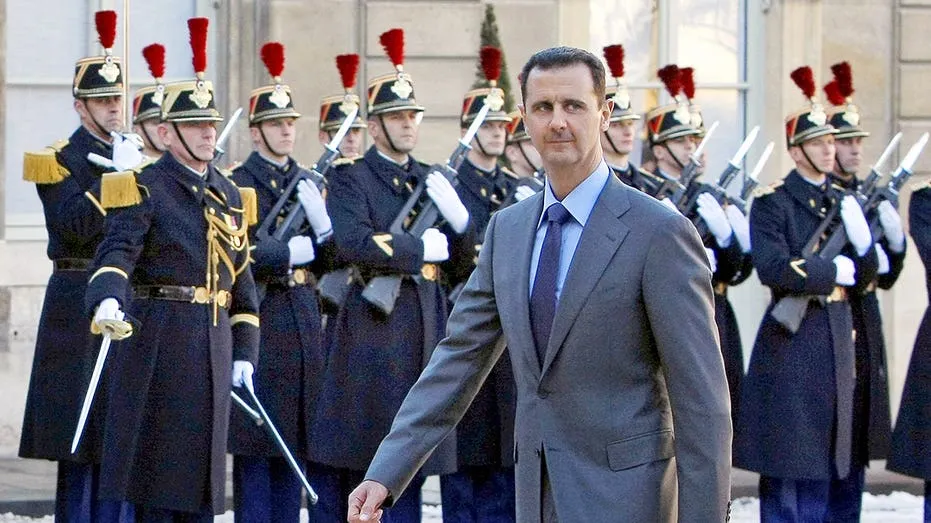
(SeaPRwire) - The seemingly collapse of high-stakes U.S.-Iran negotiations has heightened fears that senior leaders within Tehran’s ruling establishment could flee to Russia to seek shelter, with the aim of "continuing their insurgency and undermining any new Iranian regime," an analyst warns. The breakdown of the talks comes as Israeli Prime Minister Benjamin Netanyahu told CBS’ "60 Minutes" that overthrowing Iran’s ruling regime could now even be a feasible outcome. Netanyahu pointed out that any such collapse would dismantle the "scaffolding" of Tehran’s global network of terrorist proxies, potentially ending Hezbollah’s regional influence as well. "The entire framework of the terrorist proxy network that Iran has built will crumble if the Iranian regime falls," Netanyahu stated. "I believe no one can predict when that will occur. Is it a possibility? Yes. Is it guaranteed? No," he cautioned. With diplomatic options likely exhausted and the regime’s stability in doubt, one expert has posited that any exit strategy the ruling leadership might be considering could mirror that of Syrian President Bashar al-Assad, who fled Syria in 2024. "If the situation deteriorates further, some senior figures could potentially follow a similar path to Bashar al-Assad’s inner circle and seek refuge in Russia," Middle East expert Saeid Golkar told Digital. Golkar, a senior advisor at United Against Nuclear Iran, noted that escape destinations would likely depend on a leader’s rank. While top officials such as Parliament Speaker Mohammad-Bagher Ghalibaf might travel to Moscow, lower-ranking figures would be more likely to seek shelter in Iraq or Afghanistan, where the IRGC maintains operational ties, he clarified. "For the most senior leaders, Russia would probably be the most likely destination, just as we saw with Bashar al-Assad," Golkar said, noting that many officials have already transferred their assets into "financial networks outside Iran." The ongoing crisis began following the death of Ayatollah Ali Khamenei earlier in 2026, at the onset of Operation Epic Fury. While his son Mojtaba Khamenei was named as his successor, ongoing reports indicate he sustained severe injuries during the strikes and has been absent from recent negotiations. Golkar explained that the "invisible state," or Bayt-e Rahbari, was designed to withstand decapitation, while the ideological cost of fleeing the country would be high for ruling leaders. "Within the regime’s ideological culture, leaving the nation during a collapse would be viewed as desertion," Golkar noted. However, as military fractures deepen and succession remains unclear, the "Assad model" of seeking Russian protection appears increasingly appealing to those in the top ranks of power. "Mojtaba, however, is 'either dead or in very poor health, which is why he cannot send any video or voice message,'" Golkar added. "If he died from his injuries, there was no clear natural successor. He was the continuation of the regime." "Still, the system was built to ensure continuity during a crisis," Golkar said, adding that its goal is to "make sure the regime can survive even if formal institutions are damaged, leaders are killed, or the civilian government stops functioning." "I would characterize this as a regime designed not just to govern, but always to strive to survive decapitation," Golkar added. This article is provided by a third-party content provider. SeaPRwire (https://www.seaprwire.com/) makes no warranties or representations regarding its content. Category: Top News, Daily News SeaPRwire provides global press release distribution services for companies and organizations, covering more than 6,500 media outlets, 86,000 editors and journalists, and over 3.5 million end-user desktop and mobile apps. SeaPRwire supports multilingual press release distribution in English, Japanese, German, Korean, French, Russian, Indonesian, Malay, Vietnamese, Chinese, and more.
More
Starmer facing survival crisis: UK PM resists resignation amid local election losses and party revolt Hot News

Starmer facing survival crisis: UK PM resists resignation amid local election losses and party revolt

(SeaPRwire) - On Monday, U.K. Prime Minister Sir Keir Starmer was fighting to hold onto his role, declining to step down even as pressure from within his own party mounted and a wave of close aides resigned.Reports indicate that calls for his resignation intensified after more than 70 Labor MPs publicly urged the party leader to quit, while several parliamentary aides stepped down in protest.This growing rebellion comes at a critical juncture for Starmer, whose authority has been undermined by political and economic setbacks.As Digital previously reported, the immediate catalyst was the crushing losses in the May 8 local elections: Labor lost hundreds of council seats across England, surrendered long-held territory in Wales, and fell behind rivals in Scotland.A recent YouGov poll also found that roughly half of Britons believe Starmer should resign.At the same time, rising U.K. borrowing costs have heightened concerns about the government’s economic and public service policies, as well as its failure to ease living costs.The Associated Press reported that Starmer was further damaged by his decision to appoint Peter Mandelson—a friend of Jeffrey Epstein—as Britain’s ambassador to Washington.In Scotland, Labor’s struggles were laid bare when John Swinney secured a decisive victory, delivering another blow to Starmer’s authority.The result drew attention from former President Donald Trump, who publicly congratulated Swinney and appeared to take a swipe at Starmer.Trump and Starmer’s relationship had grown strained; the former president said, "This is not Winston Churchill that we’re dealing with," criticizing the U.K. leader’s reluctance to let U.S. warplanes use British bases after the start of the war against Iran.Meanwhile, Starmer struck a defiant tone in a speech labeled a "reset" on Monday, insisting he would not resign."I take responsibility for not walking away, not plunging our country into chaos like the Tories did," he stated.Sam Carlin, one of the MPs calling for change, said Starmer was "not the right person" to revive the struggling party."As a result, I join Labor colleagues across the U.K. in urging the prime minister to step down for the sake of our movement and the people we serve," he added."We have made significant progress, but if we stay on our current path, it will not last."Former minister Catherine West led efforts to formalize the challenge, calling for a timetable to elect a new leader as early as September.Three figures are viewed as frontrunners to succeed Starmer.Greater Manchester Mayor Andy Burnham would need to return to Parliament to launch a bid, while Angela Rayner continues to grapple with the fallout from past tax issues.Health Secretary Wes Streeting is seen as a more immediate contender.Under Labor rules, a leadership contest can be triggered if sufficient support coalesces behind a challenger—typically through nominations from MPs and affiliated groups.If Starmer were to resign, the party would enter a formal contest period, culminating in a vote among members. This article is provided by a third-party content provider. SeaPRwire (https://www.seaprwire.com/) makes no warranties or representations regarding its content. Category: Top News, Daily News SeaPRwire provides global press release distribution services for companies and organizations, covering more than 6,500 media outlets, 86,000 editors and journalists, and over 3.5 million end-user desktop and mobile apps. SeaPRwire supports multilingual press release distribution in English, Japanese, German, Korean, French, Russian, Indonesian, Malay, Vietnamese, Chinese, and more.
More

Remains of US soldier recovered from Atlantic Ocean in Morocco military exercise, second missing

(SeaPRwire) - Military officials have confirmed that the remains of a U.S. Army officer who disappeared during training exercises in Morocco have been retrieved from the Atlantic Ocean, while efforts to locate a second soldier remain ongoing.U.S. Army Europe and Africa stated on Sunday that the body of 27-year-old 1st Lt. Kendrick Lamont Key Jr. of Richmond, Virginia, was recovered on Saturday. Key, an Air Defense Artillery officer, was one of two soldiers who reportedly fell from a cliff while on an off-duty hike near the Cap Draa Training Area on May 2.According to the Army, a Moroccan search team discovered Key’s remains in the water along the coast at approximately 8:55 a.m. local time Saturday, about one mile from the site where the two soldiers were believed to have entered the water."Today, we mourn the loss of 1st Lt. Kendrick Key, whose remains were recovered in Morocco," said Brig. Gen. Curtis King, commanding general of the 10th Army Air and Missile Defense Command. "Our hearts are with his family, friends, teammates, and all who knew and served alongside him. The 10th Army Air and Missile Defense Command family is grieving, and we will continue to support one another and 1st Lt. Key’s family as we honor his life and service."Key and the other soldier were reported missing on May 2 while taking part in African Lion, an annual multinational military exercise held across Senegal, Ghana, Tunisia, and Morocco.Moroccan military authorities reported that the two went missing around 9 p.m. near the Cap Draa Training Area outside Tan-Tan, a region characterized by desert, mountains, and semi-desert plains.The search-and-rescue operation for the pair involved over 600 personnel from the U.S., Morocco, and other partner nations, utilizing drones, helicopters, and ships.The search for the second soldier is continuing.A U.S. team has stayed in Morocco following the conclusion of the exercises on Friday to maintain command and control and assist with the ongoing search efforts.The Army noted that Key was assigned to Charlie Battery, 5th Battalion, 4th Air Defense Artillery Regiment, 10th Army Air and Missile Defense Command.His military honors include the Army Service Ribbon and the Army Achievement Medal.Key joined the military in 2023 as an officer candidate, receiving his commission the following year through Officer Candidate School. He subsequently finished the Basic Officer Leader Course at Fort Sill, Oklahoma.He is survived by his sister, brother-in-law, and parents.African Lion 24 is a U.S.-led exercise that commenced in April across Morocco, Tunisia, Ghana, and Senegal, involving more than 5,600 military and civilian personnel from over 40 countries.It stands as the largest U.S. joint military exercise on the African continent, a status it has held for more than two decades.In 2012, an MV-22 Osprey crash near Cap Draa during the African Lion exercise resulted in the deaths of two U.S. Marines and injuries to two others. This article is provided by a third-party content provider. SeaPRwire (https://www.seaprwire.com/) makes no warranties or representations regarding its content. Category: Top News, Daily News SeaPRwire provides global press release distribution services for companies and organizations, covering more than 6,500 media outlets, 86,000 editors and journalists, and over 3.5 million end-user desktop and mobile apps. SeaPRwire supports multilingual press release distribution in English, Japanese, German, Korean, French, Russian, Indonesian, Malay, Vietnamese, Chinese, and more.
More
Massive 11,000-carat ruby, second-largest ever found in conflict-ridden country, unearthed in Burma Hot News

Massive 11,000-carat ruby, second-largest ever found in conflict-ridden country, unearthed in Burma

(SeaPRwire) - A colossal ruby discovered in Burma is being recognized as the second-largest ever found in the conflict-affected nation.The gemstone, weighing approximately 11,000 carats—about 4.8 pounds—was unearthed near Mogok in the Mandalay region, a key hub of Burma’s gem industry and an area currently impacted by ongoing hostilities, according to The Associated Press, quoting state media.The discovery occurred in mid-April, just after the country’s traditional New Year festivities.While it is about half the size of a 21,450-carat ruby found in 1996, experts suggest this new specimen could command greater value due to its superior quality, as reported by the news outlet.The stone exhibits a purplish-red hue with subtle yellow undertones, moderate transparency, and a highly reflective surface.Burmese President Min Aung Hlaing and his cabinet have already examined the gem in the capital, Naypyidaw.Burma accounts for up to 90% of the world’s ruby production, primarily from Mogok and the nearby Mong Hsu mines.The gem trade—both legal and illicit—constitutes a major economic driver in the country.Nevertheless, human rights organizations such as Global Witness have consistently called on jewelers to refrain from purchasing Burmese gemstones, asserting that the trade fuels the nation’s military regimes, per The Associated Press.Gem mining also provides financial support to ethnic armed groups vying for autonomy, further fueling Burma’s protracted conflicts.Mining areas remain unstable.Mogok was captured by the Ta’ang National Liberation Army (TNLA), an ethnic armed group, in July 2024; control subsequently reverted to the military following a ceasefire agreement brokered by China late last year. This article is provided by a third-party content provider. SeaPRwire (https://www.seaprwire.com/) makes no warranties or representations regarding its content. Category: Top News, Daily News SeaPRwire provides global press release distribution services for companies and organizations, covering more than 6,500 media outlets, 86,000 editors and journalists, and over 3.5 million end-user desktop and mobile apps. SeaPRwire supports multilingual press release distribution in English, Japanese, German, Korean, French, Russian, Indonesian, Malay, Vietnamese, Chinese, and more.
More
Second suspected oil slick near Iran heightens fears of major disaster in vital global oil corridor Hot News

Second suspected oil slick near Iran heightens fears of major disaster in vital global oil corridor

(SeaPRwire) - A second suspected oil slick has been detected near Iran’s Kharg Island export hub, according to maritime intelligence firm Windward AI, raising concerns about a potential environmental disaster as the larger spill identified on May 8 continues moving toward Saudi Arabian waters.The newly spotted slick comes amid warnings from U.N. officials that oil spills in the region could lead to an ecological catastrophe during the ongoing Strait of Hormuz crisis."Another possible oil spill was detected today at 11 a.m. local time," Windward reported. The visible area is estimated to be between 12 and 20 square kilometers.While Tehran has blamed foreign vessels, maritime experts suggest the main slick—estimated at tens of thousands of barrels and covering approximately 65 square kilometers, per the U.N. University Institute for Water, Environment and Health—is more likely due to aging infrastructure, pipeline ruptures, or the heightened tensions of a "war mode" environment since February."We should be concerned about the origin of the slick and closely monitor any developments," said U.N. official Dr. Kaveh Madani."If this slick expands, we must seriously consider the possibility of leakage from aging infrastructure," he added, noting that the slick was "moving southwest away from the island.""We need to track its movement and determine whether it approaches populated areas. If so, desalination operations may need to be suspended. Currently, the risk remains low," he stated.Madani also highlighted that the slick is located near a heavily concentrated zone of pipelines and energy facilities."Maintaining these infrastructure systems in good condition has already been challenging for Iranians even during peacetime due to sanctions," he explained, warning that in times of conflict, "a major accident is highly probable."Water circulation in the Persian Gulf is slow, allowing pollutants to linger for extended periods, he noted."Similar incidents occurred during the Gulf Wars and the Iran-Iraq War, with lasting impacts on coastal communities, fisheries, marine ecosystems, and even desalination plant intakes," he recalled.The larger spill, visible in satellite images as a gray-and-white patch, was first observed west of Kharg Island, as reported by Windward AI on May 8, and has since continued its drift."It is believed to be crude oil rather than bunker fuel and unlikely to have originated from a ship, possibly stemming from pipeline issues or a failed ship-to-ship transfer," the company said.According to Windward, the spill could enter Qatar’s exclusive economic zone within about four days and potentially reach the UAE’s Al Mirfa region in roughly 13 days.The incident follows increased U.S. efforts to enforce "Economic Fury" by tightening sanctions and expanding naval presence near the Strait of Hormuz in order to limit Iran’s oil exports.Since Iran closed the strait in late February following heightened hostilities, tankers have accumulated in the region as the critical oil transit route remains largely blocked."We are also aware of the large number of tankers operating in the area, which increases the likelihood of accidental spills," Madani remarked."As long as the Strait of Hormuz remains closed and the region remains in a state of conflict, environmental protection will not be a priority. However, monitoring tanker activity is still essential," he emphasized.In the meantime, Jafar Pourkabgani, a lawmaker representing Bushehr province, asserted that the slick resulted from "oil residue and ballast water waste from European tankers" discharged into the sea."This claim is false and part of the enemy’s psychological warfare," he wrote on X, dismissing allegations that Iran deliberately released oil due to full storage tanks.Iran’s Oil Terminals Company also denied reports of a leak near Kharg Island, Reuters reported.The company’s chief executive stated on Sunday that inspections found no evidence of leaks originating from storage tanks, pipelines, loading facilities, or nearby tankers. This article is provided by a third-party content provider. SeaPRwire (https://www.seaprwire.com/) makes no warranties or representations regarding its content. Category: Top News, Daily News SeaPRwire provides global press release distribution services for companies and organizations, covering more than 6,500 media outlets, 86,000 editors and journalists, and over 3.5 million end-user desktop and mobile apps. SeaPRwire supports multilingual press release distribution in English, Japanese, German, Korean, French, Russian, Indonesian, Malay, Vietnamese, Chinese, and more.
More
Antisemitic attacks are escalating on both sides of the Atlantic, from London synagogues to New York preschools Hot News

Antisemitic attacks are escalating on both sides of the Atlantic, from London synagogues to New York preschools

(SeaPRwire) - On Sunday, thousands gathered in London to protest the dramatic surge in violent attacks against the nation's Jewish citizens.The marchers voiced their anger regarding the British government's failure to act on the matter.Days prior to the demonstration, U.K. Conservative Party leader Kemi Badenoch told Digital that "zero tolerance for antisemitism" requires treating the "epidemic of violence" as a true national emergency. She has pushed for stricter measures, including the removal of foreign clerics inciting hatred in mosques and other bodies. "Antisemites will not be welcomed or tolerated. Britain has been a haven for Jews for centuries. It must remain so," she insisted.Her comments arrived as the U.K. elevated its national terrorism threat level to "severe," the second-highest category, indicating an attack is highly probable. Security officials cite a deteriorating climate marked by a rise in antisemitic acts, arson, and targeted violence as the reason for this change."There’s an unholy alliance of the hard Left and Islamist extremists behind some of the spread of antisemitism," Badenoch cautioned. She challenged the interpretation of slogans like "from the river to the sea" or "globalize the intifada," asking, "What do people think... mean if they do not mean the erasure of the world’s only Jewish state and violence against Jews everywhere?"Security officials in Britain have consistently identified Islamist extremism as a top terror threat, with MI5 warning that radicalization networks and extremist ideologies continue to present significant risks.Jewish leaders and analysts observe that open support for terrorist groups like Hamas, coupled with the public celebration of violence, has helped normalize hostility toward Jews.As antisemitic incidents hit record highs across the U.K., Prime Minister Keir Starmer faces criticism over his handling of the crisis. Speaking at the No10 Tackling Antisemitism Forum last week, Starmer remarked: "Our Jewish communities [are] feeling frightened, angry and asking whether this country, their home, is safe for them.""In recent months, as antisemitic incidents have risen, we have acted decisively to strengthen the safety of Jewish communities," he added, announcing an extra £25 million for patrols and security to prevent harm. Despite this, critics argue the response is inadequate, warning that Jewish people remain at risk as the situation escalates.Jonathan Sacerdoti, a London-based writer and commentator, told Digital that while police have shown they can deploy large-scale resources when needed, many Jewish residents doubt that same urgency is used to protect them."Considering they’re able to police massive anti-Israel protests every two weeks for the last two and a half years," Sacerdoti noted, "they ought to be able to do the same to protect Jews."He added that funding alone cannot fix the deeper issue at hand."Jews should not need a volunteer security organization," he stated. "The state should protect us itself."For Jewish families throughout the United Kingdom, the threat is a tangible part of daily life rather than an abstract concept.Rabbi Albert Chait of the United Hebrew Congregation in Leeds pointed out that the normalization of security for Jewish children is particularly troubling."You know what the worst thing is, in my opinion?" Chait asked. "The fact that my children do not ask why there is police outside their school. They do not question why there is paid security on the gate and on the street. They do not even question it because that is just normal day to day activity."The Community Security Trust reports that antisemitic incidents in Britain hit around 3,700 in 2025, among the highest ever recorded, leading to more funding for security at synagogues, schools, and institutions.As Britain faces a situation many call a national crisis, similar warnings are appearing in the United States.In Queens, New York, this past week, several Jewish homes, a synagogue, and a community center with a preschool were vandalized with swastikas and antisemitic graffiti, alarming residents.Swastikas in school bathrooms and subway stations, along with graffiti on Jewish institutions, show that hate symbols are becoming more visible in American life."One of the sites houses a pre-K program, where young children, their families and staff were greeted with swastikas and other hateful vandalism," said Mark Treyger, CEO of the Jewish Community Relations Council of New York, speaking to Jewish Insider. "This is not normal, and we need city leaders to act now."Many observers find the parallels between the two countries hard to dismiss.The rising violence, normalized hostility, and ideological debates seen in Britain are no longer just an overseas problem.These trends are increasingly reflected in communities across America.As the crisis grows, Badenoch’s warning has implications well beyond the United Kingdom."I have never seen the level of racism, discrimination, intimidation and attacks that have been directed at the Jewish community," she said. "If other minority communities were facing similar levels of violence, there would be a national emergency." This article is provided by a third-party content provider. SeaPRwire (https://www.seaprwire.com/) makes no warranties or representations regarding its content. Category: Top News, Daily News SeaPRwire provides global press release distribution services for companies and organizations, covering more than 6,500 media outlets, 86,000 editors and journalists, and over 3.5 million end-user desktop and mobile apps. SeaPRwire supports multilingual press release distribution in English, Japanese, German, Korean, French, Russian, Indonesian, Malay, Vietnamese, Chinese, and more.
More
Woman recounts seven years in Chinese prison, detailing torture, surveillance and husband’s death Hot News

Woman recounts seven years in Chinese prison, detailing torture, surveillance and husband’s death

(SeaPRwire) - EXCLUSIVE: Wang Chunyan held a photograph toward the camera, her hands trembling slightly as she pointed to each of the 21 smiling faces: a husband and wife, a university lecturer, a young engineer, friends she met in prison.Some died in detention, she said. Others after years of abuse. Others disappeared into China’s vast security system and never returned the same. "More than 25 of my friends have died in this persecution. I only have photos of 21 of them," Chunyan said, her voice breaking.For more than two decades, the 70-year-old Falun Gong practitioner said, the Chinese Communist Party (CCP) systematically dismantled her life, stripping away the business she had built, the home she once shared with her family and, eventually, seven years of her life in prison.But the hardest thing for her is that she believes it took her husband too. "My beloved husband died due to the persecution," Chunyan claimed during an exclusive interview with Digital.Her account comes as President Donald Trump prepares to travel to China next week for meetings with Chinese leader Xi Jinping, with trade, security and regional tensions expected to dominate the agenda. Yet behind the geopolitical rivalry lies another conflict: Beijing’s decades-long campaign against religious and spiritual groups the Communist Party views as threats to its authority.Former U.S. Ambassador-at-Large for International Religious Freedom Sam Brownback believes Wang’s story reflects a much broader struggle unfolding inside China. "Either the world changes China or China will change the world," Brownback told Digital.Brownback recently chronicled Chunyan’s story and the experiences of other survivors in his book China’s War on Faith, arguing that personal testimony can often reveal the reality of persecution more powerfully than statistics alone. "Stories are more powerful than data," he said.The book examines what Brownback describes as an increasingly sophisticated system of surveillance and repression targeting Christians, Uyghur Muslims, Tibetan Buddhists and Falun Gong practitioners. He argues the Chinese Communist Party views independent faith communities as a direct threat to its authority."They fear religious freedom more than anything else. More than our aircraft carriers, more than our nuclear weapons, more than anything else because they think it is the biggest threat to the regime."Chunyan’s story started in the late 1990s, when she suffered from severe insomnia, sometimes sleeping only two or three hours a night. Then her older sister introduced her to Falun Gong, also known as Falun Dafa, a spiritual practice she says is centered on meditation exercises and teachings rooted in "truthfulness, compassion and tolerance."The movement spread rapidly across China during the 1990s, attracting tens of millions of followers before Beijing banned it in 1999, portraying it as a threat to Communist Party control.Chunyan says Falun Gong helped improve her physical condition. She said, "My business was booming. My family was happy. My life was perfect."Chunyan became convinced the practice had saved her life. She owned a successful company selling chemical production equipment and had become wealthy by Chinese standards, but after the crackdown began she felt compelled to publicly defend Falun Gong against what she believed were government lies.She bought a printing press and began distributing leaflets. Soon afterward, she said, surveillance followed everywhere."The buildings where I worked were under constant surveillance," Chunyan recalled. "I left to escape and was afraid to come home."For years, she lived in hiding, using prepaid calling cards and public telephones to secretly arrange meetings with her husband, Yu Yefu, in restaurants, coffee shops and hotels across the city. The two tried, briefly, to maintain some sense of normalcy.Yu himself never practiced Falun Gong, but police repeatedly pressured him to reveal where his wife was hiding. He never did. Then, in 2002, Wang stopped hearing from him.When she finally returned home, she found him unconscious. Doctors could not save him. "He protected me," she said in tears.He was 49 years old when he died. Their daughter was still in college.The devastation spread through the family afterward, Chunyan said. Her mother-in-law stopped eating and later became paralyzed. Her father-in-law died from grief. Her sisters were also imprisoned and tortured.Then came Chunyan’s own imprisonment.She described years of forced labor, sleep deprivation and physical abuse. At one point, she said, the torture became so severe that she fainted three times in a single day.One memory still haunts her most. Shortly before her release from prison, Wang said authorities conducted unexplained blood tests and medical examinations. At the time, fellow inmates told her the government was simply checking on Falun Gong prisoners before release. Only later, after learning about allegations of forced organ harvesting involving detained Falun Gong practitioners, did she begin to fear why the testing may have happened. "I was horrified," Chunyan said.Today, Chunyan lives in the United States, having left China in 2013 and eventually making her way through Thailand before arriving in America in 2015.Yet decades later, the losses remain immediate to her."There are millions of families in China like ours," Chunyan wants the world to know, "Persecuted by the CCP."In a statement to Digital, Chinese Embassy spokesperson Liu Pengyu rejected the allegations and defended Beijing’s actions against Falun Gong. "The aforementioned remarks are nothing but malicious fabrications and sensational lies," Liu said. "Falun Gong is a cult organization that is anti-humanity, anti-science and anti-society. It is hostile toward religion, endangers the public, and serves as a malignant tumor within society." Liu argued that "the Chinese government outlawed the Falun Gong cult in accordance with the law, thereby safeguarding the fundamental human rights and freedoms of the vast majority of the Chinese people." This article is provided by a third-party content provider. SeaPRwire (https://www.seaprwire.com/) makes no warranties or representations regarding its content. Category: Top News, Daily News SeaPRwire provides global press release distribution services for companies and organizations, covering more than 6,500 media outlets, 86,000 editors and journalists, and over 3.5 million end-user desktop and mobile apps. SeaPRwire supports multilingual press release distribution in English, Japanese, German, Korean, French, Russian, Indonesian, Malay, Vietnamese, Chinese, and more.
More
Report: North Korea revises constitution to stipulate automatic nuclear strike in case of Kim Jong Un’s assassination Hot News

Report: North Korea revises constitution to stipulate automatic nuclear strike in case of Kim Jong Un’s assassination

(SeaPRwire) - According to a report, North Korea has amended its constitution to mandate an automatic nuclear retaliation in the event of the assassination of leader Kim Jong Un.The Telegraph reported that this change follows increased global tensions after the killing of Iran’s Supreme Leader Ali Khamenei and other officials during a recent conflict.Khamenei was killed in an Israeli strike in Tehran as part of a coordinated U.S.-Israeli military operation earlier this year, Digital previously reported.The constitutional amendment was approved during a session of North Korea’s Supreme People’s Assembly, which opened March 22 in Pyongyang, the outlet said.South Korea’s National Intelligence Service (NIS) briefed senior government officials this week on the update, according to the report.The revised policy details procedures for retaliatory action if North Korea’s leadership is incapacitated or killed."If the command-and-control system over the state’s nuclear forces is placed in danger by hostile forces’ attacks … a nuclear strike shall be launched automatically and immediately," the updated provision states.Reuters previously reported that North Korea revised its constitution to define its territory as bordering South Korea and remove references to reunification, reflecting Kim’s push to formally treat the two Koreas as separate states.That marked the first time North Korea included a territorial clause in its constitution.Last month, Kim pledged to further strengthen the country’s nuclear capabilities while maintaining a hard-line stance toward South Korea, which he has called the "most hostile" state.Kim has also accused the United States of "state terrorism and aggression," and signaled North Korea could take a more active role in opposition to Washington amid rising global tensions.Digital's Alex Nitzberg and This article is provided by a third-party content provider. SeaPRwire (https://www.seaprwire.com/) makes no warranties or representations regarding its content. Category: Top News, Daily News SeaPRwire provides global press release distribution services for companies and organizations, covering more than 6,500 media outlets, 86,000 editors and journalists, and over 3.5 million end-user desktop and mobile apps. SeaPRwire supports multilingual press release distribution in English, Japanese, German, Korean, French, Russian, Indonesian, Malay, Vietnamese, Chinese, and more.
More