(Global Infinity Labs) – Dubai World Trade Centre ran eight trade shows in nine days this month: the World Vape Show and World Tobacco Middle East opened on 10 November, GESS and the EV World Show followed the same day, and the World Police Summit, the Mining Show, the Middle East Organic and Natural Products Expo and the International Apparel and Textile Fair filled 16 to 18 November, according to the venue’s events calendar. Every space-only stand at those shows passed through the same sequence before a single panel went up: an event permit from the Department of Economy and Tourism, a build approval from the venue, and fire compliance paperwork from Dubai Civil Defence. The stack runs in parallel, and its deadlines, not the build itself, are what compress exhibitors’ timelines.
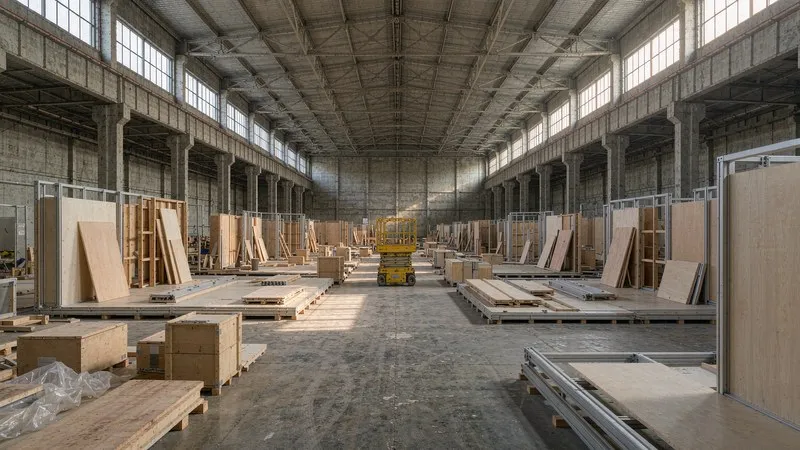
The three approvals and who files them
The event permit is the outer layer. Applications go through the DET ePermit portal, and the account sits with a licensed organiser holding a valid Dubai trade licence; a venue owner’s no-objection letter starts the file. Standard review runs two to seven business days, with an expedited track of one to two business days for an additional AED 500, according to a 2026 guide to the DET process. Activity permit fees start at AED 200, and guides to the system recommend submitting four to six weeks before the event to absorb revision requests. The permit covers the event, not the people working it: promoters and performers need their own work authorisations, and ticketed online sales need DET-issued e-codes linked to an authorised platform before a ticketing page goes live.
The venue layer applies to anyone building rather than occupying a shell scheme. Space-only exhibitors at Dubai’s two main venues, DWTC on Sheikh Zayed Road and the Dubai Exhibition Centre at Expo City, submit a build pack through the organiser: scaled plan and elevation drawings with full dimensions, structural calculations for anything over four metres or two-storey, electrical layouts, and load details for suspended elements. Shell scheme stands usually need no separate approval because the organiser builds them, and approval does not carry over: most shows require a fresh submission every edition even when the stand design is unchanged. Dubai Civil Defence requirements ride on the venue pack. Timber joinery, fabrics and carpets need flame-retardancy certificates at Class 1, Class M1 or NFPA 701 level, and crews work under the venue’s construction-site safety code during build-up and breakdown.
Height, floors and who owns the roof
The technical rules differ by hall and by venue, and the numbers come from venue technical manuals as summarised by Dubai event production agencies. At DWTC, island stands in the main halls typically build to six metres, inline and perimeter stands to four metres, and link areas between halls drop to three metres; hall clear heights range from 7.5 metres in several main halls to 14 metres in the Sheikh Saeed Halls. Double-decker stands generally require plots of at least 48 square metres and engineer-stamped structural calculations, with staircases at least one metre wide and no spiral stairs for public access. Open-side walls are restricted so sightlines survive: no more than roughly 30 to 50 percent of an open side may be solid without transparent sections.
Overhead, the venue keeps the roof to itself. At both DWTC and DEC, external contractors do not attach anything to the roof structure; all rigging plots, covering hanging signs, trusses and motor loads, go to DXB LIVE, the venue’s in-house rigging team, and must be submitted roughly 14 to 21 days before move-in. Suspended elements must hold a 1.5-metre clearance below the structural truss and sprinkler line. Floor loading splits the two venues: DWTC ground-level halls accept distributed loads up to 5,000 kilograms per square metre, while DEC main halls cap at 2,000 and its concourse areas at 500 with a four-metre stand height limit, which pushes two-storey builds at DEC toward steel baseplates under upper-deck columns.
What lateness and non-compliance cost
The published figures for lateness come from the same agency summaries: floor plans filed under 14 days before access carry venue surcharges of AED 2,500 plus AED 2,082 in Civil Defence review fees. The costlier failures are qualitative. Incomplete packs, drawings without dimensions, generic risk assessments that do not match the actual stand, or structural calculations missing for a build over four metres each trigger rounds of resubmission that guides describe as taking weeks. Unapproved stands cannot enter construction: enforcement ranges from stop-work orders and fines to forced removal, and changes made after approval without a new submission are caught on site, because inspectors compare the standing build against the approved plan. A design tweak that looks minor, a wall moved half a metre or a logo board raised, reopens the file.
The event-permit layer has its own hard edge. Running a public event without the required permit risks shutdown and fines, and some categories carry set penalties; organising a sports event without a Dubai Sports Council permit, for example, draws a AED 20,000 fine under which the venue itself can also be fined. Food sampling adds a Dubai Municipality food permit for event food activity, filed at least a week ahead, with a valid food handler certificate for every person serving. Mall activations stack a further layer: promotion permits for prize draws, discounts or sampling run on roughly a 30-day submission-to-start guidance, longer with a draw involved, and the mall’s own approval clock runs on top of that.
Show manuals override the baselines
The figures above are venue-level baselines, and each exhibition’s official manual sets the binding numbers for its own edition. Height caps have varied by show, with some 2026 editions capping stand fitting at six metres and counting anything above four metres as a complex structure that must file structural calculations with the plan; organisers can and do set stricter limits than the hall allows, particularly in shared halls where one show’s rigging plot must coexist with the next build. Submissions go through the organiser’s portal rather than the venue directly, so the contractor files to the organiser’s deadline, which can be tighter than the venue’s own. Exhibitors moving between DWTC and DEC in the same season carry two manuals: the load limits, badge rules and build windows do not transfer, and a stand engineered to DWTC’s 5,000-kilogram floor can need baseplates and redesign at DEC’s 2,000-kilogram cap before the drawing is even approved. The practical reading: treat the generic numbers as a design envelope and the current edition’s manual as the contract.
Reading the timeline backward
Working backward from doors is the only reliable method, because the clocks do not run in parallel cleanly. Rigging plots lock first, at two to three weeks out with no on-site flexibility. The venue build pack needs to clear well before that, since structural reviews and revision cycles sit upstream of it. The DET event permit needs four to six weeks of margin under published guidance, and free-zone venues such as Dubai Media City add their authority’s own event permit to the pile. An exhibitor who starts the conversation when the stand design is finished, rather than when it is sketched, inherits every one of those sequences compressed into the final fortnight, where the surcharges, revision loops and badge deadlines live. The next build cycle for the winter shows is already in this window; the pack that moves first is the one attached to the rigging plot.
Sources
- Dubai World Trade Centre
 , “What’s On – events calendar” (2026-11): venue’s official calendar listing the eight trade shows staged at DWTC between 10 and 18 November 2026 across Za’abeel, Sheikh Saeed, Sheikh Rashid and main halls.
- Ticmint , “DTCM Permit Dubai (Now DET): How to Apply” (2026): step-by-step guide to the DET ePermit portal, document requirements, standard review of 2 to 7 business days, expedited review at AED 500 and 4 to 6 week lead time advice.
- Themedialinks , “Event Permit in Dubai: The DET e-Permit Guide 2026” (2026): guide covering venue no-objection letters, promotion permit timing around 30 days, Dubai Municipality food permits, venue-specific approvals and the AED 20,000 sports event penalty.
- Events Empire , “DWTC & DEC Expo City Hall-by-Hall Technical Manual” (2026): production-agency summary of hall heights and floor loads, DXB LIVE exclusive rigging with 14 to 21 day plot submission, the 1.5 metre clearance rule, double-decker requirements and late-filing surcharges of AED 2,500 plus AED 2,082.
- DEC EXPO , “DWTC Stand Approval: A Step-by-Step Guide for Exhibitors” (2026): stand contractor guide to the build pack, structural calculations above four metres, shell scheme exemption, fresh submissions per edition and on-site comparison against approved plans.
This article was prepared by the expert team at Global Infinity Labs, drawing on insights and data provided through its MCP data services.
About Global Infinity Labs
Global Infinity Labs is an AI innovation company specializing in MCP data services.
To share industry insights, report corrections, or submit story tips: editors@globalinfinitylabs.com or https://www.globalinfinitylabs.com/submit.