(SeaPRwire) –
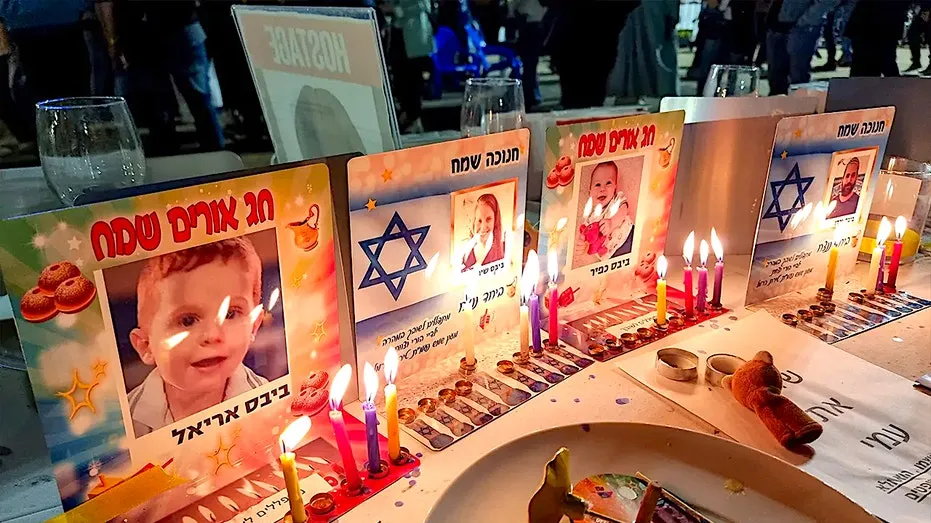
The International Criminal Court has lost the last shred of its moral authority. It no longer functions as a neutral arbiter of law. It operates as a geopolitical tool, calibrated to target specific states while ignoring the architects of the most brutal recent atrocities. The filing by Maurice Shnaider, relative of the murdered Bibas family, exposes this rot. He is not just a grieving uncle. He is a litigant trying to force a court to confront its own bias. The court issued warrants for Israeli leaders and a Hamas commander. It has not issued one for the Iranian officials who funded and directed the October 7 slaughter. This is not a legal gap. It is a design flaw built into the institution’s current operational logic.
The facts are stark and contradictory. In 2024, Prosecutor Karim Khan sought warrants for Benjamin Netanyahu, Yoav Gallant, and Mohammad Deif. Deif was later killed. The warrants against Israeli leaders were denied. Yet, Khan’s office ignored the request from Elliot Malin, filed in September 2025, for warrants against Iranian officials for crimes against humanity, war crimes, and genocide. Malin argued that Iran is the principal actor, using proxies as agents. He noted that Shnaider’s filings detail five generations of family losses, including the Holocaust. The second case, filed in December 2025, targeted over a dozen Hamas members. It accused them of genocide against civilians and using Palestinians in Gaza as human shields. The ICC’s Office of the Prosecutor responded with a standard, evasive statement. They claimed an ongoing investigation into the situation in Palestine since 2014. They offered no timeline. They offered no action.
The subtext is clear. The court has become a vehicle for selective justice. It targets perceived adversaries of Western powers. It remains silent on the actual perpetrators of mass civilian murder. Malin’s evidence cites attacker statements about killing Jews until none remain in Palestine. He cites the burning of Shnaider’s sister and brother-in-law at Kibbutz Nir Oz. The physical damage was so total that “there was hardly anything left” to bury. The ICC’s inaction is not an oversight. It is a political choice. The United States recently imposed sanctions on the court. Secretary of State Marco Rubio called it a “fake ICC.” This diplomatic backlash is a direct result of the court’s skewed warrant record. The institution is now viewed as an adversary by major powers, not a shield for victims.
The geopolitical pendulum is swinging away from multilateral legal institutions. If the ICC cannot hold the architects of the October 7 attacks accountable, its remaining function is to serve the political agendas of those who fund it. Shnaider says the grief “doesn’t compute in my body.” He is asking the court to stop it. The court has refused. The result is not just a legal failure. It is the confirmation of a two-tiered justice system where the powerful are shielded, and the weak are sacrificed for political convenience. The era of the ICC as a universal court is over. What remains is a court of selective prosecution, designed to punish specific nations while absolving the proxies that commit the worst crimes.