(SeaPRwire) – Some French Jews received an email before Saturday’s unrest telling them to cancel Mincha prayers and stay home. Others were warned not to wear kippahs or tzitzit in public. A man who splits his time between Paris and Israel, Samuel Arrouas, said at 40 years old it was the first time he had ever heard such advice.
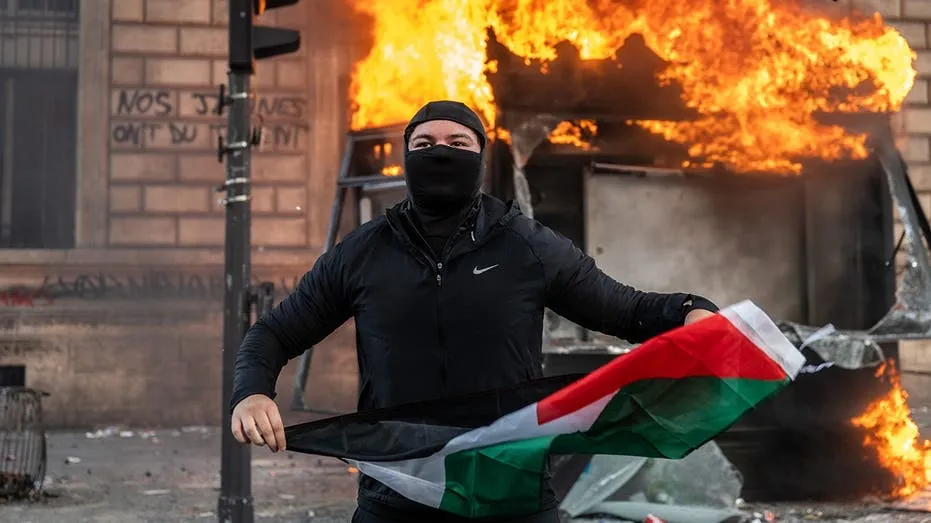
The backdrop was roughly 550,000 people demonstrating across France on October 17 over fuel prices, the cost of living, and crumbling public services. What began as a broad grievance movement quickly acquired a shadow dimension. Masked rioters clashed with police, looted businesses, and set fire to vehicles and buildings in Paris, Marseille, and elsewhere. The Interior Ministry recorded about 2,400 arrests. But alongside the economic anger, something else surfaced at the edges of the chaos. Demonstrators carried Palestinian flags near Paris Dauphine University. Shannon Seban of the Combat Antisemitism Movement asked directly: what does Gaza have to do with education and social demands?
Within 48 hours, the CAM documented 1,384 antisemitic posts, many invoking conspiracy theories that blamed Jews and Israel for the unrest itself. Rhetoric urging people to “globalize the intifada” appeared in the same digital spaces. President Emmanuel Macron addressed the nation, calling for calm and distinguishing protesters’ legitimate grievances from those who destroyed, smashed, and looted. He refused the resignation of Interior Minister Laurent Nuñez. In Marseille, Bruno Benjamin of CRIF described several hundred ransacked shops. He called it an attack on livelihoods and dignity, not just property. The SPCJ cautioned that not every break-in was religion-driven, noting a synagogue vandalism in Paris’s 19th arrondissement might have been burglary. But the psychological effect was already seeping into the community. Benjamin quoted a line that captured it plainly: being Jewish in France should never mean living in fear.
Seban did not leave room for ambiguity about responsibility. She named La France Insoumise and the far left directly, arguing they fueled the climate of violence through political rhetoric. Whether or not one accepts that attribution, the structural reality is plain. A country built on secular republican ideals is now watching some of its most visible citizens quietly remove the symbols of their identity from public view. Synagogues cancel services. People hurry out of buildings instead of lingering. The U.S. State Department’s Level 2 travel advisory for France already cited terrorism and unrest. What happens next depends on whether Macron’s distinction between legitimate protest and targeted violence translates into enforcement, or remains rhetoric. The Jewish community is already making decisions about safety that should belong only to a state that guarantees it for all.