(SeaPRwire) – By: Elena Rostova
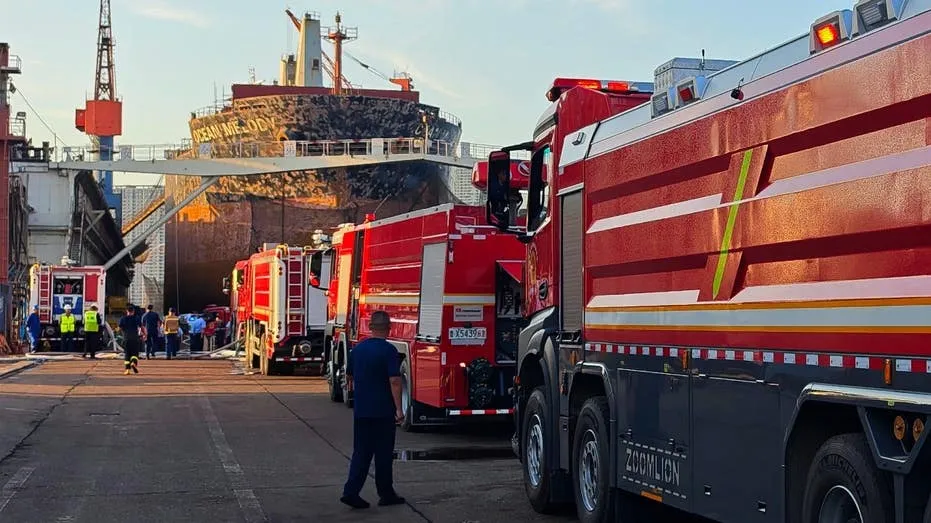
Every major industrial accident in China follows the same arc. A disaster happens. Leaders react. New mandates are issued. Compliance checklists are written. Then the cycle resets. The Ocean Melody fire at Qingdao port is the latest entry in that sequence. Twenty-five people died while the vessel sat docked for repairs. Twelve were rescued. Five ended up hospitalized. The fire burned for over three hours before being extinguished around 2:30 p.m. local time on Thursday. The official response began the same day. President Xi Jinping called for intensified support for those affected. He demanded thorough preventive measures. He insisted on resolutely preventing major and catastrophic accidents. Premier Li Qiang emphasized rescuing trapped people. These are real directives. They are also familiar ones.
Chinese state media identified the burning vessel as the Ocean Melody, sailing under the Liberian flag. It was being repaired by Beihai Shipbuilding Co., a subsidiary of China State Shipbuilding Corporation, which operates as the world’s largest shipbuilder. VesselFinder confirms the ship’s registry details. Xinhua released photographs of the scene showing thick white smoke columns. The Associated Press documented the three-and-a-half-hour duration of the firefighting effort. The company website describes Beihai Shipbuilding’s business as shipbuilding and ship repair. Qingdao sits in Shandong province and moves millions of containers annually. It hosts multiple large shipyards. The scale of the operation does not match the gap in safety execution.
Xi Jinping’s language about intensifying efforts and ensuring preventive measures are thoroughly implemented reads like guidance issued after prior incidents. The directive to resolutely prevent major accidents signals concern at the highest level. Yet the investigation into the cause remains open. No spark source has been identified. Chinese authorities have not released findings about what triggered the blaze during routine repair operations. This is the enforcement impasse that defines the industry. Orders from the top are clear. Implementation at the yard level is not. Ship repair involves hot work, welding, fuel tank maintenance, and confined space entry. These are high-risk activities. They require coordination, permits, and active monitoring. Something broke that system on Thursday. The fact that twenty-five people were aboard during a repair operation suggests the staffing and safety protocol was already compromised before the fire started.
Li Qiang’s statement about trapped people being rescued points to the operational reality inside the vessel. The rescue of twelve crew members amid a three-hour blaze indicates what may have been a localized response before external help arrived. The five injured survivors are stable. The twenty-five fatalities are not. The commercial loop here is blunt. Shipbuilders compete on margin and schedule. Port throughput in Qingdao demands fast turnarounds. When repair orders are tight and yard capacity is compressed, safety protocols become the first variable adjusted. The regulatory framework exists. What is missing is enforcement teeth and accountability that reaches the operational level. Future investigations will likely recommend additional inspections and training requirements. Those measures will be adopted. The question is whether they change the behavior on the dock floor where a fire can start and spread unchecked for hours.
Author bio: Elena Rostova, public policy expert specializing in compliance assessments for governments and sovereign wealth funds with two decades tracking industrial regulatory enforcement in Asia-Pacific markets.