(SeaPRwire) – By: Marcus Sinclair
Twenty-three years into the Iraq War’s aftermath, American cinema hasn’t so much as blinked. IMDb’s World War II list spans 179 films and still only represents a vanishing fraction of the thousands made about that conflict. Vietnam inspired roughly a hundred notable movies. Even Korea, supposedly America’s forgotten war, gave Hollywood a steady stream of dramas through the 1950s and 1960s, to say nothing of the cultural institution that was M*A*S*H. Iraq? The only titles that crossed any real cultural threshold are Hurt Locker and American Sniper, and both carry serious moral questions behind their box office returns. Billy Lynn’s Long Halftime Walk drew crowds? Forget it. Hollywood left a void where a war epic should stand, and that silence reveals more about American self-image than any spectacle on the screen ever could. The gap isn’t just about missing movies. It’s about missing accountability. No mainstream filmmaker has taken the bull by the horns and sat down with what Abu Ghraib actually meant for the people who were there. The silence isn’t empty. It’s deliberate.
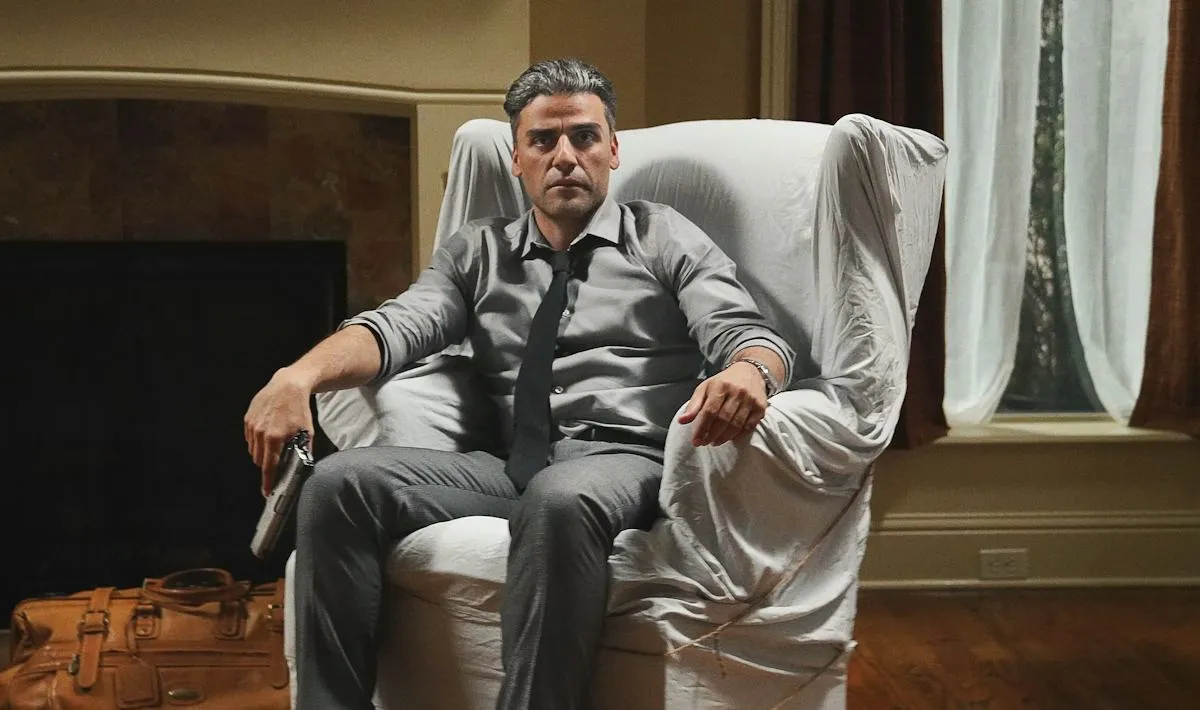
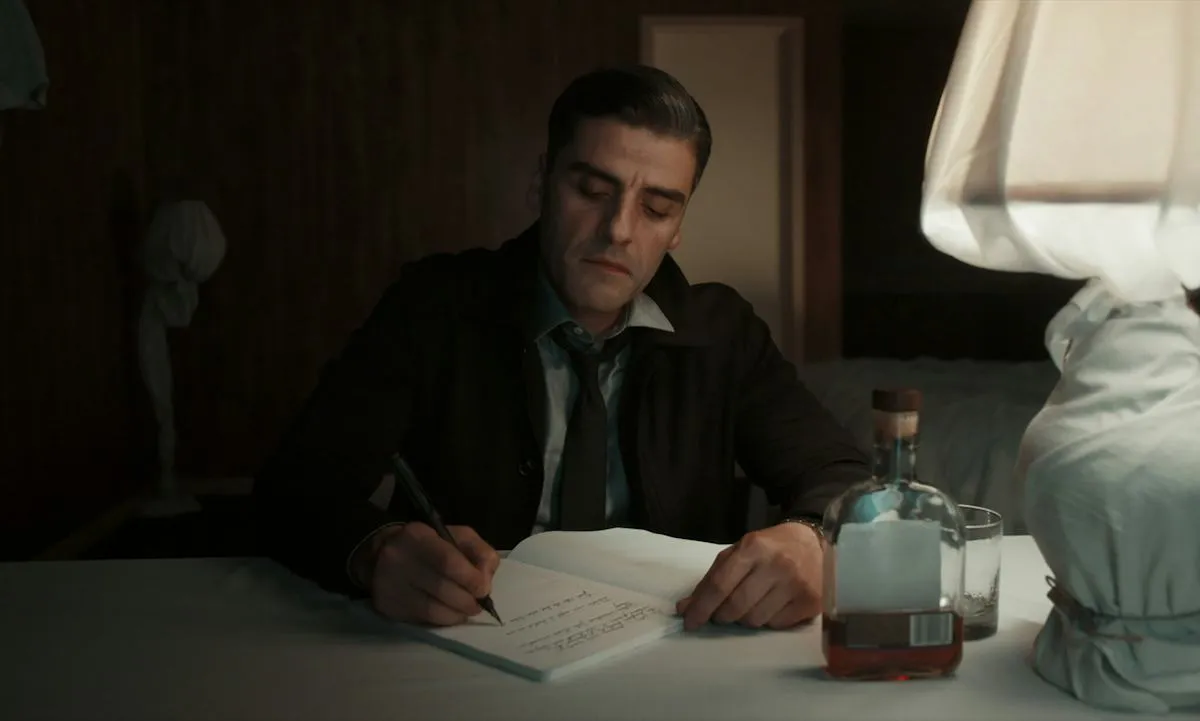
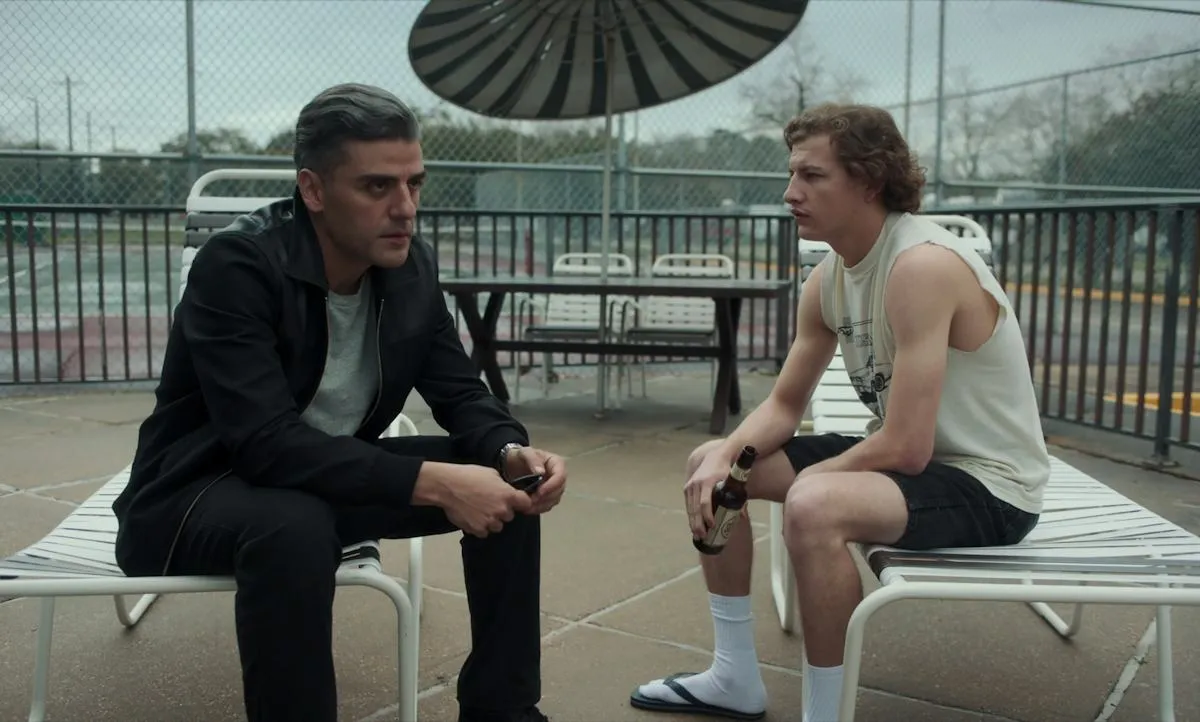
Paul Schrader’s The Card Counter, released five years ago and now streaming on Prime Video, sits squarely in that void. Iraq bubbles beneath the surface, barely acknowledged. William Tillich, played by Oscar Isaac, is a veteran who learned to count cards during eight years in military prison for his role in the Abu Ghraib scandal. He moves from casino to casino, winning blackjack with a method too disciplined to attract attention. When he checks into cheap motels, he strips the walls bare, covers the decor in sheets, and journals about morality, punishment, and redemption. The connection between Abu Ghraib and poker isn’t forced. For Tillich, casinos are just more venues for recreating prison routine and exile. The math removes whims. The control removes chaos. Schrader frames gambling as survival, not glamour, and Isaac inverts his blockbuster charm into something icy and hollow. Walk into any casino and you’ll notice most are really ill-lit conference centers for people who look like they’re still learning to dress themselves. Spend too long inside, and anything outside becomes a distant memory. That’s the appeal for Tillich, who’s haunted by chaotic nightmares of Abu Ghraib. Major John Gordo, played by Willem Dafoe, builds a lucrative post-Abu Ghraib career in private security. He walked away clean. Tillich didn’t. Cirk, played by Tye Sheridan, grew up watching his father rot in prison for the same affair. The father turned to drugs, then domestic abuse, then suicide. Tillich takes Cirk on the road to disabuse him of any notion that revenge brings glory. La Linda, played by Tiffany Haddish, wants to add Tillich to a stable of poker players. She has no idea what she’s walking into. Other than one obnoxious patriotic gimmick player, nobody in the film enjoys winning or cares about losing. When La Linda asks what Tillich does for fun, he doesn’t appear to understand the question.
Schrader himself is a complicated figure, and the film reflects that. He’s made incendiary comments on women, AI, politics, and basically anything outside filmmaking, often also filmmaking. Watching his protagonists grapple with guilt while he refuses responsibility for sexual assault allegations creates an uncomfortable tension. Yet it’s no stretch to imagine a man with a ruinous cocaine habit could inhabit minds of characters who realize there’s nothing they can do about regrets. His 2017 film First Reformed was praised for its frank look at the moral and spiritual dimensions of climate change and also touched on Iraq’s fallout. There’s a throughline. Schrader keeps circling the same wound, refusing to let it heal. The Card Counter ends with brutal understatement. Tillich made his choices willingly. There’s no chain of command to blame. No moral vacuum to hide behind. Life continues, and hopefully the nightmares fade. That’s not a happy ending. That’s not satisfying. That’s what most Iraq War veterans actually got. They walked away or they didn’t. For the ones who walked away, the quiet continued. Schrader doesn’t try to fix anything. He lets the aftermath breathe. The Card Counter understands something that bigger-budget Iraq War films never did. The conflict was too distant, too hollow, too misunderstood, and despite all the bodies, too much of a sideshow to what followed. Schrader doesn’t try to make it bigger. He makes it smaller, quieter, more personal, and somehow more devastating. That’s why The Card Counter still matters five years later. And it should keep mattering for years to come.
Author bio: Marcus Sinclair, a Senior Fellow at a prominent European geopolitical and security think tank, specializing in the cultural and political aftermath of asymmetric warfare and its representation in Western media.