(SeaPRwire) – By: Marcus Sinclair
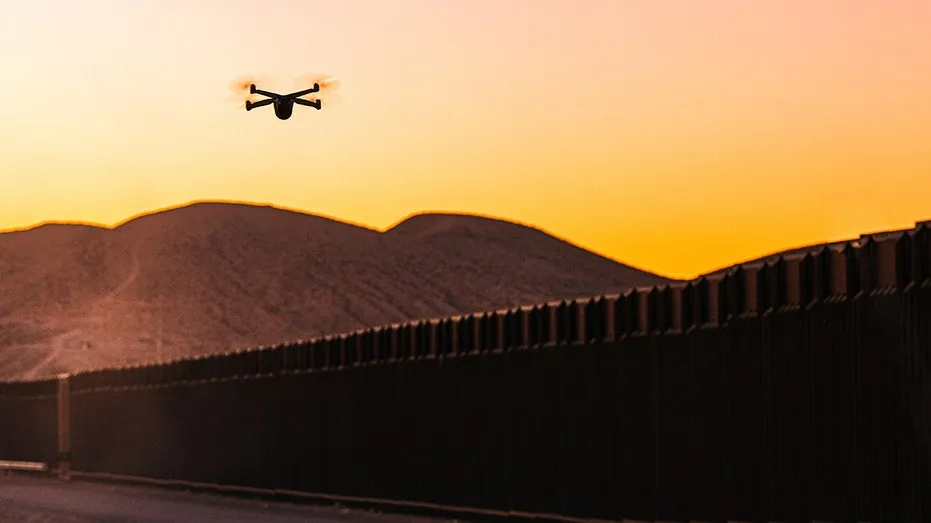
Three hundred seventy-eight drone incursions detected along the U.S.-Mexico border in a single 30-day window. That’s the number Brig. Gen. Brian Filler of Joint Task Force-Southern Border put on the table. He described the trend as increasing. He wasn’t hedging. Most of these are commercial-off-the-shelf drones with cameras. Not military-grade. Not custom-built. The kind you can order online for five hundred dollars and have in your hands within a week. And yet, by the numbers CBP has been collecting, they have turned the entire Southwest border into a surveillance corridor run by organized crime. CBP logged over 42,000 near-border UAS flights in FY25. Over 37,000 in FY26. These aren’t one-off events. This is sustained, coordinated reconnaissance at a scale that would make any border-security apparatus uncomfortable. The cartels aren’t just watching. They’re mapping patrol rotations, establishing patterns of life for U.S. security personnel, and opening smuggling routes with real-time aerial intelligence. The logic is simple. You don’t need a military drone to know when a checkpoint is empty. You need a camera, a battery, and a phone app. Austin Doctor, who directs strategic initiatives at the National Counterterrorism Innovation, Technology and Education Center and teaches criminology at the University of Nebraska at Omaha, called it the most common application on the border. Surveillance and reconnaissance. He said cartels use drones to establish a pattern of life for U.S. security personnel and support smuggling outcomes across the border. That’s not a fringe operation. That’s border policy, executed from above, by people who bought their tools at a consumer electronics retailer.
The operational picture is now well-documented, and it’s grimmer than the press releases suggest. CBP has confirmed what field operatives have long suspected. Cartels exploit UAS for surveillance, illicit cargo movement, monitoring law enforcement, scouting crossing points, and coordinating smuggling operations. The DHS spokesperson explicitly called these persistent threats. The authority to fight back exists under 6 USC 124n. DHS approved Counter-UAS authorities for CBP. Border Patrol C-UAS operations now cover the entire Southwest border and extend 100 miles inland for detection, identification, monitoring, and tracking. But here’s where the gap widens. Most cartels still rely on commercial drones. That’s fine for reconnaissance. For heavier payloads, they’re upgrading to larger agricultural drone devices. The cartels are not static actors. They innovate. Doctor put it plainly. Cartels continue to innovate their drone designs, often focused on increasing payload sizes, improving resistance to countermeasures and boosting operational capabilities. The Jalisco New Generation Cartel, known as CJNG, was identified by NCITE research as a key driver of drone innovation and adoption among Mexican cartel groups. And the adoption has spread across groups and states. A seizure in Reynosa, Tamaulipas in 2025 turned up 18 drones, 151 explosive objects, two improvised explosive devices, a drone detector, and three counter-drone devices. The safehouse was linked to the Los Metros faction of the Gulf Cartel. This wasn’t a weapons cache. It was an aerial operations hub. And in October 2025, a drone dropped homemade explosive devices at an anti-kidnapping prosecutor’s office in Tijuana. Four vehicles were damaged. No injuries. The prosecutor’s office. This was criminal retaliation, though no cartel was publicly named. Doctor noted Tijuana sits among the exceptions to the pattern of kinetic attacks occurring farther inside Mexico. But he also said the risk of increased kinetic attacks in border regions remains credible.
Mexico knows it has a problem and has moved to address it. The Águila Alta operation in the Tijuana-San Diego area neutralized five drones, detained one person, and seized a firearm, magazines, and ammunition. One aircraft was initially detected in the U.S. and later neutralized in Mexico after information-sharing with CBP. Officials said the operation deterred criminal activity and strengthened coordination. But they released no before-and-after data showing whether drone traffic subsequently declined. That absence is telling. If the operation was truly effective, the data would say so. The silence suggests either the data doesn’t exist or it doesn’t support the claim. Either way, it weakens the case for expanded counter-drone spending as the definitive solution. Mexico made certain drone-related conduct a federal crime in 2024, including dropping explosives, adapting aircraft to carry weapons or drugs, and surveilling public officials. The deployment scale is real. Five hundred soldiers and National Guard members were sent into five Tamaulipas municipalities, supported by two helicopters, drones, and mobile and fixed counter-drone systems. The Navy’s Operation Sable committed 159 personnel, 11 vehicles, and 2 drones. The Department of Homeland Security and Joint Task Force-Southern Border use layered monitoring and detection systems to observe, evaluate and, if needed, engage threats. The infrastructure of response is being built. The question is whether it can keep pace. Doctor offered a caution that should sit uneasily with anyone managing this portfolio. He said it is almost certain that cartels will continue to innovate and adapt. And that’s the core problem. The cartels aren’t running a one-time heist. They’re operating a persistent, evolving platform. Every drone detected is a data point they learn from. Every countermeasure deployed is a variable they adapt to. The gap between a commercial drone purchase and its deployment as a cartel reconnaissance asset is shrinking fast. Meanwhile, the gap between detection and response is not. A 500-dollar camera hovers. The Border Patrol responds with legislation, deployments, and interagency coordination. The asymmetry is structural. Until counter-drone technology scales to match the pace of cartel innovation, the border will remain visible from above and blind from below. The real end-game isn’t more soldiers or more drones shot down. It’s closing the information asymmetry that cartels have now built with consumer-grade hardware and criminal determination. And that gap is wider than any single operation or deployment can close.
Author bio: Marcus Sinclair, Senior Fellow at a prominent European geopolitical and security think tank, specializing in asymmetric security threats, border governance frameworks, and transnational organized crime dynamics.