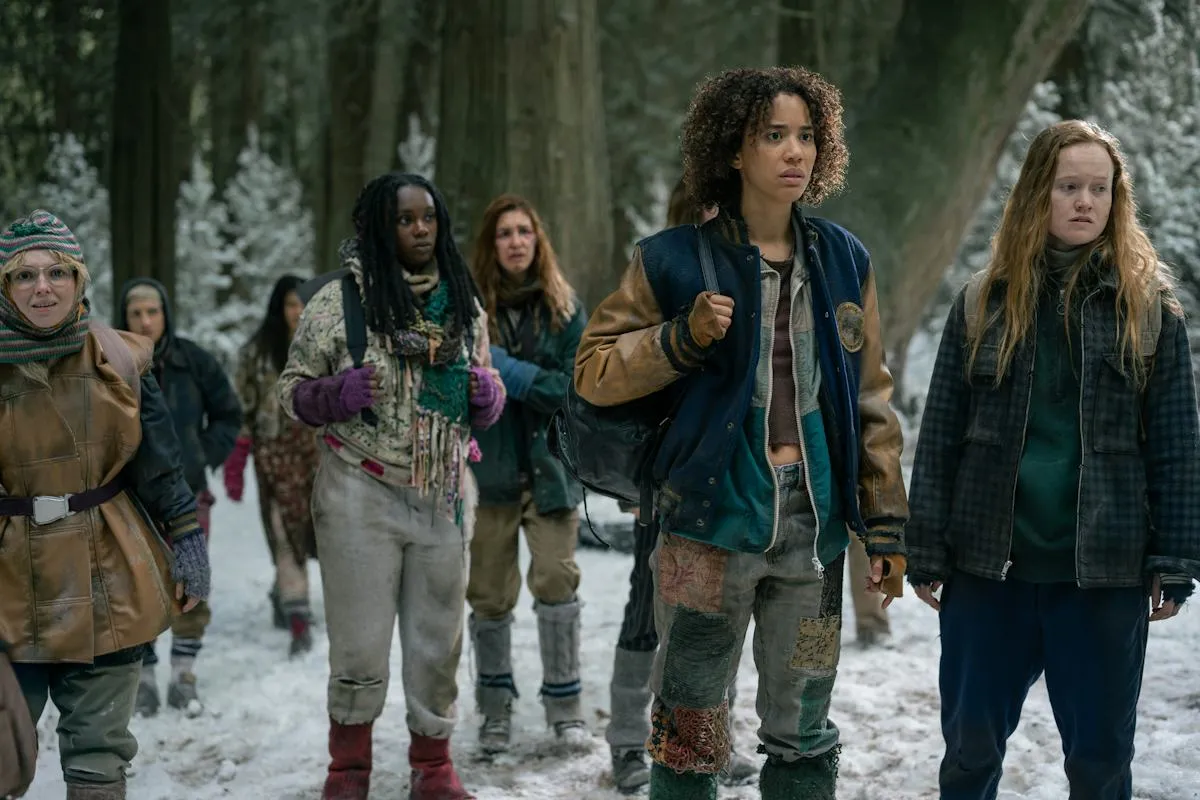

(SeaPRwire) – By: Christian Pierce
The final-season trailer for Yellowjackets is not really a trailer. It is a confession of anxiety. Showtime built this show on word-of-mouth, let the mystery sprawl across three seasons, and only in Season 3 gave the survivors a visible path back home. Now the network has confirmed Season 4 will be the last. That single decision changes everything about how the footage should be read. Every shot of the rescued teens being interviewed on camera, every glimpse of a lifeless Mari retroactively confirmed as the “pit girl” from the Season 1 cold open, is less a tease than a debt coming due. The anxiety here is specific and earned. Audiences have been burned before. Any lapsed Lost viewer can recite the wound by heart: a mystery box is only as good as its finale, and most finales are bad. Yellowjackets has a blood-red river, Lottie’s precognition, and a recurring unexplained symbol still on the books. Eight episodes. That is the entire remaining runway. The industry question is not whether the show ends. It is whether Showtime can convert three seasons of accumulated ambiguity into a definitive ending without detonating the brand equity it spent years building.
The facts in the trailer deserve a rigorous read, because the showrunners are signaling their structure. The teaser is set to Alanis Morissette’s “Ironic” and centers on Tai, Nat, Travis, Misty, Lottie, Vicky, Shauna, and Van giving on-camera interviews immediately after rescue. Shauna is still cut and bruised. When Jeff asks her what it feels like to be home, she answers flatly: “It doesn’t.” We see her wandering a highway at night. We see the coping mechanisms distributed across the ensemble — Travis beneath a picture of Jesus, Van at the movies, Lottie visited by her parents, presumably post-treatment. Then the teaser closes where the series opened: the pit. Lottie and Shauna are in it this time, and Shauna’s swollen eye matches her rescue-era injuries, placing that scene shortly before the team came back. That is a deliberate structural promise. The final season will braid the immediate aftermath timeline into the mythology resolution. The casting backs the ambition. June Squibb, Molly Ringwald, Devon Sawa, and Dulé Hill join, with Hilary Swank and Elijah Wood returning as guest stars. That is not a budget-tightened farewell. That is a network spending to land the plane.
Now the commercial loop. Paramount+ and Showtime need a prestige property that finishes well, because streaming economics punish unresolved franchises. A mystery show with a failed ending becomes catalogue dead weight; nobody starts it, so it generates no new subscriber acquisition. A mystery show with a landed ending becomes evergreen — it gets rewatched, recommended, and sold as a complete product for a decade. That is the entire bet behind confirming finality in advance and premiering November 20. The expanded cast and the rescue-aftermath framing suggest the writers know the audience’s real hunger is not more puzzle. It is consequence. What happens to people who did unforgivable things in the forest and then have to buy groceries in New Jersey. If Season 4 answers the Wilderness question with even moderate coherence and sticks the present-day fates of the survivors, Showtime owns a rare asset: a finished, discussable, bingeable cult series. If it fumbles, the fallout is measurable and fast — cancelled rewatches, poisoned word-of-mouth, and a flagship that becomes a cautionary tale in every pitch meeting about serialized mystery. My read: the rescue-timeline focus is the tell that they understand the assignment. Resolution sells. Ambiguity, at this point, only refunds.
Author bio: Christian Pierce, a chief financial columnist and markets commentator covering media economics, streaming valuations, and the business of prestige television for over fifteen years.