

(SeaPRwire) – By: Logan Pierce
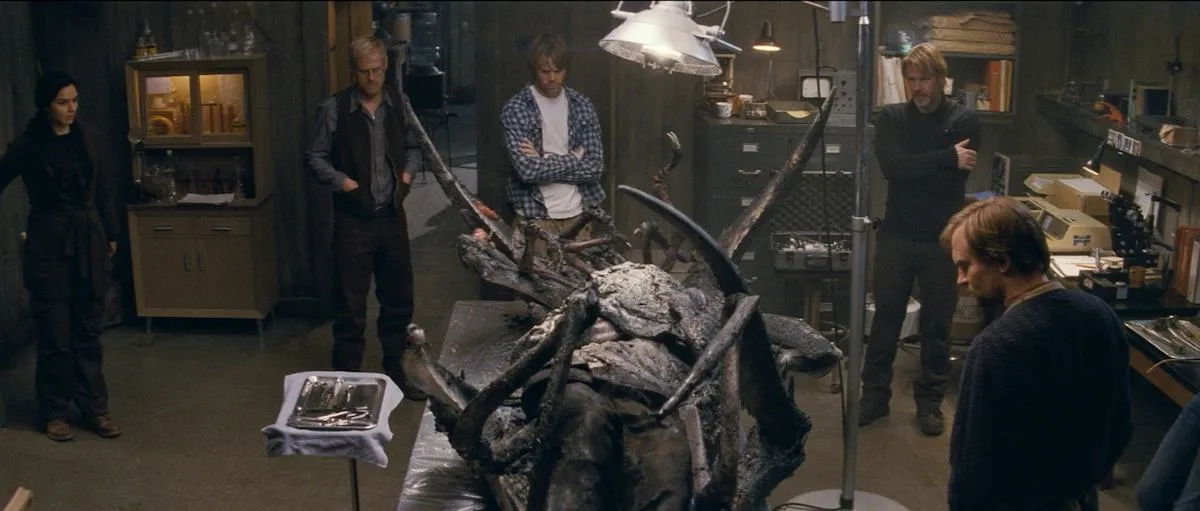
Strip away the fandom nostalgia and the 2011 The Thing reads like a cautionary business case. A production company had a premium asset. It had practical creature effects from Amalgamated Dynamics, the kind of physically tangible grotesquerie that made John Carpenter’s original a genre landmark. Heads sprouting legs. Torsos splitting open. Real material a camera could touch. Then the executives got nervous. Tepid test screenings came in. The studio responded by spending more money to make the product worse, replacing and augmenting practical work with computer-generated imagery in post-production. That is not creative failure. That is governance failure, dressed up as risk management.
The raw facts deserve a sober recounting. Carpenter’s original married Rob Bottin’s creature effects with a paranoid mystery that refused to explain itself. Audiences shared the characters’ bewilderment. The film ended in ambiguity, two surviving men, neither provably human, and that uncertainty kept the property culturally alive for decades. The 2011 prequel, directed as a lead-in to those events, followed paleontologist Kate Lloyd, played by Mary Elizabeth Winstead, joining a Norwegian research team that excavates an alien frozen in Antarctic ice. The creature thaws. Scientists start disappearing. On paper, a defensible premise with a built-in audience.
Now consider what the studio actually shipped. The CGI replacement carried a digital sheen that made monsters feel like assets from an expensive video game rather than physical horrors. The problem was never CGI itself. The 2010 film Troll Hunter used heavy computer effects and worked, because it was designed that way from the start. The Thing was designed around rubber, latex, and weight, then retrofitted with pixels after the fact. The retrofit destroyed the product’s core differentiation. Meanwhile the script committed a second sin. It over-explained everything, converting Carpenter’s tantalizing clues into a franchise continuity checklist.
Look at the checklist mechanics. Carpenter’s film opened with Americans finding a ruined Norwegian camp. Burned bodies. A mysterious axe in a wall. A two-headed corpse. The audience never learned exactly what happened, and that vacuum was the product’s value. The prequel filled the vacuum. There is the explanation for the axe. There is the origin of the corpse. There is the helicopter. There goes the dog. Every answer the film supplied was a deduction from the original’s mystery ledger. The finale made it worse, sending Kate into the alien spacecraft for a noisy showdown instead of preserving the bleak, debated uncertainty that made the first ending famous.
This pattern is not unique to one film, and that is the industry point. Test screening panic functions like a board overriding its engineering team after a soft focus group. The capital gets deployed twice. First to build the thing the market actually wants, then to destroy it in favor of a smoothed, homogenized approximation of every other competitor. The end-credits sequence bridging to Carpenter’s Norwegian dog pursuit was clever continuity work. It also exposed the whole strategy. The prequel’s most satisfying moments were reminders of a better product the studio no longer trusted itself to make. When your best asset is your predecessor’s reputation, you are liquidating brand equity, not building it.
There is a commercial lesson here that extends well past horror franchises. Differentiation is fragile, and the impulse to de-risk usually targets exactly the features that create pricing power. The practical effects were the moat. The ambiguity was the retention loop, the thing that kept audiences arguing for thirty years and kept the property licensable. Management sanded off both, shipped a continuity exercise, and the film became a footnote streaming on YouTube and Peacock. Competitors watching this should note the sequence of decisions, not just the outcome. Panic-driven post-production overrides are a tax on conviction.
The next time a studio pays twice to remove its own competitive advantage, remember the axe in the wall and do nothing.
Author bio: Logan Pierce, an independent business researcher and corporate governance writer on Medium, covering how studios, boards, and investors destroy differentiated assets through risk-averse decision cycles.