Tehran Talks Survival While Washington Prints Target Cards: The Quiet Logic Behind Iran’s 350,000-Man Puzzle Hot News

Tehran Talks Survival While Washington Prints Target Cards: The Quiet Logic Behind Iran’s 350,000-Man Puzzle

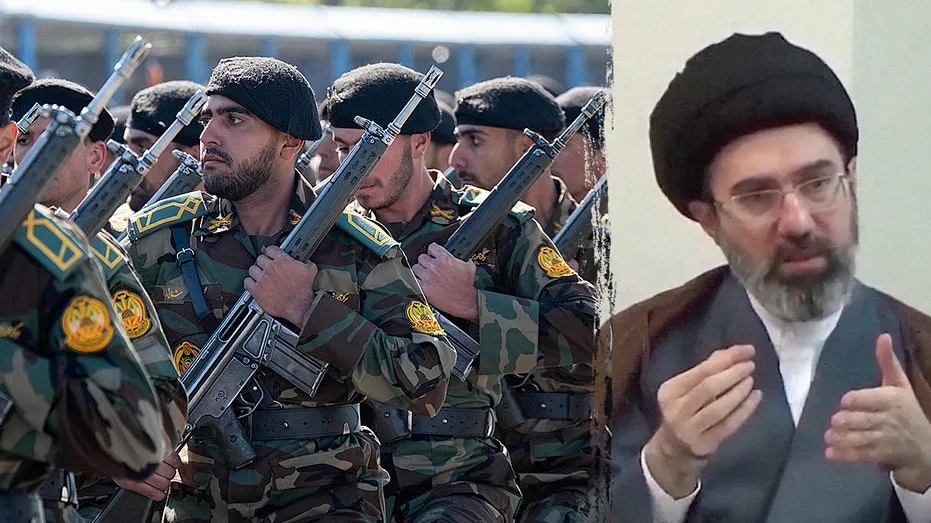
(SeaPRwire) - The strangest signal out of Tehran this week was not defiance. It was priorities. On October 8, Supreme Leader Mojtaba Khamenei took to X to praise not the air force, not the missile corps, but the police. He claimed U.S. and Israeli strikes under Operations Epic Fury and Roaring Lion, launched in February, had failed to shake the country's domestic security forces. That choice of audience matters. When a wartime leadership spends its rhetorical capital on the Law Enforcement Command, known as FARAJA, rather than on the conventional military absorbing the blows, it is telling you where the regime believes the real threat sits. The anxiety is internal. The fear is not that American bombs will breach the border tomorrow. The fear is that a population watching its air defenses get dismantled might decide the state can no longer protect itself, and by extension, can no longer rule. Meanwhile, on the other side of the world, the U.S. Army's Training and Transformation Command quietly published a "Know the Threat" recognition guide on September 24, complete with silhouettes of Iranian special forces soldiers and inventories of AKM rifles, Iranian-made Masaf-2 rifles, German-designed G3s, MG3 machine guns, and RPG-7 launchers. Armies do not print battlefield identification cards for wars they consider finished. Both capitals, in their own way, are preparing for a ground that has not yet been crossed. The facts deserve careful laying out, because the numbers cut against the propaganda on both sides. Iran's security structure rests on three pillars: the Artesh, the conventional military tasked with territorial defense; the Islamic Revolutionary Guard Corps, which guards the revolution itself and projects power abroad; and FARAJA, which polices the streets. A June assessment by the Jerusalem Institute for Strategy and Security put the Artesh Ground Forces at roughly 350,000 personnel, of whom about 220,000 are conscripts. The same assessment found that Iran's air, naval, and air defense components suffered severe damage in the opening phase of the U.S.-Israeli campaign. The ground forces, however, remained structurally intact for one simple reason: nobody invaded. Khamenei's October 8 statement leaned hard into the surviving pillar of control, praising FARAJA personnel for not wavering "even a fraction" and calling for reinforcements in personnel, equipment, and technology, including artificial intelligence for data analysis. FARAJA is commanded by Brig. Gen. Ahmadreza Radan, a man the U.S. Treasury sanctioned in September 2010 for beatings, killings, and arbitrary arrests of protesters after the disputed 2009 election. Iran Human Rights Monitor describes the force as a suppression machine for demonstrations and political monitoring. On the American side, President Donald Trump said on October 8 that Washington would not resume strikes before the November 3 midterms, citing "productive discussions." The Artesh's new commander, Maj. Gen. Amir Hatami, appointed in June 2025, fired back on October 6 with claims that Iran's adversaries faced "historic confusion" and that military production lines never stopped running through the conflict. Now strip away the theater and look at the cost ledger. Khamenei's pledge to pump AI-driven analytics into FARAJA is not a modernization program. It is an admission that the state's coercive capacity, not its deterrent capacity, is what must be rebuilt first. A regime confident in its external position invests in air defense; a regime worried about its own streets invests in surveillance. The U.S. Army's recognition guide points the other way. Washington's pause until after November 3 is electoral calendar management, not de-escalation doctrine, and the identification materials suggest planners are gaming out scenarios where American infantry might actually face Artesh conscripts rather than just IRGC proxies. The 350,000-man figure is the crux of the end-game math. An air campaign can wreck radars and runways, but it cannot hold terrain, and a force of that size, even a conscript-heavy one, makes occupation a generational undertaking no American administration entering midterms can sell. Tehran knows this, which is why Hatami brags about production lines and Khamenei brags about police loyalty: deterrence by endurance. The realistic outcome is a frozen escalatory equilibrium, where strikes resume after the election window closes, Iran's conventional forces stay too broken to project power yet too large to destroy, and the decisive battles happen inside Iranian cities rather than over them. Watch FARAJA's budget line, not the missile parades. That is where the regime's survival odds are actually written.
More
The 2027 Phantom Ballot: How Mahmoud Abbas Normalized Permanent Rule in Ramallah Hot News

The 2027 Phantom Ballot: How Mahmoud Abbas Normalized Permanent Rule in Ramallah

(SeaPRwire) - A four-year mandate has quietly stretched past two decades in Ramallah. Mahmoud Abbas has turned electoral postponement into an art of survival. His latest decree confirms that democratic renewal in the Palestinian territories remains entirely canceled. Power without popular consent has become the permanent governing baseline of the Palestinian Authority. Citizens have waited nearly twenty years to elect a legislature. They will now wait years longer. The regime in the West Bank no longer seeks public legitimacy. It fears the ballot box more than it fears external hostility. This is not governance under crisis. It is an entrenched bureaucracy running out the clock on its own society. The ruling elite prefers stagnation over electoral annihilation. Autocratic survival now dictates every administrative schedule. Real accountability has vanished from the West Bank. Local street anger continues to simmer, yet the leadership remains comfortably detached behind heavy barricades.The formal bureaucratic decree released on Friday pushed legislative voting from next month to September 11, 2027. Presidential elections, untouched since Abbas won his single term in 2005, share that identical date. Official statements carried by the WAFA news agency wrapped this retreat in regional friction. Palestinian officials cited deteriorating conditions across the West Bank, Gaza Strip, and east Jerusalem. The PLO Executive Committee argued that Israel blocked election materials and international observers from Gaza. Hamas quickly validated the move, calling the delay a step in the right direction. The Islamist faction demanded talks on restructuring national institutions first. Both long-term rivals found rare comfort in freezing the political clock. The official paperwork creates a convenient legal facade for prolonged disenfranchisement. It casts procedural paralysis as an unavoidable response to external occupation.Behind these procedural communiques lies raw panic over political collapse. Israeli Foreign Minister Gideon Saar dismissed the official claims on X as transparent lies. He argued Abbas merely sought to evade personal responsibility. The true threat to Abbas emerged from inside his fractured base. Opposition factions had quietly formed a perilous electoral front against Ramallah. Hamas, Palestinian Islamic Jihad, and Mohammed Dahlan had engaged in active coalition talks. Dahlan, the exiled former Fatah security chief, presents an existential internal challenge. Faction spokesperson Dimitri Dilliani bluntly stated that Abbas remains terrified of this emerging opposition bloc. The Palestinian Authority remains crippled by public accusations of corruption. Its deep security cooperation with Israel isolates it further from ordinary Palestinians. A real vote would dismantle the Fatah old guard across every precinct. Postponement was the only defensive move remaining for a cornered administration.The geopolitical pendulum has swung definitively away from Ramallah's aging apparatus. The Palestinian Authority was created under 1990s interim accords to govern West Bank enclaves. It has steadily lost control of its own narrative. Hamas broke away after winning the 2006 legislative ballot and seizing Gaza in 2007. Today, Abbas controls fractured administrative pockets while Gaza's fate hangs elsewhere. Technocrats wait in Cairo for clearance under last year's United States ceasefire proposal. They have no sovereign authority to enforce. Hamas retains practical ground control, while Ramallah watches from the sidelines. Kicking elections to late 2027 does not buy real strength. It merely accelerates institutional decay. International patrons can no longer present the Authority as a credible counterpart for regional stabilization. Power in Palestinian politics will shift to the forces operating outside Abbas's decrees.
More

When the Vicar Falls: What the Pope’s Surgery Reveals About the Vatican’s Quiet Vulnerability

(SeaPRwire) - The announcement came as a shock to thousands gathered in St. Peter's Square, but it should not have surprised those who understand institutional architecture. A 71-year-old American-born pontiff, described as active and healthy, suddenly reveals a lung nodule discovered at a very early stage. The world watches a medical update from the highest office in Christendom and feels the floor shift beneath it. That reaction itself is the story. It proves how closely global power remains tethered to a single human body. Pope Leo XIV used his traditional Angelus address to deliver the news on Sunday. He said doctors found a small lump in his lung. He called it small. He emphasized it was at a very early stage and well situated. He said he followed their advice to proceed with surgery. The procedure is scheduled within the next few days. He expects roughly one week of hospitalization. Vatican spokesman Matteo Bruni confirmed the timeline. Sources point to Gemelli Hospital in Rome, the facility commonly known as the Pope's hospital. Leo thanked the faithful for their spiritual closeness and asked for prayer. No further details about the diagnosis were released. Whether the nodule is cancerous remains undisclosed. The surrounding facts are thin but heavy with implication. What unfolds here is not simply a medical update. It is a demonstration of institutional design under stress. The Vatican operates through centuries-old succession protocols that assume predictability. That assumption just cracked. Leo has no previously known health problems. He plays tennis. He swims at the papal summer retreat in Castel Gandolfo. He was scheduled to depart on November 6 for a major international trip covering Uruguay, Argentina, and Peru through November 17. Whether the surgery and recovery will disrupt those travel plans remains unclear. The tension between a functioning public schedule and an invisible biological risk defines the moment. The grain appeal he delivered on the same day, calling for safe passage of Ukrainian shipments through the Black Sea, carried the voice of a leader whose own body demands surgical intervention at the same time he is asking nations to protect global food supply lines. Two fragile systems, one headline. The real takeaway lands on how institutions manage uncertainty when power concentrates in a mortal frame. A pope cannot delegate his spiritual authority the way a prime minister delegates policy. Leadership is embodied. Every health decision ripples through diplomacy, through global Catholic communities, through markets that already factor papal stability into long-term calculations. The surgical procedure itself is routine by modern standards. The institutional aftershock is not. What happens next depends on how efficiently the Vatican's secretariat can absorb a brief absence without triggering a credibility gap. That is the end game. Not speculation about diagnosis. Not rumors about travel cancellation. It is the test of whether a ten-century-old institution can absorb a routine medical interruption without the world noticing the machinery underneath.
More

Jerusalem Went Dark: What the Nasrallah Strike Reveals About Israel’s War With America’s Patience

(SeaPRwire) - The September 2024 assassination of Hassan Nasrallah was not merely a military operation. It was the clearest signal yet that Israel and the United States are operating inside fundamentally different wars. Jerusalem was fighting for decisive victory. Washington was fighting to keep the region from burning. Those two imperatives cannot coexist. They collided openly, and the cost of that collision is only beginning to accumulate. The facts do not require speculation. According to Wall Street Journal editorial writer Elliot Kaufman, who co-authored "In the War Room: The Inside Story of Israel's Fight Against Hamas and the Iranian Axis," Prime Minister Benjamin Netanyahu told senior defense officials that U.S. approval of the Nasrallah strike was a certainty of 140 percent. Defense Minister Yoav Gallant and IDF Chief of Staff Herzi Halevi argued for informing Washington, believing the Americans might support a strike against a Hezbollah leader linked to the deaths of U.S. service members. Netanyahu countered that National Security Adviser Jake Sullivan would jump out of his skin if he learned of the plans. When Israeli jets struck Hezbollah headquarters in Beirut on September 27, the Pentagon had received no advance warning. Gallant spoke with Defense Secretary Lloyd Austin only while the operation was already underway. From Israel's perspective, the delay in acting was not patience. It was punishment. Hezbollah opened a second front on October 8, 2023, one day after the Hamas massacre, and subjected northern Israel to months of rocket and anti-tank missile fire. Kaufman noted that Israeli leadership waited nearly a year for American diplomacy to produce results. It produced nothing. A senior Israeli official framed the divergence plainly: America's goal was to de-escalate the war. Israel's goal was to win it. These are not complementary aims. They are opposing ones. The same fault line ran through the ground invasion of Gaza. Senior American generals dispatched by President Joe Biden warned Israeli leaders that a ground offensive could end in military defeat, even in Gaza City. Netanyahu resisted the invasion initially, only to become one of its strongest advocates after the intelligence and military failures of October 7 came into full view. He approved the operation on October 27, 2023, after weeks of internal debate. Over time, Kaufman observed, Netanyahu gained confidence in the IDF and his intelligence services, outlasting or firing his war room rivals. The book also draws a sharper line on accountability than most public accounts allow. Kaufman stated he had multiple extended conversations with Netanyahu, including one lasting well past midnight, and heard the prime minister never take responsibility for October 7. Instead, Netanyahu pointed to the failure of senior military officials to alert him before 6:29 in the morning. That claim is now under scrutiny. Retired Major General Avi Gil, who served as Netanyahu's military secretary, said the official record of a telephone call was altered under pressure from chief of staff Tzachi Braverman, changing the recorded time from 6:40 a.m. to 6:29 a.m. Braverman acknowledged seeking the change but denied wrongdoing. Gil also said opportunities to secure hostage agreements earlier in the war were lost because of political considerations, adding that senior military officials believed Netanyahu was prolonging the conflict for political reasons. Kaufman pushed back against the political survival thesis. He argued that real strategic achievements emerged later in the war, pointing to the weakening of Hezbollah, the collapse of the Assad regime in Syria, and attacks on Iran's nuclear facilities as evidence that the campaign served purposes beyond Netanyahu's political calculus. One of those achievements intersected directly with American power. During a twelve-day war in June 2025, a Trump administration official showed Kaufman a map of Israeli airstrikes that opened a route toward Fordow, Iran's heavily fortified underground nuclear facility. Israeli military chief Eyal Zamir then made the case directly to Vice President JD Vance that American forces had an extraordinary opportunity to strike, telling him they had a straight shot and would never face a better window. American heavy bunker-busting bombs were still required, but the corridor was open. The Nasrallah strike revealed a structural reality. Israel no longer assumes Washington will be consulted before major operations, and Washington has lost the ability to prevent them. The alliance is not broken, but it is being renegotiated in real time. Every subsequent escalation will test how far either side is willing to go before the gap between their objectives becomes unbridgeable.
More
The Illusion of the Veil: Why Italy’s Classroom Dictat Fails to Cure the Disease Hot News

The Illusion of the Veil: Why Italy’s Classroom Dictat Fails to Cure the Disease

(SeaPRwire) - Everyone is staring at the cloth. That is the problem with Italy’s new "Schools Decree." It is a classic case of treating the symptom while ignoring the pathology. Rome has banned face coverings in class. It has capped foreign-born students at 30% per classroom. Parents who skip mandatory Italian language lessons face fines up to $1,120. The government frames this as "integration." Prime Minister Georgia Meloni calls these "tools of common sense." They are not tools. They are bandages applied to a systemic fracture. The official narrative is rigid. It presents a clear hierarchy of civic duty. Language is the key. Presence is mandatory. The visual is the enemy. The decree takes effect next summer. The intent is to prevent "ghetto classes." The logic suggests that if students sit in the same room and speak the same language, they become one society. This is a mechanical view of social cohesion. It assumes that proximity creates belonging. The reality is far more complex and disturbing. Experts like Simone Rodan-Benzaquen argue that demanding attachment to institutions that fail children is futile. You cannot legislate civic spirit. Daniel Schatz notes that the political divide is no longer left versus right. It is now between those who demand firm conditions for national membership and those who fear those conditions become exclusionary. The fear is not about the veil. It is about the "parallel societies." These are neighborhoods where linguistic isolation and concentrated poverty create self-contained worlds. They exist alongside the national civic space, not within it. The comparison is stark. France has restricted religious symbols since 2004. Denmark uses "ghetto laws" to restrict welfare access for non-citizens. The Netherlands tests newcomers before they arrive. These are not isolated incidents. They are a coordinated European response to a visible crisis. The shared anxiety is the emergence of a society that operates in silos. Governments worry that they have lost control of the social contract. The decree is a desperate attempt to reassert state authority. But state authority cannot compel affection. It can only compel compliance. The endgame is not integration. It is a hardened barrier. By focusing on the visible, the state ignores the deeper forces. If the institutions are broken, the ban on veils does not fix them. If the schools are underfunded, the language mandate does not help. The result is a society that looks integrated on the surface but remains fragmented underneath. The pendulum swings toward authoritarian management of social diversity. The alternative is chaos. But chaos managed by law is still chaos. The next step is enforcing the terms of membership with iron. The cost is the death of voluntary civic participation.
More

From 15% to 7.1%: The Brutal Math Behind Israel’s Battlefield Medical Revolution

(SeaPRwire) - The headline reads "Israeli combat medicine slashes IDF deaths." Strip away the PR gloss and you are left with a stark, uncomfortable truth: modern warfare is no longer decided solely by kinetic impact or air superiority. It is decided by the clock. Specifically, the window between a casualty falling and advanced life support arriving. For decades, the U.S. military assumed that technology would solve hemorrhage control through better bandages and better drugs. The data from the recent conflicts suggests a different reality. The variable that killed the most people wasn't the bullet. It was the delay. The Israeli adaptation of medical logistics into the front lines of infantry companies has shifted the entire calculus of force preservation. Let us look at the numbers provided by the IDF Medical Corps. In the 2006 war against Hezbollah, advanced life support took 15 to 20 minutes to reach a wounded soldier. The mortality rate for those who required medical intervention? 15%. Fast forward to the 2023 campaign. Advanced life support now arrives within four minutes, or immediately. The mortality rate has halved to 7.1%. This is not a marginal improvement. This is a fundamental restructuring of the triage chain. The shift involves placing a doctor in every company. It involves using helicopters not just for evacuation, but for rapid delivery to surgical facilities. It involves carrying blood plasma on the backs of first responders in coolers, ready to be infused at the point of injury rather than waiting for a field hospital. The logistics are absurdly aggressive. They treat the battlefield not as a place of chaos, but as a moving medical facility. The subtext here is geopolitical and instructional. The U.S. Army has released a 78-page study titled "Israeli Defense Force Medical Lessons Learned." The language is candid. They admit that possessing clinical skills is insufficient without tactical integration. The warning is explicit. The U.S. is now trying to avoid the "painful process of transformation in contact" that Israel had to undergo. There is a tension in this dynamic. Israel is not just exporting technology; it is exporting a doctrine of human cost reduction. The U.S. is viewing this through the lens of force readiness and operational health. The mention of bio-surveillance and food safety protocols highlights that survival isn't just about stopping blood loss. It's about maintaining the cognitive and physical edge of the soldier in a dirty environment. The interoperability between the two militaries is deep, but the lesson is clear. You cannot afford to lose a soldier to a preventable bleeding event in 2025. The pendulum is shifting toward integrated medical-tactical units. The era of the "bush whack" field medic is over. The future belongs to the embedded specialist. The U.S. is likely to adopt the coolers and the plasma protocols within the next strategic cycle. But the real insight is structural. When you make the doctor a standard fixture in a rifle company, you change the psychology of the front line. Soldiers fight differently when they know help is four minutes away, not twenty. That margin of time is the new currency of war. And it is being priced and paid for in lives saved.
More

The Protest Playbook That Wasn’t Spontaneous: Inside the Architecture of Global Anti-Israel Mobilization

(SeaPRwire) - The image of grassroots outrage flooding capital cities is a comfortable one. It suggests authenticity. It suggests organic momentum. A digital investigation has now punctured that illusion with clinical precision. What appears as a spontaneous wave of international dissent against Israel is actually a tightly engineered campaign. The scaffolding predates the banners. The playbook was written before the first feet hit the pavement. The official narrative relies on emotional immediacy. Demonstrators in Kuala Lumpur carried signs reading "STOP GENOCIDE." Others brandished mock weapons beside images of Prime Minister Netanyahu with a noose. These were visceral visuals designed for the twenty-four-hour news cycle. But the planning documents tell a different story. Coalition organizers issued explicit instructions. They told participating groups to shut down city squares. To encircle government buildings. To blockade corporate hubs. One document stated plainly that this was not a symbolic march. It was not a routine protest. The language was operational. It read like a military briefing disguised as civil disobedience. The infrastructure behind this campaign reveals its true scale. One hundred seventy-nine organizations form the coalition core. An interactive map tracks three hundred twenty-two events across three days. The geographic spread is deliberate. Saint John in New Brunswick hosts an "Intifada Trail" rally. Youth groups in Bangladesh adopt the same terminology. Organizations in South Africa organize under the banner of "Social Intifada." The word itself carries centuries of contested history. Activists frame it as resistance. Critics note its association with periods of deadly violence. The campaign materials arrived pre-designed in seven languages. Posters featured barbed wire and watermelon symbols. The branding bore the imprint of the Global Alliance for the Palestinian territories. This entity launched in London in July 2025. It positioned itself as an international popular front. Two companion organizations shared its strategic vision. The Anti-Apartheid Movement for Palestine and the Global Coalition to End the Occupation of Palestine completed the central triumvirate. The financial architecture demands scrutiny. CodePink functions as a fifty-one-percent three nonprofit. It received one point three three million dollars from Neville Roy Singham. This Shanghai-based technology entrepreneur has funneled two hundred seventy-eight million into a network of charitable organizations. The House Ways and Means Committee is currently examining whether some of these entities operate as proxies for foreign interests. Rep. Jason Smith has raised the question publicly. CodePink and allied organizations deny any wrongdoing. The personal connections run deep. Singham married CodePink co-founder Jodie Evans in twenty seventeen. Evans recently defended his funding publicly. She called the nonprofit work amazing. She framed it as standing up against violence. The timing of her remarks coincided with an anti-Israel demonstration in New York City where she marched behind activists chanting about the intifada. A parallel pattern emerged in France. Student protests across the country appeared youth-driven. A separate investigation found only fifteen of fifty coordinating organizations qualified as student or youth groups. The remaining thirty-five were communist organizations, labor unions, and professional protest coordinators. The French case demonstrates that this model transcends any single conflict. It is a reproducible template. Professional organizers supply materials. They coordinate logistics. They amplify local energy into a synchronized international front. The stated objective is not merely to demonstrate. It is to control the narrative. Campaign documents declare the goal is returning Israel's military campaign to the international media agenda. The strategy aims to make audiences worldwide see, hear, and think about the conflict in specific ways. The geopolitical implication is stark. When protest infrastructure operates this precisely, the distinction between civil society and political operator blurs beyond recognition. The techniques mirror established psychological operations. They combine standardized branding, emotionally charged messaging, traditional media outreach, workplace walkouts, university disruptions, and political lobbying into a single mobilization machine. The result transforms isolated demonstrators into instruments of a coordinated communications campaign. Nations that rely on visible grassroots energy as proof of legitimacy now face a harder question. They must determine whether the energy is genuine or manufactured. The answer will reshape how Western capitals respond to future waves of international protest.
More
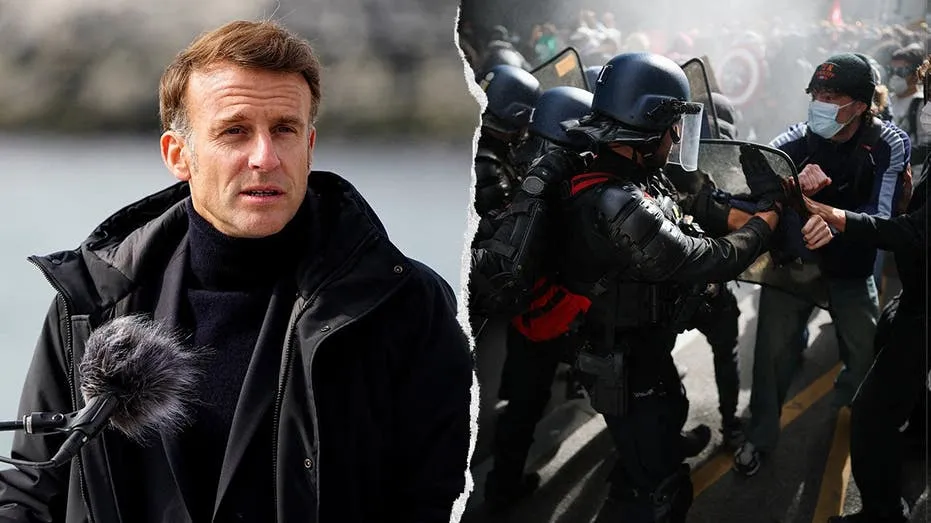
The Smoke Over Seine-Saint-Denis Is Not About Schools. It Is About a State That Spent Its Credibility Years Ago Hot News

The Smoke Over Seine-Saint-Denis Is Not About Schools. It Is About a State That Spent Its Credibility Years Ago

(SeaPRwire) - Here is the uncomfortable truth nobody in the Élysée wants to say aloud. France spends $16,674 per upper-secondary student, well above the OECD average of $12,421, and yet its teenagers are rioting over cold classrooms and broken heating. That paradox is not an accident. It is the signature of a state that has perfected the art of spending money without buying results. Simone Rodan-Benzaquen, the Foundation for Defense of Democracies' senior envoy for Europe, put it plainly from Paris: the anger is real, but the violence is organized. She is right, and both halves of that sentence matter. Seventy-two percent of education expenditure goes to salaries, social contributions, and pensions. Only 8.5 percent reaches investment in buildings and equipment. Students are not wrong to freeze. But torching a school, as she noted, will not repair a single boiler. What we are watching is a genuine grievance being harvested by political forces that have no interest whatsoever in fixing the grievance itself. The official story is about education. The real story is about arithmetic. French public debt stood at 117.6 percent of GDP in the first quarter of 2026, the third-highest ratio in the European Union, behind only Greece and Italy. Harvey Feigenbaum of George Washington University frames the trap precisely: France wants to cut its expenses, but its social commitments keep expanding while growth stays sluggish. Reuters reported on October 8 that rising borrowing costs have stripped the government of its traditional riot-extinguisher, which was always money. Previous waves of protest ended when Paris opened the wallet. The wallet is now empty. So instead we get the emergency plan from Education Minister Édouard Geffray: 3,000 qualified educators deployed to the hardest-hit schools, at a cost of several dozen million euros. Student unions called it an initial victory and promised to keep marching. Of course they did. When a government cannot buy peace, peace becomes more expensive in other currencies. Now consider the political machinery grinding beneath the street theater. Feigenbaum's verdict on Macron is brutal but defensible: a smart man, a terrible politician. By hollowing out the moderate left and moderate right after 2017, Macron destroyed the parties that used to absorb and channel discontent. Nothing durable replaced them. The 2024 snap elections produced a National Assembly with no governing majority, leaving Prime Minister Sébastien Lecornu managing street fires while the president faces questions about the system he himself redesigned. Even a coherent policy, Feigenbaum notes, would have no votes to pass. Into that vacuum walks Jean-Luc Mélenchon. French intelligence told a government crisis meeting, per Reuters on October 1, that La France Insoumise and affiliated activists helped foment the unrest, with Interior Minister Laurent Nuñez citing agitators moving between schools. LFI denies it, and Le Monde's October 2 investigation reasonably questioned whether police intelligence proved orchestration. But Rodan-Benzaquen's reading of Mélenchon's strategy is worth taking seriously ahead of the 2027 presidential race: frighten the right toward the far right, mobilize his own camp among the young and immigrant communities, and present himself as the only barrier against the abyss. The geopolitical pendulum in Europe swings toward whichever force can turn fiscal exhaustion into electoral momentum, and right now France is a live demonstration. A heavily indebted state, a paralyzed assembly, a discredited center, and radical movements on both flanks competing to own the next crisis. The schools were merely the first available match. My blunt assessment: unless Paris restores a functioning parliamentary majority before 2027, the burning classrooms of Seine-Saint-Denis will be remembered not as a protest movement, but as the rehearsal.
More
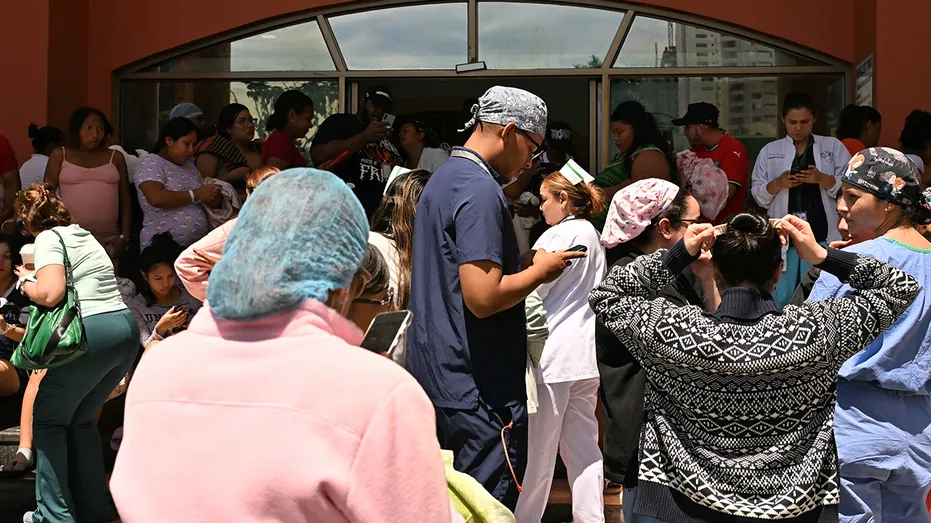
A 7.7 Quake, a Downgraded Number, and the Thin Line Between a Warning and a Disaster Hot News

A 7.7 Quake, a Downgraded Number, and the Thin Line Between a Warning and a Disaster

(SeaPRwire) - When the U.S. Geological Survey first logged Friday's earthquake off Panama's southern coast at magnitude 8.0, and then quietly walked it back to 7.7, most readers scrolled past the revision without a second thought. That small correction deserves more scrutiny than it got. It is not a sign of scientific sloppiness. It is the visible edge of a system that has to make life-and-death public calls in minutes, on incomplete data, knowing that both overreaction and underreaction carry real costs. The 8.0 figure went out first because early magnitude estimates from offshore quakes are inherently rough. The revised 7.7 followed as more seismic data arrived. What matters for governance is not the error itself, but whether the public warning architecture in Panama and its neighbors is built to act on the first number rather than the refined one. From what we know so far, it did. Tsunami officials moved quickly, warning of waves 3 to 10 feet above tide levels along parts of Panama's coast, with 1 to 3 feet possible in Ecuador. That is the correct instinct: warn early, calibrate later. Now consider the raw facts of what actually happened, because they carry an uncomfortable lesson. The quake struck at 1:56 p.m. ET, roughly 6 miles beneath the surface, near Pitaloza Arriba. Shallow depth. A 5.5 aftershock followed, its epicenter about 50 miles east. Shaking was felt not only in Panama City but across the border in San José, Costa Rica. Earthquakes in the 7.0 to 7.9 band can cause serious damage, as Michigan Technological University's scale notes, and this one sat near the top of that range. Yet the official posture, beyond the coastal warnings, was notably restrained. No Pacific-wide tsunami was expected. Smaller waves, under a foot, were forecast for a long ribbon of coastlines from Mexico down to Peru. And here is the detail that should worry every civil protection planner in the region: as of the initial reporting, information about possible damage or casualties was simply not available. Not "none reported." Not available. In a coastal state facing a potential 10-foot tsunami threat, the information gap in the first hours is itself a finding. This is where the announced facts and the social reality diverge. Panama sits on one of the more seismically active junctions in the Americas, and its coastal communities are not all wired into the same alerting infrastructure as the capital. A warning issued in Panama City or relayed through Reuters means little to a fishing village near the epicenter if the sirens, radio relays, or mobile networks fail in the first minutes after the shaking starts. The multi-country wave forecasts issued on Friday, covering Colombia, Costa Rica, Ecuador, El Salvador, Guatemala, Mexico, Nicaragua and Peru, demonstrate how centralized and scientific the detection side has become. The detection is excellent. The last mile of delivery is where such systems historically break. Casualty and damage assessments lagging for hours after a shallow 7.7 quake tells you exactly where the institutional weakness lives: local reporting chains, coastal communications, and the mundane logistics of getting eyes on remote shoreline communities fast. The science has outrun the plumbing. The blunt conclusion is this. Panama and its neighbors do not lack warning capability; they lack verification and response speed at the periphery, and every hour of silence after a near-8.0 event is an hour in which the worst outcomes go unseen. The practical fix is unglamorous: hardened coastal radio and siren networks, pre-arranged damage-assessment protocols with local authorities, and tsunami warnings that trigger automatic coastal evacuation drills rather than waiting for confirmation that will always arrive late. The next 7.7 will not wait for better data, and neither should the response.
More
Belgium’s Youth Are Burning Scooters, Not Just Protesting — Here’s Why Your Austerity Timeline Won’t Save Them Hot News

Belgium’s Youth Are Burning Scooters, Not Just Protesting — Here’s Why Your Austerity Timeline Won’t Save Them

(SeaPRwire) - Brussels erupted on Friday. Thirty thousand people flooded the capital's streets, yet the real story was invisible to most foreign correspondents covering the event. This wasn't a traditional labor march. It was a generational explosion dressed in black masks and green union vests. The visual language told the truth. Young people threw rocks and firecrackers at riot police near the central railway station. One man set an electric scooter ablaze. These weren't professional agitators hired by fringe groups. They were students and precarious workers who genuinely cannot survive the current cost structure. A single mother named Marie Gobert traveled from Namur just to walk the route. She said outright she cannot make ends meet. Her concerns center on schools, public transport, and train fares. That is not a demand for revolution. That is a plea for basic existence. The numbers behind this anger are brutal. Belgium's French Community government raised standard university tuition by roughly 43 percent this academic year, jumping from €835 to €1,194. That is a direct hit on social mobility. Students in Liège already faced arrests last month—107 of them according to local media. The federal government in Brussels projects budget surpluses by 2027. Three years from now. For a single mother choosing between groceries and a monthly transit pass, that horizon is meaningless abstraction. Behind the scenes, two dynamics are at work that the union leadership would prefer you ignore. The two largest labor unions organized the daylong national strike, but they are actively distancing themselves from the unrest. Union officials issued statements saying the people throwing rocks are not affiliated with their movement. This creates a strange political geography. Official unions occupy one lane while young protesters occupy another. The government is counting on this split. It forces the establishment to negotiate with tame representatives while criminalizing the angry ones. The second dynamic is regional. Belgium's political architecture already fractures along linguistic lines. The French Community government drove the tuition increase. The federal government is pushing fiscal consolidation. Neither side is coordinating with the other on social impact. This administrative siloing turns every policy decision into a regional blame game rather than a national solution. What happens next will determine whether Belgium follows the trajectory of other European states experiencing youth alienation. The French Community's education system already struggles with overcrowded classrooms and difficulty accessing study materials. Adding a 43 percent tuition shock to that foundation is not fiscal policy. It is social engineering that produces exactly this kind of street chemistry. When young people feel the system has no place for them, they do not become more patient. They become more visible. The government believes it can wait out the unrest. Fiscal consolidation models assume compliance. They do not model what happens when compliance stops looking rational. Brussels will see more of this before October.
More

The Nobel That Broke the Court: How One Prize Exposed the UN’s Hypocrisy Machine

(SeaPRwire) - A Nobel Peace Prize handed to a woman who spent six years chairing a U.N. inquiry that labeled Israel a genocidal state is not a celebration of international law. It is an indictment of what international law has become. The Norwegian Nobel Committee has dressed political bias in the uniform of moral authority. What we are witnessing is not the elevation of justice. It is the institutional capture of human rights frameworks by actors who treat selective condemnation as a substitute for impartial judgment. Navi Pillay, 85, won the 2026 prize. She also chaired the U.N. Human Rights Council commission that concluded Israel committed genocide in Gaza in September 2025. Israel rejected that finding as politically motivated. Before she accepted the chairmanship in July 2021, Pillay had already signed a June 2020 manifesto calling on governments to sanction apartheid Israel. She sent a June 2021 letter urging President Joe Biden to punish Israel after its conflict with Hamas. Her track record predated the commission by years. She was never a neutral investigator. She was a committed advocate wearing an investigative robe. The pattern escalated further. In 2022, fellow commissioner Miloon Kothari suggested social media criticism of the investigation was controlled by the Jewish lobby. He questioned Israel's U.N. membership. U.S. officials including antisemitism envoy Deborah Lipstadt condemned the remarks. Pillay defended Kothari, arguing his comments were taken out of context. Kothari apologized later, calling the language inappropriate and insensitive. Berlin withdrew support for an event honoring Pillay in 2022 and canceled it. Anne Bayefsky of Human Rights Voices also recalled that in 2009, Pillay remained seated during Iranian President Mahmoud Ahmadinejad's speech at a Geneva anti-racism conference while Western diplomats walked out. Ahmadinejad attacked Israel and questioned the Holocaust. Pillay condemned the speech afterward but critics called that disingenuous, pointing out she had received the speech in advance and still allowed him the microphone. UN Watch executive director Hillel Neuer condemned the Nobel announcement and pointed directly to these documents as proof Pillay lacked the impartiality required. U.N. Secretary-General António Guterres took the opposite view. He congratulated Pillay and praised her leadership of the investigation into Israel and the Palestinian territories. He called her a champion of international law and human rights who proved the force of law must prevail over the law of force. Guterres and the Nobel Committee are not describing the same person. They are describing two different institutions entirely. One claims to enforce universal standards. The other treats those standards as flexible instruments. The deeper reality is that the Nobel selection exposes how human rights institutions now function. Pillay spent 2008 to 2014 as U.N. High Commissioner for Human Rights. She was born in Durban, South Africa, in 1941. She became the first non-White woman appointed to South Africa's high court. She served as a judge at the International Criminal Tribunal for Rwanda and the International Criminal Court. Her credentials are real. Her record on Israel is also real. The problem is that her record on Israel predates her appointment and directly contradicts the neutrality her post demands. The Nobel Committee honored exactly that contradiction. International legal bodies are supposed to operate above politics. They do not. Pillay's selection proves that the machinery designed to hold perpetrators of war crimes accountable now functions as a mechanism for punishing states chosen for political reasons. When the same person who called for sanctions against a country is placed in charge of investigating that country, the system is not broken. It is working exactly as designed.
More
She Put Israel on Trial. The Nobel Committee Just Made It Official. Hot News

She Put Israel on Trial. The Nobel Committee Just Made It Official.

(SeaPRwire) - The Nobel Committee just handed its highest civilian honor to the woman whose report put a Western nuclear state on trial for ethnic cleansing. That single decision should tell you everything about where international law stands today. It is no longer a neutral referee. It is either a weapon or a shield, depending on who holds it. The prize went to Navanethem Pillay for her efforts to promote peace and international law. The language is clean and dignified. The implications are anything but. The official justification from the committee is procedural and carefully worded. Strong international judicial institutions, they argued, must be able to enforce the rule of law to have any hope of mediating the growing number of wars and conflicts worldwide. The committee noted that political attacks against judges and international law itself are becoming more commonplace. Strip away the diplomatic polish and the geopolitical intent becomes visible. This is not just about rewarding one jurist with a distinguished career. It is about drawing a red line around institutions like the ICC and the ICJ while those same bodies face coordinated dismantling from major powers. Israel's response was immediate. The findings were called "distorted and false." Nitsana Darshan-Leitner, president of the Israel-based Shurat HaDin Law Center, pushed back against the prize itself. She argued that Pillay brought no peace but instead turned Israel into a defendant in a campaign of political delegitimization. Her organization has led protest campaigns in Geneva against Pillay. That counter-argument carries some weight. A Nobel prize does not end a conflict. It makes the conflict harder to deny. Now consider what the prize actually cements in institutional memory. Pillay, 85, was born in South Africa's Natal province to a Tamil Indian family. Her first foray into the legal profession began in 1967, when she founded her own law firm, becoming the first non-white person to do so in her province. During 28 years as a defense attorney in South Africa, she represented anti-apartheid activists. In 1973, she won a case securing political prisoners on Robben Island, including Nelson Mandela, the right to consult with lawyers. Two decades later, Mandela became president and nominated her to the High Court of South Africa in 1995, making her the first non-white woman to serve there. That same year, the United Nations elected her to the International Criminal Tribunal for Rwanda, a body established to adjudicate those responsible for the Rwandan genocide. She was integral in the case against Jean-Paul Akayesu, the mayor of the Rwandan town of Taba, who was found guilty of inciting fellow Hutus to murder, rape, and torture thousands of Tutsis. That ruling set a precedent that rape constituted a crime against humanity and could amount to genocide when committed with the intent to destroy a targeted group. Pillay said after the verdict that rape had always been regarded as one of the spoils of war. Now, she declared, it is a war crime, no longer a trophy. In 2003, she was chosen to be a judge on the International Criminal Court, an institution frequently attacked by President Donald Trump as illegitimate. After five years on the ICC, she became the UN's High Commissioner for Human Rights in 2008. While in that position, she condemned both Israel and Hamas for their conduct in the 2014 Gaza War, saying both sides likely violated international law. She also condemned the United States for providing funding to Israel's Iron Dome program when no such protection had been provided to Gazans against the shelling. She currently serves as an ad hoc judge on the International Court of Justice, where she is hearing a case accusing Burma of committing genocide against the Rohingya, a predominantly Muslim minority in the Southeast Asian country. The Nobel prize does not just honor a career. It anchors an entire architecture of international accountability to a single, polarizing, and deeply consequential verdict from September 2025. That report, nearly two years after the Oct. 7 attacks, found Israel committed genocide against Palestinians in Gaza. It specifically accused Prime Minister Benjamin Netanyahu and then-Defense Minister Yoav Gallant of inciting genocide. Pillay said it was clear there was an intent to destroy Palestinians in Gaza through acts that met the criteria set forth in the Genocide Convention. The commission had been created in 2021, after a flare-up in tensions between Israelis and Palestinians. The geopolitical pendulum has not simply shifted. It has been yanked. Every institution Pillay served — the ICC, the ICJ, the UN human rights machinery — is now under siege from states that refuse to submit to binding legal authority. The Nobel Committee recognized this. It made the most targeted choice possible. It chose the person whose findings Israel could not ignore. What happens next is whether any tribunal can actually compel compliance from a state with a permanent Security Council ally behind it. If not, the prize is a monument to the gap between legal truth and enforcement power. That gap is where the next decade of global conflict will be fought.
More

How a New York Propaganda Network Turned Paris School Streets Into a Global Revolution

(SeaPRwire) - A French education dispute just became someone else's ideological war. What the mainstream media has been calling a student protest over school conditions is actually a coordinated political infrastructure project funded overseas. The line between a domestic grievance and an engineered uprising has gone completely blurry. The core architect is BreakThrough News, a pro-communist media outlet based in Manhattan. Its funder is Neville Roy Singham, an American-born tycoon now operating out of Shanghai. Digital's investigation traces how this network has spent nearly a decade in the United States capitalizing on public grievances to stoke street unrest. Now the same playbook is being deployed across French classrooms and labor unions. Fifty organizations form the visible network. Fifteen are student or youth groups. The remaining thirty-five are adult institutions pulling strings from behind the scenes. Organizational machinery runs far deeper than angry teenagers. National labor federations called adult workers into the mobilization. The Confédération nationale du travail declared the students right to revolt. Education-sector unions including CFDT Public Education, CGT Éduc'action, and SUD Éducation organized strikes on behalf of secondary students. Political parties supplied leadership. La France Insoumise officials were photographed working directly with students organizing blockades in Seine-Saint-Denis. Far-left environmental group Les Soulèvements de la Terre invoked an antifascist uprising. A Palestinian advocacy group completed what analysts call the Red-Green alliance of leftists with Muslims. Mike Gonzalez of the Heritage Foundation identified this as the same transnational ecosystem that disrupted the Brooklyn Bridge and congressional hearings in America. He named Singham as the common financier behind it all. Gonzalez warned that France carries particular historical risk. The Fourth Republic fell in 1958 after large protests over Algeria. The government nearly collapsed in 1968 over student demonstrations. The 1789 French Revolution was itself blood-drenched. The pattern repeats whenever domestic disputes are siphoned into broader anti-capitalist confrontation. What distinguishes this moment is the international media amplification. BREAKING alerts fire from New York while students occupy squares in Paris. Domestic frustration becomes global content. The end-game is neither education reform nor austerity resistance. It is the systematic presentation of a local confrontation as proof of institutional failure across the entire Western order. When fifty groups coordinate strike calls, mobilization routes, and media pushes simultaneously, you are no longer watching a protest. You are watching a political operation. And the funding trail leads far beyond France.
More
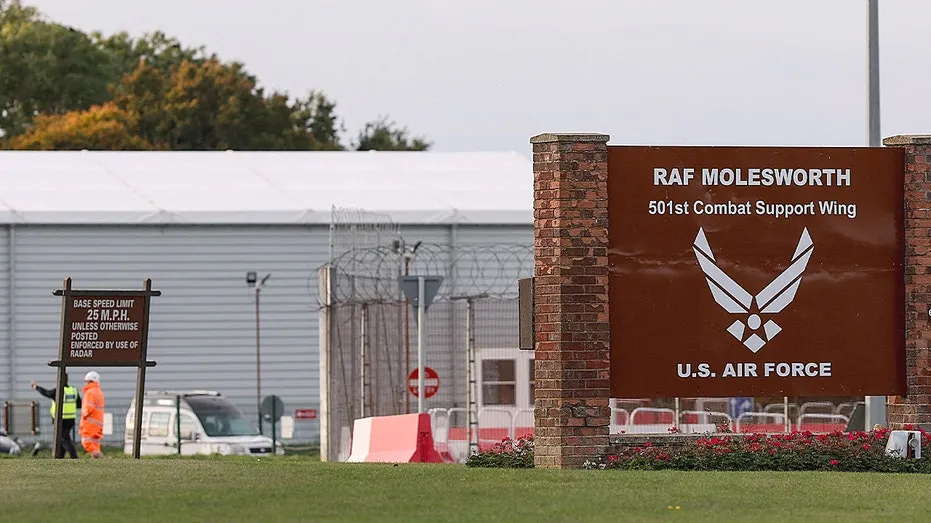
The Fence Was Cut: What a Breach at the $556M JIAC Reveals About Intel Hub Fragility Hot News

The Fence Was Cut: What a Breach at the $556M JIAC Reveals About Intel Hub Fragility

(SeaPRwire) - Two men walked past a fence. That was the breaking point. The intrusion into RAF Molesworth was not just a security failure; it was a stress test for the entire Western intelligence architecture in Europe. The optics are terrible. A $556.5 million expansion project, the Joint Intelligence Analysis Complex, is meant to be a fortress. Instead, it is a soft target. The official narrative from U.S. European Command is about "highest state of readiness." That is bureaucratic fluff. The real story is the physical vulnerability of consolidating 20 facilities and over 1,000 personnel into one single geographic location. You are creating a single point of failure. If you want to blind an adversary, you do not need to hack their servers. You just need to put boots on the ground where the sensors meet the strategy. Let us look at the facts, stripped of the PR gloss. On Thursday, two Latvian nationals, aged 32 and 36, were arrested under Section 4 of the UK National Security Act of 2023. They were found inside the base at 2 a.m. The alarm was raised earlier that night, around 10 p.m., when Ministry of Defense Police found an abandoned vehicle near the perimeter. Bomb disposal crews cleared the vehicle. Then armed officers found a fence breach. The men were first detained for trespass and criminal damage. The upgrade to a national security arrest happened because they entered a prohibited place for a purpose prejudicial to the UK. Counterterrorism detectives are now executing search warrants at two properties in Peterborough. The base is managed by the U.S. Air Force’s 423rd Air Base Group. It houses intelligence for U.S. European Command, U.S. Africa Command, and the NATO Intelligence Fusion Centre. This is not a backwater airstrip. It is the nerve center for strategic operations across two continents. The defense department talks about "European Infrastructure Consolidation." They see efficiency. I see risk. By combining the Battlefield Information Collection and Exploitation System with U.S. Air Force elements in a cross-agency collaboration, they are reducing the surface area for attack. But they are also reducing the speed of evacuation or dispersal. The construction began on April 12, 2024, with completion slated for summer 2028. That is a long tail of vulnerability. During this build-out, the base is half-finished, half-guarded. The two-stage procurement strategy was designed to streamline scheduling. It did not streamline security. The breach happened during this critical window. The fact that the suspects were legally residing in the UK makes this worse. This is not an external spy landing from a helicopter. This is internal access. The perimeter is the first line of defense. If you can walk through it, the digital security layers behind it become secondary concerns. We must stop treating this as an isolated incident. Counterterrorism Policing London commander Helen Flanagan says they are keeping an open mind. She notes no connection to the recent security concerns at RAF Fairford. That is likely true. But the pattern of attacks on U.S. assets in the UK is becoming a systemic issue. The geopolitical end-game is simple. Adversaries are probing the seams of the alliance. They are testing how far they can push before a major response triggers. The $556 million JIAC is a beacon. It tells the world where the brain is. The physical security of that building is now more important than the software running inside it. The hardware is the new software. If you cannot keep two men out of the yard, you cannot keep a missile out of the sky. The lesson is clear. Consolidation creates concentration. Concentration creates targets. The next breach will not be two men on foot. It will be a drone. And by then, the fence will not matter.
More
A Stretcher, a Snap Election, and the Body of an 87-Year-Old: Spain’s Housing Machine Just Ate Its Own Legitimacy Hot News

A Stretcher, a Snap Election, and the Body of an 87-Year-Old: Spain’s Housing Machine Just Ate Its Own Legitimacy

(SeaPRwire) - María del Carmen Abascal did not die of a housing policy. She died after being carried out of the home she had occupied for seventy years, on a stretcher, past a police cordon, past protesters who had tried to physically stop the eviction. Let us be precise about what the Spanish state and the market accomplished together on September 23: an 87-year-old woman in a wheelchair was extracted from her apartment so that a real estate company could re-let it at a substantially higher price. That is not a market failure. That is the market functioning exactly as the legal framework permits it to function, with the police providing the muscle at the point of extraction. The images went national within hours. They should have. When the visible output of your property law regime is a stretcher, your regime has a communications problem that no amount of condolences on X can repair. Prime Minister Pedro Sánchez posted his love to Maricarmen's family and a hug to "all of us who feel this loss as our own." Alberto Núñez Feijóo, the conservative opposition leader, offered sympathy and warned against political exploitation. Both statements were correct and both were beside the point. The point is the sequence: eviction, hospitalization, death on Wednesday, protests outside Parliament, a minute of silence in Puerta del Sol. The state expressed grief at the end of a process it had enforced at the beginning. Now place the official facts against the social reality. The facts are these. Abascal had lived in that Madrid apartment for seven decades. The real estate company behind the eviction wanted the unit back to lease at a substantially higher price, according to the Associated Press. Police cordoned the street and removed demonstrators. Under public pressure after the images spread, the company reversed course and agreed to let her return. She died before she could move back. Her cause of death has not been disclosed, and no one should pretend to know it. But here is the subtext that no communique will state: the reversal came only after the optics became toxic, which means the decision to evict was never about legality in doubt. It was about cost calculation. The company weighed the rent uplift against the reputational risk and proceeded. Only when the reputational risk metastasized into a national symbol did the arithmetic change. That tells you everything about where the actual regulation sits in Spain's rental market. It sits in the court of viral outrage, not in statute. A system that relies on televised shame to protect octogenarians has already conceded that its formal protections are decorative. The second layer is political, and it is where the genuine crisis lies. Sánchez called a snap election for November 29 after his government failed to pass emergency housing measures through Parliament. Read that again. The emergency measures failed first. The election was called second. Abascal's eviction happened September 23, inside that window of legislative paralysis, and her death detonated it into a full political crisis with demonstrations spreading from Madrid to other cities. Protesters chanting "Maricarmen lives, the fight goes on" are not mourning; they are organizing. Every party now enters that November campaign carrying this corpse, whether they acknowledge it or not. Feijóo's plea to avoid political gain is itself a political move, an attempt to neutralize the symbol before it attaches to his opponents' platform. It will not work. The Socialist Party is bleeding over rents and affordability because the failure is concrete and recent: they could not pass the measures, and a woman died in the gap. Housing activists now have a deadline, a face, and a date on the calendar. The electoral mechanics are simple. Whoever credibly owns rent control and eviction protection in the next weeks owns the angry median voter in Madrid, Barcelona, and every city where rents have outrun wages. What Spain is actually deciding this November is whether housing is a consumption good allocated by price or a social obligation enforced by law. The Abascal case proves the current answer. Price won, the police served the writ, and the correction arrived only as public relations triage, too late to matter. The governance structure exposed here is not uniquely Spanish; it is the standard European arrangement in which tenants hold lifetime emotional claims and landlords hold legally superior paper claims, and the state arbitrates with stretchers. The realistic trajectory is grim and plain: if the November election produces a government that caps rents and restricts evictions, capital will test those limits in the courts for years. If it produces one that does not, the next Maricarmen is already somewhere in the eviction queue, and the only question is whether anyone will be filming.
More
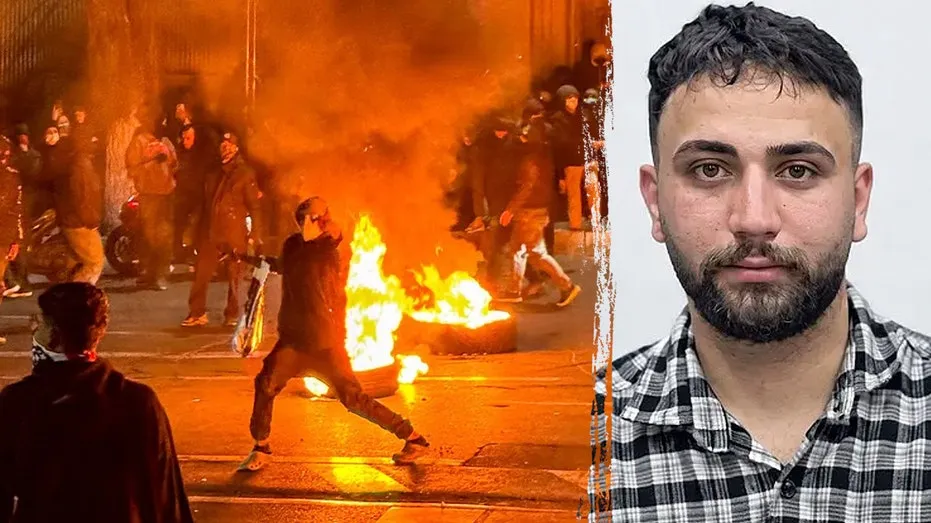
Hours Between Vows and the Gallows: What Isfahan’s Execution Reveals About Regime Arithmetic Hot News

Hours Between Vows and the Gallows: What Isfahan’s Execution Reveals About Regime Arithmetic

(SeaPRwire) - The most dangerous feature of authoritarian governance is not the cruelty it displays. It is the bureaucratic calm with which cruelty is administered. When a regime hangs a twenty-five-year-old man hours after he exchanges wedding vows over a prison phone line, it signals something far beyond mere repression. It signals that the machinery of state violence has been optimized for maximum psychological impact. Every step in the process serves a calculated purpose. Fear must be produced at precise intervals. Public punishment must land at precise moments. The timing is never accidental. What unfolded in Isfahan on October 5 was not an emotional response to dissent. It was a scheduled performance of power, calibrated to maximum symbolic violence. The Iranian state does not simply punish protesters. It choreographs their punishment for maximum deterrence value. The gap between the vows and the gallows was measured in hours, not days. This is not an oversight in a broken system. This is a functioning system operating at peak efficiency. The question is not whether such actions can be stopped. The question is whether the international community possesses the political will to impose costs that matter. The official Iranian narrative frames the Alikhani Square prosecutions as legitimate criminal justice proceedings. Twelve men faced charges after four security personnel were killed during anti-government demonstrations on January 8. Seven defendants have now been executed. The state insists these are lawful outcomes of due process, not political executions. According to the regime's legal framework, these men killed state agents and received punishment accordingly. But examine the operational details and the picture shifts dramatically. Alireza Sepahi, twenty-five years old, was sentenced to death for participation in anti-government activities. His co-defendant Alireza Raisi was executed alongside him. Mahshad Keshani, his twenty-two-year-old bride, serves a five-year prison term for student activism. Both were arrested not for violent crimes but for expressing political dissent in public spaces. They knew each other before the arrests. They loved each other through interrogation and imprisonment. The court verdicts that sealed their fates were not independent judicial decisions. They were instruments of political engineering designed to crush organized dissent. The regime's insistence on rule of law framing collapses under scrutiny of the timeline and circumstances. The wedding ceremony inside Isfahan Central Prison exposed the regime's most uncomfortable contradiction. A human rights lawyer, Amirsalar Davoudi, facilitated the ceremony by reading vows aloud for the couple's fathers to hear. A Quran, saffron rock candy, and a single red rose served as traditional dowry. Even prison officers reportedly wept during the ceremony. This human moment of intimacy occurred within the walls of the institution tasked with executing one of the participants. Davoudi later said he told Keshani that the decision could not be undone. She responded simply: "I love Alireza." When he brought the proposal to Sepahi, the young man broke down in tears. The ceremony carried no legal authority to interrupt the scheduled execution. Sepahi had previously survived a July hanging attempt after suffering a heart attack en route to the gallows. When he regained consciousness, authorities simply rescheduled the death. He was not freed. He was not rehabilitated. He was given a second trip to the gallows. On Monday morning, hours after the vows were spoken, Sepahi was hanged at dawn inside Isfahan Central Prison. The regime does not merely execute dissidents. It executes them at the most emotionally devastating possible moments. The timing is designed to break not just the condemned but everyone who loved him. After the hanging, Sepahi's family was denied permission to bury him in his hometown. This denial of burial rights is itself a political act, extending punishment beyond death. Keshani remains in custody facing additional security charges. Human rights groups document the execution as part of seven total deaths in the Alikhani Square case. The pattern is clear and systematic. Maryam Rajavi, president-elect of the National Council of Resistance of Iran, called on UN Secretary-General António Guterres to take immediate international action to halt executions. She wrote ahead of World Day Against the Death Penalty on October 10, citing thousands of executions and decades of impunity for human rights abuses in Iran. She demanded international accountability, independent investigations, and diplomatic and economic pressure on Tehran. These appeals arrive too late and too thinly. Diplomatic condemnation costs no one anything. The geopolitical pendulum only shifts when economic pressure meets strategic patience. Until Western governments tie access to Iranian oil revenues directly to prosecution halts, executions will remain inexpensive instruments of domestic control. The cost of silence from the international community is measured in bodies, and the ledger continues to grow.
More
The Helmet Camera Wrote the Playbook No School Safety Protocol Can Kill Hot News

The Helmet Camera Wrote the Playbook No School Safety Protocol Can Kill

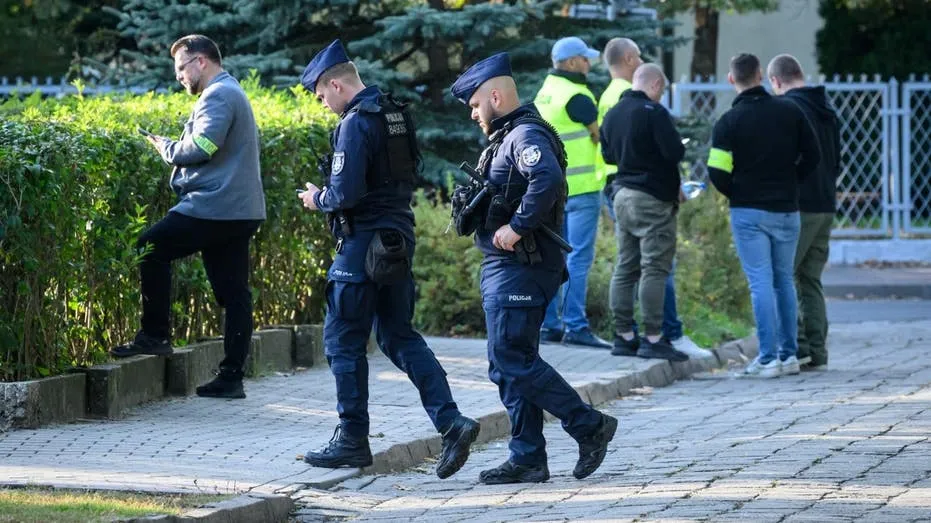
(SeaPRwire) - The helmet camera changes everything. It is not simply a knife-wielding teenager running through a school hallway. It is a teenager documenting his violence for an audience that may not exist yet. Polish Prime Minister Donald Tusk called it a "grim copycat phenomenon" at an emergency meeting. He noted that for the first time they were dealing with a killer who wore a helmet-mounted camera, intending to film the knife attack. The recording device transforms the perpetrator from a random violence actor into a content creator. That distinction matters more than the blade. Tusk's emphasis on the camera reveals political awareness that the threat vector has shifted online. The state must respond to digital radicalization faster than any legislative cycle. A 15-year-old boy attacked a primary school in Leszczydol-Nowiny, northeast of Warsaw, on Thursday morning. He killed a 37-year-old caretaker and wounded two others. Head teacher Krzysztof Ochmanski was injured subduing the teenager. Ochmanski told Polskie Radio RDC the boy had three knives and struck him with the handle. He heard a scream and ran into a hallway before the attack began. Two days earlier, a 19-year-old wounded 10 people at a school in Ostroleka, also in northeastern Poland. Police arrested a 17-year-old in Sierpc after suspecting he planned a similar attack in north-central Poland. Three incidents within one week signal a systemic breakdown rather than isolated episodes. The geographic clustering in northeastern regions suggests factors authorities have not yet publicly addressed. Authorities are investigating whether these attacks connect to an online challenge encouraging teenagers to kill as many people as possible. Nikola, the 18-year-old sister of a boy at the attacked school, told Reuters there were rumors about this challenge among students. She said she did not know if it was real because it sounds so unreal and terrifying, like something out of a movie. The investigation treats the online challenge as a potential vector for radicalization. Social media platforms become the staging ground for violence before any physical confrontation occurs. If the challenge is confirmed, the scale of the threat multiplies. Each new user exposed to it represents another potential attacker who needs no external organization beyond the algorithm. Behind the headlines, the maneuvering is already underway. Tusk ordered police to visit schools every day to discourage further violence. That directive signals a shift from crisis response to institutional prevention. Daily school visits raise questions about how this integrates with existing school safety protocols and community trust. The Polish government faces pressure to demonstrate rapid action while avoiding overreach. Each attack triggers fresh political calculations about surveillance expansion and youth intervention mandates. Local officials must absorb the operational cost of these directives without clear funding streams or performance metrics. The emergency meeting format suggests the opposition and civil society groups will scrutinize every enforcement decision. The online challenge investigation represents the real fault line for future policy. If authorities confirm the connection between social media radicalization and physical violence, the scope of government intervention expands dramatically. Current education budgets do not account for digital threat intelligence capabilities. Schools lack staff trained to identify online radicalization before it manifests physically. Tracing anonymous social media accounts to real-world actors creates jurisdictional gaps that no single agency can fill. Every delay in this investigation widens the window for copycat behavior. The interplay between law enforcement, education ministries, and platform regulators will determine whether Poland addresses the root cause or merely patches symptoms. Without cross-agency data sharing protocols, each institution will operate in isolation while the threat compounds. The next copycat attack will arrive before Polish response mechanisms fully mature, and no amount of daily school visits will neutralize a template already embedded in online radicalization networks.
More

The Bureaucratic Lie That Killed a Scientist: Decoding the Irkutsc Containment Failure

(SeaPRwire) - The official narrative surrounding the death of Darya Shipilova is a masterclass in state-sponsored obfuscation. Rospotrebnadzor claims the 28-year-old researcher died of "pneumonia of unknown origin." They assert that extensive testing found no trace of the pathogens she handled. This statement is a shield designed to deflect international scrutiny and preserve institutional reputation. It ignores the biological reality of working with high-consequence pathogens. The silence from Moscow serves a dual purpose. It comforts domestic audiences with a benign explanation. It isolates the incident from the broader context of crumbling Russian public health infrastructure. Consider the facts against the subtext. Darya worked at the Irkutsk Anti-Plague Research Institute in Siberia and the Far East. Her mother, Svetlana Shipilova, is a medical professional who rejected the official account. She stated that it is impossible to break a test tube in a way that would cause such a catastrophic spill. She told the outlet Glubina that the circulating story of a broken test tube is an amateur fabrication. Even if one flings a tube at a wall, the containment holds. Svetlana believes her daughter was simply allowed to die. She knows the truth of the institutional failure. The agency claims no evidence of plague involvement. Yet the WHO Director-General, Tedros Adhanom Ghebreyesus, admits they lack a full picture. The U.S. CDC is monitoring reports of a suspected pneumonic plague case. The discrepancy is not just medical; it is political. The geopolitical implication is stark. This is not merely a public health event. It is a security failure in a region housing strategic biological assets. When an anti-plague institute loses containment, it signals a decay in biosecurity protocols that extends beyond the lab. The refusal to acknowledge a possible plague leak invites speculation about intentional negligence or cover-up. The CDC’s involvement highlights the transnational risk. Pathogens do not respect borders. The Russian government’s rigid denialism isolates it from global health cooperation. It frames a potential containment breach as a domestic administrative error. This prevents the necessary international audit and containment measures. The pendulum of global trust has already swung away from Russian scientific transparency. Future incidents will be viewed through the lens of this event. The world will assume the worst until proven otherwise. For now, the Irkutsk incident stands as a warning. It exposes the fragility of state-controlled scientific narratives. It proves that when authorities hide the truth, the vacuum is filled by fear and suspicion. The cost of that silence is paid by the global community.
More

The Geopolitics of Grace: Why 122 Countries Sent Christian Leaders to Jerusalem Instead of Troops

(SeaPRwire) - The global response to the October 7, 2023, massacre has been clinically misdiagnosed by many Western capitals. They saw a diplomatic failure. They saw a media vacuum. What they missed was the mobilization of a quiet, transnational constituency that operates outside the rigid lanes of state-to-state diplomacy. The arrival of Christian leaders from 122 countries in Jerusalem marks a shift in the geopolitical landscape. This is not charity. It is a strategic reinforcement of Israel’s international support network, rooted in theological alignment rather than treaty obligations. The world did not turn away. It simply turned elsewhere. Consider the official narrative of the event. The Friends of Zion Ambassador Summit brought together over 1,000 participants, including released hostages like Agam Berger and Sagui Dekel-Chen. They visited Yad Vashem, the holocaust remembrance center, and the Mount of Olives. Israel’s Ministry of Foreign Affairs cooperated in hosting this delegation. The data is clear: this is a massive, organized diplomatic event disguised as a religious gathering. The presence of figures like Sylvan Adams, president of the World Jewish Congress Israel, signals institutional buy-in. The broadcast of the event on dozens of television networks indicates a coordinated media strategy. The scale is not incidental. It is deliberate. Now, contrast this with the subtext. The real intent here is to counter the "paid actors and anti-Israel organizations" that seek to drive a wedge between the West and the Jewish state. Dr. Mike Evans, the founder of the Friends of Zion Heritage Center, makes the strategic logic explicit. He argues that the vast majority of global Zionists are not Jewish but Bible-believing Christians. This is a crucial demographic insight. When secular governments hesitate, when the United Nations debates resolution after resolution, this bloc of influence provides a consistent counter-narrative. They are here to comfort, yes. But they are also here to witness. George Deek, Israel’s Special Envoy to the Christian World, frames their visit as bearing witness and carrying stories back to communities. This is intelligence work. It is the export of empathy as a geopolitical asset. The geopolitical pendulum is swinging toward those who control the narrative of victimhood. For decades, the West has argued that support for Israel must be balanced by critiques of settlement policies. This summit dismantles that binary. It asserts that moral solidarity with the victims of October 7 supersedes political conditionality. The inclusion of Hooman Khalili, an Iranian-born artist creating "Woman, Life, Freedom" murals, further complicates the simple East-West divide. It shows that this alliance cuts across traditional geopolitical blocs. The real endgame is not a military victory, but a permanent, decentralized support infrastructure that secures Israel’s moral high ground in the global court of public opinion.
More
Waltz’s Tears at the U.N. Were Real. The Mandate Behind Them Is the Real Fight. Hot News

Waltz’s Tears at the U.N. Were Real. The Mandate Behind Them Is the Real Fight.

(SeaPRwire) - At the United Nations, Mike Waltz fought back tears. That image will travel. It will be clipped. It will be shared. But tears are not a policy. They are a signal. The real story is what those tears were meant to move. Waltz is the U.S. ambassador to the U.N. He stood before diplomats and spoke about Eliya Cohen. Cohen survived 505 days in Hamas captivity. He refused to record a Hamas propaganda video. He refused again the next day. That refusal is the human core. It is also a diplomatic weapon. The U.N. commemoration was not just remembrance. It was an argument about legitimacy. Israel wants the world to see Oct. 7 as a break in history. Hamas and its allies want it treated as context. The event Tuesday tried to settle that fight. It put survivors on stage. It put a U.S. ambassador on stage. It put raw testimony against diplomatic ambiguity. That is the pain point. The West has spent two years arguing about cease-fires, aid, and civilian casualties. The survivors were often background noise. Tuesday reversed that order. The survivors were the evidence. The diplomats were the audience. The unspoken question was simple. Will the U.N. treat Israeli suffering as a security fact? Or will it keep treating it as a public relations problem? Waltz’s answer was emotional. It was also strategic. The official text of the event is easy to summarize. Eliya Cohen described chains, no showers, no clothes changes, no sleep, and no restroom. He said heavy iron chains were on his leg. Lights stayed on. Captors screamed at night. He lost 48 people he knew on Oct. 7, 2023. Cohen was one of 251 people abducted that day. About 1,200 were killed in southern Israel. Ziv Abud described the Nova festival attack. They had arrived before dawn with her 19-year-old nephew Amit and his girlfriend Karin. They hid in a roadside bomb shelter built for eight people. It held 29. More than 40 terrorists attacked it with grenades and gunfire. One man threw grenades back until he was killed. Cohen covered Abud with bodies. That saved her life. She woke after seven hours in a pile. She said it was not bodies. It was body parts. Amit and Karin were dead. She sat with the bodies for seven more hours. She was one of seven survivors from that shelter. Four people left the same house for the festival. Only she came home that night. For 505 days, she campaigned for Cohen. She did not know if he was alive. He believed she was dead. They married weeks before Tuesday. The official meaning is memory. The geopolitical meaning is different. Each detail makes the Israeli case concrete. Each detail makes abstraction harder. That matters at the U.N. The institution runs on language. Language can blur responsibility. A woman describing body parts does not blur easily. Oriya Berlin added another layer. She was a young visual intelligence observer. She had arrived at a Gaza border base two days before the attack. She woke thinking she heard thunder. Thousands of missiles were falling. She and four other soldiers ran barefoot in pajamas into a small shelter. They were unarmed. They thought it would be a small incursion. Then they heard vehicles and gunfire. About 60 heavily armed terrorists attacked the base. A WhatsApp message told soldiers to shout "IDF" in Hebrew. The broken Hebrew raised suspicion. A terrorist had a soldier’s phone. They stayed silent. They heard another group demand identification. Gunfire followed. Then silence. Ten hours after the attack began, special forces reached them. Berlin later refused to leave service. She returned as an observer for six months. She moved to the IDF Public Diplomacy Office. She said she wanted the world to see the IDF as more than an intimidating force on television. She called herself a 5'2" fake blonde girl who wanted to protect home, family, and friends. She spoke to international organizations and high school students. Some told her she was wasting their time because of anti-Israel hostility. She kept speaking. That is not just testimony. It is counter-programming. The official message is survival. The real intent is to break a hostile frame. The U.N. system often treats Israel as the powerful party. Berlin’s story flips that script. It shows vulnerability inside uniform. It shows a base overrun. It shows soldiers waiting ten hours for rescue. That image competes with the usual diplomatic image of Israel as the region’s overwhelming force. Waltz’s remarks tied the human story to a harder claim. He said Oct. 7 was Israel’s 9/11 and Pearl Harbor. He said more Jews were brutally massacred that day than any day since the Holocaust. That comparison is deliberate. It places Oct. 7 beside historic American trauma. It demands a security response. He also pointed to a larger regional shift. He cited President Trump’s 20-point peace plan. He cited a U.N. resolution establishing the International Stabilization Force. He said Iran is on its back foot. He said Lebanon, Syria, and Iraq have hope. He argued Oct. 7 backfired on Iran and its terrorist proxies. That is the geopolitical thesis. The official theme is remembrance. The real agenda is consolidation. Washington wants to lock in the realignment. It wants to prevent Hamas from rebuilding. It wants to prevent Iran from rearming. It wants a stabilization force with enough authority to matter. The tears for Cohen help sell that agenda. The refusal to make a propaganda video becomes proof of moral resistance. The wedding becomes proof of life after atrocity. The diplomats hear a human story. The policy hands hear a mandate argument. The next fight is not about whether to remember. It is about what the mandate allows. Watch the force’s rules of engagement. Watch its funding. Watch whether Hamas is named as a blocker. If those details stay vague, Tuesday becomes another ceremony. If they harden, the geopolitical pendulum keeps moving away from Tehran. That is the test.
More