The Pope vs. Bad Bunny: Why the Vatican is Losing the Attention Economy Hot News

The Pope vs. Bad Bunny: Why the Vatican is Losing the Attention Economy

(SeaPRwire) - The Vatican’s PR machine is attempting a pivot toward relevance, but the optics are jarring. Pope Leo XIV recently touched down in Madrid, immediately framing his visit as a direct competition with Puerto Rican superstar Bad Bunny. It is a desperate attempt to bridge the gap between ancient dogma and the modern attention economy. When a global religious leader feels the need to measure his cultural footprint against a reggaeton artist, the institution is no longer leading the conversation. It is merely chasing the tail of a demographic that has already moved on to more rhythmic, secular pastures.The official narrative from the papal plane was surprisingly candid. Leo XIV admitted that if young Spaniards were forced to choose between his presence and a Bad Bunny concert, the artist would win. This is not just a joke about popularity. It is a tacit acknowledgment that the Church’s traditional influence is being cannibalized by the sheer velocity of pop culture. While Bad Bunny commands a 10-show run in Madrid, the Pope is left to hope that his presence might "awaken" a spiritual spark in a generation that finds more meaning in a stadium tour than a prayer vigil.The reality on the ground reveals a complex, bifurcated truth. Despite the Pope’s self-deprecating humor, the turnout was massive. An estimated 500,000 people gathered for a Saturday evening prayer vigil, chanting for the pontiff while a rendition of "Godspell" played. The Church still possesses the logistical power to mobilize half a million bodies. Yet, the juxtaposition remains. The Pope is riding in a popemobile while the youth are vibrating to the beat of a global superstar. The Church is trading on legacy infrastructure, while the competition is trading on pure, unadulterated cultural relevance.The geopolitical pendulum is shifting away from institutional authority toward individualistic, experiential consumption. Even when the Pope is asked about the Chicago Bears potentially moving to Hammond, Indiana, he deflects with a quip about his pay scale. He is trying to appear relatable, but the disconnect is palpable. The Church is fighting for a seat at the table of modern relevance, but the table is already full of artists who don't need to ask for attention. The era of the singular, unchallenged moral authority is over, replaced by a fragmented landscape where the Pope is just another act competing for a headline.
More
The Blood in the Water: Why Policy is Failing Australia’s Coast Hot News

The Blood in the Water: Why Policy is Failing Australia’s Coast

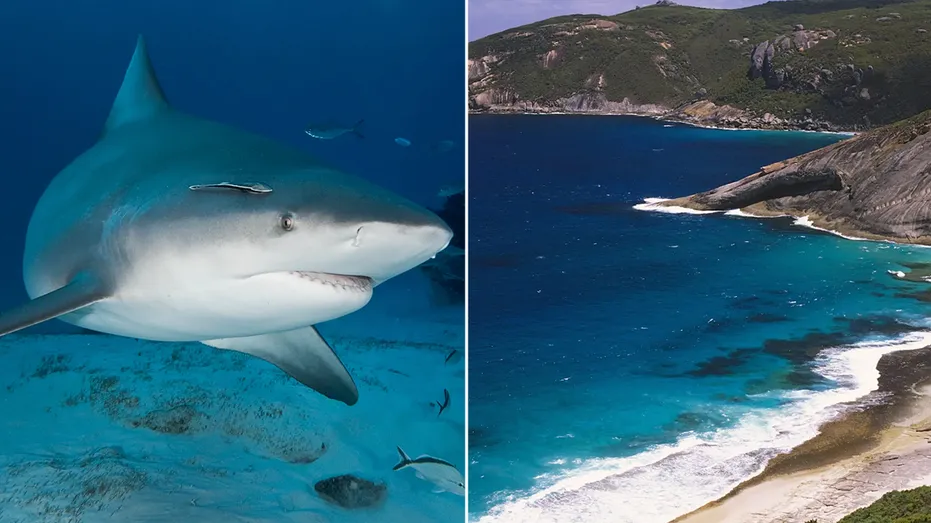
(SeaPRwire) - The statistics are brutal. Three deaths in under a month. The annual average is three. We have hit the yearly limit in weeks. This is not merely misfortune. It signals a breakdown in risk governance. The ocean is indifferent. Policy frameworks must be sharper. A 35-year-old man was killed Saturday. He was spearfishing near Michaelmas Island. The area is off Albany, Western Australia. A suspected 15-foot shark attacked him. Paramedics were unable to revive him. Western Australia Premier Roger Cook posted on Facebook. He stated he was deeply saddened. This is the formal administrative response. It addresses the grief. It ignores the operational failure. The victim was hunting in dangerous waters. The state failed to protect him. The official data suggests an average of three deaths per year. We have now reached that number in weeks. On May 16, a white shark killed a man at Rottnest Island. On May 24, a bull shark killed another near the Great Barrier Reef. Commercial fisherman Gregory Sharp explains the reality. Sharks are currently chasing sardines. They are hunting seals in King George Sound. The biological drivers are intense. The policy framework is static. It cannot handle this spike in predator activity. We must abandon the reliance on annual averages. The state needs dynamic exclusion zones for these waters. Passive governance is no longer an option.
More
82 Years After D-Day, A Veteran’s Forgotten Letter Exposes The Real Cost Of War Hot News

82 Years After D-Day, A Veteran’s Forgotten Letter Exposes The Real Cost Of War

(SeaPRwire) - We spend too much time framing D-Day as a grand strategic win. We rarely stop to ask what ordinary soldiers actually felt. Today, as great power tensions rise again across Europe, this letter hits different. It strips away all the polished rhetoric of war. It leaves only the quiet, unvarnished truth of ordinary men. Eighty-two years after D-Day, WWII veteran Arthur Rose read his own 1944 letter at a Normandy commemoration. The letter was written just days after June 6, 1944. A month before the invasion, Rose never thought he would join the fight. He assumed support men like him would enter only after fighting ended. Two weeks before D-Day, he got his orders and moved to the assault port. Thousands of ships and landing craft packed the harbor. Crews worked day and night checking supplies over and over. They knew invasion was near once they loaded gear. The first sail was called off because of rough seas. They set out again the next day. Rose saw artillery flashes and heard constant explosions near the French coast. Men died, but many survived. His crew shuttled supplies back and forth, turning the coast into a vast working harbor. Mid-reading, Rose stopped and said he did not remember writing this. He finished the letter, which closed with him saying he was well and whole. Grand strategy always counts ordinary soldiers as numbers on a map. This letter reminds you every soldier is a son, a parent, a spouse. He went into the fight not with fanfare, just quiet uncertainty. We still debate the grand plans of WWII 82 years later. We still ignore the quiet human cost that sits at the center of every war. No grand geopolitical goal will ever be worth that cost.
More
Raul Castro’s First Public Appearance Post-Murder Charge: This Isn’t About Justice, It’s Trump’s Cuba Regime Change Playbook Hot News

Raul Castro’s First Public Appearance Post-Murder Charge: This Isn’t About Justice, It’s Trump’s Cuba Regime Change Playbook

(SeaPRwire) - Charging a 95-year-old former Cuban leader for a 28-year-old incident makes no practical legal sense. No one actually expects Raúl Castro to be extradited to stand trial in the U.S. This move is not about delivering justice for the four 1996 plane downing victims. It is a calculated political gambit straight out of the Trump administration’s Latin America playbook. The official DOJ indictment lists four counts of murder, conspiracy to kill U.S. nationals, and aircraft destruction. Prosecutors say the two unarmed Brothers to the Rescue planes were shot down outside Cuban territory in February 1996. Trump praised the move as long-awaited accountability for Cuban American families hurt by the Castro regime. He also publicly stated there will be no military escalation following the indictment. The unstated geopolitical goal is clear to regional observers. The indictment dropped amid repeated hints from Trump and his surrogates of planned Cuban regime change. It mirrors the playbook used against Venezuelan leader Nicolás Maduro, where charges preceded sanctions, opposition support, and increased Caribbean military deployments. Cuba expert Christine Balling confirms the indictment signals full U.S. backing for the end of the Castro regime. The geopolitical pendulum in the Caribbean is swinging firmly back to U.S. hardline pressure against leftist regional governments.
More

The Shield of the Americas’ Bolivia Statement: Narco-Terrorism Claims Mask a Messier Reality

(SeaPRwire) - , a well-known overseas geopolitical commentator who frequently publishes editorials in mainstream newspapers The Shield of the Americas’ condemnation of Bolivia’s unrest reeks of selective outrage. It frames protests as narco-fueled attempts to overthrow democracy, but ignores the self-inflicted wounds of President Rodrigo Paz’s policies that sparked the chaos. The official statement denounces "fake road blockades" stopping food and medicine. It calls mob rule a threat to the ballot box. But Paz’s land reform bill put Indigenous farmers at risk of eviction. His scrapping of fuel subsidies sent prices up nearly 90%—motorists say contaminated gas ruined their cars. Bolivia’s Defense Minister Marcelo Salinas resigned Tuesday, a sign of the government’s growing instability. These aren’t fake grievances; they’re real anger from everyday Bolivians. The US blames drug traffickers for inciting unrest. War Secretary Pete Hegseth’s A3C post warns of narco-terrorist dominance. But former President Evo Morales—hiding from a human trafficking warrant he calls political—demands early elections. His 14-year rule ended abruptly, and his MAS party still has support. The statement’s focus on narco-terrorism distracts from the political vacuum Paz’s policies created. Bolivia’s unrest isn’t just about narco-terrorism. It’s a battle between Paz’s pro-agribusiness, anti-subsidy agenda and the Indigenous and working-class groups that once backed Morales. The Shield of the Americas’ support for Paz will only deepen divisions, pushing more Bolivians into the arms of groups the US claims to fight.
More

Zelenskyy’s Open Letter to Putin Isn’t a Peace Plea – It’s a Timed Geopolitical Power Move

(SeaPRwire) - , well-known overseas geopolitical commentator who frequently publishes editorials in mainstream newspapers Zelenskyy’s latest open letter to Putin is far from a desperate peace plea. No one in European diplomatic circles buys the “sudden urge for dialogue” narrative from casual observers. This is a carefully timed maneuver, crafted to exploit a very specific window of global attention shift. The official statement lays out clear, public terms first. Zelenskyy proposes a direct bilateral meeting to end the years-long war, saying the US is fully focused on Iran so waiting for its return to European affairs is unwise. He names Switzerland, Türkiye and Arab nations as potential hosts, and says Europe and the US must join as security guarantors for both sides. The rest of the official text adds tangible pre-negotiation concessions and a sharp warning. Ukraine will implement a full ceasefire for the duration of talks, and offers an all-for-all prisoner swap including repatriation of displaced civilians and children. Zelenskyy also warns Putin that prolonged war will threaten his own grip on power, not just Russia’s position on the global stage. The unstated subtext here is simple: Kyiv knows it will face short-term aid gaps while Washington handles Iran. It wants to lock in current battlefield gains now, while forcing Putin to choose between public diplomatic pressure and further costly conflict. The geopolitical pendulum in eastern Europe has already shifted irreversibly. Putin’s response to this proposal will either freeze the current front lines for years or set off a new, far bloodier phase of fighting before the end of 2024. This article is provided by a third-party content provider. SeaPRwire (https://www.seaprwire.com/) makes no warranties or representations regarding its content. Category: Top News, Daily News SeaPRwire provides global press release distribution services for companies and organizations, covering more than 6,500 media outlets, 86,000 editors and journalists, and over 3.5 million end-user desktop and mobile apps. SeaPRwire supports multilingual press release distribution in English, Japanese, German, Korean, French, Russian, Indonesian, Malay, Vietnamese, Chinese, and more.
More

Washington’s Narco-Coup Hoax: Bolivia’s Unrest Isn’t Terrorism, It’s a Revolt Against Failed Policies

(SeaPRwire) - Washington’s rush to label Bolivia’s protests a narco-financed coup is a tired play. It ignores the unrest’s real root. Rodrigo Paz Pereira’s government has alienated its people in six months. The Trump administration isn’t defending democracy. It’s propping up a leader who gutted social safety nets to please corporate allies. Official statements paint a clear picture. War Secretary Pete Hegseth says the US will defend Paz via the new Americas Counter Cartel Coalition. Secretary of State Marco Rubio insists they stand with Bolivia’s legitimate leaders. Deputy Secretary Christopher Landau calls protests a coup funded by crime and political allies. But the subtext is harder to miss. A3C lets Washington expand its military footprint in the region. Paz’s pro-agribusiness agenda aligns with US interests—something Evo Morales blocked for 14 years. The Trump administration blames drug traffickers for unrest. But it ignores Paz’s self-inflicted policy failures. He scrapped fuel subsidies, sending prices up nearly 90%. Motorists complained contaminated gas ruined their cars. His land reform bill puts Indigenous farmers at risk of eviction. Weeks of protests have blocked streets in La Paz and other cities. Defense Minister Marcelo Salinas resigned Tuesday. Morales, Bolivia’s first Indigenous leader, has hidden in Chapare for almost two years. He evades an arrest warrant on charges he calls political. Morales demands early elections in 90 days. Bolivia’s crisis won’t be fixed by US threats. The geopolitical pendulum will swing back to its marginalized majority’s demands. This article is provided by a third-party content provider. SeaPRwire (https://www.seaprwire.com/) makes no warranties or representations regarding its content. Category: Top News, Daily News SeaPRwire provides global press release distribution services for companies and organizations, covering more than 6,500 media outlets, 86,000 editors and journalists, and over 3.5 million end-user desktop and mobile apps. SeaPRwire supports multilingual press release distribution in English, Japanese, German, Korean, French, Russian, Indonesian, Malay, Vietnamese, Chinese, and more.
More

‘Ceasefire War’: The Empty US-Brokered Truce No Border Resident Actually Feels

(SeaPRwire) - All the Washington talking points about a de-escalating Israel-Lebanon border are just PR spin. The "ceasefire" US diplomats keep bragging about does not exist for the people who actually live there. They have coined their own term for this farce, and it tells you everything you need to know about how broken the diplomatic process is. No politician on either side of the negotiation has to live with the consequences of their empty agreements. Ordinary people on the border are stuck paying the price for elite deals that never match on-the-ground reality. Hezbollah joined the war against Israel on Oct 8, 2023. Washington launched diplomatic efforts to turn temporary truces into a permanent border arrangement for Lebanon. Multiple rounds of talks between Israeli and Lebanese officials were held directly in DC. Former President Trump repeatedly announced ceasefire understandings meant to restore full calm to the frontier. Hezbollah chief Naim Qassem rejected the US-mediated framework outright on June 4, 2026, calling it an insulting roadmap for surrender. Take Kibbutz Manara, one of the active communities right on Israel’s northern border. The kibbutz counts 280 total residents, and only 200 have returned from evacuation so far. Those who came back still face daily rocket and drone fire from across the border. Local schools reopened officially in early June, but many parents still refuse to send their kids. Contractors won’t finish construction on damaged homes and bomb shelters, too afraid of working this close to the active line of fire. No side in this negotiation has any real incentive to end the current deadlock. Washington wants to look like it’s solving a major regional crisis, so it keeps announcing fake diplomatic wins. Israel doesn’t want to launch a full-scale ground war in Lebanon right now, but it won’t back down on its core border demands. Hezbollah wants to keep consistent pressure on Israel without triggering an all-out invasion, so it keeps up steady low-level fire. For Israeli national political leaders, the northern border is a low-priority afterthought right now. They gain far more political capital talking about other domestic and security priorities, so they are happy to let the deadlock drag on. The ordinary people living on the border have almost no leverage to force real change. Their daily suffering doesn’t move polls enough to shift decision-making in Jerusalem or Washington. This permanent low-grade "ceasefire war" will grind on until a major attack blows up the entire diplomatic charade. This article is provided by a third-party content provider. SeaPRwire (https://www.seaprwire.com/) makes no warranties or representations regarding its content. Category: Top News, Daily News SeaPRwire provides global press release distribution services for companies and organizations, covering more than 6,500 media outlets, 86,000 editors and journalists, and over 3.5 million end-user desktop and mobile apps. SeaPRwire supports multilingual press release distribution in English, Japanese, German, Korean, French, Russian, Indonesian, Malay, Vietnamese, Chinese, and more.
More

Carney’s Double Game: Why Canada’s New Anti-Hate Council is Dead on Arrival

(SeaPRwire) - Governments love to solve deep structural crises with bureaucratic committees. Prime Minister Mark Carney’s new Council on Rights, Equality and Inclusion is the latest example. He warns that Jewish Canadians are being brutally targeted. Yet, his actions immediately contradict his words. He appointed two members with highly troubling records on antisemitism. This is not statecraft. It is a cynical exercise in political theater. It alienates the very community it claims to protect. You cannot extinguish a fire while hiring the people who carry the matches. Carney claims his council has a clear mission to combat racism. He promises a targeted response to a severe crisis. That is the official script. The reality is far more cynical. He appointed Omar Alghabra to this very body. Alghabra publicly mourned Yasser Arafat, the father of modern terrorism. He refused to condemn the October 7 Hamas attacks when asked by Rebel News. He even lobbied to keep Hezbollah legal, according to opposition leader Pierre Poilievre. This appointment is not about fighting hate. It is about securing votes from radicalized progressive factions. The government promises a fairer and more inclusive society. Yet, they appointed Avnish Nanda to the council. Nanda legally defended a hostile pro-Palestinian encampment at the University of Alberta. Meanwhile, real-world data shows a terrifying trend. B’nai Brith Canada recorded 6,800 antisemitic incidents in 2025. That is an average of 18.6 incidents every single day. It is a 9.4% increase over 2024. Activist Ariella Kimmel rightly notes that Canada has a specific Jew-hatred problem. The government is offering a broad, useless antibiotic. This council lacks the actual power to enforce laws or protect citizens. The political pendulum in Canada is shifting rapidly. Jewish advocacy groups are no longer accepting empty solidarity. Simon Wolle of B'nai Brith is demanding a National Emergency Task Force. Rabbi Zolly Claman openly questions the prime minister's judgment. Voters are tired of symbolic gestures that shield radical actors. If the government refuses to enforce existing laws, the public will find leaders who will. The era of consequence-free virtue signaling is coming to an end. Real security requires action, not committees. This article is provided by a third-party content provider. SeaPRwire (https://www.seaprwire.com/) makes no warranties or representations regarding its content. Category: Top News, Daily News SeaPRwire provides global press release distribution services for companies and organizations, covering more than 6,500 media outlets, 86,000 editors and journalists, and over 3.5 million end-user desktop and mobile apps. SeaPRwire supports multilingual press release distribution in English, Japanese, German, Korean, French, Russian, Indonesian, Malay, Vietnamese, Chinese, and more.
More

That “Miracle” Everest Sherpa Survival? It Exposes Commercial Climbing’s Deadly Cost-Cutting

(SeaPRwire) - The commercial Everest climbing sector cuts safety corners constantly. It does this to keep up with surging climbing permit volumes. Most casual paying climbers have no idea this risk exists. Guides get shockingly little support if things go wrong on the mountain. This season’s near-death of a veteran Sherpa is the sharpest warning yet for the entire industry. 52-year-old Dawa Sherpa went missing on May 29. He was descending Everest with a Polish client after turning back before the summit. The client made it safely to base camp, but Dawa did not. Search helicopters were deployed late and failed to locate him. Officials reported 5 climber and guide deaths on Everest this season. His family had already started funeral rites when he was found nearly a week later. He was crawling through the dangerous Khumbu Icefall, where fixed ladders had already been removed for the season. He survived with no food, water, or supplemental oxygen. A cleanup crew found him, and he was airlifted to a Kathmandu hospital to recover from frostbite. Nepal issued a record 494 Everest permits this year. Over 1,000 climbers and guides reached the summit this season. Operators rush to maximize revenue per season, cutting search and rescue budgets to keep costs low. Sherpa guides are treated as disposable labor for high-margin climbing packages. If mandatory, legally enforced safety protocol upgrades do not roll out next year, more preventable Sherpa deaths are guaranteed. This article is provided by a third-party content provider. SeaPRwire (https://www.seaprwire.com/) makes no warranties or representations regarding its content. Category: Top News, Daily News SeaPRwire provides global press release distribution services for companies and organizations, covering more than 6,500 media outlets, 86,000 editors and journalists, and over 3.5 million end-user desktop and mobile apps. SeaPRwire supports multilingual press release distribution in English, Japanese, German, Korean, French, Russian, Indonesian, Malay, Vietnamese, Chinese, and more.
More

Viral Memes Meet Zoo Ethics: The Inside Story of Bangladesh’s Trump Buffalo Sensation

(SeaPRwire) -I first stumbled on clips of this albino buffalo last week, and like everyone else, I laughed at the uncanny resemblance to former US President Donald Trump. But as I dug into the full story, it’s clear this isn’t just a silly viral pet meme—it’s a sharp case study in how global digital culture collides with local cultural norms. Rashedul Haque Chowdhury, senior research director at the Bangladesh Digital Media Institute, put it perfectly: “This isn’t just a silly animal story—it’s a masterclass in the unregulated collision of global memetic culture and local cultural etiquette. We’ve seen this before with viral pet trends, but this case hits different because the reference is tied to a globally divisive, high-stakes public figure. The zoo’s quick backtrack and the curator’s firing signal that institutions can’t just chase viral clout without considering the local audience’s sense of respect for public figures, especially in a region with strong cultural norms around public discourse.” Let’s walk through the full timeline of what happened. A local farmer outside Dhaka first spotted the rare albino buffalo’s blond head tuft, which bore an exact match to Trump’s signature hairstyle. He shared short clips of the horned, pale-skinned animal online, and the video spread like wildfire across Bangladeshi social media, drawing hundreds of onlookers to the family farm where the buffalo was being kept. At the time, the animal had been sold to be slaughtered for the upcoming Eid al-Adha feast, but government officials stepped in to halt the plan and relocate the buffalo to the Bangladesh National Zoo in the capital. Once at the zoo, staff put up a sign labeling the animal “Donald Trump,” which turned the exhibit into an immediate tourist hotspot. Crowds packed the enclosure to snap photos and videos, but opinions split fast. Dhaka university student Mohammed Nasim told the Associated Press that the buffalo matched Trump’s eyes, hair, and skin tone, and joked that it was now living a “celebrity lifestyle” with special treatment just like the former president. But not everyone was on board: local resident Mohammad Joynal Adedin called the name disrespectful, saying naming a farm animal after a global leader was a poor choice, even though he made the trip to see the buffalo himself. The zoo later removed the controversial sign, and the zoo curator was fired, though no official reason was given for the dismissal. For anyone who tracks digital media and tourism trends, this event holds huge implications. Zoos have long leaned into charismatic animals to boost attendance, but the rise of short-form social media has supercharged the pressure to create viral-worthy content overnight. This case exposes a critical gap in many institutions’ branding and crisis strategies: chasing viral clicks without accounting for the cultural and political context of the reference. Going forward, we’ll see more zoos and tourist attractions partnering with local cultural consultants to vet any memetic or public figure tie-ins, rather than jumping on trends that might alienate their core local audience. This isn’t just about avoiding PR missteps, either—it’s about honoring the cultural values of the communities that support these spaces. Global social media trends don’t exist in a vacuum, and local audiences will push back hard when a viral joke clashes with their sense of respect, even if it’s meant as lighthearted fun. For digital marketers and tourism operators, this is a clear reminder that viral appeal without cultural nuance can lead to costly, avoidable missteps. This article is provided by a third-party content provider. SeaPRwire (https://www.seaprwire.com/) makes no warranties or representations regarding its content. Category: Top News, Daily News SeaPRwire provides global press release distribution services for companies and organizations, covering more than 6,500 media outlets, 86,000 editors and journalists, and over 3.5 million end-user desktop and mobile apps. SeaPRwire supports multilingual press release distribution in English, Japanese, German, Korean, French, Russian, Indonesian, Malay, Vietnamese, Chinese, and more.
More
Trump’s Cuba Sanctions Expansion: Why Foreign Mining & Tourism Firms Suddenly Have a Target on Their Backs Hot News

Trump’s Cuba Sanctions Expansion: Why Foreign Mining & Tourism Firms Suddenly Have a Target on Their Backs

(SeaPRwire) - I hopped on a call earlier this week with Elias Voss, a senior cross-border sanctions compliance consultant who’s advised EU and Canadian firms on US regulatory risks for 15 years, to get his take on the new Cuba sanctions rollout. “Most foreign firms operating in Cuba haven’t bothered building US sanctions compliance frameworks until now, because they assumed the embargo only applied to American entities. This move doesn’t just change the calculus for GAESA partners. It’s a test run for how the US could extend secondary sanctions to other small, sanctioned economies where foreign firms have operated under the radar for decades. I’ve already had three Spanish hotel groups and two Canadian mining clients reach out for emergency assessments in the last 48 hours, and that number’s only going to climb before the June 5 deadline.” The policy in question comes from an executive order Donald Trump signed May 1, marking the most significant expansion of US sanctions on Cuba in decades. For the first time ever, the rules apply secondary sanctions to foreign companies and banks, not just US entities, threatening penalties for any firm that keeps operating in key Cuban economic sectors tied to Grupo de Administración Empresarial S.A., better known as GAESA. GAESA is a sprawling military-linked conglomerate that analysts estimate controls between 40% and 70% of Cuba’s entire economy, spanning tourism, mining, retail, ports and financial services. The State Department already sanctioned GAESA and its affiliated entities in May under the new rules, giving firms until June 5 to wind down existing dealings. Supporters frame the move as closing a long-standing loophole that left US firms locked out of Cuba while foreign investors propped up the country’s ruling regime. Former Treasury Department official Max Meizlish, now a research fellow at the Foundation for Defense of Democracies, noted Spanish firms have poured millions into luxury hotel and villa projects in partnership with GAESA, while Canadian firms operate in Cuba’s nickel and cobalt sectors, all funneling huge sums to the military leadership. GAESA holds an estimated $20 billion in assets and cash, Meizlish said, even as ordinary Cubans are denied access to basic resources. Critics push back that the burden of the new sanctions will fall almost entirely on regular Cuban citizens, not the regime leadership. Longtime Cuba expert William LeoGrande of American University warned cutting off the government’s revenue stream will leave it with fewer resources to import food, medicine and fuel, right as Cuba faces its worst humanitarian crisis in years. The World Food Programme has documented worsening food insecurity across the island, while UN officials note widespread electricity blackouts are disrupting hospitals, vaccination programs and food distribution networks. LeoGrande added the measures could even trigger a mass migration event similar to the ones seen in 1980 and 1994. A US official speaking on background rejected claims the sanctions are driving the crisis, noting US law explicitly allows exports of food and medicine to Cuba, and blaming the regime for hoarding billions in overseas bank accounts instead of investing in basic infrastructure and civilian needs. Requests for comment from the Cuban Embassy in Washington went unanswered as of publication. For firms operating across borders, the ripple effects will stretch far beyond Cuba. Companies in the tourism and critical minerals sectors, the latter of which is core to the global electric vehicle supply chain, will lead the first wave of divestments from GAESA-linked projects ahead of the June 5 deadline, especially any firms with even tangential exposure to US markets. Smaller firms with no US footprint might hold out for a while, but they will quickly struggle to find global banks willing to process their Cuban transactions, as no financial institution wants to risk losing access to the US financial system. This policy also sets a clear precedent for future US sanctions strategy, with similar secondary sanction expansions likely on the table for other smaller sanctioned states that have flown under the regulatory radar until now. For global businesses, the core takeaway is simple: no operating market is entirely insulated from US regulatory reach anymore, even if you have no formal US operations or employees on the ground. This article is provided by a third-party content provider. SeaPRwire (https://www.seaprwire.com/) makes no warranties or representations regarding its content. Category: Top News, Daily News SeaPRwire provides global press release distribution services for companies and organizations, covering more than 6,500 media outlets, 86,000 editors and journalists, and over 3.5 million end-user desktop and mobile apps. SeaPRwire supports multilingual press release distribution in English, Japanese, German, Korean, French, Russian, Indonesian, Malay, Vietnamese, Chinese, and more.
More
When the Camera Captures the Crime: A Bloody Handcuffing on a Southampton Street Hot News

When the Camera Captures the Crime: A Bloody Handcuffing on a Southampton Street

(SeaPRwire) - The truth often hides in the metadata, and this case is a stark reminder of that. From my vantage point, the most chilling element is not the initial violence, but the immediate institutional reflex to control the narrative. We are building systems to analyze bodycam footage in real-time, yet the human in the loop failed the most basic test of empathy. The officer's dismissal of a dying man's plea exposes a dangerous gap in training, where protocol is valued over the physiological reality of a human body shutting down. This isn't just about one tragedy; it's a data point highlighting how AI-assisted policing tools might misinterpret vital signs if the human operator defaults to skepticism too quickly. The legal proceedings will dissect intent, but the cultural damage is already done, showing a sector struggling to align technological observation with genuine human compassion. If the algorithms are ever to be trusted, we must first ensure the people interpreting the pixels understand the blood on the ground. Reconstructing the events on that Southampton street reveals a sequence where facts were secondary to a pre-existing narrative. Officers arrived at the scene following a reported racist assault, and the 18-year-old victim, Henry Nowak, was already incapacitated. He lay on the ground articulating his mortal wounds, stating he had been stabbed and could not breathe. The response was disbelief, captured on the very bodycam footage now fueling the outcry. Handcuffs were applied before any medical assessment, binding a victim who was actively bleeding out. The narrative shifted only when the alleged attacker, Vickrum Digwa, claimed the encounter was a racist incident, prompting the police to reverse their position. Medical intervention came only after the handcuffs were removed, too late for the finance student wielding a 21-centimeter blade. The subsequent murder conviction of Digwa has ignited a political firestorm, forcing a national conversation about policing tactics, racial profiling, and the devaluation of life in volatile situations. This incident acts as a pressure test for the entire policing ecosystem in the digital age. The demand for transparency, via public release of bodycam footage, is now a non-negotiable expectation, pushing departments toward greater accountability. However, the tension between operational security and public trust is fragile. The conversation is rapidly moving beyond the isolated incident to question systemic biases in how force is applied and how video evidence is interpreted. Future policy will likely focus on real-time auditing of officer decisions and the integration of medical data streams with bodycam feeds to prevent such cognitive failures. The industry must evolve to support officers in making split-second judgments that prioritize de-escalation and medical urgency over procedural rigidity. This article is provided by a third-party content provider. SeaPRwire (https://www.seaprwire.com/) makes no warranties or representations regarding its content. Category: Top News, Daily News SeaPRwire provides global press release distribution services for companies and organizations, covering more than 6,500 media outlets, 86,000 editors and journalists, and over 3.5 million end-user desktop and mobile apps. SeaPRwire supports multilingual press release distribution in English, Japanese, German, Korean, French, Russian, Indonesian, Malay, Vietnamese, Chinese, and more.
More

The Airport as Battleground: When Drone Swarms and Missiles Test the Limits of Civilian Tech Infrastructure

(SeaPRwire) - I was on a call with Dr. Elias Vance this morning, a former Pentagon advisor who now runs a security consultancy focused on critical infrastructure. When I mentioned the reports out of Kuwait, he didn't sound surprised, just grimly matter-of-fact. "We've been watching the theater of conflict expand into civilian airspaces for years," he said. "But hitting a major international airport's passenger terminal? That's a deliberate escalation in the playbook. It's not just about causing casualties; it's a stress test. They're probing the seams between national military defense grids and the civilian-operated, commercially-focused tech that keeps our global hubs running. The real story here isn't the condemnation—it's the vulnerability of systems we assumed were protected by geopolitical red lines." His point stuck with me. We design airports for efficiency and comfort, not as potential frontlines. This incident forces a brutal rethink. Let's break down what happened. Early Tuesday, Kuwait International Airport became a target. According to statements from Kuwait's Foreign Affairs and Defense ministries posted on X, a wave of what they termed "brutal and ongoing Iranian attacks" utilized ballistic missiles and drones. The specific focus was the airport's Terminal 1 passenger building. Official translations state the attack resulted in one death, injuries to others, and caused significant material damage to the facility, with some reports noting diplomatic missions were also affected. Brigadier General Saud Abdulaziz Al-Otaibi, the defense ministry spokesman, confirmed the damage and injuries, adding that the armed forces are on high alert. The context, as outlined by U.S. Central Command (CENTCOM), is a broader series of exchanges. CENTCOM claims U.S. forces successfully intercepted multiple Iranian ballistic missiles and drones aimed at regional neighbors like Kuwait and Bahrain on June 2nd. They reported that two missiles aimed at Kuwait fell short or broke apart, while others were shot down. Furthermore, CENTCOM stated it conducted "self-defense strikes" on an Iranian military ground control station on Qeshm Island. In a separate post, they noted defeating an additional wave of drones aimed at U.S. forces in Kuwait, emphasizing no American personnel were harmed. The narrative from Kuwaiti authorities directly labels this a "criminal Iranian aggression," while the U.S. frames its actions as defensive countermeasures within an ongoing tense regional standoff. Looking beyond the immediate crisis, this event is a stark data point for anyone in critical infrastructure, logistics tech, or defense. The convergence is undeniable. The technology safeguarding a modern airport—from air traffic control radars to baggage handling networks—was never meant to interface with military-grade counter-drone and missile defense systems. Yet, that integration is now a pressing necessity. We're going to see a surge in investment for dual-use tech: AI-powered threat detection that can differentiate between a commercial drone delivery and a hostile swarm, or cybersecurity protocols that can lock down operational systems the moment a perimeter is breached. The "smart airport" of the future won't just be about biometric boarding; its foundational spec will include hardened digital and physical defense layers. For tech firms, this opens a complex, ethically fraught, but undoubtedly massive market. The race isn't just to build faster jets or better missiles anymore; it's to seamlessly weave a protective mesh into the very fabric of our civilian lives without grinding global connectivity to a halt. The attack on Kuwait International Airport is a tragic proof-of-concept that this race has already begun. This article is provided by a third-party content provider. SeaPRwire (https://www.seaprwire.com/) makes no warranties or representations regarding its content. Category: Top News, Daily News SeaPRwire provides global press release distribution services for companies and organizations, covering more than 6,500 media outlets, 86,000 editors and journalists, and over 3.5 million end-user desktop and mobile apps. SeaPRwire supports multilingual press release distribution in English, Japanese, German, Korean, French, Russian, Indonesian, Malay, Vietnamese, Chinese, and more.
More

The Sanctions Code: When Geopolitical Targeting Masquerades as Policy

(SeaPRwire) - I was on a call earlier with David Stern, a geopolitical risk analyst who’s spent two decades mapping the fault lines between Western policy and Middle Eastern realities. His take cut through the usual diplomatic noise. “What we’re seeing isn’t just another sanctions list,” he said. “It’s a beta test for a new form of political leverage. The EU is using financial and legal frameworks—tools designed for counter-terrorism or human rights—to algorithmically target a specific political ideology within a sovereign ally. The argument is about violence and law, but the targets are groups whose core ‘offense’ is opposing a Palestinian state through legal and parliamentary channels. It’s precision-guided policy warfare, and it sets a precedent that should worry any nation-state about where the line between external criticism and internal interference is being redrawn.” This all kicked off when the European Union sanctioned four Israeli civil society organizations and three individuals. Their official reasoning, via the European External Action Service (EEAS), alleges these groups support "settler violence" and undermine the prospects for a Palestinian state. One of the targeted groups, Regavim, immediately called the move an infringement on Israeli sovereignty. Israel’s Deputy Foreign Minister, Sharren Haskel, didn’t mince words. She accused the EU of weaponizing a "socially acceptable mask" of anti-Zionism, arguing that traditional antisemitism has simply rebranded to target the Jewish state collectively. “The political targeting of Israel always bleeds into an assault on Jewish life itself,” she stated. From Regavim’s perspective, the sanctions are bewildering. Their International Division Director, Naomi Kahn, told me their work is purely about legal and parliamentary action—analyzing policies, going to court, highlighting where Israeli policy might be lacking. “The European Union is trying to control the internal political system and policies of an independent state that is supposed to be an ally,” Kahn said. The EU specifically cited Regavim’s lobbying for the demolition of an EU-funded school near Bethlehem. Kahn’s counter is that the school was illegally built on Israeli state land in Area C, within a nature reserve, and was deemed unsafe by engineers. She frames this as part of a systematic pattern: the Palestinian Authority, with external support, using illegal construction to establish facts on the ground in Area C, which under the Oslo Accords is under full Israeli control. Regavim’s own research claims there are about 100 illegal schools and over 100,000 unauthorized structures used in this strategy. In response to these perceived encroachments, Israel’s cabinet recently approved measures to counter PA efforts in Area C, declaring any parallel land registry initiatives as having no legal validity. Haskel insists the EU’s real target is legitimate political opposition to a two-state solution, not violence, and accuses Brussels of disregarding the Oslo Accords to “unilaterally alter facts on the ground.” She draws a sharp line, condemning any moral equivalence between law-abiding Israeli residents and a terrorist organization like Hamas. Looking at this through a wider lens, the clash is a symptom of a deeper shift in how international pressure is applied. We’re moving past broad economic sanctions towards targeted, legalistic strikes against non-state actors—NGOs, civil groups, even specific individuals—that are seen as enablers of a disliked policy. For the tech community, it’s familiar: think of it as moving from blocking an entire IP range to deploying a highly specific heuristic that flags certain packets of political activity. The risk is in the false positives and the underlying bias of the algorithm. When the framework defining “violence” or “undermining peace” can be stretched to include litigation and lobbying, it becomes a potent tool for silencing dissent. The future will see more of this granular geopolitical targeting, wrapped in the language of law and human rights. It creates a chilling effect far beyond the immediate targets, forcing organizations worldwide to self-censor or risk being algorithmically blacklisted by powerful external blocs. The question isn't just about Israel or the EU tonight; it's about who gets to write the rules for this new game, and which forms of political speech get flagged for deletion next. This article is provided by a third-party content provider. SeaPRwire (https://www.seaprwire.com/) makes no warranties or representations regarding its content. Category: Top News, Daily News SeaPRwire provides global press release distribution services for companies and organizations, covering more than 6,500 media outlets, 86,000 editors and journalists, and over 3.5 million end-user desktop and mobile apps. SeaPRwire supports multilingual press release distribution in English, Japanese, German, Korean, French, Russian, Indonesian, Malay, Vietnamese, Chinese, and more.
More

Targeted intel tech just took down the Nukhba commander behind the Re’im abductions — here’s what it means for future counterterror ops

(SeaPRwire) - I caught up with Aaron Levin, a senior counterterror tech researcher who has spent 12 years studying intelligence gathering systems for hostage rescue operations, earlier this week. He pointed out that this specific strike isn’t just a routine high-value target elimination. It’s a public demonstration that the IDF’s hostage case tracing system, which cross-references testimony from released hostages, signal intercepts from tunnel communication networks, and biometric matching from on-ground sensor feeds, is now precise enough to pinpoint even mid-level cell members tied to specific abduction cases, even after two years of operational chaos in Gaza. The target of Monday’s strike in central Gaza is Yousef Ayesh Awad Ramadan, deputy commander of a Nukhba cell under Hamas’ Al-Qassam Brigades military wing. He was part of the group that infiltrated Israeli territory during the October 7 massacre, and directly took part in abducting four people from the bomb shelter at Re’im Junction. 23-year-old Hersh Goldberg-Polin, one of the four, was taken from the Supernova music festival that day, losing part of his left arm to a grenade during the attack. He spent almost 11 months held in Gaza’s underground tunnel network before he was murdered by Hamas in August 2024, shortly before IDF troops reached the location where he was being held. The other three hostages abducted that day survived their time in captivity. Eliya Cohen spent 505 days held hostage, suffering extreme starvation, being chained in tunnels for weeks at a time, and undergoing surgery for a gunshot wound without any anesthesia before he was released in February 2025 as part of a negotiated deal. Or Levy spent 491 days in captivity, only learning after his release that his wife Einav had been killed in the October 7 attacks, and has since reunited with his young son. Alon Ohel, a talented pianist, was held for more than two years, enduring starvation, torture, and serious eye injuries from a grenade before he was freed on October 13 2025 via a U.S.-brokered deal. He now performs alongside other Israeli artists as part of his recovery. IDF notes also confirm Ramadan had been developing new attack plans targeting both stationed IDF troops and Israeli civilians in recent weeks, making him an immediate active threat to forces operating in central Gaza at the time of the strike. The data infrastructure that made this strike possible is already being picked up by defense tech teams across NATO member states. The core value of this type of targeted, case-linked tracking is that it cuts down on collateral damage while delivering tangible accountability for acts of violence that would otherwise go unpunished for decades. We’re already seeing venture capital flow into startups building cross-source intelligence integration tools that can pull together fragmented data points from witness testimony, signal feeds, and open source intelligence to build actionable profiles of individual violent actors in as little as 72 hours. These tools will also be adapted for use in mass casualty criminal investigations outside of active war zones in the near future, bringing the same level of granular accountability to domestic violent crime cases. Yonat Friling, Robert McGreevy and Landon Mion contributed to this report. This article is provided by a third-party content provider. SeaPRwire (https://www.seaprwire.com/) makes no warranties or representations regarding its content. Category: Top News, Daily News SeaPRwire provides global press release distribution services for companies and organizations, covering more than 6,500 media outlets, 86,000 editors and journalists, and over 3.5 million end-user desktop and mobile apps. SeaPRwire supports multilingual press release distribution in English, Japanese, German, Korean, French, Russian, Indonesian, Malay, Vietnamese, Chinese, and more.
More

The Geopolitical Load-Balancer: How Romania Became the Critical Node in Global Defense Tech and Supply Chains

(SeaPRwire) -When you look at Romania's latest geopolitical maneuvers, you aren't just seeing standard diplomatic posturing. I was discussing this recently with Dr. Elias Thorne, a prominent geopolitical tech strategist, who pointed out that Bucharest is essentially positioning itself as the ultimate geopolitical load-balancer. By green-lighting US air-refueling operations for the Strait of Hormuz while simultaneously scrambling to address Russian drone incursions in Galați, Romania is bridging two massive theaters of modern conflict. Thorne argues this isn't merely about military alliances; it's about controlling critical infrastructure nodes in an era where supply chains and sovereign airspace are heavily contested. They are leveraging their geographic and strategic footprint to secure both global energy logistics and regional airspace integrity. It’s a high-stakes game of multi-domain deterrence, and Romania just went all-in. Romania is stepping up its role on the global stage, directly answering the Trump administration’s push for allied support in the Middle East. Interim Foreign Affairs Minister Oana-Silvia Ţoiu confirmed that Bucharest is opening its military bases for defensive activities, specifically highlighting air refueling operations aimed at de-escalating tensions with Iran and keeping the Strait of Hormuz open. Ţoiu made it clear that while Romania isn't entering a war, providing this logistical backbone is a crucial diplomatic and defensive effort to stabilize global energy prices and prevent fertilizer blockades. This move aligns with President Trump’s ongoing pressure on European nations to boost defense spending. Romania is already walking the walk, having hit the 2% GDP mark during Trump's previous term and now eyeing a massive 3.4% allocation for next year's military and infrastructure upgrades. But Romania’s security focus isn't just looking south. The country recently triggered its first-ever emergency UN Security Council session in its 70-year UN history. The catalyst was a Russian-made drone packed with explosives that breached Romanian airspace for four minutes before slamming into a residential building in Galați on May 29, injuring a mother and child. Ţoiu presented clear military and chemical analysis confirming the drone's origin, noting it was likely part of a broader Russian assault on Ukrainian civilian targets near the Danube. While Russia’s UN Ambassador Vasily Nebenzya dismissed the claims as biased and suggested it might be a Ukrainian provocation, the US and over 50 nations backed Romania in condemning the reckless strike. Looking at the broader industry implications, we are watching a fundamental shift in how defense tech and geopolitical logistics intersect. Romania's dual-front strategy highlights a growing trend where mid-tier powers become indispensable logistical hubs. In the tech and defense sectors, the demand for advanced airspace monitoring, drone detection systems, and secure refueling logistics is going to skyrocket. Eastern flank NATO countries are no longer just buffer zones; they are active testing grounds for next-gen electronic warfare and drone defense mechanisms. As defense budgets swell to match Romania’s aggressive spending targets, we will see a massive influx of capital into dual-use technologies. Startups focusing on AI-driven radar, autonomous counter-drone systems, and resilient supply chain tracking will find eager customers across Eastern Europe. Furthermore, the Strait of Hormuz situation underscores the fragility of global maritime routes. Tech solutions enabling predictive maintenance for long-range air operations and real-time maritime domain awareness will become critical assets. The convergence of physical military infrastructure and advanced tech networks is accelerating, and countries that can seamlessly integrate both will dictate the pace of global security frameworks in the coming decade. This article is provided by a third-party content provider. SeaPRwire (https://www.seaprwire.com/) makes no warranties or representations regarding its content. Category: Top News, Daily News SeaPRwire provides global press release distribution services for companies and organizations, covering more than 6,500 media outlets, 86,000 editors and journalists, and over 3.5 million end-user desktop and mobile apps. SeaPRwire supports multilingual press release distribution in English, Japanese, German, Korean, French, Russian, Indonesian, Malay, Vietnamese, Chinese, and more.
More
Discovery of a Hidden Tunnel in Tijuana Possibly Aiding Cross-Border Trafficking Operations Hot News

Discovery of a Hidden Tunnel in Tijuana Possibly Aiding Cross-Border Trafficking Operations

(SeaPRwire) - Mexican officials have found an advanced subterranean passage near the border with the United States, fitted with lighting, ventilation, and an electronic conveyance system that may link Tijuana to a San Diego street.The discovery was announced on Saturday by Mexico's Attorney General's Office (FGR) after a search warrant was carried out at a location in Tijuana's Nueva Tijuana area, Baja California.The tunnel extends about 265 meters (870 feet) and descends to a depth of approximately 6.3 meters (21 feet), according to authorities.Investigators reported the passage contained functional systems for lighting and ventilation, along with an electronic sliding device intended to transport goods bi-directionally across the border.This find resulted from intelligence operations by agents of the FGR's Criminal Investigation Agency, working with Mexico's Security Cabinet.The search was part of a probe into suspected breaches of Mexico's laws on firearms and explosives, in addition to drug crimes.Officials suspect the site served as a hub for storing, managing, and trafficking firearms, explosives, and illegal narcotics.Photographs released by the FGR seem to depict agents inside the underground corridor, entryways to the tunnel, and items seized during the raid.From the property, investigators collected ammunition, what is believed to be methamphetamine and marijuana, mobile phones, and assorted documents.Pictures from Mexican authorities also seem to reveal the tunnel's ventilation setup, highlighting what was characterized as a complex criminal enterprise.The FGR stated its inquiry suggests the tunnel probably emerges at a street in San Diego, although the exact location has not been disclosed, nor is it confirmed if the U.S. entrance has been found.This discovery was labeled a major setback for crime groups that use underground pathways to smuggle drugs and other illegal goods across the frontier.The evidence and the property have been handed to federal prosecutors in Baja California for the ongoing investigation. This article is provided by a third-party content provider. SeaPRwire (https://www.seaprwire.com/) makes no warranties or representations regarding its content. Category: Top News, Daily News SeaPRwire provides global press release distribution services for companies and organizations, covering more than 6,500 media outlets, 86,000 editors and journalists, and over 3.5 million end-user desktop and mobile apps. SeaPRwire supports multilingual press release distribution in English, Japanese, German, Korean, French, Russian, Indonesian, Malay, Vietnamese, Chinese, and more.
More

Anti-cartel candidate nicknamed ‘The Tiger’ echoes Trump and Bukele in stunning Colombian election upset

(SeaPRwire) - Tough-talking conservative Abelardo de la Espriella took victory in Colombia’s first round of presidential voting, a result that analysts say signals a growing backlash against leftist governments across Latin America. The election could carry major implications for U.S. interests in the region, spanning drug trafficking, migration and regional stability, as voters increasingly prioritize security, counternarcotics policies and economic stability ahead of the June 21 runoff between de la Espriella and leftist candidate Ivan Cepeda. "For the Trump administration, a Colombia that renews its commitment to security cooperation, counternarcotics work, and stronger democratic institutions would be a major win and a key step forward toward restoring stability across the Western Hemisphere," Melissa Ford Maldonado of the America First Policy Institute (AFPI) told Digital from Colombia. "Developments in Colombia impact the flow of drugs into American communities, the power of transnational criminal networks, migration pressures and the overall balance between democratic governments and criminalized regimes across the region," she added. The first-round winner, de la Espriella, a conservative lawyer and political outsider nicknamed "El Tigre" ("The Tiger"), has emerged as the public face of Colombia’s security-focused political shift. An admirer of former President Donald Trump and El Salvador's President Nayib Bukele, he won 43.7% of the vote Sunday, performed better than most polls projected, and advanced to the runoff against left-wing Cepeda, the candidate endorsed by Colombian President Gustavo Petro. His campaign has centered on a hardline crackdown on criminal organizations, which he argues have grown significantly under Petro's "Total Peace" policy. In an interview with the Associated Press, de la Espriella pledged to open mega-prisons and adopt a far more aggressive approach toward criminal groups. "Criminals will either surrender or leave the country," he said. The first-round vote comes as Colombia faces rising violence, expanding criminal organizations and growing criticism of President Gustavo Petro’s "Total Peace" strategy, which was built around negotiations with armed groups and criminal networks. "Colombia enters the June 21 runoff with armed groups controlling vast stretches of the country, a failed ‘Total Peace’ negotiating strategy that has left communities more vulnerable than when it launched, and a Venezuelan refugee crisis that has overwhelmed the state's already limited capacity to govern its own territory," Daniel Swift, senior research analyst at the Foundation for Defense of Democracies told Digital. Maldonado said Colombia’s election reflects a broader political shift unfolding across Latin America. "This election is part of a wider trend across Latin America, where voters are increasingly rejecting the failed promises of the left in favor of security, sovereignty and economic opportunity," she said. "We’ve seen this shift already in Argentina, Ecuador, Bolivia, Chile, Honduras, Costa Rica and now it is growing increasingly clear in Colombia." Swift agreed that the election results reflect a broader regional trend. He noted that de la Espriella outperforming "every poll, with security at the top of every voter's mind — confirms that Colombia is part of a broader regional reckoning: Latin Americans are losing patience with governments that cannot deliver security," Swift said. Maldonado said the results reflect mounting frustration with the country's direction under Petro. "Years of growing insecurity, rising coca cultivation, expanding criminal organizations, and concessions to armed groups have left many Colombian people frustrated with the direction of the country," she added. The June 21 runoff is expected to focus heavily on security policy, organized crime and Colombia’s future relationship with the United States under the Trump administration. Maldonado argues it "offers Colombia an opportunity to begin reversing course and reestablish a principle that should have never been up for debate: criminal organizations should be confronted, not negotiated with." This article is provided by a third-party content provider. SeaPRwire (https://www.seaprwire.com/) makes no warranties or representations regarding its content. Category: Top News, Daily News SeaPRwire provides global press release distribution services for companies and organizations, covering more than 6,500 media outlets, 86,000 editors and journalists, and over 3.5 million end-user desktop and mobile apps. SeaPRwire supports multilingual press release distribution in English, Japanese, German, Korean, French, Russian, Indonesian, Malay, Vietnamese, Chinese, and more.
More

U.S. military carries out ‘self-defense strikes’ against Iran over the weekend

(SeaPRwire) - U.S. Central Command (CENTCOM) stated it executed "self-defense strikes" targeting Iran during the weekend.A press release detailed that "U.S. Central Command (CENTCOM) performed self-defense strikes against Iranian radar and drone command and control facilities in Goruk, Iran, and on Qeshm Island over the weekend."CENTCOM further explained, "These calculated strikes took place on Saturday and Sunday as a counter to aggressive Iranian moves, which involved shooting down a U.S. MQ-1 drone over international waters. U.S. fighter jets promptly neutralized Iranian air defenses, a ground control station, and two one-way attack drones that presented imminent dangers to vessels in regional waters."The release added, "No U.S. personnel were injured. CENTCOM remains committed to safeguarding American assets and interests against unjustified Iranian aggression, even amid the current ceasefire."According to The Associated Press, Kuwait reported its air defenses engaged on Monday to counter drone and missile assaults. Concurrently, Iran's paramilitary Revolutionary Guard claimed it retaliated against an American attack, without specifying the location—an apparent reference to the Kuwait incident. Per the AP, a Guard statement carried by the state-run IRNA news agency said the U.S. had aimed at a telecommunications tower.In a Monday morning Truth Social post, President Donald Trump asserted that Iran "really wants" to reach a deal, contending that vocal critics are complicating his negotiation efforts.He advised the public to "sit back and relax," expressing confidence the situation would conclude favorably."Iran genuinely desires an agreement, which will be advantageous for the U.S.A. and its allies. However, don't the Dumocrats, along with certain seemingly disloyal Republicans, realize it is FAR more challenging for me to execute my duties and negotiate when political operatives persistently and unprecedentedly 'chirp' negative comments, repeatedly urging me to act faster, slower, to initiate war, to avoid war, or anything else," he stated in an early Monday Truth Social post."Simply sit back and relax, everything will resolve positively in the end - It always does!" he proclaimed.The United States is maintaining a blockade on Iran.In a Saturday press release, CENTCOM announced, "U.S. forces in the Gulf of Oman implemented blockade protocols on May 29 by disabling a Gambia-flagged ship that was trying to reach an Iranian port."The Associated Press contributed to this report This article is provided by a third-party content provider. SeaPRwire (https://www.seaprwire.com/) makes no warranties or representations regarding its content. Category: Top News, Daily News SeaPRwire provides global press release distribution services for companies and organizations, covering more than 6,500 media outlets, 86,000 editors and journalists, and over 3.5 million end-user desktop and mobile apps. SeaPRwire supports multilingual press release distribution in English, Japanese, German, Korean, French, Russian, Indonesian, Malay, Vietnamese, Chinese, and more.
More