(SeaPRwire) –
By: Silas Sterling
Most time travel sci-fi falls into one of two lazy buckets these days. You either get a fully fixed predestination loop, or a free-for-all mutable timeline. There’s rarely any middle ground, and studios act like fans can’t handle anything more complex. I rewatched 12 Monkeys’ 2016 “Fatherland” episode at a local sci-fi watch party last week. Half the room was seeing it for the first time, and every single person gasped twice in the final 10 minutes.

The episode first aired the week of June 20, 2016, as part of 12 Monkeys’ second season. The core plot splits Team Splinter over two competing missions. Cole and Dr. Jones want to travel to 1957 to stop a paradox causing future temporal storms. Cassie and Ramse insist they go to 1961 to hunt Nazi war criminal Dr. Kirschner, who redacted CIA files link to the Witness and the time-traveling city Titan. They trick Cole into jumping to 1961, and the mission quickly unravels.
Cassie and Ramse track Kirschner to Berlin, where he’s being hunted by Mossad agents. They manage to interrogate him, and the first twist drops. The redacted files they used to justify the mission only exist because they said the words “Witness” and “Titan” during that exact interrogation. They created their own clue, and wasted everyone’s time chasing a loop. Most lesser sci-fi shows would roll credits right there, on that classic 1995 film-style closed loop punchline.
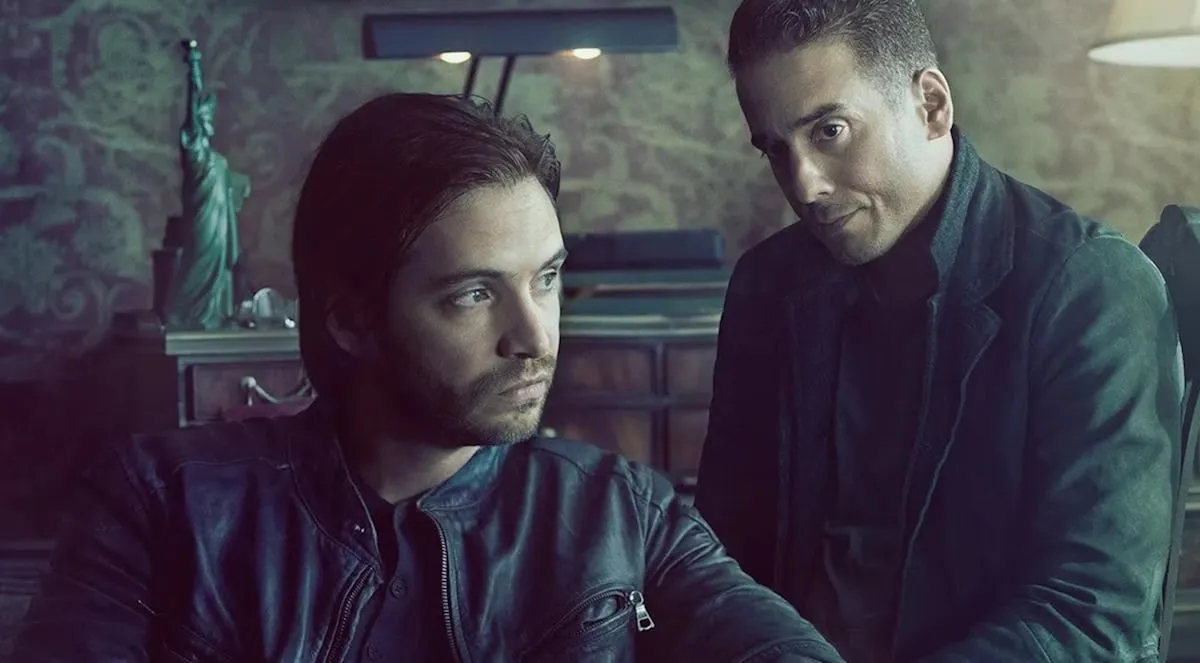
This episode doesn’t stop there. Seconds after Cole calls the team out for chasing their own tail, Cassie spots a familiar pendant around Kirschner’s neck. It’s the secret symbol of the Army of the 12 Monkeys, the group they’ve been hunting for the entire season. They were right to come to 1961, just for entirely the wrong reason. The show pulls off the rare trick of delivering a perfect predestination paradox and a linear, plot-driving twist at the same time. It upends every assumption the viewer has about cause and effect, no cheap cop-outs involved.
I dug through 2016 fan forums and Reddit threads after the watch party to refresh my memory. The episode sparked weeks of fierce debate, split between fans calling it a plot hole and hailing it as a genre masterpiece. Syfy barely marketed the episode ahead of time, and it never got the same standalone acclaim as Season 2’s “Lullaby” episode. It built its cult following entirely through word of mouth, as fans passed the twist along to each other. The side beat of Gale sacrificing himself to get the team across the Berlin Wall, only to reappear later in the series, kept fans guessing for months.

Modern streaming sci-fi plays it far too safe for my taste. Studios force showrunners to stick to predictable, trope-heavy plots that won’t confuse casual viewers. They treat core genre fans like afterthoughts, prioritizing algorithm-friendly mass appeal over creative risk. A weird, ambitious twist like the one in “Fatherland” would never make it past a modern streaming executive’s notes. If you haven’t seen it, 12 Monkeys streams in full on Prime Video. It’s still worth your time, 10 years later.
Author bio: Silas Sterling, veteran kernel contributor and editor-in-chief of an open-source security digest, with a lifelong obsession with hard sci-fi worldbuilding.