
(SeaPRwire) – By: Christian Pierce
Market saturation kills more franchises than bad scripts. The July 22, 2016 arrival of Star Trek Beyond failed to bend domestic box office curves the way earlier Kelvin timeline chapters had. Sequel revenue slipped lower despite strong audience word of mouth. Studios reflexively labeled the performance a franchise alarm. They ignored the profit signature hiding inside normal operating costs.
The film opened with the USS Enterprise shredded by drone swarms near Yorktown. This inciting incident grounded the third film in a tactile problem set. The crew splintered across a hostile planet and confronted a Starfleet-linked antagonist played by Idris Elba. The objective remained small. Restore the ship, protect Yorktown, and rekindle the mission’s purpose. There were no galaxy-ending stakes and no manufactured legacy lifts.
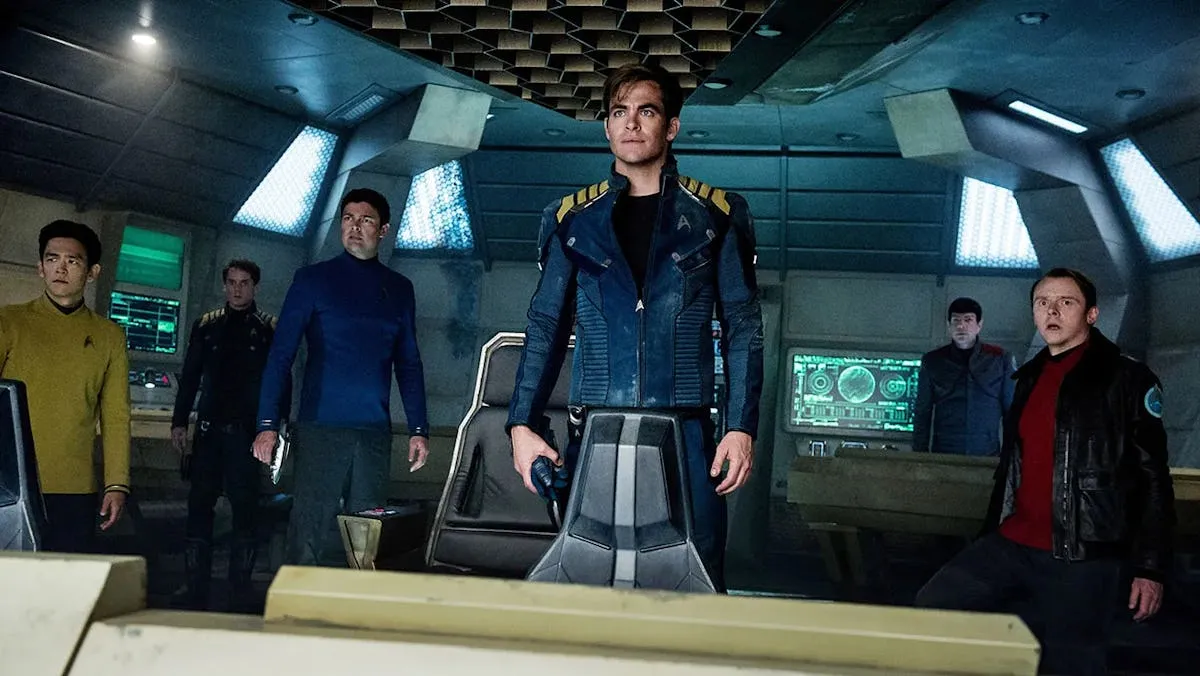
Chris Pine’s Kirk grappled with exploration fatigue rather than mythic destiny. Screenwriter Simon Pegg threaded this ennui through every recovery sequence. Crew pairings shifted away from the overused Kirk-Spock axis. Spock and Bones traded barbs while Chekov earned final narrative grace. These choices turned personnel management into the dramatic engine. The movie felt like a sturdy episode elongated with blockbuster craft instead of bloated stakes theater.
Action set pieces leaned into playful physics. Kirk rode a vintage motorcycle and blasted Beastie Boys to disrupt drone grids. Final combat unfolded on a terrain with erratic gravity. The spectacle served character comfort rather than existential proof. Viewers were never led to believe the crew faced irreversible loss. This restraint let likability carry the ledger.
The 2009 reboot anchored its success on timeline novelty. Into Darkness strained under Khan iconography and confused promotional intent. Beyond rejected both moves. It skipped three years of mission time so audiences could inhabit a working crew instead of repairing franchise mythology. The strategic subtraction of grand stakes lowered production risk while preserving premium visual pricing.
Competitors keep inflating threat ceilings to justify ticket surcharges. This installment proved that crew cohesion functions as its own premium product. The financial miss came from undersized marketing spend against overbuilt expectations, not from creative failure. Operating leverage in franchise filmmaking now favors modular adventures over continuity-heavy spectacles. Theaters can monetize comfort as easily as dread when accounting rules are respected.
Studios chasing infinite escalation will keep burning cash on diminishing returns. The real end-game is a portfolio of modestly budgeted, character-forward chapters that clip costs and preserve brand heat. Investors should demand production ledgers that treat personnel charm as a tangible asset rather than a marketing bonus. This pivot alone will separate surviving franchises from stranded capital.
Author bio: Christian Pierce, a chief financial columnist and markets commentator who deconstructs entertainment economics and boardroom strategy with a focus on capital efficiency and industry endgames.