

(SeaPRwire) – By: Lucas Caldwell
Steven Spielberg has spent his career chasing the same ghosts. From the train tracks of his youth to the alien skies of his blockbusters, he is trapped in a loop of wonder and regret. *Disclosure Day* is the latest iteration of this cycle. It is a synthesis of his entire sci-fi filmography, repackaged as a high-stakes thriller. The film is occasionally unwieldy and burdened by heavy-handed motifs. Yet, it serves as a necessary, soul-baring progression from the autobiographical honesty of *The Fabelmans*. It is not a return to form so much as a collision between his past mastery and a relentless, hopeful vision of humanity.
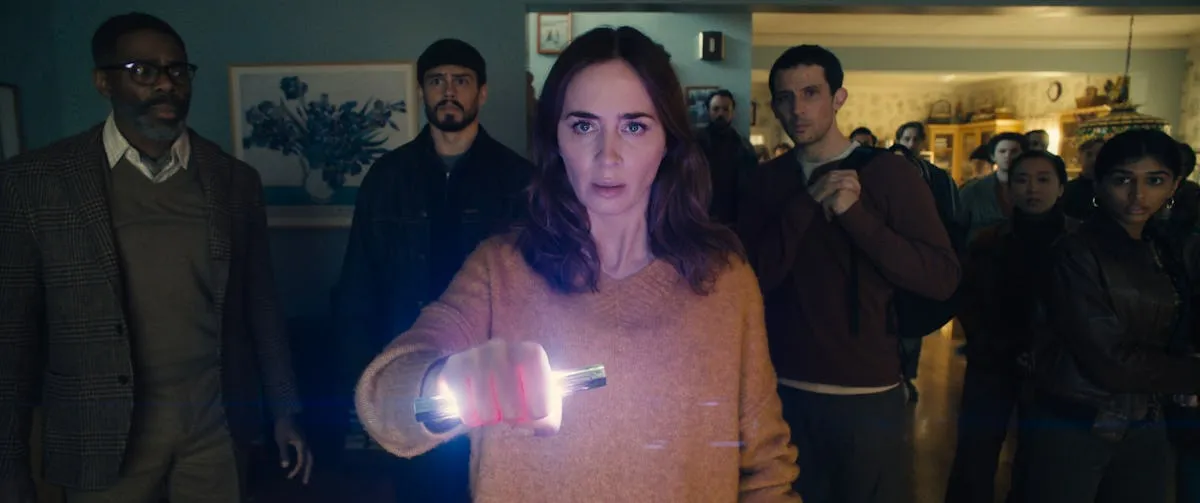
The narrative centers on Daniel Kellner, a cybersecurity expert who leaks data from WARDEX, a shadowy military entity guarding Roswell-era secrets. Daniel is joined by Hugo Wakefield, a defector leading an operation to force global disclosure. The plot thickens with the introduction of Margaret Fairchild, a Kansas City meteorologist. After a strange encounter with a red cardinal, she begins speaking in foreign languages and clicking on live television. She develops empathic powers, eventually crossing paths with Daniel. They are hunted by WARDEX head Noah Scanlon, who uses eerie technology to inhabit other people’s bodies.
The film functions primarily as a propulsive chase movie. It is arguably Spielberg’s most energized work since *War of the Worlds*. Janusz Kamiński’s cinematography captures high-speed car chases and train sequences with an agility that puts younger directors to shame. The film balances this intensity with a wink to the audience, including slapstick moments reminiscent of his 1980s output. While the plot beats are occasionally uneven and the runtime feels stretched, the chemistry between Josh O’Connor and Emily Blunt provides the necessary emotional anchor to keep the spectacle grounded.
The industry subtext here is a masterclass in legacy management. Spielberg is not merely recycling tropes; he is evolving them. The telepathic bond between Daniel and Margaret mirrors the connection in *E.T.*, while the tech-heavy paranoia echoes *Minority Report*. These are not just nostalgic riffs. They are deliberate markers of a filmmaker who understands his own brand equity. By framing the government as an irredeemable villain, he creates a clear binary conflict. This simplicity allows him to focus on his core thesis: humanity’s inherent, if naive, capacity to embrace the unknown.
The film’s attempt to weave religion and faith into the narrative remains its weakest link. Screenwriter David Koepp struggles to integrate these metaphors, resulting in an ungainly, forced subplot involving Daniel’s girlfriend, Jane. Despite this, the film succeeds as a crowdpleaser. It avoids the cynicism of modern blockbusters, opting instead for a sentimental, earnest plea for openness. Spielberg is betting that audiences still crave the sincerity he has spent decades perfecting. He is betting that we are still willing to look at the sky and believe in something beyond our own borders.
The industry will likely view this as a test of whether pure, old-school humanism can still command a global box office in an era of apocalyptic anxiety.
Author bio: Lucas Caldwell, a tech opinion leader with millions of followers on X/Twitter, specializes in analyzing the intersection of legacy media, digital culture, and the evolution of narrative technology.