(SeaPRwire) –
By: Christian Pierce
Superhero screen content has hit a brutal saturation wall. Audiences are fatigued by formulaic tentpole releases. They bounce between gritty reboots, satirical takedowns, and multiverse cameo dumps. Few titles cut through enough to drive sustained streaming sign-ups. Warner Bros. Discovery’s DC division has felt this squeeze harder than most. It has cycled through film slates, executive teams, and continuity resets for years. It has chased every tonal shift to win back fragmented viewer attention. Its recent wins have come from narrow, unexpected bets, not broad hero-led blockbusters.
The latest slate announcement came at the 2026 Annecy International Animation Film Festival. Warner Bros. unveiled a full roster of upcoming DC Universe animated series. The lineup includes a high-profile adaptation of the hit comic *Absolute Batman*. It also includes a lighthearted, kid-focused series centered on Krypto the Superdog. The clear standout title is *Joker: Laugh Riot*. It is the first anime series ever released under the official DC Studios label.
It is produced in partnership with Sola Entertainment. First-look art for the series was shared alongside the announcement, tagged for HBO Max.

Its premise follows the Joker as he launches an investigation into Batman’s murder. His violent, unhinged quest edges him closer to vigilante action than traditional villainy. The story forces him to confront a core truth: he has no identity separate from Batman. Joker is not a new presence in anime-style productions. He appeared in 2018’s *Batman Ninja* and its 2024 sequel *Batman Ninja vs. Yakuza League*.
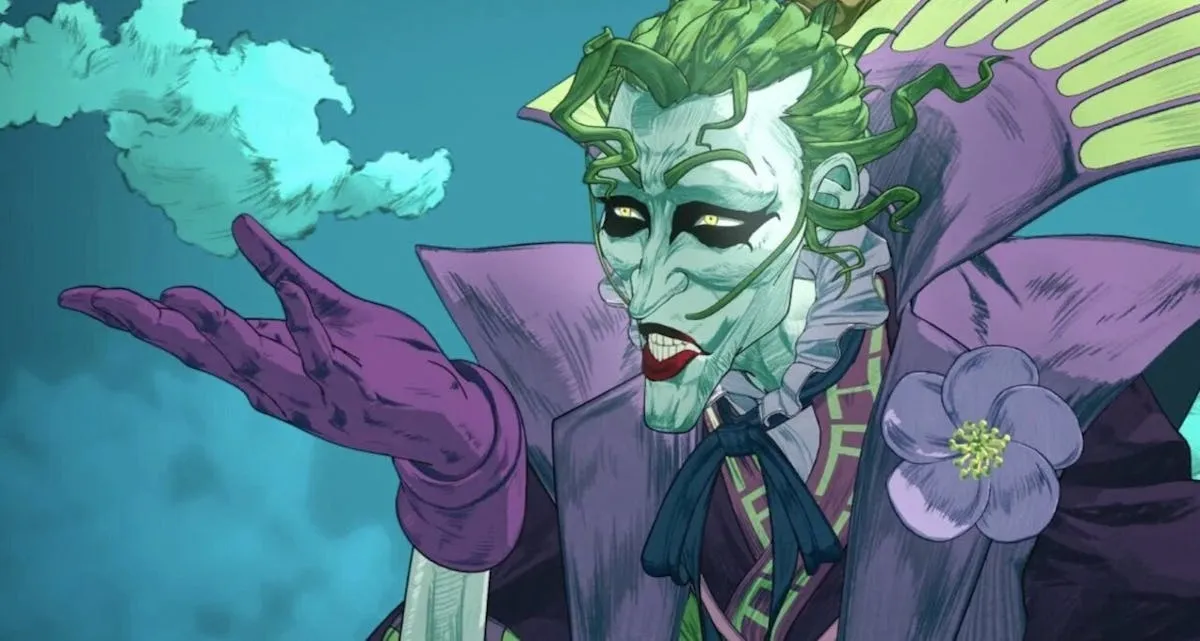
He held a featured role in 2024’s *Suicide Squad Isekai* anime series. None of those earlier projects fell under the official DC Universe continuity banner. None centered Joker as the sole lead character. Recent cross-IP anime experiments have already proven the format’s commercial viability. *Star Wars: Visions* used anime shorts to reimagine that franchise’s antiheroes for global audiences. *The Lord of the Rings: The War of the Rohirrim* anime feature showed established mythic characters translate well. WBD already scored a measurable win with its recent *Rick and Morty* anime adaptation. It also earned critical and viewership success with *The Penguin*, a series focused on a classic Batman villain’s humanity. No release date has been set for *Joker: Laugh Riot* as of the announcement.
This project is not a random, out-of-left-field creative swing. It stitches together every proven winning thread WBD has tested in the last three years. It leans into anime’s massive global reach, especially with younger audiences. Those younger viewers have largely abandoned traditional live-action superhero fare. They make up the core subscriber base WBD needs to retain to hit long-term streaming targets. It centers a villain audiences already find more compelling than most of DC’s current hero roster. It uses a tight, high-concept hook that avoids tired origin story bloat. That same bloat sank multiple big-budget DC live-action releases in recent years. It skips the need to set up interconnected future films or spin-offs in its first season. It can stand alone as a self-contained story, which lowers viewer entry barriers. Tying the project to the official DC Studios banner raises the stakes considerably. A high-profile flop would shut down anime as a viable DC content pipeline for years. A breakout hit would open the door to a full parallel slate of anime DC titles. Those titles would cost a fraction of live-action production budgets. The format allows for more creative flexibility than big-budget live-action. It can lean into the Joker’s over-the-top violence and surreal tone. It avoids the costly practical effects and rating battles that come with theatrical releases. They would also come with built-in cross-cultural fandom appeal across key Asian and Western markets. The company does not need this series to break theatrical box office records. It only needs it to drive enough streaming sign-ups and fandom chatter to justify scaling the model. WBD is not testing anime for art’s sake. It is building a low-cost, high-margin content pipeline. The goal is to prop up its struggling streaming business before superhero fatigue kills its biggest IP entirely.
Author bio: Christian Pierce, chief financial columnist covering media and entertainment markets, with 15 years tracking streaming content ROI and IP monetization strategies.