By: James Vance – SeaPRwire – Scientists guard lunar samples like rare artifacts. They total just 3,666.6 grams. That is less than nine pounds. Chang’e 6 brought back 1,935.3 grams from the far side. Chang’e 5 returned 1,731 grams earlier. Every gram carries enormous cost. Return vehicles must launch from the surface. They dock in lunar orbit. They reenter Earth at 11.2 kilometers per second. Extra mass demands more fuel. Mission risk rises. Yet researchers line up for access. The material holds irreplaceable records. Moon dust acts as the solar system’s black box. It captures 4 billion years of solar wind, meteor impacts, and cosmic history. No atmosphere means no erosion. The data stays pristine.
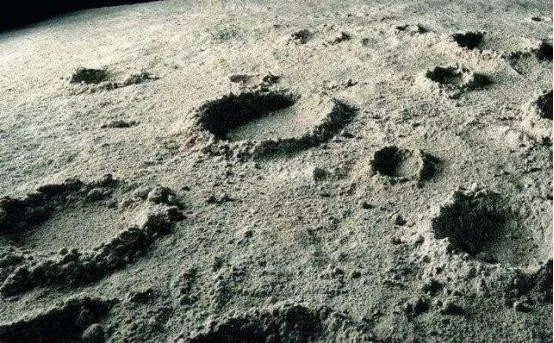
The soil itself poses handling challenges. Lunar regolith contains sharp glass fragments and rock shards. It carries strong electrostatic charge. Particles invade seals and instruments. Contamination with Earth air or water destroys original chemistry. Scientists work in vacuum chambers. They analyze milligram by milligram. Past assumptions crumble. Chang’e 5 samples showed volcanic activity 2 billion years ago. That pushed the Moon’s “death” timeline back a billion years. Chang’e 6 far-side material reveals intense magma activity at 4.2 billion and 2.8 billion years ago. The Moon’s thermal history proves far more complex than textbooks claimed. Each grain records ancient impacts or solar flares. Researchers treat the dust as time capsules. They avoid any alteration. The work rewrites planetary evolution models.
This scarcity drives strategic choices. Programs weigh every gram against scientific return. Future missions plan targeted collection. They prioritize high-value sites like the South Pole-Aitken basin. International teams compare far-side and near-side data. Insights accumulate. Engineers design better containment. They improve sealing against electrostatic dust. Space agencies study contamination risks. They model reentry stresses on samples. Private players watch developments. They consider commercial applications. The limited supply creates natural prioritization. Researchers focus on highest-impact questions. Lunar soil teaches discipline. It shows how constraint forces precision. Other fields could learn from this approach. Limit resources. Maximize insight per unit. The Moon’s regolith reminds us that some materials carry history too valuable to treat casually. Scientists protect every particle. Their patience yields discoveries worth far more than the launch costs. Programs that respect these limits advance fastest. Those that rush risk losing the story locked inside the dust.
Author bio: James Vance, long-time senior commentator for international tech weeklies, covering enterprise software shifts and their impact on mission-driven organizations.