SeaPRwire – The Department for Transport opened a consultation on 5 November on licensing shared e-bike schemes in England, with proposed national standards and new powers for councils to license operators in their areas. It closes on 31 December 2026.
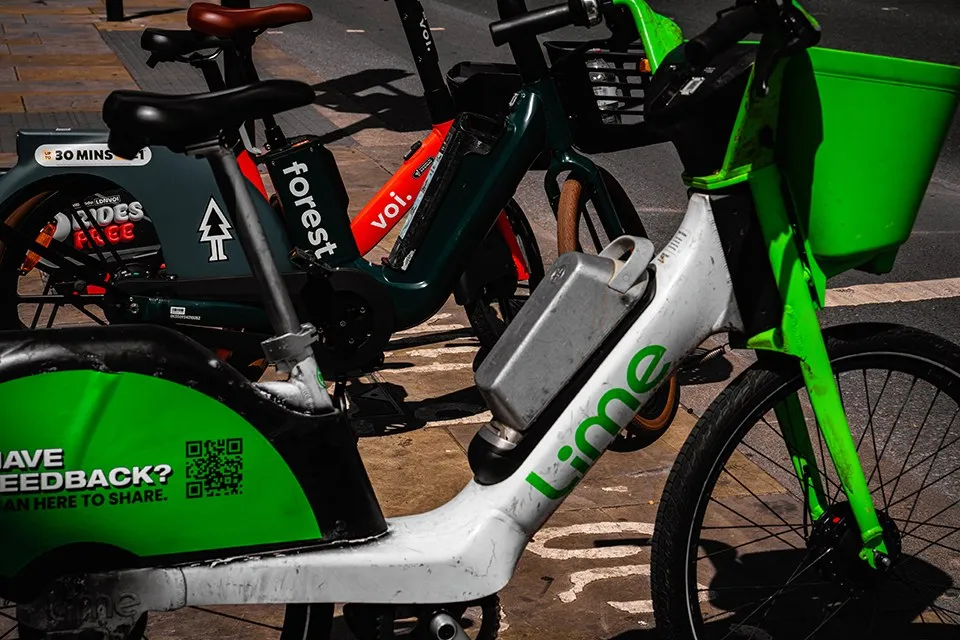
The standards are built from five documents an operator would have to file: a parking plan, a plan for antisocial and illegal behaviour, a fleet management plan with defined fleet sizes and operating areas, a fleet maintenance plan, and possibly an insurance requirement.
Of those, the parking plan is the one aimed at the complaint that started all this. Dockless bikes get left across pavements, and the answer the department has chosen is not racks or geofencing but a document each operator writes for each area and a council that can refuse a licence without it.
The behaviour plan is broader than parking. It covers riding drunk, riding underage and riding on pavements, and it commits to “clear consequences such as fines”. The consultation does not say who issues those fines, at what level, or whether a council, an operator or the police does the enforcing.
Insurance sits further back. The release describes it as a “potential” requirement, which puts it in the same category as the fees and data-sharing powers the department is still consulting on rather than proposing.
Fleet size is the clause with the most reach. A defined fleet size and operating area, set through a licence, is the mechanism by which a council can cap the number of bikes in a borough. Operators have built their pitch to cities on density, and a cap is the thing that changes their unit economics most directly.
Fees would add a second lever. The department is still consulting on whether councils should be able to charge operators, which would make a licence a revenue arrangement as well as a standards document. The release does not say what a fee would be based on, whether it would be per bike, per trip or flat. Neither the cap nor the fee has a number attached to it.
The geography is narrower than the headlines. The powers are for local leaders in England, and Scotland, Wales and Northern Ireland are not covered by the proposal. Within England, London gets a different route: the department is working with the Mayor and Transport for London on devolving the powers to TfL, so that one body enforces across the capital instead of 32 boroughs.
That London arrangement is the tell. The stated aim is to end both a patchwork of operator rules and the “postcode lottery” of standards enforced differently in each borough, and the way to do that in London is to remove the boroughs from the decision.
Elsewhere the proposal creates the patchwork it says it wants to remove. Every licensing authority in England writes its own conditions, sets its own fleet caps and decides its own fees, and an operator running in twenty towns deals with twenty sets of rules. National standards narrow the range of what a council can ask for. They do not produce one licence.
Operators have asked for this. Lime, Voi, Beryl, Dott, Forest and Bolt all run in the UK, and the release says the sector has been calling for regulation to end the “patchwork of rules for operating in different areas”. Their interest is predictability: a licence with known conditions is easier to price than a council that can act without one.
The numbers they brought to the consultation are the ones that support that case. Bolt says 98% of its rides already end with a correctly parked bike. Forest puts London’s shared e-bike trips at around 350,000 a day.
None of the operators that commented put a figure on what a fleet cap would cost them, and the department has not published one either.
The accessibility case is the one the department leads with, and it has the hardest number in the release. RNIB says 92% of blind and partially sighted people report having had to walk into the road because of street obstacles such as e-bikes. Guide Dogs makes the same point about pavement blocking. Both organisations welcomed the consultation and both warned, in almost the same words, that local flexibility could reproduce the inconsistency the standards are meant to fix. The 92% figure is the charity’s own survey data, and the release gives neither the sample nor the year.
Chris Boardman, the National Active Travel Commissioner, put the counterweight: shared bike use is growing, journey times are predictable, and the schemes give people an option when other transport fails. The department’s own spending plans point the same way, with £4.5 billion committed over five years for active travel, including £104 million recently for cycling routes across the UK’s 12,000 miles, against a target of more than half of short journeys in towns and cities being walked or cycled.
The two charities made the same request in different words: write the national standards tightly enough that a council cannot read them loosely. That is a drafting problem rather than a policy one, and it will decide whether the regime looks uniform across England or only on the department’s website.
The two goals pull in different directions, and the consultation does not resolve them. Clearing pavements means fewer bikes in the places where they are most useful; a fleet cap is the fastest way to clear a pavement and the fastest way to make a scheme unprofitable.
What happens next is legislative, and the release does not say what vehicle carries it. A licensing regime needs powers that councils do not currently hold, and the timeline beyond 31 December 2026 is unstated. Operators will keep running under the existing voluntary arrangements until a commencement order appears.
The consultation asks the questions a licensing scheme needs answered, and leaves the two that decide whether it works: how many authorities actually write a licence, and what a fleet cap does to the trips the active travel targets depend on.