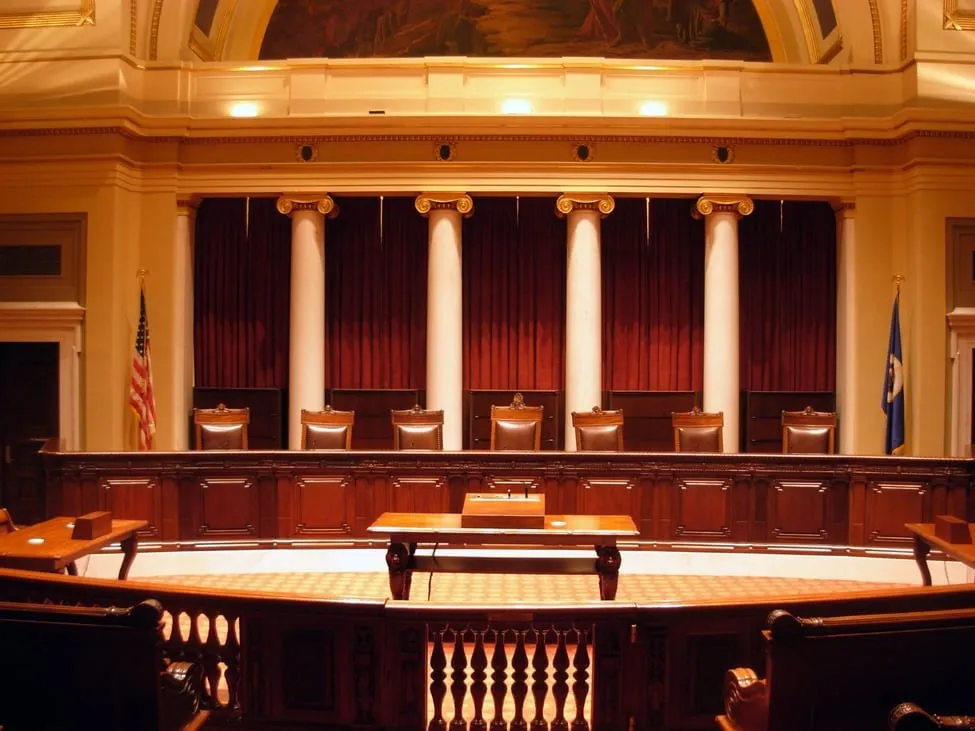
SeaPRwire – Minnesota Supreme Court justices heard oral argument on Thursday in a defamation case that turns on whether a one-star Google review is speech about a matter of public concern, and therefore covered by the state’s anti-SLAPP statute.
The review was posted by the owner of Robinet Productions, a video production company, after Paragon Restorations refused to pay for promotional video work. It gave the contractor one star and told other businesses to avoid it.
Paragon sued for defamation, arguing the review was false because Robinet had not met its side of the contract. Robinet moved to dismiss under the Uniform Public Expression Protection Act, Minnesota’s anti-SLAPP law, which is designed to end suits brought to silence critics rather than to win.
That statute is what makes the case worth arguing over. A granted anti-SLAPP motion carries a fast timetable and shifts the plaintiff’s opponent’s legal costs onto the plaintiff. A denied one leaves the defendant paying to defend a review that may be one paragraph long.
The procedural history is unusual. The district court dismissed Paragon’s defamation claim on the merits, finding that the core assertion, that Robinet was not paid, was technically true. It did so without reaching the anti-SLAPP question, which meant Robinet could not recover fees.
The Court of Appeals then held that the review was a personal grievance over a private transaction and not a matter of public concern, which is the category the act protects. Robinet appealed that holding, and Thursday’s argument was about the category rather than the truth of the post.
Minnesota applies a constitutional test that looks at a statement’s content, form and context to decide whether it addresses a matter of public concern, and the lower courts use it as a gate. Vince Reuter, representing Robinet, told the justices that the gate was built for high-stakes defamation and now catches ordinary consumer reviews.
“The purpose of this law is to expand and broaden free speech,” Reuter said. He described the review as an express warning to others, based on one owner’s experience of work he says was never paid for.
Samuel Johnson, for Paragon, argued the opposite: reading all business reviews as public concern would drop the context inquiry the statute depends on and would move a constitutional question into a category the legislature cannot create.
“If the legislature did what appellants say it would do, by making all ratings and reviews of businesses occupy that highest rung of First Amendment protection, that would invade the role of this court to decide what constitutional protections exist,” Johnson said. On his account the post expressed anger about an unpaid invoice and nothing more, and he noted that no one appears to have responded to it.
Justice Anne McKeig put the difficulty to him directly. “It seems the secondary purpose was to actually warn others,” she said. Johnson’s answer, that a warning nobody read has no social or political impact, drew the sharpest question of the morning.
“Should we be a little bit worried that we’re creating or adopting a test that sort of privileges popular statements and disadvantages unpopular statements?” Justice Karl Procaccini asked. A reach test measures how many people noticed a post, not whether the subject is one the public has an interest in.
Justice Paul Thissen offered the narrow reading. Plenty of people are hurt by defamation suits, he said, and that does not by itself require broader protection. His estimate was that perhaps 2% of business reviews fall inside the anti-SLAPP statute, and he suggested that figure might be what the legislature intended.
Two per cent is the number to hold on to. If Thissen is right, the choice before the court is not between protecting all reviews and protecting none: it is whether the small share that attracts a defamation suit gets the fast exit the statute offers, or the ordinary litigation timetable.
A fee-shifting statute works on behaviour before any judge rules. A company that expects to pay the other side’s lawyers if its claim is dismissed thinks harder about filing, and that effect does not depend on how many reviews the statute formally covers.
The tension is not easy to draft around. A narrow reading keeps the law where it started, protecting speech about how institutions behave, and leaves two companies arguing over an invoice to the ordinary rules, which is where most commercial disputes belong. A broad reading protects the small operator who cannot afford a lawyer, which is the reason the statute exists, and it also hands every disappointed customer a fast exit from a claim that may well be justified. Neither reading is obviously wrong, and the court has to pick one a district judge can apply without knowing the parties’ budgets.
The court has extended the public-concern category before. It ruled in an earlier case that a #MeToo account by a dance instructor was a matter of public concern, which is the precedent Robinet’s side leans on when it argues that a warning to future customers belongs in the same box.
Paragon’s answer is that the two are not alike. A dance instructor’s account of conduct towards students describes something a stranger might need to know before signing up; a dispute over an unpaid invoice is between two companies that signed a contract.
Both descriptions fit the post, which is why the argument ran for as long as it did. The review states a fact, that payment was withheld, and an opinion, that others should stay away. The first is either true or false and was already resolved. The second is the part the court has to classify.
Whatever the court writes will become a rule for the next thousand posts. The workable version asks whether the review describes a practice a stranger could act on, which is a different question from whether the poster was angry and a different question again from whether anyone read it.
Reuter’s closing formulation was about symmetry: a business takes the benefit of five-star reviews and should bear a one-star review based on true facts and an honest opinion without dragging the reviewer into litigation. Johnson’s was about line-drawing: someone has to decide what counts as public, and it is the court.
A ruling for Robinet would give consumer complaints and warnings about business practices a clearer route to early dismissal and fee shifting. A ruling for Paragon would leave those posts to the ordinary defamation timetable, where the cost of defending is itself the pressure.
The court did not indicate when it will rule.