(SeaPRwire) –
The Gloucestershire countryside has become an unlikely front line. The charges brought at Westminster Magistrates’ Court on Tuesday expose a security architecture under real strain. Iran did not need to fire missiles to reach a NATO installation. It allegedly deployed young men to walk the perimeter of a base that hosts America’s most fearsome heavy bombers. That is the uncomfortable truth. The vulnerability is not theoretical. It is operational. The threat is not distant. It is on British soil. The incident shows a shadow war has moved from proxy battlefields to the heart of European security. Every US airbase in Europe is now a potential target. Every surveillance operation is a direct challenge to the alliance’s ability to project power. RAF Fairford is not just any base. It is the gateway for American bombers into the Middle East and beyond. If this gateway is compromised, the entire deterrence architecture is weakened. The UK must now confront a hard question: how secure are its NATO installations, really?
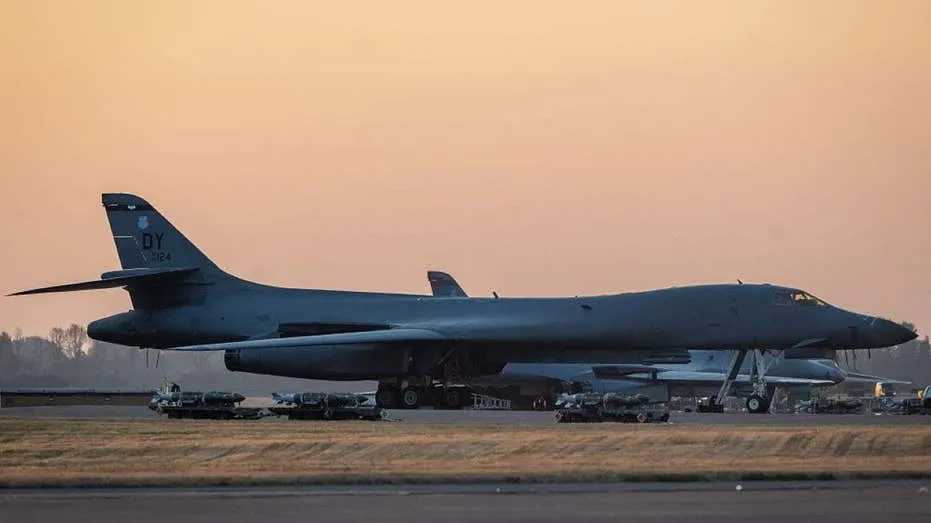
The legal details are stark. Mohmed Abdulkarim, 24, of London, was charged with assisting a foreign intelligence service. Nouman Essghir, 24, was charged with entering a prohibited place for a purpose prejudicial to the United Kingdom. Both charges fall under the National Security Act. This is a serious piece of legislation designed to address espionage and sabotage threats. British counterterrorism police said they believe the foreign country Abdulkarim was assisting was Iran. The Crown Prosecution Service stated the decision came after a “complex” counterterrorism investigation. Frank Ferguson is the chief crown prosecutor for the CPS Special Crime and Counter Terrorism Division. He said his agency decided to prosecute the two men. He added that the investigation continues. The arrests happened in the early hours of September 27. Five men were detained outside RAF Fairford in Gloucestershire. The base had been used by US bombers to carry out strikes against Iran. About a dozen B-1 bombers were later withdrawn from RAF Fairford. They returned to their home stations in the United States on security grounds. The withdrawal is the most significant detail. It signals that the military command did not consider the base safe. The bombers were removed because the threat was real. The CPS emphasized that the charges are not findings of guilt. Both defendants have the right to a fair trial. They were expected to appear at Westminster Magistrates’ Court on Tuesday.
The strategic implications extend far beyond the courtroom. RAF Fairford serves as a key European operating location for US heavy bombers. It has supported American military missions for decades. If Iran can get this close to the runway, the calculus changes. Washington will not tolerate a base that is vulnerable to foreign intelligence penetration. London will not tolerate a foreign intelligence service operating openly on British soil. The result will be a dramatic tightening of security around US installations in the UK. Counterintelligence operations across the country will also expand. For Tehran, the costs are mounting. The charges expose an operational network that has been compromised. The individuals arrested are young, seemingly ordinary, and easy to overlook. But their alleged roles suggest a sophisticated effort to map a high-value target. Iran has been fighting a shadow war with the West for decades. The battlefield has now shifted. Instead of proxy militias in the Persian Gulf, the war has come to London streets and a NATO airbase perimeter. The end-game is not a military confrontation. It is a grinding intelligence war that will escalate quietly. The US will demand more from its British hosts. The UK must demonstrate that its security services are up to the task. The men charged on Tuesday will face trial. But the court proceedings are almost incidental. The real verdict has already been delivered. A NATO base was compromised. The response will reshape how the alliance protects its forward-deployed assets.