(SeaPRwire) – By: Douglas Vance
The Houthis are not bluffing about closing the Bab-el-Mandeb Strait. This week’s reporting confirms attacks on Saudi-flagged vessels, the sinking of an Indian commercial cargo ship, and the Aug. 13 strike on an Egyptian vessel that killed at least four crew members. These are not isolated incidents. They are calibrated provocations. The Houthi leadership is explicitly tying their aggression to the Strait of Hormuz situation. They vowed to shut the secondary chokepoint if Iranian leverage in the primary one wanes. Major General Ken Ekman, former West Africa Coordination Element Lead, put it plainly. The Houthis are building a second front. They are stretching American assets. And they are testing whether Washington will respond with force or fold into a diplomatic back channel. Saudi Arabia relies on that narrow waterway to export up to 7 million barrels of oil daily. Every ship that gets hit is a pressure gauge reading. The question is whether the needle has crossed into crisis territory.
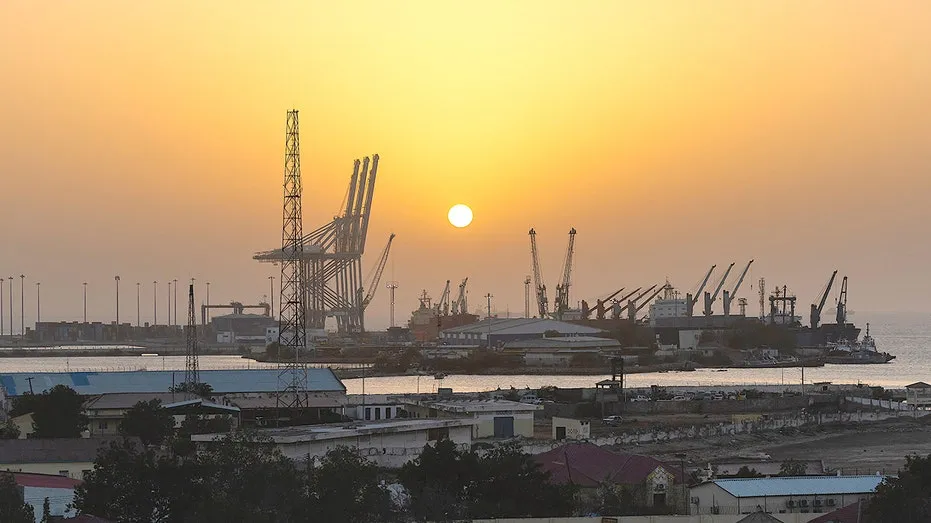
The United States already operates Camp Lemonnier in Djibouti. That base was designed for counterterrorism and East African crisis response, not for Red Sea containment operations. The structural problem is visibility. China is significantly expanding its military and commercial presence in Djibouti, as Edmund Fitton-Brown noted in a prior briefing. The former British ambassador to Yemen did not mince words. There is a sense that Djibouti is not a reliable ally for the U.S. Somaliland is offering something materially different. The breakaway territory, which separated from war-torn Somalia in 1991, provides one of the longest runways in Africa, an air base, and a deep sea port directly on the Red Sea. AFRICOM Commander General Dagvin Anderson visited Berbera last week. An official statement confirmed he traveled there to assess the security environment and review the port’s operational capacity. A Somaliland delegation led by the state’s defense minister visited AFRICOM headquarters in Stuttgart, Germany the same week. Red Sea security was reportedly on the agenda there. Bill Roggio, editor of the Long War Journal, acknowledged the redundancy value. He noted that Camp Lemonnier remains better positioned geographically than any potential Somaliland base. But redundancy, he admitted without hedging, is a good thing in military operations. The U.S. officially still backs Somalia. A State Department spokesperson reiterated that commitment to the press. Yet Anderson’s language about Somalia’s political instability and inter-clan infighting suggested engagement is conditional. He told a Somali journalist that if Mogadishu does not step up, Washington will face difficulty staying engaged.
The geopolitical calculus is becoming legible to anyone tracking the shipping lane. The Houthis are not acting independently. Iranian influence provides strategic cover and weapons logistics. But that cover is not permanent. The Strait of Hormuz situation will shift. The Houthis know the timeline is working against Tehran. Ekman predicted they would pull the trigger in a major way when Iranian leverage in the Hormuz wanes. That is an imminent trigger, not a theoretical one. Saudi Arabia and thirteen other nations already formed a maritime defense coalition to combat the Houthi threat. The United States publicly sits outside this coalition. A State Department spokesperson said Washington stands firmly with Riyadh and remains in close consultation. But no American boots are embedded in that force structure yet. Major General Ekman argued that orienting a Horn of Africa strategy against the Houthis would place a premium on freedom of navigation. Somaliland is proximate and overcomes limitations imposed by Djibouti and other regional hosts. His language was unusually direct for a retired officer. The Houthis could compel a different U.S. strategy in Africa. They could force Washington to recognize Somaliland as an independent state. Full diplomatic recognition remains off the table for now. Roggio warned it would create a major rift between Washington and Mogadishu. But an operational military base in Berbera would be a de facto concession without the diplomatic bill of sale. Somaliland’s representative to the United States, Bashir Goth, made his pitch to the press. He called Somaliland the reliable partner Washington needs on Africa’s coastline. The Houthis do not need to sink every ship transiting the Bab-el-Mandeb. They only need to make the Red Sea expensive enough to justify a base move.
Author bio: Douglas Vance, a maritime defense scholar and naval intelligence briefing coordinator specializing in chokepoint geopolitics and Red Sea security architecture.