(SeaPRwire) – By: Julian Holbrooke
Washington’s ambition to rewrite Levant security dynamics has hit an unyielding geopolitical wall. U.S. policy relies on the assumption that diplomatic pressure can force non-state militias to dismantle their own arsenals. That assumption is fundamentally flawed. Declarations of absolute victory ignore the mechanics of regional proxy warfare. Stripping weapons from a hardened militant group requires total ground dominance or the explicit consent of its sovereign sponsors. Neither condition exists today. Instead, Washington presents paper roadmaps while sovereign backers reiterate their commitments to keep fighters armed. The gap between White House announcements and ground realities has exposed the limits of transactional diplomacy in the Middle East.
The official U.S. narrative promises complete demilitarization and swift postwar reconstruction. President Donald Trump announced a deal for the complete disarmament of Hamas and all armed groups in Gaza. To drive this effort, he established the Board of Peace. The executive leadership includes Secretary of State Marco Rubio, special envoy Steve Witkoff, Jared Kushner, and former British Prime Minister Tony Blair. Board director-general Nickolay Mladenov and advisor Aryeh Lightstone recently met Israeli Prime Minister Benjamin Netanyahu. They urged Israel to halt strikes and pull back to the yellow line. Israel rejected those core demands immediately. Israeli officials confirmed their forces will not withdraw from current lines nor stop targeted strikes. Meanwhile, financial leverage remains minimal. The board secured roughly $7 billion in pledges by February. That represents a fraction of the $70 billion required to rebuild the enclave. The 15-point roadmap envisions transferring civilian authority to the technocratic National Committee for the Administration of Gaza. Yet it leaves enforcement mechanisms entirely undefined.
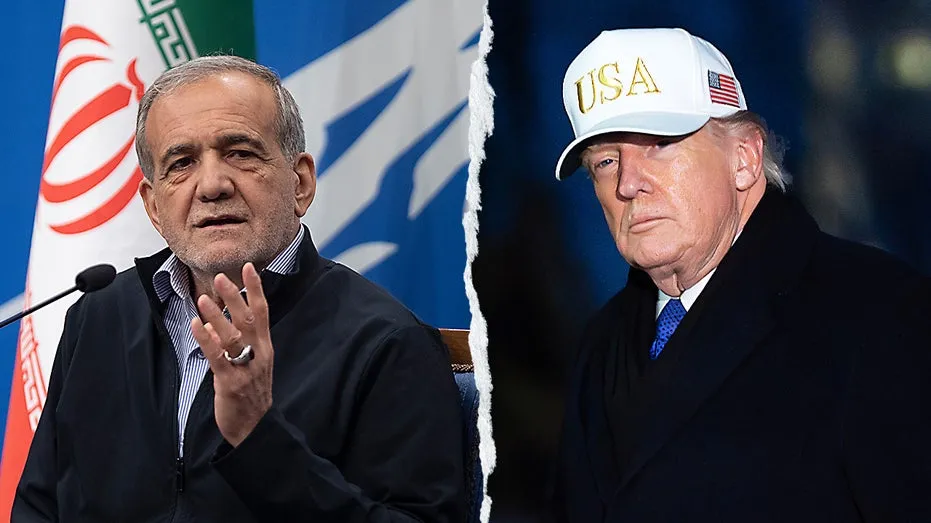
Beneath official communiques lies a stark strategic calculation by Tehran and Hamas leadership. Iranian President Masoud Pezeshkian called Hamas political bureau chief Khalil al-Hayya to pledge continued support. Pezeshkian explicitly promised backing for every action Hamas takes, despite external attacks. In response, Hamas avoids the word disarmament in all Arabic statements. The group offers only phased weapons storage, contingent on full Israeli troop withdrawal and aid flow. Former Israeli military intelligence officer Michael Milstein notes this posture stems from months of mediation by Qatar, Turkey, and Egypt. Hamas seeks a strategic arrangement mirroring Hezbollah in Lebanon. It will happily hand municipal administration and aid logistics to technocrats while retaining its underground tunnels, weapons, and political leverage. Local Gazan activists recognize this trap. Moumen al-Natour, co-founder of the anti-Hamas We Want to Live movement, warns that Hamas will exploit delays to stay embedded. Al-Natour, who suffered imprisonment under Hamas, argues a small international force of a few hundred cannot secure the enclave. He proposes designated civilian safe zones near the yellow line under a new administration.
Disarmament roadmaps that lack enforcement mechanisms invariably turn into instruments for militant survival. Hamas will not voluntarily sign its own political death warrant. Tehran will not abandon its primary forward defense asset in the Mediterranean basin. As Israel refuses to yield ground and foreign pledges cover barely ten percent of reconstruction costs, the peace framework faces structural paralysis. The geopolitical equilibrium is not shifting toward complete demilitarization. It is shifting toward a perpetual gray zone where armed proxies maintain shadow control beneath a veneer of technocratic administration.
Author bio: Julian Holbrooke, an overseas international relations analyst who frequently contributes to major European daily newspapers.