(SeaPRwire) –
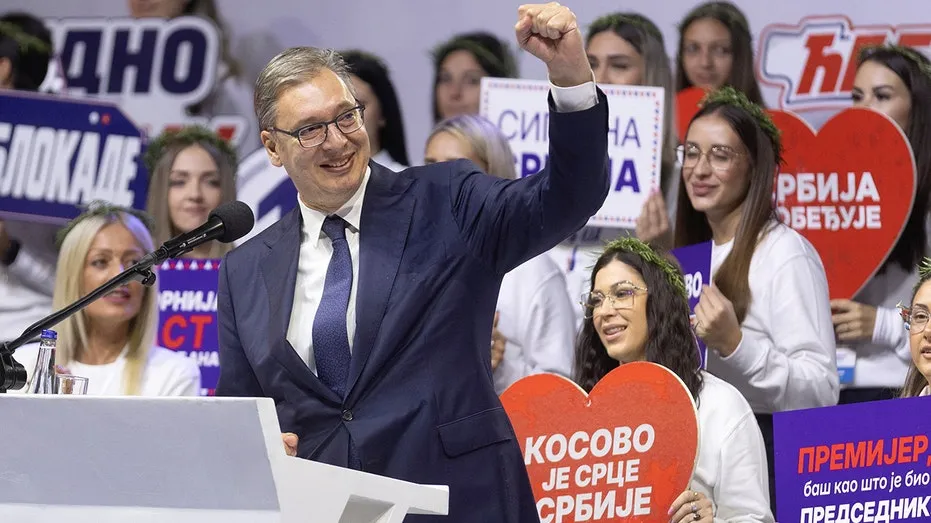
Let me say what many Brussels corridors are whispering but few will print. Aleksandar Vucic did not resign the presidency in September out of constitutional humility. He did it because fourteen years of choreographed power finally met something his media machine could not smother: dead students’ parents, collapsed concrete, and 350,000 people in Slavija Square. The Novi Sad railway station canopy killed sixteen people in November 2024. No one has been held accountable. That single unprosecuted failure has now mutated into the most serious electoral challenge of Vucic’s career, and the October 25 snap election is the referendum he never wanted to hold. Helena Ivanov of the Henry Jackson Society is right to call it his biggest test. But I would go further. This is the first time the opposition is not an opposition at all. It is a generation.
The official text from Belgrade is confident. Foreign Minister Marko Djuric insists the student movement has no credible program, no serious plan, and that “the people of Serbia have seen through them.” He leans on the economic record, and it is a record worth stating plainly. GDP was 32 billion euros when Vucic became prime minister in 2014. This year it will exceed 100 billion euros. Djuric also touts the Strategic Dialogue with Washington, promising fresh cooperation and opportunity. That is the government’s case: growth, stability, and American friendship. The real intention beneath it is cruder. Vucic was term-limited as president, so he resigned, dissolved parliament, and repositioned himself as a prime ministerial candidate. The office changes. The man does not. It is a constitutional costume change, and everyone in Belgrade knows the tailoring.
Now set that against the other side of the ledger. The Student List is leaderless, decentralized, drawn from academia and civil society, and deliberately free of the discredited party hacks who lost to Vucic’s Serbian Progressive Party for a decade. Filip Ubovic, a University of Belgrade student, put it simply: people embrace them because they are “their kids,” young, faceless, principled, and not professional politicians. That is not a platform. It is a moral claim, and moral claims win street battles but often lose ballot counts. Washington is not waiting to find out. Senators Grassley and Blumenthal, with Representatives Wilson and Keating, have introduced the SRBIJA Act, which would condition future U.S. aid on certification that Belgrade has made “significant and sustained” progress on judicial accountability, press freedom, and alignment with the EU and NATO. Read that carefully. Congress is pre-positioning leverage in case the election is rigged, or in case a student victory is simply refused. The fear that Vucic’s camp would not respect an adverse result is no longer fringe speculation. It is legislative drafting.
The geopolitical pendulum, though, will swing less than the protesters hope. Sinisa Vukovic of Johns Hopkins notes the students have been remarkably reluctant to depart from the current foreign policy course, and he predicts continuity, even “pseudo-hedging,” with Russia retaining deep presence in Serbia’s most vital sectors. Kosovo stays frozen. EU accession, opened in 2014, stays stalled. Whoever wins on October 25 inherits the same east-west tightrope Vucic walked since his Milosevic-era apprenticeship. So here is my realistic assertion: the election will not move Serbia’s map, but it may break Serbia’s spell. If a leaderless list of students can merely survive the count, the pendulum of fear that kept one man in power for fourteen years has already swung, and strongmen rarely get it back.