(SeaPRwire) –
I have covered Balkan politics for two decades, and I can tell you the most dangerous moment in any revolution is not election night. It is the morning after, when the champagne goes flat and someone has to write a budget. Serbia just handed a landslide to a movement that, by its own opponents’ account and by most neutral observers’ account, has no program, no ideology, and no governing experience. That is not a criticism of the students. It is simply the fact of the matter. The Student List took 52.45% of the vote and a projected 138 of 250 seats in the National Assembly. Aleksandar Vucic, after 14 years in power, conceded on Sunday night with a grace that surprised even his critics. Turnout hit 69%, the highest this century, with more than 4.4 million ballots cast. Those numbers are real, historic, and remarkable. They are also, at this moment, the only solid things Serbia possesses. Everything else is a question mark wearing a victory sash.
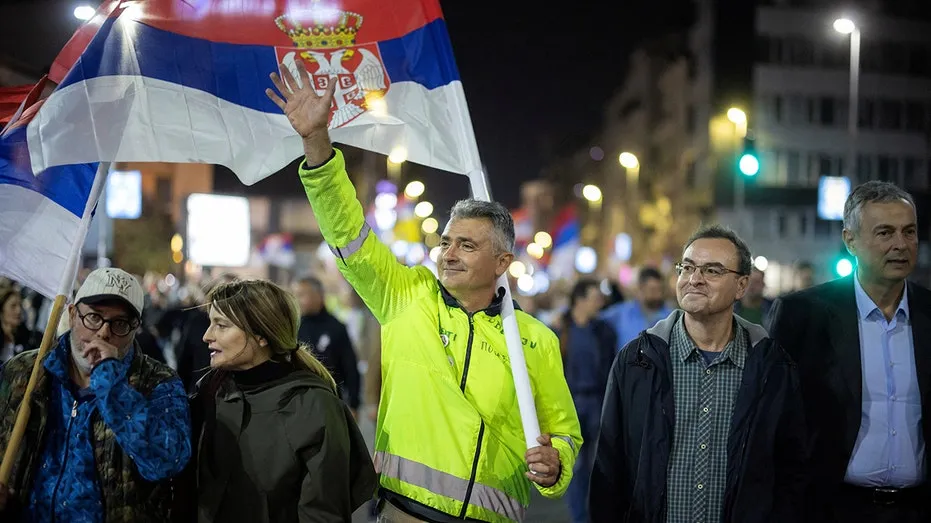
Let us be precise about what the official record says, because it deserves to be read closely. Vucic addressed the nation roughly two hours after polls closed. He admitted defeat based on a stratified sample, before final results were even in, and announced a peaceful transfer of power. His party took 39.2% and a projected 103 seats. That concession matters. Many feared violence as polls closed, and the fears were not idle. The CRTA Election Observation Mission documented a campaign stained by abuse of state resources, pressure on candidates and voters, efforts to bring media under total government control, and attacks on independent election observers. Tens of thousands of Serbians volunteered to run and monitor polling stations to counteract exactly that machinery. The movement itself was born from grief. Sixteen people died when a railway station canopy collapsed in Novi Sad in November 2024, and students marched for nearly two years demanding accountability. Sinisa Vukovic of Johns Hopkins called the result a future chapter in handbooks on how to topple an autocrat. He is right about the campaign. Creative organization, relentless grassroots mobilization, and a simple anti-corruption message kept the students two steps ahead of a regime that failed to co-opt, demoralize, or fragment them.
Now here is the geopolitical reality underneath the celebration. Ana Brnabic, vice president of the SNS main board, gave the losing side’s most honest assessment, and it stings because parts of it are true. She called the Student List a classical anti-establishment movement with neither program nor coherent ideology, opposing everything in an essentially anarchic fashion. Dismiss the sour grapes, keep the diagnosis. Then listen to what the winners themselves say. Milos Jevtic, a 48-year-old professor who just won a parliamentary seat, listed the priorities: economic stability, fighting corruption, rule of law, strengthening institutions. Admirable words. Also completely generic. Every reform government in Eastern Europe has run on that exact sentence since 1989. On foreign policy, the expectation is continuity, good relations with the EU, Russia, China, and the United States all at once. Brnabic posed the uncomfortable questions. Is Serbia firmly pro-EU? Will it keep ties with Moscow? What about Beijing? Nobody in Belgrade can answer today. This is the classic pattern of protest movements that win power. The coalition held together by what it opposed must now survive what it actually is. The students refused to merge with the traditional opposition, which voters saw as ineffective and corrupt. That purity won them the election. It also means there is no experienced apparatus waiting to staff ministries, negotiate with Brussels, or manage the SNS machine that still controls local government across the country.
The pendulum in the Balkans rarely swings cleanly from autocracy to liberal democracy. It swings from one dominant pole to a vacuum, and vacuums get filled by whoever organizes fastest. Serbia has been here before, in October 2000, when Milosevic fell and the reformers spent their first year fighting each other instead of governing. The students have an absolute majority, a genuine mandate, and a populace that trusts them precisely because they are untested. That trust has a shelf life measured in months, not years. My blunt read is this. The peaceful transfer of power Vucic promised is the easy deliverable. The hard deliverable is a functioning cabinet, a coherent line on Kosovo and EU accession, and proof that fighting corruption means prosecuting friends as well as enemies. Watch the first hundred days, watch whether the movement fragments into factions over the Russia question, and watch whether SNS quietly retakes the municipalities while Belgrade celebrates. Revolutions are won in the streets. They are lost in the ministries.