(SeaPRwire) –
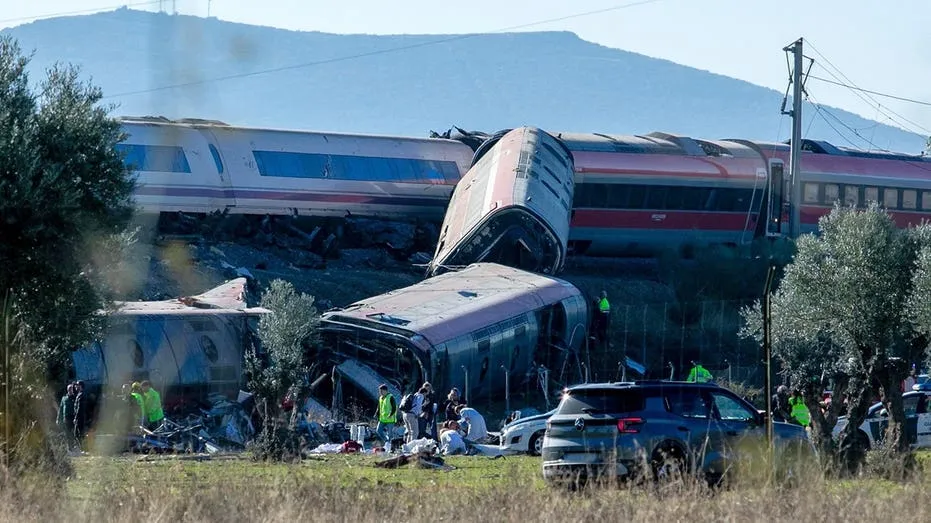
Spain’s high-speed rail network, once celebrated as Europe’s crowning engineering achievement, is hemorrhaging public credibility at an alarming rate. Twelve people are dead. Dozens more are being treated for injuries. On Wednesday morning, a RENFE high-speed train slammed into the rear of a stationary IRYO carriage in the province of Toledo. Two cars derailed. One was shredded into unrecognizable fragments. Debris cascaded down a gravel slope between the towns of Urda and Los Yébenes. This is the second major rail disaster to strike Spain in just four months. In January, a train derailed and collided head-on with an oncoming service, killing 45 people. The 2013 disaster claimed 80 lives. The AVE brand was constructed as a national pledge of safety and modernity. That promise is unraveling.
The official statement from ADIF, Spain’s rail infrastructure operator, emphasizes the technical sophistication of the network. Both trains were operating on the Madrid-to-Seville corridor. The RENFE service, state-owned, was carrying 397 passengers. The IRYO service, operated by an Italian-owned private company, had 147 aboard. The RENFE train struck the IRYO from behind at significant speed. Authorities have offered no explanation for why the IRYO stopped on an active high-speed line. No disclosure has been made regarding signaling system status. No statement addresses operator error, mechanical failure, or weather conditions. The investigation is in its opening hours. What is immediately evident is the operational interface between two distinct companies sharing the same infrastructure. RENFE operates under state oversight. IRYO answers to Italian corporate governance. Different safety protocols. Different dispatching procedures. The integration boundary between these systems remains a mystery. Trains from both companies were also involved in the deadly January crash, compounding the pattern of recurring incidents involving the same operators.
Health Minister Mónica García told state broadcaster TVE that rescue crews are focused on extracting survivors and recovering bodies from the two most devastated cars. She described the impact as a high-speed collision and warned that the death toll would climb. Injured passengers are being transported to hospitals across the Castilla La Mancha region. Civil protection authorities mobilized the municipality of Urda. Mayor Manuel Galán confirmed that officials requested the town’s sports pavilion serve as an emergency triage facility. A military emergency brigade was deployed to support firefighters and police at the scene. IRYO issued a statement confirming it activated security protocols and is working closely with authorities. The confirmed death toll is ten. Regional authorities insist the number will rise. Regional President Emiliano García-Page traveled to the crash site. Prime Minister Pedro Sánchez canceled his entire public schedule. He posted on X that he was dismayed by the severity of the accident. He directed emergency services to give their full support. The political mathematics are stark. A national election approaches next month. Every rail fatality is ammunition for opposition campaigns.
Spain maintains the second-largest high-speed rail network on the continent. Rail service was suspended between Madrid, Ciudad Real and Andalusia in the aftermath. It has carried hundreds of millions of passengers since its inauguration. It was marketed as proof of Spanish engineering excellence. Two catastrophic accidents within a single year reveal a governance architecture that has not kept pace with operational complexity. The central question is not whether the rolling stock meets safety standards. The question is whether the regulatory oversight framework can detect and correct systemic risks before they become headlines. An independent inquiry with full transparency. Published findings with binding recommendations. Mandatory safety audits across all operators sharing the network. Until those steps are taken, the next collision will follow the same pattern.