(SeaPRwire) –
María Corina Machado is back in Venezuela, and the loudest silence in the hemisphere belongs to Washington. The Trump administration armed the rhetoric, watched U.S. forces capture Nicolás Maduro in January, and installed Delcy Rodríguez as acting president. Yet when the opposition’s most consequential figure re-entered the country on Sunday, the President of the United States had to be briefed by reporters on the tarmac. His response was a shrug with a compliment. She is a very nice woman. She gave him her Nobel Prize. He hopes she is safe. That is not statecraft. That is a man caught mid-scene without a script.
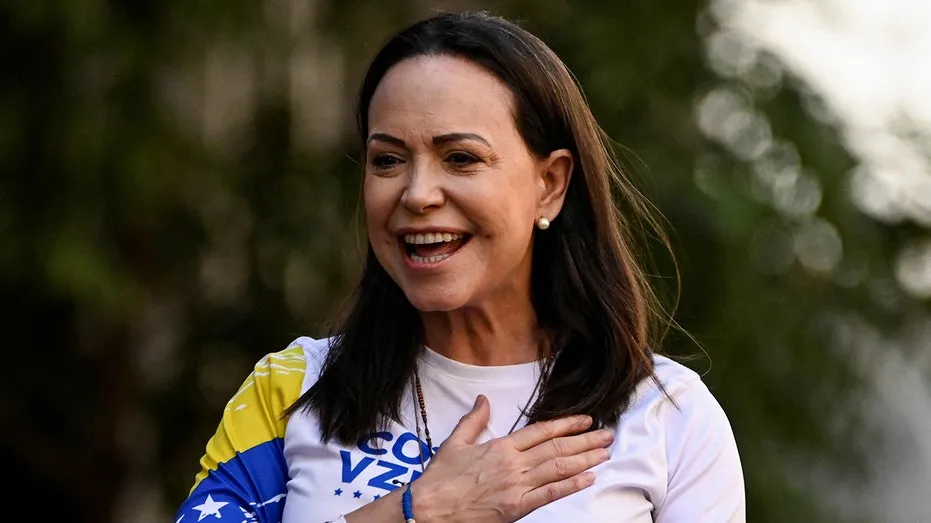
Look at what Machado’s official statement actually says. “I’m here. With you all.” Eleven words on social media. No location. No travel details. No mention of Washington’s role. This is the first time she has set foot in Venezuela since December, nearly a year after she secretly left. Edmundo González, the opposition figure who ran for president in 2024 after Machado was barred, confirmed her arrival and promised to join her very soon. He called her return the moment when “our sovereign voice” comes back to lead. She was awarded the Nobel Peace Prize in 2025. She spent much of that year in hiding. She was briefly detained after an opposition protest in January. She surfaced in Norway in December to accept the prize. Now she is home, walking into a landscape where no presidential election is scheduled and where an acting president has overstayed her authorized term.
The geopolitical subtext is far less elegant. Rodríguez holds power because she is useful to Trump, not because Venezuela’s institutions are stable. Trump has praised her repeatedly, pointing to agreements on Venezuelan oil production and business ventures for American companies. In September, he said it was too soon to hold elections, with U.S. officials prioritizing economic stabilization over democratic sequencing. Machado’s return breaks that arrangement. Reuters reported in June that American officials asked her to delay her homecoming. She ignored them. Her political movement has also refused to join the current negotiation track, where another faction of the opposition has been holding talks with Rodríguez’s government this month over reforms to the Supreme Court and electoral authorities. Machado’s people are not at that table. She is not asking for permission. She is building a rival center of gravity.
This is where Washington’s Venezuela policy collides with itself. If the United States embraces Machado publicly, it destabilizes Rodríguez and threatens the commercial deals Trump celebrates. If it sidesteps her, it confirms that the post-Maduro project was never about democratic restoration, only about transactional control. Machado understands this tension better than any diplomat in Washington. Her timing is deliberate. Her silence on logistics is deliberate. She is forcing a choice that the administration has spent ten months avoiding. Expect Washington to push for a controlled electoral timeline, hoping to absorb her momentum without breaking the oil relationship. Expect Machado to reject any timetable that leaves Rodríguez in place indefinitely. One of those positions will give way. Venezuela now has two competing claims to legitimacy, one backed by U.S. commercial interests and one standing on Venezuelan soil. The pendulum will swing toward whoever holds the ground. A very nice woman with a Nobel Prize is not a plan, and Washington is about to learn that the hard way.