(SeaPRwire) –
Israel is not holding an election. It is holding a reckoning. Two weeks before the polls open, the central question is not economic policy or foreign alliances. It is whether the man who led Israel through its deadliest day still deserves to lead it home.
The numbers tell a thin story. October 27 polling begins at 7 a.m. and closes at 10 p.m. Local time. Israel’s 120-seat Knesset uses proportional representation. The threshold sits at 3.25 percent of the national vote. No party has ever governed alone. A coalition needs 61 seats. Exit polls drop at 4 p.m. EST. Official results land on November 4. The arithmetic is clear. The politics are not.
What matters is the human fault line cutting through this entire exercise. Shir Shai stood at her brother’s grave and told Netanyahu voters not to return. Yaron Shai died fighting Hamas on October 7, 2023. His sister’s words are not campaign rhetoric. They are a burial-ground warning. On the other side, other bereaved families credit Netanyahu with standing firm across years of multi-front war and place blame on military and intelligence institutions for failing to anticipate the attack. The same tragedy. Two irreconcilable interpretations. Neither side is moving.
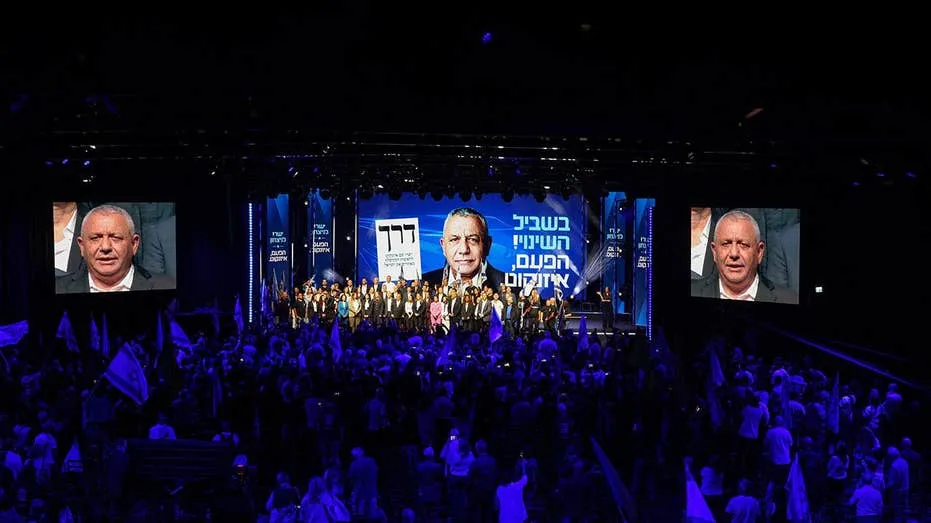
Behind the scenes the maneuvering is already shaping outcomes that the ballot cannot capture. Gadi Eisenkot, 66, former IDF chief of staff, leads the centrist Yashar party and has positioned himself as the anti-Netanyahu alternative. Naftali Bennett, 54, and Yair Lapid are running on a joint ticket, a rare far-right to center-left alliance designed to cross thresholds and dilute Likud’s base. Avigdor Lieberman, Itamar Ben-Gvir, and Bezalel Smotrich each hold leverage over coalition mathematics. Arab parties including Ra’am and the Joint List sit in a kingmaker position that no serious strategist can ignore. Two days before the vote, Netanyahu released an AI-generated image of a nuclear explosion over Tel Aviv, framing the election as an existential choice against Iran. Police are preparing for post-election unrest. Experts have floated a Jan. 6 scenario. President Isaac Herzog will begin consultations within days of the November 4 results. The first coalition builder gets 28 days. A second attempt gets 28 days with no extension.
If any bloc falls short of 61, Israel inherits another caretaker government and another year of political paralysis, and the security architecture built since October 7 will remain untested inside a chamber that cannot agree on its own leadership.