(SeaPRwire) – By: Julian Holbrooke
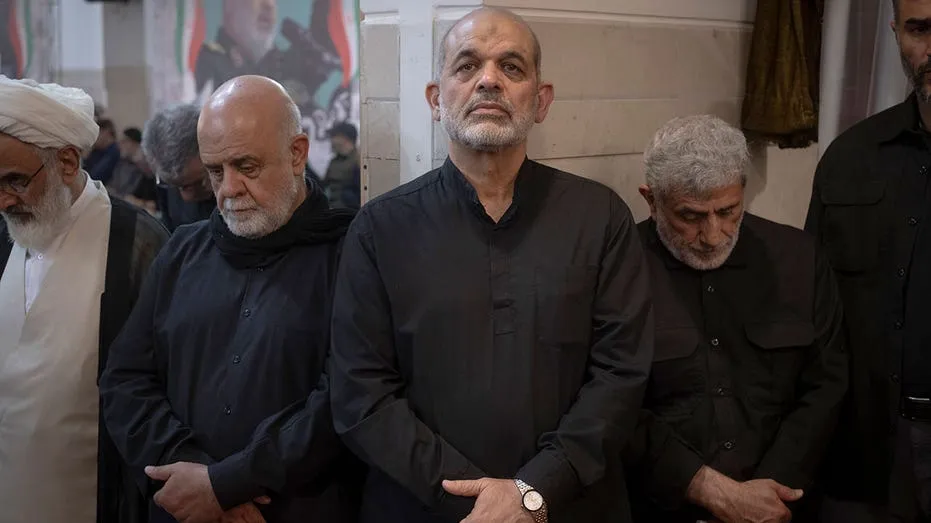
In a significant development, Iranian Supreme Leader Mojtaba Khamenei formally appointed six senior military commanders on Monday. This move comes as Tehran rebuilds its command structure, which has been severely impacted by months of U.S. and Israeli strikes. The appointments, announced by Khamenei’s office and promoted on social media, cover various branches of Iran’s armed forces, including the Islamic Revolutionary Guard Corps (IRGC) and the Basij paramilitary force.
A counterterrorism expert, Dr. Omar Mohammed of George Washington University, warns that the timing and language of these decrees signal Tehran is gearing up for a “prolonged confrontation” rather than seeking a settlement with Washington. Strategically, the announcements were issued in English on X, while Iranian and Omani negotiators were finalizing the coordinates of a proposed shipping route through Hormuz. This, according to Mohammed, is a deliberate sequencing, indicating that Tehran is establishing its command structure on the ground before making any agreements.
Khamenei appointed Ali Abdollahi as chief of staff of the armed forces and Kioumars Heydari as his deputy. Ahmad Vahidi was named commander-in-chief of the IRGC, promoted to the rank of major general. Mostafa Izadi became deputy IRGC commander, Ali Azmaei commander of the IRGC Navy, and Hossein Taeb commander of the Basij. Mohammed also pointed out that Vahidi has been instructed to maintain readiness for “powerful offensive operations against the enemy” by the Supreme Leader, while Abdollahi is tasked with integrating the General Staff into the Khatam al-Anbiya wartime joint command.
What’s notable is that several of the newly appointed commanders have faced U.S. or European sanctions or allegations related to terrorism and violent crackdowns. Vahidi is the subject of an Interpol Red Notice requested by Argentina over his alleged involvement in the 1994 bombing of the AMIA Jewish community center in Buenos Aires, which killed 85 people. Taeb, a former chief of the IRGC Intelligence Organization and Basij commander, is on the U.S. Treasury Department’s sanctions list since 2010 over serious human rights abuses following Iran’s 2009 disputed presidential election. Heydari was sanctioned by the U.S. in 2022 after publicly acknowledging his forces’ involvement in the violent response to Iran’s November 2019 protests, in which hundreds of protesters were killed. The European Union has also sanctioned him.
This reshuffle comes at a time when Iran is still rebuilding its political and military leadership after a series of U.S. and Israeli strikes that killed senior figures across the regime. Ayatollah Ali Khamenei, who had served as supreme leader since 1989, was killed in a Feb. 28 strike at the start of the war. Mojtaba Khamenei was selected as the new supreme leader in March. Ali Larijani, then secretary of Iran’s Supreme National Security Council and a key figure in the country’s security and foreign policy, and Gholamreza Soleimani, commander of the Basij, were killed in strikes on March 17.
The latest appointments also come amid ongoing questions about Mojtaba Khamenei’s health and public absence. President Masoud Pezeshkian claimed Monday that he had held a nearly seven-hour meeting with Khamenei, the second such meeting publicly disclosed since the new supreme leader took office. Khamenei has not appeared publicly since being selected in March and is believed to have been wounded in the Feb. 28 strike that killed his father. Pezeshkian said the two discussed economic conditions, sanctions, and other domestic challenges, with Khamenei emphasizing the need for “unity and cohesion.”
However, the military rebuild has not fully extended to Iran’s sensitive intelligence apparatus. As Mohammed pointed out, the IRGC Intelligence Organization and its counterintelligence arm have no announced chiefs, and Iran has no permanent defense or intelligence ministers. The appointments now require someone to take responsibility for the counterintelligence failures that led to the February decapitation. Ultimately, whoever wins this internal argument – whether it’s the supreme leader’s circle or the Guard’s institutional leadership – will be the one truly in control.
This situation in Iran is a complex web of political and military maneuvers. The international community watches closely as the country rebuilds its leadership structure in the face of external threats. The sanctions on some of the newly appointed commanders add another layer of complexity, highlighting the international tensions at play. It remains to be seen how these developments will shape Iran’s future stance in its confrontations with the West, especially the United States. The appointment of these commanders and the signals of a prolonged confrontation could lead to further instability in the region if not carefully managed.
Author bio: Julian Holbrooke, an overseas international relations analyst who frequently contributes to major European daily newspapers.