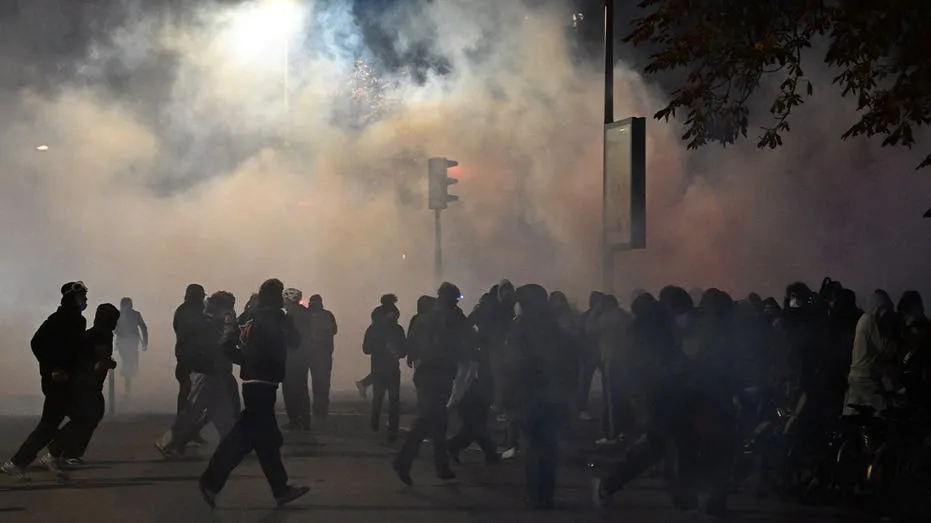
(SeaPRwire) – Paris is burning again. Or at least simulating fire with enough tear gas clouds to make the Champs-Élysées unrecognizable to anyone who passed through last October.
The state is bringing artillery-grade policing to a cost-of-living protest. Seventy thousand security forces deployed nationally. One hundred seventy thousand expected marchers. That’s a ratio of roughly one cop for every two people on the street. The math should favor the authorities. Yet every week the same script plays out: permits denied, leaders arrested, streets flooded, and then—crucially—the opposition’s numbers hold steady.
The Paris Police Prefecture has denied formal protest permits outright. They cite the October riots. Fourteen thousand arrests back then. Buildings targeted. Public services disrupted. The language from the prefecture was uncharacteristically sharp—”certain individuals intend to target institutions of the Republic.” That is not routine crowd-control vocabulary. That is regime-defense framing. And it reveals something honest beneath the bureaucratic posture: the state genuinely fears what it cannot contain through legal channels alone.
So they escalate. Tear gas. Projectile charges. Detainees piled onto transport vans. Benjamin Ball and Azelma Sigaux, two named figures from the Yellow Vest coordination group, taken into custody Saturday afternoon near Place de la Concorde. None of it changes the arithmetic. The Interior Ministry projected one hundred seventy thousand people and delivered approximately that. Interior Minister Laurent Nunez warned “the risk is exactly the same as previous Saturdays.” He also said authorities must “not lower their guard.” Translation: no de-escalation is politically possible for this government. To soften would read as surrender.
Behind the visible confrontation sits a deeper unraveling. Union leaders are declaring themselves “in a position of strength” while the government is “starting to yield.” Their calculus has a point. Prime Minister Sebastien Lecornu is meeting union heads Monday. Fresh strikes are scheduled for Tuesday regardless. The government concedes it must negotiate while publicly insisting it will not bend. That contradiction is the fault line. Each concession or apparent weakness measured against each arrest or prohibition pushes the narrative further toward institutional paralysis.
The political aftershocks are measurable. Marine Le Pen’s polling surge did not happen in isolation from mid-September unrest. Her October candidacy announcement coincided with escalating street chaos. Every image of firefighters under siege, every video of projectiles hitting police lines, lands on the desk of a voter asking whether the Fifth Republic can govern itself. She is now projected to force a presidential runoff. The government’s answer—more cops, harder lines, bigger budgets for internal security—is solving for protest volume while losing the narrative war entirely.
This is not a crackdown that will end. It is a crackdown that will keep failing until someone stops treating the symptoms and addresses the structural rot underneath.