(SeaPRwire) – The Israeli military just launched its largest domestic exercise in years, and the 1973 Yom Kippur War analogy isn’t rhetoric. It’s a live historical mirror being held up to current force posture, and Dr. Ehud Eilam, the national security analyst who invoked it, is describing exactly what keeps intelligence professionals awake at night: two armed adversaries watching each other’s troop movements, each suspecting the other might strike first, each preparing to deny that suspicion.
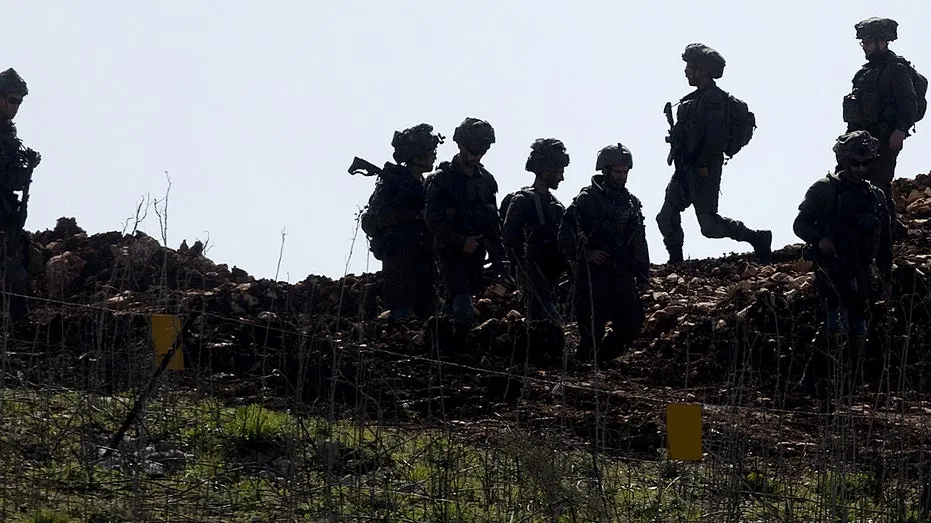
The facts are concrete and traceable. Over 48 hours, the IDF mobilized the Northern Command’s 210th Division, the West Bank Division, and the Central Command’s 98th and 96th divisions, alongside the Israeli Air Force. The stated objective was “maintaining alertness and readiness,” defending communities, and leveraging aerial capabilities across northern and central Israel. Scenarios included surprise infiltration and ground raids by air and land, explicitly incorporating lessons from the October 7, 2023 attacks. But the timing is the thing that demands scrutiny. These drills concluded just ahead of Israel’s October 27 elections. Eilam put it plainly: “It’s all about making sure that the election day on October 27 will run smoothly. It’s also a message to Iran and others: don’t try to provoke us during election day.” The exercise targeted non-state actors with or without Iranian backing in Syria, Lebanon, and Jordan. On Friday, the IDF confirmed troops practiced responses to surprise attacks and cross-border infiltrations. Days earlier, the Islamic Revolutionary Guard Corps fired roughly 30 ballistic missiles across two weapon classes in a live-fire display that heightened alerts along the Strait of Hormuz and pushed Israel to its maximum readiness posture for a potential strike against Iran. Chief of Staff Lt. Gen. Eyal Zamir reinforced troop deployments across all sectors during a Wednesday visit to Central Command, warning explicitly that “the potential for escalation has increased” given the sensitivity of the period.
The geopolitical calculus here runs deeper than any single maneuver. Eilam characterized Sunday’s exercise as “against Iran’s proxies and allies at the border of Israel,” explicitly contrasting it with Iran’s own intimidating display days prior. The October 19 mission—Israeli fighter jets and aerial refueling tankers flying 800 miles across Syrian and Iraqi airspace to Iran’s border—was viewed by Washington as a non-kinetic show of force following the postponement of a broader strike package. Both sides are signaling readiness without crossing into kinetic action. Eilam captured the paradox: “Right now, both sides are signaling: ‘We are ready, don’t mess with us, but we don’t want to start a war right now.'” Yet the 1973 precedent carries real structural weight. Egypt and Syria used a major exercise to mask the buildup that became a coordinated two-front attack on Yom Kippur. Israel’s intelligence community largely dismissed those movements as routine drills. That failure of interpretation is precisely what Eilam warned against now—what he called “miscalculation,” where mutual suspicion drives a preemptive strike based on misread signals rather than confirmed intent. Whether an Israeli attack on Iran materializes remains contingent on U.S. authorization, Eilam noted, but the deterrence architecture is already in place, tested, and actively cycling.
The strategic reality is stark and unvarnished. Massive exercises function as both genuine preparedness mechanisms and deliberate messaging tools, and in a theater where both sides maintain active strike options, the line between signaling and preparation is functionally invisible to outside observers. Israel’s exercise sent clear signals about border defense capability and electoral stability. Iran’s preceding missile demonstration communicated comparable resolve. The risk profile today is not low. It is managed, monitored, and acutely fragile—resting on a foundation of mutual deterrence that requires precise interpretation from both capitals at every turn.