(SeaPRwire) – By: Julian Holbrooke
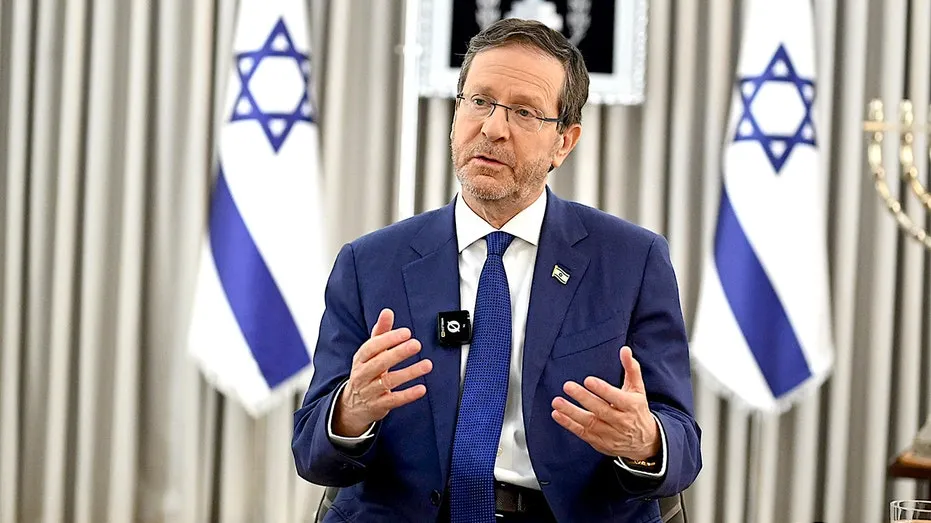
Israeli President Isaac Herzog’s exclusive Jerusalem interview is no casual diplomatic chat. It is a carefully scripted pressure play aimed directly at US audiences. He lashes out at New York Mayor Zohran Mamdani in uncommonly harsh terms. He frames Iran as a decades-long threat to global stability. He heaps unreserved praise on former President Donald Trump. The surface talking points follow familiar Israeli government lines. The underlying goal is far more urgent: to stop the erosion of bipartisan US support for Israel. That erosion has spread fast among younger voters and Democratic lawmakers in recent years.
On the surface, Herzog’s attack on Mamdani is a defense of Israeli self-determination. He calls Mamdani’s July 21 social media video antisemitic and dangerous. The video labeled Prime Minister Benjamin Netanyahu a war criminal and architect of Palestinian genocide. Herzog says such rhetoric endangers New Yorkers and risks irreversible damage to the city’s ties with Israel. He frames US-Israel ties as rooted in shared biblical values, above partisan political shifts. He blames well-funded social media disinformation, especially on TikTok, for declining support among young Americans. He invites every young American to visit Israel to see the country beyond online smears. He frames Israel as a hub of innovation in health, energy, science, agriculture, and food security. The real calculation here is more tactical than moral. The Mamdani takedown is a proxy fight against rising progressive Democratic criticism of Israel’s Gaza campaign. Framing that criticism as antisemitism shifts the terms of US public debate in Israel’s favor. The biblical values line targets evangelical Christian voters, a core Republican base that has long backed Israel. The TikTok disinformation claim deflects anger away from Israeli policy and onto shadowy external forces. The visit invitation and innovation pitch are classic soft power tools. They target the exact demographic where support for Israel has dropped most sharply.
Herzog’s official remarks on Iran and US politics follow a clear pro-Israel policy script. He calls Iran a global threat that diverts its people’s food and money to terror networks worldwide. He cites Tehran’s missile program, Strait of Hormuz activity, nuclear ambitions, domestic repression, and proxy groups as direct threats to US national security. He adds that many Americans have been killed by the Iranian regime. He notes the Feb. 28 joint US-Israel military campaign, dubbed Operation Epic Fury by the Trump administration and Operation Roaring Lion by Israel, before Trump announced a ceasefire on April 7. He credits Trump with the 2018 decision to relocate the US embassy to Jerusalem, and subsequent recognition of Israeli sovereignty over the Golan Heights. He praises Trump’s endless backing of Israeli positions and immense friendship with the country. He says Trump “put his foot down” and negotiated brilliantly to help free 255 hostages held by Hamas after the Oct. 7, 2023, massacre. He calls the $1.15 trillion fiscal year 2027 NDAA’s near-total Democratic rejection – just six Democratic votes in the House – a “red light” but not the end of bipartisan support. He references his address to a joint session of Congress three years prior, marking Israel’s 75th independence anniversary, where he received nearly 30 standing ovations. He acknowledges Israel has made mistakes, even as he blames well-funded campus campaigns for driving anti-Israel sentiment. He pays tribute to late Sen. Lindsey Graham, who he says understood Israel’s role in protecting Western values and was not afraid to voice friendly criticism. He highlights Israel’s 184,200-strong Christian population, which made up 1.9% of the total population and grew 0.7% in 2025, noting interfaith dialogue is a top priority. The unstated goals here are twofold. First, to lock in the Trump administration’s hardline Iran policy, even after the April ceasefire. Second, to hedge against partisan shift by courting both Republican lawmakers and skeptical younger US voters. The Graham tribute reinforces longstanding GOP support for Israel, while also signaling openness to legitimate criticism. The Christian community outreach is another targeted play for evangelical support, a key pillar of the Republican base.
The geopolitical pendulum of US-Israel relations is shifting faster than Herzog’s public remarks admit. Bipartisan support is no longer a default, even with a sympathetic administration in the White House. Soft power pitches and rhetoric about shared values will not reverse policy-driven criticism on their own. Israel will need to pair its public relations push with tangible movement on Palestinian security and statehood to stem the erosion.
Author bio: Julian Holbrooke, an international relations analyst and regular contributor to leading European daily newspapers.