(SeaPRwire) – By: Julian Holbrooke
Seventy-two migrants are dead in Ceuta, and the political machine is already grinding their deaths into talking points. This isn’t just a border crisis—it’s a masterclass in how European leaders prioritize power over people. Far-right figures like Spain’s Santiago Abascal are branding the migrant surge an “invasion,” a loaded term designed to stoke fear rather than confront the root of the problem. The bodies floating off Ceuta’s coast aren’t evidence of an attack. They’re evidence of systemic failure, and politicians are using them to score political points.
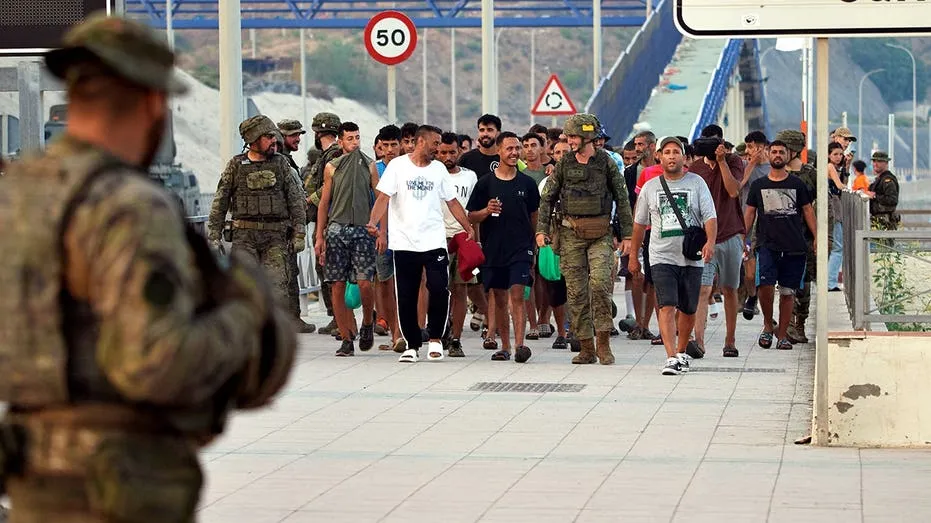
Official reports detail a chaotic, unmanageable influx. Spanish authorities say between 50,000 and 60,000 migrants—mostly young men—crossed into Ceuta over several days. The tiny territory’s population of roughly 84,000 swelled by more than half, straining every local resource. Seventy-two people died: many drowned while trying to cross the narrow strait, others were crushed in a stampede near a breakwater barrier. Rescue teams spent the weekend searching for more victims in the choppy waters. But the subtext here is impossible to ignore. The border wasn’t just breached; it was neglected. For days, authorities failed to deploy adequate resources to prevent the rush or manage the crowds. The “chaos” they decry is a direct result of their own inaction, not an organized assault on Spanish sovereignty.
Officials frame the aftermath as a necessary crackdown. Far-right leaders across Europe are calling for tighter border security and the immediate removal of all remaining migrants. Abascal visited Ceuta on Sunday, blasting the Spanish government for failing to protect its borders. Even European Parliament member Alvise Pérez faced angry counterprotesters during a rally, forcing him to take shelter in a bar before police escorted him away. But local residents aren’t buying the official line. Karima Abenaz, a French national living in Ceuta with family in Morocco, told Reuters she’s heartbroken by the deaths. She says migrants have food and shelter at home—they just lack decent jobs. Instead of risking their lives, she argues, they should demand better from their own government. Mohamad Abdelkader Driss, a local waiter, told the Associated Press the blame lies entirely with authorities. “If you open the border, of course everyone comes in,” he said. “The young men aren’t to blame.” The US State Department raised its travel advisory for Ceuta to Level 3, warning of unpredictable security. But this move is less about protecting travelers and more about avoiding association with a crisis that exposes Europe’s broken immigration policies.
Europe’s geopolitical pendulum is swinging hard toward border hardening, but this will only make future crises deadlier. Tighter fences and more patrols won’t fix the lack of economic opportunity in Morocco that drives migrants to risk their lives. Instead, it will push them to take even more dangerous routes—crossing wider stretches of sea, or relying on smugglers who care nothing for human life. The rift between Spain and Morocco will deepen, as both sides use the crisis to score domestic points. Ceuta’s reputation as a model of interfaith coexistence—where Christian, Muslim, Jewish, and Hindu communities live side by side—has been tested. Local residents worry about security and fear another mass crossing could happen at any time. Unless European leaders stop weaponizing the crisis and start engaging with Morocco to address economic inequality, Ceuta’s bloodbath will repeat itself, again and again.
Author bio: Julian Holbrooke, an overseas international relations analyst contributing to major European dailies, specializes in border policy and humanitarian crisis dynamics.