(SeaPRwire) –
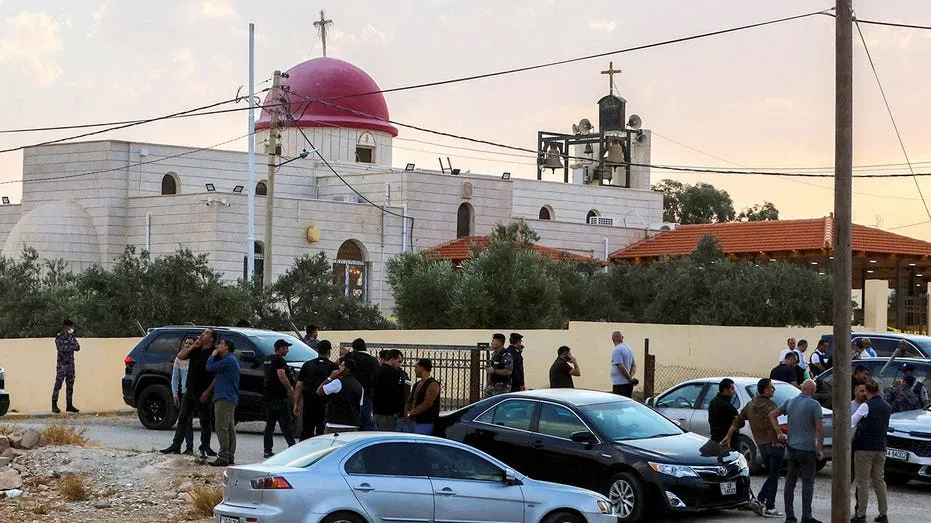
A funeral is supposed to be the safest gathering a community can hold. Grief disarms people. That is precisely what made Friday’s attack on the Greek Orthodox church in Karak so coldly efficient, and so strategically alarming. Multiple gunmen walked up to a Christian house of worship during a burial service and killed at least seven people, injuring 34 more. State television footage described by the Associated Press shows the method: two men with pistols firing as they approached, a third appearing with a semiautomatic rifle, all three then moving toward the church. This was not a riot or a spontaneous eruption. It was a choreographed strike on the softest target imaginable, in a town about 110 miles south of Amman that is home to a minority Christian population. For a country that has spent years selling itself as the stable address in a burning neighborhood, this is the nightmare file opening again. Jordan’s security anxiety has never been about armies at its borders. It is about fractures inside the house, and attackers who understand exactly where the load-bearing walls are.
The facts as established so far are stark and, frankly, incomplete. The government statement called the attack the work of “unknown assailants” and declined to say whether any gunmen were captured or killed, noting only that investigations are proceeding “at full speed.” Maj. Gen. Obeidallah Maaytah, the director of public security, confirmed 27 of the wounded remain in treatment. King Abdullah II moved fast to frame the event, writing on X that the “terrorist attack against Karak will be met with the harshest retaliation” and insisting that those who think they can “divide Jordanians with their bullets have no chance in the face of our unity.” Read that language carefully. The king is not merely mourning; he is pre-empting the attack’s obvious purpose. When a monarch leads with “all Jordanians, from north to south, are partners in land and fate,” he is telling you what the shooters were actually targeting: the seam between Muslim majority and Christian minority. And Karak carries a dark precedent. In 2016, gunmen ambushed police there in a series of attacks, including at a Crusader castle popular with tourists, killing 10 people, among them seven officers, before security forces ended a long standoff by killing the attackers. Same town. Same logic of symbolic, destabilizing violence. The only thing new is the target selection, which has shifted from state security and tourism to sectarian fault lines. Meanwhile, Iraqi Foreign Minister Fuad Hussein called his Jordanian counterpart to affirm “Iraq’s solidarity with Jordan in the face of terrorism,” a reminder that Amman’s neighbors are watching nervously, because instability in Jordan rarely stays in Jordan.
Now consider the geopolitical cost ledger, because that is where this story gets expensive. Jordan survives on a reputation premium: tourism revenue, Western security partnership, and donor goodwill all depend on the perception that the kingdom has its internal security locked down. An unresolved church massacre, with assailants unaccounted for, corrodes that premium faster than any border skirmish could. The “iron fist” rhetoric buys time, but the investigation is the real test. If the attackers turn out to be a locally rooted cell, the state faces an internal radicalization problem that retaliation alone cannot fix. If they came from across a border, Amman inherits an escalation decision it does not want. Either way, the king’s unity message reveals the endgame the attackers were playing for: provoke an overreaction, force the state to police its Christian minority visibly, and let suspicion do the recruiting for them. The countermove is unglamorous but decisive. Protect Karak’s churches quietly, publish investigation results fast and credibly, and let the funeral victims’ families, not the security services, lead the public mourning. States win these contests by being boring in their competence. Jordan has maybe a fortnight to prove it still can be.