
By: Lucas Caldwell
(SeaPRwire) – Hollywood remains trapped in a costly intellectual property paradox. Studios spend millions chasing official comic book adaptations. They lock these properties in development hell for decades. Meanwhile, agile creators bypass the bureaucratic red tape entirely. They synthesize the core mechanics of these stories. They build streamlined, unencumbered spiritual successors. These unauthorized iterations capture the cultural zeitgeist first. They render the official, slow-moving corporate projects obsolete before they even launch. This is not just creative borrowing. It is a highly efficient form of market preemption. It proves that execution speed and narrative utility always beat formal licensing agreements in the modern attention economy.
Look at the historical timeline of Frank Miller’s comic masterpiece, Ronin. The six-issue series ran from July 1983 to August 1984. It merged feudal samurai lore with a dystopian, post-apocalyptic New York. The plot followed a telekinetic named Billy. He was possessed by a cursed samurai spirit. He fought a shapeshifting demon named Agat using a magical sword. In July 1998, director Darren Aronofsky signed on to adapt it for New Line Cinema. He had just finished his debut film, Pi. Yet the project quickly stalled. Aronofsky abandoned the adaptation. He chose to direct Requiem for a Dream instead. The official IP remained completely frozen.
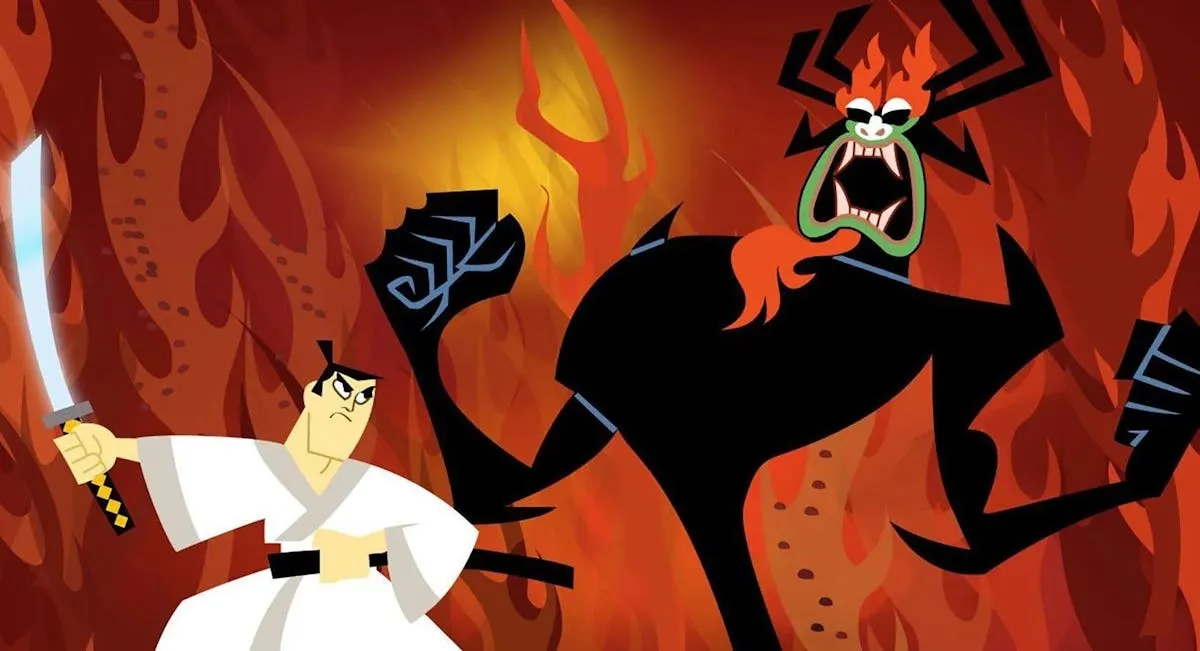
During this exact window, animator Genndy Tartakovsky pivoted. His hit show Dexter’s Laboratory ended its original run on June 15, 1998. He directed The Powerpuff Girls until 2001. Then he launched Samurai Jack. The animated series mirrored Ronin almost perfectly. An unnamed prince voiced by Phil LaMarr used a magic katana. He fought a shapeshifting demon named Aku, voiced by Mako and Greg Baldwin. Aku flung him into a retrofuturistic dystopia. Tartakovsky admitted Ronin was a major influence. The show won multiple Emmys over five seasons. Later official Ronin attempts by Sylvain White in 2007 and Syfy in 2014 both collapsed.
This creative preemption highlights a fundamental rule of media distribution. Tartakovsky succeeded because he simplified the product. Miller’s Ronin is a dense, highly complex text. It features mature themes, extreme violence, and difficult narrative twists. These elements make a direct cinematic translation incredibly risky for risk-averse studios. Tartakovsky extracted the core aesthetic appeal. He kept the samurai-in-the-future premise. He retained the magical sword and the demonic nemesis. He stripped away the convoluted psychological subplots. He packaged it into a highly digestible, visually stunning animated format. He solved the adaptation problem by rewriting the rules of the medium.
The commercial success of Samurai Jack created an insurmountable barrier for future Ronin projects. Once a spiritual successor dominates the market, the original IP loses its unique selling proposition. Any official Ronin film now faces a marketing nightmare. General audiences will view it as a live-action clone of Tartakovsky’s work. They will not realize Miller wrote his comic first. The copy has effectively displaced the original in the public consciousness. Studios cannot justify spending eighty million dollars on a project that looks derivative of a free Adult Swim cartoon. The market window for an official adaptation has closed permanently.
As global media platforms continue to fragment rapidly and legacy comic book publishers struggle to monetize their aging back catalogs, the ultimate victors in this digital attention economy will never be the slow-moving conglomerates holding the dusty legal deeds, but rather the agile independent animators and digital native creators who can successfully strip-mine classic narratives, execute them flawlessly on modern streaming channels, and capture the audience’s loyalty long before the corporate machinery can even greenlight its first official production budget.
Author bio: Lucas Caldwell, a tech opinion leader with millions of followers on X/Twitter, specializing in digital media disruption and creative industry dynamics.