


(SeaPRwire) –
The mid-1980s effects renaissance left a generation of filmmakers stranded when the wave broke. But during that brief window — before the video rental market peaked at $6 billion and before the LA makeup studio count ballooned from five to roughly seventy — there was a peculiar economic alignment that made the impossible commercially viable. “From Beyond,” directed by Stuart Gordon and produced by Brian Yuzna, turns forty this month. It is not merely a film that survived. It is a fossil of a specific production ecology that no longer exists, and examining its remains tells you more about creative industry economics than any corporate merger announcement ever will.
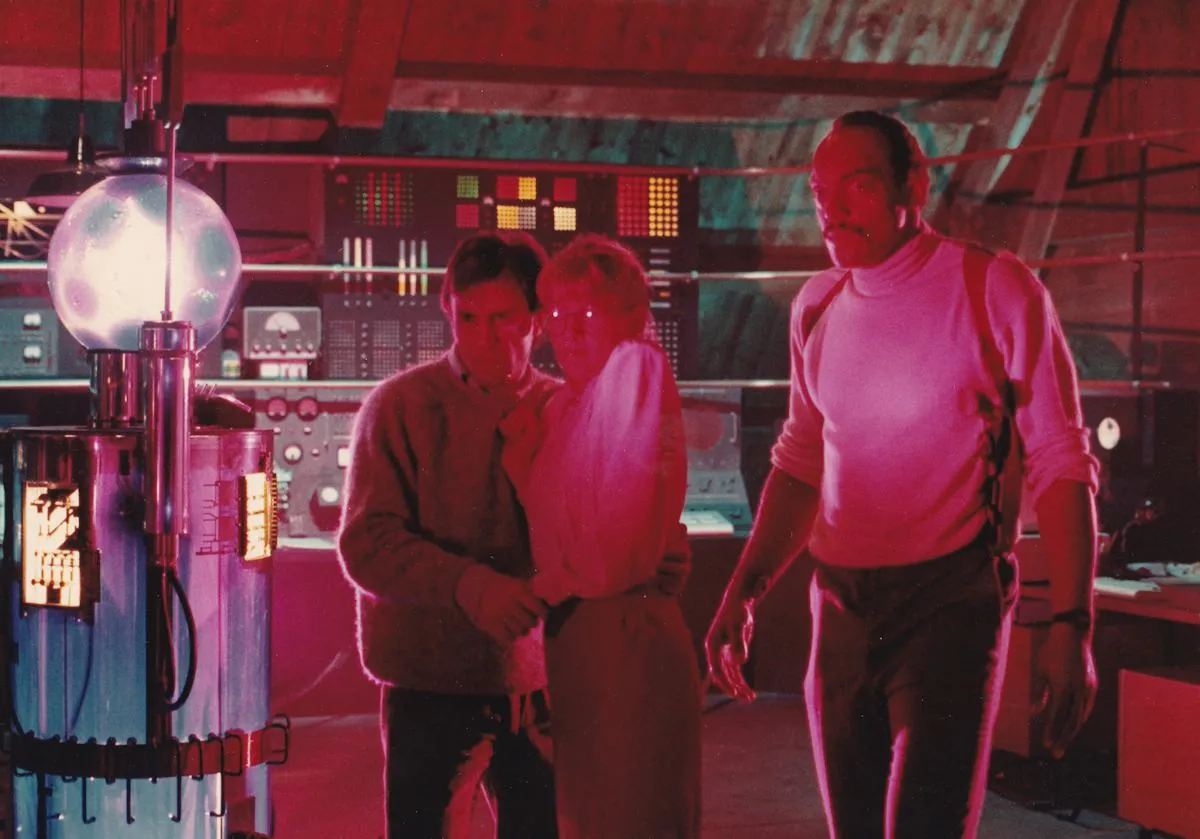
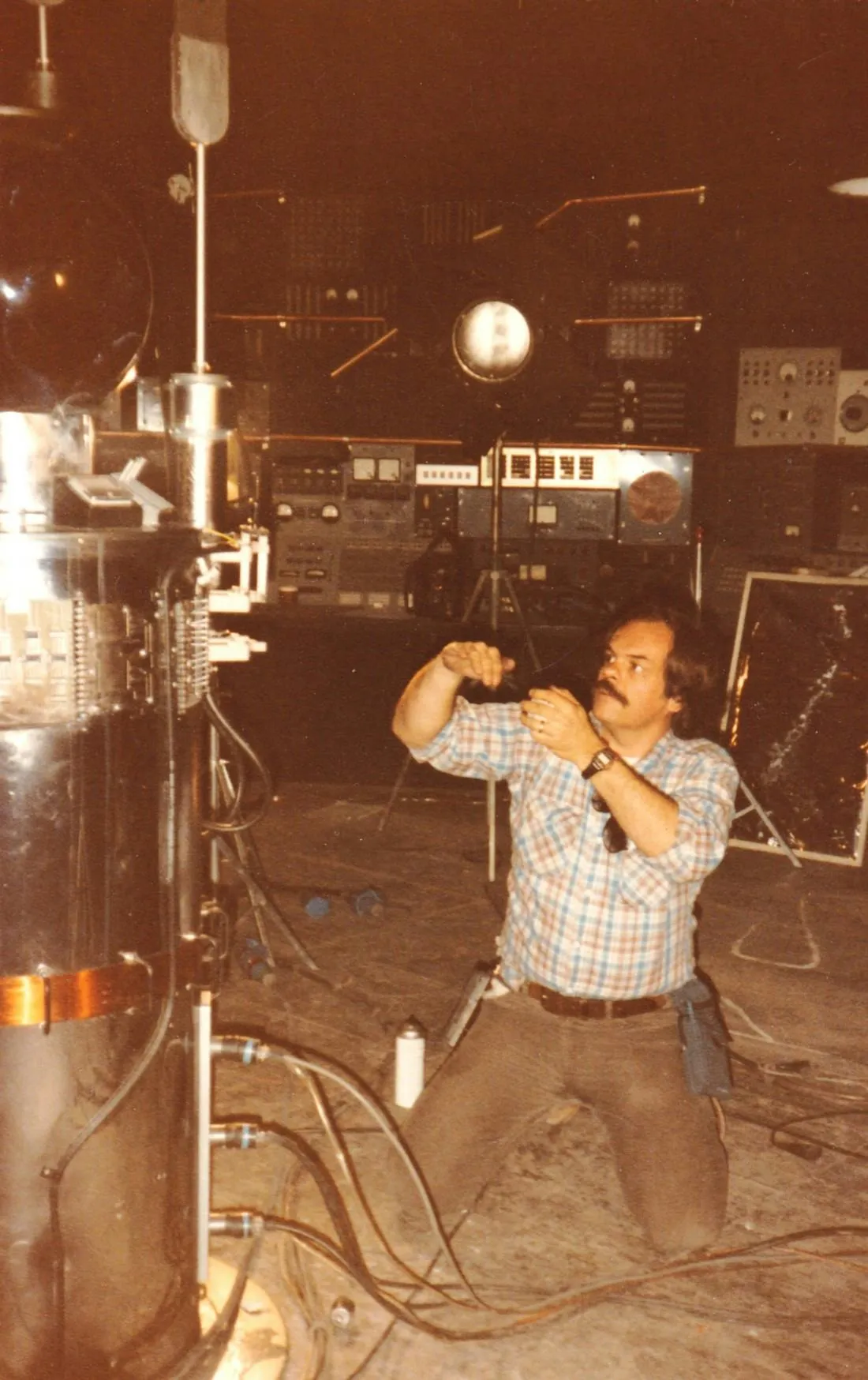
Brian Yuzna’s personal situation dictated the film’s creative DNA. Four children, low-budget filmmaking, minimal producer fees — the math was simple and brutal. You either churned out volume or you starved. “You don’t get much of a fee; that means you’ve got to make a lot of movies,” Yuzna told Inverse. That pressure generated the obsessive creative density that defines his partnership with Gordon. “From Beyond” inherited the DNA of “Re-Animator” — same core team, same set just outside Rome where Gordon had just shot “Dolls,” same philosophy of body horror pushed to its most extreme logical conclusion. But the adaptation strategy was not accidental. Yuzna chose the Lovecraft source material deliberately because the Resonator — a device that stimulates the pineal gland to peer through cosmic barriers — gave the horror a technological framework. “We went with From Beyond because it had the metal of the machine,” he said. The sci-fi lean made it commercially accessible in a way that pure cosmic horror alone might not have. The short story, as he admitted to Inverse, “was used up before we got to the opening credits.” What replaced it was a maximalist synthesis of horror tropes — mad scientists, out-of-control experiments, otherworldly creatures — fused into what Yuzna called a spiritual successor and, simultaneously, part of a double feature with its predecessor. The effects supervisor John Naulin described the difference between the two films succinctly: “replace gallons of blood with vast amounts of slime.”
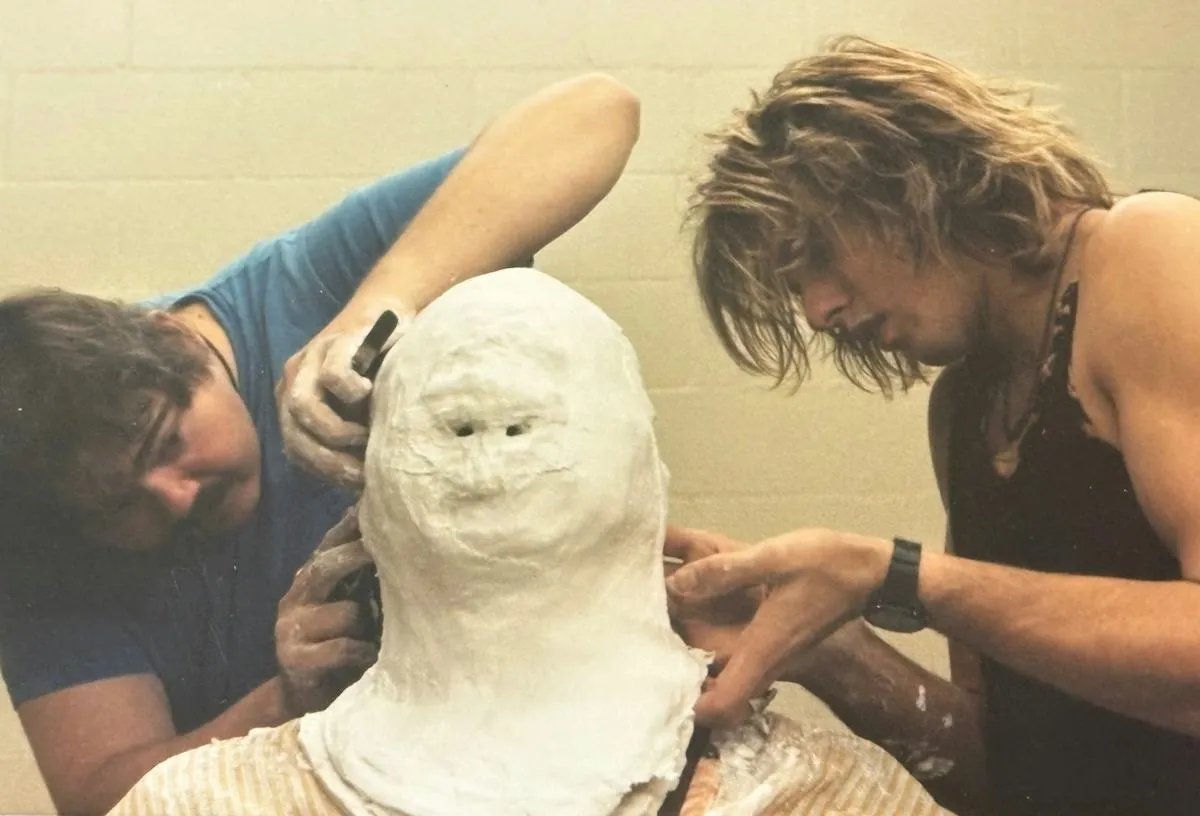
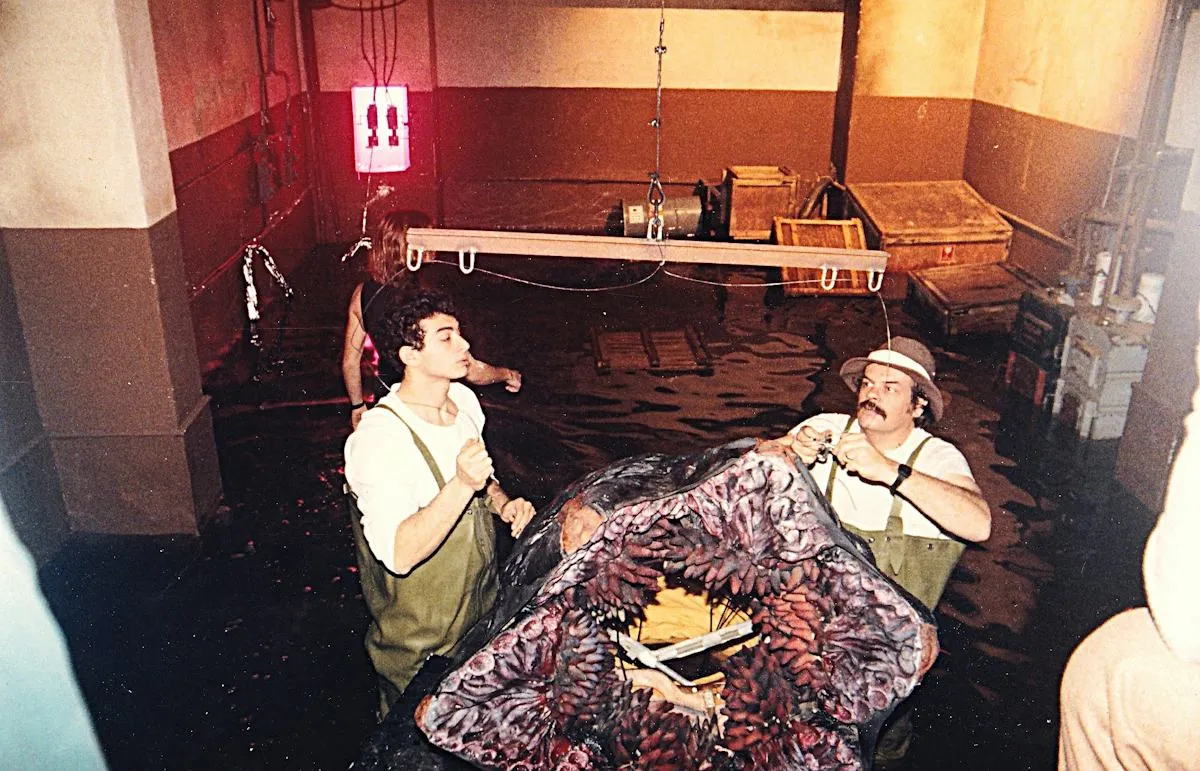
The production logistics were a lesson in resource multiplication. No single makeup shop could handle the effects density of “From Beyond,” so Yuzna assembled a four-workshop team — John Naulin, Mark Shostrom, the late John Buechler, and Anthony Doublin. All but Shostrom had worked on “Re-Animator.” Shostrom, meanwhile, found his way onto the project by a kind of serendipitous networking — wandering onto an adjacent lot during pickups for “The Supernaturals,” discovering a headless man with intestines spilling from its body, learning the responsible team would be making “From Beyond,” and then ferrying dummies he’d built for “A Nightmare on Elm Street 2” across Los Angeles to Gordon and Yuzna’s office. “This is what I can do and I’m your guy,” he said. The coordination apparatus was analog and relentless — Doublin shuttled between workshops during preproduction, faxes and phone calls crisscrossed between the shops and the Italian set. This industrial infrastructure existed because the video boom was literally pouring money into independent production. “It really fueled the rubber monster era,” Shostrom said. Companies were “just hitting the ground running and trying stuff out,” as Yuzna put it. The experimentation bred an eclecticism that defined the period’s output and gave Gordon — a former transgressive theater artist — a uniquely fertile creative environment.
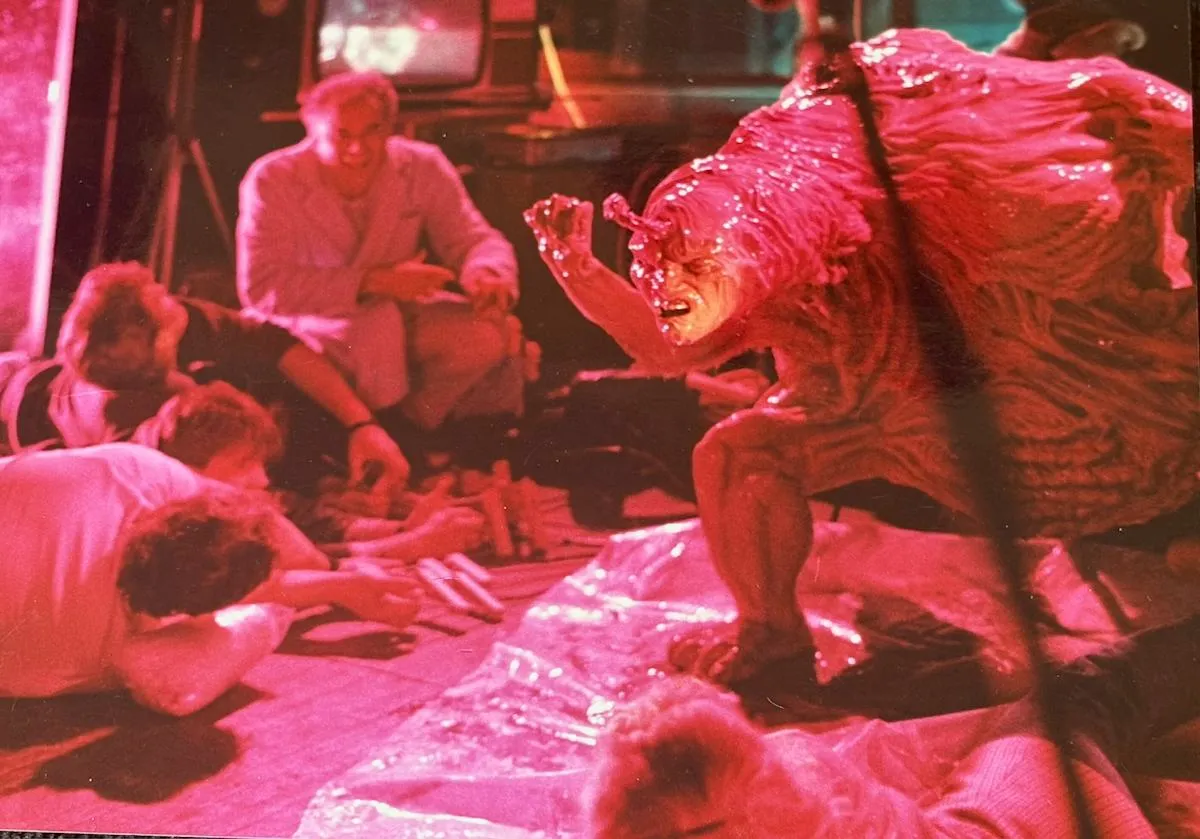
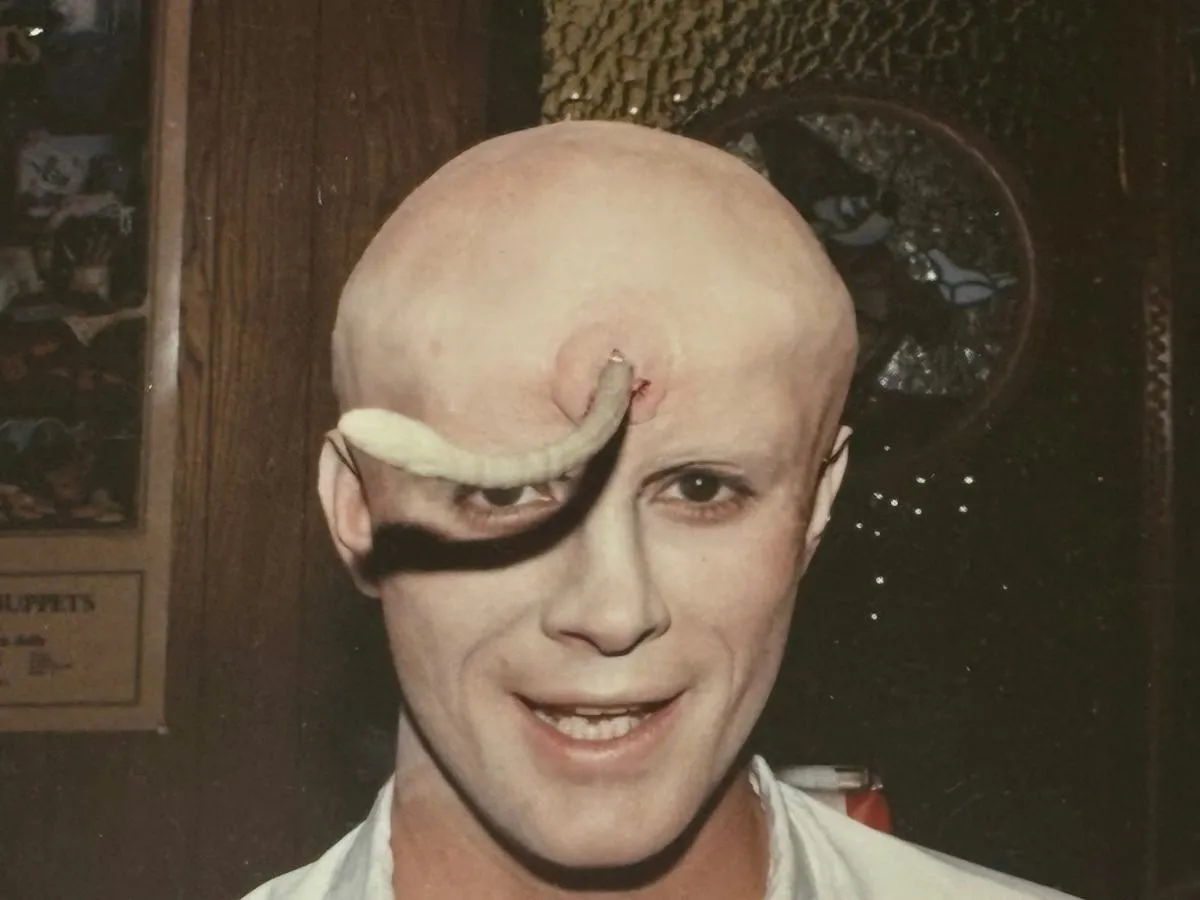
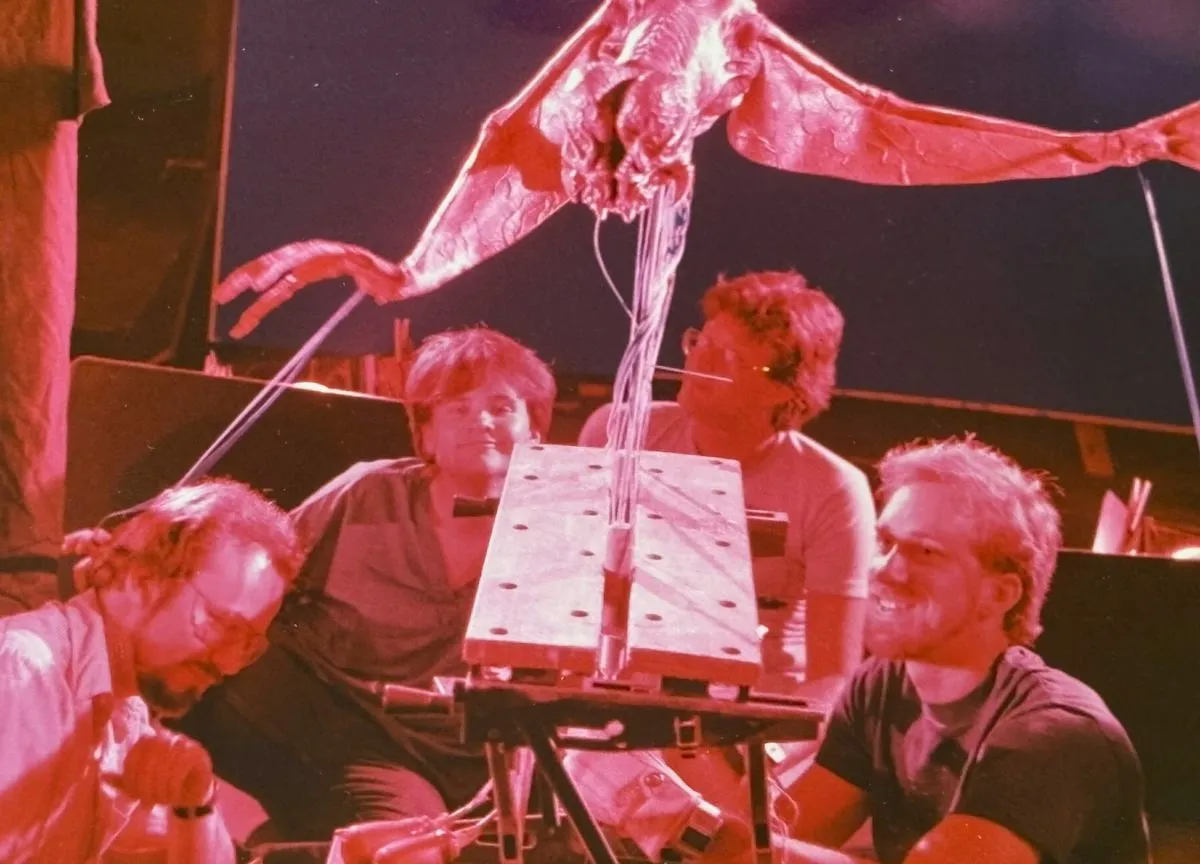
The creative choices within that environment explain why the film still lands with visceral force. Gordon’s ability to extract radical audience experiences from Lovecraft’s sparse prose earned him the reputation, as Patton Oswalt described it, of being “one of the best interpreters of Lovecraft.” Naulin added that Gordon had “the ability to pierce the willing suspension of disbelief required to make that hidden world very real.” The specific craft choices — eels cast in hot-melt vinyl from Naulin’s sculpts, each with an internal armature for aerial movement, lit and shot by Doublin for compositing onto the Resonator shots — represent a level of physical detail that CGI-era effects rarely bother with anymore. Dr. Pretorius’s transformations escalate through the film, with Shostrom handling the earlier stages and Buechler the final forms. One prosthetic — a heavy, rigid plastic foam strapped to Ted Sorel’s torso to simulate flesh melting away — was, in Shostrom’s words, “about as unpleasant as you can get.” Sorel, nephew of the makeup artist Jack Pierce who worked on “Frankenstein” and “The Wolf Man,” reportedly welcomed the destruction. When the first removal of the effect tore out his chest hair, he was unbothered. “It’s okay, it’s just my chest hair. Let’s do it!” The film’s later shift into what scholar Lindsay Hallam calls “Sadean” territory — Pretorius unbothered by his own bodily dissolution, turned instead toward the sensual pleasures of the beyond — is a deliberate commercial and thematic calculation. Yuzna was frank about it. “We’ve got to get the sex in it,” he said. “He’s not only a sensualist, he’s an S&M kinky kind of guy.” That unapologetic clarity of purpose is what gives “From Beyond” its distinctive edge and explains its outsized cultural longevity relative to its production cost.
The commercial end-game is clear enough to state without sentimentality. The video rental boom that bankrolled this kind of independent effects filmmaking collapsed. The seventy makeup studios consolidated into a fraction of their former number. The independent workshop coordination model that produced “From Beyond” no longer exists as a viable industrial category. What endures is the cultural artifact — a film so thoroughly saturated in its moment’s creative excess and economic pressures that it achieved a kind of preservation by contradiction. The production conditions that made it possible were temporary. The audience response it triggered was not. For anyone tracking how creative industries generate lasting value, the pattern is instructive. Durable cultural products tend to emerge from compressed, high-velocity windows where resource scarcity forces radical innovation and market hunger rewards risk-taking more generously than it rewards safe replication. “From Beyond” was not lucky. It was positioned — by accident of schedule, by personal necessity, by the sheer gravitational pull of a market in explosive growth — at the intersection of creative ambition and commercial receptivity. That intersection closes more often than it opens. The film that emerges from it lasts longer than anyone on the set could have imagined.