(SeaPRwire) –



By: Silas Sterling
Warning: Spoilers for Spider-Man: Brand New Day follow.
Marvel’s marketing for *Spider-Man: Brand New Day* leaned hard on two core hooks. The first was Tom Holland’s return as Peter after the *No Way Home* memory wipe. The second was the long-awaited first official MCU Jean Grey appearance. Fan spaces spent six months picking apart trailer frames for mutant Easter eggs. Most viewers walked into theaters expecting a fluffy, table-setting team-up entry. They got the standard Peter Parker arc. Tricked by a shadowy government agency, he makes a messy choice, makes amends, helps the misunderstood stranger escape. The audience I sat with cheered when Jean walked off into the New York treeline. Hardly anyone stuck around to unpack the device Peter cobbled together in his dorm room. That throwaway gadget is not a one-off plot fix. It is the single darkest lore beat the MCU has dropped in a decade.
Let’s lay out the on-screen facts without the fanfare. The film puts Peter between two overlapping crises. Damage Control, led by Tramell Tillman’s Bill Metzger, recruits him to track and capture Jean Grey. His own spider DNA is spiking, warping his powers in painful, unmanageable ways. He pulls design notes from Bruce Banner’s old Hulk-suppression work. He builds a portable genetic inhibitor tuned to shut down anomalous gene expression. The device works exactly as designed. He uses it to subdue Jean during their first chaotic fight. He uses it to dial back his own mutating hormones long enough to think straight. When he uncovers Metzger’s real plan, he destroys the field unit. The longtime X-Men villain aims to lock Jean up and run brutal experiments. He helps Jean escape, flushes his own inhibitor doses, lets his powers evolve naturally. He walks away thinking he fixed his mistake. He leaves every schematic, test result, and calibration file on Damage Control servers.
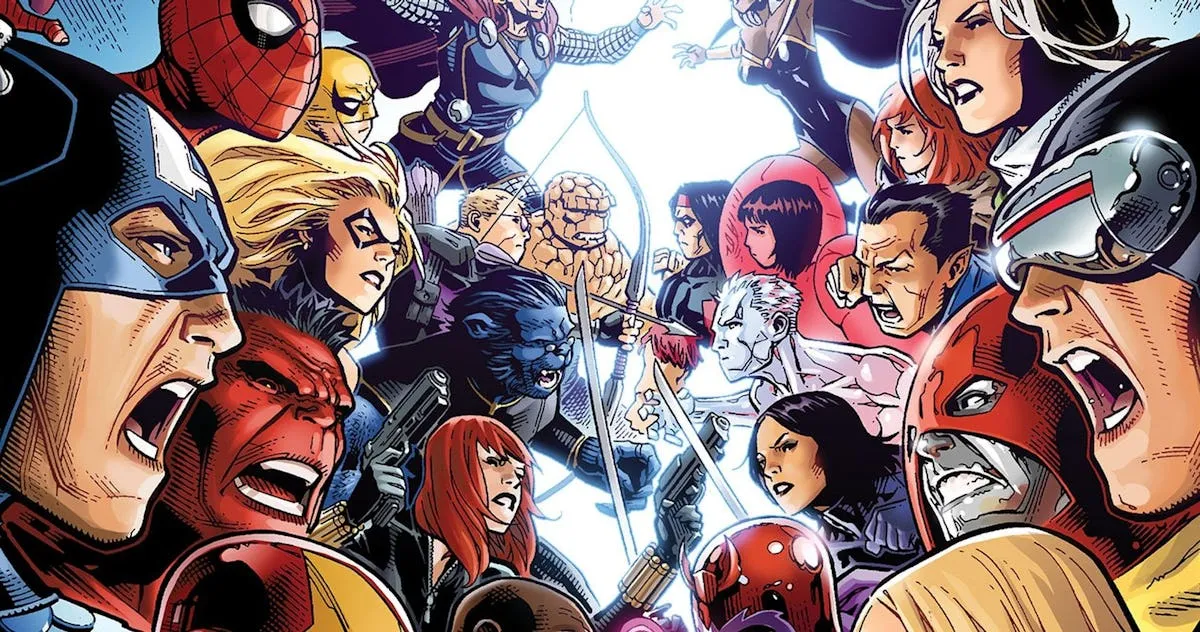
Longtime X-Men fans will recognize this tech instantly. It is the direct prototype for the mutant inhibitor collar. Chris Claremont and John Byrne introduced the collar for 1981’s *Days of Future Past*. That landmark story follows a dystopian 2013 where Sentinels lock mutants in internment camps. The collars are the first line of control, stripping captives of their powers entirely. Kitty Pryde averted that specific timeline by sending her mind back to her younger body. The collars never left the canon, though. They became the go-to weapon for every anti-mutant force in 60 years of comics. Alien threats like the Phalanx used them during incursions, including the attack that assimilated Jean’s sister Sara. Violent mutants like Apocalypse deployed them against rival factions. Human bigots remained the most frequent users of the tech. Bolivar Trask used them to fill Sentinel prison camps. William Stryker strapped them to captives during his paramilitary purges. Cameron Hodge’s radical group The Right deployed them in targeted hits. Even fellow heroes turned to the tech during cross-species conflicts. The Inhumans used similar devices when Terrigen Mists turned lethal to mutants. The Avengers deployed them during the Phoenix Force clashes that sparked 2012’s *Avengers vs X-Men*.
Fan forums lit up within hours of the film’s Thursday previews. Most of the early discourse fixated on Jean’s costume, or hints of Xavier’s school in her dialogue. Almost no one connected the inhibitor prototype to Marvel’s long-game slate plans. Rumors of an *Avengers vs X-Men* adaptation have swirled for years. Previous *Dark Phoenix Saga* adaptations flopped hard, trapped in isolated Fox X-Men silos. None of those films got to play out conflict in a world full of other heroes. The MCU can merge the two storylines seamlessly now. Jean’s eventual Phoenix possession will spark panic across the existing Avengers roster. Someone in Damage Control will pull Peter’s old inhibitor files off a backup server. They will pitch the tech as a “humane” way to stop an out-of-control Jean. The X-Men will see the tech for what it is: a permanent weapon to erase mutant identity. Peter will be stuck dead center, caught between stopping a cosmic threat and enabling genocide. Marvel does not make these plot choices by accident. Most viewers walked in expecting the film to simply confirm mutants exist in the MCU. No one expected the studio to anchor mutantkind’s entire arc of oppression to Peter’s small, panicked choice. It gives every Spider-Man fan a personal stake in the X-Men’s fight for survival.
This is the part that leaves a bad taste. The X-Men have always stood apart from other Marvel heroes. Their stories are not just about punching supervillains. They are about the fear majority groups hold for people they see as different. They are about the casual cruelty of state power targeting a marginalized group for eradication. For decades, those stories centered the mutants themselves. Their pain, their resistance, their tight-knit community. Now the MCU is framing the start of that centuries-long fight as a mistake Peter Parker made when he was 19. The X-Men will show up, eventually, angry, fighting for their people. They will be framed as antagonists first, standing against the Avengers fans have followed for 15 years. The inhibitor collars will roll out across every future MCU project. Peter will get his redemptive arc, where he fights to destroy the tech he built. The mutants will never get to tell their own origin story on their own terms.
*Spider-Man: Brand New Day* is currently in theaters.
Author bio: Silas Sterling, veteran kernel contributor and editor-in-chief of an open-source security digest, covering digital culture and media lore for over a decade.