By: Robert Sterling – SeaPRwire – Tariffs were supposed to slow the Chinese advance. They have not. In the first five months of this year Chinese brands captured 14.2 percent of the pure electric market across Western Europe. That is a new high. One in every seven pure EVs sold came from a Chinese nameplate. The extra duties reach as high as 35.3 percent on top of the standard 10 percent import tariff. Price and product still moved the metal. European traditional makers are feeling the pressure.
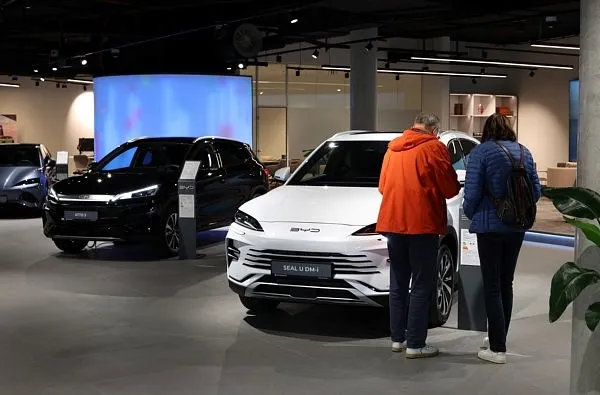
The numbers are exact. Schmidt Automotive Research counted 171,800 pure electric vehicles sold by Chinese brands in eighteen major Western European markets during those five months. The share rose nearly five percentage points against the same period in 2025. BYD, Chery, SAIC MG, XPeng and others are accelerating their push. Britain stands out. The UK did not follow the European Union’s extra tariffs. Chinese brands accounted for roughly one quarter of the total Chinese pure-EV volume across those eighteen markets. Italy also showed clear growth. One Chinese firm supplied large numbers of inexpensive small electrics and used local purchase subsidies. Some models reached prices near 5,000 euros. Across Europe Chinese companies offered more than 120 models this year. European local brands offered about 100. Analysts quoted in the report say the pure-electric share may be nearing a phase peak. Some Chinese makers are already shifting volume toward plug-in hybrids to step around tariffs that mainly target pure electrics. European manufacturers continue to press for wider coverage. Volkswagen chief executive Oliver Blume has stated that European-produced plug-in hybrids struggle to compete with Chinese offerings. The European Union is examining whether to extend the extra duties into the hybrid segment.
The commercial intent is straightforward. Chinese producers treat the tariff wall as a cost of entry rather than a barrier. They keep flooding the market with models and aggressive pricing. Where the extra duty does not apply, as in Britain, volume expands fastest. Where subsidies exist, as in Italy, entry-level cars drop to levels local producers cannot easily match. The move into plug-in hybrids is the next logical hedge. It preserves access while the pure-electric tariff remains in force. European incumbents respond by demanding broader protection. The map is being redrawn in real time by the companies that treat the current duties as temporary friction.
The competitive board has already shifted. Chinese brands now hold a measurable slice of pure-electric sales that tariffs were designed to limit. The practical test is whether the pure-electric share plateaus as analysts expect and whether the hybrid pivot gains enough speed to keep the pressure on. Watch the next quarterly registration figures in the UK and Italy. Those two markets will show first whether the current trajectory holds or whether the tariff regime finally bites.
Author bio: Robert Sterling, veteran operator and investor with decades of experience tracking industrial competition and market-share battles in automotive and heavy industry.