(SeaPRwire) – By: Marcus Sinclair
The peninsula just fractured along a line nobody wanted to redraw. Washington pulled back from the drills. Seoul woke up to a cold realization. The umbrella it relied on for decades just contracted. President Lee Jae Myung scrambled to respond. His cabinet heard one clear directive. Build your own strength. The alliance still matters. But only if you have leverage of your own. Strengthening independent capabilities increases your value as an ally. That is the calculus echoing from Seoul right now. It is not a rhetorical flourish. It is a survival calculation. For decades, the United States carried the deterrent burden on the Korean Peninsula. That assumption just evaporated in a single social media post. The regional security architecture just took a hit. Nobody planned for this contingency. The alliance that anchored Korean defense just became conditional. Every partner in the region recalibrated instantly. Tokyo wondered whether the same fate awaited it. Canberra asked whether Pacific commitments would hold. Singapore watched with quiet alarm. The ripple effect extends far beyond the Korean peninsula. Trump reduced a decades-old strategic commitment to a transaction. The framework holding East Asian security together just cracked. Seoul stood on the wrong side of the ledger. Washington decided the bill was too steep. The response from Lee’s office was swift. But it revealed a painful truth. Independence is not a choice. It is the price of a shifting world order. The nuclear-powered submarine program Lee specifically mentioned now carries existential weight. The defense industrial base faces an unprecedented expansion mandate. Every day of delay costs more in strategic uncertainty.
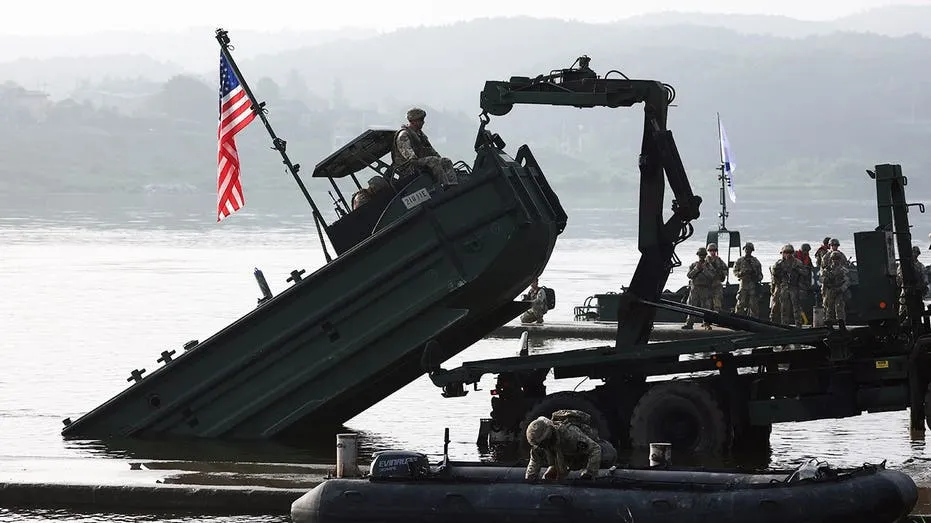
The sequence of events reveals the full shock. Annual Ulchi Freedom Shield exercises began on schedule last week. The next day, Lee convened his cabinet. Trump had already posted on Truth Social the weekend before. He told War Secretary Pete Hegseth to substantially reduce US involvement. The reasoning was openly framed as diplomatic theater. Trump cited his very good relationship with Kim Jong Un. He called the drills excessively costly. He noted most costs were paid by America. He said they sent an inappropriate and hostile signal. He pointed to a country that had been unthreatening and respectful under his presidency. Lee pushed back calmly. He called Ulchi Freedom Shield purely defensive. The top priority remains peace on the peninsula. But the worst-case scenario must be prepared for. Nuclear-powered submarines were specifically named as a priority. Trump then pivoted to a different grievance. He noted South Korea declined to join the Iran operation. No thanks. The slight was deliberate. A transactional ledger being kept on a public platform. Lee’s national security advisor Wi Sung-lac responded diplomatically. He expressed hope that Trump’s relationship with Kim could produce lasting change. The response was measured. The anxiety underneath was palpable. Notice what Trump did not say. He did not threaten to withdraw entirely. He did not demand new terms publicly. He used ambiguity as leverage. The reduction was framed as already ordered. Hegseth was told to substantially reduce involvement. The word substantially carries no fixed metric. Seoul has no way to gauge the actual pullback. The uncertainty itself is the weapon. Every drill scenario just became unscripted. Every contingency plan now needs revision. The alliance is not dead. It is just no longer guaranteed. That distinction matters enormously. Allies plan for guarantees. Partners negotiate around uncertainty. Seoul just transitioned from one category to the other. The diplomatic language softened the blow. The strategic implication hardened it.
Trump’s public ledger reveals the real architecture of his foreign policy. Every partnership is measured in immediate transactional terms. The Iran reference was not incidental. It was a warning shot. Do not expect protection without contribution. The message traveled clearly across the Pacific. Washington wants allies who fight and pay. Not allies who sit under an umbrella. South Korea learned the lesson in real time. Its nuclear-powered submarine program now carries existential weight. The defense industrial base faces an unprecedented expansion mandate. Domestic production capacity will need to scale rapidly. The timeline is compressing. Every month of delay extends vulnerability. The alliance still holds. But its terms just shifted. Seoul now must carry more weight. The question is whether its economy can absorb the burden. Defense spending will climb. The political cost of cutting elsewhere will mount. Regional competitors are watching closely. China sees the cracks forming in the US-Korea partnership. North Korea sees the opening. Kim Jong Un read the Truth Social post. He does not need a translator for that one. The signal of US disengagement from routine drills is unmistakable. Pyongyang has been waiting for exactly this opening. The peninsula has never been safer on paper. It has also never been more unstable in practice. Lee’s response was calibrated correctly. He did not match Trump’s public tone. He did not escalate rhetoric into a shouting match. He announced capability building. That is the professional response. It also reveals the depth of the strategic shift. Korea must now deter on its own terms. Nuclear submarines are the most visible symbol of that shift. They are also the longest lead time investment available. Years of construction lie ahead. The current vulnerability window is real and widening. Washington just reset the terms of East Asian security unilaterally. Seoul must now budget for a more expensive world. The alliance endures. The bill just went up.
Author bio: Marcus Sinclair, a Senior Fellow at a prominent European geopolitical and security think tank specializing in East Asian alliance structures and nuclear deterrence strategy.