(SeaPRwire) – By: Julian Holbrooke
Scott Bessent didn’t mince words on Monday. He compared the U.S. financial offensive against Iran to the Allied campaign that defeated Nazi Germany. The rial plunged to 2.02 million per dollar within hours. That is not a coincidence. It is calibrated intimidation. But let’s strip away the rhetoric for a moment. Calling something “Economic D-Day” does not guarantee it functions like one. The question most analysts are quietly asking is whether severing every financial lifeline to Tehran will actually produce collapse — or simply deepen the misery of 90 million people who have already endured four decades of exactly this kind of pressure.
Bessent’s official statement painted a moral picture. He declared that “every economic lifeline” sustaining Iran’s regime would be cut. He cited Iran’s pursuit of nuclear weapons and its record of murdering American citizens. The Trump administration framed this as an unprecedented synchronization of economic and military force. Jason Brodsky of UANI was quick to confirm the distinction: Operation Economic Outcast arrives while Iran’s naval blockade is already in place, steel plants are damaged from kinetic strikes, and military capacity has been degraded. Jonathan Harounoff, writing on Persian upheavals, told Digital that the pressure campaign will “likely continue to cripple the regime and set the stage for perhaps yet another domestic uprising.” He acknowledged the timing of any revolt remains unpredictable. Bessent then targeted the soldiers directly, invoking the fall of the Berlin Wall and asking ordinary Iranian troops whether their commanders are leading them “to triumph or to ruin.”
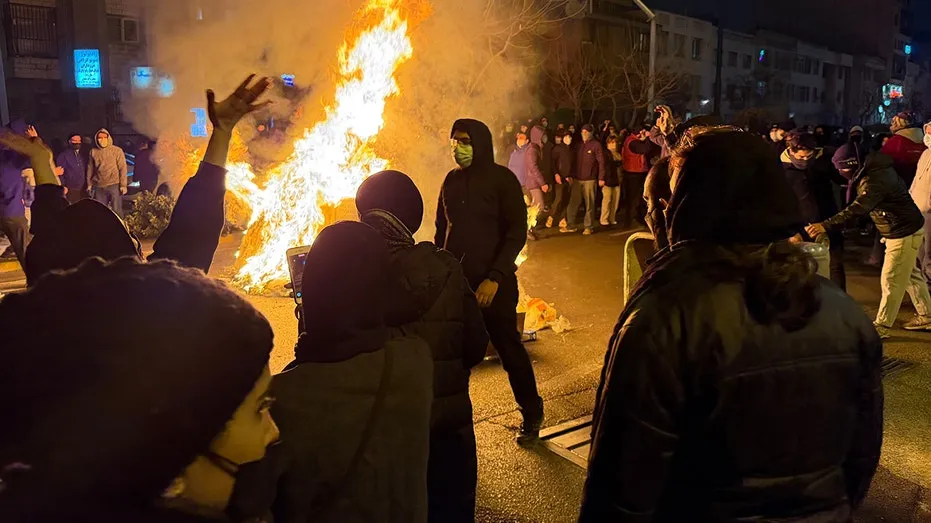
What the official narrative omits is the brutal counter-argument. Alireza Nader, an independent Iran expert, was blunt. He said starving the civilian population will not produce an American victory. The regime massacred thousands of unarmed protesters in January alone. Iranians witnessed the promised help from Trump and Netanyahu never materialize. The Woman, Life, Freedom movement had its best shot at overthrowing the clerical state before the war disrupted that struggle. Beni Sabti, born in Tehran and working at Israel’s INSS, noted there are protests by pensioners and unpaid soldiers, but he framed them as rumors rather than organized uprising. Harounoff himself admitted that outsiders often speak of regime change “as if it were a passive exercise.” The Iranian people alone can bring organic transformation. He suggested tangible support mechanisms — Starlink, think tanks, awareness campaigns — but conceded the dream has remained “quixotic” for 47 years.
The geopolitical pendulum here swings on one axis: credibility. Bessent’s Berlin Wall analogy assumes Iranian soldiers will make a rational calculation. Regimes do not fall because paychecks arrive late. They fall when the cost of obedience exceeds the cost of rebellion. Iran’s clerical establishment has shown a willingness to murder its own citizens without hesitation. That is not a weakness to be exploited by a treasury announcement. The rial hitting 2.02 million to the dollar is real economic devastation. It is also exactly what the regime has survived before. The sanctions architecture is undeniably more sophisticated this time — synchronized with kinetic strikes and a naval blockade. Yet the strategic reality remains uncomfortable. Maximum pressure has been tried before. The Iranian public has been broken, rebuilt, and broken again. The next swing of this pendulum will depend on whether the economic suffocation outpaces the regime’s capacity for internal repression. The numbers say one thing. The history of sanctions says another.
Author bio: Julian Holbrooke, an overseas international relations analyst who frequently contributes to major European daily newspapers on Middle East geopolitics, sanctions architecture, and great power competition.