The Executive Centre Marks 25 Years in Chinese Mainland, Celebrating a Legacy of Premium Flexible Workspace Leadership ACN Newswire

The Executive Centre Marks 25 Years in Chinese Mainland, Celebrating a Legacy of Premium Flexible Workspace Leadership

- 25 years in Mainland China with over 70+ centres across key cities- Pioneer in premium flexible workspace built on consistent quality and service standards- Occupancy sustained above 85% across market cycles – a mark of structural and durable demand- Part of a global network spanning 260+ centres across 38 cities and 15 markets Photo: TEC Shanghai HSBC BuildingSHANGHAI, Oct 26, 2026 - (ACN Newswire via SeaPRwire.com) - The Executive Centre (TEC), Asia’s leading premium flexible workspace provider, proudly marks its 25th anniversary in Chinese Mainland. Since opening its first centre at Citic Square in Shanghai in 2001, TEC has grown from a single location into a network of over 70+ centres across key cities including Beijing, Shanghai, Guangzhou, Shenzhen, Chengdu, Chongqing, Hangzhou, Tianjin, Xi’an, Nanjing and Suzhou. Through every phase of China’s economic development during the past 25 years, TEC’s strategy has remained unchanged: premium locations, enterprise-grade service, and disciplined expansion.A 25-Year Barometer of the China MarketTEC’s entry into Chinese Mainland coincided with a pivotal moment in the country’s economic transformation, as China joined the World Trade Organization and accelerated its integration into the global economy. In those early years, its role was to provide international-standard workspace and services to foreign companies establishing their first foothold in China – a time when language, service quality, and Grade A infrastructure were genuine barriers for incoming businesses.What followed was 25 years of change that TEC both witnessed and served. As multinational companies expanded into China, TEC played a critical role in supporting their market entry and growth through premium, flexible workspace solutions in prime CBD locations. The rise of China’s domestic technology sector reshaped the corporate economy and stimulated growing demand for flexible, multi-city solutions. Through periods of uncertainty and business consolidation, companies have continued to turn to flexible workspace – not as a compromise, but as a deliberate strategic choice.Through all of it, TEC’s occupancy has held consistently above 85% – a track record that speaks to the structural durability of demand for premium flexible workspace in China. Its member base, predominantly comprising MNC clients and Chinese companies with international operations, has become, in effect, a ground-level index of where corporate activity in China is concentrating.“Not many companies can claim 25 years in China without changing direction,” said Jane Ding, Group Managing Director, Greater China, The Executive Centre. “TEC has grown its network, adapted its offering, and served clients through cycles of expansion and consolidation, while the founding commitment to premium locations, premium buildings, and premium service has remained constant.”Committed, Consistent, and Still GrowingAs a pioneer in the premium flexible workspace sector, TEC established early benchmarks for quality, service, and design at a time when such offerings were limited. The company introduced a differentiated model centred on Grade A locations, enterprise-grade infrastructure, and consistently high service standards. Over the years, TEC has continued to innovate—from introducing barista services and ergonomic workplace designs, to being the first and only provider to include a Timothy Oulton Apollo capsule meeting pod in China at its Shanghai ITC centre, and most recently managed office solutions for large MNCs that want a fully fitted, branded workspace without a conventional lease. What has not evolved is the standard or the strategy.“Over the past 25 years, we have witnessed and supported China’s remarkable growth journey, and it remains one of our most important and dynamic markets,” said Jane Ding. “From our first centre in Shanghai to a nationwide network, our focus has remained consistent—anchored in operational excellence, disciplined expansion, and delivering a high-quality, reliable experience to our Members. As the market continues to evolve, we remain committed to setting new benchmarks in premium flexible workspace.”TEC has established itself as a trusted partner to multinational corporations and high-growth enterprises, delivering premium work environments underpinned by consistent service and operational excellence. As part of a broader global footprint, TEC today operates over 260+ centres across 38 cities in 15 markets, supporting businesses with seamless workspace solutions across Asia Pacific, the Middle East, and Australia.About The Executive CentreThe Executive Centre (TEC) is a premium flexible workspace provider, opened its doors in Hong Kong in 1994 and has over 260+ Centres in 38 cities and 15 markets.The Executive Centre caters to professionals and industry leaders. TEC has a global network spanning Greater China, Southeast Asia, North Asia, India, Sri Lanka, the Middle East, and Australia. Each Executive Centre offers a prestigious address with the advanced infrastructure to meet the needs of its Members.Privately owned and headquartered in Hong Kong, TEC provides Private and Shared Workspaces, Business Services, and Meeting & Events facilities to suit its clients’ business' needs.www.executivecentre.comPress EnquiriesThe Executive CentrePebble LeePebble_lee@executivecentre.com / +852 3951 9888 Copyright 2026 ACN Newswire via SeaPRwire.com. All rights reserved. www.acnnewswire.com
More
18th Hong Kong International Wine & Spirits Fair opens next week ACN Newswire

18th Hong Kong International Wine & Spirits Fair opens next week

Hong Kong, Oct 27, 2026 - (ACN Newswire via SeaPRwire.com) - The 18th edition of the Hong Kong International Wine & Spirits Fair, organised by the Hong Kong Trade Development Council (HKTDC), will be held from 5 to 7 November at the Hong Kong Convention and Exhibition Centre. This year's fair is bringing together more than 620 exhibitors from over 25 countries and regions, showcasing wines, spirits, sake, beer, low- and no-alcohol beverages and related products from over 40 places of origin worldwide. Serving as a one-stop sourcing platform for global buyers, the fair further reinforces Hong Kong's position as an international wine and spirits trading hub. The public zone of the fair, Saturday Fiesta, will open to wine enthusiasts aged 18 or above on the final day of the event, offering opportunities to sample and purchase wines and spirits from around the world, as well as participate in a series of engaging thematic activities.Smilely Lam, Associate Executive Director of the HKTDC, said: "This year's fair features a strong international lineup of exhibitors and an extensive selection of wines and spirits from around the world, fully demonstrating Hong Kong’s position as an international trading hub for the wine and spirits industry and its dual roles of 'bringing in and going global’. With its free-port status, world-class logistics infrastructure, free flow of capital and unique position connecting the Chinese Mainland with global markets, Hong Kong has long served as a strategic base for wine and spirits businesses looking to expand across Asia. The Hong Kong SAR Government has also been actively supporting the development of the wine and spirits trade, injecting fresh momentum into the sector while generating opportunities for related industries, including logistics, retail, warehousing, catering, tourism and investment."Smilely Lam, Associate Executive Director of the HKTDC, said: “With its free-port status, world-class logistics infrastructure, free flow of capital and unique position connecting the Chinese Mainland with global markets, Hong Kong has long served as a strategic base for wine and spirits businesses looking to expand across Asia”(From left to right) Max Wong, President of the Hong Kong Wine Merchants' Chamber of Commerce, Master Sommelier Derek Li, Smilely Lam, Associate Executive Director of the HKTDC (position), Jo Jo So, President of the Hong Kong General Chamber of Wine & Spirits(position), and Patrick Chow, President of the Hong Kong Huaxia Wine Industrial Association (position), shared insights into the latest trends shaping the wine and spirits marketMs Lam added: "Benefiting from the recent reduction in liquor duty and growing market demand, the World of Spirits zone has been further expanded this year, reflecting evolving interest in premium spirits and a broader spectrum of alcoholic beverages. Through the fair, we aim to foster international exchange and business collaboration across the industry, helping companies capture emerging opportunities and expand into new markets. The fair also highlights Hong Kong's role as a 'super connector' and 'super value-adder' between the mainland and the rest of the world, supporting the high-quality development of the wine and spirits industry."World of Spirits returns with expanded line-up featuring world's eight major spiritsThe World of Spirits zone returns this year with spirit exhibitors from 16 countries and regions, including first-time participation from Mexico, Portugal, Slovakia and the United Kingdom. The zone showcases the world's eight major spirit categories, including baijiu, whisky, vodka, rum, tequila, brandy (including cognac), gin and soju, enabling buyers to discover premium spirits from around the world in one place while exploring the distinctive flavours and heritage behind different spirit-producing regions. Highlights include:King Barley Single Malt Whisky from Moravia, Czechia (Booth: 3E-A16), produced at the TÄ›šitice Distillery with a heritage dating back to 1973. Crafted using locally sourced ingredients and traditional distillation methods, the whisky reflects the unique terroir of one of Central Europe's most fertile agricultural regions.Legenda Cherry Spiced Rum (Booth: 3E-B13) from Slovakia, bringing together the rich character of Caribbean rum with vibrant fruit and warming spices, creating a smooth and delicious balance of sweetness, spice and cherry flavour.The media luncheon offered a preview of over 20 products, featuring a diverse range of wines and spirits from renowned producing regions worldwide. The selection reflects the depth, diversity and international character of this year's Hong Kong International Wine & Spirits FairTop 10 Chinese Baijiu Brands gather to accelerate international expansionAmong the wide range of spirits on offer, baijiu stands out as one of the fair's strongest categories in 2026. The “Top 10 Chinese Baijiu Brands” will converge at this year's fair, including renowned names such as Kweichow Moutai and Yanghe. Leveraging Hong Kong's unique position as an international wine and spirits trading hub, participating baijiu producers are using the fair as a platform to develop markets overseas and accelerate baijiu's global expansion, rejuvenation and diversification. A new interactive installation combining culture and technology will make its debut at this year's fair, showcasing the traditional craftsmanship behind Chinese baijiu and the rich knowledge contained in the classic text Jiudian, while offering visitors a deeper appreciation of baijiu's history and cultural heritage. The fair will also feature a series of baijiu-themed events, including a seminar, "Chinese Baijiu Go Global", where industry experts and brand representatives will discuss the opportunities and challenges arising from overseas expansion. The programme aims to help mainland brands connect with international buyers and explore new business opportunities worldwide.Among the exhibitors, Xiantan Distillery (Booth: 3D-A02), a multiple gold medal winner at the International Wine and Spirit Competition (IWSC) with its Tanjiu collection, has been actively pursuing a younger consumer base in recent years. The company has introduced a 39% ABV version and 100ml mini-bottle packaging, making sauce-flavoured baijiu more accessible to younger consumers. With Southeast Asia and Europe identified as key target markets, the company hopes to connect with more international trade buyers through the fair and further expand its global footprint.China Honest Industrial Limited (Booth: 3C-E24) showcases an innovative Sauce-Flavoured Whisky that artfully blends the distinctive character of Chinese baijiu with the craftsmanship of Western whisky. Featuring a unique “30% sauce aroma, 70% malt aroma” profile, it highlights a new style of cross-category spirit innovation Producers of Chinese baijiu and Chinese wines are leveraging the fair to expand into overseas markets and accelerate their global developmentAn automated cocktail machine offers visitors an innovative and interactive way to experience the growing cocktail cultureWiseville (Asia-Pacific) Limited (Booth: 3C-C02) showcases a selection of premium Hungarian wines, including Tiffán Villányi Franc 2015 (left) and Dereszla Tokaji Kabar Száraz 2022 (right), highlighting the distinctive terroir and winemaking craftsmanship of the countryEmerging wine regions take centre stage with Chinese wines growing in recognitionOn the wine front, this year's fair brings together exhibitors from a wide range of wine-producing countries and regions. For the first time, pavilions from Georgia and Italy's Calabria wine region will participate, offering buyers an opportunity to discover distinctive wines that reflect the character and heritage of their origins. Meanwhile, as Chinese wines continue to attract growing attention in the market, exhibitors from major Chinese wine-producing regions, including Xinjiang, Ningxia and Xizang, will showcase their products to international buyers, demonstrating the diversity, quality and growing potential of the mainland’s wine industry.Among the highlights are Pazhu Rigang 3675 red wine from Xizang (Booth: 3D-A22), produced in one of the world's highest-altitude wine-growing regions, and Sundyard Private Collection Five-Star Dry Red Wine from Xinjiang (Booth: 3D-C02), reflecting the unique terroir and winemaking expertise of China's leading wine-producing region. Other featured wines include:Pinot Noir Ben's Reserve 2020 from Czechia (Booth: 3E-A16). Matured for 18 months in premium French oak barrels following open-top fermentation, the wine offers aromas of sweet cherry preserve and ripe stone fruits, complemented by a smooth palate and an elegant finish.Concept Feteasca Neagra 2022 from Romania (Booth: 3E-C10), crafted from the country's signature indigenous red grape variety. Full-bodied and well-structured, it delivers a balanced expression of fruit and depth, making it an excellent companion to red meats and a variety of cuisines.Local brands showcase creativity as low- and no-alcohol drinks gain momentumThe fair also enjoys strong support from home-grown Hong Kong brands, highlighting the creativity and craftsmanship of the local wine and spirits sector. Many local producers have successfully blended traditional production techniques with distinctive Hong Kong elements and innovative ideas. For example:Quadran Gin Salty Lime London Dry Gin (Booth: 3C-D28), inspired by the beloved Hong Kong drink "Salted Lemon 7-Up" and created by two former bankers who studied distillation in the United Kingdom, the gin showcases a distinctive flavour profile that blends Hong Kong's culinary heritage with contemporary craft distilling.CATNIP tea gin – YUAN YANG (Booth: 3C-E27), inspired by Hong Kong's iconic tea café beverage that combines coffee and tea, reinterpreted through the art of gin-making.As health-conscious drinks consumption continues to gain traction, low- and no-alcohol beverages are becoming increasingly popular among consumers. This year's fair will feature a range of related products such as Neon Tiger Real Fruit Soda (Booth: 3C-C16), made with real fruit juice and natural carbonation. Containing around 50% less sugar than conventional soft drinks, it offers a refreshing alternative for consumers seeking healthier beverage options.Over 40 events spotlight industry trends and cocktail cultureMore than 40 events will be held throughout the fair, covering a diverse range of industry topics and tasting experiences. Renowned wine experts, including Masters of Wine Debra Meiburg, Bill Liu and Jennifer Docherty, will host masterclasses exploring global wine market trends and sharing professional tasting insights. The highly anticipated “Sommeliers' Picks” will also return. Master Sommelier Derek Li, together with award-winning sommeliers Carlito Chiu and Anty Fung, will conduct blind tastings of selected exhibiting wines and spirits to create their recommended lists for industry professionals and consumers. Selected products will be identified with special labels throughout the fair, while the results will be announced on the opening day.This year's fair will place a stronger emphasis on cocktail culture, introducing a series of cocktail-themed events and parties. One of the highlights will be a sharing session hosted by actress and wine commentator Bernice Liu, joined by representatives from some of Asia's leading bars, including Bar Leone, COA, Penicillin, The Opposites and The Savory Project. Among them, Hong Kong’s Bar Leone was named No. 1 on the World's 50 Best Bars list in both 2025 and 2026, becoming the first Asian bar to achieve the top ranking. Through a more engaging and interactive format, the fair aims to bring the increasingly popular cocktail culture closer to both trade visitors and consumers. Additional cocktail-themed events include Geonbae from Korea, organised by KOTRA Hong Kong (Korea Trade-Investment Promotion Agency); and the Hong Kong International Mixology Showdown 2026 – Semi Final for the Hong Kong region and the Final of the China GBA region.Public day offers multiple delights for local drinks loversOn the final day of the fair, 7 November (Saturday), the designated public zone Saturday Fiesta will open to visitors aged 18 or above. Admission for Saturday Fiesta is priced at HK$220 per ticket. From now until 6pm on 6 November, public can enjoy a special ticket offer at HK$128 through designated ticketing platforms*. Visitors purchasing promotional tickets will receive a complimentary Lucaris Crystal Wine Glass (while stocks last). They can also sample and buy a range of wines and spirits, while enjoying wine tasting experiences through several activities including the FIGARO AFTER HOURS Canton cocktail music party. Pre-registration for public-day activities is available through the fair website.*Promotional ticket offer detailsFrom now until 6pm on 6 November, public-day tickets are available at the promotional price of HK$128 through HK01, KKday, KLOOK, Trip.com, Trans-Island Chinalink, Wai Shing Wine Int’l Co Ltd and WineNow.Photo download: https://bit.ly/47JhmJPWebsiteHong Kong International Wine & Spirits Fair: https://www.hktdc.com/event/hkwinefair/enMedia enquiries:For enquiries, please contact:HKTDC Communication and Public Affairs Department:Katy WongTel: (852) 2584 4524Email: katy.ky.wong@hktdc.orgSerena CheungTel: (852) 2584 4272Email: serena.hm.cheung@hktdc.orgAbout HKTDCThe Hong Kong Trade Development Council (HKTDC) celebrates its 60th anniversary this year. The HKTDC is a statutory body established in 1966 to promote, assist and develop Hong Kong's trade. With over 50 offices globally, including 13 in the Chinese Mainland, the HKTDC promotes Hong Kong as a two-way global investment and business hub. The HKTDC organises international exhibitions, conferences and business missions to create business opportunities for companies, particularly small and medium-sized enterprises (SMEs), in the mainland and international markets. The HKTDC also provides up-to-date market insights and product information via research reports and digital news channels. For more information, please visit: www.hktdc.com/aboutus. Copyright 2026 ACN Newswire via SeaPRwire.com. All rights reserved. www.acnnewswire.com
More
DJKI Connects Investors with Promising Technologies at Indonesia Patent Business Forum 2026 ACN Newswire

DJKI Connects Investors with Promising Technologies at Indonesia Patent Business Forum 2026

JAKARTA, Oct 27, 2026 - (ACN Newswire via SeaPRwire.com) - The Directorate General of Intellectual Property (DJKI) at the Ministry of Law is inviting investors and industry players to attend the Indonesia Patent Business Forum (FBPI) 2026, which will take place on November 3–5, 2026, at the Jakarta International Convention Center (JCC). The forum aims to connect Indonesian innovations with business collaboration and investment opportunities.Director General of Intellectual Property, Hermansyah Siregar, said patents hold strategic value when protected technologies can address market needs and generate economic value. Industry and investor participation is therefore essential to bridging research outcomes with business needs."Patents need more than legal protection; they must also be put to use to create added value. Through the Indonesia Patent Business Forum, we aim to connect inventors with industry players and investors, giving domestic innovations greater opportunities for further development and commercialization," Hermansyah said in an interview at the DJKI Building on Thursday, October 22, 2026.Minister of Law Supratman Andi Agtas also highlighted the importance of collaboration between national researchers, industry players, and business associations in an interview held during the 'Hari Pengayoman' commemoration."We will bring together universities and the National Research and Innovation Agency (BRIN), along with the Indonesian Chamber of Commerce and Industry (KADIN), the Indonesian Employers Association (APINDO), the Indonesian Chinese Association (INTI), and other business associations. The goal is to connect national research outputs with potential buyers interested in acquiring them through licensing agreements," Supratman said.The 2026 Indonesia Patent Business Forum, themed "Patents Driving the People's Economy," features a series of programs designed to connect industry needs with the potential of domestic innovations. In addition to exhibition areas showcasing inventors and patented technologies, the forum will feature investment and industry zones, intellectual property and patent services, and an innovation showcase highlighting technologies with potential for further development.The program will also include pitching sessions, discussions on strategies for commercializing patented technologies, and opportunities to explore partnerships among inventors, universities, research institutions, and industry players. One of the key events is the Patent Townhall Pitching, which provides a platform for industry players to communicate their technology needs to universities and research institutions, particularly in the automotive and electric vehicle sectors, as well as electronics and the Internet of Things (IoT).For industry players, the forum offers a starting point for identifying alternative technologies, exploring product development opportunities, and establishing collaborations with inventors. Investors, meanwhile, can use the forum to identify technologies that align with market needs and explore potential investment opportunities. Possible forms of collaboration include patent licensing, technology development, commercial partnerships, and investment, depending on the readiness of each invention and the agreement between the parties."We hope these meetings between inventors and potential partners will pave the way for collaboration, including patent licensing, technology development, commercial partnerships, and investment opportunities, depending on the needs and readiness of each invention," Hermansyah said.Business participation is essential to ensuring that innovations developed by Indonesian researchers and inventors move beyond the discovery stage. Engaging potential technology users from the outset can help align technological capabilities with actual industry needs while creating opportunities for broader patent utilization.DJKI invites investors, industry players, business owners, and other stakeholders involved in technology development and utilization to attend FBPI 2026. Further information about the forum and its program is available at forumbisnispaten.dgip.go.id.Through FBPI 2026, DJKI aims to foster greater collaboration between inventors and the business sector, enabling domestic patents to drive innovation, strengthen industrial competitiveness, and generate economic value.About DJKIThe Directorate General of Intellectual Property (DJKI) is an echelon I unit under the Ministry of Law of the Republic of Indonesia, responsible for formulating and implementing policies in the field of intellectual property.DJKI provides registration and protection services for copyrights, patents, trademarks, industrial designs, geographical indications, integrated circuit layout designs, and trade secrets. Through digital transformation and strengthened public services, DJKI is committed to providing fast, transparent, and accountable legal protection for creators, inventors, and businesses across Indonesia.Directorate General of Intellectual Property (DJKI) – Public RelationsMinistry of Law of the Republic of IndonesiaDJKI BuildingJl. HR. Rasuna Said Kav. 8–9, South Jakarta, Jakarta, IndonesiaM. Wahdan H.J.Q.+62 878-3954-615 Copyright 2026 ACN Newswire via SeaPRwire.com. All rights reserved. www.acnnewswire.com
More
Quant Group Validates Its Physical AI Foundation Model in a Working Restaurant Kitchen ACN Newswire

Quant Group Validates Its Physical AI Foundation Model in a Working Restaurant Kitchen

Hong Kong, Oct 27, 2026 - (ACN Newswire via SeaPRwire.com) - October 22, 2026, Quant Group (02685.HK), has released a series of embodied-AI demonstrations conducted in a working restaurant kitchen, validating its Physical AI foundation model under real-world food-service conditions.At its GTC conference, NVIDIA shifted the industry’s focus from “selling GPUs” to “selling AI factories” — a signal that the global AI industry is moving decisively from digital interfaces into the physical world. Capital markets are repricing accordingly: Field AI, which does not manufacture its own robots, is reported to have been valued in the region of US$10 billion. What the industry lacks is not hardware, but the capability layer that makes that hardware work out of the box in real-world settings.That capability layer is what Quant Group is targeting. The company does not manufacture robot hardware; it is developing an open physical-world foundation model that generalizes across scenarios and robot platforms. Its growth potential depends on how well the model generalizes, rather than on hardware production capacity or the ability to delivery project. The Endgame in Physical AI: A Cross-Scenario Foundation Model for the Physical WorldPhysical AI is the ultimate frontier of artificial intelligence,with companies competing to sell hardware, solutions or AI capabilities. The first two business models scale project by project, placing clear limits on growth. The third is built around a foundation model— “train it once, deploy across multiple scenarios”,with marginal costs approaching zero.Quant Group has chosen the third path. Its architecture separates software from hardware: the physical-world foundation model is not tied to any single hardware platform, and the same underlying model can run on different hardware platforms. The test is whether a single underlying model can transfer learned skills across different tasks, different materials and different types of physical disturbance.Real-World Trials: Repeated Closed-Loop Validation in a Live KitchenQuant Group is one of a small number of companies with a Physical AI focus listed on the Main Board of The Stock Exchange of Hong Kong Limited. It has recently released several embodied-AI demonstrations for commercial kitchens, each validated through repeated testing and deployed under real, dynamically changing kitchen conditions. From the mid-2026 demonstrations — sandwich preparation using dexterous manipulation, shopping-bag sorting, steak seasoning and coordinated dual-arm milk-tea preparation— to the four most recent ones, the company’s embodied-AI capabilities have progressed from dexterous manipulation to handling a combination of materials, another step toward a full Physical AI foundation model.Preparing hand-pounded lemon tea tests closed-loop control in a precision manipulation task. With the left hand steadying the cup and the right hand pounding repeatedly, the “one arm moving, one arm steady” dual-arm coordination is underpinned by an RSI self-evolving loop that continuously records trajectories, identifies deviations and adjusts rhythm during drink preparing. Demo image: hand-pounded lemon tea — live commercial-kitchen testPreparing flaky flatbread tests the ability to track task progress over a long sequence of actions. Twenty-two consecutive actions require the robot to remember which step it has reached and which tool comes next: System 2 handles global planning and exceptions while System 1 executes actions in real time. This demonstrates the agent’s procedural memory and coordinated use of different tools in an unstructured environment. Demo image: flaky flatbread — live commercial-kitchen testPreparing stir-fried shredded potatoes tests the robot’s ability to respond to the changing conditions of Chinese wok cooking. The slippery shreds can easily slip during transfer, the materials shift continuously in the wok, and dual-arm coordination demands millisecond-level timing — one hand working the wok, the other holding the spatula.The task involves relatively few steps, but the robot must respond to frequent disturbances during physical interaction. Demo image: stir-fried shredded potatoes — live commercial-kitchen testPreparing egg cake tests whether the model can generalize across multiple types of materials. High-viscosity batter requires anticipating how the fluid will flow; unevenly sized pieces of crushed peanut require precise, localized sprinkling; folding the soft cake demands extremely precise and continuous adjustment of contact force. The task tests the foundation model’s ability to transfer learned skills when the object changes. Demo image: egg cake — live commercial-kitchen testFollowing these kitchen trials, the next step is cross-scenario reuse — extending these capablities beyond food service to a broader range of hardware platforms. The Moat Behind “Selling AI Capability” Is a Vast Amount of User Data, Not ParametersThe key difference between Physical AI and language models is that language data can be harvested from the internet in effectively unlimited quantities, whereas physical-interaction data can only be generated through operation in the real world. Quant Group runs its trials in a restaurant kitchen rather than a laboratory precisely because the kitchen’s complex, unstructured conditions cannot be fully reproduced in simulation. Each real-world trial strengthens this data advantage: a data set of genuine physical interactions that can only be built up over time.Quant Group’s consumer e-commerce business provides funding for this development. In 2025 the company reported revenue of RMB 1.035 billion and net profit of RMB 195 million, while gross merchandise value (GMV) on its Yangxiaomie platform exceeded RMB 10 billion. 30 percent of the proceeds from its July placing were allocated to research and development of the Physical AI foundation model, and a further 40 percent to the commercialization of intelligent hardware.Frost & Sullivan forecasts that Physical AI will grow at a compound annual growth rate (CAGR) of 47.2 percent, with the global market for related industries potentially reaching US$3.25 trillion by 2040. What will determine who secures the “picks-and-shovels” position is not who makes bold claims first, but who first delivers AI capabilities that can be reliably deployed across multiple scenarios, backed by a sufficiently rich dataset of real-world interactions.Quant Group’s share price has recently shown signs of bottoming out, with its price-to-earnings ratio stabilising at around 19–20 times and its price-to-sales ratio at just around 2 times. These valuations suggest that the market has not yet to fully value Quant Group as a physical AI company. As companies in the sector accelerate their development, more growth stories and investment candidates are likely to emerge, creating new investment opportunities and scope for returns.About Quant Group (02685.HK) Quant Group is an AI technology company listed on the Main Board of the Hong Kong Stock Exchange, called Hong Kong’s first listed “Embodied AI” company.The company operates a dual-track business model: e-commerce AI solutions that generate steady cash flow, and physical AI capabilities that extend AI from the digital world into real-world commercial environments including restaurants, retail stores, and automotive showrooms. In 2025, Quant Group reported revenue of RMB 1.035 billion and net profit of RMB 195 million, up 32.6% year-over-year.IR Contact Information:lR@quantgroup.com Copyright 2026 ACN Newswire via SeaPRwire.com. All rights reserved. www.acnnewswire.com
More
MicroVision Begins Commercial Production of MOVIA(TM) Pro for Superior Short-Range Sensing and Onboard Perception, Enabling Physical AI at the Edge ACN Newswire

MicroVision Begins Commercial Production of MOVIA(TM) Pro for Superior Short-Range Sensing and Onboard Perception, Enabling Physical AI at the Edge

ORLANDO, FL, Oct 23, 2026 - (ACN Newswire via SeaPRwire.com) - MicroVision, Inc. (NASDAQ: MVIS), a leader in advanced perception solutions for industrial, security and defense, intelligent infrastructure, and automotive applications, today announced the much-anticipated commercial production launch of MOVIA™ Pro, shipping sensors to meet customer demand. MOVIA Pro is the company’s next-generation short-range lidar sensor uniquely engineered to deliver differentiated sensing performance and onboard perception capabilities, with flexible integration across intelligent infrastructure, unmanned aerial, industrial robotics, and other emerging autonomous applications. As the lidar industry transitions toward solid-state architectures that enable cost-effective sensing solutions, MicroVision’s MOVIA Pro is designed to deliver enhanced short-range detection performance for demanding applications. By combining advanced sensing capabilities with onboard perception, MOVIA Pro makes high-performance lidar more accessible across a broader range of autonomous and intelligent systems. MOVIA Pro joins the company's broader portfolio of short- and long-range lidar technologies, airborne sensing solutions and advanced perception software, providing customers with configurable solutions for a growing range of operating environments. The launch of MOVIA Pro reinforces MicroVision's transformation into a diversified perception technology company focused on delivering commercially ready solutions for industrial, intelligent infrastructure, security and defense, and emerging autonomous applications. "We’re thrilled to meet pent-up customer demand with this production launch of MOVIA Pro,” said Glen DeVos, CEO of MicroVision. “Customers are ready to progress from evaluation of prototypes to launching commercial programs, and we are pleased to support their progression. Our Orlando-based state-of-the-art production facility is manufacturing MOVIA Pro to meet the increasing demand. DeVos continued, "With MOVIA Pro, we've combined high-performance sensing with onboard computing, an open software framework and industrial-ready connectivity. This is one device that can sense, perceive, and act, providing customers with a more integrated and adaptable solution." One Sensor That Sees, Understands, and Enables Solutions at the Edge MOVIA Pro is MicroVision’s production-ready version of MOVIA S, loaded with high-performance features and a differentiation that extends beyond sensing hardware. Built around an integrated processing architecture, MOVIA Pro enables perception software to run directly on the sensor through MicroVision's Open Software Framework. This allows developers and customers to build, deploy, and update applications on the device, rather than relying exclusively on external computing hardware to interpret point-cloud data. The architecture enables MOVIA Pro to generate sensing information, process that information into actionable perception outputs, and communicate results directly to connected systems. Key capabilities include: Onboard perception, edge AI, and open software: Processes point-cloud data directly on the sensor to generate object-level information, supporting AI at the edge and reducing reliance on external computing devices. Multi-echo sensing enhances perception by capturing multiple returns from a single emitted pulse, helping detect objects in challenging conditions. An open, Linux-based software framework enables customers to develop, deploy, and update perception applications. Flexible connectivity and industrial integration: Supports CAN, Gigabit and 100Mbit Ethernet, and industrial-ready I/O and connectors to simplify integration with industrial equipment, vehicles, and control systems. Software-defined evolution: Enables capabilities and enhancements through software updates, with a foundation for future-edge computing and AI-ready capabilities. By combining sensing and perception in a single device, MOVIA Pro is designed to reduce system complexity, cabling and external hardware requirements while supporting more efficient integration, maintenance and future upgrades. Movia Pro is MicroVision’s next-generation short-range lidar sensor that delivers integrated perception and multi-echo sensing, built for flexible integration across various commercial applications. Purpose-Built for High-Value Commercial Applications MOVIA Pro is designed to support a broad range of commercial and defense applications, with MicroVision prioritizing markets where advanced short-range perception can address immediate operational challenges and enable new levels of automation. Its configurable sensing and perception architecture supports applications across: Aerial Systems – Civil and Defense: Supporting navigation, obstacle awareness, mapping, environmental perception and autonomous operations for unmanned platforms, where compact sensing, onboard processing and reliable perception are critical. Intelligent Transportation and Smart Infrastructure: Enabling intelligent intersections, traffic monitoring, automated traffic enforcement, infrastructure surveillance and connected transportation systems through high-resolution sensing, broad field of view, and industrial connectivity. Anonymized sensing capabilities can support monitoring applications where privacy is a consideration. Warehouse and Industrial Automation: Supporting obstacle detection, environmental awareness and automated navigation for autonomous mobile robots (AMRs), automated guided vehicles (AGVs), forklift advanced driver-assistance systems and other intelligent industrial equipment. Continuous near-field coverage, multi-echo capabilities and onboard perception help address dynamic environments where people, equipment and autonomous machines operate in close proximity. Security, Defense, and Emerging Applications: Supporting infrastructure protection, autonomous ground systems, off-road unmanned ground vehicles, marine systems, commercial vehicles and selected automotive applications, including low-speed autonomy, blind-spot detection and off-road assistance. Availability and Product Information MOVIA Pro is now available for customer orders. For additional product information, visit https://microvision.com/sensors/movia-pro. For inquiries, please contact us here. About MicroVision MicroVision is defining the next generation of lidar-based perception solutions for industrial, security & defense, infrastructure, and automotive markets. As the industry moves beyond proof of concept toward value, deployment, and commercialization, MicroVision delivers integrated hardware and software solutions designed for real-world performance, automotive-grade reliability, and economic scalability. With engineering centers in the U.S. and Germany, MicroVision leads the industry in depth and breadth of its portfolio, with both short- and long-range lidar solutions, featuring solid-state sensors, advanced sensor architectures, design-to-cost engineering, and open software solutions. For more information, visit the company's website at www.microvision.com, on Facebook at www.facebook.com/microvisioninc, and LinkedIn at www.linkedin.com/company/microvision/. MicroVision, MicroVision HALO, IRIS, MOVIA, MOSAIK, and SENTINEL are trademarks of MicroVision, Inc., and SCANTINEL is a trademark of Scantinel GmbH, in the United States and other countries. All other trademarks are the property of their respective owners. Investor Relations Contact: Jeff Christensen Darrow Associates Investor Relations MVIS@darrowir.com Media Contact:Heidi Davidson - For MicroVision heidi@galvanizeworldwide.com (914) 441-6862 Copyright 2026 ACN Newswire via SeaPRwire.com. All rights reserved. www.acnnewswire.com
More
Australian Made puts Singaporean approval centre-stage of its new campaign launch ACN Newswire

Australian Made puts Singaporean approval centre-stage of its new campaign launch

SINGAPORE, October 27, 2026 - (ACN Newswire via SeaPRwire.com) - Australian Made Campaign Limited (AMCL) is putting its unmistakable green-and-gold Australian Made kangaroo firmly in view across Singapore this October with Australian Made, Singaporean Approved - a new awareness push celebrating Australian products, provenance and the spirit behind the mark.Launching at Trifecta Singapore, the initiative will channel Australia’s confidence and sense of adventure through high-impact creative and digital content. At its centre is a simple message: Look for the iconic Australian Made Kangaroo - a cue to explore the breadth of Australian Made products available in Singapore and understand what sets them apart.Local shoppers may already have encountered the familiar logo on products they know and use without necessarily knowing what sits behind it. Australian Made, Singaporean Approved aims to change that - building greater understanding of what the symbol represents while leaving the ultimate seal of approval to Singaporeans themselves. Designed by Dr. Ken Cato AO and introduced 40 years ago, the green-and-gold kangaroo is today recognised by 99 per cent of Australians, with +82 Net Trust Score and nine in ten Australians confident that products displaying it are genuinely Australian. Australian Made, Singapore Approved aims to build that same recognition and trust among Singapore consumers. This vibrant campaign seeks to deepen awareness of the kangaroo as a trusted sign of Australian authenticity and a go-to shopping cue.Ben Lazzaro, Chief Executive of Australian Made Campaign Limited, said: “Singaporeans know Australia well – its products, produce, quality and way of life – and they know what they like. Australian Made, Singaporean Approved celebrates that connection with the confidence, optimism and sense of discovery that Australians are known for.”“The green-and-gold kangaroo tells you a product is authentically Australian Made. Whether it becomes Singaporean Approved is ultimately up to Singaporeans. We want people to discover the breadth of Australian products available here, try something they may not have encountered before, and when they want to know if something is genuinely Australian Made, look for the kangaroo.” Look for the Kangaroo - Discover, experience and winFrom skincare and wellness to food and beverage, apparel, homewares and pet nutrition, Australian Made, Singapore Approved will spotlight the breadth of certified Australian-made goods already available in Singapore.Over the next three months, Australian Made, Singaporean Approved will come to life across Singapore through creative storytelling with media and digital content creators. The green-and-gold kangaroo will also take to the streets through outdoor advertising across Grab.” A dedicated Singapore website will provide more information about Australian Made and showcase brands available locally. Beyond the launch, a contest will also give six winners the chance to experience Trifecta for themselves.The campaign will also meet Singaporeans at the BYD Singapore International Marathon from 3 to 6 December, with a dedicated Australian Made booth inviting visitors to look for the kangaroo, discover Australian Made brands, and take part in interactive activities and giveaways.The kangaroo has to be earnedNot every product that looks or sounds Australian can carry the green-and-gold kangaroo. The logo is reserved for products that meet the Australian Made campaign’s carefully defined eligibility criteria. It gives shoppers a clear and trusted way to recognise products that are genuinely Australian Made. For more information and to discover participating brands and products, visit: https://australianmade.com.au/campaigns/singaporeanapproved/ ABOUT THE AUSTRALIAN MADE, AUSTRALIAN GROWN LOGO The green-and-gold Australian Made, Australian Grown (AMAG) logo is the only registered country-of-origin certification trademark for genuine Australian products and produce.The AMAG logo can only be used on products registered with the not-for-profit organisation Australian Made Campaign Limited. The strict set of rules governing the logo’s use also requires that it must always be used with one of five descriptors: ‘Australian Made’, ‘Australian Grown’, ‘Product of Australia’, ‘Australian Seafood’ or ‘Australian’ (for export use only). To use the logo, goods must meet the criteria set out in Australian Consumer Law as well as the more stringent Australian Made, Australian Grown Logo Code of Practice. More than 4,600 businesses are registered to use the AMAG logo, which can be found on thousands of products sold worldwide.Australian Made Campaign Limited is located at Level 4, 111 Coventry Street, Southbank, VIC 3006, Australia. Free ph: 1800 350 520 www.australianmade.com.au Media Contact:Wani DiwarkarE: wani@prbespoke.com Copyright 2026 ACN Newswire via SeaPRwire.com. All rights reserved. www.acnnewswire.com
More
Micot Pharma Showcases First-in-Class, Brain-Penetrant TrkB Agonist MT200605 at World Stroke Congress, Building the Case for Global Partnerships and Commercialization ACN Newswire

Micot Pharma Showcases First-in-Class, Brain-Penetrant TrkB Agonist MT200605 at World Stroke Congress, Building the Case for Global Partnerships and Commercialization

Hong Kong, Oct 27, 2026 - (ACN Newswire via SeaPRwire.com) - Micot Pharma (HKEX: 2335) presented its in-house neuroprotective drug candidate MT200605 in an oral presentation at the 18th World Stroke Congress (WSC 2026), held in Seoul, South Korea, on October 21–23, 2026. The presentation covered the candidate’s mechanism of action, preclinical findings and Phase I data from China and the United States.Micot Pharma describes MT200605 as a first-in-class small-molecule TrkB agonist that crosses the blood–brain barrier and is being developed for acute ischemic stroke (AIS). The WSC presentation adds international visibility to a program backed by positive Phase II stroke data and China–U.S. Phase I experience. Together, these elements strengthen the company’s case for potential licensing and co-development partnerships outside China.The 18th World Stroke Congress (WSC 2026), held in Seoul, South Korea.A Differentiated Approach to Stroke NeuroprotectionSelection for an oral presentation gave Micot Pharma a forum to present MT200605’s development rationale to international stroke specialists and potential research partners.Dr. Liu, Micot Pharma’s executive director of nonclinical R&D, presents MT200605 at WSC 2026.Reperfusion therapies, including thrombolysis and mechanical thrombectomy, can restore blood flow after an ischemic stroke. However, ischemia–reperfusion injury and neuronal death can still contribute to disability and mortality. There remains a substantial need for neuroprotective therapies that demonstrate meaningful functional benefits in well-controlled clinical trials.MT200605’s differentiation lies in a single molecule designed to address multiple points in the ischemic cascade. Its preclinical rationale combines direct TrkB activation, TrkB-independent antioxidant activity, effects on microcirculation and mitochondrial protection, with the aim of limiting injury and supporting endogenous neural repair.In a preclinical stroke model, survival was 79.2% in the MT200605 group, compared with 44.8% in the edaravone comparator group. The company also reported a significant reduction in infarct volume. Phase I studies in China and the United States showed favorable safety and tolerability and predictable pharmacokinetics.Positive Phase II Results in Acute Ischemic StrokeIn a 360-patient, multicenter, randomized, double-blind, placebo-controlled Phase II trial in China, MT200605 met its primary efficacy endpoint and key secondary endpoints, according to Micot Pharma. The high-dose group achieved a statistically significant improvement over placebo in the proportion of patients with a modified Rankin Scale (mRS) score of 0–1 at Day 90. This represents no symptoms or no significant disability despite symptoms, with patients able to carry out their usual activities.According to Micot Pharma, the odds of achieving this outcome were more than twice as high in the high-dose group as with placebo. The company also reported approximately one additional patient with a favorable functional outcome for every six patients treated, compared with placebo.Secondary endpoint findings supported early neurological improvement, as measured by the National Institutes of Health Stroke Scale (NIHSS), alongside a clear dose–response relationship. The study also showed a favorable safety profile, according to the company.Micot Pharma reported that the incidence of post-stroke acute kidney injury (AKI) in the high-dose group was more than 80% lower than in the placebo group. The finding points to a potential benefit beyond neuroprotection and supports further investigation of MT200605’s proposed combined brain and kidney protection.Micot Pharma views the Phase II findings as clinical proof of concept in AIS, providing a foundation for further clinical development.Potential Beyond Stroke Broadens the CNS OpportunityThe WSC presentation followed MT200605’s appearance at the International Congress of Parkinson’s Disease and Movement Disorders (MDS 2026). At MDS, Micot Pharma presented preclinical Huntington’s disease findings alongside Phase I safety and pharmacokinetic data from healthy adults. The two congress presentations brought different parts of the development program to international audiences in cerebrovascular and neurodegenerative diseases.According to Micot Pharma, MT200605 has received orphan drug designation from the U.S. Food and Drug Administration for Huntington’s disease. TrkB activation and mitochondrial protection provide a biological rationale for exploring the candidate in neurodegenerative conditions, including Huntington’s disease, Parkinson’s disease and amyotrophic lateral sclerosis (ALS). Clinical efficacy in these additional indications has not yet been established.For Micot Pharma, the potential to extend MT200605 beyond stroke offers a path toward a broader central nervous system (CNS) portfolio. If supported by indication-specific clinical data, expansion into neurodegenerative diseases could broaden the candidate’s commercial opportunity and its contribution to the company’s long-term value.Focus on Phase 3 Clinical Progress and Overseas PartneringThe combination of a differentiated mechanism, positive Phase II findings and China–U.S. clinical experience gives Micot Pharma a more developed evidence base to present to potential partners. International congresses provide opportunities to discuss that evidence with investigators and pharmaceutical companies, supporting the company’s efforts to explore global development options.Key developments to watch include the design and initiation of Phase â…¢ registrational trials in China and potential multiregional clinical trials (MRCTs), as well as any disclosed out-licensing, co-development or regional partnerships outside China. Additional human clinical data in indications such as Huntington’s disease will be important in assessing MT200605’s broader CNS potential. Copyright 2026 ACN Newswire via SeaPRwire.com. All rights reserved. www.acnnewswire.com
More
Quant Group (02685.HK) Enters into Framework Procurement Agreement for Up to 2,000 Embodied-AI Robots Solutions – Physical AI Business Poised for Re-rating ACN Newswire

Quant Group (02685.HK) Enters into Framework Procurement Agreement for Up to 2,000 Embodied-AI Robots Solutions – Physical AI Business Poised for Re-rating

Hong Kong, Oct 27, 2026 - (ACN Newswire via SeaPRwire.com) - On 25 October 2026, Quant Group (02685.HK), as Hong Kong's first listed "Embodied AI" company, announced that its indirectly wholly owned subsidiary Silicon Base (Beijing) Intelligent Technology Development Company has entered into a framework procurement agreement with Chewujie (Beijing) Automobile Co., Ltd. Under the agreement, Quant Group is to supply up to 2,000 embodied-AI robot solutions by end-2027, covering reception, vehicle presentation, customer engagement, sales lead capture and distribution at automobile showrooms and 4S outlets. The deal marks the first large-scale framework order for Quant Group's Physical AI business — a milestone signalling a shift from "technical feasibility validation" to "commercial delivery."The agreement raises three questions for the market: how much revenue it could generate? What it means for Quant Group, currently valued at less than HK$2 billion? What valuation the company could justify based on embodied AI sector benchmarks?I. Integrated Solutions Command a Premium, Offering Significant Revenue UpsideQuant Group delivers an integrated value proposition — "robot hardware + embedded software + scenario configuration + supporting services" — with pricing that differs from that of pure hardware vendors. In its previously disclosed food-service deployment, Quant Group adopted a three-layer architecture: "Store Agent + humanoid robot + automated equipment." At a jointly operated pilot outlet, monthly labour costs fell from RMB 35,000 to RMB 20,500, delivering tangible cost savings for the customer. Integrated solutions typically sell for more than standalone hardware.Combined Chewujie's network of thousands of 4S outlets and Quant Group's AI models and software for robots, this collaboration is expected to offer significant revenue potential. Under a conservative scenario (lightweight interactive robots + basic software licensing), the per-solution price is approximately RMB 15,000, implying incremental revenue of around RMB 30 million. Under a standard embodied-AI package with scenario customization, the estimated per-solution price is roughly RMB 50,000, implying incremental revenue of about RMB 100 million. At the high end (a premium or full-stack humanoid robot solution plus deep customization and a full AI Agent system), per-solution price can reach RMB 100,000–200,000, with potential incremental revenue of RMB 200–400 million.The above estimates assume full delivery. The company's announcement also states that the planned quantities for each period are indicative only and do not constitute fixed delivery obligations; actual deliveries will depend on demand from Chewujie's outlets. Revenue will be recognised in stages, with timing and amount remaining uncertain.II. The Current Share Price Does Not Yet Reflect the Physical AI Business; The Embodied-AI Sector Provides a "Valuation Anchor"As of 23 October 2026, Quant Group closed at HK$2.935, below its net asset value per share, giving a market capitalization of approximately HK$1.65 billion. Since listing, the company's share price previously peaked at HK$43.36 (market cap exceeding HK$24 billion), yet it has since pulled back to current levels even as Physical AI orders have progressively materialized — a clear valuation mismatch. On 2025 revenue of RMB 1.035 billion and net profit of RMB 195 million, the current price-to-sales (PS) ratio is approximately 0.8 and the price-to-earnings (PE) ratio is about 8. The market's current pricing of Quant Group rests almost entirely on its mature e-commerce AI solutions business — a consumer technology platform generating around RMB 1 billion in revenue and nearly RMB 200 million in net profit. Its embodied AI business, which the company has been actively developing since early 2026, is barely reflected in its current valuation .In 2026, embodied-AI companies have gone public in quick succession, establishing a price-to-sales (PS)-based valuation framework. UBTECH reported 2025 revenue of RMB 2.001 billion and a net loss of RMB 703 million, yet commands a market cap of roughly HK$34.3 billion — implying a PS ratio of 15-20. Unitree reported 2025 revenue of RMB 1.699 billion and net profit of RMB 591 million; its market cap stands at RMB 236.6 billion (spiking to RMB 444.9 billion on its IPO debut), implying a PS ratio of approximately 36. The sector-average PS ratio is around 25. Market commentary broadly suggests that current embodied-AI valuations still reflect a "manufacturing" multiple and have not yet factored in the optionality inherent in the Physical AI foundation model as an industry-wide enabling layer. In other words, even at a P/S ratio of 36, Unitree's valuation does not, on this analysis, include a valuation premium for its models or software — a key point of differentiation for Quant Group.Overseas, institutional valuation models commonly apply a P/S ratio of 25 to Tesla's Optimus, providing another "valuation anchor" for the embodied-AI sector. In sum-of-the-parts models from Morgan Stanley, Piper Sandler and others, Optimus commands a multiple significantly above traditional automotive manufacturing. The logic is that the robotics business is fundamentally not about selling hardware but about selling "automation capability" — a thesis that aligns closely with Quant Group's positioning as a "capability-layer" provider.III. SOTP Re-Rating: Potential for a Valuation Approaching HK$10 BillionThe e-commerce AI solutions business provides a solid base. In 2025 the company reported e-commerce revenue of RMB 1.035 billion and net profit of RMB 195 million; gross merchandise value (GMV) on its Yangxiaomie platform exceeded RMB 10 billion, and cash flow is stable. This segment is expected to remain resilient. Applying a P/S ratio of 1.5–2 or P/E ratio of 8–10 to the e-commerce business implies a valuation of approximately RMB 2 billion.The Physical AI business is the core driver of Quant Group's re-rating. Its unique positioning: it does not manufacture its own robots — it positions itself as a Physical AI foundation model provider, providing its WAM world model and Store Agent — effectively the "operating system" of the embodied-AI sector. According to public reporting, the company has completed multi-scenario techinical feasibility validation spanning hand-pounded lemon tea, flaky flatbread (shouzhuabing), stir-fried shredded potatoes and automobile showroom deployments, demonstrating its industry-leading breadth of techinical feasibility validation across these applications. It has also built an integrated ecosystem with ByteDance Volcengine, Tungkong Inc.'s Ruihong Robot and Chewujie connecting AI models, robot hardware and real-world applications. Separately, it has co-established a RMB 1 billion cognitive-intelligence fund with Z.AI and Jiangmen Ventures. Together, these initiatives indicate that Quant Group has established an ecosystem for its Physical AI business and is approaching its first year of commercialisation.Based on rough estimates, Quant Group's Physical AI business could generate revenue of approximately RMB 140 million in 2027, comprising roughly RMB 50 million from the Chewujie order (assuming 50% realization), circa RMB 40 million from Beijing Ruihong, around RMB 18 million from food service and other retail, and approximately RMB 30 million from software licensing fee/ Annual SaaS subscription fees. If realization exceeds expectations or more enterprise clients come on board, 2027-2028 revenue could potentially reach RMB 300-500 million. Applying a PS ratio of 25 to projected 2027 revenue of RMB 150–300 million yields an implied valuation of RMB 3.75-7.5 billion.Under a sum-of-the-parts (SOTP) valuation model, combining the two segments suggests a fair value for Quant Group of approximately RMB 5.75-9.5 billion. Converted at the upper end (RMB 9.5 billion), this equates to roughly HK$11 billion, or a share price of about HK$19.5. Key assumptions underlying this target include: delivery of at least 50% of the 2,000 units envisaged under the Chewujie framework agreement; 2027 Physical AI revenue exceeding RMB 200 million; and the company successfully communicating its "Physical AI foundation model provider" positioning to the market, with sector sentiment remaining supportive.In summary, the 2,000-unit framework agreement represents a pivotal milestone for Quant Group's Physical AI business — the transition from "concept" to "contract." Against the embodied-AI sector's P/S benchmark ratio of 25 successful scaling of the Physical AI business could — alongside the e-commerce base — support a market capitalisation approaching HK$10 billion. With the current market cap at just HK$1.65 billion, the stock offers a substantial margin of safety and meaningful upside — a scarce combination of attractive risk-reward and high probability of success. Copyright 2026 ACN Newswire via SeaPRwire.com. All rights reserved. www.acnnewswire.com
More
Qatar’s Solar Target Is 30% of Capacity. The Energy Share Will Be Half That. ACN Newswire

Qatar’s Solar Target Is 30% of Capacity. The Energy Share Will Be Half That.

HONG KONG, Oct 27, 2026 - (ACN Newswire via SeaPRwire.com) - Drive west out of Doha on the Dukhan road and the landscape does one thing for about forty minutes: nothing. Then, near the Al Kharsaah turnoff, 1.8 million panels appear on ten square kilometres of graded desert, tilted south, washed by robots at night with treated water. The plant has been running since 2022. It supplies roughly a tenth of Qatar's electricity at peak. It was contracted at 5.71 Qatari dirhams per kilowatt-hour, or about 1.57 US cents, which in January 2020 was the lowest price ever agreed for a solar project anywhere on earth.That is the part of the story Qatar tells often, and it is true. The part that gets repeated less carefully is the target attached to it. QatarEnergy says it will reach 4,000 megawatts of renewable capacity by 2030 and that this will equal about 30 percent of the country's electricity production. Ministers, state news agency copy and a good deal of trade-press coverage have restated that pairing — 4,000 megawatts, 30 percent — so often that it now functions as a single fact. It is two facts, and they do not sit in the same unit.Four thousand megawatts is a capacity figure. Thirty percent, in any normal reading, is a share of output. Confusing the two is the most common error in energy journalism and the most useful one for anybody selling a transition narrative, because capacity is always the larger, more flattering number. The gap between them is not a rounding difference in Qatar's case. It is roughly a factor of two.Three percentages, three denominatorsHere is where the arithmetic gets interesting, and where the official numbers stop agreeing with each other.QatarEnergy's own climate page describes Al Kharsaah as providing "around 10 percent of Qatar's peak power consumption." The plant is 800 megawatts. Divide 800 by 0.10 and the implied peak demand is 8,000 megawatts. In April 2025, at the inauguration of the Ras Laffan and Mesaieed plants, the same company's messaging put total operating solar at 1,675 megawatts and said this covered "nearly 15 percent of peak electricity demand." Divide 1,675 by 0.15 and the implied peak is 11,167 megawatts. And the 2030 target of 4,000 megawatts is described as "about 30 percent of total local electricity production capacity," which implies a capacity base of 13,333 megawatts.Three claims, three denominators: 8,000, 11,167 and 13,333. They are not interchangeable, and at least two of them cannot be right at the same time. Peak demand and installed capacity are different quantities in any power system — Qatar's grid has reserve margin, as every grid must — but the spread here is too wide to be explained by reserve alone. Either peak demand grew by nearly 40 percent between the two statements, which would be a national emergency in the making, or the percentages were computed on different bases and never reconciled.The number that would settle this is a published peak load and a published annual generation figure for the same year, from the same source. Neither QatarEnergy's sustainability pages nor the Ministry of State for Energy Affairs puts those two numbers side by side. Planning documents from the Qatar General Electricity and Water Corporation, known as Kahramaa, contain them, but they circulate as Arabic-language statistical bulletins rather than as press releases, and nobody quoting the 30 percent figure appears to have opened one.Claim as publishedFigureStated baseImplied denominatorAl Kharsaah share of peak800 MWaround 10%8,000 MWOperating solar share of peak, 20251,675 MWnearly 15%11,167 MWSolar target, 20304,000 MWabout 30% of capacity13,333 MW What the capacity actually producesSet the percentages aside and do the physics, which is less forgiving than a press office.A fixed-tilt or single-axis solar plant in the Gulf runs at a capacity factor somewhere between 18 and 22 percent once you account for summer heat derating, dust soiling between robotic washes, and the fact that output collapses in the late afternoon when Qatari demand is still climbing toward its evening peak. At 20 percent, 4,000 megawatts produces about 7 terawatt-hours a year. At 22 percent, 7.7 terawatt-hours.Now the other side. A system with 11,000 megawatts of peak demand and a load factor around 50 percent — typical for a hot-climate grid with heavy air-conditioning and desalination load — generates roughly 48 terawatt-hours a year. Solar's share of that is 14 to 16 percent. Not 30.Every input in that calculation is an estimate, and I have flagged it as such. Change the load factor to 55 percent and the solar share falls to 13. Change it to 45 percent and it rises to 17. The conclusion survives the sensitivity range comfortably: the energy share lands near half the headline capacity share, and no plausible combination of assumptions closes the gap.This is not a Qatar-specific trick. It is how solar targets are announced everywhere, from Saudi Arabia's 130-gigawatt renewable goal to India's 500-gigawatt non-fossil target. Capacity is what gets built and what gets financed; energy is what gets delivered and what displaces fuel. The first is a construction statistic. The second is the only one that matters for emissions.The cheap-solar record nobody in Doha mentionsThere is a stranger fact buried under the 30 percent argument. Qatar did not come late to utility-scale solar because solar was expensive or technically hard there. It came early, won on price, and then went quiet about it.The Al Kharsaah tender closed in January 2020. A consortium of TotalEnergies and Marubeni, holding 40 percent of the project company alongside QatarEnergy's Siraj Energy at 60 percent, offered 1.745 US cents per kilowatt-hour. That was already the lowest bid. It was then cut by about 10 percent to 1.567 US cents in the signed power purchase agreement, a 25-year contract with Kahramaa. Trade coverage at the time flagged the oddity: the winning bidder had volunteered to shave its own margin in a tender it had already won. Middle East Economic Survey, which has covered Gulf power procurement since the 1970s, noted the more likely explanation was that the terms had been adjusted to produce a world-beating headline number.That detail matters for a reason beyond scorekeeping. It tells you the Qatari state treats solar pricing as a reputational asset, and treats solar volume as something closer to an obligation. The price was worth engineering. The volume was not worth accelerating past what the grid could absorb and what the gas business could spare.Because that is the real constraint, and it is a commercial one rather than an engineering one. Every kilowatt-hour of Qatari solar is a kilowatt-hour of gas that stays in the ground instead of being liquefied and sold at 142 million tonnes a year of scale. Before the expansion, Qatar burned roughly 20 billion cubic metres a year of its own gas for power and water. Solar is the cheapest way to free that gas for export. Solar is also, therefore, capped by how much gas the export machine can absorb. The 4,000-megawatt target is not an environmental ambition with a commercial side effect. It is a commercial optimisation with an environmental side effect, and it should be read that way.The North Field is an Asian contract wearing a global headlineWhich brings us to the larger business, and to the second myth: that the North Field expansion exists to keep Europe warm.Qatar's LNG capacity has been stuck at 77 million tonnes a year since about 2010, when the country passed Malaysia to become the world's largest exporter. The expansion adds 65 million tonnes in three phases, an 84 percent increase, and is the largest single liquefaction programme ever attempted.PhaseAdded capacityTrainsStatus as described by QatarEnergy LNGNorth Field East32 mtpa4 x 8 mtpaFirst LNG expected 2026; full operation targeted Q4 2026North Field South16 mtpa2 x 8 mtpaProgressive completion through 2027North Field West16 mtpa2 x 8 mtpaEngineering and construction; completion targeted by 2030 Note the last row, because it is where the official story has begun to fray. QatarEnergy's stated target is 142 million tonnes a year by 2030. Contractor and trade reporting on North Field West puts first cargo from that phase at the end of 2031. The two statements can coexist only if 142 mtpa is reached in 2030 on the strength of East and South plus a partial West start-up, and then held flat. Nobody has published a commissioning sequence that makes that work, and QatarEnergy has not been asked to.Follow the offtake and the geography becomes plainer. The long-term sale and purchase agreements signed against North Field volumes run overwhelmingly east: Sinopec and CNPC in China, Petronet in India, CPC in Taiwan, Kogas in Korea, and buyers in Pakistan and Bangladesh. European volumes exist — Belgium, Italy, France, and a German deal routed through a terminal on the Elbe — but they are smaller, shorter in tenor where disclosed, and priced against a market where the buyer had alternatives. Asia took the tonnage. Europe took the symbolism.The structure of the seller explains why. One state company owns the field, holds majority stakes in every liquefaction train at Ras Laffan, and controls a shipping arm through Nakilat. ExxonMobil, Shell, TotalEnergies, ConocoPhillips, Eni and Sinopec participate as minority partners in individual trains rather than as independent sellers. When a single counterparty controls resource, plant and fleet, it can commit to 20- and 27-year contracts at a scale no diversified supplier can match — and it can also choose to leave volumes uncontracted when it expects a tighter market later. That optionality is the actual asset. The molecules are almost secondary.Forty percent of the new supply, one balance sheetHere is the number that should worry a Qatari planner more than any solar percentage. The expansion makes Qatar the source of a very large share of all liquefaction capacity coming online worldwide this decade, at the same moment the United States is commissioning its own wave of Gulf Coast trains.QatarEnergy is not a bystander to that wave either. It holds a stake in Golden Pass in Texas alongside ExxonMobil, which means the company is short neither the American barrel nor the Qatari one. That is a hedge, and it is a clever one. It is also an admission that the returns in a glutted market accrue to the lowest-cost producer, not the largest one, and that being on both sides of the trade is safer than being on the right side of it.The oversupply arithmetic is not complicated. Sixty-five million tonnes of new Qatari capacity plus the American additions land in a market that has historically absorbed new supply slowly, because gas demand grows with industrial build-out and switching policy rather than with consumer fashion. Buyers who signed 27-year deals in 2023 and 2024 at oil-indexed slopes did so partly to lock in volume ahead of the wave. Sellers who signed them did so to underwrite the trains. Both sides have now hedged the risk they were most afraid of, which means the residual risk sits with whoever is uncontracted — and at 142 million tonnes a year, Qatar will have uncontracted volume.The country's stated answer is trading: QatarEnergy has said it aims to market 30 to 40 million tonnes a year of non-Qatari LNG by 2030, buying cargoes from other producers and reselling them. That converts a producer into a portfolio player, which is what Shell and TotalEnergies already are. It is a sensible strategy. It is also an acknowledgement that volume leadership alone no longer sets the price.Carbon capture measured at the wrong end of the pipeThe third claim that does not survive contact with the numbers is the cleanest-sounding one: that Qatari LNG is lower-carbon LNG, and that carbon capture makes it so.QatarEnergy's capture programme is real and unusually long-running. The first project started in 2019 at 2.2 million tonnes a year at the QatarEnergy LNG facilities. North Field East will add 2.2 million tonnes, North Field South 1.1 million, and a 2025 contract award covers up to 4.1 million tonnes from existing liquefaction trains. The company says it has stored more than 8.9 million tonnes since 2019 and targets over 11 million tonnes a year of capacity by 2035.Now put 11 million tonnes against 142 million tonnes of annual LNG output. Each tonne of LNG, when burned, releases about 2.75 tonnes of carbon dioxide. The combustion of 142 million tonnes of LNG therefore produces roughly 390 million tonnes of carbon dioxide — at the customer's end, in Chinese power stations, Indian fertiliser plants, Korean city gas networks and European industrial boilers.The capture programme addresses the liquefaction plant, the compression trains and the field operations. Those are genuine emissions and worth abating; they are also, on a full life-cycle basis, a minority of the total. Even a flawless 11-million-tonne programme offsets under 3 percent of the combustion emissions the cargoes will produce. That is a defensible industrial efficiency measure. It is not a product attribute, and marketing it as one is the kind of claim that invites a regulator's letter rather than a customer's premium.The distinction matters commercially because Asian buyers have started asking for verified emissions intensity per cargo, not per company. Japan's and Korea's utilities have begun writing carbon-intensity clauses into tenders. A seller who can document 6 kilograms of carbon dioxide per million British thermal units from the liquefaction train but cannot document the shipping and regasification legs is answering half the question, and the half it answers is the half it controls.Two official targets, one decade, no reconciliationBuried in the state news agency's own coverage of the solar programme is a target that does not match the one QatarEnergy now promotes.Qatar's National Environment and Climate Change Strategy, covering 2021 to 2030, set out a commitment to produce 20 percent of electricity from renewable sources by 2030, alongside a 25 percent cut in greenhouse gas emissions. The 20 percent figure was the policy target. The 30 percent figure, attached to 4,000 megawatts of capacity, is the corporate target that replaced it in public messaging. Nobody issued a statement explaining the change. The two numbers simply coexist in the record, one in a strategy document and one in a press release, and readers are left to infer that the ambition was raised.It may well have been raised. A 4,000-megawatt fleet genuinely could supply something close to 20 percent of annual generation if the grid's load factor is lower than I assumed, which is possible in a system with a very sharp summer peak and mild winters. But an increase in a headline target, made without a published methodology, is not evidence of an increase in ambition. It is evidence that the denominator moved.The emissions target has the same problem in a sharper form. A 25 percent reduction is meaningless without a base year, a scope and a treatment of exported emissions. Qatar's territorial inventory counts the gas it burns at home. The gas it liquefies and ships is counted where it is burned. A country that cuts domestic emissions by 25 percent while increasing export volumes by 84 percent has almost certainly increased its contribution to global emissions, even as its national inventory improves. Both statements can be defended. Only one of them is normally disclosed.This is not a uniquely Qatari accounting choice — it is the standard architecture of the Paris Agreement, and every gas exporter benefits from it. It is worth naming precisely because Qatar's transition story rests on it. The 4,000 megawatts are real, the 875 megawatts at Ras Laffan and Mesaieed are real, and the emission reductions from replacing domestic gas burn are real. The question is what they are being used to justify, and the answer is a liquefaction programme that will put more fossil carbon into the atmosphere than the solar plants will ever take out.What would change this readingFairness requires stating the conditions under which the skeptical case fails, because a critique with no falsifiers is just a mood.If Qatar publishes a peak load and an annual generation series on the same basis for 2025 and 2030, and the solar share of generation comes out above 25 percent, the capacity-versus-energy argument collapses and the official framing was merely loose language rather than a category error. If the Dukhan plant — 2,000 megawatts, announced in 2024, described as one of the largest single solar installations in the world — enters service before 2029 rather than at the end of the decade, the delivery record is better than the schedule implies. And if North Field West produces first cargo in 2030 rather than 2031, the 142 mtpa target is met on the stated date and the timeline criticism is wrong.Two of those three are checkable within eighteen months. That is the useful thing about a commissioning schedule: it either happens or it does not, and there is no room for a percentage computed on a convenient base.The grid question nobody asks in DohaThere is a fourth issue that receives almost no attention, and it is the one that will determine whether 4,000 megawatts is even useful.Qatar's grid is small, islanded, and built around a handful of large gas-fired stations plus desalination co-generation. Integrating 4,000 megawatts of inverter-based generation into a system with peak demand in the low teens of gigawatts is not a matter of adding panels. It requires spinning reserve to cover the evening ramp when solar falls away and air-conditioning load is still rising, fast frequency response, and — in practice — storage, of which Qatar has announced very little. The three existing plants were sited at Al Kharsaah, Ras Laffan and Mesaieed, each adjacent to load or generation infrastructure. The Dukhan plant will sit in the west, closer to the field than to the city.Kahramaa's answer to the distribution side is BeSolar, a net-metering programme that lets households and businesses install rooftop systems and export surplus to the grid for credit. Net metering is the cheapest possible integration policy and the one most likely to create a duck curve the utility did not plan for. It is also, in a country where electricity for nationals is heavily subsidised, a policy that pays customers a retail-rate credit against a cost the state was covering anyway. The economics work. The engineering is the part that has not been stress-tested in public.The number to watch is not 4,000If you want a single indicator of whether Qatar's energy transition is real, ignore the megawatt target and the percentage attached to it. Watch the annual generation series that Kahramaa publishes in Arabic and that almost nobody outside Doha reads. When solar's share of kilowatt-hours sold crosses 20 percent, the transition has happened in a way that affects fuel burn, export availability and emissions. Until then, the 30 percent figure is a statement about nameplate capacity, computed on a base that the announcing institution has never specified, in a country whose comparative advantage is a molecule it would rather sell than save.None of this makes Qatar a laggard. A country that contracted the world's cheapest solar in 2020, commissioned 875 megawatts of industrial-city solar in 2025, and runs the only large-scale carbon capture programme in the Gulf is not dragging its feet. It is optimizing, deliberately and lucratively, along a different axis from the one its press releases describe. The gap between those two axes is where the real story sits, and it is not measured in megawatts.Sources· QatarEnergy, Climate Change Action, corporate sustainability pages, accessed October 2026 (qatarenergy.qa)· The Peninsula, "Qatar's solar energy production capacity to reach 4,000 megawatts by 2030," 29 April 2025· Qatar News Agency, "Qatar's Solar Energy Projects: Green Energy in Heart of Desert," 28 July 2025· PV Tech, "TotalEnergies inaugurates 800MW solar PV plant in Qatar," 2022· Middle East Economic Survey, "Gulf Solar Costs Tumble As PV Technologies Improve, But Some Are Skeptical," 31 January 2020· QatarEnergy LNG, The Pioneer, issue 166, December 2024· Ministry of Commerce of China, Qatar economic and commercial office, dispatch on the 2 GW Dukhan solar project, September 2024 This article was prepared by the expert team at Global Infinity, drawing on insights and data provided through its MCP data services. About Global InfinityGlobal Infinity is an AI innovation company specializing in MCP data services.Email: support@globalinfinity.hk For Media Inquiryhk@asiapresswire.com https://www.asiapresswire.com Copyright 2026 ACN Newswire via SeaPRwire.com. All rights reserved. www.acnnewswire.com
More
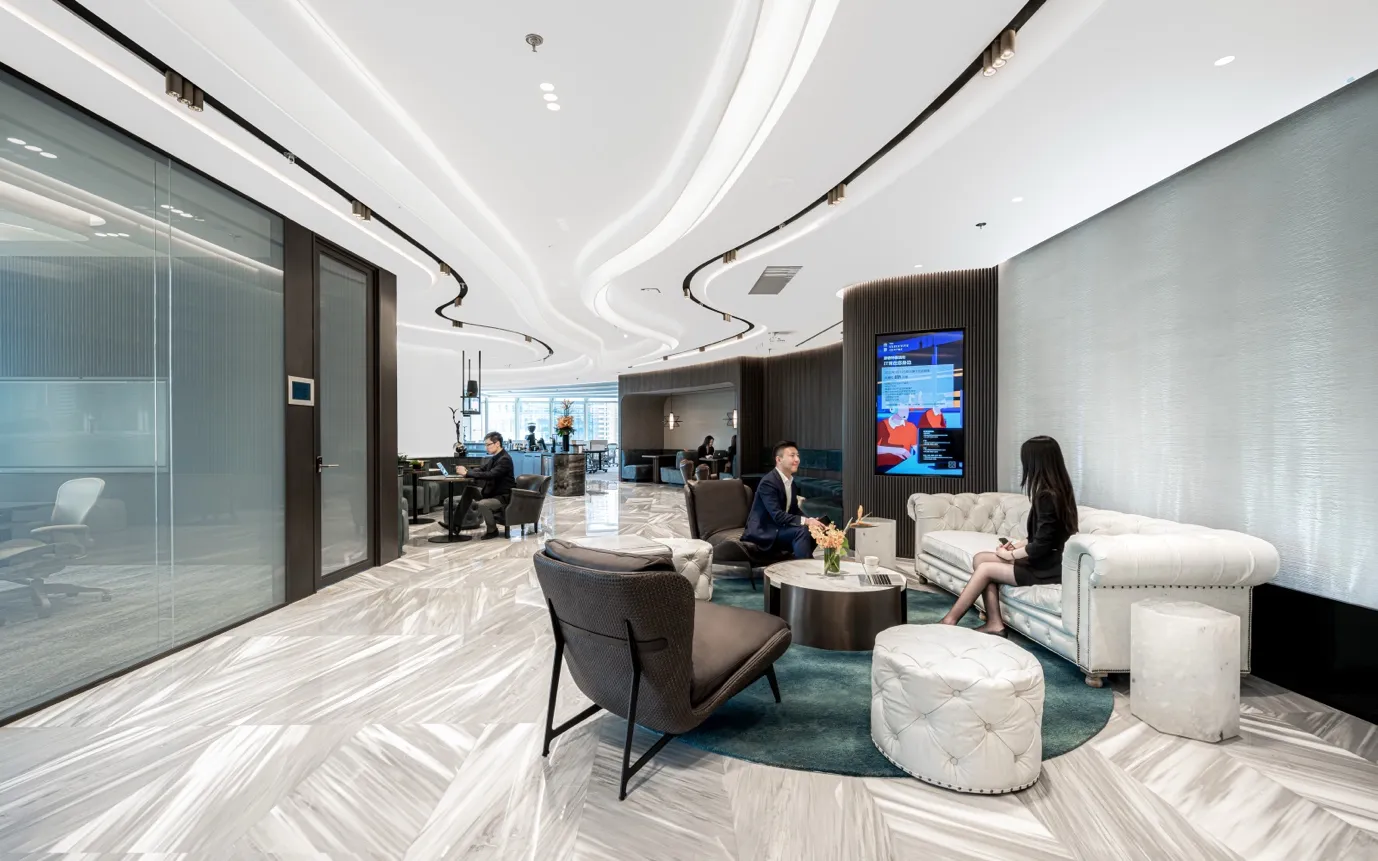
Chervon Names Maggie Jones Director of National Field Sales OPS ACN Newswire

Chervon Names Maggie Jones Director of National Field Sales OPS

NAPERVILLE, IL, Oct 26, 2026 - (ACN Newswire via SeaPRwire.com) - Maggie Jones joins Chervon as Director of National Field Sales Operations, effective October 26, 2026, reporting to Thomas Kentouris, VP of Field Sales. Jones will be charged with building out the support system, technology platform, and rigorous measurement/control process for the Chervon Field Sales Network.Most recently, Maggie was Divisional Sales Manager for TTI/Milwaukee where she was responsible for leading 140 field sales store coverage reps. She was an outstanding performer managing the high growth Texas region. Her career also included a series of store coverage and sales management positions in the Southeast USA."Maggie is best described as an overachieving superstar," said Thomas Kentouris. "Her leadership skills, organization skills, and results orientation will serve her well as she builds our field sales team infrastructure.""I cannot wait to get started supporting Chervon's vision of industry leadership," said Jones. "I look forward to deploying the field sales infrastructure needed to support our staggering growth potential at store level in the years ahead."Jones holds a BA from Appalachian State University. She graduated cum laude and was on both the Chancellor's list and Dean's list for academic excellence.ABOUT CHERVONChervon North America is part of a global total solution provider specializing in R&D, manufacturing, testing, sales, and after-sales service of power tools and outdoor power equipment (OPE).Guided by user-centric innovation, the Company operates an integrated business model supported by global sales and distribution networks. Chervon's portfolio includes EGO, FLEX, SKIL, and DEVON, serving industrial, professional, and consumer markets globally.Better Tools. Better World.Chervon is committed to delivering superior products to users worldwide through continuous innovation and strives to become a global leader in power tools and OPE in the lithium-ion, intelligent, and digital era.PR Contact: Corporate Communications: CorpComm@na.chervongroup.com | +1 (331) 231-2360SOURCE: Chervon Copyright 2026 ACN Newswire via SeaPRwire.com. All rights reserved. www.acnnewswire.com
More
Chervon Names Parker Wesley Clary Director of Field Sales – Southern Division ACN Newswire

Chervon Names Parker Wesley Clary Director of Field Sales – Southern Division

NAPERVILLE, IL, Oct 26, 2026 - (ACN Newswire via SeaPRwire.com) - Parker Wesley Clary joins Chervon as Director of Field Sales - Southern Division, effective October 26, 2026, reporting to Thomas Kentouris, VP of Field Sales.Clary assumes responsibility for the Southern Division of the Chervon Field Sales Team. He is charged with developing a strong organization, building outstanding store-level merchandising and promotional programs.Most recently, Parker was a Key Account Manager for TTI/Milwaukee Pro Tools responsible for the Transportation Maintenance Vertical.His impressive career also includes a series of increasingly responsible positions in store coverage and field sales management."Parker's exceptional sales and sales management skills will help us deliver our bold growth targets," said Thomas Kentouris. "He is a high-potential talent with a bright future ahead at Chervon.""The opportunity to be a part of Chervon's inspired high-performance culture was most compelling to me," said Parker. "I feel fortunate to now be a part of Chervon's outstanding leadership team."Clary is a graduate of Appalachian State University with a degree in Communications. He graduated Magna Cum Laude with a 3.84 GPA.ABOUT CHERVONChervon North America is part of a global total solution provider specializing in R&D, manufacturing, testing, sales, and after-sales service of power tools and outdoor power equipment (OPE).Guided by user-centric innovation, the Company operates an integrated business model supported by global sales and distribution networks. Chervon's portfolio includes EGO, FLEX, SKIL, and DEVON, serving industrial, professional, and consumer markets globally.Better Tools. Better World.Chervon is committed to delivering superior products to users worldwide through continuous innovation and strives to become a global leader in power tools and OPE in the lithium-ion, intelligent, and digital era.PR Contact:Corporate Communications: CorpComm@na.chervongroup.com | +1 (331) 231-2360SOURCE: Chervon Copyright 2026 ACN Newswire via SeaPRwire.com. All rights reserved. www.acnnewswire.com
More
Chervon names Joel Petersheim as Vice President, End User Research and Sales – OPE Commercial USA ACN Newswire

Chervon names Joel Petersheim as Vice President, End User Research and Sales – OPE Commercial USA

NAPERVILLE, IL, Oct 26, 2026 - (ACN Newswire via SeaPRwire.com) - Joel Petersheim joins Chervon as Vice President, End User Research and Sales - OPE Commercial, effective October 26, 2026, reporting to Joe Galli, CEO.Petersheim brings to Chervon 15+ years of experience at TTI/Milwaukee encompassing a series of increasingly responsible positions in sales, key account management, end user marketing, and sales management. Most recently, he held the position of Vice President Industrial Channel Sales - Northeast. Joel's impressive career also includes a series of director level end user marketing leadership roles focused on the MEP Verticals.His track record in converting key end users and in growing sales in each of his past positions was consistently outstanding."Joel is a tremendous addition to the outstanding leadership team we are building at Chervon," said Joe Galli. "He is a high potential talent with a tremendous track record of success at the account and end user level.""I am enormously impressed with Chervon's technology leadership and new product development capabilities," said Joel Petersheim. "I look forward to quickly supporting our company's bold growth targets in the months and years ahead."Petersheim has a Business Administration degree from Shippensburg University, Shippensburg, PA. He was a star on the Shippensburg University football team.ABOUT CHERVONChervon North America is part of a global total solution provider specializing in R&D, manufacturing, testing, sales, and after-sales service of power tools and outdoor power equipment (OPE).Guided by user-centric innovation, the Company operates an integrated business model supported by global sales and distribution networks. Chervon's portfolio includes EGO, FLEX, SKIL, and DEVON, serving industrial, professional, and consumer markets globally.Better Tools. Better World.Chervon is committed to delivering superior products to users worldwide through continuous innovation and strives to become a global leader in power tools and OPE in the lithium-ion, intelligent, and digital era.PR Contact: Corporate Communications: CorpComm@na.chervongroup.com | +1 (331) 231-2360SOURCE: Chervon Copyright 2026 ACN Newswire via SeaPRwire.com. All rights reserved. www.acnnewswire.com
More
Xunce TokenOS Expands Deep into Germany, the Heart of Europe, Marking Further Progress in Its Internationalization Layout ACN Newswire

Xunce TokenOS Expands Deep into Germany, the Heart of Europe, Marking Further Progress in Its Internationalization Layout

HONG KONG, Oct 26, 2026 - (ACN Newswire via SeaPRwire.com) - Recently, Berlin Global Dialogue (BGD) 2026 and the Invest in Germany Summit were held concurrently in Berlin, Germany. Xunce (3317.HK) was invited to attend as a strategic partner. The company’s management and representatives participated in relevant events and held in-depth exchanges with stakeholders from all sectors on topics including AI data infrastructure and China-Europe data cooperation. Seizing this opportunity, the company’s new-generation product TokenOS is accelerating its entry into the European market, marking a solid step forward in its internationalization strategy.On-site of BGD 2026 (Photo by Paula GVidal)TokenOS Business Accelerates Overseas Expansion: From Product Export to Joint Co-creationAt BGD 2026, leading global industrial giants including Mercedes-Benz, Airbus, Bayer and Siemens Healthineers gathered at the event. Xunce is conducting in-depth negotiations with multiple leading European enterprises covering core scenarios such as automotive, high-end manufacturing and energy, exploring potential cooperation space for TokenOS and steadily building its global business layout. According to financial report data, the company’s overseas business revenue reached 11.86 million yuan in the first half of this year, a substantial year-on-year increase of 264%.The accelerated rollout of TokenOS in Europe is the core highlight of Xunce’s Berlin visit. As a flagship product launched by the company in the first half of this year, TokenOS is dedicated to converting enterprise multi-source heterogeneous data into standardized, measurable and priceable scenario-based Tokens in real time. It focuses on addressing the core bottleneck of insufficient high-quality scenario data supply in enterprise AI implementation, enabling large-scale industrial production of scenario-specific Tokens.Prior to this, Xunce has launched a "scenario Token factory" for the European market to promote the localized deployment of TokenOS in Europe. It deeply integrates the engineering capabilities of China’s AI data infrastructure with Europe’s local industry experience, compliance governance and delivery capabilities, to jointly explore AI transformation solutions that comply with EU data sovereignty requirements.Deep Dive into the Data Layer: Solving Enterprise AI Implementation Pain Points with Specialized TokensRecently, Jensen Huang stated at the Invest in Germany Summit that in the future, every company will have two factories: one is a real physical factory, and the other is a digital factory — the digital factory will be so realistic that it is nearly indistinguishable from reality. He also noted that data is part of a country’s natural resources, recording its culture, values, knowledge and experience; Germany should introduce the world’s best AI technology to develop its own data and turn data into its own intelligence. The next wave of AI will be "Physical AI", where AI will deeply integrate with robotics, manufacturing, automotive and heavy industries, serving to enhance rather than replace Germany’s existing craftsmanship and industry expertise.Xunce clearly pointed out at the forum that the three pillars of the AI industry are large models, computing power and data. Through the full-link product and service system of "computing power + data + Token + model + application", the company provides enterprise-level customers with integrated AI deployment solutions and continuously creates strategic and business value. Currently, the company serves 11 high-barrier, high-value industries including finance, telecommunications, energy, high-end manufacturing, healthcare, robotics and intelligent vehicles, with over 400 AI data infrastructure product modules and a customer retention rate of over 90%.Full-link product matrix of "Computing Power - Data - Token - Model - Application"In the context of "Physical AI", the key to enterprise AI implementation is not simply stacking GPUs, but prioritizing data governance, standardization and modeling. As a critical hub connecting models with real business operations, TokenOS is driving the delivery model of enterprise services in the AI era to shift from standardized solution output to in-depth co-construction with customers.China-Europe AI Collaboration: Compliance as the Bottom Line, Complementarity as the FoundationChina and Europe are highly complementary in AI cooperation. China has rich application scenarios, a complete industrial system and large-scale implementation advantages, while Europe has profound accumulation in basic research, technical compliance, regulatory governance and industry standards. The two sides can form deep complementarity of "scale + governance". Xunce stated that with the deepening of AI applications, high-quality, compliant and traceable data is becoming a core asset, which also brings broad development space for data infrastructure enterprises."Data sovereignty does not necessarily equal data closure." TokenOS can be deployed on customer-managed clouds and local systems, ensuring that raw data remains in the customer’s environment while supporting secure Token invocation, truly realizing the vision of "data stays locally while value can flow". This technical path not only accommodates data sovereignty requirements, but also provides a brand-new implementation paradigm for cross-border AI applications. In addition, Xunce has reached strategic cooperation with the Shenzhen Data Exchange and the Beijing International Big Data Exchange, forming a north-south coordinated layout in the data factor market, and providing solid support for the standardized application of data tokenization and related technologies.Currently, over 90% of Xunce’s revenue comes from China’s domestic market, while the company continues to increase investment in the European and Southeast Asian markets. Going forward, Xunce will take the European deployment of TokenOS as a new starting point, accelerate the formation of replicable global implementation samples in scenarios such as automotive, aviation, manufacturing and energy, and strive to deliver premium solutions to global customers. With compliance as the bottom line and local partners as the fulcrum, it will push China-Europe sci-tech cooperation to a new height of joint innovation and scenario co-creation.Media contactBrand Name: XunceContact Person: Marketing TeamEmail: ir@xuncetech.com Tele: 0755-86667876Website: http://www.xuncetech.com/ Copyright 2026 ACN Newswire via SeaPRwire.com. All rights reserved. www.acnnewswire.com
More
Xunce Focused on Real-Time AI Data, Bringing the Best Solutions to the World ACN Newswire

Xunce Focused on Real-Time AI Data, Bringing the Best Solutions to the World

HONG KONG, Oct 26, 2026 - (ACN Newswire via SeaPRwire.com) - From October 20 to 22, Berlin Global Dialogue (BGD 2026) was held at ESMT Berlin in Germany under the theme “Advancing Alliances for the New Era.” Xunce (3317.HK) participated as a strategic partner, with members of its management team and other representatives invited to attend.This year’s forum brought together government representatives and senior business executives from the United States, the United Kingdom, India, China, the European Union, and other countries and regions. As markets, supply chains, and technologies increasingly become arenas of strategic competition, scaling AI deployment across fragmented ecosystems emerged as a central topic. As a strategic partner, Xunce took part in the Leaders’ Dialogue and Impact Dialogue and hosted a thematic session titled “Navigating Cooperation of EU and China in a Fractured World.”BGD 2026 (Photo courtesy of photographer Paula G. Vidal)Leaders’ Dialogue: Focusing on the Data Layer and Bringing the Best Solutions to the WorldAt the Leaders’ Dialogue session, “Fragmented AI, Competitive Ecosystems, and Faster Innovation?”, Xunce noted that the AI industry rests on three pillars: large models, computing power, and data. Xunce focuses on the data layer. Founded 11 years ago, the company has served customers across 11 vertical industries, including pharmaceuticals, manufacturing, electric power, and telecommunications. It helps enterprises govern, standardize, and model their internal data before feeding it into large models to generate optimized outcomes. Relatively constrained computing capacity in China has pushed companies to maximize data efficiency, creating structural opportunities.Leaders’ Dialogue session (Photo courtesy of photographer Izzy Dempsey)On regulation, Xunce observed that enterprise AI remains at an early stage, with most applications governed by existing industry-specific rules in telecommunications, pharmaceuticals, manufacturing, and other sectors. For example, helping telecom customers improve advertising efficiency and return on investment remains subject to existing telecommunications regulations. Customers have yet to reach a regulatory ceiling; foundational data work remains the priority, in Europe and the United States as well. Fragmentation is a structural reality, but it does not necessarily impede innovation and can sometimes act as a catalyst. Limited resources encourage enterprises to use large models to improve operational efficiency rather than compete to stockpile GPUs. For instance, when a leading insurance client expanded into Singapore, it needed separate data centers in the two markets, data segregation protocols, and different large models, increasing costs and exposure to two regulatory regimes. Conversely, foreign insurers entering China have brought mature models and governance frameworks, while dialogue with Chinese regulators has increased markedly over the past two years, improving two-way exchange.Discussing globalization, Xunce emphasized the commercial imperative to bring the best solutions to customers worldwide. Approximately 90% of its revenue currently comes from China, while the company continues to increase investment in Europe, Southeast Asia, and South America. The AI era is reshaping how enterprise service providers deliver solutions. Whereas standardized offerings, similar to those of consulting firms, once sufficed, providers must now co-develop solutions closely with each customer. This requires a rapid change in mindset.Xunce believes that if China, the United States, India, and Europe could agree on one AI priority, it should be “safety standards,” where risks are concentrated and the issues most complex. In frontier research, reaching global consensus on “what must not be done” is even more important than agreeing on “what can be done.”Impact Dialogue: The Next AI Winners Will Be Companies That Deliver Measurable ProductivityAt the Impact Dialogue session, “Scaling AI: Shared Prosperity or Greater Social Division?”, Ai Cheng, Global Strategic Advisor to Xunce, said that China’s AI opportunity is often misunderstood. It is not simply about training larger or cheaper models, but about making AI work in the real economy, including manufacturing, energy, and robotics. Xunce focuses on real-time AI data and enterprise infrastructure, connecting models with actual business operations. The next AI winners will not be the companies with the smartest models, but those that create measurable productivity. In China–Europe cooperation, China can contribute industrial scale and deployment experience, while Europe brings engineering capabilities, sector expertise, and governance experience. The two sides can compete in innovation while cooperating on interoperability—one reason she hopes to see more Chinese and European companies work together.Impact Dialogue session (Photo courtesy of photographer Paula G. Vidal)Ai Cheng noted that Germany’s renowned Mittelstand and China’s vast ecosystem of small and medium-sized manufacturing enterprises face the same challenge: they need AI that actually works, not AI that merely looks impressive. She proposed three solutions. First, offer enterprise AI infrastructure “as a service” to make it affordable. Second, develop industry-specific AI applications that integrate seamlessly with existing workflows. Third, make deployments repeatable, with transparent costs, measurable returns, and clear accountability. This is why companies such as Xunce are working to modularize complex data and AI capabilities. Its strategy is to turn capabilities that enterprises previously had to build in-house into standardized modules that organizations of different sizes can combine as needed, rather than starting from scratch each time. She also argued that the greatest asset shared by China and Germany is not capital, factories, or technology, but people—especially young people. The future of AI should not be determined by a handful of companies or countries, but shaped collectively by more people across more borders.She added that what moved her most about BGD was its determination to turn uncertainty into action. To her, BGD is more than a conference: it is a place where government leaders, entrepreneurs, investors, and younger generations challenge one another and forge new partnerships. As Jensen Huang recently asked, why does a country as technologically advanced as Germany lag behind in certain areas? China, too, has experienced periods of falling behind and understands the importance of learning, catching up, and building. The question today is no longer who is ahead or behind, but how we can move forward together.TokenOS Deployment Accelerates in Europe: China–EU AI Cooperation Moves Toward Joint InnovationAt Xunce’s session, “Navigating Cooperation of EU and China in a Fractured World,” Jiang Changjian, an independent non-executive director of Xunce, stated that the key question for China–EU economic cooperation is not whether it should continue, but in what form it can move forward. Amid trade restrictions, technological competition, and regulatory differences, both sides need to address disagreements through more institutionalized and pragmatic approaches.Xunce’s thematic session on China–EU cooperationDrawing on Xunce’s international expansion, he explained that the company has partnered with a European digital services provider to jointly develop a scenario-specific Token Factory for the European market, advancing the local deployment of TokenOS. By combining China’s engineering capabilities in AI data infrastructure with European industry expertise, compliance knowledge, and delivery capabilities, the partners are exploring AI transformation solutions aligned with EU data sovereignty requirements. The partnership also illustrates how China–EU technology cooperation is expanding beyond traditional technology exports toward joint innovation and co-creation of use cases. On data sovereignty, he argued that sovereignty does not necessarily mean data isolation. Xunce’s TokenOS can be deployed on customer-managed clouds and on-premises systems, keeping raw data within the customer’s environment while enabling secure Token access. This creates a model in which “data stays local while value can flow,” balancing data security with business use. Xunce has also established strategic partnerships with the Shenzhen Data Exchange and Beijing International Big Data Exchange Co., Ltd. to advance its business in data-related assets and markets.China’s technological upgrading, Europe’s industrial transformation, and the economic complementarities between the two sides are long-term trends. For AI companies, standardized data infrastructure, collaboration with local European partners, and compliance with local requirements provide a path for cross-border cooperation in real industrial settings. With a focus on real-time data processing and decision support, Xunce continues to explore how data can create value across industries and markets.Media contactBrand Name: XunceContact Person: Marketing TeamEmail: ir@xuncetech.com Tele: 0755-86667876Website: http://www.xuncetech.com/ Copyright 2026 ACN Newswire via SeaPRwire.com. All rights reserved. www.acnnewswire.com
More
OpenWorld Confirms Dual Listing on Figure OPEN on Track for Q4 2026 Following Stockholder Approval of Blockchain Common Stock ACN Newswire

OpenWorld Confirms Dual Listing on Figure OPEN on Track for Q4 2026 Following Stockholder Approval of Blockchain Common Stock

LAKE MARY, Fla., October 26, 2026 - (ACN Newswire via SeaPRwire.com) - OpenWorld, Inc. (NASDAQ: OPNW) (“OpenWorld” or the “Company”), a blockchain innovation company advancing real-world asset tokenization, today confirmed that its planned dual listing on Figure’s On-chain Public Equity Network (“Figure OPEN”) remains on track to go live in the fourth quarter of 2026.OpenWorld expects to be among the first Nasdaq-listed companies to bring its public equity on-chain, giving institutional and retail investors a new way to hold and trade shares of a U.S. exchange-listed company without leaving the regulatory boundaries of the existing securities framework.The update follows stockholder approval on October 16, 2026 of the Company’s Amended and Restated Articles of Incorporation (“Restated Articles”), which authorizes a new class of Blockchain Common Stock. As disclosed in the Company’s Current Report on Form 8-K filed on October 16, 2026. This is the corporate mechanism required to bring OpenWorld’s equity onto Figure OPENNo New Shares – One Company, Two Ways to TradeThe Figure OPEN listing does not involve the issuance of any new shares and will not raise capital. OpenWorld’s Blockchain Common Stock will serve as a blockchain-native version of the Company’s existing Nasdaq-listed shares, giving stockholders the choice of holding and trading OPNW shares on Nasdaq or on Figure OPEN. Blockchain Common Stock is designed to settle in real time, rather than on the conventional T+1 cycle, and to trade around the clock. The Company’s total number of outstanding shares will not increase.“Bringing OPNW on-chain has been part of our vision since day one, and we remain on track to execute this vision with Figure OPEN later this quarter,” said Matthew Shaw, Chief Executive Officer and Chairman of OpenWorld. “Bringing our shares on-chain through Figure OPEN provides our existing stockholders with greater choice, without any dilution, as markets increasingly move 24/7 through blockchain rails. When we go live on Figure OPEN, our shareholders can trade on Nasdaq as they always have or hold the same ownership as a blockchain-native share with faster settlement and extended trading access. We believe this is where public markets are heading, and we intend to be at the front of it.”Delivering on the Dual-Listing PlanAs announced on October 1, 2026, OpenWorld is pursuing a dual listing on Figure OPEN, building on its previously announced agreement with Figure Technology Solutions, Inc. (NASDAQ: FIGR) to offer a digitally native share class. With stockholder approval secured, OpenWorld expects the Figure OPEN listing to be live later this quarter.The Figure OPEN listing is designed to complement, not replace, the Company’s Nasdaq listing. OpenWorld remains subject to the same SEC reporting requirements, corporate governance standards and investor protections.Compliant Transfer Agent to Simplify the Dual StructureTo make moving between the two formats simple for stockholders, OpenWorld has appointed Vinyl Equity, Inc., an SEC-registered transfer agent equipped to maintain records for both traditional and blockchain-based shares. The transfer agent will support stockholders who wish to hold their shares in either form. OpenWorld will provide information on how stockholders can access the blockchain-based shares.Charter Amendments ApprovedOn September 30, 2026, OpenWorld’s Board of Directors approved the Restated Articles and submitted them to stockholders. On October 16, 2026, stockholders holding approximately 57.57% of the Company’s issued and outstanding common stock, a majority of its outstanding voting power, approved the Restated Articles by written consent under Section 78.320 of the Nevada Revised Statutes. The amendments provide for:- The authorization of 500,000,000 shares of Blockchain Common Stock, par value $0.001 per share, as a “blank check” class issuable in one or more series.- An express election permitting the Company to make distributions that would otherwise be prohibited by NRS 78.288(2)(b).Upon effectiveness, OpenWorld’s authorized capital stock will consist of 675,000,000 shares of Common Stock, 500,000,000 shares of Blockchain Common Stock and 75,000,000 shares of Preferred Stock, each with a par value of $0.001 per share. Authorized shares represent the maximum the Company may issue and do not change the number of shares outstanding. The Restated Articles will become effective upon filing with the Nevada Secretary of State following the expiration of the applicable notice period under Rule 14c-2 under the Securities Exchange Act of 1934, as amended, following the mailing of OpenWorld’s definitive Information Statement on Schedule 14C to its stockholders, which is expected to begin on October 26, 2026.About OpenWorldOpenWorld, Inc. (NASDAQ: OPNW) is a digital assets and blockchain technology company. Through its OpenWorld Enterprise platform, the Company provides financial structuring and blockchain infrastructure for the issuance and distribution of tokenized real-world assets to institutional and retail investors. To learn more, visit openworld.dev.Forward-Looking StatementsThis press release includes forward-looking statements within the meaning of Section 27A of the Securities Act of 1933, as amended, and Section 21E of the Securities Exchange Act of 1934, as amended, including statements regarding the timing of filing and effectiveness of the Company’s Restated Articles, the timing of the Company’s definitive Information Statement on Schedule 14C being mailed to the Company’s stockholder, the timing and expected benefits of the Company’s listing on Figure OPEN, the issuance and characteristics of Blockchain Common Stock, and the services of the Company’s transfer agent. Words such as “believe,” “expects,” “intends,” “planned,” “will,” and similar expressions identify forward-looking statements. These statements are subject to risks and uncertainties, including regulatory approvals, market conditions and technology readiness, that could cause actual results to differ materially. Investors should not place undue reliance on forward-looking statements, which speak only as of the date of this release. OpenWorld undertakes no obligation to update them except as required by law. Additional risks are described in the Company’s filings with the SEC.ContactsInvestors: OpenWorldIR@allianceadvisors.com Media: Aayushi@allianceadvisors.com NMS Equity Transfer Agent: Vinyl Equity, Inc., 1-888-80-VINYL (84695)Blockchain Equity Transfer Agent: Figure Equity Solutions, Inc., support@figuremarkets.com Source: Form 8-K filed with the SEC. Prior announcements: October 1 Nasdaq listing; Figure agreement. Copyright 2026 ACN Newswire via SeaPRwire.com. All rights reserved. www.acnnewswire.com
More
Savills Hong Kong Hosts Grand Reception to Celebrate 40th Anniversary ACN Newswire

Savills Hong Kong Hosts Grand Reception to Celebrate 40th Anniversary

Hong Kong, Oct 26, 2026 - (ACN Newswire via SeaPRwire.com) - International real estate firm Savills Hong Kong hosted a grand reception on Friday, 23 October at Cloud 39, the spectacular rooftop event venue at The Henderson in Central, to celebrate its 40th anniversary. The occasion brought together more than 300 business partners, industry leaders and key stakeholders to mark Savills’ four decades in Hong Kong, reflect on its remarkable achievements and explore its vision for the future.Mr Simon Shaw (right), Group Chief Executive Officer of Savills, and Mr Raymond Lee (left), Chief Executive Officer, Greater China of Savills The event brought together numerous distinguished business luminaries and industry leaders, including Dr Albert Yeung, Chairman of Emperor Group; Dr Francis Choi, Chairman of Early Light International (Holdings) Ltd.; and Mr Raymond Kwok, Chairman and Managing Director of Sun Hung Kai Properties, to celebrate Savills Hong Kong’s 40th anniversary.Since establishing its presence in Hong Kong in 1986, Savills has witnessed and played a part in the city's dynamic growth and transformation over the decades. The management expressed its gratitude to business partners, clients and colleagues for their steadfast support over the years, reaffirming the Company’s commitment to professionalism and to moving forward together with the Hong Kong community.Mr Simon Shaw, Group Chief Executive Officer of SavillsMr Simon Shaw, Group Chief Executive Officer of Savills, said in his opening remarks, “Thank you for joining us to celebrate our 40th anniversary in Hong Kong. Over the past four decades, Hong Kong has experienced periods of rapid growth as well as challenging economic and property market cycles. Throughout each cycle, the property market has demonstrated its ability to adapt, recover and move forward, and our business has followed the same trajectory. None of this would have been possible without the trust and support of our clients over the years. Your confidence and loyalty have enabled us to continue to grow and thrive. Looking ahead, we will further develop across the Asia-Pacific region, while strengthening and expanding our expertise and capabilities. This region is central to Savills’ future, just as it has long been an integral part of our history. Finally, I would like to thank everyone who has contributed to our success. Together, we look to the future with confidence.”Mr Raymond Lee, Chief Executive Officer, Greater China of SavillsMr Raymond Lee, Chief Executive Officer, Greater China of Savills, said, “Many of our partners have stood alongside us for decades, and over time, those business ties have grown into lasting friendships. Thank you for entrusting us with your important projects. For us, completing a transaction is always rewarding, but the greatest recognition of our team’s efforts comes when clients choose to work with us again or recommend us to others. The strength of our Hong Kong team lies in its deep understanding of the local market, combined with its global connections. By drawing on the Group’s resources and worldwide network, we are able to offer clients a broader perspective and a more comprehensive range of services. Looking ahead, markets and technologies will continue to evolve, but our commitment to professionalism, integrity and putting our clients’ interests first will remain unchanged.”Guests gather to celebrate the 40th anniversary of Savills Hong Kong.The reception featured a thoughtfully curated programme combining music, magic and traditional instrumental performances to add depth and an element of surprise to the celebration. The evening commenced with Hong Kong soprano Hedy Chan, who was accompanied by a string quartet to perform a moving rendition of Mattinata, setting an elegant yet lively tone for the reception. Renowned magician Louis Yan then took to the stage. Known for his close-up magic and interactive performances, he engaged guests with skilful sleight of hand and well-timed humour, drawing waves of laughter and applause and bringing the atmosphere to a crescendo. Finally, renowned shakuhachi player Mr Sunny Yeung and yangqin player Ms Kwok Ka-ying took to the stage for the grand finale. The deep, resonant tones of the shakuhachi, complemented by the yangqin, lent the lively celebration a touch of Zen-like tranquillity and poetic elegance. The series of performances not only showcased a sophisticated appreciation for lifestyle and the arts, but also allowed guests to connect and mingle in a relaxed and refined atmosphere, raising their glasses in conversation and sharing a memorable evening. Hedy Chan and the string quartet open the 40th anniversary reception Magician Louis engages guests with close-up magic, drawing sustained applauseRenowned shakuhachi player Mr Sunny Yeung and yangqin player Ms Kwok Ka-ying bring the programme to a close with their resonant tonesAbout SavillsFor over 170 years, Savills has been helping people thrive through places and spaces. Listed on the London Stock Exchange, we have more than 42,000 professionals collaborating across over 70 countries, delivering unrivalled coverage and expertise to the world of commercial and prime residential real estate. By applying world research data and trends to local and global settings, we’re able to empower our clients with insights from the forefront of the industry – bringing their aspirations to life through innovative, tailor-made solutions. Whether we are working with a global corporate looking to expand, an investor seeking to sustainably optimise their portfolio, or a family trying to find a new home, we help our clients make better property decisions. Copyright 2026 ACN Newswire via SeaPRwire.com. All rights reserved. www.acnnewswire.com
More
Micro-Dramas After 1 September 2026 – How China (Mainland) Rewrote the Rules ACN Newswire

Micro-Dramas After 1 September 2026 – How China (Mainland) Rewrote the Rules

HONG KONG, Oct 26, 2026 - (ACN Newswire via SeaPRwire.com) - China (Mainland) counts 664 million micro-drama viewers, 59.0% of its 1.125 billion internet users, according to the China Internet Network Information Center's 57th statistical report. It counts 814 million livestreaming users, 72.3% of the same base. And since 1 September 2026 it counts a comprehensive regulatory regime for the format, the Micro-Drama Development Management Measures issued by the National Radio and Television Administration, backed by a parallel multi-channel distribution rule from five departments that took effect the same day.The industry that those measures now governs is not the one most coverage describes. It is not a cottage industry of scrappy studios chasing viral hits. It is a sector where artificial intelligence-generated titles account for roughly 60% of output, where the cultural and related industries as a whole generated RMB 6.2094 trillion in 2024, equal to 4.61% of GDP, and where the binding constraint stopped being demand some time ago. The problem facing Chinese micro-drama studios in late 2026 is not whether anyone will watch. It is whether the unit economics survive a rules change that rewrote classification, labelling, platform duty and payment mechanics in a single quarter.What actually changed on 1 SeptemberThe Measures are the first comprehensive rule for the format rather than a notice, and they do four things that matter operationally.First, they define the object. A micro-drama is a serial work with episodes under twenty minutes, with a clear theme and main line, continuous and complete story, and defined characters. The definition reaches across every distribution channel: websites, apps and distribution platforms, broadcast channels and dedicated zones, internet television, IPTV and cable, received on televisions, phones, tablets, computers, public screens, wearables and in-vehicle devices. That breadth is deliberate. It closes the gap between "online content" and "television content" that the format had been exploiting since it began.Second, they classify. Micro-dramas are divided into three categories by investment size and subject matter, with a filing and public-notice regime for some and a distribution licence regime for others.CategoryBasisRegimePractical effectClass IHigher investment, sensitive subject matterDistribution licence or approval required before broadcastLongest lead time, highest barClass IIMid-rangeDistribution licence or approval required before broadcastSame gate, lighter dossierClass IIILower investment, general subject matterPlatform review, then title information filed with the regulatorFastest path, platform bears first review Third, they enumerate prohibited content across eleven items, including endangering national security, distorting national history, disparaging excellent traditional culture, and infringing the lawful rights of minors. Fourth, and this is the one that reshapes production decisions, they require any micro-drama generated or produced using artificial intelligence technology to carry a clear AI prompt mark in a prominent position in every episode.The AI clause is the one with teethThe labelling requirement did not arrive cold. It was built in three steps over eight months, and the sequencing tells you the regulator was reacting to a measurable shift in the production mix rather than anticipating one.· From 1 April 2026, filing rules for AI comic-style dramas became fully mandatory.· From 1 July 2026, the Administration issued a management notice setting out classification and layering standards for AI micro-dramas, requiring AI generation marks and setting requirements on content quality, subject selection and copyright protection.· From 1 September 2026, the Measures made the per-episode AI mark a standing obligation across all distribution channels.By 17 September 2026, at a State Council Information Office briefing, the Administration was describing the problem in unusually direct terms: AI dramas are developing very fast and account for a very high share, so the approach must encourage innovation while holding the bottom line, and in the end AI is a tool while people remain the subject of creation. The same briefing stated that live-action dramas are the main force of quality production and should be strongly supported. That is a policy signal about which category of producer the state intends to back, and studios reading it as incidental are misreading it.There is a compliance mechanic underneath the principle. Machine review can identify explicit violations such as gore and violence. It cannot reliably identify distorted aesthetics, vulgarity, or content that violates public order and good morals. The industry response, pushed by the regulator, is that AI-simulated-human micro-dramas must have human review applied. That requirement converts a variable cost into a fixed one, and for the studios whose entire cost advantage was the absence of human review, it removes the advantage.Every upload gets reviewedThe measures were followed by a further management notice from the Administration's network audiovisual department that tightened platform duty in ways that matter more to studios than the classification table does.· Platforms must apply broadcast-then-review to nothing: user-uploaded micro-dramas are subject to strict "review everything that is broadcast" handling.· Class I and Class II titles may only be broadcast after obtaining a Micro-Drama Distribution Licence or corresponding approval document.· Class III titles are reviewed by the platform, which then files title information with the competent authority.· Platforms may not distribute self-produced special-subject micro-dramas uploaded by individuals.· Provincial authorities are to supervise and verify, and may explore broadcast-while-reviewing management within compliance.The structural change is that the platform has become the regulatory counterparty of the studio. Every obligation above lands on a platform that now has a strong incentive to prefer producers who can produce clean paperwork on the first attempt. That is a quiet consolidation mechanism, and it will show up in commissioning behaviour before it shows up in any published market share data.Alongside the review duty sit two obligations aimed squarely at the business model. Platforms must periodically evaluate their review algorithm mechanisms, increase recommendation weight for quality micro-dramas, and must not use algorithmic models that induce addiction or excessive consumption. And paid content must be provided under a lawfully concluded agreement with clearly published charging information protecting consumer rights.The money problem, which predates the rulesHere is the part that the regulatory coverage tends to miss. The micro-drama business model had already broken before 1 September, and the rules are landing on an industry that was already repricing itself.The mechanism was paid traffic acquisition. Studios bought traffic, tested a hook, and scaled whatever converted. In mid-2026 three things moved at once: model pricing rose, platform revenue-share terms adjusted, and regulation tightened. The distribution mechanism that had amplified marginal titles was withdrawn. Guangfa Securities' media and internet analyst described the outcome plainly: the flood-the-zone, bet-on-a-hitmodel of traffic buying returned to rationality, supply-side excess and homogenisation pushed down the win rate on traffic spend, and incremental viewing flattened. His framing is worth quoting because it is more precise than most: this is not a winter for content itself, it is the extinguishing of an upstream false fire that had been sustained by a single system's strong capital and channel distribution tilt.The consequences for small and mid-sized studios are specific and financial rather than editorial.· Cash flow is tight and collection periods are unstable, because platform settlement lags production spend.· Traffic acquisition requires upfront capital, which makes the working capital gap structural rather than cyclical.· Original subject matter requires long script development and higher shooting cost, and platform conversion rates are hard to predict in advance, which pushes companies away from innovation and toward homogeneous plots.· Standardised formula micro-dramas trigger algorithmic recommendation more reliably, so investors prefer proven templates that minimise market testing risk.That last point is the trap, and the rules have now closed part of it. A formula-driven, AI-generated title was the cheapest possible response to algorithmic incentives. It is now also the category carrying a mandatory per-episode AI mark, mandatory human review, and the lowest priority in the recommendation weighting the regulator has told platforms to apply.The financing response is real but smallChina's banks have started building products for the sector, which is a useful signal about both the size of the funding gap and its shape.LenderProductTermsBank of Communications, Liaoning branchFirst OPC plus micro-drama industry loan in the northeastProceeds tied to script acquisition, shooting, post-production and launchICBC, Xi'an Economic and Technological Development Zone sub-branchRMB 3 million to a micro-drama producerAccount opening to disbursement in under five daysQujiang Rural Commercial BankMicro-drama loan secured on copyright, shooting contracts and forecast revenueDisbursement in three working days, rate about 20% below comparable productsBank of Beijing"Ten Billion New Vision" action plan, March 2026RMB 10 billion of credit resources for the audiovisual sector The pattern across all four is that lending is being secured on copyright, production contracts and forecast platform revenue shares rather than on fixed assets. That is the only way to lend to a business with no collateral, and it works only while platform revenue shares are predictable. The rules make them somewhat more predictable for compliant producers and considerably less so for everyone else.Demand is not the problemEvery indicator on the consumption side is healthy, and this is worth stating because the regulatory coverage implies a contraction that the audience data does not show.The 57th CNNIC report puts internet users at 1.125 billion with 80.1% penetration, online video users at 1.093 billion, short video at 1.074 billion, micro-drama at 664 million and livestreaming at 814 million. The National Bureau of Statistics put cultural and related industries value added at RMB 6.2094 trillion for 2024, 4.61% of GDP, up 0.02 percentage points, of which cultural services were RMB 4.3256 trillion, or 69.7%, cultural manufacturing RMB 1.2607 trillion, and cultural wholesale and retail RMB 623.1 billion. Note that the 2025 figure had not been published as of late October 2026, so 2024 remains the latest official year.Where the pressure does show is in the adjacent revenue line. Kuaishou's second-quarter 2026 results showed total revenue of RMB 35.5 billion, up 1.4%, with online marketing services at RMB 20.6 billion, up 4.4%, other services at RMB 6.2 billion, up 18.5%, and livestreaming revenue at RMB 8.7 billion, down 13.5%. Average daily active users were 412.3 million and monthly active users 797.3 million. Livestreaming is the line that shares an audience and an attention pool with micro-drama, and it is the line that is falling.Overseas is the release valve, and it is not a substituteChinese micro-dramas have become the fourth globally distributed audiovisual format after American film, Japanese animation and Korean television drama, according to the China-ASEAN Micro-Drama International Communication Development Report released by the Administration during the China-ASEAN Audiovisual Week in Beihai on 20 October 2026.Market indicatorFigureCumulative downloads of Chinese micro-drama apps in ASEAN, to end-September 20261.217 billionCumulative in-app purchase revenue in ASEANUS$438 millionIndonesia share of ASEAN downloads56.77%Indonesia downloads, first three quarters411 millionThailandHighest ASEAN in-app revenue, only ASEAN market in global top ten The mismatch between those two headline numbers is the point. 1.217 billion downloads produced US$438 million in cumulative in-app purchases, which works out to well under half a dollar of revenue per download. Downloads are where the audience is; revenue is not. Thailand is the instructive exception, being both the highest-revenue ASEAN market and the only one in the global top ten, which suggests that willingness to pay rather than willingness to install is the variable that matters.There is also a reported conflict in the size of the Southeast Asian micro-drama market that deserves to be recorded rather than resolved: industry estimates place the sector at about US$510 million while official reporting puts in-app purchase revenue at about US$190 million for January to September. The gap is a definitional one between total industry value and platform-measured consumer spend, and no source reconciles the two.Supply is still risingWhatever the rules have done to economics, they have not yet reduced volume. The Administration's network audiovisual department publishes monthly filing notices for key micro-dramas, and the 2026 third-quarter series runs upward month by month:Month, 2026Key micro-drama filingsLeading subjectsJuly143Urban 44 (30.77%), legend 32 (22.38%), revolutionary 16 (11.19%)August207Not itemised in the same noticeSeptember224Urban 65 (29.02%), legend 58 (25.89%), revolutionary 22 (9.82%) Subject categories expanded to sixteen types by September. On the production side, the China-ASEAN report records a cumulative domestic catalogue on the order of 490,000 titles and about 290,000 titles distributed overseas cumulatively, with new domestic production in the most recent reporting year recorded at roughly 33,000. Those three figures come from the same report and are not fully reconciled with each other, so they should be read as order-of-magnitude rather than as a consistent series.The policy response runs alongside rather than against this. The Administration's quality micro-drama creation and communication implementation plan sets out a target of 1,000 outstanding micro-dramas per year and a support system substantially in place by the end of 2026, and the Measures explicitly encourage public participation in production, support outward-oriented co-production, relax restrictions on foreign creative participation, and promote simultaneous domestic and overseas release.What a studio should actually do nowThe compliance list is short; the strategic list is shorter. Ordered by what changes the outcome.· Decide which class you are filing under before you shoot, not after. Investment size and subject matter set the category, and the category sets whether you need a distribution licence before broadcast. Retrofitting a Class III production into a Class II filing is the most expensive mistake available.· Budget human review as a fixed cost. If the economics of a title depended on no human reviewing it, the title no longer has economics. AI-assisted production that retains human review is still cheaper than live action; AI-simulated-human production without review is not a product any more.· Treat the audience data as the demand signal it is. 664 million viewers and a 59% penetration rate mean the constraint is conversion and retention, not reach. Spending to reach people who are already watching is the definition of the traffic-buying model that stopped working.· Price the overseas market on revenue per download, not downloads. US$438 million against 1.217 billion installs is the real conversion rate, and any market entry plan built on install counts will misprice it.· Read the platform's incentive correctly. Platforms now carry review duty, algorithm duty and disclosure duty, and will prefer producers whose paperwork is clean on the first pass. Being easy to clear is now a commercial asset.The enforcement ladderChapter seven of the Measures sets out the disposal provisions, and they are worth knowing because they define the downside precisely rather than vaguely.ViolationAvailable disposalLaunching a micro-drama without compliant reviewOrder to rectify, suspend updates, circulate a warning, fine up to RMB 100,000Distributing prohibited or restricted contentSame ladderBroadcasting a finished work that differs from the filed or licensed contentSame ladderTransferring a filing application mid-reviewSame ladderProviding false filing materialsSame ladder, plus possible revocation of qualification where obtained by bribery or deceptionAbuse of regulatory authority by personnelAdministrative sanction under law The fine ceiling is modest in absolute terms. The real exposure is the suspension of updates and the circulation of a warning, because a suspended update schedule on a title in its monetisation window costs more than any fine, and a warning attaches to the platform's credit record rather than to the individual title.The Measures also tighten the entry gate for platforms themselves. Every platform or channel carrying micro-dramas must hold the corresponding network audiovisual or radio and television business qualification, must implement a chief-editor content responsibility system with the chief editor's name filed to the regulator, and must establish a fully traceable review process. Platforms must re-review Class III titles that go back online, operate a credit grading system for key accounts, maintain an exit mechanism for violating entities, take down and delink violating titles immediately, and conduct standing inspections of content creators and promoters.Three signals to watch before the year closesThe regime is three months old and its effect will show up in three places before anything else.· The monthly filing notices. The July to September series of 143, 207 and 224 ran upward through the quarter. If the October and November prints flatten or fall while subject categories keep expanding, the supply correction is real. If they keep climbing, the rules have changed the cost structure without changing the volume.· The split between live-action and AI output. The Administration has said live-action is the main force of quality production and should be supported, and AI titles carry a mandatory mark and mandatory human review. The share of AI-generated output, reported around 60%, is the number that will show whether that statement had budget behind it or was rhetoric.· Platform commissioning terms. Because platforms now carry review, algorithm and disclosure duties, the producers who get commissioned will be the ones whose dossiers clear first pass. Watch which production companies appear repeatedly across platform slates in the fourth quarter.None of these are published as statistics today, which is itself the finding. An industry with 664 million viewers and a national strategy behind it currently reports less about its own economics than the Saudi data center market does about its substations.The provision the industry should be readingThe single most consequential line in the new regime is not the classification table and not the AI mark. It is the prohibition on algorithmic models that induce addiction or excessive consumption, combined with the obligation to publish charging information clearly. Between them, they remove the two mechanics that converted low-quality supply into revenue: the recommendation engine that surfaced it, and the payment flow that monetised impulse.That is why the sector's reaction has been about capital rather than censorship. A business model that needed both mechanics is being asked to find another one, and the audience of 664 million has not gone anywhere.Sources· Five departments, Multi-Channel Distribution Service Management Regulation, effective 2026-09-01 — https://www.gov.cn/zhengce/2026-09-01/multi-channel-distribution-regulation.htm · National Bureau of Statistics, 2024 cultural and related industries value added RMB 6.2094 trillion, 4.61% of GDP, 2025-12-30 — https://www.stats.gov.cn/sj/zxfb/202512/t20251230_1962179.html · CNNIC, 57th Statistical Report on Internet Development, 2026-02-05 — http://www.cnnic.net.cn/NMediaFile/2026/0304/MAIN1772588317069TUXN3827X8.pdf · Kuaishou Technology, Q2 2026 results, 2026-08-19 — https://ir.kuaishou.com/zh-hant/news-releases/news-release-details/kuaishoukejifabu2026niandierjidujizhongqiweijingshenhecaiwuyeji · China Securities Journal, micro-drama sector reshuffle and regulatory signal, 2026-08-07 — https://www.cs.com.cn/qs/2026/08/07/detail_2026080710029900.html · Guangdong Provincial Radio and Television Administration, interpretation of the new micro-drama rules — https://gbdsj.gd.gov.cn/zxzx/hydt/content/post_4959287.html · Guangdong Provincial Radio and Television Administration, quality micro-drama creation plan, 2026-05-27 — https://gbdsj.gd.gov.cn/zxzx/hydt/content/post_4903094.htmlThis article was prepared by the expert team at Global Infinity, drawing on insights and data provided through its MCP data services.About Global InfinityGlobal Infinity is an AI innovation company specializing in MCP data services.Email: support@globalinfinity.hk For Media Inquiryhk@asiapresswire.com https://www.asiapresswire.com Copyright 2026 ACN Newswire via SeaPRwire.com. All rights reserved. www.acnnewswire.com
More

Hong Kong, Singapore, Tokyo: A Data Centre Comparison for Asian Site Selection ACN Newswire

Hong Kong, Singapore, Tokyo: A Data Centre Comparison for Asian Site Selection

HONG KONG, Oct 25, 2026 - (ACN Newswire via SeaPRwire.com) - A regional headquarters needs a lease, a few racks, a legal entity, and people who can answer a regulator in English. A large training cluster needs a substation, a long-term power contract, water for cooling, and a construction workforce that will still be on site years after the ribbon cutting. Both get filed under "choosing a data centre market", and the same three cities appear on both shortlists. The criteria behind them barely overlap.Start with the workload, not the cityThat is why this comparison is organised around workloads instead of a league table. Hong Kong, Singapore and Tokyo each win on at least one axis and lose on at least one, and the axes do not carry equal weight for every tenant. A bank placing a matching engine cares about a 30 ms round trip to the next exchange. A hyperscaler cares whether a large load can be energised before the depreciation schedule eats the business case. Those two buyers should not read the same table the same way.The three cities are on the shortlist for different reasons, and it helps to say which. Hong Kong is a financial centre with a cable history. Singapore is a Southeast Asian gateway whose government rations power. Tokyo is a domestic market large enough to justify its own supply chain. A tenant that treats them as interchangeable will pick the cheapest lease and spend three years discovering why the choice was wrong.Six variables follow, each defined, sourced, and then read against the tenants it governs: cross-border latency and cable landings, industrial electricity price, rentable capacity and pipeline, licensing and ownership, technical talent, and the time needed to bring land and power online. The order runs from the questions that eliminate cities fastest to the ones that only break ties.Six variables, and why these sixEach variable passes a simple test. It changes the answer for at least one plausible tenant, and it can be measured without asking a broker for a favour.Latency and cable landings decide whether a workload can be split across markets at all. Industrial electricity price is the largest controllable operating cost in a dense hall. Rentable capacity and pipeline decide whether a lease starts this year or in three. Licensing and ownership decide who may hold the asset. Talent decides whether the site can be staffed after the opening. Land and power timelines decide whether the project exists.Three candidates were dropped. Rack rents went first, because the three markets quote different products: Hong Kong space is commonly priced per square foot of raised floor, Singapore and Tokyo wholesale deals per kW, and neither basis converts cleanly without a density assumption the landlord will not warrant. Land cost per acre went next, because the figures I could reach sit behind subscription walls. Exchange-level latency went last, because venue latency depends on where a cage sits inside the building, which is a negotiation rather than a market statistic.What remains is narrow on purpose. It will not tell you which city has the better data centre industry. It will tell you which variable is likely to decide your project, and which city that variable points to.One methodological note before the numbers. Where two credible sources measure the same thing differently, I have kept both and said so instead of averaging them into a figure that belongs to neither. Singapore is the clearest case: the economic development board counts 1.4 GW of computing capacity across more than 70 facilities, while Cushman & Wakefield counts 1,068 MW across 51. The gap is scope, and scope matters more than the midpoint.Connectivity: the triangle is not equilateralThe three cities sit on one trunk. The Southeast Asia–Japan Cable 2 runs 10,500 km and connects 11 landing stations, with its main trunk linking Singapore, Hong Kong and Japan; the system was designed for 144 Tbps and entered service on 16 July 2025. All three markets can therefore reach each other on capacity from the same build, which removes the old argument that one city is structurally cut off from another.The geometry still favours Hong Kong. Measured round-trip times between the three metros put Hong Kong 30.18 ms from Singapore and 62.17 ms from Tokyo, while Tokyo and Singapore sit 66.84 ms apart. Hong Kong is the hinge of the triangle and Tokyo is the far corner. For anything that must touch two of the three markets in sequence, that difference compounds with every request.Cable depth tells a different story. Hong Kong hosts 11 of the 14 intra-Asian submarine cables, according to Digital Realty. Singapore's advantage is breadth of networks rather than cable count: 742 distinct networks have a presence in the metro, against 583 in Hong Kong and 533 in Tokyo, on PeeringDB data. Tokyo's lower count is partly an artefact of how Japanese carriers peer and partly real.Read together, the connectivity picture splits three ways. Hong Kong is the lowest-latency place to sit if your traffic crosses the Pearl River Delta or shuttles between North and Southeast Asia. Singapore is the better place to buy transit, because more networks are already in the building. Tokyo is the right answer when the traffic is domestic Japanese or headed east across the Pacific, and a costly detour when it is not.MarketNetworks presentRTT to Hong KongRTT to SingaporeRTT to TokyoHong Kong583—30.18 ms62.17 msSingapore74230.18 ms—66.84 msTokyo53362.17 ms66.84 ms— Latency measured 25 October 2026 by WonderNetwork. Network counts from PeeringDB, October 2026.Power: the ranking flips when the tariff class changesElectricity is where a comparison most easily goes wrong, because "the industrial price" is not one number. Two credible series produce two different orderings of the same three cities, and both are defensible.Start with country-average business retail prices collected in March 2026. On that basis Hong Kong is cheapest at US$0.169 per kWh, Japan is second at US$0.179, and Singapore is dearest at US$0.212. A mid-sized enterprise buying a few megawatts would look at that table and put Hong Kong first.Now switch to large-load industrial tariffs, the product a data centre actually buys. Tokyo's special high-voltage average came to 19.40 yen per kWh across January to July 2026, or US$0.119. Hong Kong's all-customer average net tariff was HK$1.406 per kWh from January 2026, or US$0.179. Singapore's high-tension large tariff, weighted for a flat 24-hour load, came to SGD 0.2490 per kWh, or US$0.192. Japan moves from second to first, Hong Kong stays in the middle, and Singapore stays last by a wider margin.The reversal is not a data error. Hong Kong's published figure is an average across all customer classes, which flatters a large user. Japan's is the actual special high-voltage product. Singapore's includes a contracted capacity charge that a 24-hour load absorbs but a peaky load does not, so a tenant running batch training around the clock faces a different bill from a tenant running a trading floor for part of the day.Market structure explains part of the gap. Hong Kong sets tariffs under a scheme of control agreed with the government, which is why the published number is an average across customers rather than a menu. Singapore publishes a quarterly regulated tariff alongside a competitive wholesale market, so the same building can buy at two different prices depending on contract length. Japan's retail market is deregulated, and special high-voltage is a reporting category covering all retailers rather than a single offer. A tenant comparing headline numbers is comparing regulatory artefacts as much as fuel costs.There is a second power variable that does not appear in the tariff: how much of it is low-carbon. Japan generated 23.56% of its electricity from renewables in 2025, Singapore 5.49%, and Hong Kong 1.04%, on Ember data. For a tenant with a corporate renewable target, that gap is a procurement problem in Singapore and a reporting problem in Hong Kong.Demand is moving in one direction. CLP reported that its data centre electricity sales in Hong Kong grew 7.5% in 2025, driven by AI and digital services. Growth of that order against a fixed generation fleet is how a price advantage disappears.Capacity: what you can rent, and how fastInstalled capacity is the least interesting number in this comparison, because none of the three markets is short of buildings. What matters is what is empty, what is under construction, and how quickly the empty space is absorbed.Hong Kong has 592 MW in service across 49 facilities and a vacancy rate of 15.6%, with 185 MW under construction. That is the softest market of the three by a wide margin, and the only one where a tenant with a near-term requirement can plausibly negotiate rather than queue. Vacancy and demand can coexist: in September 2026 Grand Ming agreed to sell two Fanling data centres for up to HK$2.445 billion, about US$312 million, with Amazon identified as the buyer. That is a platform purchase rather than a bet on empty space.Singapore has 1,068 MW across 51 facilities, a vacancy rate of 4.8%, and just 25 MW under construction. The pipeline equals about half a year of current take-up. New capacity arrives through a government allocation process rather than the open market: at least 300 MW was offered under the 2024 green data centre roadmap, and a second call for applications launched in December 2025 for at least 200 MW more, with additional power possible for proposals that bring new green energy pathways.Tokyo is the largest market at 1,397 MW across 123 facilities, with 4.4% vacancy and 220 MW under construction. It is also the fastest absorber: 223 MW of take-up in the first half of 2026 alone, against 30 MW in Hong Kong and 25 MW in Singapore. Pre-letting is normal. Colt's Inzai 4 was fully pre-let when it launched, with 4.8 MW energised, on the way to 20 MW at full build and 70 MW across the Inzai campus.The constraint that binds all three is the grid. Connection waits of more than three years are reported for Tokyo, Singapore and Hong Kong alike, which means the difference between the markets is less about how fast a utility can connect you and more about whether you can secure an allocation, a site, or a pre-let building that already holds the connection.MarketIndustrial power (US$/kWh)Operational capacity (MW)VacancyUnder construction (MW)Networks presentHong Kong0.17959215.6%185583Singapore0.1921,0684.8%25742Tokyo0.1191,3974.4%220533 Capacity, vacancy and pipeline from Cushman & Wakefield APAC H1 2026, compiled by Datacentres.com. Power from CLP, SP Group and the Japanese energy surveillance commission, as compiled in the same source.Construction cost adds a second filter. Turner & Townsend's 2025 index put Singapore at US$14.53 per watt, up 5% year on year, second only to Tokyo and ahead of Silicon Valley; Kuala Lumpur came in at US$11.37 and Shanghai at US$6.12. Hong Kong does not appear in the coverage I could reach, which is itself informative: the market with the most empty space is also the one whose build economics are least publicly documented.Licensing: the gate is rarely the telecom licenceAll three markets allow a foreign investor to own 100% of a data centre operator. The differences sit in who needs a licence and who needs to notify.Hong Kong licenses facility-based public telecommunications through a unified carrier licence, a single instrument covering fixed and mobile services since August 2008. Running a colocation building does not require one; landing a cable or selling capacity on public circuits does. The investment regime around it is unusually open, with no distinction in law between foreign-controlled and locally controlled companies, and no requirement that directors reside in Hong Kong.Singapore requires a facilities-based operator licence to deploy network infrastructure and sell capacity, and the market has been fully liberalised since 2000, with foreign and domestic firms applying on the same terms. The State Department's investment climate report counted 76 facilities-based operators. A colocation landlord that does not run public transmission sits outside the licence, but any tenant wanting to resell cross-border capacity will need a partner that holds one.Japan is the outlier in ownership terms, though not where a data centre tenant would feel it. The foreign ownership caps that exist apply to NTT at 33.3% and to broadcasters below 20%, not to data centres. What does apply is a prior-notification regime: acquisitions of 10% or more of a company in a designated core industry require filing with the finance ministry and the sector regulator, a step that matters for anyone buying an operating platform rather than building one. Entity setup is quick by regional standards, at about one month for a branch and two for a subsidiary.Administrative speed is not the constraint in any of the three. Hong Kong registers a local company through a single electronic platform, typically on the same day, and a non-Hong Kong company in about two weeks. Japan measures entity setup in one to two months, which is fast for the region. The months that decide a project timeline are spent on land, power and construction approvals, not on the corporate paperwork.The practical gate in all three sits upstream of the licence. In Singapore it is the power allocation. In Hong Kong it is land, since almost every new hall involves a lease modification or a government site. In Tokyo it is the grid connection queue and, increasingly, local consent.Talent: a proxy with a wide error barThere is no comparable public count of liquid-cooling technicians by city, so the usable measure here is a proxy with its limits stated. The IMD World Talent Ranking places Hong Kong 4th, Singapore 7th and Japan 40th out of 69 economies in 2025, scoring investment in education, appeal to foreign talent, and the readiness of the existing pool.That ranking measures economies, not data centres, and it will not tell you whether a specific metro can staff a round-the-clock network operations centre in English. It does capture something a site-selection memo usually misses: the difference between a place where a shift team can be hired in weeks and a place where one has to be imported. For a regional headquarters with a small technical team, Hong Kong and Singapore are close enough that the decision will be settled on cost and lease terms. For a Japanese-language operation serving domestic customers, Tokyo's rank is irrelevant and its local labour market is the only one that counts.Reading the matrixThree readings follow from the tables, and they point in different directions. On latency, Hong Kong wins and Tokyo loses. On industrial power, Tokyo wins and Singapore loses. On available capacity, Hong Kong wins and Singapore loses. On network depth, Singapore wins. On market size and absorption, Tokyo wins. No city is first on more than two of the five, and that distribution is the finding: a comparison that produced a single winner would be hiding the trade the buyer actually has to make.Where the data runs outFour gaps are worth naming, because each one is a place where a confident-looking table would be inventing precision. Rack rents are not comparable across the three markets, for the reasons given earlier. Land cost per acre is published by the major brokers but sits behind subscription walls in every case I could reach. Permit timelines are estimated rather than observed, and the benchmarks behind them predate the current build cycle. Exchange-level latency, as opposed to metro-to-metro latency, is negotiated per cage and not published on a consistent basis.Two smaller gaps matter for specific tenants. Hong Kong's construction cost per watt is missing from the most recent index coverage I could obtain, so the market with the most vacant space cannot be priced on a like-for-like basis against Singapore and Tokyo. And the three markets define installed capacity differently enough that Singapore's total shifts by roughly a third depending on whether captive capacity is counted, which is why the table uses one compiler throughout instead of mixing sources.What would change these conclusions is specific and observable. If Hong Kong's 185 MW under construction is absorbed at anything like Tokyo's rate, its vacancy advantage disappears and the negotiating leverage moves to the landlord. If Singapore's second allocation clears and the awarded capacity is energised, its pipeline constraint eases, though the power price and the green conditions stay. If Tokyo's grid queue shortens, its cost advantage compounds. None of these is a forecast; each is a number to re-check before signing.If you need X, choose YLatency-sensitive trading or settlement across North and Southeast Asia: Hong Kong. The 30.18 ms round trip to Singapore and 62.17 ms to Tokyo are the best pair in the set, and 11 of the 14 intra-Asian cables land there.A large, near-term block of space with negotiating leverage: Hong Kong. A 15.6% vacancy rate and 185 MW under construction are the only combination in the three markets that gives a tenant a credible alternative to the incumbent landlord.Deep peering and the widest choice of transit partners: Singapore. 742 networks is the largest ecosystem of the three, and it is why Singapore remains the default for cloud on-ramps even at the highest power price.The cheapest energy for a round-the-clock, power-dense load: Tokyo. At US$0.119 per kWh on the special high-voltage tariff, Japan is the only one of the three below twelve cents, and a 23.56% renewable share helps a corporate target as well as a bill.Scale without a government allocation: Tokyo, but only through a pre-let. 220 MW under construction against 223 MW absorbed in a single half-year means the buildings that exist are already spoken for, so the route is a negotiation with an operator rather than an application to a ministry.A regional headquarters with a small technical team and an English-speaking regulator: Singapore or Hong Kong. The talent proxy puts them 7th and 4th against Japan's 40th, and neither licensing regime imposes an ownership condition that would complicate a holding structure.A green-field campus where a renewable power purchase agreement is the binding constraint: Singapore, if you can win an allocation, and nowhere if you cannot. The 200 MW second call is the main route to new capacity, and it is scored on green energy pathways rather than price.SourcesSubmarine Networks, SJC2 system profile. https://www.submarinenetworks.com/en/systems/intra-asia/sjc2 Digital Realty, Hong Kong data centres. https://www.digitalrealty.co.uk/data-centers/china WonderNetwork, ping statistics between Hong Kong, Singapore and Tokyo, 25 October 2026. https://wondernetwork.com/pings/Singapore WonderNetwork, latency from Tokyo to Asian cities. https://wondernetwork.com/pings/Tokyo WonderNetwork, Tokyo to Singapore. https://wondernetwork.com/pings/Tokyo/Singapore Datacentres.com, Hong Kong market report. https://www.datacentres.com/markets/hong-kong Datacentres.com, Singapore market report. https://www.datacentres.com/markets/singapore Datacentres.com, Tokyo market report. https://www.datacentres.com/markets/tokyo GlobalPetrolPrices, Hong Kong electricity prices, March 2026. https://www.globalpetrolprices.com/Hong-Kong/electricity_prices/ GlobalPetrolPrices, Singapore electricity prices, March 2026. https://www.globalpetrolprices.com/Singapore/electricity_prices/ This article was prepared by the expert team at Global Infinity, drawing on insights and data provided through its MCP data services. About Global InfinityGlobal Infinity is an AI innovation company specializing in MCP data services.Website: https://globalinfinity.hk Email: support@globalinfinity.hk Copyright 2026 ACN Newswire via SeaPRwire.com. All rights reserved. www.acnnewswire.com
More
HotelKey Announces Strategic Leadership Updates to Expand Global Footprint and Drive Operational Excellence ACN Newswire

HotelKey Announces Strategic Leadership Updates to Expand Global Footprint and Drive Operational Excellence

CARROLLTON, TX, Oct 25, 2026 - (ACN Newswire via SeaPRwire.com) - HotelKey, the leading cloud-based property management platform for the hospitality industry, today announced strategic updates to its leadership bench. Driving the company's vision and global scaling efforts are Julie Arrowsmith, Executive Vice President and Chief Financial Officer (EVP & CFO); Craig Chait, Vice President, Asia-Pacific (VP, APAC); Adnan Malik, Vice President, Europe, Middle East, and Africa (VP, EMEA); and Laura Atallah, Head of Marketing.These leadership roles underscore HotelKey's commitment to optimizing financial performance, elevating its brand presence, and accelerating its footprint across highly competitive international hospitality markets."We are thrilled to formally introduce these accomplished leaders who are helping drive HotelKey's operations forward," said Aditya Thyagarajan, Co-Founder & President of HotelKey. "With Julie and Laura anchoring our financial and marketing strategies, and Craig and Adnan spearheading our vital APAC and EMEA markets, we have significantly strengthened our already exceptional leadership team to execute our vision and deliver unparalleled value to our partners worldwide."Strengthening the Executive BenchJulie Arrowsmith, Executive Vice President & Chief Financial Officer (EVP & CFO)Julie oversees HotelKey's financial strategy, planning, and reporting, actively positioning the company for sustained profitability and scale. She brings over 25 years of financial expertise in the hospitality industry, including executive leadership as both CFO and CEO at G6 Hospitality, the corporate headquarters of the Motel 6 and Studio 6 brands. Prior to G6, Julie worked in public accounting with Deloitte. Working closely with the leadership team, she supports key growth initiatives, drives operational efficiency, and ensures the organization's long-term financial health, playing a pivotal role in guiding strategic decision-making.Expanding Global Reach: APAC and EMEACraig Chait, Vice President, Asia-Pacific (VP, APAC)Driving HotelKey's rapid expansion across the Asia-Pacific region, Craig steers the company's go-to-market strategy, regional sales, and strategic partnerships. As a commercial-led B2B SaaS executive, he brings 30 years of hospitality technology experience, with prior senior leadership roles at Oracle Hospitality, Xn protel, and Planet. With a career rooted in hotel operations at Accor and Marriott, Craig leverages deep domain expertise to guide major enterprise chains through complex transitions to the cloud.Adnan Malik, Vice President, Europe, Middle East, and Africa (VP, EMEA)Adnan takes the helm of the EMEA region, where he is responsible for accelerating market penetration, building regional teams, and nurturing localized client relationships. He brings over 20 years of experience spanning London's luxury hotel segment, large-scale property operations, and enterprise SaaS. Having previously served as Managing Director of a global hospitality tech firm and CEO of an international hotel brand, Adnan offers a deep, ground-up understanding of how to align technology with enterprise growth and owner profitability.Elevating the BrandLaura Atallah, Head of MarketingLaura leads HotelKey's comprehensive marketing strategy, focusing on worldwide brand positioning, demand generation, and go-to-market initiatives. She brings over 20 years of experience in B2B SaaS and technology marketing, having previously built the marketing function for an early-stage technology company and directed high-impact campaigns at Yardi, where she led a product launch that acquired over 1,000 owner/operator clients in its first year. Known for pairing strategy with hands-on execution, Laura leverages creativity and data-driven precision to accelerate HotelKey's commercial growth.For more information about HotelKey and its leadership team, please visit https://www.hotelkeyapp.com.About HotelKeyThe HotelKey suite of products is a cutting-edge, cloud-based property management platform built on proven industry innovations. These advancements enable HotelKey to deliver a true plug-and-play solution that enhances revenue growth, streamlines operations, and simplifies guest interactions, empowering hotels and enterprise groups to succeed at scale.Today, HotelKey supports more than 25,000 contracted hotels, with over 15,000 live on its Hospitality Management Platform. HotelKey's customer base includes 10 enterprise hotel chains and more than 800 independent properties worldwide.Media Contact:Laura AtallahHead of Marketing, HotelKeylaura.atallah@hotelkeyapp.comhttps://www.hotelkeyapp.comSOURCE: HotelKey Copyright 2026 ACN Newswire via SeaPRwire.com. All rights reserved. www.acnnewswire.com
More

ZenaTech Unveils its Proprietary AI Software Suite Designed to Accelerate Land Survey Delivery for Drone as a Service Commercial, Municipal and Infrastructure Clients ACN Newswire

ZenaTech Unveils its Proprietary AI Software Suite Designed to Accelerate Land Survey Delivery for Drone as a Service Commercial, Municipal and Infrastructure Clients

Vancouver, BC, Oct 24, 2026 - (ACN Newswire via SeaPRwire.com) - ZenaTech, Inc. (Nasdaq: ZENA)(FSE: 49Q)(BMV: ZENA)("ZenaTech" or the "Company"), a technology solution provider specializing in AI (Artificial Intelligence) drone, Drone as a Service (DaaS), enterprise SaaS, and Quantum Computing solutions, today unveiled its proprietary artificial intelligence software suite and planned integration across its DaaS land survey operations. By pairing ZenaDrone high-density LiDAR (Light Detection and Ranging) data acquisition with automated feature extraction and point cloud classification, ZenaTech plans to accelerate survey-grade data delivery time from days to as little as minutes across commercial land surveying, municipal and infrastructure projects for DaaS clients across North America and around the world. The combined platform is currently in the development and testing stage.ZenaTech, Inc. is a B2i Digital Featured Company. See the company’s in-depth profile at: https://b2idigital.com/zenatech-1 “Land survey delivery has traditionally been limited by manual post-processing, which caps how many projects a survey team can complete,” said Shaun Passley, Ph.D., CEO of ZenaTech. “By integrating our AI software directly into ZenaDrone DaaS operations, we aimto automate the heavily manual work of point cloud classification and CAD linework generation, so the same crews and drones can deliver turn-key, actionable intelligence to clients faster and with consistent quality. As we apply our AI suite across our AI tools growing network of DaaS subsidiaries, we believe it can improve operating efficiency and support the scalable, recurring revenue model at the center of our DaaS strategy.”The combined platform is designed to bridge hardware data collection with AI-driven point cloud processing. A ZenaDrone land survey drone equipped with high-density LiDAR captures a site as a point cloud, a dataset that can contain billions of individual 3D measurement points. ZenaAI is then intended to run automated geospatial workflows on that data, classifying each point by what it represents, converting the classified data into terrain models and vector drawings, removing noise, tagging infrastructure assets and exporting the results in formats that survey and engineering teams can use directly. Its key planned capabilities include:Automated Point Cloud Classification: Designed to use deep learning neural networks to rapidly parse billions of 3D LiDAR points, separating ground returns from dense canopy, buildings, utility lines and surface vegetation to generate true Digital Terrain Models (DTM)Automated Feature Extraction and Linework: Computer vision algorithms are intended to detect and vectorize critical planimetric features, including curb lines, pavement edges, retaining walls and structures, and export them directly into CAD and BIM (Building Information Modeling) formatsRapid DaaS Turnaround: By replacing manual point-picking and heuristic scripting, the AI software suite is being designed to reduce post-processing workflows by as much as 80% and shorten survey turnaround time, allowing DaaS survey teams to deliver fully classified datasets within hours of flight completionSmart Noise Filtering and Asset Tagging: Automated artifact suppression is intended to clean airborne noise, multipath errors and scan overlap, while semantic tagging logs discrete infrastructure assets, such as manholes, hydrants and utility poles, with millimeter-level precisionPoint cloud classification and linework have traditionally required skilled technicians to work through by hand, which can take days and limits how many projects a survey team can complete. ZenaTech believes that automating these steps could raise surveying productivity, allowing the same drones and crews to deliver more projects faster and potentially improving margins over time. As proprietary software, the AI suite is also intended to add a scalable SaaS layer to the Company’s acquisition-led DaaS strategy, applying a consistent processing workflow across the surveying businesses it acquires and supporting its recurring revenue model for commercial, municipal and infrastructure clients that rely on timely data for planning, design and construction. The AI-powered LiDAR processing is currently in development with testing across DaaS land surveying, infrastructure monitoring and utility inspection projects expected next year. The Company will provide updates on launch and rollout as milestones are achieved.ZenaTech’s Drone as a Service (DaaS) division provides on-demand turnkey drone piloting, data capture, and data processing services to commercial, government, and infrastructure customers, allowing them to access aerial data and automation without owning or operating their own drone fleets. The division is being built through an acquisition-led strategy that combines local low-tech service providers into a global network, creating a scalable platform for delivering recurring-revenue aerial and data services such as surveying, inspections, power washing, and construction progress monitoring.About ZenaTechZenaTech, Inc. (Nasdaq: ZENA) (FSE: 49Q) (BMV: ZENA) is a technology company which specializes in AI autonomy drone platforms to transform commercial, government, and defense sectors. Its subsidiaries include drone manufacturing through ZenaDrone, a global Drone as a Service (DaaS) business, and an enterprise SaaS division of software brands. The Company is executing an acquisition-led DaaS roll-up strategy to digitize and automate legacy service industries like land surveys and inspections, driving drone-based scalable, recurring revenue growth. With an operating footprint spanning North America, Europe, the Middle East, Asia, and Australia, ZenaTech is advancing AI drones for applications such as agriculture and logistics, as well as ISR, cargo, and counter-UAS for U.S. defense and NATO allies. The company is investing in next-generation technologies, including drone swarms, quantum computing, and advanced AI autonomy to capture long-term opportunities in key markets through its R&D initiatives. Visit zenatech.com.About ZenaDroneZenaDrone, a subsidiary of ZenaTech, develops and manufactures AI-powered multifunction autonomous drone solutions integrating machine learning, predictive analytics, and advanced computing technologies, for government, defense, and industrial applications. This includes multifunctional drones for surveying, inspections, logistics, security, and defense applications. Its product portfolio under development includes the ZenaDrone 1000 for ISR defense and specialized cargo, the IQ Nano for indoor inventory management and security, the IQ Square for outdoor inspections and maintenance, the IQ Quad for land surveying, the IQ Aqua, for underwater applications, and the IQ Octo for precision agriculture. ZenaDrone operates three global manufacturing facilities in Arizona, Dubai, and Taiwan, and is advancing counter-UAS maritime interceptor drones and an integrated defense system.ContactsCompany, Investors and Media: Linda Montgomery, ZenaTech, 312-241-1415Investors: Michael Mason, CORE IR, investors@zenatech.comSafe HarborThis press release and related comments by management of ZenaTech, Inc. include "forward-looking statements" within the meaning of U.S. federal securities laws and applicable Canadian securities laws. These forward-looking statements are subject to the safe harbor provisions under the Private Securities Litigation Reform Act of 1995. This forward-looking information relates to future events or future performance of ZenaTech and reflects management's expectations and projections regarding ZenaTech’s growth, results of operations, performance, and business prospects and opportunities, including statements about the development, features, availability, pricing, commercialization and market adoption of ZenaAI. Such forward-looking statements reflect management’s current beliefs and are based on information currently available to management. Forward-looking information in this document includes, but is not limited to ZenaTech’s expectations regarding its revenue, expenses, production, operations, costs, cash flows, and future growth; ZenaTech’s ability to deliver products to the market as currently contemplated, including software platforms such as ZenaAI; ZenaTech’s anticipated cash needs and its needs for additional financing; ZenaTech’s intention to grow the business and its operations and execution risk; the volatility of stock prices and market conditions in the industries in which ZenaTech operates; risks related to the development, testing, accuracy and performance of artificial intelligence and machine learning models; regulatory risks, including regulations governing drone operations; product development, validation and data quality and accuracy risks; customer adoption and recurring revenue opportunities; the competitive conditions of the industry; the ability to complete any contemplated acquisitions; market uncertainty; and applicable laws, regulations, and any amendments affecting the business of ZenaTech. Readers should not place undue reliance on forward-looking statements, which speak only as of the date of this release, and ZenaTech undertakes no obligation to update them except as required by law.Additional Contact:David Shapiro, B2i Digital, Inc., +1 212-579-4844, david@b2idigital.comB2i Digital Social Media:LinkedInXFacebookInstagramYouTubeTikTokStocktwitsRedditPinterestThreadsTo learn more about the B2i Digital Media Network, visit https://b2idigital.com/media-network. Copyright 2026 ACN Newswire via SeaPRwire.com. All rights reserved. www.acnnewswire.com
More