(SeaPRwire) –
By: Silas Sterling
I sat through a screening of 1976’s *Squirm* at a local cult horror marathon last weekend, and I’m still thinking about it. The Letterboxd comment section is full of people joking it put them off spaghetti for weeks, and I get it now. Modern horror relies so heavily on jump scares and overrendered CGI monsters that it’s easy to forget how effective raw, gross practical effects can be. This low-budget drive-in flick doesn’t just live up to its name, it makes every other 70s eco-horror entry look tame by comparison.

The origin story of *Squirm* is surprisingly mundane. Director Jeff Lieberman got the idea when he was 8 years old, messing around with his older brother in their backyard. The pair used a toy train transformer to shock worms out of the mud for fishing bait. They learned the worms would bolt back underground if they turned on the lights. 12 years later, he wrote the first two pages of the script that would become his breakout cult classic. Filmed and set in rural Georgia, the plot centers on a downed power line that electrifies the mud, turning millions of local worms into flesh-eating predators. Local woman Geri picks up her New York-born boyfriend Mick from the bus station in a truck borrowed from worm farmer Roger Grimes. 100,000 worms disappear from the truck bed soon after, and townspeople start turning up as half-devoured skeletons.
The production details are just as wild as the plot. The film used a mix of rubber props and three million real worms, prodded to move with electric wires, ironic given the core premise. Legendary makeup artist Rick Baker handled the gory effects, including shots of worms crawling under characters’ skin and oozing out of shower heads. Lieberman cast local non-professionals for small supporting roles, which gives the small-town setting a gritty, unscripted feel. He almost landed Martin Sheen, Kim Basinger, and Sylvester Stallone for lead roles before they hit stardom, but passed on them for various budget and scheduling reasons. The final leads, Don Scardino and Patricia Pearcy, have a wholesome, natural chemistry that grounds the more absurd horror beats. The first hour moves slow, leaning into small-town melodrama and light Nancy Drew-style mystery as the pair tries to solve the town’s string of strange deaths. The third act delivers all the gory chaos you would expect, with waves of worms overrunning the town and consuming multiple residents.
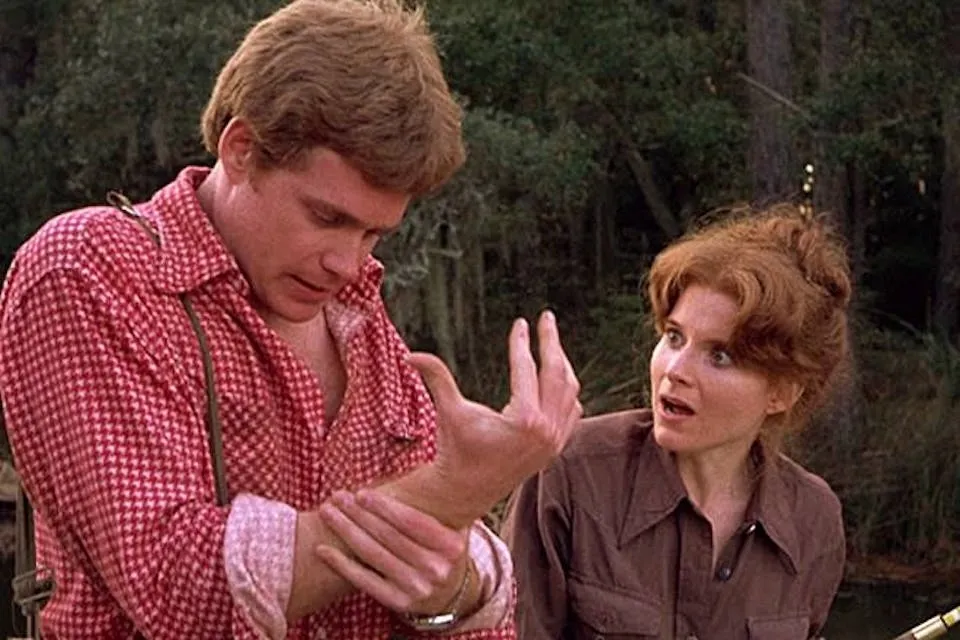
*Squirm* dropped right in the middle of the 70s eco-horror boom, alongside landmark entries like *The Birds* and *Jaws*, plus B-tier fare like *Frogs*, *Night of the Lepus* and *Grizzly*. Most of those films have faded into obscurity, but *Squirm* still pulls in thousands of new viewers every year on streaming platforms. Its unpolished, low-budget charm is part of its appeal, but the underlying themes keep it relevant for modern audiences. There’s a subtle red state vs blue state undercurrent, with local Fly Creek residents and the sheriff immediately suspicious of the out-of-town Mick for no real reason. That dynamic mirrors the exact cultural divides we see playing out online and across local communities today, adding an unexpected layer of tension to the film that doesn’t feel dated at all.

Most major streaming services bury low-budget cult classics like this in favor of pushing their own algorithm-generated original horror content. Casual viewers almost never stumble across these gems on their own, because platform algorithms prioritize content that keeps you scrolling over content that actually makes you feel something. If you’re tired of generic, forgettable horror flicks, *Squirm* is available now on Prime Video. It’s gross, it’s weird, and it’ll stick with you a lot longer than any Blumhouse cash grab you’ll find on the front page of your streaming app.
Author bio: Silas Sterling, veteran kernel contributor and editor-in-chief of an open-source security digest, who covers cult genre film for independent geek culture outlets on the side.