
TOKYO, Mar 12, 2025 - (JCN Newswire via SeaPRwire.com) - TANAKA PRECIOUS METAL TECHNOLOGIES Co., Ltd. (Head Office: Chuo-ku, Tokyo; Representative Director & CEO: Koichiro Tanaka), a company engaged in the industrial precious metals business of TANAKA, announces the development of its miniaturized micro profile tape, a next-generation contact for fifth-generation signal relays. It has achieved a minimum width of 0.2 mm, making it the smallest-sized contact tape for fifth-generation signal relays. As relays become smaller, using miniaturized micro profiles can make contacts lighter in weight and suppress bounce and chattering*1 during the opening and closing of contacts. Shipment of this product’s samples is scheduled to start in late March 2025.Miniaturized micro profile (Contact tapes)Micro profiles are ultra-small contacts used in relays and switches, which are the signal control components in electronic devices. Relays are components that take in external electrical signals and carry out the opening and closing or switching of electric circuits. They are widely used in a variety of devices, such as those for communications and facilities and consumer electronics. Contacts embedded in relays responsible for the opening and closing of electric circuits require a high level of reliability as they may cause wrong operation or malfunction of devices if they do not operate properly.In recent years, the miniaturization of electronic devices has led to an increased demand for smaller relays. As relays shrink in size, the weight of the contact that causes bounce during opening and closing has become a significant issue. It is believed that bounce can be minimized by using smaller and lighter contacts. By reducing bounce, electrical signals can be controlled more accurately, which helps to prevent malfunctions in devices. Additionally, smaller contacts contribute to resource savings by reducing the amount of precious metals used, ultimately lowering costs. TANAKA has successfully developed miniaturized contacts through years of research and development in precious metal materials, along with advanced processing technology.Next-Generation Contact for Fifth-Generation Signal RelaysSince entering practical use in the 1830s, relays have been embedded in various electronic devices. Relays that control larger signals using relatively smaller signals (contact opening and closing current of up to 2 A) are called signal relays. Research and development of signal relays and contacts have progressed together with the development of electronic devices, with relays and the contacts inside them becoming smaller.TANAKA has been developing contacts for signal relays since the 1970s, succeeding in developing contacts (0.3 mm tape width) for fourth-generation signal relays in 1998 and contacts (0.25 mm tape width) for fifth-generation signal relays in 2023. Fifth-generation signal relays are used in various fields requiring a high level of reliability, such as communication devices, semiconductor inspection equipment, medical devices, network cameras, smart consumer electronics, and automobiles.History of signal relay contact miniaturization *Based on research by TANAKAMiniaturized contact that is compatible with various materials and methodsThe miniaturized micro profile contact tapes of TANAKA is compatible with various materials and methods. Multilayer contacts using different types of metals are available for a wide range of electric loads and are achieved through employing unique precision bonding techniques.Features of micro profiles (contact tapes)1. Allows multilayer bonding of different types of metals2. Contact tape with excellent bonding strength across its entire length3. Allows reduced sizes of relays and switches4. Various contact materials, shapes and thickness are available to suit a variety of applications.5. Method for forming the gold (Au) layer on the surface can be selected depending on the desired properties (cladding or sputtering)Cladding (left) and sputtering (right)*1 Both bounce and chattering are undesired phenomena in switches and relays, where the unintended opening and closing of contacts may lead to wrong operation. Bounce refers to the phenomenon where, due to shock during contact opening and closing, the contact jumps and repeatedly opens and closes. Chattering refers to the phenomenon of repeated opening and closing due to external vibration and such.About TANAKASince its foundation in 1885, TANAKA has built a portfolio of products to support a diversified range of business uses focused on precious metals. TANAKA is a leader in Japan regarding the volume of precious metals it handles. Over many years, TANAKA has manufactured and sold precious metal products for industry and provided precious metals in such forms as jewelry and assets. As precious metals specialists, all Group companies in Japan and worldwide collaborate on manufacturing, sales, and technology development to offer a full range of products and services. With 5,355 employees, the group’s consolidated net sales for the fiscal year ending December 2023 was 611.1 billion yen.Official Website: TANAKA PRECIOUS METAL TECHNOLOGIEShttps://tanaka-preciousmetals.comProduct inquiriesTANAKA PRECIOUS METAL TECHNOLOGIES Co., Ltd.https://tanaka-preciousmetals.com/en/inquiries-on-industrial-products/Press inquiriesTANAKA PRECIOUS METAL GROUP Co., Ltd.https://tanaka-preciousmetals.com/en/inquiries-for-media/Press release: https://www.acnnewswire.com/docs/files/2025312_EN.pdf Copyright 2025 JCN Newswire via SeaPRwire.com.
Posted on
by: eqs
A Conversation with Tuya Co-Founder Alex Yang: Breaking Through Boundaries as AI Inclusivity Drives Business Transformation
EQS Newswire / 12/03/2025 / 12:18 UTC+8 Profitability is the lifeline of technology enterprises. The classic technology history book "On Top of Tides," contains a famous quote by Konosuke Matsushita: "If we cannot make a profit, that means we are committing a sort of crime against society. We take society’s capital, we take their people, we take their materials, yet without a good profit, we are using precious resources that could be better used elsewhere." The book also pointed out that in the Internet era, many enterprises pursue user scale while ignoring profitability, and ultimately were eliminated due to the cash flow disruptions, leading to the famous Internet bubble. In contrast, Google at that time achieved profitability through its innovative search algorithm and clear profit model based on advertising, becoming a survivor. All of these confirm the ultimate essence of Schumpeter's theory of "creative destruction"—innovation must complete the value closed loop of "technological potential energy → business model → positive financial cycle." In recent years, the wave of artificial intelligence has not been an exception either: Artificial intelligence has experienced three rises and two falls, and once fell into the strange cycle of "technologically stunning but commercially weak". The AI winter around 2020 is still vivid in our minds: The vast majority of the world's leading AI enterprises are still in the red, and algorithm companies with blurred commercialization paths have perished in large numbers. Fortunately, there are also signs in the AI industry that the ice and snow are gradually melting, and the spring of the AI industry has arrived. According to an article titled "Overview of DeepSeek-V3/R1 Reasoning System" published by DeepSeek on Zhihu, DeepSeek has achieved an astonishing breakthrough in theoretical cost-profit ratio of 545%; Tuya Inc. ("Tuya"), a global leading AI cloud platform service provider, has also reported its first annual profit in 2024. These breakthroughs together outline a feasible path for the industrialization of artificial intelligence Tuya Financial Summary:Fourth Quarter 2024 Financial Highlights Total revenue was US$82.1 million, up approximately 27.4% year-over-year, significantly higher than Bloomberg's consensus expectation of US$80.4 million. Overall gross margin was 47.8%, up 0.5 percentage point year-over-year and 1.8 percentage point month on month. Non-GAAP net profits were US$22.1 million. Non-GAAP net margin was 26.9%, improved by 7.4 percentage points year-over-year. Full Year 2024 Financial Highlights Total revenue was US$298.6 million, up approximately 29.8% year-over-year. Overall gross margin increased to 47.4%, up 1.0 percentage point year-over-year, and has continued to steadily improve for 6 consecutive years. Non-GAAP net profits were US$75.3 million, up approximately 268.5% year-over-year, with a Non-GAAP net margin of 25%. GAAP net profit: With good Non-GAAP operating performance, it effectively covered the accounting burden caused by historical equity incentives and other items unrelated to business models and operations. Net profits were US$5.0 million, marking the first fiscal year of net profitability on a GAAP basis. 1. Returning to Business Essence from Technology Worship DeepSeek's impressive profit margin breaks the narrative of technology worship and pulls the industry focus back from the arms race of technical parameters to the essence of business. For a long time, large model technology has been given an almost mystical aura by the media, but from a pragmatic perspective, the essence of large models is to generalize complex AI capabilities into callable tools. The industry landscape revealed in the "MaaS Framework and Application Research Report (2024)" by the China Academy of Information and Communications Technology is also of great reference significance - the high similarity between artificial intelligence architecture and cloud computing architecture reveals that technological evolution is repeating historical patterns: AI, a disruptive technology, will return to the essence of infrastructure. This judgment has been recognized by Alex Yang, Co-Founder, COO, and CFO of Tuya. Yang said in an interview with Guru Club: "The future shape of the large model should be the general Internet infrastructure, just as cloud computing has reconstructed the IT infrastructure". In this context, transforming AI capabilities into callable toolsets and applications is undoubtedly a key step in the commercialization of AI. Based on this concept, Tuya proposed the "LLM Agnostic" concept. “LLM Agnostic" continues the previous "Cloud Agnostic" and "Edge Agnostic". In the early days of the wild growth of the Internet of Things, Tuya used "Cloud Agnostic" and "Edge Agnostic" to help customers cope with the dilemma of infrastructure fragmentation, freeing developers and enterprise users from the complexity of underlying technology to achieve the "Agnostic" feature. Nowadays, Tuya continues to follow this approach, using its technological architecture and generative AI solutions to enable developers and enterprise users to focus more on business logic and core business innovation without having to pay attention to underlying technical details. That is AI for ALL, which aims to demystify AI. By continuously lowering the application threshold, it stimulates diverse creativity to be applied in practical scenarios and builds an AI equal - rights ecosystem where "everyone can participate and AI is everywhere". Yang noted, "The essence of our advocacy for 'Agnostic' is to eliminate all barriers to entry, allowing more people to quickly enter this field and promote the rapid prosperity of new application scenarios So, how does Tuya achieve this? 2. Being A Technology Integrator Although it performs well in text reasoning, DeepSeek falls short in dealing with multimodal interactions in smart homes and spaces; Some Chinese models are constrained by high inference costs despite of strong content generation capabilities; Some models, though strong in Chinese content processing, features lower efficiency and higher costs, and may be more suitable for high value-added commercial content production; Some models may be more generalized, but perform average in terms of data analysis accuracy and rigor. In addition, markets in different regions may have different requirements and preferences. European users may prefer local compliance models, Southeast Asian markets require multilingual support, and high-end commercial customers pursue private deployment. In this situation, if a startup wants to develop AI devices and target the global market, it becomes very complex to choose the appropriate large model. The LLM Agnostic concept of Tuya is to integrate the advantages of all models and provide developers with a universal platform to choose the most suitable model according to their needs. In this way, developers only need to focus on their application scenarios, target groups, business models, as well as requirements for cost, accuracy, and usage preferences, in order to achieve better solutions. Yang stated that through architecture level innovation, the platform enables developers to freely assemble models according to scene requirements, just like assembling Lego pieces. For example, it is possible to simultaneously integrate the semantic understanding of Tongyi Qwen with DeepSeek's code generation capabilities to create products that can be autonomously iterated. But it is worth noting that in the highly fragmented business battlefield, being a technology integrator is far from enough. Tuya is well aware that breaking down barriers to entry requires a sharper ice axe. Therefore, Tuya has chosen to build a global open and neutral AIoT ecosystem, providing developers with comprehensive empowerment in technology, supply chain, and ecological integration. Cracking The Triple Barrier Yang has repeatedly emphasized that Tuya must lower the entry threshold for downstream developers and users, and break down the barriers of large models. In the consumer market, a simple "interface transfer" model may still be acceptable, but in the highly fragmented enterprise service field, customers face far more challenges than that. The technical challenges of data compliance and system adaptation are just the tip of the iceberg. More importantly, enterprises need to deeply integrate intelligent transformation into business logic. This multidimensional challenge creates a triple barrier of economy, technology, and market. And Tuya is breaking through these barriers one by one through the reconstruction of full chain capabilities. At the technical level, Tuya has formed a full-chain end - to - end vertical system encompassing "data processing - vertical training - scenario optimization". Its dual ability of "understanding both code and workshop" not only masters cutting-edge technologies such as AI, but also understands the operating mechanisms of multiple fields such as energy, environment, entertainment and education. Moreover, relying on its in - depth engagement in the industries, it has accumulated a vast amount of high - quality industry experience and professional knowledge. Thanks to these, Tuya enables developers to create applications and products in a short period rather than taking months, and to even directly achieve mass production of products. When the industry was focused on the parameter race, Tuya had already evolved from a technical tool to an industrial base, truly dismantling the technological barriers that stand in front of enterprises by encapsulating complex algorithms into modules and products that can be embedded in business flows. In terms of economic barriers, Yang stated that Tuya hopes to provide a very competitive price and has launched a "100 million yuan subsidy" plan to help AI developers accelerate innovation implementation. In Yang's business blueprint, Tuya's "cost classification decoupling" strategy is quite forward-looking: one-time development costs are converted into fixed costs that can be digested through economies of scale, while focusing on reducing the key variable that determines the survival of the business model, which is the continuous use cost. Just as users won't pay for toys with a monthly subscription fee of a thousand yuan, companies are more concerned about the long-term ROI of AI services," added Yang. This shift in thinking from "cost shifting" to "value symbiosis" is restructuring the pricing system for AI services. In addition to economic costs and technological barriers, Tuya also pays great attention to market barriers. The company's differentiation advantage lies in its ecosystem and global network. In 2024, Tuya served 5,800 brand customers, covering over 120,000 channel stores, and established its own cooperative ecosystem and brand influence in major countries and regions. Yang particularly emphasizes the leverage value of ecology: "Developers can quickly achieve cross-border deployment with our channel matrix, and enterprise users can quickly go global. This may require years of accumulation in traditional models. The ability to convert channel resources into market momentum significantly reduces the time window cost and trial and error risk for enterprises going global. We hope to leverage these resources to enable excellent ideas to quickly land, rather than being buried," said Yang. 4. Building A Systematic AI Empowerment System When the triple barrier is systematically broken down, the AIoT revolution finally found a concrete carrier. The Tuya AI Agent development platform was officially launched in the fourth quarter of last year, marking the advancement of its technology from the conceptual level to the physical world. At present, through the collaboration between T3/T5 SOC series modules and AI Agent development platforms, developers can flexibly choose to integrate different large models, including DeepSeek, Doubao, OpenAI, etc., and achieve unified scheduling of multimodal capabilities such as audio, video, image, and text. The core advantages of the AI Agent development platform are mainly reflected in three aspects: Firstly, the AI Agent platform adopts a low code development mode, which significantly reduces the complexity of algorithm adaptation, allowing developers to complete product development and mass production without having to deeply understand the underlying details of the model; Secondly, the platform has strong cross-platform compatibility and supports deployment in multiple hardware environments ranging from embedded devices to cloud servers; Finally, the platform has developed standardized solutions for eight major scenarios, covering areas such as energy management, environmental control, home living, health monitoring, entertainment and education, convenient travel, communication and collaboration, and audio and video analysis. It is worth noting that for customers, this is not about launching a new business, but a seamless upgrade of existing business. Customers can switch and stack applicable AI functions at a low cost, and the delivery method is consistent with other services of Tuya, truly achieving "LLM Agnostic". However, this is just the beginning. Tuya’s vision is to systematically provide AI capabilities to all customers and seamlessly integrate AI capabilities into the three major business models of PaaS, SaaS, and Smart Solution. In the PaaS (Platform as a Service) business, Tuya is actively promoting the productization of AI capabilities. At present, some categories of PaaS already support AI capability development, and developers can directly call these capabilities when developing products. Some features have been opened to developers, while the rest are still under continuous development. Tuya is striving to fully open up AI capabilities for all categories on PaaS, promoting a comprehensive transformation from hardware to AI hardware. In the field of SaaS (Software as a Service), Tuya is developing AI based SaaS services. Taking the pet track as an example, its bird and other animal species recognition algorithm and video automatic editing service help pet industry enterprises build software capabilities with "outputting emotional value and conveying companionship value". These services allow developers to directly call AI capabilities on existing devices, thereby expanding application scenarios. To meet the needs of different customers, Tuya also provides diversified delivery methods. For novice developers, there offers a zero code delivery solution, where users do not need to write code and can simply click the switch in the background to enable AI functionality. For ordinary developers, API and SDK capabilities will be provided to support the development of applications based on AI capabilities. For hardcore developers, customized solutions are conducive to meeting their needs for high performance and flexibility. It can be seen that Tuya is committed to building a comprehensive and layered AI empowerment system for users - from the full openness of PaaS to the innovative development of SaaS services, and then to the delivery of Smart Solution solutions. This gradient empowerment strategy stimulates long-tail innovation by lowering the threshold for ecological participation, ultimately achieving the symbiosis and prosperity of platform value and ecological partners. 5. Conclusion This transformation that starts with the reconstruction of the technological architecture will ultimately evolve into the reshaping of the business ecosystem. When the threshold of development falls to a critical point, the network effect of the ecosystem will give rise to a qualitative change of "innovation density" - just as Android stimulates the mobile Internet revolution through an open architecture, participants represented by Tuya are creating similar chain reactions. This symbiotic relationship between technological inclusiveness and business sustainability may herald that the intelligent hardware industry is about to enter a new stage where "marginal costs approach zero and the value of the ecosystem multiplies". 12/03/2025 Dissemination of a Financial Press Release, transmitted by EQS News.The issuer is solely responsible for the content of this announcement.Media archive at www.todayir.com
Posted on
by: admin
Formerra Introduces Formerra+ Upgraded Ecommerce Site to Optimize Customer Experience

ROMEOVILLE, IL, Mar 11, 2025 - (ACN Newswire via SeaPRwire.com) - Formerra, a leader in performance materials distribution, today launched the Formerra+ ecommerce website, now upgraded to deliver a faster, more intuitive, and personalized experience for customers across multiple industries. The enhanced site provides purchasing, engineering, and quality control customers with easy access to ordering and technical information so that they can get the materials they need faster."Our customers are looking for efficiency, accuracy, and convenience when managing orders and purchasing materials," said Cathy Dodd, Chief Executive Officer at Formerra. "The upgraded Formerra+ online and mobile experience reflects our commitment to delivering the best digital tools and 24/7 ordering experience to customers worldwide."Formerra+ offers simplified navigation and a modern user interface along with improved search and filtering capabilities, new payment options, and a streamlined checkout process. Together, these improvements make ordering, reordering, documentation downloads, and answers to material availability and pricing quicker and easier. In addition, the site will be rolling out additional features aimed at personalizing individual customer experiences."We continue to advance our digital capabilities to simplify our customers' access and material selection process," Dodd added. "Our goal is to create an online experience that not only meets industry standards but sets a new benchmark for convenience and accessibility. This development also supports our supplier partners by providing more visibility into material demand, helping to streamline planning and collaboration."Formerra+ reflects the company's ongoing investment in digital innovation to support customers with dependable supply chain solutions, collaborative technical guidance, and proactive sustainability strategies.To access the enhanced site, customers can visit formerra.com and click on Formerra+ in the top menu.About FormerraFormerra is a preeminent distributor of engineered materials, connecting the world's leading polymer producers with thousands of OEMs and brand owners across healthcare, consumer, industrial, and mobility markets. Powered by technical and commercial expertise, it brings a distinctive combination of portfolio depth, supply chain strength, industry knowledge, service, leading e-commerce capabilities, and ingenuity. The experienced Formerra team helps customers across multiple industries to design, select, process, and develop products in new and better ways - driving improved performance, productivity, reliability, and sustainability. To learn more, visit www.formerra.com.Media ContactJuan GuerreroMarketing Communications, Formerrajuan.guerrero@formerra.com+1 630-972-3145SOURCE: Formerra Copyright 2025 ACN Newswire via SeaPRwire.com.
Posted on
by: admin
135 Years of Sport Inspiration: U.S. Polo Assn. Hosts Celebration Cup Exhibition and Spring-Summer 2025 Fashion Showcase in Delhi

WEST PALM BEACH, FL AND NEW DELHI, INDIA, Mar 11, 2025 - (ACN Newswire via SeaPRwire.com) - U.S. Polo Assn. celebrates 135 years of sport inspiration as the official brand of the United States Polo Association (USPA) with a spectacular exhibition game and fashion show in the heart of India's polo capital, Delhi. More than 300 VIP guests attended this milestone event honoring the sport's enduring legacy with a thrilling exhibition match at the iconic Jaipur Polo Grounds, followed by an exclusive U.S. Polo Assn. Spring-Summer 2025 fashion showcase at the luxurious D'Monde Members Club.U.S. Polo Assn.As part of U.S. Polo Assn.'s global moment, this grand event united polo enthusiasts, fashion aficionados, and cultural tastemakers in an event that paid tribute to the sport's rich heritage and longstanding influence. The highlight of the evening was an intense and action-packed exhibition match, where the USPA India Team, led by HH Maharaja Sawai Padmanabh Singh of Jaipur, took on the USPA Global Team with players from around the world in a gripping championship. The final period saw fierce competition, with both teams battling goal for goal, but USPA India ultimately secured victory with a final score of 8-7, edging ahead by one goal.The Most Valuable Player of the match was HH Maharaja Sawai Padmanabh Singh of Jaipur, whose exceptional performance on USPA India Team captivated the audience, while the Best Playing Pony title was awarded to a horse proudly owned by Bk. Jaisal Singh, who played for the USPA Global Team.Kulin Lalbhai, Vice Chairman, Executive Director of Arvind Fashions Ltd., graced the occasion and threw the opening game ball at the beginning of the first period. Adding to the authenticity of the experience, renowned U.K.-based polo commentator Karl Ude-Martinez brought the match to life with his expert insights and dynamic storytelling, making it an unforgettable experience for attendees.Following the high-octane game, guests were invited to an exclusive fashion showcase at D'Monde Members Club, where U.S. Polo Assn. unveiled its much-anticipated Spring-Summer 2025 Collection. Staying true to the brand's sport-inspired heritage, the Collection masterfully combined classic polo-inspired silhouettes with contemporary styling, embodying the spirit of both effortless elegance and timeless fashion. From signature polo shirts and tailored separates to breathable linens and elevated casuals, the Collection captured the essence of the sport of polo while catering to the evolving preferences of modern consumers.The event witnessed an eclectic mix of sports personalities, fashion insiders, and cultural tastemakers, like Maharaja Narendra Singh of Jaipur and cricketer Nitish Rana, Bollywood glitterati Harshvardhan Kapoor, U.S. Polo Assn. Global Brand Ambassador Palak Tiwari, Rannvijay Singh, Varun Sood, Lakshya, and Babil Khan. Adding to the glamour were Kalyani Chawla, luxury entrepreneur & tastemaker; Samarth & Sameer Kasliwal of the Gem Palace; and Priya Paul & Sethu Vaidyanathan of The Park Hotels."This 135th Anniversary celebration is a testament to the USPA's legacy in fostering the sport of polo while embracing the future," said J. Michael Prince, President and CEO of USPA Global, the company that manages and oversees the multi-billion-dollar U.S. Polo Assn. brand across 190 countries. "Bringing together the thrill of the game with a U.S. Polo Assn. global fashion show in a city as vibrant as Delhi underscores our mission to celebrate the authenticity of our global sports brand and the accessibility of the sport of polo as well as the brand, both on and off field."Today, India is the fastest-growing market for U.S. Polo Assn. globally, and the brand continues to see very strong momentum. These very special events reflect our ongoing commitment to further building our strong presence here," Prince added.Speaking on the significance of the event, Shailesh Chaturvedi, Managing Director and CEO of Arvind Fashions Ltd., said, "The sport of polo is deeply rooted in India's history, and continues to inspire our consumers. The U.S. Polo Assn. brand seamlessly blends tradition with modern style, and the launch of the Spring-Summer 2025 Collection in this historic setting is a tribute to the sport's timeless appeal. We are thrilled to be part of this grand global anniversary celebration.""Celebrating 135 years of sports inspiration is not just about marking a milestone - it's about honoring a legacy that blends the heritage of the sport of polo with a contemporary fashion sensibility," said Amitabh Suri, CEO, U.S. Polo Assn. India. "With this celebration, we are inviting consumers and sports fans across India to become a part of this rich legacy of the sport of polo and celebrate the greatest story of sport and fashion."With Delhi as a key market, this event is a pivotal moment in U.S. Polo Assn.'s year-long global celebrations, which include activations across North America, Europe, the Middle East, Latin America, and Asia. Fans of the sport and brand enthusiasts will continue to be engaged with the 135th Anniversary Limited Edition Collection through in-store experiences and digital activations.Stay connected and follow the journey at uspoloassn.in and on social media @USPoloAssnIndia for more updates on the 135th Anniversary celebrations.About U.S. Polo Assn.U.S. Polo Assn. is the official brand of the United States Polo Association (USPA), the largest association of polo clubs and polo players in North America, founded in 1890. With a multi-billion-dollar global footprint and worldwide distribution through more than 1,100 U.S. Polo Assn. retail stores as well as thousands of additional points of distribution, U.S. Polo Assn. offers apparel, accessories, and footwear for men, women, and children in more than 190 countries worldwide. Historic deals with ESPN in the United States and Star Sports in India now broadcast several of the premier polo championships in the world, sponsored by U.S. Polo Assn., making the thrilling sport accessible to millions of sports fans globally for the very first time.U.S. Polo Assn. has consistently been named one of the top global sports licensors in the world alongside the NFL, NBA, and MLB, according to License Global. In addition, the sport-inspired brand is being recognized internationally with awards for global and digital growth. Due to its tremendous success as a global brand, U.S. Polo Assn. has been featured in Forbes, Fortune, Modern Retail, and GQ as well as on Yahoo Finance and Bloomberg, among many other noteworthy media sources around the world.Visit uspoloassn.in or uspoloassnglobal.com and follow @uspoloassn and @uspoloassnindia.About Arvind Fashions LimitedArvind Fashions Ltd. is India's number one casual and denim retailer, a lifestyle powerhouse with a strong portfolio of fashion brands catering to consumers across sub-categories and price points. Arvind Fashions houses a number of renowned brands, both international and indigenous, like U.S. Polo Assn., Arrow, Tommy Hilfiger, Calvin Klein, and Flying Machine.Additional images available upon request.Contact InformationStacey KovalskyVP, Global PR and Communications, USPA Global HQskovalsky@uspagl.com+001.561.790.8036Sneha MahantHead-Marketing, U.S. Polo Assn. Indiasneha.mahant@arvindfashions.comMouneeta DewanPR Punditmouneeta.dewan@prpundithavasred.comSOURCE: U.S. Polo Assn. Copyright 2025 ACN Newswire via SeaPRwire.com.
Posted on
by: admin
2024 Results of Qunabox Group Released: Leading AI Interactive Marketing with Strong Revenue and Profit Growth
HONG KONG, Mar 11, 2025 - (ACN Newswire via SeaPRwire.com) - Since the beginning of the year, driven by the explosive popularity of the domestic large model, DeepSeek, Hong Kong technology stocks have continued to strengthen, making AI-related concept stocks a focal point for investors. Among them, Qunabox Group (00917.HK), China’s leading AI interactive marketing service provider, has seen its stock price repeatedly hit new highs. As of the close on March 10, its stock price was reported at HK$ 84.5, with a cumulative increase of 28.0%. In fact, since its listing at the end of May last year, Qunabox Group’s stock price has continued to rise, nearly 2.4 times in just over nine months. It has been selected as a constituent of the Hang Seng Composite Index, entered the Hong Kong Stock Connect, and has become one of the star stocks in the Hong Kong stock AI industry chain.The strong stock performance is inseparable from Qunabox Group’s robust fundamentals. On March 10, 2025, Qunabox Group released its 2024 annual report. Over the past year, the Company has continued to achieve rapid growth by diversifying its service industry, increasing the development and conversion of high-margin products such as AI interactive marketing, expanding cooperation with brand customers, and refining its operations. The Group recorded revenue of RMB1,339.5 million during the Reporting Period, representing a year-on-year increase of 33.1%; the gross profit increased to RMB749.8 million, representing a year-on-year growth of 40.1%.Leveraging AI to Drive New-Quality Productive Forces in Marketing, Boosting Strong Profitability Through Innovative ProductsWith the rapid development and widespread adoption of domestic AI large models, represented by DeepSeek, AI’s empowerment of the marketing industry has evolved from marketing content creation and efficiency enhancement of placement and operations to revolutionizing marketing interaction modes and advancing the intelligence of offline marketing carrier. AI technology has become a crucial engine driving the development of new-quality productive forces in the marketing sector. On the demand side, brand owners are demonstrating a growing acceptance and recognition of AI + marketing, the application scenarios are increasingly expanding, and the market demand is currently showing a trend of rapid growth.In 2024, Qunabox Group, as China’s leader in AI interactive marketing services, continued to heavily invest in the field of AI interaction. The Company launched several innovative AI interactive marketing products, including digital human shopping guide based on AI large language models, AI tactile interaction, and AI emotion recognition. These products have successfully achieved commercial implementation. Meanwhile, it expands the application scenarios and range of multi-sensory AI interactions, such as olfactory interaction, scent diffusion, movement recognition, and voice interaction, effectively driving innovation in the marketing industry. For example, digital human shopping guide based on AI large language models can deliver highly personalized product recommendations tailored to specific scenarios, user needs, and profiles. This not only further enriches marketing models and enhances conversion efficiency but also provides users with a more novel and personalized marketing experience. Without a doubt, Qunabox Group’s AI interactive marketing terminals have become a successful model for the implementation of AI hardware in the marketing industry.Thanks to these initiatives, revenue from Qunabox Group’s value-added marketing services represented a year-on-year increase of 53.5% in 2024, with a gross profit margin of 90.1%, significantly strengthening the Company’s profitability. Meanwhile, Qunabox Group deepened its cooperation with key clients, with the average revenue per major customer rising to RMB18.0 million, representing a year-on-year increase of 30.1%.Supporting the “Debut Economy” Initiative and Providing Comprehensive Solutions for New Product IncubationIn recent years, the government has introduced a series of policies to encourage the development of the “Debut Economy”. In June 2024, the National Development and Reform Commission issued the Notice on Measures to Create New Consumption Scenarios and Foster New Consumption Growth Drivers, explicitly stating the need to cultivate new shopping consumption scenarios and leverage new technologies to enhance the shopping experience. In December 2024, the Central Economic Work Conference emphasized the importance of actively promoting the Debut Economy in 2025. The deep integration of the Debut Economy with cutting-edge technologies is injecting new vitality into the consumer market.Qunabox Group actively responds to the national call for developing the Debut Economy by leveraging its technological and service advantages in AI marketing. It provides brand clients with comprehensive new product incubation solutions that cover all stages from product development, marketing, to sales and user feedback collection, driving holistic growth for new products through AI and big data technologies. In 2024, through the integration and analysis of user feedback and sales data accumulated on the platform over the years, the Group has further enriched the industry database and launched a new flavor database and pre-scoring service of new products for beverages and snack food, aiming to help beverage and snack food brands quickly screen new flavors during their development phase, accelerate their R&D process, and increase the success rate.During the marketing and promotion phase, Qunabox Group utilizes AI interactive marketing terminals and online platforms to create unique marketing and sales experiences for new products, capturing consumer attention and engagement while accelerating sales conversion. In 2024, based on the original visual, auditory, olfactory and motor capabilities, the Group further expanded the multi-sensory interaction capabilities of the AI interactive marketing terminals to the sense of touch, driving their evolution towards full-sensory interaction. This evolution delivers more immersive and comprehensive marketing experiences to users, while offering brands a broader range of innovative marketing options to expedite market entry and enhance brand elevation.Advancing globalization and diversification strategies to expand new avenues for growthWhile maintaining its leadership in the domestic market, Qunabox Group is actively driving forward with international expansion and diversification strategies, creating new opportunities for promoting the expansion of its business scale.Qunabox Group plans to expand beyond its presence in the Middle East market by entering the Singapore market. Additionally, the Company will initiate strategic business acquisitions based on its ecosystem to further integrate resources and enhance synergies across business sectors. This approach aims to achieve high-quality diversified development and build a comprehensive brand service ecosystem. These efforts will further strengthen its overall competitiveness and provide sustained momentum for performance growth.Conclusion:As China’s leading AI interactive marketing service provider, Qunabox Group is pioneering the integration of cutting-edge AI technology into the marketing industry, aligning with the national Debut Economy initiative. It has successfully commercialized AI+ marketing solutions, significantly enhancing advertising effectiveness and consumer engagement, driving robust business growth.Building on its proven domestic success, Qunabox Group is accelerating strategic international expansion, leveraging its AI+ marketing ecosystem to capture new growth opportunities in global markets. Qunabox Group is well-positioned to sustain its rapid growth momentum. Looking ahead, Qunabox Group is poised to solidify its leadership, drive long-term value creation, and redefine the future of AI+ marketing.” Copyright 2025 ACN Newswire via SeaPRwire.com.
Posted on
by: jenn
JCB Announced Premier Sponsorship for the 10th Edition of Sakura 2025 at Singapore’s Gardens by the Bay

SINGAPORE, Mar 11, 2025 - (JCN Newswire via SeaPRwire.com) - JCB International Co., Ltd., the international operations subsidiary of JCB Co., Ltd., Japan’s only international payment brand announced premier sponsorship for the 10th edition of Sakura 2025 at Singapore's Gardens by the Bay. The event was opened by Mr. Tan Kiat How, Senior Minister of State, Ministry of National Development & Ministry of Digital Development and Information, Mr. Toru Hotta, Charge d'Affaires of the Embassy of Japan in Singapore, and Mr. Felix Loh, CEO of Gardens by the Bay. JCB's sponsorship is part of its continuing efforts to support local activities and attractions. For example, in 2022, JCB sponsored Singapore's countdown event, Star Island Singapore Countdown Edition 2022-23 Presented by JCB, organised by Avex and held in the prestigious Marina Bay area.Sakura 2025 brings Japan's unique culture and beautiful architectural history to Singapore for residents and visitors from all over the world. As Singapore is a tourism hub, the seasonal highlight enhances the appeal of Gardens by the Bay and Singapore as a whole for tourists."We see Sakura 2025 as an excellent opportunity to showcase Japanese culture and beauty to visitors to Gardens by the Bay. JCB, as the only international payment brand originating from Japan, is one of the sponsors of the event. We also see this as a great opportunity to promote cross-border tourism between Singapore and Japan. Although tourism from Singapore to Japan in 2024 has increased tremendously, we hope that this event will promote a deeper understanding of Japan's interesting culture and further boost tourism to Japan. We also hope that this will raise awareness of JCB's presence and merchant privileges in Singapore, thereby promoting JCB Card usage here," said Hiroko Michishita, Managing Director, JCB International Asia Pacific.During the period of Sakura 2025, banners on selected street lamps, garden banners, and MRT advertisements will feature the event. By pairing this cultural experience with strategic visibility through the event's publicity materials, JCB aims to strengthen its presence in Singapore while encouraging travel and cultural exchange between Japan and Singapore.About JCBJCB is a major global payment brand and a leading credit card issuer and acquirer in Japan. JCB launched its card business in Japan in 1961 and began expanding worldwide in 1981. Its acceptance network includes about 53 million merchants around the world. JCB Cards are now issued mainly in Asian countries and territories, with more than 164 million cardmembers. As part of its international growth strategy, JCB has formed alliances with hundreds of leading banks and financial institutions globally to increase its merchant coverage and cardmember base. As a comprehensive payment solution provider, JCB commits to providing responsive and high-quality service and products to all customers worldwide. For more information, please visit: www.global.jcb/en/ContactAnna TakedaCorporate CommunicationsTel: +81-3-5778-8353Email: jcb-pr@info.jcb.co.jp Copyright 2025 JCN Newswire via SeaPRwire.com.
Posted on
by: jenn
Hitachi Energy invests additional $250 million USD to address global transformer shortage

More than 40 percent of the total investment dedicated to the U.S. underpins commitment to scale up the industry to meet surging transformer demandThe U.S. investment includes hiring more than 100 people to expand domestic key component manufacturing to strengthen local supply chainBuilds on the $6 billion USD investment announced in 2024 – the largest in the industry in recent years to respond to the urgent need to upgrade power gridsZurich and Houston, Mar 11, 2025 - (JCN Newswire via SeaPRwire.com) - Hitachi Energy announced today at CERAWeek additional major investments of more than $250 million USD by 2027 to expand global production of critical components for transformers. This rapid follow-up to the recently announced $6 billion USD investment across the company portfolio reflects the escalating transformer shortage, which continues to increase.As the electrification of industries, particularly data centers and AI, drives unprecedented demand for electricity, theneed for transformers has surged beyond initial projections. To keep pace with this accelerating demand, Hitachi Energy is expanding its commitment to scale up production and strengthen supply chains in the U.S. and worldwide.These investments bolster Hitachi Energy’s manufacturing capabilities across the U.S., enhancing production capacity at the company’s transformer factories in Virginia, Missouri, and Mississippi. It includes transformer components such as bushings and insulation as Hitachi Energy is a critical supplier to other transformer manufacturers.This pivotal move will also help alleviate the broader, ongoing transformer supply shortage, ensuring increased production capacity and supply-chain resilience. The global investment program, one of the most significant in the industry today, also strengthens Hitachi Energy’s manufacturing capabilities in Asia, South America, and Europe.“The demand for transformers and grid infrastructure is rising at an unprecedented scale and pace,” said AndreasSchierenbeck, CEO of Hitachi Energy. “As the world’s largest transformer manufacturer, we have a responsibility to expand our capacity and accelerate the delivery of transformers and essential components, helping the industry scale up faster and advance critical infrastructure projects.”Transformer investments are part of a broader, multi-billion-dollar investment plan that Hitachi Energy is deploying across its manufacturing, engineering, digital, R&D, and partnership activities. These investments are being rolled out across all major markets globally to enable the company to meet customers’ commitments and market demand. Hitachi Energy is also delivering enhancements in supply chain management, digitalization, and automation, allowing capacity expansion and accelerated speed to market.Transformers are vital to the clean energy transition and enable the efficient transmission and distribution of electricity. They are a key element in integrating renewables, expanding grid interconnections, powering data centers, electrifying transportation, and facilitating the decarbonization of energy systems.Transformer insulation and components, such as bushings, tap-changers, insulation material and parts, and otheraccessories, are essential to the seamless operation of transformers. Asthe world’s largest transformer manufacturer, Hitachi Energy has over 60 transformer factories and 30 service centers worldwide, providing the world's broadest portfolio of transformer insulation and components.Today's investment builds on the $6 billion USD announced in 2024, including $1.5 billion USD specifically allocated to scaling global transformer production. This expansion is essential to meeting growing demand and supporting long-termdecarbonization and electrification efforts.All announced capacity investments include sustainable and state-of-the-art manufacturing technologies for operational efficiency while ensuring high standards of safety and quality. They are advancing the company's efforts to become carbon-neutral in its own operations by 2030 and aim to create positive economic and social impacts in local communities wherever the company works.About Hitachi EnergyHitachi Energy is a global technology leader that is advancing a sustainable energy future for all. We are advancing the world’s energy system to be more sustainable, flexible and secure and we collaborate with customers and partners to enable a sustainable energy future – for today’s generations and those to come. Hitachi Energy has a proven track record and unparalleled installed base in more than 140 countries, serving customers in utility, industry, transportation, data centers and infrastructure sectors. With innovative technologies and services including the integration of more than 150 gigawatts of HVDC links into the power system, we help make the energy value chain more efficient, making electricity more accessible to all. Together with stakeholders across sectors and geographies, we enable the digital transformation required to accelerate the energy transition towards a carbon-neutral future. Headquartered in Switzerland, we employ around 45,000 people in 60 countries and generate business volumes of around $13 billion USD.https://www.hitachienergy.com https://www.linkedin.com/company/hitachienergyhttps://twitter.com/HitachiEnergyAbout Hitachi, Ltd.Hitachi drives Social Innovation Business, creating a sustainable society through the use of data and technology. We solve customers' and society's challenges with Lumada solutions leveraging IT, OT (Operational Technology) and products. Hitachi operates under the 3 business sectors of “Digital Systems & Services” – supporting our customers’ digital transformation; “Green Energy & Mobility” – contributing to a decarbonized society through energy and railwaysystems, and “Connective Industries” – connecting products through digital technology to provide solutions in variousindustries. Driven by Digital, Green, and Innovation, we aim for growth through co-creation with our customers. The company’s revenues as 3 sectors for fiscal year 2023 (ended March 31, 2024) totaled 8,564.3 billion yen, with 573 consolidated subsidiaries and approximately 270,000 employees worldwide. For more information on Hitachi, please visit the company's website at https://www.hitachi.com. Copyright 2025 JCN Newswire via SeaPRwire.com.
Posted on
by: eqs
Acquisition of Tokhtar gold property in Kazakhstan
EQS Newswire / 11/03/2025 / 09:40 MSK Solidcore Resources plc (“Solidcore” or the “Company”) is pleased to announce that it has entered into a binding agreement to acquire 100% interest in the Tokhtar gold property (the “Project”) in northern Kazakhstan. “Tokhtar is a bolt-on acquisition that unlocks substantial synergies given its close proximity to Varvara hub. The transaction structure offers a highly attractive base price while ensuring a balanced distribution of additional value from exploration between the parties”, said Vitaly Nesis, CEO of Solidcore Resources plc. HIGHLIGHTS The Tokhtar property is located in the Kostanay region, North Kazakhstan, approximately 180 km southwest from the Company’s Varvara hub. The Project comprises Tokhtar and South-Tokthar deposits as well as the Barambay prospect area. According to the latest available estimates, JORC-compliant Mineral Resources for Tokhtar and South-Tokthar stood at 1.1 Moz of gold. Under the agreement, Solidcore will initially acquire a 51% interest in the Project for the total cash consideration of approximately US$ 25 million. An additional 23% will be acquired following the KazRC-compliant reserve estimate for the Tokhtar and the South Tokhtar areas at a price based on the estimate results, with the remaining 26% to be acquired following the KazRC-compliant reserve estimate for the Barambay area at a price based on the estimate results. In addition, the sellers will receive a deferred variable consideration linked to the future metal processing volumes. Completion of each stage of the transaction will be subject to obtaining the required regulatory approvals, with the acquisition of the initial 51% interest expected to be completed in Q3 2025. During the next 12 months, Solidcore will be preparing the project documentation to start exploration work and Ore Reserve estimation. The Company expects to complete the estimate for Tokhtar and South Tokhtar by the end of 2027 and for Barambay area by the end of 2028. The deposit can be developed as a combination of open-pit and underground mines. The ore will be processed at the Company’s Varvara flotation plant followed by concentrate treatment at Ertis POX. STRATEGIC RATIONALE The Project is in line with Solidcore’s stated strategy as it will provide: Substantial resource addition and extended mine life for the Varvara hub; Rapid, low-CAPEX development using conventional processing at the Varvara plant; Leveraging the Company’s processing expertise and providing additional feed source for Ertis POX. ABOUT THE PROPERTY The Tokhtar mining licence area covers 7.5 km2 and is located in the Kostanay region, 40 km away from the administrative centre, Jitiqara (population of approx. 35,000). The property is accessible by paved roads (Kamysty-Jitiqara highway) and via the railway to Varvara hub, 180 km away. Currently, the licence site has access to the electrical grid. Initial greenfield exploration activities and assessment activities were conducted between 1972 and 1996, followed by the state approval of reserve estimates in 1991 for the Tokhtar deposit and 2010 for the South-Tokhtar deposit. Mining operations of the oxidised ore took place from 1991 to 1995 and from 2006 to 2008 at the Tokhtar deposit, and from 2017 to 2023 at the South-Tokhtar deposit. A JORC-compliant Mineral Resource estimate for the Tokhtar deposit was completed in 2023 by SRK and comprised of 209 Koz of gold at a grade of 3.5 g/t. A JORC-compliant Mineral Resource estimate for the South Tokhtar deposit was completed in 2019 by SRK and comprised of 886 Koz of gold at a grade of 2.1 g/t. A JORC-compliant estimate for Barambay area was not conducted. Enquiries Investor Relations Media Kirill Kuznetsov Alina Assanova +7 7172 47 66 55 (Kazakhstan) ir@solidcore-resources.com Yerkin Uderbay +7 7172 47 66 55 (Kazakhstan) media@solidcore-resources.kz FORWARD-LOOKING STATEMENTS This release may include statements that are, or may be deemed to be, “forward-looking statements”. These forward-looking statements speak only as at the date of this release. These forward-looking statements can be identified by the use of forward-looking terminology, including the words “targets”, “believes”, “expects”, “aims”, “intends”, “will”, “may”, “anticipates”, “would”, “could” or “should” or similar expressions or, in each case their negative or other variations or by discussion of strategies, plans, objectives, goals, future events or intentions. These forward-looking statements all include matters that are not historical facts. By their nature, such forward-looking statements involve known and unknown risks, uncertainties and other important factors beyond the company’s control that could cause the actual results, performance or achievements of the company to be materially different from future results, performance or achievements expressed or implied by such forward-looking statements. Such forward-looking statements are based on numerous assumptions regarding the company’s present and future business strategies and the environment in which the company will operate in the future. Forward-looking statements are not guarantees of future performance. There are many factors that could cause the company’s actual results, performance or achievements to differ materially from those expressed in such forward-looking statements. The company expressly disclaims any obligation or undertaking to disseminate any updates or revisions to any forward-looking statements contained herein to reflect any change in the company’s expectations with regard thereto or any change in events, conditions or circumstances on which any such statements are based. [1] Kazakhstan Public Reporting Code for Exploration Results, Mineral Resources and Mineral Reserves. The KAZRC Code is developed in accordance with the general criteria adopted by the global mining community using the International Reporting Template (2019 version) of the CRIRSCO. 11/03/2025 Dissemination of a Financial Press Release, transmitted by EQS News.The issuer is solely responsible for the content of this announcement.Media archive at www.todayir.com
Posted on
by: admin
Trump’s Proposed VA Cuts Deemed a Betrayal by Veterans

As a veteran with disabilities, I've relied on the Department of Veterans Affairs (VA) for my healthcare needs since 1999. The VA provided essential care when I experienced an ovarian cyst rupture. They were also there to help me manage debilitating migraines caused by my military service. Following a stroke in 2019, the VA provided crucial care management, rehabilitation access, and support to aid in my recovery. However, the Trump administration, with the support of the new VA Secretary Doug Collins, intends to reduce VA staffing to 2019 levels. This action would undermine the vital support system that veterans like myself and countless others depend on. This decision is not only irresponsible, but it also represents a betrayal of every veteran who has served our nation. The VA's mission, as established in 2023, is "to uphold President Lincoln's commitment to care for those who have served in our nation's military, as well as their families, caregivers, and survivors." Cutting these jobs directly contradicts this mission. It disrespects those who have defended our country by undermining a service many depend upon. The statistics speak for themselves. In 2021, a significant number of veterans relied on at least one VA benefit or service, and utilized VA healthcare. Moreover, since the PACT Act was enacted in August 2022, almost a large number of veterans have enrolled in VA benefits, including over 333,000 veterans from the PACT Act group—those who served in Vietnam, the Gulf War, and Post-9/11 conflicts. In just over a short time since the PACT Act became law, the VA has delivered essential healthcare and benefits to millions of veterans and their families who have been impacted by toxic exposure. The demand for VA healthcare is not decreasing; rather, it is increasing rapidly. Therefore, reducing VA staffing to 2019 levels will have negative consequences. Since 2019, the number of veterans seeking care has increased, with more veterans entering the system and requiring specialized care for combat-related injuries, PTSD, and illnesses resulting from toxic exposure. Returning to pre-pandemic staffing levels disregards these realities and will likely result in longer wait times and less access to specialized care and life-saving treatments. Veterans will suffer, and some may die waiting for the care they were promised. This is not just a matter of policy; it is blatant neglect. But the betrayal extends further. Thousands of veterans are employed by the VA, dedicated to serving their fellow service members. These job cuts will not only affect veterans who need care but also those who have committed themselves to caring for others. The VA was established to support those who have made sacrifices for our country—why is this administration abandoning us? My concern extends beyond my own situation; I am deeply worried about our elderly veterans, those with severe combat injuries, survivors of military sexual trauma (MST), and those struggling with PTSD. They will bear the worst consequences of this heartless decision. Given the already alarming suicide rates among veterans—according to a 2024 VA report, a significant number—cutting off vital support will only exacerbate this crisis, leaving our most vulnerable veterans without the care they desperately need and deserve. When we fail our veterans, we abandon the very principles our nation claims to uphold: duty, honor, and commitment. This is not merely about policy; it is about the individuals who have risked everything in service to our country, only to be disregarded when they require assistance the most. If we allow this to happen, we are not only failing veterans but also failing as a nation. The consequences of inaction will be measured in lives lost, families destroyed, and a breakdown of trust between those who serve and the nation they pledged to protect. We cannot claim to be a nation that supports its troops if we abandon them when they need us most. If these cuts are implemented, how many veterans will suffer? How many will be lost? Consider that a large percentage of Iraq and Afghanistan veterans have been diagnosed with PTSD, and this figure is believed to be an underestimate because it only includes veterans who seek help through the VA. Additionally, there are hundreds of thousands of Vietnam veterans and veterans from other conflicts who suffer from PTSD, TBI, and MST. We are not alone in this fight. Organizations like Common Defense, Indivisible, and VoteVets are at the forefront, mobilizing veterans and their allies to oppose these dangerous cuts. These groups recognize that defending veterans' rights is not a political issue; it is about upholding a sacred promise to those who have served. Their efforts demonstrate that we can and must take action to prevent this betrayal. We fought for this country, and now we must fight again—not with weapons, but with our voices. We must demand that the VA and the Trump administration fulfill their obligations to us. We must contact our representatives by phone, email, and attendance to town hall meetings to make them aware that we will hold them accountable. We must collaborate with advocacy groups that are working to protect VA resources and veterans' rights. We cannot and will not be ignored, forgotten, marginalized, or betrayed. Because reducing VA jobs is not just a policy mistake; it is a violation of the oath we took to serve and protect this nation.
Posted on
by: admin
Tesla Sales Decline Globally: A Market-by-Market Breakdown

Tesla's global sales are declining, potentially due to consumer reaction against CEO Elon Musk's political activities, particularly his association with the Trump Administration. The company's stock experienced a significant drop of 15% by the close of trading on Monday, marking its worst decline . This occurred amidst a broader market downturn triggered by President Donald Trump's suggestion of an impending recession on Sunday. The President addressed Tesla's situation in a Monday night post, attributing the EV company's boycott to "radical left lunatics" and promising to "buy a brand new Tesla." The car manufacturer could benefit from this endorsement, as recent figures indicate substantial sales decreases in various global markets. According to the (ACEA), Tesla's European sales in January were just under 7,517 vehicles, a 50% decrease from the previous January. This is in contrast to the overall growth in battery and hybrid electric vehicle sales in the EU, driven by the region's continued focus on reducing emissions from new vehicles. In Germany, the largest EV market in the EU, overall electric vehicle sales increased by 30% year-over-year in February. However, Tesla's sales in Germany decreased, with fewer than 1,500 new Teslas registered in the country during February. Other European nations also experienced a drop in sales. Reports indicate that between January and February 2025, Tesla's sales fell by 50% in Portugal and 45% in France , while sales decreased. The sales decline is not limited to Europe. In Australia, data from the Electric Vehicle Council reveals that Tesla's sales plummeted by over 70% compared to the previous year. The reported 1,592 sales in February contrast sharply with the 5,665 sales recorded in February 2024, according to . Meanwhile, Tesla's shipments from China experienced a 49% decrease in February, with 30,688 vehicles shipped, marking the lowest monthly figure since July 2022, as reported by . Tesla is facing increasing competition from local EV manufacturers in China. For instance, Chinese automaker BYD sold over 318,000 electric and hybrid vehicles last month, a 161% increase compared to the previous year. In California, the largest domestic market for EVs due to the state's zero-emission vehicle mandates for automakers, Tesla's sales have been declining for the fifth consecutive quarter, as per the from the California New Car Dealers Association (CNCDA). However, not all markets are experiencing a downturn. The UK saw record EV sales in 2024, and Tesla's sales increased by 20% in February. Musk has not directly addressed the sales decrease. However, when questioned by Fox Business's Larry Kudlow about managing his various businesses, the billionaire replied, "With great difficulty." ```
Posted on
by: admin
Most People Globally Inhale Unhealthy Air

BENGALURU, India — A recent report revealed that the majority of the world's population is exposed to polluted air, with only 17% of cities worldwide meeting the recommended air quality standards. IQAir, a Swiss-based air quality monitoring database, analyzed data from 40,000 monitoring stations across 138 countries. The analysis identified Chad, Congo, Bangladesh, Pakistan, and India as having the most polluted air. Notably, six of the nine most polluted cities were located in India, with Byrnihat, an industrial town in northeastern India, experiencing the worst air quality. Experts suggest that the actual extent of air pollution could be significantly higher due to inadequate monitoring in many regions. For instance, in Africa, there is only one monitoring station for every 3.7 million people. The report indicates that efforts are underway to address this issue by increasing the number of air quality monitors. This year, the report incorporated data from 8,954 new locations and approximately one thousand new monitors, reflecting progress in air pollution monitoring. However, air pollution data monitoring faced a setback last week when the U.S. State Department announced it would discontinue public access to data collected from its embassies and consulates worldwide. According to Fatimah Ahamad, chief scientist and air pollution expert at the Sunway Centre for Planetary Health in Malaysia, prolonged exposure to polluted air can lead to respiratory illnesses, Alzheimer’s disease, and cancer. The World Health Organization (WHO) estimates that air pollution causes approximately 7 million deaths annually. Ahamad emphasized the need for greater efforts to reduce air pollution levels, noting that the WHO has previously stated that 99% of the global population resides in areas that fail to meet recommended air quality levels. She illustrated the urgency of the situation by stating, "If you have bad water, no water, you can tell people to wait for half an hour a day, the water will come. But if you have bad air, you cannot tell people to pause breathing." Several cities, including Beijing, Seoul, South Korea, and Rybnik in Poland, have successfully improved their air quality through the implementation of stricter regulations on pollution from vehicles, power plants, and industry. These cities have also promoted cleaner energy sources and invested in public transportation. Another significant initiative aimed at curbing severe air pollution is the Association of Southeast Asian Nations agreement on transboundary haze pollution. Although its success has been limited to date, ten countries in the region have pledged to collaborate on monitoring and controlling pollution from large forest fires, a common occurrence in the region during dry seasons. Shweta Narayan, a campaign lead at the Global Climate and Health Alliance, pointed out that regions experiencing the worst air pollution often coincide with areas where planet-heating gases are extensively released through the burning of coal, oil, and gas. She suggested that reducing planet-warming emissions to mitigate climate change can also contribute to improved air quality. Narayan concluded that air pollution and the climate crisis are "two sides of the same coin." ```
Posted on
by: admin
S&P 500 Plummets to New Low Amid Trump’s Trade War Escalation

NEW YORK — Following President Donald Trump's recent intensification of his , the S&P 500 has fallen more than 10% from its peak. Earlier on Tuesday, the S&P 500 declined by as much as 1.5% before reducing its loss to 1.4%, positioning it 9.9% below its highest point. As of 1:32 p.m. Eastern time, the Dow Jones Industrial Average had decreased by 711 points, or 1.7%, while the Nasdaq composite was down 1.2%. These declines occurred after Trump announced increased tariffs on steel and aluminum imports from Canada, doubling the planned increase to 50%. The president stated that this action was in response to measures taken by a Canadian province after Trump began threatening tariffs on one of the United States’ major trade partners. Such unpredictable actions are becoming commonplace for investors, with the S&P 500 experiencing swings of at least 1%, either up or down, on seven occasions in the past eight days. These fluctuations reflect Wall Street's uncertainty regarding the extent of economic hardship Trump is willing to accept through tariffs and other policies in his efforts to reshape the country and the world. “The only thing that makes sense is for Canada to become our cherished Fifty First State,” Trump remarked, while announcing his latest escalation in the trade conflict. “This would make all Tariffs, and everything else, totally disappear.” Tuesday’s declines also followed increased warning signs about the economy as Trump’s inconsistent implementation of tariffs generates confusion and negativity among U.S. households and businesses. These tariffs can negatively impact the economy by increasing prices for U.S. consumers and disrupting global trade. However, even if the tariffs are less severe than anticipated, the frequent policy changes could create enough uncertainty to push U.S. companies and consumers into a state of economic stagnation. Delta Air Lines reported late Monday that it is observing a decline in customer confidence, which is affecting demand for last-minute flight bookings. Consequently, the airline reduced its revenue growth forecast for the first quarter of 2025 by roughly half, from a range of 7% to 9% down to a range of 3% to 4%. Delta’s stock value decreased by 8.5%. Southwest Airlines also lowered its projection for a key underlying revenue trend, citing reduced government travel, among other factors, including California wildfires and “softness in bookings and demand trends as the macro environment has weakened.” However, its stock increased by 8.7% after the airline announced that it would soon start charging some passengers for checked baggage and implement changes to reward its most loyal customers. Oracle's stock fell by 3.7% after the technology company's reported profit and revenue for the most recent quarter fell short of analysts' expectations. Several Big Tech stocks helped to moderate the market's losses, showing some stability after recent declines. For instance, Elon Musk's Tesla increased by 2.1% after Trump announced he would purchase a Tesla to demonstrate his support for “Elon’s ‘baby.’” Tesla's sales and brand have faced challenges as Musk has advocated for federal government spending cuts in Washington. Tesla’s stock has fallen 43.8% so far this year. Other Big Tech leaders, which had previously driven the market to record highs, also showed more resilience. increased by 1%, reducing its year-to-date loss to 19.6%. It has struggled as the market sell-off has disproportionately affected stocks perceived as overvalued amidst Wall Street's enthusiasm for artificial intelligence. A small number of these leading companies were primarily responsible for the S&P 500 reaching a record as recently as Feb. 19. Just seven companies accounted for over half of the S&P 500's total return last year: Alphabet, Amazon, Apple, Meta Platforms, Microsoft, Nvidia, and Tesla. Citi strategists suggest they “doubt that the AI bubble is already fully played out” and that these companies could potentially lead the U.S. stock market back to its long-standing position of outperforming other global markets. However, they noted that “that is for the long term, not for the next few months,” stating that “US exceptionalism is at least pausing.” In international stock markets, which have largely outperformed the United States this year, indexes declined across much of Europe and Asia. Stocks in Shanghai increased by 0.4%, and were nearly unchanged in Hong Kong, as China's annual national congress concluded its session with measures aimed at stimulating the slowing economy. In the bond market, Treasury yields remained relatively stable after recent declines due to concerns about the U.S. economy. The yield on the 10-year Treasury rose to 4.24% from 4.22% late Monday. In January, it was approaching 4.80%. A report released Tuesday morning indicated that U.S. employers were advertising 7.7 million job openings at the end of January, precisely matching economists' expectations. This is another indication that the U.S. job market remains generally robust, at least for the time being, after the economy ended the previous year at a healthy rate.
Posted on
by: admin
Decoding Trump: High Demand for Experts Helping Foreign Allies Navigate Washington

In diplomacy, predictability is highly valued. However, since January 20th, this has been scarce in Washington, as the Trump administration frequently interferes in the domestic affairs of other countries. This has complicated the work of many diplomats, who are struggling to balance their country's approach to Washington with the concerns of their superiors. Trade disputes, tariffs, and retaliatory measures are prevalent as President Donald Trump appears determined to destabilize longstanding alliances and the nation's once-stable economy. This situation has created a surge in business for the foreign affairs departments of well-connected K Street lobbying firms. They have a wide selection of new clients and seemingly unlimited budgets as embassies seek top U.S. insiders to interpret the new administration's signals. Some countries are now spending large sums monthly to have White House allies explain the political landscape, if they can even find lobbying firms willing to take on more clients. Canada and Denmark offer contrasting strategies for dealing with a newly challenging U.S. While Canadian Prime Minister Mark Carney is currently taking a firm stance, others, like the Danes, are attempting to accommodate Trump’s policies. "I recognize these are difficult times, brought about by a country we can no longer have faith in," Carney stated on Sunday after winning his party's leadership election in a landslide victory where Trump was a significant factor. Several months prior, the Liberals were preparing for a major defeat among dissatisfied Canadian voters. This changed following Trump's campaign for Canada, reminding Canadians of the importance of their leaders. Outgoing Canadian Prime Minister Justin Trudeau was even more forthright than Carney in his recent farewell address: "Democracy cannot be taken for granted. Freedom cannot be taken for granted. Even Canada cannot be taken for granted." This pessimism is widespread in Washington's diplomatic circles. It sometimes surfaces as dark humor—or a Freudian slip—as when the Danish Ambassador to Washington recently addressed a reception of business leaders, academics, and investors. "I would like to propose a toast to the enduring friendship between our two great nations, the United States of Denmark, and the Kingdom," Jesper Møller Sørensen said, catching himself in a room suddenly filled with nervous laughter, given Trump's repeated interest in acquiring Greenland from Denmark. "May I try that again?" he asked. "You understand what I mean." While Denmark's leaders are not adopting the combative attitude of Carney and Trudeau, they are experiencing their own Trump-related political shift, which is expected to influence Tuesday's election in Greenland, where the country's desire for independence is a significant factor. More seriously, Denmark's primary advocate for business, Minister of Industry, Business, and Financial Affairs Morten Bødskov, stated the day after the awkward toast that the kingdom, which funds over half of Greenland's budget, was striving to maintain stability and historical consistency. "The connections between Denmark and the U.S. are exceptionally strong, resulting in a relationship of friendship, trust, and straightforward dealings," the Danish political insider told me, trying to keep his words restrained and avoid causing any negative repercussions from an unpredictable U.S. President. This caution is now common. Words such as *partnership*, *alliance*, and *friendship* are frequently used along Embassy Row, but it is widely known that Trump has disrupted the diplomatic landscape. As he overturns decades of international norms, his own diplomats at the State Department are preparing for widespread changes, and Hill staff, particularly those on the Senate Foreign Relations Committee, are trying to understand the extent of the impending cuts. Even Trump's defenders are being candid with their counterparts in other governments. "President Trump's approach to diplomacy is very transactional, with economics serving as the foundation and driving force behind international relations," retired Lt. Gen. Keith Kellogg, the president's special envoy for Ukraine and Russia, told a Council on Foreign Relations audience last week. In simple terms: there will be winners and losers, and Trump intends to be the former. Foreign diplomats understand this and are trying to adapt as necessary without alienating their most important economic ally. For example, 16% of Denmark's export market, worth approximately $40 billion, ends up in the United States. Long-held assumptions about consistent U.S. policy are no longer certain. Since Trump returned to power, he has aligned himself with—or at least excused—Russia in its conflict with Ukraine and advocated permanently removing Palestinians from Gaza. A security guarantee for Taiwan is no longer a given. He has even suggested that the United States needs to reclaim the Panama Canal, possibly by force. These erratic actions and dramatic reversals have heightened anxiety within the diplomatic corps in Washington, as both allies and adversaries attempt to understand the current situation. Consider Bødskov's recent trip to the United States. Denmark's charm-offensive leader visited Texas before stopping in Washington to promote the longstanding ties between Washington and Copenhagen, including hosting a reception for business leaders and investors to demonstrate a stable environment. Like many other global leaders, his message emphasized the benefits for the U.S., noting that Danish companies employ around 200,000 Americans. However, with Trump openly seeking to acquire Greenland, maintaining a friendly demeanor is becoming increasingly challenging. "There are new positions in Washington, and the rhetoric is new. We must, of course, manage that," Bødskov says. "The connections between Danish companies and American companies are at the highest level ever." But so too are the tensions.
Posted on
by: admin
Southwest Airlines to End Free Checked Bags, Implement Fees
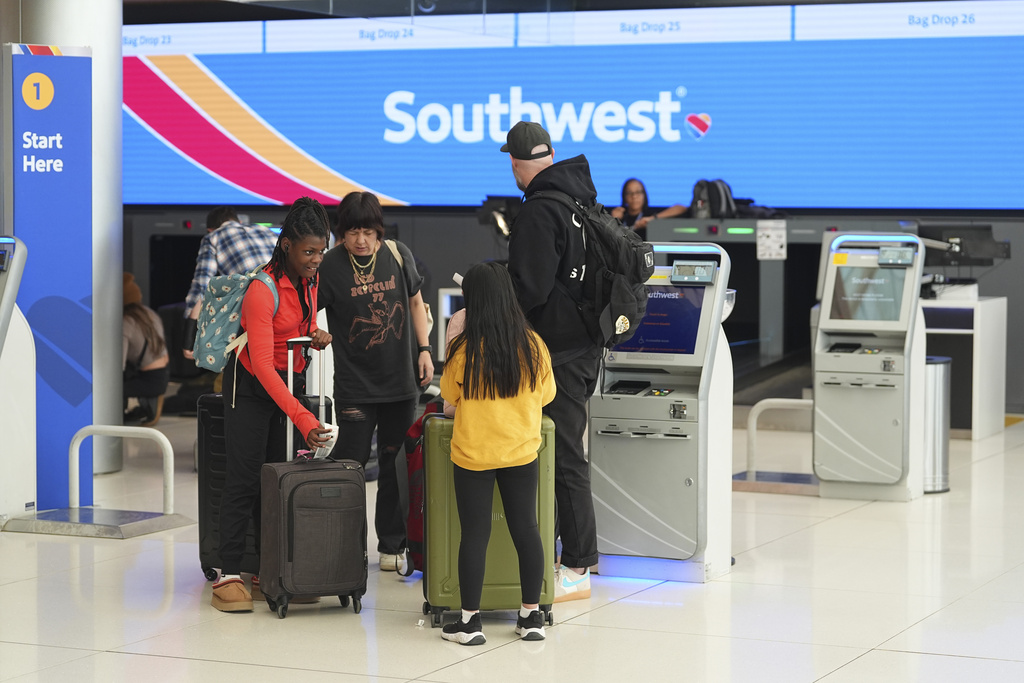
Southwest Airlines announced on Tuesday that it will start charging customers for checked baggage. This move reverses a long-standing policy that company executives had previously highlighted as a key differentiator for the budget airline. Southwest, known for advertising its free checked bag policy for years, stated that passengers who are not high-tier members of its Rapid Rewards loyalty program, who haven't purchased business class tickets, or who don't possess the airline's credit card will now be required to pay for checked bags. The airline has not yet released the specific fee amounts but indicated that the new policy will be implemented for bookings made on or after May 28. Southwest Airlines CEO Bob Jordan stated that the airline has a significant opportunity to cater to current and future customer demands, attract new customer groups, and restore profitability to levels expected by both the company and its shareholders. Almost a year ago, the Dallas-based carrier revealed its plan to discontinue its open-boarding system, which had been in place for over half a century. Southwest anticipates introducing assigned seating on its flights next year. Southwest has faced recent challenges and is under pressure from activist investors to increase profits and revenue. In October, the airline reached an agreement with hedge fund Elliott Investment Management to prevent a proxy fight, resulting in Elliott gaining several seats on Southwest's board. Last month, the airline announced the elimination of 1,750 positions, representing 15% of its corporate workforce, marking the company's first major layoffs in its 53-year history. These job cuts, expected to be largely completed by the end of June, are part of a strategy to reduce costs and transform the company into a more efficient and adaptable organization, according to Jordan. Southwest's stock price increased by over 6% in pre-market trading on Tuesday. During Southwest's investor day in late September, airline executives emphasized the free baggage allowance as the most crucial aspect differentiating Southwest from its competitors. Other major U.S. airlines charge for checked baggage, and Wall Street has long suggested that Southwest was missing out on potential revenue. In September, the airline estimated that implementing baggage fees would generate approximately $1.5 billion annually, but could also result in $1.8 billion in lost revenue due to customers choosing other airlines with more generous baggage policies. Southwest clarified on Tuesday that it will continue to offer two complimentary checked bags to Rapid Rewards A-List preferred members and passengers traveling on Business Select fares. A-List members and other select customers will still receive one free checked bag. Customers with Rapid Rewards credit cards will receive a statement credit for one checked bag. Passengers not eligible for these categories will be charged for checked baggage. The airline also stated that it will introduce a new, basic fare option on its lowest-priced tickets when the policy takes effect. In a regulatory filing, Southwest indicated that it now expects first-quarter revenue per available seat mile to increase by 2% to 4%. Its previous forecast projected an increase of 5% to 7%. The airline anticipates a capacity reduction of approximately 2%. The airline announced last year that, in addition to assigned seating, it would offer extra-legroom seating for an additional charge and introduce red-eye flights.
Posted on
by: admin
Analyzing the Implications of Rodrigo Duterte’s Arrest

` tags. `` March 11 was a significant day. Former Philippine President Rodrigo Duterte was apprehended at Manila International Airport under an arrest warrant for alleged crimes against humanity. Former Philippine Senator , a long-time critic of Duterte who was previously acquitted of drug-related charges after nearly seven years of imprisonment, stated, "This is deeply personal for me," in . Randy delos Santos, the uncle of a teenager killed in a 2017 police anti-drug operation in Manila, told the Associated Press that it was "a big, long-awaited day for justice." Duterte spearheaded a crackdown on illegal drugs for over two decades, initially as Davao City's mayor and subsequently as the Philippine President from 2016 to 2022. This campaign resulted in a death toll as high as , predominantly affecting impoverished Filipinos. Duterte’s arrest, coupled with the current Ferdinand Marcos Jr. Administration's cooperation, signifies a shift in the nation's political landscape. Jean Encinas-Franco, a political science professor at the University of the Philippines, notes that "In the short term, this marks the beginning of the end for the Duterte political dynasty." Duterte, often referred to as "Asia's Trump" due to his rhetoric and unconventional governing style, secured a landslide victory in the presidential election almost a decade ago, promising a relentless crackdown on crime. Upon assuming office, he fulfilled his promise through his "war on drugs." He also initiated and suppressed dissent from critics and . Despite sparking global condemnation, Duterte and his political approach maintained at home, even after his presidency. His daughter, Sara Duterte-Carpio, leveraging her family's legacy, won the Vice Presidency in 2022 with a significant margin, while , himself the son of a former dictator who governed the Philippines from 1965 to 1986. However, a power struggle has strained the relationship between the two families. A poll by indicates Duterte-Carpio as a leading contender in the 2028 presidential elections, and the elder Duterte is as mayor of Davao City in the upcoming May midterm elections. Meanwhile, the Duterte patriarch and President Marcos have . The former President has also accused his successor of toward a dictatorship. Last November, Vice President Duterte-Carpio even to have Marcos assassinated. These remarks, along with other allegations against Duterte-Carpio, prompted the House of Representatives, largely composed of Marcos allies, to her last month. Marcos had previously expressed his refusal to cooperate with the . However, in January, his administration stated that it would “” if the ICC issues an Interpol arrest warrant. Richard Heydarian, a Manila-based political analyst and senior lecturer at the University of the Philippines, told TIME that with the arrest, the Marcos Administration has "cut off the head of the snake" after a period of less direct confrontation with the family. He suggests that Duterte's potential transfer to The Hague could encourage Marcos’ allies in the Senate to against Duterte-Carpio. Political analyst Antonio Contreras believes it's premature to assess the impact of Duterte's arrest on the upcoming local elections or the future 2028 presidential race. However, he notes that the "feeling of invincibility before that [Duterte] can no longer be held accountable" is now being challenged.
Posted on
by: admin
Five Years After COVID-19: Are We Ready for the Next Pandemic?

It's remarkable that it's already been five years since the COVID-19 pandemic began. Since 2020, the U.S. has recorded over 1.2 million deaths, the highest number of any country. This figure represents more than one in seven of all reported COVID-19 deaths globally, although the actual worldwide death toll is likely higher due to underreporting. It's important to remember that COVID-19 was a devastating disease, comparable in lethality only to the 1918 Spanish Flu and the Bubonic Plague, and not to minimize its impact. In 2025, the days of lockdowns and quarantines seem like a distant memory for many, even though the pandemic's physical, mental, and emotional effects linger. However, a crucial question remains: Are we better prepared for the next pandemic? Unfortunately, the answer is likely no, we are less prepared. Pandemics are not necessarily rare events. We witnessed the 2009 swine flu pandemic, which resulted in deaths. Currently, H5N1 bird flu is spreading among poultry, wild birds, and mammals in the U.S., increasing the risk of it spilling over into humans. This makes the U.S. a potential ground zero for a new flu pandemic if the virus evolves to spread easily among humans. Other circulating threats include MPox, MERS (another coronavirus with a high fatality rate), and Ebola. And, of course, there's always the possibility of "Disease X," a future unknown virus. What actions should we be taking that we aren't? First, we need to invest in pandemic preparedness, not cut funding. The U.S. has . The WHO, working with local and national health authorities, plays a vital role as a "first responder," identifying and containing infectious-disease outbreaks. The U.S. previously contributed approximately to responding to acute health emergencies and preventing pandemics, so a reduction in our contributions will create a significant gap in resources needed to address emergencies and prevent the spread of outbreaks. Moreover, recent funding cuts or freezes are already impacting public health, raising concerns that progress in addressing infectious diseases will slow down or regress. Reduced funding also slows down pandemic preparations, and the U.S.'s decision to cease negotiations for the and amendments to the International Health Regulations exacerbates the situation. On a national level, plans to de-prioritize infectious-disease research and are likely to leave the public-health workforce under-resourced and ill-equipped to handle future pandemic threats. Although some employees have since been , the loss of experienced personnel involved in potential pandemic response means losing invaluable knowledge gained from working on the frontlines during COVID-19. Second, the ideologies and past actions of some individuals in charge of protecting public health in the U.S. suggest that the response to a new pandemic in the coming years would be minimal. Robert F. Kennedy Jr. supported (though weakly) the measles, mumps, and rubella vaccine to combat a measles outbreak in Texas. However, he has a history of RFK Jr. has . The Trump Administration is reportedly for H5N1 mRNA vaccine research. Dr. Jay Bhattacharya, the , held views on COVID-19 that differed from the scientific consensus, including advocating for a herd-immunity approach that critics argued would have resulted in preventable deaths. While U.S. COVID-19 policies were not perfect, and while some extreme measures like extended could hopefully be avoided in the future, inaction during the next health emergency would be irresponsible. The question is, how actively will measures like vaccines be promoted next time? Third, we need to rebuild public confidence and trust in science, not continue to erode it. Recent rhetoric from figures like Trump and Kennedy, as well as influential social media personalities and podcasters, is fostering a conspiracy mindset towards science and health organizations, branding them as "" and . Research from the COVID-19 pandemic has shown that one of the is the public's level of trust in science and health authorities. Can the new administration restore trust in science and health organizations? If not, will people trust public-health guidance during future health emergencies, including infectious disease outbreaks? If the answer is not "yes" by the time the next pandemic arrives, the consequences will be dire.
Posted on
by: admin
Women’s Career Advancement Hampered by Initial Promotion Obstacles, Not Just the Glass Ceiling

` tags. In 1978, Marilyn Loden, a human resources executive, participated in a Women’s Exposition panel in New York City, discussing women's career aspirations. While the discussion largely focused on how women should adapt to succeed, Loden contended that structural barriers were the real issue hindering their progress. She introduced the concept of an "invisible glass ceiling" impeding their ambitions and opportunities. Since then, the image of a glass ceiling at the top of the corporate ladder has become a common symbol of the challenges women face in reaching leadership positions. Moving forward from Loden's time to the 1990s, women's presence in the workforce was at an all-time high. In response, the U.S. Congress formed the Glass Ceiling Commission to examine obstacles to their advancement. The commission reported that women held only 3% to 5% of senior leadership roles in Fortune 500 companies. Consequently, many organizations began prioritizing increasing the number of women in these top-tier positions. Progress has been gradual but consistent. In the three decades since the Glass Ceiling Commission's report, women's representation in the C-suite has risen from 3-5% to 29%. While still far from equal, this represents progress. In the U.S., between 2012 and 2022, women's C-suite representation increased by 10 percentage points, which translates to roughly one more direct report to the CEO in a 10-person team. However, the very top remains difficult to penetrate: in 2023, women accounted for just over 10% of Fortune 500 CEOs, 9% of FTSE CEOs, and 5.4% of CEOs in the S&P Global Broad Market Index. One crucial, often overlooked, factor in promoting women's advancement is addressing the obstacle that affects them early in their careers: the broken rung. Although the glass ceiling persists, many women start lagging behind their male colleagues well before reaching that level. Our research indicates that women entering the workforce have significantly lower chances of securing their first managerial role compared to men. Moreover, when they do achieve that initial promotion, it often occurs later in their careers. In the U.S., for every 100 men promoted to manager, only 87 women receive the same opportunity. This disparity has remained remarkably consistent over the past decade, showing minimal improvement. The broken rung phenomenon often continues through the manager and director levels, preventing women from catching up. Across more than 1,000 U.S. companies surveyed over five years, women held an average of 48% of entry-level positions but only 37% of director-level positions, a mid-level of seniority. This indicates a significant number of women stalling or leaving the corporate workforce. At senior levels, women's representation hovers just below 30%, a significant drop from the parity they experienced in college or at the start of their careers. Women's representation is halved between the entry-level and the C-suite. Similar trends are observed globally. Norway, Australia, and Sweden lead with 24% to 27% female representation in senior leadership. The UK stands at 18%, and France at 13%. Brazil, Germany, and Mexico lag behind with 8% women (although Germany is improving due to quotas), followed by India at 5% and Japan at 3%. Every rung on the ladder presents challenges for women, especially women of color, as they navigate the corporate pipeline. However, the first rung has the most significant impact on both individual women and organizations. An eight-percentage-point drop so early in the pipeline makes it nearly impossible to close the gap, with compounding effects at each subsequent level. Missing the initial promotion to manager impacts an individual's entire career path, particularly in acquiring valuable skills and experiences. The decrease in female representation at each level further reduces the pool of women eligible for promotion, leaving few with a chance to even reach the glass ceiling. To make matters worse, the broken rung is often overlooked by leadership. Despite positive intentions among many CEOs, managers, and HR executives to support women, gaps persist in implementation. Over half of HR leaders believe their organization will achieve gender parity within 10 years. However, the UN estimates that, at the current rate, it will take 140 years to achieve equal representation in leadership worldwide. Optimistically, the problem and solution are two sides of the same coin. Promoting women and men to management at equal rates would create a powerful domino effect, increasing representation throughout the pipeline. This would lead to a larger pool of women available for promotion and hiring at each subsequent level. While achieving equality would still take time, fixing the first broken rung could bring women close to parity within a generation. This would also help companies retain ambitious, talented women and create mentors and leaders at all levels for young women to learn from and emulate. In essence, we must address parity in leadership from the bottom up, not just from the top down. Reprinted by permission of Harvard Business Review Press. Excerpted from by Kweilin Ellingrud, Lareina Yee, and María del Mar Martínez. Copyright 2025 McKinsey & Company, Inc. United States. All rights reserved.
Posted on
by: admin
Ex-Philippine President Duterte Arrested on ICC Warrant

MANILA, Philippines — Rodrigo Duterte, the former president of the Philippines, was apprehended at Manila International Airport on Tuesday. The arrest was carried out under an International Criminal Court (ICC) warrant related to allegations of crimes against humanity, according to the Philippine government. President Ferdinand Marcos’ office stated that Duterte was detained upon his arrival from Hong Kong. Police acted on the ICC's orders, which is currently investigating the numerous deaths that occurred during Duterte's aggressive campaign against illegal drugs. The government stated that "Upon his arrival, the prosecutor general presented the ICC arrest warrant notification to the former president regarding the crime against humanity." They added, "He is currently in the custody of the authorities." The unexpected arrest caused a disturbance at the airport. Duterte's legal team and aides protested that they, along with a doctor, were barred from approaching him after he was taken into custody. Senator Bong Go, a close ally of Duterte, told reporters, "This violates his constitutional rights." Duterte's arrest shocked many and brought tears to the families of victims of his violent anti-drug operations. Randy delos Santos, the uncle of a teenager killed by police during a drug operation in Manila in August 2017, told The Associated Press, "This is a significant and long-awaited day for justice." Delos Santos stated, "We now sense that justice is progressing. We hope that high-ranking police officials and the hundreds of officers involved in the unlawful killings will also be detained and punished." In 2018, three police officers who killed his nephew, Kian delos Santos, were convicted of murder in a high-profile case. This prompted Duterte to temporarily halt his anti-drug campaign. The conviction was among at least three against law enforcement officials involved in the anti-drug campaign. This reflects the concerns of families who feared they would not obtain justice in the Philippines for suspected extrajudicial killings, leading them to seek assistance from the ICC. The whereabouts of Duterte following his arrest were not immediately known. The government stated that the 79-year-old former president was in good health. The ICC initiated its investigation into drug-related killings under Duterte's leadership from November 1, 2011, when he was mayor of Davao City, until March 16, 2019, considering them as possible crimes against humanity. In 2019, Duterte withdrew the Philippines from the Rome Statute, a move that human rights activists believe was intended to avoid accountability. In late 2021, the Duterte administration attempted to suspend the ICC's investigation by claiming that Philippine authorities were already investigating the same allegations, arguing that the ICC, as a court of last resort, lacked jurisdiction. In 2023, ICC appeals judges ruled that the investigation could proceed, dismissing the Duterte administration's objections. The ICC, based in The Hague, Netherlands, intervenes when countries are unwilling or unable to prosecute individuals for severe international crimes, including genocide, war crimes, and crimes against humanity. President Ferdinand Marcos Jr., who succeeded Duterte in 2022 and has since been engaged in a political dispute with him, has decided against rejoining the ICC. However, the Marcos administration has stated it would cooperate if the ICC requests international police to detain Duterte through a Red Notice, which is a global request for law enforcement to locate and provisionally arrest a suspect. ```
Posted on
by: grit
Atua AI (TUA) Boosts Multi-Chain Transaction Efficiency with Scalable AI

Advanced AI enhances multi-chain transaction efficiency, security, and interoperability.London, United Kingdom Mar 10, 2025 - The on-chain AI platform (TUA) is improving multi-chain transactions by incorporating scalable AI models. These models are designed to boost efficiency, security, and interoperability for blockchain-based businesses. This progress allows companies to conduct smooth, automated, and intelligent transactions across various blockchain networks, which shortens latency and improves scalability. Atua AI's AI-driven transaction optimization uses real-time analytics, automated cross-chain communication, and predictive modeling to make sure interactions between decentralized applications are secure and efficient. By making multi-chain operations more efficient, businesses can improve liquidity management, lower transaction costs, and boost overall performance within decentralized ecosystems. This aligns with Atua AI's goal of providing businesses with AI-driven solutions that enable scalable and seamless blockchain operations. The platform integrates intelligent automation and smart processing, ensuring businesses can navigate complex blockchain networks with greater efficiency and adaptability. As multi-chain interoperability drives Web3 innovation, Atua AI remains a leader in scalable, AI-powered transaction automation. This ensures that decentralized businesses benefit from operations that are faster, more secure, and more cost-effective. About Atua AI Atua AI is a leading on-chain platform that offers AI-powered multi-chain transaction solutions for decentralized businesses. By optimizing multi-chain interoperability, Atua AI enhances efficiency, security, and automation for blockchain businesses globally.Media ContactKaJ Labs88887012914730 University Way NE 104- #175 Source :KaJ Labs ```
Posted on
by: grit
Entrepreneur Nitin Khanna Discusses Premium Tequila Crafting in Exclusive Blog Feature
Tradition Meets Innovation: Nitin Khanna Discusses His Passion for Premium Tequila ProductionPortland, Oregon Mar 10, 2025 – Entrepreneur Nitin Khanna, known for his tequila enthusiasm, is the subject of a blog post titled, "The Art of Crafting Premium Tequila: A Journey from Agave to Bottle." The article explores the detailed artistry and commitment required to produce top-tier tequila, providing an inside look at El Cristiano's dedication to quality, authenticity, and heritage. Khanna, a seasoned business leader with experience in various sectors, shares his enthusiasm for tequila creation, emphasizing that producing a premium spirit involves much more than just bottling. The blog delves into the meticulous attention to detail at each stage, from growing the finest blue Weber agave to distillation, aging, and the final serving. The Art and Science of Tequila-Making In the piece, Khanna elaborates on how tequila production is steeped in tradition, yet demands continuous innovation to achieve peak quality. He explains that the agave plant, which can take up to ten years to mature, is essential for producing a smooth, complex spirit. His dedication to sourcing only the best agave and collaborating with skilled farmers underscores his commitment to honoring Mexico’s tequila legacy. "The agave is the heart of great tequila. It’s more than an ingredient; it’s the foundation of everything we do," Khanna states in the blog. "Each step, from harvesting to roasting, fermentation, and distillation, must be handled with care to strike the perfect flavor balance." Khanna also touches on the aging process, a key element in defining the characteristics of high-end tequila. By using carefully chosen oak barrels, El Cristiano enriches the spirit with nuanced hints of vanilla, caramel, and spice. The controlled aging process ensures the tequila gains complexity without overshadowing the agave's natural essence. Innovation Meets Tradition The blog highlights Khanna's dedication to combining traditional tequila-making practices with modern innovations. He explains that each batch of El Cristiano is carefully monitored to ensure consistency and enhance the drinking experience. Every aspect, from agave selection to final bottling, is executed with a steadfast focus on quality. "Tequila-making is an art, a science, and a heritage. It’s about honoring the past while expanding the possibilities," Khanna says. "At El Cristiano, our goal is to create a tequila that not only respects tradition but also establishes a new benchmark for the future." About Nitin Khanna Nitin Khanna is an entrepreneur, investor, and business visionary who has achieved success across diverse industries, including technology, cannabis, and premium spirits. As a co-founder of El Cristiano, Khanna has infused his passion for craftsmanship and quality into the tequila industry, ensuring every bottle reflects a commitment to excellence. His dedication to innovation and tradition continues to influence the future of high-end tequila. To read the full blog, click .Media ContactNitin Khanna Source :Nitin Khanna