(Global Infinity Labs) – Nine months after buying SpotHero, Uber controls 13,000 places to stand still near demand, and the January 2028 Waymo split shows why that space is the scarce input in 2026.
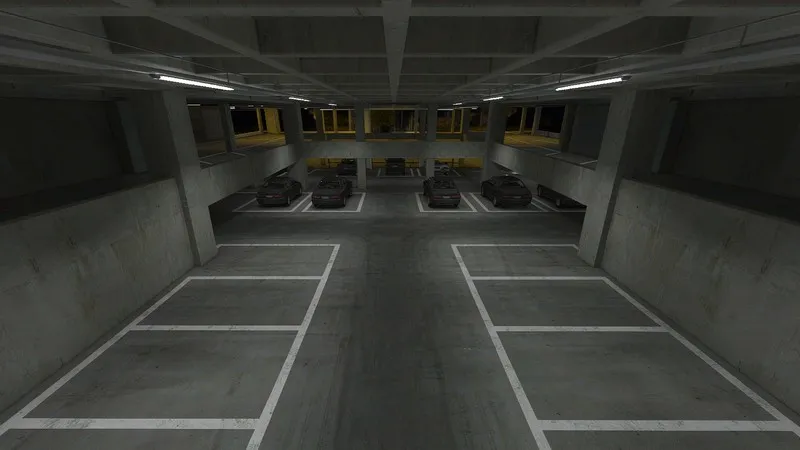
On November 9, Uber put a parking button on its home screen. A rider who plans to drive opens the app, types a destination, picks a date and time, and gets a map of garages, lots and valets with the price shown before checkout. Entry works through a QR code or a camera that reads the plate. A booking can be cancelled for free until it starts.
The product is small print next to the balance sheet. The network behind it is not. Uber reached the launch with 13,000 garages, lots and valet services across more than 400 cities, nine months after it bought the company that had assembled those contracts. The first release covers 15 US cities, from Atlanta and Austin to Seattle and Washington.
Then comes the sentence that makes the button interesting. Uber says the same spots can serve as staging and waiting locations for autonomous vehicles, cutting congestion and the miles a car drives with nobody paying inside. The company already works with dozens of autonomous vehicle firms, and it has spent the past two years assembling them: Waymo in two cities, Rivian for a 2028 robotaxi, a long list of smaller fleets that supply cars but not depots.
So the parking tab does two jobs at once. It sells a cheap reservation to a commuter, and it quietly takes a position in the part of the robotaxi business that no software release fixes. The second job is the one worth reading carefully, because it answers a question the industry has been avoiding: when the driving gets cheap, what stays expensive?
What 13,000 facilities actually buy
Divide the network by its footprint and the shape becomes clear. 13,000 facilities across more than 400 cities works out to roughly 33 locations per city on average. The launch covers 15 of those cities, under 4% of the network by city count. On the same average, that puts roughly 495 facilities inside the first release and more than 12,500 outside it, which means most of what Uber bought is sitting idle as an option rather than running as a product.
What Uber owns is not concrete. SpotHero built a marketplace: rate agreements with operators, a booking engine, and a way for a driver to get into a garage without talking to anyone. Uber bought the contracts and the software, and inherited the operators who list on it. That is why the deal could close and launch inside nine months. Building 13,000 parking relationships from scratch takes years of property-by-property negotiation, and buying land in the middle of a city takes longer than that.
For the operators, the logic is narrower and more concrete than the robotaxi story. A garage in downtown Chicago is full at 10am on a Tuesday and empty at 11pm on a Sunday. Listing inventory on a marketplace converts dead hours into revenue at almost no marginal cost, and a booking platform that already carries 55 million Uber One members hands them demand they cannot reach with a sign on the street. Those operators do not care whether the car that takes the stall has a driver. They care about the utilization rate on a Tuesday night.
A network that size is also a map of where a city lets a car sit still, which is a different map from where it lets one drive. That alignment is what makes the asset politically cheap. Uber is not adding parking spaces to cities, so there is no zoning fight, no construction permit, no neighbourhood meeting. It is repricing stalls that already exist and routing demand to them. The city gets a car off the street and into a garage. The operator gets paid for hours nobody wanted, at a wholesale rate agreed in a contract rather than at the gate meter. Uber gets a transaction it can take a cut of, and a map of where cars stand still.
The waiting problem nobody priced
A car waiting for a passenger can do it in two places. It can circle the block, which costs the operator fuel, mileage and tyre wear, and costs everyone else a lane. Or it can stand in a stall, which costs a fixed fee and nothing else.
Ride-hailing has always lived with the first option, because the driver absorbs the empty miles. Uber calls the second option deadheading, and it names the fix in its own description of the parking launch: staging and waiting locations that reduce congestion and empty running. The wording is careful. It does not promise that robotaxis will park between trips. It says the spots could be used for that.
The size of the problem is visible in the one fleet that publishes mileage. Tesla said in October that its robotaxis had driven 3.3 million miles autonomously, up from 380,000 unsupervised miles reported in July. That is roughly 8.7 times more miles in four months, and every one of those miles had to end somewhere. Tesla does not break out how much of that distance was driven with an empty cabin, waiting for a fare or returning to a base. Spread over the roughly 100 days between the two disclosures, the fleet averaged about 33,000 autonomous miles a day, and every one of those days ended with cars parked somewhere the operator had to pay for or negotiate.
Uber has not said how many of its 13,000 facilities are contracted for autonomous staging, or at what rate. That absence matters. A stall rented at wholesale and resold to a fleet is a different business from a stall rented to a commuter for two hours, and the margin on the first depends on terms nobody outside the deal can see.
A stall does one thing well: it turns an unpriced cost into a priced one. Circling is paid in fuel and in the patience of a city council. A garage is paid in dollars per hour, on an invoice, with a contract that says who is liable when a sensor pod scrapes a pillar. For a fleet operator trying to forecast cost per trip, the second is easier to defend to a board.
A network built to be brand-neutral
The argument for owning parking only holds if the parking outlives the partners. November delivered a test of that.
Waymo confirmed it will end its exclusivity with Uber in Austin and Atlanta in January 2028 and sell rides through its own app in both cities, four months before the existing contract runs to May 2028. Its co-chief executive, Tekedra Mawakana, told Bloomberg that riders could never be sure whether the Uber app would match them with a robotaxi or a human-driven car, and called the experience a bit of a crapshoot. Uber said it had asked Waymo to add a dedicated robotaxi option inside its app, and Waymo declined.
The notice period says how both sides read the arrangement: 14 months between the November announcement and the January switch, on a contract that still had 18 months to run. Read narrowly, that is a distribution fight. Read against the parking purchase, it is the reason to buy parking. If the fleet partner can leave, the platform needs an asset that does not leave with it. A garage contract signed with a Chicago operator is indifferent to whether the car that pulls in says Waymo, Rivian or nothing at all.
The partner list is getting longer, and most of it cannot build its own real estate. Trucks VC told TechCrunch it had fielded pitches from 81 new autonomous vehicle startups in 2026, two-thirds more than the year before, with some deploying in a few months on less than $1 million raised. A company at that scale can write driving software. It cannot negotiate 13,000 parking contracts, and it cannot persuade a landlord to hand over a hundred stalls for staging at 6pm.
The supply side is fragmenting in the other direction. May Mobility plans to put more than 10,000 autonomous vehicles into ride-hailing platforms through 2031, built on Volkswagen’s electric ID. Buzz, which means a fleet that size will need somewhere to stand between shifts and no property division to buy it with. Newmo, a Japanese robotaxi startup, raised 20.8 billion yen in a round led by KDDI. Even the parking side is consolidating: ParkBee, a Dutch parking technology company, bought Mobian’s city and parking operations this month. Small fleets, rented space, and a parking industry rolling up its own inventory is the combination Uber is positioned to sit in the middle of.
The partners also have less cash than the story suggests. Lucid reported $350 million of revenue in the third quarter of 2026 against a net loss of $830.9 million, and raised its delayed draw term loan from Saudi Arabia’s Public Investment Fund to $1.75 billion. That is a company burning about $2.37 for every dollar it books. A fleet with that shape does not buy depots in 15 metros. It rents stalls by the month and lets someone else carry the lease.
Rivian is the clearest middle case. It plans to put a hands-free, point-to-point system in employees’ hands in 2026 and in customers’ cars in 2027, then launch its first robotaxis with Uber in 2028. Between now and then it has to solve a problem that has nothing to do with perception: where the cars sit between fares in a city where it owns no property.
Where the Uber One math pays for the experiment
The commuter product is what funds the option, and the mechanism is a credit.
Uber One members get 10% back in credits on eligible parking reservations, and those credits can only be spent on rides and Uber Eats orders. A driver who books a garage gets back a tenth of the price in credit that works nowhere else. Uber’s chief executive, Dara Khosrowshahi, framed the audience on the third-quarter call: commute is one of the company’s largest categories, and offering a ride to work, a pass to avoid surge pricing, and parking for the days someone chooses to drive keeps that customer inside one app.
That is a loyalty loop with a parking meter attached. The reservation itself may earn little. The credit it generates pulls spending back to the rides and delivery businesses, which is where the company already knows its margins.
The comparison inside the industry is Rivian’s software line. Rivian reported $605 million in software and subscription revenue in the third quarter of 2026, up 45% year over year, with $256 million in profit on that line and a 42% margin. Investors pay for recurring revenue with that shape. A parking marketplace, if it works, earns the same way: contracts, small transactions, software in the middle, no metal.
The obvious objection is that every parking booking is a ride Uber did not sell. A commuter who drives and parks is a customer who did not call a car, and the company is now paying 10% of that decision back as credit. The answer sits in the shape of the demand. A commute is a repeated trip on a fixed schedule, which is the worst kind of demand for a marketplace that prices by the minute and the nearest car. Owning the parking transaction keeps the customer, the payment method and the map data inside the app on the days a car is not an option, and the credit pulls the next discretionary trip back to rides or delivery.
There is a gap in that story. Uber has not disclosed parking revenue, its take rate, or how much of the 10% credit programme it funds itself. Until it does, the parking business is best read as customer acquisition with an infrastructure option attached, and the option is the part that would take years to rebuild.
| Item | Figure | Period |
| Parking facilities in the network | 13,000 | November 2026 |
| Cities covered by the network | More than 400 | November 2026 |
| Cities in the first release | 15 | November 2026 |
| Facilities per city, average | About 33 | Derived from the two figures above |
| Share of network city count in launch | Under 4% | Derived |
| Uber One members | 55 million | As of September 30, 2026 |
| Waymo exclusivity ends in Austin and Atlanta | January 2028 | Announced November 4, 2026 |
Source: TechCrunch
Tesla is solving the same problem with other people’s driveways
The strongest case against Uber’s version of this bet comes from the company that owns the most cars and the fewest garages.
Tesla told investors in October that owners will be able to add their own vehicles to its robotaxi fleet in the second quarter of 2027, once the same software running its Cybercabs reaches customer cars. More than 75% of new Tesla buyers in North America paid for Full Self-Driving in the third quarter of 2026, up nearly 20 percentage points from the previous quarter, across a base of more than 1.7 million active customer cars. The fleet itself is still small: a few hundred robotaxis in Texas and Florida, and several dozen fully driverless Cybercabs in Austin. The arithmetic on the owner base is what makes the model worth taking seriously. If even 1% of those 1.7 million cars opted in, Tesla would have 17,000 vehicles standing in driveways, more stalls than Uber holds in any single metro under its 33-per-city average.
If that model works, staging costs nothing at the platform level, because the owner pays for the driveway, the charger and the insurance. Every idle hour becomes someone else’s fixed cost. Against a network of 13,000 contracted garages, a fleet of privately parked cars looks like a cheaper answer to the same question.
It does not settle the question, for three reasons.
The first is regulatory. Unsupervised ride-hailing needs local and state permits, and in most places it is still illegal for an individual to run a self-driving car as a taxi. A customer-owned fleet is a legal project before it is an operational one, and the permits are granted city by city.
The second is history. Tesla first promised a million robotaxis on the road by 2020, and owners earning passive income from their cars has been a slide in investor decks since 2019. The Q2 2027 date may hold. The pattern says to price it with a discount.
The third is geography, which is the one that matters for parking. An owner’s car sits where the owner sleeps. Demand peaks where people work, shop and land at airports, in the hours when those cars are commuting. Distributed ownership solves the cost of standing still. It does not solve the location. Uber’s 13,000 facilities are, in effect, a map of where cars already stand still in the places demand goes.
The regulator is drawing lines on the same ground
Two regulatory decisions in the past month point at the same physical layer.
In October, the National Highway Traffic Safety Administration proposed lighting rules for autonomous vehicles: steady cyan lights, visible from the front, rear and both sides, with an option to replace manual switches for turn signals, high beams and hazards. The point is to make an autonomous car identifiable on the street by anyone standing next to it.
On November 18, California’s regulator pushed Waymo to suspend driverless rides on high-speed roads nationwide after construction zone incursions and a run-in with patrol vehicles, according to The Register.
Neither decision is about model accuracy. Both are about what happens when a car meets an exception in the physical world: a work zone with no lane markings, a police officer waving traffic through a closed lane. When that happens, an operations team needs somewhere to send the car, and a garage with a contract is easier to send it to than a kerb.
The same logic explains why airports keep appearing in the plans, and why the airport test is the one to watch first. Waymo opened rides at Harry Reid International in Las Vegas in October, and said it will launch in Madrid in 2027. An airport is the densest concentration of paid parking in any metro, and the worst place to have a car circling. If a staging model works anywhere, it works where the inventory is already there and the alternative is a loop road.
Three ways this becomes a line in a filing
The first failure mode is silence. If Uber has still not broken out parking revenue, take rate, or the number of stalls under fleet contracts by the end of 2027, the network is a coupon programme with a nice story. Watch for a network count that stays at 13,000 while the launch city count grows. That combination means the company is harvesting demand, not building capacity.
The second is that the partners build their own space. Tesla’s driveways are the cheap version. Waymo already runs its own depots in the cities where it operates directly, and its exit from the Uber channel in Austin and Atlanta removes the reason to rent someone else’s stalls in those markets. If the large fleets all end up with their own yards, Uber’s neutrality premium applies only to the small ones, and the small ones pay less.
The third is the kerb. If cities start metering the space where cars wait, the gap between a free street and a paid stall narrows, and the arbitrage that makes parking valuable to a fleet disappears. Cities have been slow here, but the politics of a street full of empty cars is not slow. Residents in one Atlanta neighbourhood put up a children’s traffic sign to confuse cars looping through a dead end, and that kind of story travels faster than a rate case.
A concrete test sits inside the launch footprint. Uber has 15 cities to work with. If by the end of 2027 it has signed staging or dispatch agreements with autonomous operators in fewer than two of them, the robotaxi rationale was a story told to justify a commuter product. If it has signed in five, the parking tab was the cheapest infrastructure deal in the sector.
The scarce input is stationary
The industry spent a decade treating driving as the hard part, and it is no longer the hard part. A startup can deploy an autonomous stack in months on less than $1 million, built on open foundation models. In China, where export controls bite differently, Pony.ai’s finance chief told TechCrunch that demand for computing power still outruns supply, and that the company’s answer is mid-tier chips at home and tighter training. That is a compute argument. It is not a space argument, and it is the one that gets solved with money.
Standing still near demand is not solved with money at the same speed. It is solved with contracts, one landlord at a time, in the parts of a city where a car is allowed to be idle and a customer is likely to appear. That is what 13,000 facilities represent, and it is why the number is more interesting than the product launch that revealed it.
Uber is not buying a robotaxi company. It is buying the layer that stays put while robotaxi companies come and go, and it is paying for that layer with a commuter discount that doubles as a customer retention tool. If the layer holds, the parking receipt will look like the cheapest part of the autonomy strategy. If it does not, the receipt will still be a parking business, which is a strange thing for a company valued on trips to own.
Limitations
The per-city average of about 33 facilities assumes an even spread, and parking inventory is not evenly spread: a handful of metros will hold most of the 13,000 contracts. Uber has also not disclosed how many stalls are under fleet agreements, so the split between commuter parking and autonomous staging is unknown from outside.
The Tesla comparison rests on a date the company has missed before. Treating owner driveways as staging capacity is a plan for the second quarter of 2027, not an observed fleet, and the permit regime that would make it legal city by city is still being written.
Sources
- TechCrunch: Uber launches parking service following SpotHero acquisition, with an eye on robotaxis, November 9, 2026
- TechCrunch: Waymo confirms it is shaking up its Uber relationship in January 2028, November 4, 2026
- The Verge: Tesla says customers can add their own vehicles to the robotaxi fleet next year, October 22, 2026
- The Verge: Rivian’s autonomy gamble faces its first real test, October 30, 2026
- TechCrunch: TechCrunch Mobility: A new, bigger AV boom is here, November 1, 2026
- TechCrunch: TechCrunch Mobility: Blue-green is the color of autonomy, October 25, 2026
- TechCrunch: TechCrunch Mobility: The Nvidia backup plan for China’s self-driving industry, November 15, 2026
- The Register: California tells Waymo to take the next exit after freeway mishaps, November 18, 2026
This article was prepared by GlobalInfinityLabs’ expert team using insights and data provided through their MCP platform. To share industry insights, report corrections, or submit story tips: editors@globalinfinitylabs.com or https://www.globalinfinitylabs.com/submit.
About Global Infinity Labs
Global Infinity Labs is an AI innovation company specializing in MCP data services. More industry insight and deep research on www.globalinfinitylabs.com