SeaPRwire – Readwise launched Readwise Books on Monday in the United States: an ebook store that doubles as a reading tracker. Titles come from the big five publishers and others, which the company describes as millions of books. The app is free and currently in an invite-only beta.
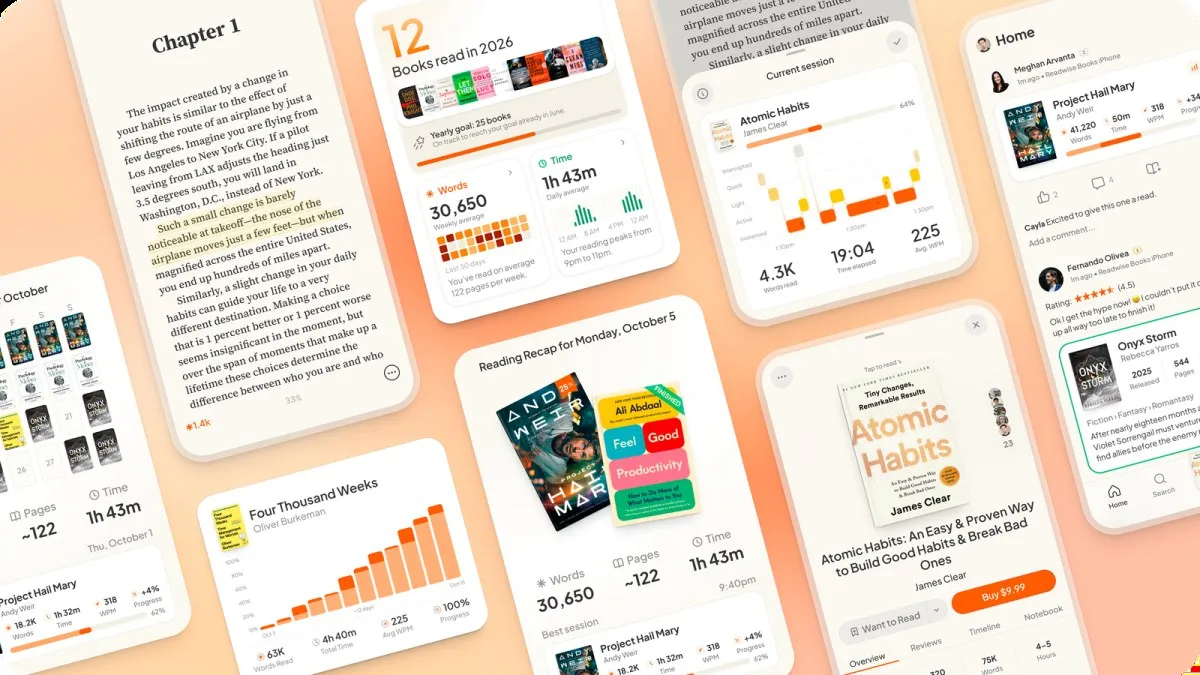
It is replacing two things that used to be separate. Kindle sells the book; Goodreads records whether you finished it. Readwise Books puts buying, reading and logging in one place and adds resolution to the logging: words read, pace, session length, how deep into a sitting a reader stayed.
Taken as a store alone, this is the heaviest thing the company has attempted. Independent developers have spent years shipping reading trackers and almost none have gone near ebook retail, for a reason that is easy to find: Kindle holds roughly 83% of ebook sales once Kindle+ (formerly Kindle Unlimited) is counted, according to Goodereader’s tally. Readwise does not sell an e-reader and has no hardware position to defend.
What it has is a decade of highlights and book notes, plus a subscriber base that pays monthly. The existing apps cost $7.99 a month each or $9.99 for both. The company has been bootstrapped from the start.
Books bought from Amazon stay inside Amazon’s reader, and Readwise’s import path covers DRM-free files only.
The store therefore does not begin with a library the customer already owns. It asks a reader to keep two bookshelves instead of one, and to trust that the new one still opens in five years.
Running a store is also a different business from running a subscription. Wholesale terms, sales tax, refunds and the payment plumbing behind millions of titles are capabilities Readwise has not needed before, and the company has not said who supplies the catalog feed or how returns are handled.
Discovery is the other unfinished piece. A store with millions of titles needs a way to surface them, and Readwise’s advantage there is the history it already holds: a recommendation drawn from what a reader highlighted carries more signal than a bestseller list. That signal runs only on books the app has seen, which is the same coverage limit the AI features face.
Outside its own store, Readwise logs books bought elsewhere through a few side doors. It follows sessions through Kindle’s browser-based Cloud Reader, lets readers photograph a physical book to mark a page, accepts any DRM-free EPUB, and hands read-aloud to the system’s text-to-speech voice.
The decision that shapes the product most is how the AI features are licensed. Session recaps, definitions and term lookups, phrase translation, and the ability to ask questions about the passage in front of you all switch on only with a publisher’s permission. Of the big five, only HarperCollins has agreed so far.
That arrangement shows up in the reader’s hands. The same book bought from a consenting publisher gets recaps and questions; bought from another, the buttons are simply absent. Millions of titles sit in the store and only some of them can be processed by a model, and the line is drawn by contracts rather than by subject matter.
Amazon does not have this problem. It is the store and the hardware maker, so it negotiates the terms with itself.
Readwise went the other way on a second front. It publishes an API and runs an MCP server, so an AI agent can read a user’s library: research recommendations, build a books page on a personal site, or let a hackable e-reader log sessions automatically. That is a feature and also a transfer of leverage. Data that can leave cannot be held hostage, which means the same door that opens Readwise to other tools opens the exit for its users.
The company calls its metrics a Strava for reading. In a blog post, co-founders Daniel Doyon and Tristan Homsi wrote that the wish to read, like the wish to exercise or eat well, arrives loaded with guilt, and that feeling bad about it changes nothing. Session tracking works on a different lever: it makes the reading you already do visible.
That argument worked for running apps, and it runs into one difference here. Strava records roads you actually rode. A reading session records time and page turns, not what went in. The company says the most consistent user feedback is that people read more without goal-setting or streaks. Feedback like that cannot be checked from outside, and it cannot be separated from selection: someone willing to pay for reading statistics probably already reads.
The metrics have a second use that has nothing to do with motivation. A tracker that knows what someone is reading has a reason to be opened every day, and a daily habit is what a $9.99 subscription is really selling. The store gives that habit somewhere to spend.
Print books are fulfilled through Bookshop.org’s distributor and only some audiobooks are listed. Neither line carries ebook margins, and the company has not said whether it earns a commission on either. It has also not said how revenue splits between the store and the subscriptions.
The store is US-only for now and requires an invite unless you already subscribe. Handing the door to paying customers first keeps support load down and puts the earliest buyers in the group most likely to tolerate a beta.
Three things are worth watching. Whether the other large publishers follow HarperCollins, which decides whether the AI layer is the product or an exception. Whether the store converts existing highlight users into book buyers instead of letting them buy elsewhere and log here. And whether API usage turns into a cost line rather than a reputation.
In the business history of reading, selling books earns thin margins and selling the experience of reading earns thinner ones. Readwise has bet on both at once: a free store to buy users, a set of features that must be negotiated publisher by publisher to buy subscriptions. Whether the arithmetic works rests on the publishers, not on how good the app is.